
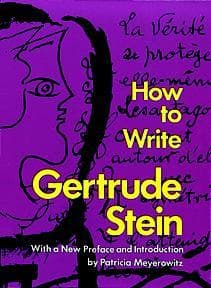
Core Idea
- Difficulty
- Hard
- Read it if
- You are a writer, artist, or thinker interested in experimental approaches to language, deconstructing traditional narrative, and understanding the philosophical underpinnings of modernism and avant-garde literature.
- Skip it if
- You are looking for a practical, step-by-step guide to conventional writing, or prefer clear, linear prose over abstract and repetitive exploration of linguistic theory.
Key Takeaways from How to Write
The Continuous Present
Writing must exist in an eternal now, free from past or future tenses.
Stein argues against the usual linear flow of time in writing. For her, true writing and living happen in a 'continuous present,' where each moment is new, without the past or future. This is more than a grammar choice; it is a philosophical view of perception. When we write, we should aim to create a text that unfolds in a constant 'now.' The reader experiences the language as it appears, not just follows a story. This approach frees language from representing a fixed reality, letting it become a reality itself, immediate and alive.
“A sentence is not a sentence if it is not a present sentence.”
In the book: Her own experimental prose, which often eschews traditional narrative structures and chronological sequencing, instead focusing on the immediate impact and sound of words as they appear on the page.
Try this: Experiment with writing without explicit time markers. Focus on the sensory details and the immediate experience of the words, rather than building a plot. Try writing a scene where every sentence feels like a fresh start, independent of the one before it, yet connected by an underlying rhythm.
Related ideas: continuous-present, experimental-prose, temporal-dislocation
Words as Things, Not Symbols
Detach words from their conventional meanings to discover their intrinsic value.
Stein questions the idea that words mainly point to outside realities. Instead, she urges writers to treat words as 'things' themselves—objects with their own sound, shape, and presence, not just clear windows to meaning. This view lets the writer play with language, appreciate its physical qualities, and create new connections based on rhythm and repetition, rather than only on standard definitions. By removing words' usual 'significance,' Stein believes one can reach a deeper, more direct experience of language, allowing for fresh, unmediated expression that bypasses intellectual constructs.
“A rose is a rose is a rose.”
In the book: Her famous line, 'A rose is a rose is a rose,' which, through repetition, seeks to strip the word 'rose' of its accumulated cultural and poetic associations, returning it to its essential 'thingness.'
Try this: Practice 'word defamiliarization.' Take common words and repeat them aloud, or write them down repeatedly, until their meaning begins to dissolve, and you start to hear their sound or see their shape anew. Use words for their sonic qualities or visual impact as much as for their dictionary definitions.
Related ideas: word-as-object, defamiliarization, materiality-of-language
The Power of Repetition
Repetition isn't redundancy; it's a tool for emphasis, rhythm, and re-seeing.
Unlike common advice to avoid repetition, Stein embraces it as a basic writing principle. For her, repeating words or phrases is not sloppy style but a deliberate way to create rhythm, emphasize ideas, and let the reader experience the word or concept anew each time. Every repetition, though seemingly the same, occurs in a slightly different 'time of the composition,' gaining new shades of meaning within the changing text. It is a way to explore a word's essence more deeply, rather than moving past it quickly. This creates a hypnotic, almost chanting quality that draws the reader into the text's unique flow.
“Everything is the same except composition and the time of the composition.”
In the book: Her extensive use of refrains and repeated phrases throughout her work, such as in 'Tender Buttons' or 'The Making of Americans,' where patterns of words create a musicality and an evolving perception of meaning.
Try this: In your writing, identify a key word or phrase and intentionally repeat it, varying its context or surrounding sentences slightly. Observe how the meaning or feeling of the phrase changes with each repetition, rather than becoming stale. Use it to build rhythm and emphasis.
Related ideas: repetition-as-style, rhythm-in-prose, incantation
Punctuation's Tyranny
Liberate the sentence from conventional punctuation, especially the comma.
Stein had a strong dislike for traditional punctuation, especially the comma. She saw punctuation marks as interruptions, artificial stops that break the natural flow and rhythm of thought and speech. For Stein, writers should capture the continuous stream of consciousness. Commas, periods, and question marks impose an external, often arbitrary, logic on this organic process. By using less or no punctuation, she aimed for a more direct connection between the writer's thought and the reader's experience, letting the words' inherent rhythm and meaning guide pauses and connections. This approach makes the reader engage more actively with the text.
“Commas are servile.”
In the book: Her own distinctive style, characterized by long, run-on sentences, a scarcity of commas, and often a period only at the very end of a paragraph or even a longer section, allowing the reader to find their own breath and pace.
Try this: Experiment with writing a paragraph or a short story without using any commas. Rely on sentence structure, word choice, and natural pauses in rhythm to guide the reader. Observe how this changes the pace and the reader's engagement with the text.
Related ideas: anti-punctuation, stream-of-consciousness, syntactic-freedom
The Importance of 'Beginning Again'
Each sentence, each word, offers an opportunity for a fresh start.
Stein highlights the constant act of 'beginning again' not just as a starting point for a new work, but as an ongoing process within writing. Every word and sentence is a chance to approach language with fresh eyes, rediscover its potential, and avoid predictable patterns or clichés. This mindset encourages a playful, exploratory way of writing, where composition is less about following a plan and more about continuous discovery. It is a commitment to staying present with language, not taking anything for granted, and always seeking newness even in familiar things. This constant renewal keeps writing alive and vital.
“To begin again and again and again to write.”
In the book: Her chapter titles like 'Saving the Sentence' imply a need to constantly refresh and revitalize the basic units of writing, rather than letting them become stale conventions.
Try this: When you feel stuck or your writing feels dull, try to mentally 'erase' everything you've written and approach the next sentence as if it's the very first one you're composing. Ask yourself how you can make each new phrase surprising or unexpected.
Related ideas: creative-renewal, fresh-perspective, iterative-writing
Grammar as Instinct, Not Rule
Embrace a natural, intuitive sense of language over rigid grammatical rules.
Stein's unusual chapter title, 'Arthur a Grammar,' hints at her personal and organic view of grammar. For her, grammar is not a set of external rules to follow strictly, but an inherent, almost instinctive understanding of how words relate to each other to create meaning and rhythm. It is a 'grammar' that comes from the act of writing itself, rather than being forced upon it. This view frees the writer from strict rules and encourages a deep listening to language's internal logic and musicality. It suggests that a writer should trust their own ear and sense of balance, allowing a unique, personal grammar to develop, even if it goes against common expectations.
“Arthur a Grammar.”
In the book: Her own prose often bends or breaks traditional grammatical rules, yet maintains a distinct internal coherence and rhythm that is uniquely Steinian, demonstrating a 'grammar' built on intuition.
Try this: Write a short piece where you consciously break a common grammatical rule (e.g., subject-verb agreement, pronoun reference) if it feels more natural or creates a desired effect. Pay attention to how the altered grammar impacts the rhythm and meaning, and whether it serves your artistic intent.
Related ideas: intuitive-grammar, organic-language, stylistic-deviation
Narrative Without Plot
A story can unfold through observation and presence, rather than dramatic events.
Stein's approach to 'narrative' differs greatly from traditional storytelling. She cares less about plot, character growth, or drama, and more about the continuous flow of observation and the unfolding of language itself. Her 'narrative' exists in the 'regular, regularly' return of words, phrases, and perceptions. This creates a textual space the reader inhabits rather than a linear journey they follow. This allows for a deeper look into the present moment and the inner workings of consciousness, rather than an external sequence of events. It is a narrative of being, not doing, where the 'story' comes from sustained attention to language and its rhythms.
“Regular Regularly in Narrative.”
In the book: Her long, meditative works like 'The Making of Americans,' which are less about a conventional story and more about an exhaustive, repetitive exploration of character types and their internal states, creating a narrative through accumulation.
Try this: Try writing a 'narrative' where nothing explicitly 'happens.' Focus instead on describing a scene, a person, or a feeling through repeated observations and variations of language, allowing the reader to experience the texture of the moment.
Related ideas: plotless-narrative, narrative-of-being, observational-prose
The Writer's Unique Vocabulary
Cultivate a personal lexicon and let words resonate with individual meaning.
The playful title 'Finally George a Vocabulary' suggests that a writer's vocabulary is not just a collection of dictionary definitions, but a very personal, almost unique, set of tools. Stein implies that each writer must 'own' their words, giving them their unique resonance and history, rather than just using them as generic placeholders. This is not about making up new words, but about finding a fresh relationship with existing ones. It lets them gather new layers of meaning within a specific writer's work. It is about developing a sensibility where words become very personal, vibrating with the author's individual consciousness and way of seeing the world. This creates a clear voice.
“Finally George a Vocabulary.”
In the book: Stein's own distinct and often challenging vocabulary choices and combinations, which, though using common words, often create new and unexpected meanings through their arrangement and repetition.
Try this: Select a few common words you use frequently. Spend time writing about them, exploring their various connotations, sounds, and potential new uses in your personal lexicon. Try to use them in ways that challenge their conventional associations, making them uniquely 'yours.'
Related ideas: personal-lexicon, authorial-voice, idiosyncratic-language
The Humorous Undercurrent
Beneath the experimental surface lies a distinct strain of American humor.
Despite the intellectual depth and experimental nature of her work, Stein's writing has a distinct, often dry, American humor. This humor is not always obvious; it often appears in unexpected word pairings, playful challenges to grammar rules, and the sheer boldness of her style choices. Critics often point to her use of repetition, which can become absurdly funny, or her straightforward statements on deep subjects, as sources of this humor. This humor makes her work more approachable than it might first seem, inviting readers to enjoy the linguistic play and unexpected twists of her thought, rather than being put off by its unconventional style.
“I like to write and I like to read and I like to listen to what is said and I like to like what I like.”
In the book: The very titles of her chapters, like 'Saving the Sentence' or 'Arthur a Grammar,' carry an inherent wit and playful subversion of academic expectations, immediately signaling a departure from serious, conventional discourse.
Try this: When writing, don't be afraid to embrace absurdity or unexpected turns of phrase. Look for opportunities to introduce subtle humor through repetition, understatement, or the juxtaposition of disparate ideas, even in serious topics. Trust that your reader will find the playfulness.
Related ideas: literary-humor, absurdist-prose, playful-language
How to Write Quotes
“A rose is a rose is a rose is a rose.”
“Begin again.”
“Anything one does is a beginning.”
“The thing that is important is that there is no past.”
“Writing is writing is writing is writing.”
“One must have a mind of one's own.”
“Composition is not there, it is going to be there and it is being there.”
“If you can do it then why do it.”
“The business of art is to live in the actual things.”
“Nothing is the same as anything else.”
“Let me listen to me and let me speak.”
“A sentence is not made by what it says but by what it means.”
“To write is to write is to write.”
“The time to write is when you have something to say.”
Quiz
10 questions on the main ideas. Each answer comes with a short explanation.
Question 1
Which of the following stylistic elements is Gertrude Stein known for in 'How to Write'?
- Extensive use of elaborate metaphors and similes.
- Disconnectedness and a repetition of words and phrases.
- Strict adherence to traditional grammatical rules.
- A preference for lengthy, complex sentences.
Show answer
B. Disconnectedness and a repetition of words and phrases. The text states her experimental style includes 'disconnectedness, a love of refrain and rhyme, a search for rhythm and balance, a dislike of punctuation (especially the comma), a dismissal of the conventional significance of words, and a repetition of words and phrases.'
Question 2
When was 'How to Write' by Gertrude Stein first published?
- 1913
- 1931
- 1945
- 1905
Show answer
B. 1931 The book description explicitly states, 'First published in 1931, this book contains Gertrude Stein’s thoughts about the craft of writing.'
Question 3
Despite its experimental style, what kind of readers is 'How to Write' suggested to be useful for?
- Only avant-garde literary scholars.
- Readers who have never encountered Gertrude Stein or had difficulty with her other work.
- Those strictly interested in historical linguistics.
- Children learning basic grammar.
Show answer
B. Readers who have never encountered Gertrude Stein or had difficulty with her other work. The text notes, 'Readers who have not encountered Gertrude Stein or who have had difficulty with her other work will find this book useful as an entry into her writing.'
Question 4
Which punctuation mark did Gertrude Stein particularly dislike, according to the description of her experimental style?
- The period
- The exclamation point
- The comma
- The question mark
Show answer
C. The comma Her experimental style includes 'a dislike of punctuation (especially the comma)'.
Question 5
According to critics, what distinctive characteristic is often seen in Gertrude Stein's work, including 'How to Write'?
- A strong emphasis on classical Greek literary traditions.
- A strain of American humor.
- A focus on dystopian science fiction themes.
- An overt political agenda.
Show answer
B. A strain of American humor. The text mentions, 'many critics see a strain of American humor in her work, borne out immediately by some of the chapter titles'.
Question 6
Which of the following is NOT listed as an element of Gertrude Stein's experimental style?
- A search for rhythm and balance.
- A dismissal of the conventional significance of words.
- An adherence to chronological narrative structures.
- A love of refrain and rhyme.
Show answer
C. An adherence to chronological narrative structures. Her style includes 'disconnectedness' and a 'dismissal of the conventional significance of words,' which implies a departure from traditional narrative rather than adherence to it.
Question 7
The chapter titles 'Saving the Sentence,' 'Arthur a Grammar,' and 'Finally George a Vocabulary' suggest Stein's engagement with what aspect of writing?
- Traditional storytelling arcs.
- The fundamental components and rules of language.
- Biographical narratives of famous writers.
- Literary criticism of contemporary authors.
Show answer
B. The fundamental components and rules of language. These titles directly reference elements of language structure (sentence, grammar, vocabulary), indicating a focus on the craft and mechanics of writing, albeit in her unique style.
Question 8
The book description states that 'How to Write' is 'not difficult to understand.' How does this statement reconcile with the mention of her 'usual experimental style'?
- It suggests that while the style is unconventional, the underlying ideas about writing are accessible and clear.
- It implies that Stein abandoned her experimental style specifically for this book.
- It means the book is intended only for readers already familiar with experimental literature.
- It is a contradiction, as experimental writing is inherently difficult to understand.
Show answer
A. It suggests that while the style is unconventional, the underlying ideas about writing are accessible and clear. The text states 'It is written in her usual experimental style, yet it is not difficult to understand, and even traditionalists will find that it has many things to say to them.' This indicates that the unconventional style does not preclude clarity of thought or accessibility of its core message about writing.
Question 9
Given Stein's 'dismissal of the conventional significance of words,' what might a reader expect her approach to vocabulary to be in 'How to Write'?
- A strict emphasis on dictionary definitions and etymology.
- An exploration of words based on their sound, rhythm, or personal associations rather than fixed meanings.
- A formal cataloging of synonyms and antonyms.
- Advice on using only the most precise and unambiguous terms.
Show answer
B. An exploration of words based on their sound, rhythm, or personal associations rather than fixed meanings. Her 'dismissal of the conventional significance of words' implies that she would not be bound by strict definitions but might explore words based on other qualities, aligning with her experimental approach to language.
Question 10
The description suggests that 'How to Write' offers a 'unique, exhilarating experience.' What specific elements of the book contribute to this feeling, beyond just the content?
- The use of elaborate illustrations and diagrams.
- The combination of her experimental style with accessible ideas about writing, offering a fresh perspective.
- Its role as a comprehensive historical document of 1930s literary theory.
- The inclusion of traditional narrative plots and character development.
Show answer
B. The combination of her experimental style with accessible ideas about writing, offering a fresh perspective. The 'exhilarating experience' comes from the unique blend of her challenging yet understandable experimental style applied to the craft of writing, making it a distinctive entry point and experience.
How to Write FAQ
What is Gertrude Stein's 'How to Write' about?
'How to Write' is a non-fiction book by Gertrude Stein that explores her unique perspective on the craft of writing. It delves into her experimental theories and practices, offering insights into her unconventional approach to language and composition.
Is 'How to Write' difficult to understand given Gertrude Stein's experimental style?
While written in her signature experimental style, 'How to Write' is generally considered accessible and not overly difficult to understand. Many readers, even traditionalists, find valuable insights within its pages.
What are some key elements of Gertrude Stein's experimental writing style discussed in the book?
Stein's style, as revealed in 'How to Write,' includes elements like disconnectedness, a fondness for refrain and rhyme, a search for rhythm, a deliberate disuse of punctuation (especially commas), and a re-evaluation of the conventional meaning of words through repetition.
Does Gertrude Stein advocate for a specific writing method or technique in 'How to Write'?
Stein's approach to writing is not easily summarized into a single method; instead, the book presents her philosophy and experiments with language. It encourages readers to reconsider traditional rules and explore new ways of constructing text.
How does 'How to Write' differ from conventional writing guides?
Unlike conventional writing guides that offer prescriptive rules and structured advice, 'How to Write' provides an experiential and philosophical exploration of writing. It challenges traditional notions of grammar, punctuation, and narrative structure, offering a more abstract and artistic perspective.
Does Gertrude Stein believe in the importance of grammar and vocabulary?
While Stein's experimental style might suggest a dismissal, chapters like 'Arthur a Grammar' and 'Finally George a Vocabulary' indicate her engagement with these concepts. She reinterprets their significance, often playing with their conventional roles rather than ignoring them entirely.
Is 'How to Write' a good starting point for readers new to Gertrude Stein's work?
Yes, 'How to Write' is often recommended as an excellent entry point for readers unfamiliar with Gertrude Stein or those who have found her other works challenging. It offers a unique and engaging introduction to her literary world.
What is the role of repetition in Gertrude Stein's writing, as explored in this book?
Repetition in Stein's work is not merely redundant; it's a deliberate technique used to explore the rhythm of language, to shift the conventional significance of words, and to create new meanings and emotional textures within her prose.
Does 'How to Write' offer practical advice for improving one's writing skills?
While not a step-by-step guide, 'How to Write' offers a profound shift in perspective that can inspire writers to experiment with language, break free from conventional constraints, and discover their own unique voice, thus indirectly improving their skills.
About the author
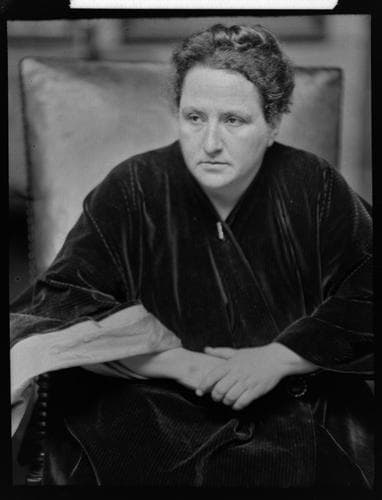
Gertrude Stein was an American novelist, poet, playwright, and art collector. Born in Allegheny, Pennsylvania, and raised in Oakland, California, Stein moved to Paris in 1903, and made France her home for the remainder of her life. She hosted a Paris salon, where the leading figures of modernism in literature and art, such as Pablo Picasso, Ernest Hemingway, F. Scott Fitzgerald, Sinclair Lewis, Ezra Pound, Sherwood Anderson and Henri Matisse, would meet.
Similar books
- Tender Buttons
Gertrude Stein
3.7 (6k) average on GoodreadsFictionAnother experimental work by Stein, showcasing her theories on language as object.
- A Room of One's Own
Virginia Woolf
4.2 (118k) average on GoodreadsCreativityExplores the conditions necessary for creative expression, though in a more conventional essay form.
- Ways of Seeing
John Berger
3.9 (251k) average on GoodreadsHistoryChallenges conventional perceptions and interpretations, similar to Stein's challenge to linguistic norms.
- The Story of Art
E.H. Gombrich
3.9 (311k) average on GoodreadsReferenceExplore thousands of years of human creativity, from ancient cave art to modern masterpieces, with Gombrich's classic account, updated with new insights into art's changing story.
- The New Drawing on the Right Side of the Brain
Betty Edwards
3.9 (297k) average on GoodreadsPsychologyLearn to draw by using the often-ignored visual side of your brain, changing how you see the world.
- Go Ask Alice
Anonymous
3.7 (293k) average on GoodreadsReferenceA teenage girl's diary chronicles her swift decline into 1970s drug culture, from an innocent game to addiction, ending in her tragic death.



Enjoyed the summary?
A summary gives you the shape of the book. The book itself has the detail, the examples and the voice.
Find How to Write on AmazonAs an Amazon Associate, BookBrief earns from qualifying purchases. How we're funded