

Synopsis
Covers the whole plot, including the ending.
- Difficulty
- Hard
- Pacing
- Slow
- Mood
- Abstract, Challenging, Experimental, Disorienting, Reflective
- Read it if
- You are fascinated by experimental literature, modernist poetry, linguistic theory, or enjoy texts that challenge traditional narrative and require active interpretation. Ideal for readers who appreciate avant-garde art and are willing to be disoriented by language.
- Skip it if
- You prefer clear plots, character-driven stories, conventional grammar, or straightforward meaning. This book will likely frustrate readers looking for an easy, digestible narrative.
Tender Buttons Plot Summary
Covers the whole plot, including the ending.
Objects: The Abstract Introduction
The first section, 'Objects,' offers abstract, non-linear descriptions of common items like a 'red stamp,' 'a box,' 'a plate,' and 'a little piece of string.' Stein uses language in a new way, focusing on sensory qualities, textures, and associations of these objects, not their usual meanings or uses. The descriptions are often circular, repetitive, and lack traditional grammar. This asks the reader to see the objects in a new way. For example, a 'plate' is not just a dish but 'a silver brown silver,' focusing on color and material over use. This section sets the book's experimental style and its move away from usual narrative or descriptive writing. It invites a new look at how language relates to reality.
Food: Sensory Exploration of Consumption
After 'Objects,' the 'Food' section continues the language experimentation, applying it to various food items and eating. Stein explores items like 'roastbeef,' 'mutton,' ''milk,' and 'sugar,' not through recipes or typical descriptions, but through their textures, colors, sounds, and the feelings they cause. For instance, 'roroastbeef' might be described with rhythmic repetitions and sensory details that show its essence, not its cooking. The language becomes more abstract, using alliteration, assonance, and disjointed phrases to create a strong, almost synesthetic experience of food. This section further blurs the lines between subject and object, focusing on the immediate, subjective experience of perception, not objective reality.
Rooms: The Internal Landscape of Domesticity
The book ends with 'Rooms,' where Stein looks at interior spaces and their contents. Unlike a usual architectural description, 'Rooms' presents impressions and observations about domestic settings. These often have psychological depth and personal association. The descriptions are not of specific rooms with clear uses, but instead create feelings, colors, light, and the presence or absence of things in a space. For instance, a 'chair' or 'table' might appear as a fixed point in many sensations. This section often has longer, though still abstract, passages, hinting at human presence and interaction in these spaces, even if the 'characters' are absent. The language remains challenging, requiring the reader to actively build meaning from the fragments.
A Challenge to Conventional Meaning
Across all three sections — 'Objects,' 'Food,' and 'Rooms' — Gertrude Stein's main 'plot' is taking apart conventional meaning and perception. There is no overall narrative in the usual sense, no characters, and no linear progression of events. Instead, the 'action' is the reader's engagement with the text. Stein's language forces a new look at how words relate to the world. She uses repetition, breaks, and unexpected pairings to strip words of their usual associations. This invites a fresh, often disorienting, encounter with the mundane. The book's 'plot' is an intellectual and sensory journey, where the reader must constantly find new ways to understand and interpret the seemingly simple subjects presented.
The Absence of Traditional Plot and Character
A key part of 'Tender Buttons' is its deliberate lack of traditional plot, character development, or setting. Stein does not focus on telling a story about people or events. Instead, she explores the nature of language itself and how it shapes our view of reality. The 'scenes' are not dramatic incidents but language experiments. There are no named characters, and any implied 'speaker' is an impersonal observer, only seeing and describing. The book's 'world' is the inner world of language. Here, objects, foods, and rooms become ways to play with language and to question the act of naming and knowing. This absence of traditional narrative elements is central to its modernist goal.
Repetition and Variation as Structural Principles
One of the main structural ideas throughout 'Tender Buttons' is the extensive use of repetition, often with small changes. Words, phrases, and even whole sentences are repeated, but rarely exactly the same way. This creates a rhythmic, chant-like quality, like music or abstract art. For instance, a phrase describing a color might appear in different places, subtly changing its meaning or feel. This method makes the reader slow down. They must consider each word's sound and individual impact, rather than quickly looking for a usual meaning. Repetition also shows language as a material, drawing attention to the words themselves as objects, not just clear ways to convey ideas. It is a way of 'insisting' on presence.
Focus on Sensory Perception and Abstraction
Throughout 'Tender Buttons,' Stein always puts immediate sensory perception — sight, touch, taste, and sound — before intellectual or conceptual understanding. Descriptions are often fragmented. They focus on color, texture, shape, and movement, not the object's use or history. For example, a 'chair' might be described by its 'dark wood' and 'shine' rather than its purpose for sitting. This approach aims to free perception from the limits of usual thought and language. It lets the reader experience the world more directly, without filters. The abstraction in her language mirrors the abstract art movements of her time. It asks viewers/readers to find meaning in non-representational forms.
The Reader's Active Role in Meaning-Making
The 'plot' of 'Tender Buttons' also involves the reader's active effort to understand the text. Because traditional narrative signs are missing, the reader cannot passively receive information. Instead, they must actively engage with the language, make connections between different phrases, and find personal meaning in the abstract descriptions. This participatory aspect is a central 'event' of the book. Meaning is not pre-made. It comes from the interaction between the text and the individual reader's mind. This makes each reading a unique experience, a journey of discovery and interpretation, not just understanding a pre-determined story.
Challenging Gender and Domesticity
While not directly political, 'Tender Buttons' can be seen as quietly questioning common ideas about gender and domesticity, especially in the 'Food' and 'Rooms' sections. By using her radical language approach for traditionally 'feminine' subjects like cooking and household interiors, Stein reclaims and re-thinks these spaces. She elevates the ordinary to a subject of deep language and philosophical inquiry, removing sentimental or practical associations. The 'plot' here is a quiet revolution. The domestic sphere becomes a place for avant-garde artistic expression, not just a background for traditional stories. This re-framing implicitly questions the societal expectations and limits placed on women in the early 20th century.
A Legacy of Linguistic Innovation
The main 'plot' of 'Tender Buttons' is its own existence as a key modernist work and its lasting impact on how language is understood and used. Its publication was a radical break from literary norms, causing both confusion and admiration. The book's 'story' is about how it was received and its role in shaping 20th-century poetry and prose. It 'acts' as a way to start new ways of reading, writing, and perceiving. By breaking down usual grammar and meaning, Stein opened new possibilities for literary expression. She showed that language could be an end in itself, a material to be shaped and explored, not just a tool for information or narrative. Its 'ending' is an ongoing discussion about words' limits and potential.
Principal Figures
Gertrude Stein (Implied Author/Narrator)
Protagonist (as the linguistic agent)
The unseen force orchestrating the linguistic experiments.
While not a character in the traditional sense, Gertrude Stein's authorial voice and consciousness are the driving 'protagonist' of 'Tender Buttons.' Her relentless experimentation with language, her unique way of seeing the world, and her intellectual courage to break from literary conventions are what shape the entire book. She is driven by a desire to capture 'the continuous present' and to make language fresh again, stripping away its accumulated historical and associative meanings. Her presence is felt through the distinctive rhythm, repetition, and abstract descriptions that define the text.
The Object (e.g., 'A Red Stamp', 'A Plate')
Central Subject/Passive Character
Everyday items transformed into subjects of intense linguistic scrutiny.
The various 'objects' described in the first section, such as 'A Red Stamp,' 'A Box,' 'A Plate,' and 'A Little Piece of String,' function as central, albeit passive, 'characters.' They are not imbued with personality but are subjected to intense, fragmented linguistic analysis. Stein strips them of their conventional utility and meaning, presenting them as pure forms, colors, and textures. Their significance lies in their ability to provoke new ways of seeing and describing, becoming catalysts for Stein's linguistic experimentation rather than merely being described. They are the stage upon which the drama of language unfolds.
The Food (e.g., 'Roastbeef', 'Sugar')
Central Subject/Sensory Character
Culinary items explored through their raw sensory qualities.
Similar to the 'Objects,' the 'Food' items like 'Roastbeef,' 'Mutton,' 'Milk,' and 'Sugar' serve as 'characters' in the book's second section. They are not presented as ingredients in a recipe but as entities rich in sensory data – taste, texture, color, and even sound. Stein's descriptions bypass their culinary function to focus on their immediate, visceral qualities, often through repetitive and rhythmic language. These 'food characters' embody the book's emphasis on direct perception and the materiality of language, challenging the reader to experience them anew, beyond their conventional associations with eating and sustenance.
The Room (e.g., 'A Chair', 'A Table')
Central Subject/Environmental Character
Domestic spaces and furniture depicted as psychological landscapes.
In the 'Rooms' section, various aspects of domestic interiors, from 'A Chair' to 'A Table' to the overall sense of a 'room,' act as 'characters.' These are not merely settings but are explored with the same fragmented and subjective intensity as the objects and food. Stein evokes their presence through light, color, and the subtle interplay of their forms, often hinting at the psychological resonance they hold. They become abstract representations of domesticity and interiority, challenging the reader to perceive them not as functional spaces but as complex, shifting compositions of perception and feeling. Their 'character' is defined by their presence and the linguistic space they occupy.
The Reader
Interactive Participant/Co-creator
The active interpreter essential for the text's meaning to emerge.
The reader, while external to the text, is arguably one of its most crucial 'characters.' 'Tender Buttons' is designed to be read actively and interpretively, demanding that the reader engage in the process of meaning-making rather than passively receiving a narrative. Without the reader's willingness to grapple with its unconventional language, to connect disparate phrases, and to find personal resonance, the text remains opaque. The reader's experience of disorientation, frustration, and eventual insight forms a significant 'plot' in itself, making them a co-creator of the book's meaning and impact. Their 'journey' is one of intellectual and sensory exploration.
Language Itself
Antagonist/Protagonist (as the subject and tool)
The medium of the book, both obstacle and opportunity for expression.
Language, as a system of signs and meanings, functions as both a protagonist and an antagonist in 'Tender Buttons.' It is the primary tool Stein uses, yet it is also the very thing she deconstructs and challenges. She wrestles with language's conventional constraints, its tendency to create habitual associations, and its capacity to obscure direct perception. By breaking syntax, divorcing words from their expected meanings, and employing repetition, Stein attempts to liberate language from its traditional roles, making it fresh and immediate again. The book is a sustained meditation on the nature and limits of linguistic expression.
Themes & Insights
The Nature of Perception and Reality
'Tender Buttons' explores how we see the world and how language shapes or changes that perception. Stein asks the reader to look at everyday objects, foods, and rooms as if for the first time. She removes their usual names and uses to focus on their raw sensory data. For example, a 'plate' is not just a plate but 'a silver brown silver,' stressing its visual qualities over its use. This theme suggests that reality is not fixed. Instead, it is always being built through our subjective experience and the words we use to describe it.
“A kind in glass and a cousin, a spectacle and nothing strange a single hurt color and an arrangement of a system to pointing. All this and not ordinary, not rare, not in any way resembling another.”
The Materiality of Language
Stein treats language as a physical material, like paint or sculpture, not just a clear way to carry meaning. She focuses on the sound, rhythm, and visual look of words, often through repetition, alliteration, and unusual grammar. This makes the reader notice the words themselves, not just the ideas they represent. For instance, the rhythmic insistence of 'roastbeef' or 'mutton' in the 'Food' section draws attention to the words' sounds. This theme frees words from only referring to things. It lets them exist as objects for aesthetic enjoyment and experiment.
“A white so white and an old silence. A white so white and a long day. A white so white and a new way. A white so white and a long silence.”
The Continuous Present
A main concern for Stein, 'the continuous present' tries to capture experience as it happens. It does not use past or future tenses, memory, or narrative progression. The fragmented, repetitive, and non-linear descriptions in 'Tender Buttons' aim to put the reader in an eternal 'now.' There is no character development or plot progression. Instead, each description exists in its own moment, demanding immediate attention. This theme rejects traditional narrative time. It aims to convey the raw, unfiltered experience of perception as an ongoing event.
“A lamp is not a lamp. It is a lamp and a lamp.”
Redefining Domesticity and the Mundane
By using her radical language methods on everyday, often feminized subjects—household objects, food, and domestic spaces—Stein makes them subjects of deep artistic and philosophical thought. She questions the common idea that these topics are unimportant or not worthy of serious art. The 'Rooms' section, for example, turns everyday interiors into complex psychological and aesthetic scenes. This theme quietly reclaims and rethinks the domestic sphere. It shows that the ordinary can be a source of extraordinary language and perceptual discovery, free from sentimental or practical limits.
“A kind of a bloom is a bloom of a little water. This is to say that a door is a door, a door is a door, a door is a door.”
Abstraction and Modernism
'Tender Buttons' is a key modernist text. It engages with the ideas of abstraction found in art movements like Cubism. Just as Cubist painters broke down objects into geometric forms and multiple views, Stein fragments language and perception. She presents subjects through disconnected phrases, unusual pairings, and a focus on essential qualities, not accurate representation. The book's challenging, non-representational style mirrors the artistic drive to move beyond traditional realism. It forces the reader to actively build meaning from the abstract language forms presented, much like looking at an abstract painting.
“A sound. A sound, a sound, a sound. A sound is a sound. A sound is a sound and a sound.”
Plot Devices & Literary Techniques
Repetition with Variation
A core stylistic technique used to create rhythm and emphasize the materiality of language.
Stein frequently employs repetition of words, phrases, and sentence structures, but rarely in an identical manner. This device creates a rhythmic, incantatory quality, akin to a musical refrain. The subtle variations within the repetitions force the reader to pay close attention to each word and its immediate context, preventing passive reading. For example, a phrase like 'a sound is a sound' might be repeated with slight additions or alterations, drawing attention to the sound of the words themselves and their shifting nuances rather than their fixed meaning. This technique underscores the book's focus on the 'continuous present' and the dynamic nature of perception.
Dislocation of Syntax and Semantics
Breaking traditional sentence structure and word meanings to create new associations.
One of the most prominent devices in 'Tender Buttons' is Stein's deliberate disruption of conventional English syntax and semantics. Sentences are often fragmented, lacking clear subjects or verbs, or words are used in unexpected combinations. This dislocation forces words out of their habitual contexts, stripping them of their accumulated associations and inviting fresh, often startling, interpretations. For instance, 'a red stamp' might be described with adjectives that usually apply to other objects, creating a sense of defamiliarization. This device challenges the reader's ingrained linguistic habits, compelling them to engage with language on a more primal, sensory level, rather than relying on pre-established meanings.
Defamiliarization (Ostranenie)
Presenting common objects in an unfamiliar way to renew perception.
Stemming from her dislocation of language, Stein's writing actively employs defamiliarization. She takes everyday objects, foods, and rooms and describes them in such an abstract, fragmented, or unexpected manner that they appear strange and new. The purpose is to break automatic perception and force the reader to see these familiar items with fresh eyes, rather than through the lens of their conventional names and functions. For example, a 'plate' becomes 'silver brown silver,' focusing purely on color and texture rather than its use. This device aims to revitalise perception, making the mundane extraordinary and challenging the reader's assumptions about reality.
Stream of Consciousness (Linguistic Version)
A narrative technique that mimics the flow of thought, focusing on language itself.
While not a traditional stream of consciousness in terms of character's inner monologue, 'Tender Buttons' employs a linguistic version of this device. The text often feels like an unfiltered, associative flow of observations and wordplay, mirroring the non-linear and fragmented nature of thought itself. Instead of depicting a character's mental processes, it showcases the author's linguistic consciousness at work, moving from one sensory detail or verbal association to the next without strict logical or narrative progression. This creates an immersive, almost hypnotic reading experience, drawing the reader into the immediate, unfolding present of Stein's linguistic explorations.
Cataloging and Listing
The systematic, often repetitive, presentation of items without traditional narrative.
The structure of 'Tender Buttons' itself, particularly in the 'Objects' and 'Food' sections, relies heavily on a form of cataloging or listing. Stein presents a series of distinct, short prose pieces, each focusing on a single object or food item. While not a simple inventory, this cumulative effect of presenting one item after another, often with similar linguistic approaches, creates a sense of exhaustive exploration without narrative connection. This device emphasizes the individual integrity of each subject while also building a larger, abstract portrait of the domestic world through accumulation rather than storytelling. It highlights the book's experimental, non-narrative intent.
Quiz
10 questions on the plot and the characters. Each answer comes with a short explanation.
Question 1
Which of the following best describes the initial reaction of readers and critics to Gertrude Stein's 'Tender Buttons'?
- It was largely ignored due to its experimental nature.
- It was met with widespread acclaim for its clear narrative.
- It caused a sensation and was widely reviewed and discussed.
- It was praised for its traditional poetic structure.
Show answer
C. It caused a sensation and was widely reviewed and discussed. The provided text states that 'the text caused a sensation and was widely reviewed and discussed on its publication,' indicating a strong and widespread initial reaction.
Question 2
According to the description, what was a key characteristic of 'Tender Buttons' in relation to other modernist texts?
- It was one of the most accessible and straightforward.
- It was the most opaque, yet generated the most voluminous response.
- It was primarily focused on traditional narrative forms.
- It had the least impact on publishing history.
Show answer
B. It was the most opaque, yet generated the most voluminous response. The text describes 'Tender Buttons' as 'the most opaque of modernist texts,' but also notes it 'had modernism’s most voluminous and varied response.'
Question 3
In what specific context did American daily newspapers often place 'Tender Buttons'?
- Political debates, economic trends, and scientific discoveries.
- Cubism, fashion shows, and celebrity culture.
- Literary awards, academic conferences, and historical events.
- Romantic poetry, classical music, and architectural design.
Show answer
B. Cubism, fashion shows, and celebrity culture. The description explicitly states that the responses in American daily newspapers 'placed it in the context of Cubism, fashion shows, and celebrity culture.'
Question 4
How was the text of 'Tender Buttons' initially composed?
- Typed on a typewriter and heavily revised.
- Written in pencil in a small notebook and barely revised.
- Dictated to a secretary and then edited by a team.
- Composed directly onto printing plates by hand.
Show answer
B. Written in pencil in a small notebook and barely revised. The text specifies, 'Written in pencil in a small notebook and barely revised after its first composition.'
Question 5
What was the publisher's initial description of 'Tender Buttons' effect on readers?
- A sense of profound understanding and clarity.
- Something like terror, with no known precedents to cling to.
- An immediate appreciation for its innovative style.
- A feeling of nostalgia for traditional literature.
Show answer
B. Something like terror, with no known precedents to cling to. The first publisher described the book’s effect on readers as 'something like terror, there are no known precedents to cling to.'
Question 6
The Broadview Edition of 'Tender Buttons' aims to understand the text by focusing on what?
- Detailed biographical analysis of Gertrude Stein's life.
- A purely theoretical linguistic analysis of its structure.
- Its original composition process and handwritten notes.
- The response to the text as a way of understanding its cultural context.
Show answer
D. The response to the text as a way of understanding its cultural context. The Broadview Edition 'uses the response to Tender Buttons as a way of understanding this spectacular moment in publishing history,' immersing the text in its cultural context.
Question 7
What types of accompanying materials are included in this Broadview Edition to provide context?
- Only academic essays and literary critiques.
- Photographs of Stein's home and personal letters.
- Parodies, defenses, a publicity brochure, and newspaper responses.
- Interviews with contemporary modernist authors.
Show answer
C. Parodies, defenses, a publicity brochure, and newspaper responses. The edition 'is published alongside its parodies, defenses, publicity brochure, and selections from the hundreds of responses to it in American daily newspapers.'
Question 8
Why might 'Tender Buttons' be considered 'transformative' as described in the text?
- Because it transformed Gertrude Stein's personal life.
- Because it offered a traditional return to classical literary forms.
- Because its unprecedented style and reception challenged existing literary norms and publishing expectations.
- Because it was the first book ever written in pencil.
Show answer
C. Because its unprecedented style and reception challenged existing literary norms and publishing expectations. The description refers to it as 'Gertrude Stein’s transformative work' and notes its lack of 'known precedents' and the 'sensation' it caused, implying a significant shift or challenge to existing literary and publishing standards.
Question 9
The publisher's initial description of 'terror' and 'no known precedents' suggests what about 'Tender Buttons' in the context of its time?
- It was a horror novel disguised as poetry.
- It was an utterly unconventional and challenging work that defied categorization.
- It was a satire that frightened its readers with its dark humor.
- It was a poorly written book that lacked any literary merit.
Show answer
B. It was an utterly unconventional and challenging work that defied categorization. The phrase 'no known precedents to cling to' directly indicates that the work was highly original and deviated significantly from established literary forms, making it challenging and potentially disorienting for readers accustomed to conventional texts.
Question 10
How does the Broadview Edition aim to use the 'voluminous and varied response' to 'Tender Buttons'?
- To prove that the book was ultimately misunderstood by its contemporary audience.
- To reconstruct the exact plot and characters that readers failed to grasp.
- As a primary lens through which to understand the text itself and its place in publishing history.
- To dismiss the book's importance by highlighting its controversial reception.
Show answer
C. As a primary lens through which to understand the text itself and its place in publishing history. The text states, 'This Broadview Edition uses the response to Tender Buttons as a way of understanding this spectacular moment in publishing history,' implying that the reception itself is key to comprehending the work's significance.
Tender Buttons FAQ
What is "Tender Buttons" about?
"Tender Buttons" is a collection of prose poems by Gertrude Stein, divided into three sections: 'Objects,' 'Food,' and 'Rooms.' It is not about a linear narrative or traditional plot, but rather an experimental exploration of language, perception, and the essence of everyday items and experiences, challenging conventional representation.
Why should I read "Tender Buttons"?
You should read "Tender Buttons" to experience a foundational work of modernist literature that radically redefines language and perception. It offers a unique intellectual challenge, inviting readers to engage with text as pure sound and image, and to question the very nature of meaning and representation.
What is the background/setting of "Tender Buttons"?
Written by Gertrude Stein in Paris between 1912 and 1913, the book reflects the intellectual and artistic ferment of the early 20th century, particularly the influence of Cubism and avant-garde movements. It was composed in a small notebook, emphasizing its intimate and immediate creation, and published to a sensational reception in 1914.
What are the most memorable quotes?
Memorable 'quotes' from 'Tender Buttons' are often entire short pieces or striking phrases due to its fragmented nature. Examples include 'A CARAFE, THAT IS A BLIND GLASS. A kind of a blind glass. A ordinary kind of blind glass.' or 'A RED HAT. A dark red comes from a dark red piece of wood.', which exemplify its concrete yet abstract descriptions.
What writing style does the author use?
Gertrude Stein employs a highly experimental and non-linear writing style characterized by repetition, parataxis (the absence of conjunctions), and a focus on the sound and visual qualities of words over their denotative meaning. Her prose is often described as abstract, cubist, and deeply challenging to traditional grammar and syntax.
What minor details add significant meaning?
The specific objects Stein chooses to describe—like 'A PLATE' or 'A PIECE OF COFFEE'—are not random but reflect her domestic Parisian life, imbuing the abstract language with a grounded, personal context. The very act of naming these mundane items with such intense scrutiny elevates their significance, suggesting that meaning resides in the observer's attention.
What are some subtle foreshadowing moments?
Foreshadowing in 'Tender Buttons' is not plot-driven but thematic. The early descriptions of 'Objects' subtly foreshadow the fragmented, multi-perspectival approach that will be applied to more complex concepts like 'Food' and 'Rooms,' suggesting a consistent method of deconstruction and re-assembly of reality through language.
What unexpected character connections exist?
As a work without traditional characters, 'Tender Buttons' doesn't feature character connections. However, the unexpected connection exists between the reader and the text itself, as the book forces an active, interpretive role, creating a unique and often challenging relationship where the reader 'connects' disparate linguistic elements to form personal meaning.
What are unspoken character motivations?
Given the absence of traditional characters, there are no unspoken character motivations in 'Tender Buttons.' Instead, the 'motivation' lies with the author, Gertrude Stein, whose unspoken drive was to break free from conventional narrative and descriptive norms, pushing language to its limits to explore new ways of seeing and representing the world.
What psychological complexities do characters exhibit?
There are no traditional characters exhibiting psychological complexities in 'Tender Buttons.' The 'complexity' lies in the psychological demands placed on the reader, who must grapple with ambiguity, resist the urge for linear interpretation, and engage with the text on a primal, sensory level, mirroring the complexities of perception itself.
What are the major emotional turning points?
As an experimental text, 'Tender Buttons' lacks traditional emotional turning points. However, a significant emotional moment for the reader might be the initial 'terror' described by its first publisher, or the eventual breakthrough of understanding and appreciation when the reader accepts its unique linguistic logic and finds beauty in its abstract patterns.
How do relationship dynamics evolve?
There are no evolving relationship dynamics between characters in 'Tender Buttons.' The primary 'relationship' is between language and reality, which evolves from a conventional, representational dynamic to a fragmented, re-imagined one, where language itself becomes the subject and object, independent of its referent.
Which parts remain ambiguous or open-ended?
Almost every part of 'Tender Buttons' remains intentionally ambiguous and open-ended. Stein deliberately avoids definitive statements, allowing words to float free of fixed meanings. This ambiguity is central to its modernist project, inviting multiple interpretations and resisting any single, authoritative reading of its descriptions.
What are controversial scenes or decisions?
The entire text of 'Tender Buttons' was controversial upon its publication, not due to specific 'scenes' but due to its radical linguistic decisions. Its deliberate rejection of clear syntax, narrative, and conventional meaning was seen by many as nonsensical or even an insult to literature, sparking widespread debate and parody.
"Tender Buttons" ending explained: how it ends & what it means
"Tender Buttons" does not have a traditional ending or resolution. It simply concludes with the final piece in the 'Rooms' section, leaving the reader where they began: immersed in Stein's unique linguistic world. Its 'ending' signifies the ongoing, cyclical nature of perception and the limitless possibilities of language, rather than a definitive conclusion.
About the author
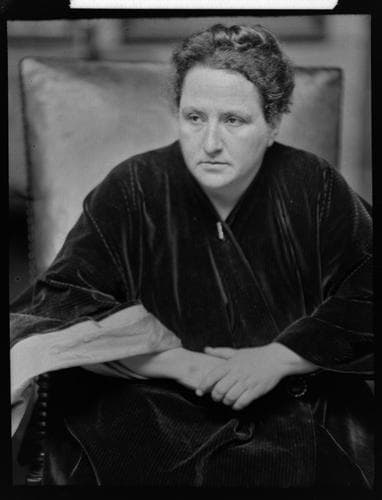
Gertrude Stein was an American novelist, poet, playwright, and art collector. Born in Allegheny, Pennsylvania, and raised in Oakland, California, Stein moved to Paris in 1903, and made France her home for the remainder of her life. She hosted a Paris salon, where the leading figures of modernism in literature and art, such as Pablo Picasso, Ernest Hemingway, F. Scott Fitzgerald, Sinclair Lewis, Ezra Pound, Sherwood Anderson and Henri Matisse, would meet.
Similar books
- Ulysses
James Joyce
3.7 (111k) average on GoodreadsLiterary FictionBoth are foundational modernist texts known for their experimental language, stream-of-consciousness, and challenging narrative structures, though 'Tender Buttons' is far more abstract.
- Mrs Dalloway
Virginia Woolf
3.8 (361k) average on GoodreadsFictionExplores internal landscapes and sensory details, though Woolf maintains a more conventional narrative framework than Stein.
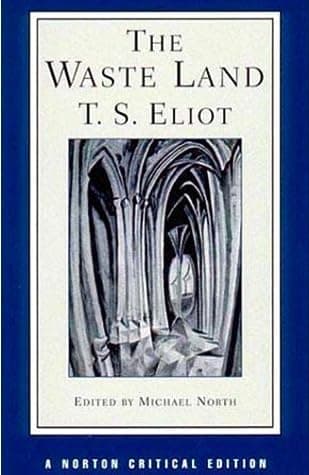
- The Waste Land
T.S. Eliot
4.1 (43k) average on GoodreadsFictionWhile Eliot's The Waste Land also uses fragmentation and allusiveness, it ultimately builds towards a discernible, albeit complex, thematic statement about societal and cultural decay. Stein's Tender Buttons resists such overarching thematic unity, focusing instead on the immediate, moment-to-moment experience of language and perception without a clear narrative or thematic destination.
- Nineteen Eighty-Four
George Orwell
4.2 (5.5M) average on GoodreadsFictionWinston Smith dreams of truth and rebellion in a world where Big Brother watches all, but he confronts the terrifying power of a regime that controls not just actions, but thoughts.
- The Frozen River
Ariel Lawhon
4.4 (600k) average on GoodreadsFictionIn 1789 Maine, a heroic midwife's diary helps her expose a murder and get justice in a town that wants to silence her.
- A Man Called Ove
Fredrik Backman
4.4 (569k) average on GoodreadsFictionA stubborn widower, who lives by strict rules, finds his quiet world changed by a lively new family next door, making him face his past and find happiness in human connection.





Enjoyed the summary?
A summary gives you the shape of the book. The book itself has the detail, the examples and the voice.
Find Tender Buttons on AmazonAs an Amazon Associate, BookBrief earns from qualifying purchases. How we're funded