

Synopsis
Covers the whole plot, including the ending.
- Difficulty
- Medium
- Pacing
- Fast
- Mood
- Suspenseful, Tense, Claustrophobic, Perilous
- Read it if
- You enjoy classic Cold War espionage thrillers with a strong sense of place and high stakes.
- Skip it if
- You prefer character-driven narratives over plot-driven action or dislike confined settings.
Ice Station Zebra Plot Summary
Covers the whole plot, including the ending.
The Urgent Mission
Dr. Carpenter, a British physician, is unexpectedly summoned to join the USS Dolphin, a nuclear submarine. Captain Swanson informs him that their mission is to rescue the survivors of British weather station Zebra, which has reported a catastrophic fire and is now drifting somewhere in the Arctic Ocean. Carpenter receives minimal information about the station's purpose or the specifics of the incident, leading him to suspect there's more to the story than a simple rescue. He also meets Commander Ferraday, an American Marine officer, who is also part of the mission and seems to have a hidden agenda.
Sabotage Aboard the Dolphin
As the USS Dolphin navigates the Arctic waters beneath the ice cap, a series of suspicious incidents begin to plague the submarine. First, the periscope heating system is sabotaged, preventing observation of the surface. Then, a navigation instrument is tampered with, nearly causing the Dolphin to collide with an ice floe. These events confirm Carpenter's suspicions that a saboteur is aboard the submarine. This complicates their perilous mission and heightens tension among the crew and the small group of special operatives, including Ferraday and a Russian defector named Zabrinski.
The Revelation of Zabrinski
Dr. Carpenter, using his medical expertise and observation, begins to piece together the puzzle. He learns that the alleged Russian defector, Zabrinski, is actually a highly trained Soviet agent named Colonel Boris Vaslov. Vaslov's true mission is to recover a sensitive camera and photographic film from Ice Station Zebra, which contains crucial intelligence. This revelation exposes the complex international espionage at play. It confirms that the mission is far more than a simple humanitarian rescue. Carpenter realizes he is caught in a dangerous game between superpowers, with his life potentially on the line.
Arrival at Ice Station Zebra
The USS Dolphin finally reaches Ice Station Zebra and, after a tense operation, manages to surface through a fragile ice lead. The station is a desolate wreck, charred by fire, with only a few survivors huddled together. Dr. Carpenter, Captain Swanson, Ferraday, and Vaslov lead the boarding party. The scene is grim, confirming the severity of the fire. The survivors are in various states of shock and injury, making immediate interrogation difficult. The true nature of the fire and the whereabouts of the photographic film remain unknown, intensifying the mystery and urgency of their mission.
The Search for the Film
Upon examining the wreckage and the survivors, Carpenter and Ferraday deduce that the fire at Ice Station Zebra was deliberately set to destroy evidence and cover the theft of the photographic film. The film contains images of advanced American satellite technology, and both the Americans and the Soviets are desperate to recover it. The survivors provide conflicting accounts, making it difficult to identify the saboteur among them. The race is on to find the film before Vaslov, or another hidden agent, can secure it, turning the rescue mission into a high-stakes intelligence operation.
Confrontation and Betrayal
Dr. Carpenter, through observation and deduction, identifies the saboteur and killer: Lieutenant Commander Garvie, one of the 'survivors' from Ice Station Zebra. He was a double agent working for the Soviets. Garvie had set the fire, killed several personnel, and attempted to destroy the film, only to hide it for later retrieval. A tense standoff ensues, with Garvie attempting to escape and destroy the evidence. Carpenter, with the help of Ferraday and Captain Swanson, corners Garvie. This leads to a violent struggle that exposes the full extent of the betrayal.
The Scramble for the Film
The location of the film is finally revealed, hidden within a seemingly innocuous piece of equipment amidst the wreckage of Ice Station Zebra. As Garvie's treachery is exposed, a desperate scramble for the film erupts. Colonel Vaslov (Zabrinski), now unmasked as a Soviet agent, attempts to seize the film. Ferraday, representing American interests, moves to secure it. Carpenter tries to maintain order and protect the remaining innocent survivors. The confined and damaged environment of the station becomes a battleground, with each party driven by their own allegiances and objectives.
The Final Showdown
In the ensuing chaos, Dr. Carpenter directly confronts Colonel Vaslov. Vaslov, desperate to complete his mission, attempts to overpower Carpenter and escape with the film. Carpenter, despite being a physician, exhibits resourcefulness and courage, using his wits and the environment to his advantage. Captain Swanson and Ferraday intervene, leading to a tense and violent confrontation that ultimately results in Vaslov being subdued. The film is finally secured by the Americans, but not without significant cost and peril to all involved.
Escape from the Arctic
With the film secured and the remaining threats neutralized, the USS Dolphin prepares for its return journey. The survivors from Ice Station Zebra, along with the agents and the recovered intelligence, are all aboard. The submarine still faces the challenge of navigating the Arctic ice cap. This journey is made even more dangerous by the damage sustained during the mission and the psychological toll on the crew. The mission, initially a rescue, has transformed into a critical intelligence extraction, with the fate of Cold War secrets resting on their successful return.
The Aftermath and Revelation
As the USS Dolphin makes its way back to safety, Dr. Carpenter reflects on the true nature of his involvement. He realizes that he was not merely a physician, but an unwitting pawn in a larger intelligence operation. He was specifically chosen for his observational skills and lack of direct ties to either side. The mission, fraught with deception and betrayal, leaves him with an understanding of the ruthless world of espionage and the sacrifices made in the name of national security. The recovered film is a victory, but the human cost and moral ambiguity weigh heavily on him.
Principal Figures
Dr. Carpenter
Protagonist
A British physician unwittingly drawn into a high-stakes espionage mission.
Dr. Carpenter is a highly intelligent and observant British medical doctor, initially recruited under false pretenses for a rescue mission. He possesses a sharp mind, a keen eye for detail, and a strong moral compass. Despite being a civilian, he demonstrates remarkable courage and resourcefulness when faced with danger and deception. He is driven by a desire to understand the truth and protect innocent lives, even as he navigates a world of spies and betrayal.
Relationships: Captain Swanson (professional superior, initially guarded, later trusting); Commander Ferraday (co-conspirator/ally in uncovering the truth); Colonel Boris Vaslov (Zabrinski) (adversary, object of suspicion)
Captain Swanson
Supporting
The dedicated and pragmatic commander of the USS Dolphin.
Captain Swanson is the stoic and highly competent commander of the nuclear submarine USS Dolphin. He is a man of duty and integrity, deeply committed to the safety of his crew and the success of his mission. While initially reserved and bound by secrecy, he eventually trusts Carpenter's judgment. He is pragmatic and decisive, capable of making difficult choices under extreme pressure, prioritizing the mission and the lives under his command. His leadership is crucial to the Dolphin's survival in the hostile Arctic environment.
Relationships: Dr. Carpenter (professional subordinate, later an indispensable ally); Commander Ferraday (fellow officer, military liaison)
Commander Ferraday
Supporting
A mysterious American Marine officer with a hidden agenda.
Commander Ferraday is an enigmatic and highly trained American Marine officer aboard the Dolphin. He is initially presented as a security consultant but is revealed to be a covert intelligence operative with a deep understanding of the mission's true stakes. Ferraday is cool, calculating, and ruthless when necessary, focused solely on securing the intelligence. He is a man of action, capable of both physical combat and strategic thinking, often working in tandem with Carpenter to uncover the truth, albeit with his own nationalistic motives.
Relationships: Dr. Carpenter (unwilling collaborator, later a necessary ally); Captain Swanson (military counterpart)
Colonel Boris Vaslov (Zabrinski)
Antagonist
A Soviet agent disguised as a defector, seeking to retrieve crucial intelligence.
Initially introduced as Zabrinski, a nervous Russian defector, he is later unmasked as Colonel Boris Vaslov, a highly skilled and ruthless Soviet intelligence officer. Vaslov's primary objective is to recover the photographic film from Ice Station Zebra for the Soviet Union. He is cunning, deceptive, and willing to resort to violence to achieve his goals. His presence on the Dolphin and at the station creates constant tension and danger, embodying the Cold War espionage struggle.
Relationships: Dr. Carpenter (primary adversary); Commander Ferraday (rival intelligence operative)
Lieutenant Commander Garvie
Antagonist
A double agent from Ice Station Zebra, responsible for the sabotage and murders.
Lieutenant Commander Garvie is one of the 'survivors' from Ice Station Zebra, but is ultimately revealed to be a treacherous double agent working for the Soviets. He orchestrated the fire at the station, murdered several personnel, and attempted to destroy the sensitive film while secretly hiding it for later retrieval. Garvie is cunning, ruthless, and highly dangerous, willing to betray his own side for his objectives. His presence among the survivors adds a layer of immediate danger and suspicion.
Relationships: Dr. Carpenter (the one who unmasks him); Colonel Boris Vaslov (covert associate in the Soviet plot)
Lieutenant Folsom
Supporting
The Dolphin's navigating officer, whose competence is tested by sabotage.
Lieutenant Folsom is the navigation officer aboard the USS Dolphin. He is a competent and dedicated member of the crew, responsible for guiding the submarine through the treacherous Arctic environment. His skills are put to the ultimate test when a crucial navigation instrument is sabotaged, nearly leading to disaster. Folsom's professionalism and quick thinking are vital to the Dolphin's ability to continue its mission despite the internal threats.
Relationships: Captain Swanson (subordinate officer); Dr. Carpenter (fellow crew member, indirectly affected by his investigation)
Lieutenant Curtis
Supporting
The Dolphin's executive officer, assisting Captain Swanson.
Lieutenant Curtis serves as the executive officer (XO) of the USS Dolphin, acting as Captain Swanson's second-in-command. He is a loyal and efficient officer, responsible for the day-to-day operations and discipline aboard the submarine. Curtis assists Swanson in managing the crew and navigating the complex challenges of the mission, providing a steady hand amidst the escalating tension and danger.
Relationships: Captain Swanson (direct subordinate and trusted officer)
Sergeant Davies
Supporting
A member of Ferraday's security detail.
Sergeant Davies is one of the security personnel accompanying Commander Ferraday on the mission. He is a no-nonsense, highly disciplined soldier, trained for covert operations and protection. Davies follows orders diligently and provides a physical presence to Ferraday's more strategic maneuvers. His role underscores the military aspect of the mission and the constant threat of physical danger.
Relationships: Commander Ferraday (direct subordinate)
Themes & Insights
Deception and Betrayal
The novel is steeped in deception, where characters' true identities and motives are constantly hidden. Dr. Carpenter is initially misled about the mission's true nature, and the 'rescue' is a front for an intelligence operation. The most significant betrayal comes from Lieutenant Commander Garvie, a supposed survivor who is actually a double agent responsible for the massacre at Ice Station Zebra. Even Zabrinski, the 'defector,' is revealed to be Colonel Vaslov, a ruthless Soviet operative. This theme highlights the moral ambiguity and constant vigilance required in espionage, where trust is a dangerous luxury.
“In this game, Doctor, no one is quite what they seem, and everyone has a hidden agenda.”
The Perils of the Cold War
Ice Station Zebra vividly portrays the intense and dangerous geopolitical climate of the Cold War. The entire mission, from the secret nature of the weather station to the desperate scramble for the photographic film, is driven by the rivalry between the United States and the Soviet Union. The Arctic environment itself becomes a metaphor for the icy, unforgiving nature of this ideological conflict. The characters are pawns in a larger game of espionage and counter-espionage, where national security interests supersede individual lives. The constant threat of sabotage and the presence of enemy agents underscore the pervasive fear and paranoia of the era.
“We're not just rescuing men, Doctor. We're fighting a war, a cold one, but a war nonetheless.”
Survival Against All Odds
Both the physical and psychological survival of the characters are central to the narrative. The USS Dolphin's journey beneath the Arctic ice cap is perilous, with the constant threat of ice collisions, mechanical failure, and the extreme cold. The fire at Ice Station Zebra and the subsequent sabotage attempts aboard the submarine further endanger the lives of all involved. Characters like Dr. Carpenter and Captain Swanson must demonstrate resilience, resourcefulness, and courage to navigate these life-threatening situations. The struggle for survival extends beyond physical danger to the psychological toll of deception and the moral compromises required.
“The Arctic doesn't care about our politics, only our ability to stay alive.”
The Nature of Truth and Knowledge
A recurring element is the elusive nature of truth. Dr. Carpenter constantly seeks to understand the real purpose of the mission and the true identities of those around him. Information is tightly controlled, deliberately obscured, or outright false. This forces him to rely on his observational skills and deductive reasoning. The photographic film itself represents a piece of critical, hidden knowledge that both sides are desperate to obtain. The struggle to uncover the truth behind the fire and the identities of the saboteurs drives much of the plot. It highlights how knowledge, or the lack thereof, can be a weapon or a vulnerability.
“The truth, Doctor, is a luxury few of us can afford in this line of work.”
Plot Devices & Literary Techniques
Red Herring
Misleading clues or characters designed to divert attention from the real culprit.
The novel employs several red herrings to maintain suspense and mislead both the characters and the reader. The most prominent is the initial presentation of Zabrinski as a nervous Russian defector, directing suspicion away from his true identity as Colonel Boris Vaslov, a highly trained Soviet agent. The various 'accidents' aboard the Dolphin also serve as red herrings, making it difficult to pinpoint the true saboteur among the diverse group of passengers and crew, thus delaying the identification of Lieutenant Commander Garvie.
Confined Setting
The use of restricted and claustrophobic environments to heighten tension.
The USS Dolphin itself, a nuclear submarine operating deep beneath the Arctic ice cap, provides a highly confined and claustrophobic setting. This limited space intensifies the psychological pressure on the characters, making escape impossible and magnifying the threat of sabotage or interpersonal conflict. The damaged and isolated Ice Station Zebra further reinforces this sense of confinement, trapping the characters in a dangerous, remote environment where help is unattainable, thus amplifying the stakes and the feeling of vulnerability.
Ticking Clock
A deadline or impending disaster that creates urgency and accelerates the plot.
The mission is driven by several ticking clocks. Initially, it's the urgent need to rescue the survivors of Ice Station Zebra before they succumb to the cold or injuries. Once at the station, the clock becomes the race to find the photographic film before the saboteur can destroy it or another agent can retrieve it for the opposing side. The constant threat of the submarine's structural integrity under the ice, and the limited time they can remain surfaced at the unstable station, add further layers of urgency, forcing characters to act quickly and decisively.
Unreliable Narrator (Subtle)
The protagonist's limited knowledge makes him an indirectly unreliable source of initial information.
While Dr. Carpenter is intelligent and observant, his initial lack of information about the true nature of the mission and the identities of those involved makes him a subtle form of an unreliable narrator regarding the overarching conspiracy. The reader experiences the unfolding mystery through his limited perspective, sharing his confusion and gradual realization of the deception. This device effectively builds suspense and allows for reveals that surprise both Carpenter and the audience, as he slowly pieces together the full, complex truth.
Ice Station Zebra Quotes
“The Arctic was a world of its own, a silent, hostile, and utterly magnificent world.”
“In the Arctic, as in life, the unexpected was the only thing you could truly count on.”
“Fear, like cold, could be a paralyzing thing, or it could be a spur.”
“The greatest weapon in any war, hot or cold, was information.”
“There are no accidents in this business, only varying degrees of incompetence or treachery.”
“The ice was a living thing, groaning and shifting, reminding them of its immense power.”
“Trust was a luxury they could ill afford, especially when lives hung in the balance.”
“The silence of the Arctic was deceptive; beneath it lay a constant hum of danger.”
“Sometimes, the only way to find out who your enemy is, is to let him make the first move.”
“He knew the sea, but the ice was a different beast altogether.”
“The truth, like a good torpedo, was best kept submerged until the moment of impact.”
“Every man had his breaking point, and the Arctic was an excellent place to find it.”
“The cold was an ally to no one, a relentless, impartial killer.”
“When you're dealing with professionals, you expect the unexpected, and then you expect it again.”
Quiz
10 questions on the plot and the characters. Each answer comes with a short explanation.
Question 1
What is the primary mission of the atomic submarine 'Dolphin'?
- To retrieve a downed satellite from the Arctic Ocean.
- To conduct a deep-sea mapping expedition under the ice.
- To locate and rescue the men of weather-station Zebra.
- To test new navigation systems in extreme cold conditions.
Show answer
C. To locate and rescue the men of weather-station Zebra. The 'Dolphin' is tasked with finding and rescuing the survivors from the destroyed weather station.
Question 2
What catastrophic event occurred at Ice Station Zebra?
- It was hit by a rogue iceberg.
- It was gutted by fire.
- It sank into the ocean due to structural failure.
- It was attacked by a foreign submarine.
Show answer
B. It was gutted by fire. The description explicitly states that weather-station Zebra was 'gutted by fire'.
Question 3
Where is Ice Station Zebra located when the 'Dolphin' is dispatched?
- South of the Arctic Circle, near Greenland.
- Drifting with the ice-pack somewhere north of the Arctic Circle.
- Fixed to the seabed in the Bering Strait.
- On a stable ice shelf near the North Pole.
Show answer
B. Drifting with the ice-pack somewhere north of the Arctic Circle. The station is described as 'drifting with the ice-pack somewhere north of the Arctic Circle'.
Question 4
What crucial piece of information is NOT initially given to the 'Dolphin' crew regarding Ice Station Zebra?
- That the fire was an act of sabotage.
- That the station is drifting.
- That there are survivors.
- The approximate coordinates of the station.
Show answer
A. That the fire was an act of sabotage. The text states, 'the orders do not say what the 'Dolphin' will find if she succeeds – that the fire at Ice Station Zebra was sabotage'.
Question 5
What is the implied danger among the survivors of Ice Station Zebra?
- They are suffering from extreme hypothermia and frostbite.
- One of them is a killer.
- They have run out of food and water.
- They are infected with a highly contagious virus.
Show answer
B. One of them is a killer. The summary reveals 'that one of the survivors is a killer'.
Question 6
The setting of the story under the Polar Ice-Cap suggests a primary theme of:
- The beauty of untouched nature.
- The psychological impact of isolation and extreme environments.
- The economic potential of Arctic resources.
- The historical significance of polar exploration.
Show answer
B. The psychological impact of isolation and extreme environments. The 'impossible orders' and the treacherous environment 'under the Polar Ice-Cap' strongly emphasize the theme of isolation and the mental strain of such conditions, especially with an unknown killer among them.
Question 7
What type of vessel is the 'Dolphin'?
- A diesel-electric attack submarine.
- A research icebreaker.
- An atomic submarine.
- A conventional surface ship.
Show answer
C. An atomic submarine. The text explicitly states 'The atomic submarine 'Dolphin''.
Question 8
The genre 'Mystery' is supported by which element of the plot summary?
- The 'Dolphin' sailing beneath the ice-floes of the Arctic Ocean.
- The fact that the fire at Ice Station Zebra was sabotage and one survivor is a killer.
- The difficulty of locating the drifting weather station.
- The 'impossible orders' given to the 'Dolphin'.
Show answer
B. The fact that the fire at Ice Station Zebra was sabotage and one survivor is a killer. The revelation of sabotage and a killer among the survivors introduces a classic 'whodunit' element, central to the mystery genre.
Question 9
Why are the 'Dolphin's orders considered 'impossible' in the context of the story?
- Because they involve navigating through heavily mined waters.
- Because they require sailing beneath the ice-floes of the Arctic Ocean to an unknown, drifting location.
- Because the submarine is not equipped for rescue operations.
- Because the crew is inexperienced in Arctic conditions.
Show answer
B. Because they require sailing beneath the ice-floes of the Arctic Ocean to an unknown, drifting location. The difficulty lies in 'to sail beneath the ice-floes of the Arctic Ocean to locate and rescue the men of weather-station Zebra, gutted by fire and drifting with the ice-pack somewhere north of the Arctic Circle.' This combination of extreme navigation and an unpredictable target makes the orders 'impossible'.
Question 10
The statement 'the orders do not say what the 'Dolphin' will find if she succeeds' primarily serves to:
- Emphasize the secrecy surrounding military operations.
- Build suspense and foreshadow the hidden dangers of the mission.
- Highlight the incompetence of the mission planners.
- Suggest that the mission is a test of the crew's adaptability.
Show answer
B. Build suspense and foreshadow the hidden dangers of the mission. This phrase directly precedes the revelation of sabotage and a killer, clearly designed to create anticipation and hint at the deeper, more dangerous nature of the rescue operation.
Ice Station Zebra FAQ
What is the primary mission of the USS Dolphin at the beginning of the story?
The USS Dolphin, an atomic submarine, is tasked with a perilous mission to navigate beneath the Arctic ice-cap. Its objective is to locate and rescue the survivors of British Weather Station Zebra, which has been destroyed by fire and is now drifting somewhere north of the Arctic Circle.
Who is Dr. Carpenter and what is his role aboard the Dolphin?
Dr. Carpenter is a civilian doctor brought aboard the Dolphin, ostensibly for his medical expertise in extreme conditions. However, it quickly becomes apparent that he possesses a suspicious lack of medical knowledge and a keen interest in intelligence matters, suggesting he has a hidden agenda related to the mission.
What critical discovery is made once the Dolphin reaches Ice Station Zebra?
Upon reaching Ice Station Zebra, the crew discovers that the fire was not accidental but deliberate sabotage. Furthermore, it's revealed that a critical piece of photographic reconnaissance equipment, containing vital intelligence, is missing, indicating a deeper conspiracy than a simple rescue operation.
Who are the main antagonists or suspicious characters among the survivors of Ice Station Zebra?
Among the survivors, Lieutenant Commander Ferraby and Dr. Zabrinski are immediately suspicious due to their conflicting accounts and behavior. Ferraby is identified as a British intelligence agent, while Zabrinski, despite his medical background, is revealed to be a Soviet agent working to retrieve or destroy the intelligence.
What is the significance of the missing photographic reconnaissance equipment?
The missing photographic reconnaissance equipment contains highly sensitive images of Soviet military installations, making it an invaluable intelligence asset. Its recovery or destruction is the true objective of the various agents on board, turning the rescue mission into a desperate race for espionage data.
What 'hidden detail' explains the initial suspicion surrounding Dr. Carpenter's medical skills?
The initial suspicion surrounding Dr. Carpenter's medical skills is a deliberate misdirection. He is, in fact, an experienced intelligence operative, Colonel Raferty, disguised as a doctor to infiltrate the mission and locate the missing intelligence, making his lack of medical acumen a crucial clue to his true identity.
How does the 'Dr. Zabrinski' character's true identity unfold throughout the narrative?
Dr. Zabrinski initially appears as a legitimate survivor, but his erratic behavior and attempts to sabotage the Dolphin's equipment gradually expose him. He is ultimately revealed to be a highly trained Soviet agent, Major Boris Vaslov, whose mission is to secure the reconnaissance photographs by any means necessary.
What is the true nature of Lieutenant Commander Ferraby's mission?
Lieutenant Commander Ferraby's mission is to act as a British counter-intelligence agent, protecting the integrity of the mission and the intelligence. He is tasked with identifying and neutralizing any enemy agents attempting to retrieve or destroy the crucial reconnaissance data, making him an ally to Raferty.
What role do the 'accidents' and 'sabotage' aboard the Dolphin play in revealing the deeper plot?
The 'accidents' and 'sabotage,' such as the poisoned food and damaged communications, are not random occurrences but deliberate acts by the enemy agents. These incidents serve to heighten tension, create distrust among the crew, and ultimately expose the presence of spies, forcing the protagonists to identify the perpetrators.
How does Commander Swanson's leadership style contribute to the psychological tension on the Dolphin?
Commander Swanson's leadership is characterized by his stoicism and internal struggle to maintain order and complete the mission under extreme pressure. His suspicion of his own crew, coupled with the constant threat of sabotage, creates an atmosphere of paranoia and isolation, forcing him to make difficult decisions with limited trust.
Analyze the psychological impact of operating under the ice-cap on the crew.
Operating under the ice-cap imposes immense psychological strain due to the claustrophobia, isolation, and constant threat of crushing ice. This environment amplifies fear and suspicion, eroding trust among the crew and making it easier for saboteurs to sow discord and exploit the already fragile mental state of the submariners.
How does the novel explore the theme of trust and betrayal through its characters?
The novel deeply explores trust and betrayal through the constant uncertainty of who is friend or foe among the limited crew. Characters like Dr. Carpenter and Dr. Zabrinski initially appear benevolent but are revealed to be spies, forcing Commander Swanson and the reader to constantly re-evaluate loyalties and motives, highlighting the fragility of trust in high-stakes espionage.
What psychological tactics do the enemy agents employ to achieve their objectives?
The enemy agents employ psychological tactics such as gaslighting, creating confusion, and sowing discord among the crew to divert suspicion and facilitate their sabotage. They manipulate perceptions of accidents and illnesses, exploiting the crew's stress and isolation to further their goals without direct confrontation, until their cover is blown.
Is the ending of 'Ice Station Zebra' a clear-cut victory, or does it leave room for ambiguity?
While the immediate threat of the Soviet agents is neutralized and the intelligence secured, the ending leaves a subtle ambiguity regarding the long-term implications of the recovered data and the ongoing Cold War. The personal costs of the mission for the survivors, particularly Commander Swanson, also suggest a nuanced 'victory' rather than an entirely triumphant one.
How does the novel's setting beneath the Arctic ice contribute to its thematic depth beyond just a thrilling backdrop?
The Arctic ice-cap setting is more than a thrilling backdrop; it symbolizes the isolation, extreme pressure, and hidden dangers of the Cold War itself. It creates a claustrophobic, unforgiving environment that mirrors the secrecy and moral ambiguities of espionage, forcing characters to confront their limits and the true nature of their mission.
What is the author's commentary on the nature of espionage and patriotism in 'Ice Station Zebra'?
Alistair MacLean portrays espionage as a morally grey area where patriotism often demands deception and extreme sacrifice. The novel suggests that even those fighting for their country must engage in ruthless tactics, blurring the lines between hero and villain and questioning the ultimate cost of national security.
Could the initial fire at Ice Station Zebra have been prevented, or was it an unavoidable part of the larger plot?
The initial fire at Ice Station Zebra was an integral and unavoidable part of the larger espionage plot. It was deliberately set by the Soviet agents to destroy the evidence of their reconnaissance activities and to create a plausible cover for their true mission: to retrieve or destroy the sensitive photographic intelligence before it could be analyzed by the West.
What makes 'Ice Station Zebra' a timeless thriller despite its Cold War context?
'Ice Station Zebra' remains timeless due to its masterful blend of suspense, claustrophobic setting, and intricate plot of betrayal and hidden identities. The psychological tension, the 'locked-room' mystery aspect on the submarine, and the universal themes of trust, survival, and duty transcend its specific Cold War context, making it universally engaging.
About the author
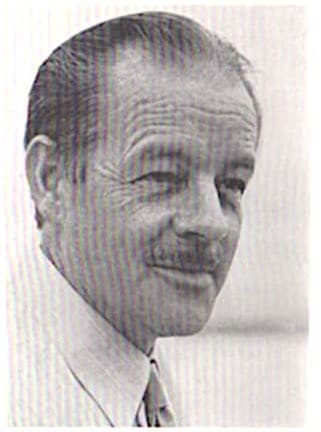
Alistair MacLean was a celebrated Scottish author renowned for his gripping thrillers and adventure novels. His most famous works, including "Ice Station Zebra" and "The Guns of Navarone," masterfully blend suspense, action, and intricate plots, often set in exotic or perilous locales. MacLean's prolific career established him as a titan of the espionage and military fiction genres.
Similar books
- The Hunt for Red October
Tom Clancy
4.1 (336k) average on GoodreadsThrillerSubmarine thriller with Cold War espionage and a tense, high-stakes plot.
- Angels & Demons
Dan Brown
3.9 (2.7M) average on GoodreadsThrillerA Harvard symbologist races through Rome's ancient sites, deciphering cryptic clues to unmask the Illuminati and stop a vengeful plot to destroy the Vatican with a stolen antimatter weapon.
- Gone Girl
Gillian Flynn
4.1 (2.3M) average on GoodreadsThrillerA wife's sudden disappearance on her fifth anniversary reveals a web of lies and psychological warfare, exposing the secrets within a seemingly perfect marriage.
- The Girl on the Train
Paula Hawkins
3.9 (2.1M) average on GoodreadsThrillerA woman’s fascination with a seemingly perfect couple she watches from her daily train commute leads her into a dark investigation when she witnesses something that shatters their idyllic image.
- The Da Vinci Code
Dan Brown
3.9 (1.9M) average on GoodreadsThrillerA symbologist and a cryptologist race through European landmarks, deciphering ancient codes and uncovering a conspiracy that could rewrite the foundations of Christianity.
- The Guest List
Lucy Foley
3.8 (1.3M) average on GoodreadsThrillerOn a remote Irish island, a glamorous wedding descends into a deadly whodunnit when a guest is found murdered, trapping everyone with their secrets as a storm rages.






Enjoyed the summary?
A summary gives you the shape of the book. The book itself has the detail, the examples and the voice.
Find Ice Station Zebra on AmazonAs an Amazon Associate, BookBrief earns from qualifying purchases. How we're funded