

Synopsis
Covers the whole plot, including the ending.
- Difficulty
- Medium
- Pacing
- Moderate
- Mood
- Suspenseful, Tense, Strategic, Realistic
- Read it if
- You love intricate military strategy, Cold War espionage, and high-stakes submarine action with a focus on technical detail and realistic procedural elements.
- Skip it if
- You prefer character-driven narratives over plot-heavy thrillers, or find extensive technical descriptions and military jargon tedious.
The Hunt for Red October Plot Summary
Covers the whole plot, including the ending.
The Defection of Red October
Captain First Rank Marko Ramius, a highly respected Lithuanian Soviet submarine commander, embarks on a routine patrol with the newest Typhoon-class submarine, the *Red October*. This revolutionary vessel has a silent 'caterpillar' propulsion system, making it virtually undetectable. Ramius, along with a hand-picked group of officers, has secretly planned to defect to the United States. He executes his plan by faking an emergency, ordering his crew to seal off the engine room, and then informing his political officer, Ivan Putin, of his intention to defect. Putin is killed by Ramius when he attempts to interfere. Ramius then sends a falsified message to Moscow, claiming they are on a training exercise to test the caterpillar drive in deep waters, while secretly heading for the American coast.
Moscow's Fury and the Search Begins
Moscow receives Ramius's message. After some initial confusion, the Soviet high command realizes the *Red October* is not on a training exercise but is attempting to defect. Enraged by this unprecedented act of treason, Admiral Yuri Padorin orders the entire Soviet Northern Fleet to hunt down and sink the *Red October* under the guise of a search-and-rescue mission for a 'missing' submarine. This massive naval deployment immediately catches the attention of NATO and the United States, who are baffled by the sudden, aggressive Soviet activity in the Atlantic. The scale of the Soviet response suggests something far more significant than a mere search.
CIA Analyst Jack Ryan Enters the Fray
Dr. Jack Ryan, a former Marine and now a CIA analyst specializing in Soviet naval doctrine, is brought in to analyze the unusual Soviet naval movements. Based on his knowledge of Ramius's background, his recent personal tragedy (his wife's death due to medical malpractice), and the capabilities of the *Red October*, Ryan deduces that Ramius is not trying to launch a first strike, but attempting to defect with the submarine. He presents his theory to Admiral James Greer and the US National Security Advisor, Jeffrey Pelt. Initially met with skepticism, Ryan's compelling arguments, coupled with intercepted Soviet communications, gradually convince the American leadership that Ramius is indeed trying to defect and that the *Red October* poses a unique intelligence opportunity.
The Americans Make Contact
The USS *Dallas*, a Los Angeles-class attack submarine commanded by Captain Bart Mancuso, is dispatched to the last known position of the *Red October*. After a tense cat-and-mouse game, the *Dallas* eventually detects the *Red October*'s unique silent propulsion system. Ryan is flown out to the *Dallas* by a helicopter from the aircraft carrier USS *Enterprise* to personally deliver the defection plan to Ramius. The *Dallas* faces immense pressure, not only from the approaching Soviet fleet but also from the need to maintain secrecy and avoid accidental engagement with the *Red October* or other Soviet vessels. Ryan's presence is important to bridge the communication gap and ensure a peaceful rendezvous.
The Rendezvous and the Plan
Jack Ryan successfully transfers to the *Red October* via a daring underwater maneuver. He meets Captain Ramius and confirms the defection. Ramius reveals his detailed plan: to stage a reactor meltdown and fire, forcing his loyal crew members to abandon ship, believing the submarine is doomed. This would allow Ramius and his selected officers to remain on board and complete the defection with the Americans. The US Navy would then 'rescue' the abandoning Soviet sailors, while secretly taking control of the *Red October*. This elaborate ruse is designed to prevent open conflict with the Soviets and protect the defection's secrecy.
A Near Disaster and a Soviet Attack
During the staged meltdown, a Soviet Foxtrot-class submarine, the *Konovalov*, commanded by Ramius's former student Captain Viktor Tupolev, unexpectedly detects the *Red October* and launches a torpedo. The *Red October* is damaged, and the American submarine USS *Dallas* is forced to intervene, destroying the *Konovalov* to protect the *Red October*. This incident complicates the defection, as the loss of a Soviet submarine and the damage to the *Red October* make it harder to maintain the illusion of a simple accident. The US Navy now has to contend with an increasingly suspicious Soviet high command and the need to protect the damaged submarine.
The Transfer and the Saboteur
The loyal crew members of the *Red October* are successfully evacuated by the US Navy, believing the submarine is sinking. As the remaining officers and the American transfer team prepare to take the *Red October* to the American coast, a hidden saboteur, Dr. Yevgeniy Petrov, a political officer disguised as a cook, reveals himself. Petrov attempts to scuttle the submarine by flooding a missile tube and detonating the warheads. A tense struggle ensues between Petrov, Ramius, and Ryan, who are all on board. Petrov manages to wound Ramius before Ryan intervenes, shooting and killing Petrov, saving the *Red October* from destruction.
The Final Escape
With the saboteur neutralized and Ramius recovering, the *Red October*, now under joint American and remaining Soviet command, makes a desperate dash for the safety of American territorial waters. They are pursued by the last remaining Soviet hunter-killer submarine, which is ultimately tricked into destroying a decoy. The *Red October* then enters the deep waters of the Laurentian Abyss, a geological feature that allows it to disappear from Soviet sonar. The submarine successfully reaches the Penobscot River in Maine, where it is secretly docked and secured, marking the successful completion of the most audacious defection in naval history.
Aftermath and New Beginnings
The *Red October* is safely hidden in a secret dry dock, where American intelligence can begin to study its revolutionary technology. Ramius and his loyal officers are granted asylum and begin new lives in the United States, their identities protected. Jack Ryan is recognized for his important role in the defection, solidifying his reputation within the CIA. The United States now possesses the most advanced Soviet naval technology, a significant strategic advantage in the Cold War. The successful defection of the *Red October* sends shockwaves through the Soviet high command, who are left to grapple with the unprecedented loss and the humiliation of the event, never fully understanding the true extent of the American involvement.
The Hunt for Red October Characters
Captain First Rank Marko Ramius
Protagonist
The brilliant and disillusioned Soviet submarine commander seeking defection.
Marko Ramius is a highly decorated and legendary Soviet naval officer, known for his tactical genius and innovative thinking. He is a Lithuanian, which grants him a degree of detachment from the Soviet system. His defection is driven by a profound disillusionment with the Soviet regime, particularly after his wife's preventable death due to medical malpractice. He is a master of deception and strategy, meticulous in his planning, and deeply committed to his crew, even those he must deceive. He carries the heavy burden of his decision but believes it is the right path.
Relationships: Jack Ryan (Mutual respect and collaboration, initially cautious trust); Ivan Putin (Political officer, killed by Ramius during the defection); Captain Viktor Tupolev (Former student, now an adversary hunting Ramius)
Dr. Jack Ryan
Protagonist
A sharp CIA analyst who deciphers Ramius's intentions and facilitates the defection.
Jack Ryan is a former Marine turned CIA analyst with a Ph.D. in history. He possesses a keen intellect, an encyclopedic knowledge of Soviet naval doctrine, and an intuitive understanding of human nature. He is a family man who prefers academic pursuits but is thrust into high-stakes espionage. Ryan is characterized by his integrity, his ability to connect disparate pieces of information, and his courage under pressure, despite not being a field operative. His analytical skills are instrumental in convincing the US government of the defection and executing the complex plan.
Relationships: Marko Ramius (Mutual respect and collaboration, initially cautious trust); Admiral James Greer (Mentor and superior at the CIA); Jeffrey Pelt (National Security Advisor, initially skeptical but eventually trusts Ryan's judgment); Captain Bart Mancuso (US Submarine Commander, provides transport and support)
Admiral James Greer
Supporting
Jack Ryan's pragmatic and supportive superior at the CIA.
Admiral Greer is a senior CIA official and Ryan's direct superior. He is a seasoned intelligence professional who recognizes Ryan's talent and trusts his judgment, even when Ryan's theories are unconventional. Greer acts as a mentor and protector for Ryan, navigating the bureaucratic hurdles within the intelligence community. He is calm, experienced, and a shrewd political operator, instrumental in getting Ryan's theories heard by the highest levels of government. His faith in Ryan is crucial to the success of the defection.
Relationships: Jack Ryan (Mentor and superior, strong professional trust); Jeffrey Pelt (Colleague in the US intelligence community)
Jeffrey Pelt
Supporting
The astute and cautious US National Security Advisor.
Jeffrey Pelt is the National Security Advisor to the President of the United States. He is a highly intelligent and politically savvy individual, responsible for advising the President on matters of national security. Pelt is initially skeptical of Ryan's audacious theory regarding Ramius's defection, as the implications are immense. However, he is open-minded enough to listen to Ryan's arguments and, once convinced, acts decisively to orchestrate the American response. He represents the highest level of US decision-making in the crisis.
Relationships: Jack Ryan (Subordinate in the intelligence chain, initially skeptical but ultimately trusts Ryan); Admiral James Greer (Colleague in the US intelligence community)
Captain Bart Mancuso
Supporting
The skilled and observant commander of the USS *Dallas*.
Captain Mancuso is the no-nonsense commanding officer of the USS *Dallas*, a Los Angeles-class attack submarine. He is a highly competent and experienced submariner, deeply committed to his crew and mission. Mancuso is initially frustrated by the ambiguous orders he receives but quickly adapts to the rapidly evolving situation. He is a keen observer, capable of discerning the *Red October*'s unique characteristics, and plays a crucial role in locating and making contact with Ramius's submarine. His professionalism and tactical prowess are vital to the American effort.
Relationships: Jack Ryan (Provides transport and tactical support during the mission); Skipper (Executive Officer) (Subordinate officer, close working relationship)
Admiral Yuri Padorin
Antagonist
The enraged and vengeful Soviet Naval Commander-in-Chief.
Admiral Padorin is the Commander-in-Chief of the Soviet Navy. He is depicted as a powerful, traditional, and deeply nationalistic figure. Padorin is consumed by rage and humiliation over Ramius's defection, viewing it as a profound betrayal of the Motherland. He personally orders the destruction of the *Red October* and its crew, making him the primary antagonist on the Soviet side. His relentless pursuit of Ramius drives much of the plot's tension and the massive Soviet naval deployment.
Relationships: Marko Ramius (Former subordinate, now a hated traitor)
Captain Viktor Tupolev
Antagonist
Ramius's former student, now hunting him in the Soviet submarine *Konovalov*.
Captain Tupolev is the ambitious and aggressive commander of the Soviet hunter-killer submarine *Konovalov*. He was a former student of Ramius, a fact that adds a layer of personal rivalry to the pursuit. Tupolev is determined to prove himself and eager to destroy the *Red October*, seeing it as an opportunity for glory. His relentless tracking and torpedo attack on the *Red October* represent a significant threat to the defection plan, forcing the Americans to intervene directly.
Relationships: Marko Ramius (Former mentor, now a bitter enemy)
Dr. Yevgeniy Petrov
Antagonist
A hidden political officer and saboteur on board the *Red October*.
Petrov is initially disguised as a cook on the *Red October*, but he is actually a political officer and a deep-cover saboteur. His mission is to prevent the *Red October* from falling into enemy hands, even if it means destroying the submarine and everyone on board. He is fanatically loyal to the Soviet system and represents the internal threat to Ramius's defection. His sudden emergence and violent actions create a climactic confrontation on the submarine, putting Ramius and Ryan in immediate physical danger.
Relationships: Marko Ramius (Hidden adversary, attempts to prevent defection); Jack Ryan (Direct combatant who ultimately kills Petrov)
The Hunt for Red October Themes
Duty vs. Conscience
This theme is central to Ramius's character. He is a highly decorated officer, bound by duty to the Soviet Union, yet his conscience, spurred by his wife's death and disillusionment, compels him to betray that duty for a higher moral purpose. The novel explores the internal conflict of a man who chooses to break his oath for what he believes is right, even if it means risking his life and reputation. This is evident in Ramius's meticulous planning of the defection, where he attempts to minimize casualties and avoid direct conflict, showing his moral compass despite his treasonous act.
“'I am not a traitor. I am a patriot. I am a patriot who is going to America to save my country from a war it does not want and cannot win.”
The Perils and Promises of Technology
The *Red October* itself embodies this theme. Its 'caterpillar' drive is a revolutionary technology that promises silent, undetectable movement, fundamentally altering naval warfare. However, this same technology also makes it a dangerous prize, capable of destabilizing the global balance of power if misused. The hunt for the submarine highlights both the strategic advantage advanced technology can offer and the immense risks associated with its development and control. The discovery of the caterpillar drive is the ultimate prize for the Americans, demonstrating technology's promise, while the Soviet's desperate attempts to destroy it show its perceived peril.
“'The silent drive. It is a technological marvel. It will change the balance of power on the seas.”
Cold War Espionage and Deception
The entire plot revolves around layers of espionage, deception, and misdirection. The Soviets lie about the *Red October*'s mission, the Americans lie about their intentions, and Ramius himself executes a complex deception to defect. The story showcases the intricate dance of intelligence agencies, the use of disinformation, and the constant struggle to decipher an adversary's true motives. Jack Ryan's ability to see through the Soviet's false narrative and understand Ramius's real intentions is a prime example of successful intelligence work amidst a web of lies.
“'The only way to win a chess game is to think two moves ahead of your opponent.”
The Human Element in Warfare
Despite the focus on advanced technology and geopolitical strategy, the novel consistently emphasizes the human factor. Ramius's personal tragedy drives his defection; Ryan's intuition and courage are important; and the skill and bravery of the submarine crews on both sides determine the outcome. The story demonstrates that even with the most sophisticated machines, human decisions, emotions, and individual actions ultimately dictate the course of events. The tension and camaraderie within the *Dallas* and *Red October* crews highlight the importance of individual skill and teamwork.
“'Give me a good man in a bad boat, and I'll beat a bad man in a good boat every time.”
Plot Devices & Literary Techniques
The 'Caterpillar' Drive
A revolutionary silent propulsion system for the *Red October*.
The 'caterpillar' drive is the central MacGuffin and plot device of the novel. It is a fictional magneto-hydrodynamic propulsion system that allows the *Red October* to move almost silently, making it virtually undetectable by conventional sonar. This technology is the primary reason the Americans want the submarine and the Soviets want it destroyed. It drives the entire pursuit, creating immense strategic value and escalating the stakes of the defection. Its existence sets the *Red October* apart from all other submarines and is the key to both its escape and its desirability.
The Faked Reactor Meltdown
Ramius's elaborate ruse to evacuate loyal crew members.
This is a critical deception employed by Ramius to facilitate the defection without endangering his loyal crew. By staging a reactor meltdown and an onboard fire, Ramius creates a plausible reason for the majority of his crew to abandon ship, believing the submarine is doomed. This allows him to retain a small, hand-picked group of officers who are in on the defection, while the Americans can 'rescue' the abandoning Soviet sailors. It's a complex, high-stakes bluff that requires precise timing and execution, and its success is vital to maintaining the secrecy of the defection from the broader Soviet fleet.
Jack Ryan's Intuition and Analytical Skills
Ryan's ability to deduce Ramius's true intentions.
Jack Ryan's unique intellectual capabilities serve as a crucial plot device. His deep understanding of Soviet naval doctrine, combined with his knowledge of Ramius's personal history and the capabilities of the *Red October*, allows him to connect seemingly unrelated pieces of information. This intuition enables him to deduce Ramius's true intention to defect, overriding the initial assumptions of a first strike. Without Ryan's analytical brilliance, the US might have misread the situation, leading to a catastrophic confrontation with the Soviet fleet or missing the opportunity to acquire the *Red October*.
The Saboteur (Dr. Yevgeniy Petrov)
An internal threat to the *Red October*'s defection.
The presence of Dr. Yevgeniy Petrov, the political officer disguised as a cook, acts as a last-minute internal antagonist and a dramatic plot twist. His existence provides a final, immediate threat to the *Red October* after the external Soviet pursuit has largely been evaded. Petrov's attempt to scuttle the submarine by detonating a missile warhead creates a climactic, close-quarters confrontation that directly involves Ramius and Ryan, raising the stakes and providing a final obstacle to the defection's success. It underscores the Soviet Union's resolve to prevent the submarine from falling into enemy hands at any cost.
The Hunt for Red October Quotes
“There are two kinds of people in the world, son: those who are Irish, and those who wish they were Irish.”
“The most dangerous thing in the world is a man with a gun and nothing to lose.”
“Russians don't take a dump without a plan, Vasily. They don't even fart without a plan.”
“The problem with the future is that it keeps turning into the present.”
“It is a matter of principle that a ship's captain goes down with his ship.”
“Some things just don't add up, and if they don't add up, you'd better find out why.”
“There is no such thing as a perfect plan. There are only perfect executions.”
“He knew that the most dangerous thing in the world was not a gun, but a mind.”
“The sea is an unforgiving mistress.”
“A man's got to know his limitations.”
“Trust, but verify.”
“The greatest weapon in the world is a quiet mind.”
“Fear is the most potent weapon.”
“The absence of evidence is not the evidence of absence.”
Quiz
10 questions on the plot and the characters. Each answer comes with a short explanation.
Question 1
What is the name of the Soviet submarine that is the subject of the hunt?
- Typhoon-class Akula
- Red October
- Kirov-class Kalinin
- Delta IV-class Ryazan
Show answer
B. Red October The Soviet submarine that Captain Ramius is defecting with is explicitly named the Red October.
Question 2
Who is the Soviet captain attempting to defect with the submarine?
- Admiral Yuri Padorin
- Captain Viktor Tupolev
- Captain Marko Ramius
- Commander Ivan Putin
Show answer
C. Captain Marko Ramius Captain Marko Ramius is the central character, the brilliant Soviet submarine commander who makes the decision to defect with the Red October.
Question 3
What unique propulsion system does the Red October possess that makes it virtually undetectable?
- Magnetohydrodynamic drive (Caterpillar drive)
- Advanced pump-jet propulsor
- Whisper-quiet electric motors
- Acoustic baffling and active noise cancellation
Show answer
A. Magnetohydrodynamic drive (Caterpillar drive) The Red October's 'Caterpillar drive,' a magnetohydrodynamic propulsion system, is a key plot device allowing it to run silently and evade detection.
Question 4
Which American CIA analyst is instrumental in understanding Ramius's intentions?
- Jack Ryan
- James Greer
- Robert Ritter
- Scott Adler
Show answer
A. Jack Ryan Jack Ryan, a CIA analyst, uses his knowledge of Soviet naval doctrine and Ramius's personal history to deduce the defection plan.
Question 5
What reason does Ramius give his crew for their initial course change towards the west?
- A secret training exercise with the Cuban navy.
- Testing a new weapon system in international waters.
- An urgent medical emergency requiring a port call in Cuba.
- A planned rendezvous with a Soviet surface group for exercises.
Show answer
D. A planned rendezvous with a Soviet surface group for exercises. Ramius initially deceives his crew, claiming they are heading west for a pre-planned exercise with a Soviet battle group.
Question 6
What is the primary motivation for Captain Ramius's defection?
- Desire for political asylum and wealth in the West.
- Disillusionment with Soviet communism and a desire to prevent war.
- Revenge for the death of his wife due to a negligent Soviet doctor.
- To sell the submarine's secrets to the highest bidder.
Show answer
B. Disillusionment with Soviet communism and a desire to prevent war. Ramius's defection is driven by his profound disillusionment with the Soviet system and his belief that the Red October, with its silent propulsion, could be used to initiate an accidental nuclear war, which he wishes to prevent.
Question 7
How do the Americans first learn about the Red October's defection attempt?
- A distress signal intercepted from the Red October itself.
- Through a message passed by a high-level Soviet defector.
- Satellite imagery showing unusual Soviet naval activity.
- An anonymous tip called into the US embassy in Moscow.
Show answer
B. Through a message passed by a high-level Soviet defector. The Americans receive information about Ramius's intentions via a letter from a high-ranking Soviet official, though the exact details are initially vague and lead to confusion.
Question 8
What is the 'accident' that Ramius stages to get his loyal officers off the submarine?
- A simulated reactor meltdown requiring immediate evacuation.
- A torpedo tube malfunction causing an explosion.
- A fire in the engine room that needs external firefighting.
- A critical navigation system failure requiring a surface repair.
Show answer
A. A simulated reactor meltdown requiring immediate evacuation. Ramius stages a 'reactor meltdown' and orders the evacuation of most of his crew, including the politically loyal officers, under the guise of saving their lives.
Question 9
What specific detail about Ramius's personal life does Jack Ryan use to help confirm the defection theory?
- His daughter's enrollment in an American university.
- His wife's recent death due to medical malpractice.
- His long-standing correspondence with an American academic.
- His uncle being a prominent defector years earlier.
Show answer
B. His wife's recent death due to medical malpractice. Ryan learns that Ramius's wife died due to a negligent Soviet doctor, and Ramius wrote a scathing letter to the Politburo, which was suppressed. This personal tragedy and his subsequent disillusionment are key to Ryan's understanding.
Question 10
What is the ultimate fate of the Red October at the end of the novel?
- It is scuttled by the Americans to prevent its technology from falling into the wrong hands.
- It is successfully delivered to the Americans and studied for its advanced technology.
- It is sunk by a Soviet torpedo just before reaching American waters.
- It is recovered by the Soviets after a fierce battle with the US Navy.
Show answer
B. It is successfully delivered to the Americans and studied for its advanced technology. Despite numerous close calls, the Red October is successfully brought to an American port, allowing the US to study its advanced propulsion system and other technologies.
The Hunt for Red October FAQ
What is the core premise of 'The Hunt for Red October'?
The novel centers on Captain Marko Ramius, a brilliant Soviet submarine commander, who decides to defect to the United States with his nation's newest, most advanced ballistic missile submarine, the Red October. This defection triggers an unprecedented cat-and-mouse game across the Atlantic, with both the Soviet and American navies unaware of Ramius's true intentions.
Who is Jack Ryan and what is his initial role in the story?
Jack Ryan is a former Marine and current CIA analyst specializing in Soviet naval technology. He is initially tasked with interpreting reconnaissance photos of the Red October and quickly deduces Ramius's true intention to defect, rather than launch a surprise attack, a theory initially met with skepticism by his superiors.
What makes the Red October so technologically significant?
The Red October is a Typhoon-class submarine equipped with a revolutionary 'caterpillar drive' propulsion system, which makes it virtually silent and undetectable by conventional sonar. This technological leap would render existing anti-submarine warfare tactics obsolete, giving the Soviets a decisive strategic advantage if it were to remain in their hands.
What is Captain Ramius's primary motivation for defecting?
Ramius's primary motivation is a profound moral opposition to the potential use of the Red October's advanced silent capabilities for a pre-emptive nuclear strike against the United States. He also carries a personal grief over the death of his wife, believing the Soviet system and its inherent risks contributed to her demise, solidifying his resolve to prevent a catastrophic war.
How do the Americans and Soviets initially react to the Red October's movements?
The Soviets, led by Admiral Yuri Padorin, publicly declare the Red October a rogue submarine and initiate a massive hunt to destroy it, feigning an accident to mask the defection attempt. The Americans, initially fearing a first strike, scramble their forces but are soon convinced by Jack Ryan's analysis that Ramius intends to defect, leading them to covertly assist him.
What role does the USS Dallas play in the hunt for Red October?
The USS Dallas, an American Los Angeles-class attack submarine commanded by Captain Bart Mancuso, is crucial in the pursuit. It is the first to make contact with the Red October and, despite initial misunderstandings, becomes instrumental in protecting Ramius's vessel from Soviet forces and guiding it to its intended rendezvous point.
How is the 'caterpillar drive' described, and why is it so vital to the plot?
The 'caterpillar drive' is a magnetohydrodynamic propulsion system that generates thrust by expelling seawater through a magnetic field, eliminating moving parts and making the submarine virtually silent. Its secrecy and strategic implications are central to the plot, as its capture by the US would neutralize a significant Soviet advantage, while its loss would be a major blow to the USSR.
What specific deception plan does Ramius execute to facilitate the defection?
Ramius orchestrates a staged 'reactor emergency' on board the Red October, ordering his crew to abandon ship in life rafts, believing they are saving themselves from a meltdown. This allows him to retain a loyal core of officers to complete the defection while making the sub appear to be a sinking derelict to both Soviet and American observers.
How does Jack Ryan communicate his intentions to Ramius without revealing the defection to the wider world?
Jack Ryan uses a combination of subtle signals and a daring mid-ocean transfer to the Red October. He leverages his knowledge of Soviet naval doctrine and Ramius's known character to convey trust and assistance, eventually boarding the submarine to directly coordinate the defection and subsequent cover-up.
What moral dilemma does Jack Ryan face regarding Ramius's defection?
Ryan faces the moral dilemma of whether to trust Ramius's intentions, which could lead to a catastrophic war if he's wrong, versus the immense strategic advantage of acquiring the Red October. He also grapples with the ethical implications of orchestrating a large-scale deception against an allied nation (the USSR, in a sense, as they are both avoiding war), and potentially endangering numerous lives.
How does the novel explore the concept of 'honor' among military professionals, regardless of nationality?
The novel portrays honor through the mutual respect between commanders like Ramius and Mancuso, and even the grudging admiration from Soviet pursuers for Ramius's skill. Despite ideological divides, there's an underlying code of conduct and professional excellence that transcends national loyalties, particularly evident in the silent 'duels' between submarine captains.
What is the significance of the 'one man's decision' theme in the book?
The theme emphasizes how a single individual's conviction and actions, in this case, Captain Ramius's decision to defect, can profoundly alter geopolitical dynamics and potentially avert a global catastrophe. It highlights the agency of individuals even within vast military structures and the weight of their moral choices.
How does Clancy build suspense throughout the narrative?
Clancy uses multiple shifting perspectives, from the US command centers to the Soviet fleet and inside both the Red October and the USS Dallas. He intersperses technical details with high-stakes action, employing a ticking clock scenario and constant near-misses to maintain intense suspense as the various parties converge and clash in the Atlantic.
Are there any internal conflicts or betrayals within the Red October's crew during the defection?
Yes, there is a significant internal conflict. While Ramius's core officers are loyal, a political officer, Ivan Putin, eventually discovers the true defection plot and attempts to sabotage the submarine, leading to a tense confrontation and his eventual neutralization by Ramius and Ryan, highlighting the inherent dangers of such a high-stakes maneuver.
What is the ultimate fate of the Red October and Captain Ramius?
The Red October is successfully brought to a US port, meticulously disguised as a derelict and salvaged. Captain Ramius successfully defects to the United States, providing invaluable intelligence and expertise. The defection is covered up by both sides to avoid international incident, with the Red October secretly studied and its technology absorbed by the US Navy.
How does the book portray the political climate of the Cold War?
The book vividly portrays the intense paranoia, distrust, and brinkmanship of the Cold War. It highlights the constant threat of nuclear annihilation, the intricate espionage operations, and the ideological clash between the superpowers, while also subtly suggesting that common ground and shared humanity can exist even amidst such tension.
What psychological pressures does Captain Ramius endure during his mission?
Ramius faces immense psychological pressure from leading a defection that could either save millions or start World War III. He grapples with the betrayal of his nation, the grief over his wife, the need to maintain absolute control over his crew, and the constant threat of discovery and destruction from both Soviet and American forces, all while maintaining a stoic facade.
How does the novel address the concept of 'mutiny' versus 'principled action'?
Ramius's actions could be seen as mutiny from a Soviet perspective, but the novel frames it as a principled stand against a potentially catastrophic weapon. His conviction that the Red October's true purpose is a threat to global peace elevates his 'mutiny' to a moral imperative, making his actions a choice of conscience over blind loyalty.
About the author

Tom Clancy was an American author known for his military and espionage-themed novels. His notable works include The Hunt for Red October, Patriot Games, Clear and Present Danger, Red Storm Rising, Rainbow Six, and Executive Orders, which often feature intricate plots and detailed technical descriptions. Clancy's writing has significantly influenced the genre of techno-thrillers.
Similar books
- Ice Station Zebra
Alistair MacLean
4.0 (17k) average on GoodreadsThrillerFeatures a submarine in a Cold War mystery with high stakes and espionage.
- Red Storm Rising
Tom Clancy
4.2 (70k) average on GoodreadsThrillerAnother detailed military thriller from Clancy, focusing on a conventional war scenario.
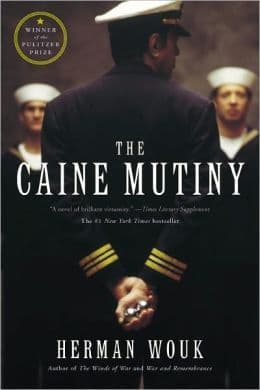
- The Caine Mutiny
Herman Wouk
4.3 (21k) average on GoodreadsLiterary FictionExplores naval command, loyalty, and the pressures of wartime decisions.
- The Day of the Jackal
Frederick Forsyth
4.3 (118k) average on GoodreadsThrillerThe Day of the Jackal is a benchmark for procedural thrillers, meticulously detailing an assassination plot and the intelligence hunt to stop it. While it shares Clancy's commitment to detail, Forsyth's focus is on individual espionage and counter-intelligence rather than large-scale military or naval maneuvers and technology, which is Clancy's primary domain.
- Angels & Demons
Dan Brown
3.9 (2.7M) average on GoodreadsThrillerA Harvard symbologist races through Rome's ancient sites, deciphering cryptic clues to unmask the Illuminati and stop a vengeful plot to destroy the Vatican with a stolen antimatter weapon.
- Gone Girl
Gillian Flynn
4.1 (2.3M) average on GoodreadsThrillerA wife's sudden disappearance on her fifth anniversary reveals a web of lies and psychological warfare, exposing the secrets within a seemingly perfect marriage.





Enjoyed the summary?
A summary gives you the shape of the book. The book itself has the detail, the examples and the voice.
Find The Hunt for Red October on AmazonAs an Amazon Associate, BookBrief earns from qualifying purchases. How we're funded