

Synopsis
Covers the whole plot, including the ending.
- Difficulty
- Hard
- Pacing
- Moderate
- Mood
- Disturbing, satirical, surreal, thought-provoking, nihilistic
Ice Trilogy Plot Summary
Covers the whole plot, including the ending.
The Tunguska Event and the Awakening
The first book, 'Ice,' opens with the 1908 Tunguska event. A young, unnamed scientist on an expedition in Siberia finds a strange ice shard at the impact site. When he touches it, he has a violent, transforming experience: his heart shatters, and an inner voice renames him 'Bro' and reveals his purpose. He learns he is one of 23,000 'Children of the Light,' blond, blue-eyed beings across Earth whose hearts must be awakened by similar ice shards. This awakening involves a brutal, often fatal, ritualistic heart-shattering, followed by a new, shared consciousness and a strong desire to unite and fulfill their cosmic destiny: returning to the 'Primordial Light' and destroying the current world.
The Cult's Genesis and Expansion
After his awakening, Bro dedicates his life to finding and awakening others. He develops specific ways to identify potential 'Brothers' and 'Sisters' – mainly blond hair and blue eyes, plus a certain spiritual readiness. The awakening ritual requires a precise strike to the heart with an ice shard, often killing those deemed unworthy or not true Children. Survivors instantly connect to the collective consciousness, losing their individual identities and taking new, simple names like 'Bro' or 'Sis.' The cult grows in secret throughout the 20th century, seeking more ice shards and members, driven by an unshakeable, almost fanatical, devotion to their goal.
The Moscow Cell and Early Operations
The story moves into the mid-20th century, focusing on a cell of the Children of the Light working secretly in Moscow. They live seemingly ordinary lives as engineers, scientists, or factory workers, but their true existence serves the cause. Their operations involve careful planning to identify and 'awaken' new members, often using their jobs to get access or information. The challenges of operating under strict Soviet surveillance and ideology appear, forcing them to maintain extreme secrecy and develop complex communication and recruitment methods. The story details the cold, almost detached efficiency with which they carry out their awakenings, seeing it as a sacred duty rather than a violent act.
The Search for Ice and New Awakenings
A large part of the story focuses on the Children's search for more ice shards, which are necessary for awakening new members. These shards are rare and often found in remote or dangerous places, sometimes requiring elaborate expeditions or infiltration. The awakening process itself is described in detail, showing the violent impact to the chest and the survivor's transformation. The story presents this process as both divine and mechanical, without human emotion or empathy from the awakeners. The cult's strong belief in its mission justifies any means, including the deaths of many who fail the awakening, seen merely as 'empty shells' or 'dead wood.'
The Individual and the Collective
The trilogy explores the tension between individual identity and the Children of the Light's powerful collective consciousness. Once awakened, members shed their former names, memories, and personal histories, becoming mere tools for the shared 'Light.' Their thoughts and actions follow the collective will, with little room for personal desire or disagreement. However, glimpses of lingering individuality or memories sometimes appear, especially in the second book, 'Bro's Way,' where the protagonist, Bro, deals with echoes of his past life as a Soviet agent. This internal conflict highlights the deep, almost terrifying, sacrifice of self needed to fully embrace the 'Light' and the collective's ultimate purpose.
The Great Gathering and the New Era
As the 20th century ends and the 21st begins, the Children of the Light increase their efforts, anticipating the 'Great Gathering' – the moment all 23,000 awakened Brothers and Sisters will unite. The story details their preparations, including establishing secluded bases and the careful logistics of bringing together such a large, varied group. The world is shown as increasingly decadent and chaotic, ready for destruction, strengthening the Children's belief in their mission. They view the coming disaster not with dread, but with excited anticipation, believing it is a necessary cleansing before their return to the Primordial Light, marking the true 'End of the World' as humanity knows it.
The 'Ice' Weapon and Global Impact
The final book, '23,000,' ends with the Children of the Light's awaited, cataclysmic act. After uniting all 23,000 awakened members, they deploy a massive, concentrated 'Ice' energy, described as a weapon of immense destructive power. This event is a global phenomenon, causing widespread devastation and fundamentally changing Earth's environment. The story shows the world's collapse through different fragmented perspectives, emphasizing the sheer scale of the destruction and the end of human civilization. For the Children, this is not an act of malice, but the fulfillment of their ancient prophecy, a necessary step to return to the 'Primordial Light' and transcend the material world.
The Transformation of Earth
After the 'Ice' weapon is deployed, Earth undergoes a dramatic and irreversible change. The destruction is not just annihilation; it is a reshaping. The planet is covered in a new, crystalline ice, becoming a vast, shimmering monument to the Children's success. This new, frozen world is inhospitable to ordinary human life, effectively erasing the remnants of the old civilization. For the Children, this transformed Earth is a stepping stone, a purified vessel from which they can ascend to their next stage of existence, leaving behind the 'darkness' of humanity. The story emphasizes the alien beauty and terrifying finality of this new, frozen landscape.
Ascension to the Primordial Light
With their mission accomplished and Earth transformed, the 23,000 Children of the Light prepare for their ultimate ascension. This involves a collective departure from their physical bodies, which are shed like cocoons. Their consciousnesses merge entirely, forming a unified entity that then transcends the material plane, moving towards the 'Primordial Light.' The story describes this as a moment of ecstatic union and ultimate fulfillment, the culmination of millennia of waiting and striving. They achieve their goal of escaping earthly existence, leaving behind a world reborn as ice and devoid of human life, entering a new, higher dimension.
The Aftermath: A World of Ice
The final scenes of the trilogy show Earth as a silent, frozen sphere, covered entirely in crystalline ice. No humans are left, no cities, no signs of the civilization that once was. The transformed planet stands as proof of the Children of the Light's success and humanity's demise. The story leaves the reader with a stark, chilling image of absolute transformation and finality. The world is reborn, but not for humanity. It is a world purified and prepared for a new, unknown cosmic purpose, a chillingly beautiful monument to the cult's unwavering, destructive faith and their ultimate, successful exodus from the material realm.
Principal Figures
Bro
Protagonist
The first human to be awakened by the Ice, becoming the central figure of the Children of the Light.
Originally an unnamed young scientist on a Siberian expedition in 1908, he is the first to encounter the Ice and undergo the violent awakening. This transformation shatters his human heart and individuality, replacing it with a collective consciousness and the name 'Bro.' He becomes the driving force behind the Children of the Light, meticulously establishing their ideology, methods, and the relentless search for other awakened beings. Though his individual personality is subsumed, he embodies the collective will and unwavering dedication to the 'Primordial Light' and the destruction of the current world.
Relationships: The Children of the Light (Spiritual leader and collective consciousness); The Ice (Source of his awakening and power)
Sis
Supporting
A generic term for any awakened female member of the Children of the Light.
Like 'Bro,' 'Sis' is not a single character but a collective designation for the awakened female members of the Children of the Light. They are blond, blue-eyed women who have undergone the heart-shattering ritual and joined the collective consciousness. Their individual identities are erased, and they serve the unified purpose of the Light. They participate in the recruitment and awakening of new members, often operating in mundane roles within society while secretly dedicated to the cult's destructive goals. Their existence reinforces the cult's dehumanizing and uniform nature.
Relationships: Brothers (Fellow awakened members of the collective); The Ice (The source of their transformation)
The Narrator (various)
Supporting
Often a newly awakened member, providing a fresh perspective on the cult's internal workings.
Throughout the trilogy, particularly in the later books, the narrative voice often shifts to a newly awakened 'Bro' or 'Sis.' These narrators, though quickly subsumed by the collective, offer a transitional perspective, sometimes retaining faint echoes of their former lives or expressing the initial shock and reprogramming involved in the awakening. They serve as a lens through which the reader experiences the cult's inner workings, their cold logic, and the process of shedding individual identity. Their perspective highlights the profound psychological and spiritual transformation at the heart of the Children's ideology.
Relationships: The Collective (Part of the unified consciousness); Humanity (Former identity, now seen as 'darkness')
The Ice
Antagonist/Catalyst
The mysterious, extraterrestrial substance that awakens the Children of the Light and drives their mission.
The Ice is not a character in the traditional sense, but it is the central antagonist and catalyst of the entire trilogy. It is a non-human, extraterrestrial substance that fell to Earth in 1908, carrying a cosmic intelligence and purpose. It communicates directly to the hearts of the chosen, shattering them and implanting a new consciousness and purpose. The Ice is the source of the Children's power, their ideology, and their ultimate goal. Its nature remains enigmatic, but its influence is absolute, driving the cult towards the destruction of the world and their ascension to the 'Primordial Light.'
Relationships: The Children of the Light (Origin of their existence and purpose); Humanity (The instrument of its destruction)
The Collective
Antagonist
The unified consciousness of all awakened Children, driving the cult's actions.
The Collective refers to the shared, unified consciousness that all awakened Brothers and Sisters become a part of. It is a powerful, impersonal entity that subsumes individual identities, thoughts, and emotions. The Collective speaks through its members, dictates their actions, and guides their mission to destroy the world and return to the Primordial Light. It represents the ultimate antithesis to human individuality and free will, acting with cold, unwavering logic towards its cosmic goal. It is the true antagonist, representing the force that erases humanity both individually and globally.
Relationships: Bro/Sis (Individual components of the larger entity); Humanity (The target of its destructive purpose)
Humanity (unawakened)
Antagonist/Victim
The vast majority of the world's population, oblivious to the impending destruction.
Unawakened humanity serves primarily as the antagonist to the Children of the Light's mission and ultimately as their victim. They are depicted as consumed by mundane concerns, materialism, and a lack of spiritual insight, making them 'blind' to the 'Primordial Light.' The Children view them as 'empty shells' or 'dead wood,' unworthy of existence and destined for destruction. Their world, with its diverse cultures, technologies, and individual lives, is merely an obstacle to be overcome before the Children can achieve their cosmic purpose. They are a passive, unknowing target for the cult's apocalyptic plans.
Relationships: The Children of the Light (The unwitting target of their extermination); The Ice (The instrument of their destruction)
Themes & Insights
The Destruction of Individuality
A central theme is the complete loss of individual identity upon awakening. Members shed their names, memories, and personal histories, becoming mere vessels for a collective consciousness. This process is shown as both a liberation from the 'darkness' of human ego and a terrifying loss of self. The book explores the psychological effects of such a transformation, where personal desires and emotions are replaced by a singular, unified purpose, highlighting the cult's dehumanizing yet powerful nature.
“Your heart is shattered. Your name is Bro. Your path is Light.”
Religious Fanaticism and Apocalypticism
The trilogy examines the psychology of religious fanaticism, presenting the Children of the Light as an extreme apocalyptic cult. Their strong belief in their 'Primordial Light' and the need to destroy the existing world is absolute, justifying any means, including mass murder. The story shows how a singular, cosmic belief can override all human morality, empathy, and reason, leading to a chillingly detached execution of their destructive mission. It explores the intoxicating appeal of a grand, ultimate purpose that transcends human life.
“The world is an empty shell. It must be broken for the Light to shine.”
The Allure of Transcendence
The cult's ultimate goal is not just destruction but transcendence – a return to a higher state of being, the 'Primordial Light.' This theme explores the human (or post-human) desire to escape the limits of the material world and achieve a form of spiritual or cosmic elevation. The Children see their earthly existence as a temporary, dark phase, and their mission as a path to ultimate liberation and union with a divine, non-human consciousness. This appeal of transcendence drives their extreme actions, offering a powerful, though destructive, promise of ultimate meaning.
“We are not of this world. We are children of the Light, and to the Light we shall return.”
Nihilism and Dehumanization
A deep sense of nihilism runs through the trilogy, especially regarding human life and civilization. The Children of the Light view unawakened humanity as worthless, 'empty shells' deserving of destruction. This extreme dehumanization allows them to carry out their apocalyptic plans without remorse or hesitation. The story explores how such a worldview can come from a radical spiritual belief, leading to the complete devaluation of human existence and the eventual, cold-blooded annihilation of an entire species, replacing it with a sterile, icy purity.
“Their hearts are not shattered. They are not us. They are nothing.”
Plot Devices & Literary Techniques
The Ice Shard
The physical manifestation of the alien intelligence and the catalyst for awakening.
The Ice shard is the pivotal plot device. It is a physical, yet mysterious, extraterrestrial object that fell to Earth, possessing the ability to shatter human hearts and replace individual consciousness with the collective 'Light.' It serves as both a weapon and a sacred tool, essential for initiating new members into the Children of the Light. Its rarity drives much of the cult's early efforts, and its ultimate, concentrated form becomes the instrument of global destruction. The Ice represents the alien, transformative power at the core of the narrative.
The Heart-Shattering Ritual
The violent, transformative process of awakening a new Brother or Sister.
This ritual is a recurring and central plot device. It involves a precise, often fatal, blow to the chest with an ice shard, designed to 'shatter' the individual's human heart and consciousness. Those who survive are instantly transformed, losing their former identity and joining the collective. This device serves to illustrate the brutal, uncompromising nature of the cult, the complete loss of self, and the stark divide between the 'awakened' and the 'unawakened.' It is the gateway to becoming a Child of the Light and underscores the extreme sacrifices required.
The Collective Consciousness
The unified mental network shared by all awakened Children.
The Collective Consciousness is a powerful, non-physical plot device that dictates the actions and thoughts of all awakened Children. It replaces individual personalities and provides a unified purpose and communication network. This device allows the cult to operate with extreme efficiency and secrecy, as all members are inherently linked and driven by the same will. It also serves to illustrate the theme of individuality's destruction, as personal thoughts and emotions are subsumed by the larger, impersonal entity, making the Children a truly formidable and alien force.
The Blond Hair and Blue Eyes
A seemingly arbitrary, yet crucial, physical identifier for potential Children of the Light.
This physical characteristic acts as a key plot device for identifying potential Brothers and Sisters. While never explicitly explained in a scientific or logical manner, the requirement for blond hair and blue eyes is an unshakeable tenet for the Children. It serves to narrow down their search, creating an exclusive and visually distinct group. This device adds an unsettling, almost eugenic undertone to the cult's ideology, emphasizing their alienness and their arbitrary selection criteria for who is 'worthy' of the Light, further dehumanizing those who do not fit the mold.
Quiz
10 questions on the plot and the characters. Each answer comes with a short explanation.
Question 1
What is the central object that falls to Earth in 1908?
- A meteorite
- An alien artifact
- Their Ice
- A lost satellite
Show answer
C. Their Ice The text explicitly states 'THEIR ICE. A young man on a scientific expedition found it.'
Question 2
What is the name given to the young man who finds the Ice?
- The Lightbringer
- Bro
- The Awakened
- Siberian
Show answer
B. Bro The text says 'His heart named him Bro.'
Question 3
What is the stated purpose of the Ice?
- To bring knowledge to humanity
- To initiate a new era of peace
- To unite the scattered Brothers and Sisters of the Light and destroy the current world
- To guide humanity to the stars
Show answer
C. To unite the scattered Brothers and Sisters of the Light and destroy the current world The text explains the Ice's purpose: 'To bring together the 23,000 blond, blue-eyed Brothers and Sisters of the Light... To wake their sleeping hearts. To return to the Light. To destroy this world.'
Question 4
Who are the 'Brothers and Sisters of the Light' described as?
- A religious cult seeking enlightenment
- Descendants of an ancient alien race
- Individuals with specific physical characteristics (blond, blue-eyed) who need to be united
- Members of a secret society planning world domination
Show answer
C. Individuals with specific physical characteristics (blond, blue-eyed) who need to be united The text specifies their characteristics: 'the 23,000 blond, blue-eyed Brothers and Sisters of the Light'.
Question 5
The 'Ice Trilogy' is described as a collision of various genres and styles. Which of the following is NOT explicitly mentioned as a colliding element?
- Historical fiction
- Pulp fiction
- New Ageism
- Video-game mayhem
Show answer
A. Historical fiction The text lists 'Pulp fiction, science fiction, New Ageism, pornography, video-game mayhem, old-time Communist propaganda, and rampant commercial hype'. Historical fiction is not explicitly stated.
Question 6
What is the ultimate goal of the Children of the Light?
- To establish a new global government
- To achieve spiritual transcendence and return to the Primordial Light
- To reclaim their lost homeland in Siberia
- To usher in an age of technological advancement
Show answer
B. To achieve spiritual transcendence and return to the Primordial Light The text states their goal is 'To return to the Light' and the reader seeks 'the redemptive fix of a good story as the Children are for the Primordial Light'.
Question 7
The narrative structure of the 'Ice Trilogy' is characterized by its:
- Linear progression and predictable plot
- Focus on character development over plot
- Collage of disparate elements leading to a 'spectacular crash'
- Subtle philosophical undertones and ambiguity
Show answer
C. Collage of disparate elements leading to a 'spectacular crash' The description mentions 'Pulp fiction, science fiction, New Ageism, pornography, video-game mayhem, old-time Communist propaganda, and rampant commercial hype all collide, splinter, and splatter... with the promise of a truly spectacular crash at the end.'
Question 8
What does the text suggest about the reader's experience of the 'Ice Trilogy'?
- The reader is likely to feel detached and analytical.
- The reader is compelled to follow the narrative, caught in an illusion.
- The reader will easily distinguish between reality and the novel's fiction.
- The reader will find the narrative straightforward and easy to comprehend.
Show answer
B. The reader is compelled to follow the narrative, caught in an illusion. The text states, 'the reader... has no choice except to go along, caught up in a brilliant illusion from which only illusion escapes intact.'
Question 9
The 'Ice Trilogy' blends elements that are typically found in different forms of media and ideology. The phrase 'crazed joyride through modern times' implies:
- A leisurely and educational tour of historical events.
- A chaotic and exhilarating, perhaps even dangerous, journey through contemporary culture and its various manifestations.
- A methodical exploration of societal progress and its benefits.
- A predictable and calming narrative that offers respite.
Show answer
B. A chaotic and exhilarating, perhaps even dangerous, journey through contemporary culture and its various manifestations. The term 'crazed joyride' suggests a wild, unpredictable, and intense experience, contrasting with a leisurely or methodical journey. 'Through modern times' indicates the scope of its cultural and ideological collision.
Question 10
The description of the Children of the Light pursuing their 'beloved goal' throughout the twentieth century and up to our own day, alongside the mention of 'old-time Communist propaganda' and 'rampant commercial hype', suggests that the novel might be exploring themes related to:
- The enduring power of utopian ideals and their manipulation across different political and economic systems.
- The inevitable decline of religious faith in the face of scientific progress.
- The rediscovery of ancient spiritual traditions in the modern world.
- The cyclical nature of history and the repetition of past mistakes.
Show answer
A. The enduring power of utopian ideals and their manipulation across different political and economic systems. The combination of a fervent, almost religious goal ('beloved goal', 'Primordial Light') pursued through decades, and the inclusion of contrasting ideologies like Communism and commercialism, points towards an examination of how such powerful, potentially destructive, belief systems manifest and are propagated across different societal structures.
Ice Trilogy FAQ
What is the Ice Trilogy about?
The Ice Trilogy by Vladimir Sorokin is a science fiction novel that begins with the discovery of an alien substance called 'Ice' in Siberia in 1908. This Ice has the power to awaken a spiritual purpose in those who connect with it, leading to a secret society's quest to unite humanity and destroy the current world.
What kind of science fiction is the Ice Trilogy?
The Ice Trilogy blends elements of pulp fiction, New Age spirituality, and even incorporates aspects of pornography, video game violence, and propaganda. It's a highly experimental and often disturbing take on science fiction themes.
Who are the 'Children of the Light' in the book?
The 'Children of the Light' are individuals who have been spiritually awakened by the mysterious 'Ice'. They believe they are destined to gather other awakened beings, referred to as 'Brothers and Sisters of the Light,' to achieve a higher purpose and bring about the destruction of the current world.
What is the significance of the 'Ice' in the novel?
The Ice is a central, mysterious element that falls to Earth. It acts as a catalyst, awakening a dormant spiritual consciousness in certain individuals. Its ultimate purpose is to unite these awakened people and lead them to a radical transformation of the world.
What themes does the Ice Trilogy explore?
The novel delves into themes of consciousness, spirituality, the nature of reality, societal control, and the destructive potential of utopian ideals. It critically examines modern culture through a warped and often violent lens.
Is the Ice Trilogy a single book or a series?
The Ice Trilogy is a single work composed of three interconnected parts or books, exploring a continuous narrative arc. It is often published as a single volume.
What is the tone of Vladimir Sorokin's writing in this book?
Sorokin's tone is virtuosic, experimental, and often darkly humorous. He juxtaposes high-minded philosophical ideas with graphic violence and vulgarity, creating a disorienting yet compelling reading experience.
How does the Ice Trilogy compare to other science fiction works?
Unlike traditional science fiction, the Ice Trilogy is less focused on technological advancement and more on spiritual and philosophical upheaval. Its unique blend of genres and its challenging subject matter set it apart from more conventional sci-fi narratives.
Is the Ice Trilogy a difficult read?
The Ice Trilogy can be challenging due to its fragmented narrative, graphic content, and complex thematic layering. However, its compelling prose and unique vision make it a rewarding experience for readers seeking something unconventional.
What is the ultimate goal of the Children of the Light?
The ultimate goal of the Children of the Light, as driven by the Ice, is to awaken all scattered 'Brothers and Sisters of the Light,' unify them, and ultimately destroy the current world to usher in a new era or 'return to the Light.'
About the author

Vladimir Sorokin is a Russian author known for his provocative and imaginative fiction. His notable works include "Day of the Oprichnik," which explores a dystopian future in Russia, and the "Ice Trilogy," a surreal narrative set in a frozen landscape. Sorokin's writing often delves into themes of power and identity within contemporary society.
Similar books
- The Hunger Games
Suzanne Collins
4.3 (6.4M) average on GoodreadsFantasyIn a future where children fight to the death on live television, Katniss Everdeen volunteers for the arena, turning a death sentence into a fight for survival and a spark of rebellion.
- 1984
George Orwell
4.2 (3.1M) average on GoodreadsPoliticsIn a future where surveillance and thought control are absolute, a man's search for truth clashes with the Party, showing that hope can be a form of rebellion.
- Divergent
Veronica Roth
4.2 (2.9M) average on GoodreadsFantasyIn a society divided by virtues, a sixteen-year-old's difference from the norm starts a rebellion that threatens her world.
- Animal Farm
George Orwell
4.0 (2.7M) average on GoodreadsPoliticsA farm animals' rebellion against humans turns into a pig-led dictatorship, showing how power corrupts and revolutionary ideals are betrayed.
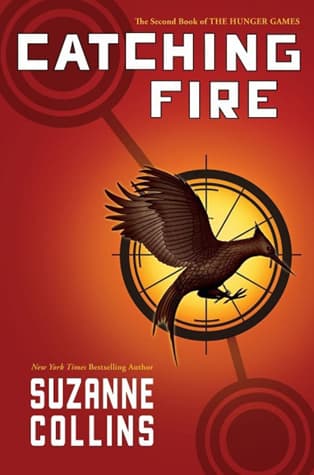
- Catching Fire
Suzanne Collins
4.3 (2.5M) average on GoodreadsFantasyAfter defying the Capitol and starting a rebellion, Katniss and Peeta are forced on a dangerous Victory Tour, navigating political schemes, a fake romance, and the constant threat of a government eager to crush the uprising they began.
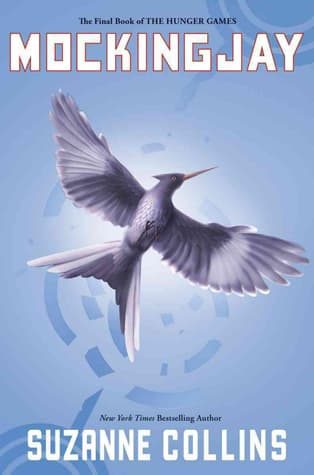
- Mockingjay
Suzanne Collins
4.0 (2.3M) average on GoodreadsFantasyHaunted by the Games and driven by a need for justice, Katniss Everdeen becomes the Mockingjay, leading a rebellion against the Capitol to save Panem and those she loves.




Enjoyed the summary?
A summary gives you the shape of the book. The book itself has the detail, the examples and the voice.
Find Ice Trilogy on AmazonAs an Amazon Associate, BookBrief earns from qualifying purchases. How we're funded