
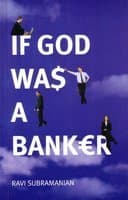
Synopsis
Covers the whole plot, including the ending.
- Difficulty
- Easy
- Read it if
- You enjoy fast-paced business thrillers with moral dilemmas, want to understand the dark underbelly of the banking world, or appreciate stories where ambition leads to a dramatic fall.
- Skip it if
- You prefer non-fiction analyses of corporate ethics, dislike fictionalized drama in business settings, or are looking for a purely uplifting narrative.
If God Was a Banker Quotes
“Money isn't everything, but it sure beats whatever is in second place.”
“In the world of investment banking, a friend is just an enemy you haven't fought with yet.”
“The higher you climb, the harder you fall. And in banking, the falls are always spectacular.”
“Every deal has a devil. The trick is to know who he is before he takes your soul.”
“Loyalty is a luxury few can afford in this business. Most prefer profit.”
“Fear is a great motivator, especially when it's the fear of losing everything.”
“Success tastes sweeter when you know how many people wanted you to fail.”
“The biggest lies are often told with the straightest faces, especially in a boardroom.”
“You can forgive many things, but never a betrayal from someone you trusted.”
“Sometimes, the only way to win is to change the rules of the game.”
“The market doesn't care about your feelings, only about your numbers.”
“Power is an intoxicating drug. Once you taste it, you'll do anything to keep it.”
“Even the most secure systems have a backdoor, if you know where to look.”
“A good banker knows how to make money. A great banker knows how to make money disappear and reappear.”
Quiz
10 questions on the plot and the characters. Each answer comes with a short explanation.
Question 1
Which of the following best describes Sundeep's primary characteristic in his pursuit of success at New York International Bank?
- He is highly ethical and morally upright.
- He is ambitious and willing to use unscrupulous means.
- He prioritizes teamwork and collaboration above all else.
- He is content with slow and steady career progression.
Show answer
B. He is ambitious and willing to use unscrupulous means. The book explicitly states that Sundeep is 'ambitious and selfish, which leads him to achieve his goals through unscrupulous means,' contrasting him with Swami.
Question 2
What is the key contrast between Sundeep and Swami's approaches to their careers at New York International Bank?
- Sundeep focuses on client acquisition, while Swami focuses on internal operations.
- Sundeep prioritizes ethics, while Swami prioritizes rapid promotion.
- Sundeep uses unscrupulous means for success, while Swami sticks to morals and ethics.
- Sundeep is a team player, while Swami prefers individual work.
Show answer
C. Sundeep uses unscrupulous means for success, while Swami sticks to morals and ethics. The book highlights that 'Sundeep is ambitious and selfish, which leads him to achieve his goals through unscrupulous means. Swami is the exact opposite as he sticks to his morals and ethics to ensure success in his career.'
Question 3
What role does the 'friend and counsellor' character play in the lives of Sundeep and Swami?
- He is a direct competitor for their positions.
- He offers philosophical guidance based on his experience, teaching what he deems right.
- He actively participates in Sundeep's unscrupulous schemes.
- He is the ultimate antagonist working against both of them.
Show answer
B. He offers philosophical guidance based on his experience, teaching what he deems right. The description states this character 'is a friend and counsellor to both of them and he has his own philosophy which is based on his experience and is genuine. He always taught what he deemed right.'
Question 4
Despite his rapid rise and popularity, what does Sundeep's demeanor at New York International Bank disguise?
- His secret desire to leave the banking industry.
- His underlying incompetence and lack of skill.
- His real motives and cunning mind.
- His efforts to expose corporate corruption.
Show answer
C. His real motives and cunning mind. The book states, 'Sundeep's rapid rise up the corporate ladder and his popularity with colleagues disguises his real motives and cunning mind.'
Question 5
What specific aspect of the corporate bank environment is highlighted as 'polluted' in the novel?
- The physical air quality in the office buildings.
- The ethical atmosphere, where characters easily deviate from righteousness.
- The financial data systems, which are prone to errors.
- The dress code and professional conduct expectations.
Show answer
B. The ethical atmosphere, where characters easily deviate from righteousness. The description explicitly mentions, 'All through the novel, the backdrop is the corporate bank environment, which is so polluted that the characters are portrayed as people who are ready to deviate from the righteous path at the drop of a hat.'
Question 6
Despite the 'friend and counsellor's' guidance, what strong temptation does Sundeep succumb to?
- The temptation to leave the banking sector for a simpler life.
- The temptation of untold riches and ill-gotten financial gain.
- The temptation to mentor junior employees ethically.
- The temptation to expose the bank's corrupt practices.
Show answer
B. The temptation of untold riches and ill-gotten financial gain. The text states, 'Inspite of all the facts, the temptation of untold riches was too strong for Sundeep and he continued on his quest for more ill-gotten financial gain.'
Question 7
What is the primary reason Swami's career performance lags behind Sundeep's at New York International Bank?
- Swami lacks the necessary skills and qualifications for his role.
- Swami's adherence to his ideals and ethics keeps him from employing unscrupulous tactics.
- Swami is disliked by his colleagues and superiors.
- Swami frequently takes extended leaves of absence.
Show answer
B. Swami's adherence to his ideals and ethics keeps him from employing unscrupulous tactics. The description clearly states, 'Swami's ideal and ethics keeps him behind Sundeep in terms of performance at the New York International Bank where they both work.'
Question 8
The novel suggests a specific unethical behavior among women in the corporate bank environment. What is it?
- They frequently sabotage their female colleagues' careers.
- They engage in insider trading to gain personal wealth.
- They use sexual advances towards their bosses to advance their positions.
- They spread false rumors about their male counterparts.
Show answer
C. They use sexual advances towards their bosses to advance their positions. The text explicitly states, 'Women throw themselves at their bosses to advance their position,' illustrating the 'polluted' corporate environment.
Question 9
What overarching theme is strongly conveyed by the portrayal of the 'polluted' corporate bank environment and characters' willingness to deviate from the righteous path?
- The importance of strict regulatory oversight in banking.
- The corrupting influence of ambition and wealth in a high-stakes corporate setting.
- The inherent goodness of individuals despite their surroundings.
- The inevitability of failure for those who lack ambition.
Show answer
B. The corrupting influence of ambition and wealth in a high-stakes corporate setting. The narrative consistently emphasizes characters deviating from righteousness due to the 'polluted' environment and 'temptation of untold riches,' pointing to the corrupting nature of ambition and wealth.
Question 10
Given the contrasting philosophies of Sundeep and Swami, what is a likely central conflict explored in 'If God Was a Banker'?
- The conflict between different investment strategies in global markets.
- The internal struggle within a single character to choose between two career paths.
- The moral and ethical compromises required for success versus maintaining integrity in a cutthroat corporate world.
- The clash between traditional banking methods and new financial technologies.
Show answer
C. The moral and ethical compromises required for success versus maintaining integrity in a cutthroat corporate world. The core of the story is built around Sundeep's unscrupulous rise versus Swami's ethical but slower progression, directly addressing the conflict between ambition and integrity in a corporate setting.
If God Was a Banker FAQ
What is the central theme of 'If God Was a Banker'?
'If God Was a Banker' explores the cutthroat world of corporate banking, contrasting the ambitious, morally flexible Sundeep with the ethical Swami, and examining how the allure of wealth can corrupt individuals within a corrupt system.
Does 'If God Was a Banker' offer a realistic portrayal of the banking industry?
Yes, the book is praised for its realistic depiction of the intense competition, moral compromises, and power dynamics prevalent in the corporate banking sector, even highlighting the lengths some go for career advancement.
Who are the main characters in 'If God Was a Banker'?
The primary characters are Sundeep, the ambitious and unscrupulous banker; Swami, his ethical counterpart; and a wise mutual friend who acts as a counselor, offering philosophical insights based on his experiences.
What is the significance of the title 'If God Was a Banker'?
The title provocatively suggests a world where even divine principles might be compromised by the pursuit of wealth, hinting at the profound moral corruption within the banking environment depicted in the novel.
How does 'If God Was a Banker' differ from other business thrillers?
Unlike some business thrillers that focus purely on financial mechanics, this book deeply delves into the moral and ethical dilemmas faced by individuals in the corporate world, offering a more character-driven exploration of corruption and ambition.
Is 'If God Was a Banker' based on a true story?
While the characters and specific events are fictional, the book is widely considered to draw heavily on the author's deep understanding of the banking industry, reflecting common pressures and ethical challenges faced by real bankers.
What kind of readers would enjoy 'If God Was a Banker'?
Readers interested in business thrillers, corporate ethics, character-driven dramas, and stories that expose the darker side of ambition and wealth will find 'If God Was a Banker' particularly engaging.
What awards did 'If God Was a Banker' win?
'If God Was a Banker' won the prestigious Indiaplaza Golden Quill Book Award, recognizing its significant impact and popularity within the literary landscape.
About the author

Ravi Subramanian is an Indian author known for his works of fiction, particularly in the banking and financial sectors. His notable books include "If God Was a Banker," which explores the intricacies of the banking world, and "The Bestseller She Wrote," a story about ambition and the publishing industry.
Similar books
- The Wolf of Wall Street
Jordan Belfort
3.7 (31k) average on GoodreadsBusinessExplores the excesses and moral bankruptcy within the financial industry through a character-driven narrative.
- The Firm
John Grisham
4.1 (43k) average on GoodreadsThrillerA legal thriller where a young professional uncovers corruption within his seemingly prestigious firm, leading to a dangerous moral conflict.
- Capital
John Lanchester
3.7 (13k) average on GoodreadsLiterary Fiction'If God Was a Banker' shares with 'Capital' a focus on the impact of finance on individual lives, but their approaches differ significantly. Subramanian's book is a genre-driven thriller with clear heroes and villains, centering on a specific corporate conspiracy. Lanchester's 'Capital,' in contrast, is a literary novel that uses the financial crisis as a backdrop to explore the interconnected lives of diverse residents on a single London street, offering a broader, more nuanced sociological critique of capitalism's effects on society rather than just corporate malfeasance. Lanchester's character development is far more intricate and psychologically deep than Subramanian's.
- Steve Jobs
Walter Isaacson
4.1 (957k) average on GoodreadsBusinessSteve Jobs was a visionary who fused creativity and technology to revolutionize six industries and shape our digital world.
- Freakonomics: A Rogue Economist Explores the Hidden Side of Everything
Steven D. Levitt
4.0 (709k) average on GoodreadsBusinessThis book uses economic principles to reveal the surprising incentives behind everything from drug dealing and real estate to cheating teachers and the decline of crime.
- The Tipping Point: How Little Things Can Make a Big Difference
Malcolm Gladwell
4.0 (690k) average on GoodreadsBusinessMalcolm Gladwell explains how small, targeted actions can start widespread changes in trends, behaviors, and ideas.






Enjoyed the summary?
A summary gives you the shape of the book. The book itself has the detail, the examples and the voice.
Find If God Was a Banker on AmazonAs an Amazon Associate, BookBrief earns from qualifying purchases. How we're funded