
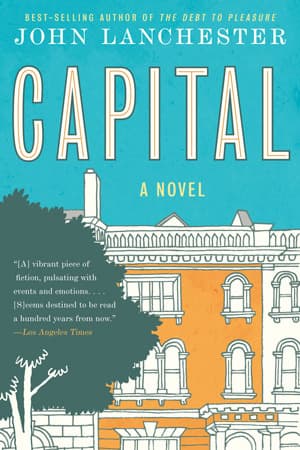
Synopsis
Covers the whole plot, including the ending.
- Difficulty
- Medium
- Pacing
- Moderate
- Mood
- Observational, Socially critical, Interconnected, Reflective
- Read it if
- You enjoy sprawling, character-driven literary fiction that dissects contemporary society through a mosaic of interconnected lives, especially with themes of wealth, class, and urban living.
- Skip it if
- You prefer fast-paced thrillers or stories with a single, tightly focused plot and clear heroes/villains.
Capital Plot Summary
Covers the whole plot, including the ending.
Pepys Road, 2008: Postcards and Unease
The novel opens in 2008 on Pepys Road, a London street where property values have soared. It is a small version of contemporary urban life. Residents from various backgrounds begin receiving anonymous postcards with the unsettling message: 'We Want What You Have.' Roger Yount, a high-flying banker, lives with his extravagant wife Arabella and their two children. Across the street, Petunia Howe, an elderly woman with a brain tumor, lives alone, her life slowly fading. Her grandson, Smitty, a street artist, visits occasionally. The Pakistani-immigrant Anwar family runs the local convenience store; their son Ahmed navigates his adolescence. Zbigniew, a Polish builder, works on renovations, while a Senegalese footballer, Quentins, lives nearby with his minder, Freddy Kamo. The postcards create paranoia and suspicion among these different individuals, hinting at the financial anxieties and social divisions beneath their seemingly prosperous lives.
Roger's Financial Precipice
Roger Yount, a bond trader at a major investment bank, finds his world increasingly uncertain. The global financial crisis, initially a distant rumble, begins to directly impact his job and the bank's stability. His wife, Arabella, unaware of the impending doom, continues her extravagant spending, further straining their finances. Roger's bonuses, once astronomical, are now threatened, and work pressure becomes immense. He grapples with his profession's ethical dilemmas and the growing fear of losing everything. His daily commute and interactions with colleagues show the widespread panic and uncertainty within the financial sector, reflecting the broader economic collapse around them. The postcards, though still a mystery, seem to taunt him with the very wealth he fears losing.
Petunia's Last Days and Smitty's Art
Petunia Howe, a long-time resident of Pepys Road, is in the final stages of a brain tumor. Her memories often drift to her late husband and the changing face of her beloved street. Her grandson, Smitty (real name Graham), a talented but struggling street artist, visits her regularly. Smitty feels a deep connection to his grandmother and a growing disillusionment with the wealth and inequality he sees around him. He uses his art, often politically charged graffiti, as a form of social commentary, reflecting the 'We Want What You Have' sentiment in his own way. His art appears in various public spaces, sometimes drawing the attention of law enforcement and other times sparking local conversations. Petunia's declining health is a poignant contrast to her neighbors' material anxieties, showing the fragility of life regardless of wealth.
The Anwars and Cultural Tensions
The Anwar family, who own the local convenience store, face their own challenges. Mr. and Mrs. Anwar work tirelessly, striving to maintain their business and provide for their children. Their son, Ahmed, struggles with his identity, caught between his parents' traditional expectations and the pull of Western culture. He develops a crush on a local girl, sparking internal conflict. The family also experiences subtle and overt forms of prejudice, particularly from some of the wealthier residents of Pepys Road who view them as 'outsiders.' The postcards add another layer of anxiety, as they wonder if the message is directed at them or if they are simply caught in the crossfire of others' resentments. Mrs. Anwar's sister, who is a meter maid, also becomes an unwitting participant in the unfolding drama.
Quentins and the Illusions of Fame
Quentins, a young Senegalese football prodigy, lives a life of isolated luxury on Pepys Road, managed by his shrewd and controlling minder, Freddy Kamo. Quentins is a valuable asset, and Freddy carefully manages his diet, training, and public appearances, aiming to maximize his potential and financial returns. Quentins often feels lonely and disconnected, despite his fame and wealth. He sends money back to his family in Senegal, feeling the weight of their expectations. His interactions are largely limited to Freddy and his teammates. The postcards, when they arrive at his address, are a strange intrusion into his carefully constructed bubble, a reminder of the world outside his gilded cage. Freddy, ever vigilant, dismisses them as a nuisance, focused solely on Quentins' career trajectory.
The Meter Maid and the Suspect
Ms. Kamal, an Iraqi refugee working as a meter maid on Pepys Road, observes the residents with a keen, often detached, eye. She is a quiet, intelligent woman with a traumatic past, and her job gives her a unique vantage point on the lives of others. She notices patterns, behaviors, and the subtle shifts in the street's atmosphere. Her sister is Mrs. Anwar. As the postcards continue to arrive, Ms. Kamal begins to piece together fragments of information. She spots Smitty's distinctive graffiti tags and starts to connect his art with the sentiments expressed on the postcards. Her observations make her an accidental detective, slowly narrowing down the potential perpetrator of the anonymous messages, though she keeps her suspicions largely to herself.
Roger's Downfall and Arabella's Reckoning
The inevitable happens for Roger Yount: he is made redundant, a casualty of the financial crisis. His dismissal plunges him into despair and forces a harsh reckoning with Arabella. Their lavish lifestyle, built on Roger's inflated salary and bonuses, is no longer sustainable. Arabella, initially in denial, is forced to confront the reality of their situation, including their substantial debt. Her shopping addiction, once a source of pleasure, now becomes a symbol of their financial ruin. The couple's relationship strains under the pressure, and they must consider drastic changes, including selling their expensive house on Pepys Road. Roger, stripped of his professional identity, struggles with feelings of failure and irrelevance.
Smitty's Motivation Revealed
Through Ms. Kamal's astute observations and Smitty's increasing boldness with his graffiti, his role in the postcard campaign is gradually revealed. It becomes clear that Smitty is the one sending the postcards, using them as a form of artistic protest against the perceived greed and inequality he witnesses on Pepys Road. His motivation comes from a genuine frustration with the disparities between his own struggling existence and the opulent lives of his neighbors, made worse by his grandmother Petunia's quiet decline. He sees the postcards as a way to provoke thought and highlight the hidden resentments bubbling beneath the surface of London's affluent areas, though his actions cause fear and anxiety among the recipients.
Life After the Crash
In the aftermath of the financial crisis and the postcard mystery, life on Pepys Road slowly finds a new rhythm. Roger and Arabella are forced to significantly downsize, moving to a smaller house outside London. Roger struggles to find a new job, eventually taking a less prestigious role. Arabella, surprisingly, begins to find a new sense of purpose without the pressure of maintaining a lavish lifestyle. Petunia Howe passes away peacefully, leaving Smitty to process his grief and continue his artistic endeavors, perhaps with a newfound maturity. The Anwar family continues to run their shop, adapting to the changing economic climate, while Ahmed explores his own path. Quentins' football career continues, but the underlying loneliness remains, and Freddy Kamo remains his watchful guardian.
The Enduring Questions of 'Capital'
The novel concludes without neat resolutions, reflecting the ongoing complexities of modern urban life. The 'We Want What You Have' sentiment, though the source is known, continues to resonate, highlighting persistent social and economic divisions. The financial crisis leaves a mark on all characters, forcing them to re-evaluate their values, ambitions, and relationships. Some find resilience and adaptation, while others grapple with loss and uncertainty. The diverse community of Pepys Road, though shaken, endures. The novel ultimately poses questions about the nature of capital – not just financial, but social and cultural – and what it truly means to have or to lack in a rapidly changing world.
Capital Characters
Roger Yount
Protagonist
A high-flying banker grappling with the financial crisis and his family's extravagant lifestyle.
Roger is a bond trader at a major investment bank, representing the pinnacle of pre-crash financial success. He is ambitious and driven, but also increasingly aware of the ethical compromises inherent in his work. He loves his wife, Arabella, but is frustrated by her uncontrolled spending. As the financial crisis escalates, Roger experiences immense pressure, fear, and ultimately, the humiliation of redundancy. He is a character defined by his profession and his struggle to maintain a certain standard of living, making his downfall particularly poignant. His journey reflects the broader anxieties of the financial sector in 2008.
Relationships: Arabella Yount (wife, whose spending he resents but tolerates); His children (father, striving to provide for them); Colleagues (professional peers, sharing the anxieties of the financial world)
Arabella Yount
Supporting
Roger's shopaholic wife, initially oblivious to their financial peril, later forced to confront reality.
Arabella is Roger's wife, characterized by her extravagant taste and compulsive shopping. She embodies the consumerist excesses of the pre-crisis era, often oblivious to the true cost of her lifestyle or Roger's increasing stress. Her character initially appears superficial, but she undergoes a significant transformation when faced with their financial ruin. She is forced to confront her habits and find a new identity beyond material possessions, revealing an unexpected resilience and capacity for change. Her initial lack of awareness highlights the detachment some had from the looming economic disaster.
Relationships: Roger Yount (husband, who she loves but takes for granted financially); Her children (mother, concerned for their future)
Petunia Howe
Supporting
An elderly, ailing resident of Pepys Road, a living link to the street's past.
Petunia is an elderly woman dying of a brain tumor, a long-time resident of Pepys Road. She represents the fading old guard, a witness to the street's transformation from a working-class neighborhood to an affluent enclave. Her memories and reflections provide historical context and a sense of rootedness amidst the rapid changes. She is quiet, observant, and her declining health offers a poignant contrast to the material obsessions of her neighbors. Her relationship with her grandson, Smitty, is a source of comfort and connection, and her eventual death marks a symbolic end to an era.
Relationships: Smitty (Graham) (devoted grandmother, a source of stability for him); Her late husband (remembered with fondness and nostalgia)
Smitty (Graham)
Supporting/Antagonist (of sorts)
Petunia's grandson and a street artist, responsible for the anonymous 'We Want What You Have' postcards.
Graham, known as Smitty, is a struggling street artist and Petunia's grandson. He is intelligent, socially conscious, and deeply frustrated by the wealth disparity he observes on Pepys Road. He uses his art, particularly politically charged graffiti, as a form of protest and commentary. Smitty is the anonymous sender of the 'We Want What You Have' postcards, driven by a desire to provoke thought and expose what he perceives as injustice. He is a nuanced character, not purely malicious, but rather a product of his environment and his artistic expression of societal grievances. His actions stir fear but also highlight genuine issues.
Relationships: Petunia Howe (loving grandson, deeply connected to her); Ms. Kamal (unwittingly observed by her)
Ahmed Anwar
Supporting
The teenage son of the corner shop owners, navigating cultural identity and adolescence.
Ahmed is the teenage son of Mr. and Mrs. Anwar, who run the local convenience store. He represents the second generation of immigrants, caught between his parents' traditional Pakistani values and the allure of Western youth culture. He struggles with his identity, his attraction to a local girl, and his desire to fit in while respecting his heritage. Ahmed's experiences highlight themes of cultural assimilation, generational gaps, and the challenges of adolescence in a diverse urban environment. He is observant and often reflects on the differences between his family's life and those of their wealthier neighbors.
Relationships: Mr. and Mrs. Anwar (son, sometimes struggling with their expectations); Ms. Kamal (niece, observed by her)
Ms. Kamal
Supporting
An Iraqi refugee working as a meter maid, who observes the residents and pieces together clues.
Ms. Kamal is an Iraqi refugee who works as a meter maid on Pepys Road. She is a quiet, intelligent, and observant woman who carries the weight of a traumatic past. Her job gives her a unique, almost invisible, perspective on the lives of the street's residents. She is resourceful and perceptive, noticing details that others miss. Her sister is Mrs. Anwar. Ms. Kamal's character embodies themes of displacement, resilience, and the quiet dignity of those on the margins. She ultimately plays a crucial role in indirectly identifying the source of the postcards through her careful observations of Smitty's art.
Relationships: Mrs. Anwar (sister); Smitty (Graham) (observes his artistic activities)
Quentins
Supporting
A young Senegalese football star living an isolated life of fame and wealth.
Quentins is a young, talented Senegalese footballer who lives on Pepys Road under the strict management of Freddy Kamo. He represents the globalized nature of modern wealth and talent. Despite his fame and fortune, Quentins often feels isolated and controlled, missing his family in Senegal. His character highlights the transactional nature of professional sports and the pressures young athletes face. He is largely passive in the unfolding drama of the street, his life dictated by his career, but he is still a recipient of the unsettling postcards, a reminder that even his wealth doesn't insulate him entirely.
Relationships: Freddy Kamo (his manager/minder, controlling his life); His family in Senegal (sends money to them, feels their expectations)
Freddy Kamo
Supporting
Quentins' shrewd and controlling manager, focused solely on his client's financial success.
Freddy Kamo is Quentins' manager and minder, a pragmatic and somewhat ruthless individual focused entirely on maximizing Quentins' football career and financial returns. He controls every aspect of Quentins' life, from diet to public appearances, viewing him primarily as an asset. Freddy is a shrewd operator, embodying the commercial side of professional sports. He is largely unaffected by the social anxieties of Pepys Road, dismissing the postcards as trivial distractions. His character highlights the commodification of talent and the often-unseen forces that shape the lives of public figures.
Relationships: Quentins (his client and protégé, whom he manages rigorously)
Zbigniew
Mentioned
A Polish builder working on renovations on Pepys Road, representing immigrant labor.
Zbigniew is a Polish builder who works on various renovation projects along Pepys Road. He represents the significant immigrant labor force that underpins much of London's economy, particularly in construction. Though not a central character, his presence highlights the multinational fabric of the city and the often-unseen workers who contribute to its prosperity. He is hardworking and dedicated, a quiet observer of the lives of his wealthier clients. His character underscores the theme of different social strata coexisting, often without true interaction, within the same urban space.
Relationships: Various Pepys Road residents (as clients for renovation work)
Capital Themes
Wealth, Inequality, and Resentment
The central theme is about the stark differences in wealth and the resentments simmering beneath the surface of affluent London. The 'We Want What You Have' postcards directly show this tension, challenging the comfortable lives of the Pepys Road residents. Roger and Arabella Yount show the excesses of financial wealth, while characters like Smitty and the Anwar family represent those who feel left behind or exploited. The financial crisis further shows the fragility of this wealth and the systemic inequalities that support it, leading to a deeper examination of who truly 'has' and who 'wants'.
“What had happened in London was that the rich had got richer and the poor had got richer, but the rich had got much, much richer.”
The Global Financial Crisis of 2008
The economic meltdown of 2008 is the main backdrop and a major cause for the plot. It directly impacts Roger Yount's career and the Younts' financial stability, forcing them to confront their unsustainable lifestyle. The crisis affects the lives of all characters, influencing property values, business prospects for the Anwars, and the general atmosphere of uncertainty. The novel uses the specific events of the crisis (e.g., Bear Stearns, Lehman Brothers) to ground its narrative in a historical moment, exploring its human cost beyond abstract economic figures.
“The credit crunch was like a big, invisible, slow-motion car crash, and everyone was in it, whether they knew it or not.”
Identity and Belonging
Many characters deal with their sense of identity and where they belong in a rapidly changing, multicultural London. Ahmed Anwar struggles to reconcile his Pakistani heritage with his desire for a Western adolescence. Ms. Kamal, an Iraqi refugee, navigates her new life while carrying the weight of her past. Quentins, the Senegalese footballer, is a global citizen but feels isolated. Even Roger Yount's identity is deeply tied to his profession, leading to a crisis when he loses his job. The anonymous postcards challenge the residents' sense of security and belonging on their street, forcing them to question who truly belongs and who is an 'other'.
“He was a Londoner, but sometimes he felt like a tourist in his own city.”
Community and Isolation
Despite living on the same street, many residents of Pepys Road live largely isolated lives, separated by wealth, culture, and personal circumstance. The novel explores the paradox of urban living, where close proximity does not necessarily mean community. Petunia Howe's quiet decline, Quentins' gilded cage, and Roger's professional anxieties highlight individual struggles. The postcards, while creating fear, also make residents more aware of their neighbors and the underlying tensions that connect them, even if negatively.
“They lived on the same street, but their worlds were miles apart.”
Consumption and Materialism
The novel examines the culture of consumption and materialism, particularly through Arabella Yount's character. Her compulsive shopping and desire for luxury goods symbolize the pre-crisis economic boom and the societal pressure to acquire. The pursuit of material wealth drives many characters, from Roger's banking career to the Anwars' desire for a better life for their children. The financial crash forces a re-evaluation of these values, showing the emptiness of purely material aspirations and the instability of a life built on excessive spending.
“She bought things not because she needed them, but because she could. Or, rather, because she thought she could.”
Plot Devices & Literary Techniques
The Anonymous Postcards
A mysterious recurring motif that drives suspense and highlights social tensions.
The anonymous postcards bearing the message 'We Want What You Have' serve as the central inciting incident and a recurring plot device. They create suspense, fear, and paranoia among the residents of Pepys Road, acting as a tangible manifestation of underlying social resentments and anxieties about wealth inequality. The postcards force characters to confront their own privilege and vulnerability. Their eventual revelation as Smitty's artistic protest transforms them from a vague threat to a pointed social commentary, revealing the novel's core themes of class, envy, and the desire for justice.
Multiple Perspectives/Omniscient Narrator
A narrative technique providing intimate access to the diverse lives on Pepys Road.
The novel employs an omniscient narrator who shifts between the perspectives of numerous characters living on Pepys Road. This device allows Lanchester to present a panoramic view of contemporary London society, showcasing a wide range of socio-economic backgrounds, cultures, and personal struggles. By moving between characters like Roger the banker, Petunia the elderly resident, Ahmed the shopkeeper's son, and Ms. Kamal the meter maid, the narrative creates a rich tapestry of interconnected yet often isolated lives, emphasizing the diversity and complexity of the urban environment and highlighting shared human experiences amidst disparate circumstances.
The Financial Crisis of 2008 as a Catalyst
A real-world historical event that provides the primary structural framework and drives character arcs.
The 2008 financial crisis is not merely a backdrop but a fundamental plot device that actively shapes the characters' destinies and the overall narrative trajectory. It serves as a powerful external force that disrupts established lives, forces difficult choices, and accelerates character development. Roger Yount's downfall, Arabella's forced reckoning, and the general atmosphere of uncertainty on Pepys Road are all direct consequences of the crisis. By anchoring the fictional lives to a real and impactful historical event, the novel gains a sense of urgency, relevance, and social commentary, making the characters' struggles resonate with broader societal experiences.
Pepys Road as a Microcosm
The street functions as a symbolic representation of London's diverse social strata.
Pepys Road itself acts as a significant plot device, serving as a microcosm of London's diverse social and economic landscape. By concentrating a wide array of characters – from ultra-wealthy bankers to immigrant shopkeepers, refugees, and artists – within a single, geographically defined space, the novel can explore themes of class, race, and community in a concentrated manner. The changing property values and the influx of new residents reflect broader urban transformations. The street becomes a stage where different lives intersect and clash, allowing the author to examine the forces of globalization, capitalism, and social change in a localized, intimate setting.
Capital Quotes
“The greatest trick the devil ever pulled was convincing the world he didn't exist. The greatest trick the modern economy ever pulled was convincing us it was natural.”
“Money was a language, and like any language, it could be used to say many things, some beautiful, some terrible, some utterly meaningless.”
“London was like a vast, complex organism, constantly regenerating, constantly consuming, its heart a pulsing mass of money and desire.”
“Every transaction, however small, was a miniature act of faith. Or, if you preferred, a miniature act of delusion.”
“The market didn't care about your feelings, your history, your good intentions. It only cared about numbers.”
“Wealth, it turned out, was not just about having money; it was about the freedom from thinking about money.”
“The past was a foreign country; the future was an unwritten spreadsheet.”
“There was a certain kind of person who saw the world as a series of opportunities, and another who saw it as a series of threats. The former often ended up with more money.”
“Debt was not just a financial instrument; it was a relationship, a bond, sometimes a shackle.”
“The city was full of people trying to get rich, and people trying not to get poor.”
“What was wealth for, if not to insulate you from the consequences of your own mistakes?”
“The internet had made the world smaller, but it had also made the gulfs between people wider.”
“Everyone had a story about money, because money was the story of how we lived.”
“The greatest illusion was that money was real. It was just a promise, a collective agreement, a hallucination we all shared.”
Quiz
10 questions on the plot and the characters. Each answer comes with a short explanation.
Question 1
What is the primary year in which the events of 'Capital' by John Lanchester unfold, marked by significant financial turmoil?
- 2001
- 2008
- 2012
- 1999
Show answer
B. 2008 The novel is explicitly set in 2008, a year famously associated with the global financial crisis and the collapse of institutions like Bear Stearns and Lehman Brothers, which are mentioned in the book's description.
Question 2
What mysterious message do the residents of Pepys Road begin to receive?
- Your Property Is Overvalued
- We Know What You Did
- We Want What You Have
- Time To Sell
Show answer
C. We Want What You Have The anonymous postcards received by the residents contain the unsettling message 'We Want What You Have,' which serves as a central mystery and a commentary on social inequality and envy within the novel.
Question 3
Which major street in London is central to the lives of the diverse characters in the novel?
- Abbey Road
- Baker Street
- Pepys Road
- Oxford Street
Show answer
C. Pepys Road The novel's setting is primarily focused on the residents of Pepys Road, London, whose diverse lives intersect and unfold against the backdrop of this specific street.
Question 4
What is the profession of one of the main characters, a key figure in the financial world depicted in the book?
- Doctor
- Teacher
- Banker
- Artist
Show answer
C. Banker One of the central characters is described as a 'banker' whose life, along with his shopaholic wife, is significantly impacted by the financial collapse of 2008.
Question 5
Besides financial collapse, what other major societal threat or concern is explored in the novel?
- Climate Change
- Political Corruption
- Terrorist Threat
- Pandemic Outbreak
Show answer
C. Terrorist Threat The description explicitly states that the novel explores 'financial collapse and terrorist threat,' indicating that the latter is a significant theme alongside the economic downturn.
Question 6
Among the diverse residents of Pepys Road, who is described as working as a meter maid and being a shadowy refugee?
- The old woman dying of a brain tumor
- The graffiti-artist grandson
- The young soccer star from Senegal
- A shadowy refugee
Show answer
D. A shadowy refugee The book's synopsis specifically mentions 'a shadowy refugee who works as the meter maid,' highlighting a character who embodies themes of immigration and hidden identities.
Question 7
What is the relationship between the old woman dying of a brain tumor and the graffiti-artist character?
- They are neighbors
- They are mother and son
- They are grandmother and grandson
- They are landlord and tenant
Show answer
C. They are grandmother and grandson The book description details 'an old woman dying of a brain tumor and her graffiti-artist grandson,' establishing a familial connection between these two distinct characters.
Question 8
The novel is described as 'epic in scope yet intimate.' How does it achieve this balance?
- By focusing on a single character's internal monologue throughout the entire narrative.
- By detailing the grand scale of global finance while neglecting individual stories.
- By weaving together the 'ordinary dramas of very different lives' against a backdrop of large-scale societal events like financial collapse.
- By presenting only the perspectives of the wealthiest characters in London.
Show answer
C. By weaving together the 'ordinary dramas of very different lives' against a backdrop of large-scale societal events like financial collapse. The description highlights the novel's ability to be 'epic in scope yet intimate' by 'capturing the ordinary dramas of very different lives' while simultaneously addressing major societal events such as financial collapse and terrorist threats, thus balancing personal narratives with broader themes.
Question 9
What contrasting economic phenomena are observed on Pepys Road during the novel's timeline?
- Rising unemployment and declining interest rates.
- Property values going up and fortunes going down.
- Increased consumer spending and reduced national debt.
- Stable inflation and fluctuating stock markets.
Show answer
B. Property values going up and fortunes going down. The novel's synopsis explicitly mentions 'property values going up and fortunes going down,' illustrating the complex and often contradictory economic realities experienced by different individuals in London during the financial crisis.
Question 10
The novel's title, 'Capital,' likely refers to multiple meanings. Which of the following is NOT a plausible interpretation based on the book's description?
- London as the capital city.
- Financial capital and wealth.
- Capital punishment as a legal theme.
- The capital letters used in the anonymous postcards ('We Want What You Have').
Show answer
C. Capital punishment as a legal theme. While 'Capital' clearly refers to London as a capital city, financial wealth, and potentially the anonymous message, there is no indication in the description that capital punishment or legal themes are central to the plot or themes of the novel, which focuses on economics and social dynamics.
Capital FAQ
What is "Capital" by John Lanchester about?
"Capital" is an ensemble novel set in Pepys Road, London, during the 2008 financial crisis. It explores the interconnected lives of diverse residents, from bankers and shop owners to refugees and artists, as they grapple with the economic downturn and a mysterious campaign of anonymous postcards reading 'We Want What You Have.' The narrative weaves together personal dramas with broader societal anxieties and the impending financial collapse.
Why should I read "Capital"?
You should read "Capital" for its panoramic view of contemporary London, its incisive commentary on economic inequality and the human cost of financial crises, and its rich tapestry of character studies. Lanchester skillfully balances intimate personal stories with a grander social critique, making it a compelling read for those interested in literary fiction that reflects on modern society and economics.
What is the background/setting of "Capital"?
The novel is primarily set on Pepys Road, a gentrified street in South London, during 2008, specifically leading up to and during the global financial crisis. This specific time and place highlight the stark contrasts between immense wealth and burgeoning poverty, the anxieties of a city on the brink, and the diverse communities coexisting (or clashing) within a single urban landscape.
What writing style does the author use in "Capital"?
John Lanchester employs a detailed, observational, and often ironic writing style. He uses multiple perspectives, shifting between characters to build a comprehensive picture of Pepys Road. His prose is accessible yet intelligent, blending social commentary with character-driven narrative, often incorporating economic explanations seamlessly into the story.
What minor details add significant meaning in "Capital"?
The specific street name, Pepys Road, subtly evokes Samuel Pepys' diaries, linking the contemporary London depicted to historical observations of the city's life and crises. Furthermore, the recurring motif of the anonymous postcards, 'We Want What You Have,' serves as a constant, unsettling reminder of the underlying social tensions and desires simmering beneath the surface of seemingly normal lives.
What are some subtle foreshadowing moments in "Capital"?
Early mentions of Roger Yount's lavish bonuses and the bank's increasing risks subtly foreshadow his eventual financial downfall and the broader collapse of the banking system. Similarly, the initial unease felt by the shopkeepers, the Sharifs, regarding their property value and the changing neighborhood hints at the economic pressures that will affect their business and family.
What unexpected character connections exist in "Capital"?
One unexpected connection is between the elderly resident Petunia Howe, who is dying of a brain tumor, and her graffiti-artist grandson, Smitty, whose art is a form of protest against the very system that enriched people like Roger Yount. Another is the meter maid, Quentina, an undocumented refugee, whose daily rounds connect her tangentially to all the residents, yet her existence is largely invisible to many of them.
What are unspoken character motivations in "Capital"?
Roger Yount's unspoken motivation is often a desperate need to maintain his perceived status and provide for his wife, Arabella's, extravagant lifestyle, even as he privately doubts the stability of his world. For Quentina, the meter maid, her entire existence is motivated by the unspoken fear of deportation and the desire for a stable, legal life in London, driving her quiet diligence and resilience.
What psychological complexities do characters exhibit in "Capital"?
Arabella Yount exhibits a complex psychological dependency on consumerism and social validation, using shopping to fill an emotional void and maintain an image, even as her husband's finances crumble. Petunia Howe, despite her physical decline, displays a sharp mental clarity and a profound sense of observation about her neighbors, reflecting on life and change with a poignant blend of wisdom and resignation.
What are the major emotional turning points in "Capital"?
A major emotional turning point for Roger Yount is the moment he realizes the full extent of his financial ruin and the collapse of his bonus culture, forcing him to confront a new reality. For the Sharif family, the decision to sell their shop, a cornerstone of their family life and identity, represents a significant emotional shift, marking an end to an era and a reluctant embrace of change.
How do relationship dynamics evolve in "Capital"?
The relationship between Roger and Arabella Yount deteriorates under financial strain, exposing the superficiality of their bond based on wealth. Conversely, the bond between Petunia Howe and her grandson Smitty deepens as she faces her mortality, finding a new understanding and appreciation for his artistic expression. The relationships among the Sharif family are tested by economic pressures but ultimately strengthen through shared resilience.
Which parts remain ambiguous or open-ended in "Capital"?
The true identity of the person behind the 'We Want What You Have' postcards remains somewhat ambiguous, hinted at but never definitively revealed, suggesting it could be one individual or a collective sentiment. The long-term fates of some characters, particularly Quentina and Smitty, are left open, allowing readers to ponder their future trajectories in a changed London.
What are controversial scenes or decisions in "Capital"?
Roger Yount's decision to accept increasingly risky financial products and leverage his life savings for a bonus, despite internal doubts, can be seen as controversial, highlighting the moral compromises made in the pursuit of wealth. The casual racism and classism displayed by some characters towards their neighbors, though reflective of societal attitudes, are also points of potential controversy, exposing uncomfortable truths.
"Capital" ending explained: how it ends & what it means
The novel ends with the immediate aftermath of the financial crisis, showing some characters adapting, some suffering, and some finding new paths. Roger Yount faces bankruptcy and a drastically reduced lifestyle. The Sharifs sell their shop, moving towards new ventures. Quentina achieves a form of stability. The ending signifies that while the crisis brought immense change and hardship, life on Pepys Road, and in London, continues, albeit transformed, suggesting resilience and the ongoing cycle of human struggle and adaptation.
About the author

John Lanchester is a British author known for his fiction, particularly his novel "Capital," which explores the lives of various characters in London during the financial crisis. His work often delves into themes of economics and society, reflecting on contemporary issues. Lanchester has also written essays and non-fiction, contributing to discussions on culture and politics.
Similar books
- White Teeth
Zadie Smith
3.8 (124k) average on GoodreadsLiterary FictionExplores the interconnected lives of diverse characters in contemporary London, grappling with identity and social change.
- Freedom
Jonathan Franzen
3.8 (150k) average on GoodreadsLiterary FictionA sprawling, character-rich novel examining modern life, family, and societal issues in a specific cultural moment.
- The Bonfire of the Vanities
Tom Wolfe
3.9 (72k) average on GoodreadsLiterary FictionA satirical look at wealth, class, and ambition in a major city, with a large ensemble cast.
- The Corrections
Jonathan Franzen
3.8 (156k) average on GoodreadsLiterary FictionWhile Franzen's The Corrections is also a sprawling family saga that critiques American consumerism and societal malaise, its focus is primarily on the psychological dynamics of a single family unit and their individual struggles. Lanchester's Capital, by contrast, takes a broader, street-level view, using a geographical location (Pepys Road) as its central organizing principle to explore the interconnectedness of many unrelated individuals within a specific economic landscape. Both offer critical social commentary, but Lanchester's is more explicitly tied to macro-economic forces impacting a diverse urban populace, rather than the internal lives of a single, albeit representative, family.
- The Old Man and the Sea
Ernest Hemingway
3.8 (831k) average on GoodreadsLiterary FictionA Cuban fisherman's long struggle with a giant marlin becomes a story of endurance and dignity, now retold for young adults with illustrations, phonetic guides, and writing prompts in Traditional Chinese.
- One Hundred Years of Solitude
Gabriel García Márquez
4.1 (753k) average on GoodreadsLiterary FictionThrough the multi-generational story of the Buendía family, a mythical town deals with the repeating patterns of time, love, and solitude, as the extraordinary mixes with the ordinary.





Enjoyed the summary?
A summary gives you the shape of the book. The book itself has the detail, the examples and the voice.
Find Capital on AmazonAs an Amazon Associate, BookBrief earns from qualifying purchases. How we're funded