
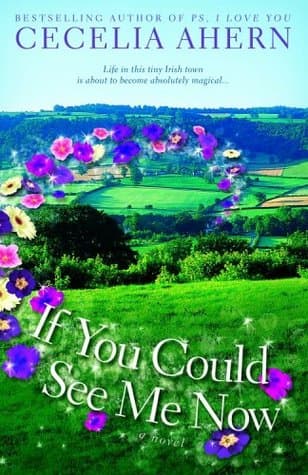
Synopsis
Covers the whole plot, including the ending.
- Difficulty
- Easy
- Pacing
- Moderate
- Mood
- Whimsical, Heartwarming, Reflective, Hopeful
- Read it if
- You enjoy heartwarming stories about self-discovery, a touch of magical realism, and a unique romance that challenges the boundaries of reality.
- Skip it if
- You prefer hard science fiction or fantasy with clear-cut rules, or if you dislike stories with an 'imaginary friend' trope for adults.
If You Could See Me Now Plot Summary
Covers the whole plot, including the ending.
A Life of Strict Order
Elizabeth Egan lives a life of order and control. Her mother abandoned her young, and her father was distant. Elizabeth cares for her six-year-old nephew, Luke, after her free-spirited sister, Saoirse, left him with her. Elizabeth runs a graphic design business. Her personal life is predictable. She lives in a perfectly kept house in Dublin, planning every day to avoid chaos. This is very different from her family history. Luke, a quiet and imaginative boy, is her main focus. She wants to give him stability.
Luke's Invisible Friend
Luke starts talking about a new friend named Ivan. Elizabeth thinks Ivan is just an imaginary friend, common for children. However, Luke's descriptions of Ivan are vivid. He insists Ivan is real. Luke tells stories about adventures and talks with Ivan, often involving new ways of seeing everyday things. Elizabeth, a realist, tries to gently move Luke away from his 'imaginary' companion. She worries he might be retreating too much into fantasy, which reflects her own avoidance of emotional mess and her wish for Luke to be grounded.
Ivan's First Appearance
One evening, Elizabeth finds a man in her living room. He appears out of nowhere. This man says he is Ivan, Luke's friend. Elizabeth is suspicious. She thinks he is an intruder or someone who tricked Luke. Ivan is charming and whimsical. He is not sorry for being there. He says he is a 'friend' for Luke, a concept Elizabeth struggles to understand. He can appear and disappear. His explanations for his existence are vague and fantastical. This further unsettles Elizabeth and challenges her rational view. She tries to make him leave, but he is elusive and persistent.
Unconventional Wisdom
Elizabeth tries to ignore or dismiss him, but Ivan keeps appearing, always with Luke. He offers Luke unique ways of seeing the world, encouraging curiosity and imagination. Elizabeth sees that Ivan brings a spark to Luke's life, but she remains skeptical. Ivan's talks with Elizabeth are often philosophical and lighthearted. Yet, they challenge her strict adherence to logic and order. He points out beauty in imperfections and joy in spontaneity. He quietly shows the emotional walls Elizabeth has built. His unusual wisdom starts to affect her carefully built reality.
A Glimpse of the Impossible
Elizabeth eventually sees Ivan do things that cannot be explained. He appears and disappears at will. He seems to know things he should not. He has an almost magical way of subtly influencing situations. One striking event involves him helping Luke find a lost toy in an impossible way. These events make Elizabeth consider that Ivan is not just an eccentric man or Luke's imagination, but something else. Her logical mind struggles to understand what she sees, leading to confusion and a reluctant acceptance that there is more to reality than she thought.
The Nature of Ivan
Slowly, Ivan explains his true nature. He is not human in the usual sense. He is an 'imaginary friend' who appears for people who need him, often those who are emotionally stuck or lonely. He explains that he helps people find joy, wonder, and connection again. While he mainly appeared for Luke, he is also there for Elizabeth. She needs emotional release and a change in perspective. This revelation is hard for Elizabeth to process. It shatters her view of the world and makes her rethink relationships and existence. She struggles with the idea of being 'seen' by someone like Ivan.
Breaking Down Walls
As Elizabeth spends more time with Ivan, she slowly lets down her guard. Ivan encourages her to face the emotional weight from her past, especially her mother's abandonment and her distant relationship with her father. He helps her see that her need for control comes from a deep fear of chaos and loss. Through gentle encouragement and whimsical adventures, Ivan helps Elizabeth embrace spontaneity, feel her emotions, and reconnect with parts of herself she had suppressed. He takes her on small, magical journeys, showing her the world in a new, more vibrant way. This starts to heal her emotional wounds.
The Return of Saoirse
Elizabeth's sister, Saoirse, Luke's mother, returns to Dublin. She brings a fresh wave of chaos and emotional complexity. Saoirse, still free-spirited and unpredictable, struggles to fit back into Luke's life and Elizabeth's ordered world. Her return forces Elizabeth to confront her lingering resentment and her role as Luke's main caregiver. Ivan helps Elizabeth navigate the difficult family dynamics. He encourages her to talk openly with Saoirse and address old issues. Saoirse's return also makes Ivan's unique nature harder to hide.
A Love Beyond Logic
Despite all logic and her first resistance, Elizabeth falls in love with Ivan. His kindness, his understanding of her, his ability to make her laugh, and his unique way of seeing the world captivate her. She realizes her feelings for him are beyond rational. She has found a connection she thought impossible. This realization is both exciting and scary. She struggles with loving someone who is not fully human and whose existence is temporary. Their bond grows, and Ivan returns her feelings, but with a sad understanding of his temporary role.
Ivan's Purpose Fulfilled
As Elizabeth grows, shedding her fears and embracing life's uncertainties, Ivan's purpose nears completion. She learns to forgive her mother, reconnects with her father, and builds a more honest relationship with Saoirse. She finds new joy and spontaneity in her daily life. Ivan gently explains that his role is to help people, and when they no longer need him, he must leave. The more Elizabeth heals, the less visible Ivan becomes. This is a painful but natural result of his nature. Their love story, while deep, is temporary. It helps Elizabeth find her own strength.
Saying Goodbye
The time comes for Ivan to leave. It is a mix of sorrow and gratitude. Elizabeth and Luke say a final goodbye to Ivan. Elizabeth, though heartbroken, understands his departure means she has grown and is ready to live a full life on her own. Luke, prepared by Ivan, accepts the goodbye with understanding beyond his years. Ivan's last advice to Elizabeth is to keep seeing magic in the world and to live with an open heart. He fades away, leaving Elizabeth and Luke with memories and changed lives.
A New Beginning
After Ivan leaves, Elizabeth's life changes. She keeps her new spontaneity and joy. She is no longer controlled by her need for order. Her relationship with Luke is deeper and more open. She has a more real connection with Saoirse. She learns to value life's imperfections and unexpected turns, finding beauty in everyday things. She misses Ivan, but his lessons and love stay with her, guiding her. Elizabeth continues her graphic design work, now with creativity and passion. She lives a life that is truly her own, full of happiness and the courage to face the unknown.
Principal Figures
Elizabeth Egan
Protagonist
A meticulous graphic designer who cares for her nephew, seeking order amidst family chaos.
Elizabeth is a highly organized and emotionally guarded graphic designer in her early thirties. Raised by an absent mother and a distant father, she developed a fierce need for control and order in her life, believing it protects her from chaos and pain. She has taken on the responsibility of raising her nephew, Luke, after her free-spirited sister, Saoirse, left him. Elizabeth's life is meticulously planned, leaving little room for spontaneity or emotional vulnerability. She initially dismisses Ivan as imaginary, but his presence gradually forces her to confront her past and open her heart to new possibilities and love.
Relationships: Luke (Nephew, whom she cares for deeply); Ivan (Love interest, who helps her heal and grow); Saoirse (Sister, with whom she has a complicated, resentful relationship); Father (Emotionally distant parent)
Ivan
Love Interest/Magical Being
Luke's 'imaginary' friend, a whimsical being who helps Elizabeth reconnect with life.
Ivan is a mysterious, charming, and whimsical character who manifests as Luke's imaginary friend but is, in fact, a magical being designed to help people who are emotionally stuck or lonely. He possesses an uncanny ability to appear and disappear, seems to know things he shouldn't, and offers profound, often poetic, insights into life. Ivan is playful, adventurous, and sees the world with a sense of wonder that challenges Elizabeth's pragmatism. He is patient and understanding, guiding Elizabeth towards emotional healing and self-discovery. His love for Elizabeth is genuine, but he understands his ephemeral nature and purpose.
Relationships: Elizabeth Egan (Love interest, whom he helps transform); Luke (Primary charge, whom he befriends and guides)
Luke
Supporting
Elizabeth's imaginative six-year-old nephew, who first introduces Ivan.
Luke is Elizabeth's quiet, imaginative, and perceptive six-year-old nephew. He is the catalyst for Ivan's appearance, as Ivan initially manifests for him. Luke is sensitive and has a natural openness to wonder and magic, which makes him receptive to Ivan's presence. He relies on Elizabeth for stability and care but finds a unique companionship and understanding in Ivan. Luke's innocent belief in Ivan helps bridge the gap between Elizabeth's rational world and the magical reality Ivan represents. He is a loving child who longs for a stable family life.
Relationships: Elizabeth Egan (Aunt and primary caregiver); Ivan (Close friend and mentor); Saoirse (Mother, with whom he has an on-again, off-again relationship)
Saoirse
Supporting
Elizabeth's free-spirited sister and Luke's mother, who struggles with responsibility.
Saoirse is Elizabeth's younger sister and Luke's biological mother. She is depicted as free-spirited, impulsive, and somewhat irresponsible, often leaving Luke in Elizabeth's care. Her bohemian lifestyle and tendency to disappear for extended periods are a source of constant frustration and resentment for Elizabeth, who feels abandoned and burdened. Saoirse's return to Dublin creates tension and forces Elizabeth to confront their unresolved past. Despite her flaws, Saoirse clearly loves Luke and eventually tries to be a more present mother, though she still struggles with stability.
Relationships: Elizabeth Egan (Sister, with a complex and often strained relationship); Luke (Son)
Elizabeth's Father
Supporting
Elizabeth's emotionally distant father, who struggles with expressing affection.
Elizabeth's father is an emotionally distant and somewhat gruff man who struggled to raise his daughters after his wife left. He is a man of few words, often communicating through actions rather than emotional expression. His inability to provide emotional support contributed to Elizabeth's need for control and her fear of vulnerability. He runs a small business and cares for his daughters in his own way but lacks the warmth and openness Elizabeth craves. His relationship with Elizabeth is strained, but through Ivan's influence, Elizabeth begins to understand and forgive him.
Relationships: Elizabeth Egan (Daughter, with a distant relationship); Saoirse (Daughter)
Elizabeth's Mother
Mentioned
Elizabeth's absent mother, whose departure deeply impacted her daughters.
Elizabeth's mother is not a present character in the book but her absence profoundly shapes Elizabeth's personality and worldview. She left the family when Elizabeth was young, leaving behind a void that Elizabeth attempted to fill with order and control. Her abandonment is a core wound that Elizabeth carries, fueling her fear of chaos and her reluctance to form deep emotional attachments. The memory of her mother's departure is a significant theme that Elizabeth must confront and process with Ivan's help.
Relationships: Elizabeth Egan (Daughter, whose life was deeply affected by her absence); Saoirse (Daughter)
Kevin
Supporting
Elizabeth's colleague and occasional social acquaintance.
Kevin is a colleague of Elizabeth's, working in a similar creative field. He is a kind, somewhat awkward man who clearly holds an affection for Elizabeth, often trying to engage her in social activities or offer support. Elizabeth, in her guarded state, often keeps him at arm's length, viewing him more as a professional contact than a potential romantic interest. He represents the kind of 'normal' relationship Elizabeth could have, but her emotional barriers prevent her from truly connecting with him until she undergoes her transformation.
Relationships: Elizabeth Egan (Colleague, with unrequited romantic interest)
Brenda
Supporting
Elizabeth's friend and confidante, offering practical advice.
Brenda is one of Elizabeth's few close friends, a more grounded and practical woman who often offers Elizabeth advice, though Elizabeth rarely takes it. Brenda serves as a sounding board for Elizabeth's frustrations and worries, particularly regarding Luke and Saoirse. She is a loyal friend but, like Elizabeth, is rooted in the conventional world, making it difficult for her to understand Elizabeth's experiences with Ivan. She represents the 'normal' perspective that Elizabeth is slowly moving away from.
Relationships: Elizabeth Egan (Friend)
Themes & Insights
Identity and Self-Discovery
The novel explores Elizabeth's journey to understand herself beyond the strict facade she built. Her orderly life is a reaction to her chaotic past. Ivan's presence makes her uncover these layers. She finds a more spontaneous, joyful, and emotionally connected self she had hidden. Her journey is about embracing her true feelings and desires, not living a life based on fear and past hurts. This theme is clear as she slowly gives up her need for control and allows herself to experience love and vulnerability.
“Perhaps the reason you are afraid is because you have never had to be yourself. You've always been someone else for someone else.”
The Nature of Reality and Belief
A main theme is the blurring of real and imagined, and the power of belief. Elizabeth, a strong realist, must face Ivan's existence, which defies all logic. The book asks the reader, along with Elizabeth, to consider that reality might be more expansive and magical than common understanding allows. Ivan's existence depends on belief. Elizabeth's journey involves opening her mind to possibilities beyond the tangible. She learns to trust her intuition and heart over strict logic.
“Just because you can't see something doesn't mean it isn't real.”
Love in Unconventional Forms
The novel tells a unique love story between Elizabeth, a human, and Ivan, an 'imaginary friend' come to life. This challenges traditional ideas of romantic love. It shows that connection and intimacy can go beyond physical form or societal expectations. Their love is spiritual and transformative. It focuses on emotional growth and understanding, not traditional partnership. It says that deep love can exist even if it is temporary. Its purpose might be to help personal healing and growth, not permanent companionship.
“Love isn't always about holding on. Sometimes it's about letting go, knowing that the love will always remain.”
Healing from Childhood Trauma
Elizabeth's strict personality and fear of chaos come from her childhood. Her mother abandoned her, and her father was distant. The book shows how these past traumas shaped her adult life. They led to her need for control and her difficulty with vulnerability. Ivan helps Elizabeth confront these wounds. He helps her process her resentment towards her mother and sister. He helps her find forgiveness. This allows her to break free from past patterns and build healthier relationships.
“You've built walls around yourself, Elizabeth, but they don't keep the bad out; they keep the good in.”
The Importance of Imagination and Wonder
Through Luke's innocent belief in Ivan and Ivan's whimsical nature, the novel supports the importance of imagination and a childlike sense of wonder. Elizabeth first dismisses these qualities as childish. But Ivan shows her how embracing imagination can lead to a richer, more joyful life. It is about seeing magic in the ordinary, finding beauty in imperfections, and keeping an open heart to possibilities. This theme is vital for Elizabeth's change. She learns to reconnect with her inner child and see the world in a more vibrant way.
“The world is full of magic, Elizabeth, if only you open your eyes to see it.”
Plot Devices & Literary Techniques
Magical Realism
The integration of a fantastical character (Ivan) into an otherwise realistic setting.
The novel employs magical realism by introducing Ivan, a supernatural being, into the mundane, contemporary setting of Dublin. Ivan's ability to appear and disappear, his profound insights, and his role as an 'imaginary friend' for adults are presented without extensive explanation, treated as an accepted, albeit unusual, part of the narrative world. This device allows for the exploration of themes like belief, reality, and emotional healing through a fantastical lens, while grounding the story in relatable human experiences and emotions, making Elizabeth's internal journey feel more profound.
The Imaginary Friend Trope
Reimagining the concept of an imaginary friend for adult emotional needs.
The book takes the familiar childhood trope of an imaginary friend and elevates it to a significant plot device for an adult protagonist. Ivan initially appears for Luke but is revealed to be there for Elizabeth, serving as a manifestation of her subconscious needs for emotional support, spontaneity, and healing. This twist allows the author to explore adult emotional repression and the idea that some people might need a 'magical' catalyst to break free from their self-imposed limitations, highlighting the enduring human need for connection and guidance, regardless of age.
Symbolism of Order vs. Chaos
Elizabeth's meticulously ordered life symbolizes her emotional control and fear.
Elizabeth's perfectly organized home, meticulously planned schedule, and controlled emotions symbolize her deep-seated fear of chaos and her attempt to prevent further pain after her traumatic childhood. This symbolic contrast is highlighted by Ivan's whimsical, unpredictable nature and Saoirse's free-spirited, chaotic lifestyle. As the narrative progresses, Elizabeth's willingness to embrace disorder and spontaneity in her physical surroundings directly mirrors her emotional growth and her ability to let go of control, signifying her healing and acceptance of life's inherent unpredictability.
The Catalyst Character
Ivan acts as a catalyst, initiating Elizabeth's emotional transformation.
Ivan functions as a catalyst character, whose primary role is to instigate change in the protagonist, Elizabeth. He doesn't have a traditional character arc of his own in the same way Elizabeth does; instead, his existence and actions are entirely geared towards helping her confront her past, break down her emotional barriers, and discover her true self. His whimsical nature, profound insights, and temporary presence are all designed to push Elizabeth out of her comfort zone and facilitate her journey of self-discovery and healing, ultimately leading to his departure once his purpose is fulfilled.
If You Could See Me Now Quotes
“Sometimes the most real things in the world are the things you can't see.”
“You don't have to be perfect to be loved.”
“Imagination is the only weapon in the war against reality.”
“The best things in life are often the ones we don't plan for.”
“We all need someone who makes us forget to be afraid.”
“Happiness is not a destination; it's a way of travel.”
“Sometimes the people who are hardest to love are the ones who need it most.”
“You can't change the past, but you can change how you carry it.”
“Magic is just another word for believing in the impossible.”
“The heart doesn't care about logic; it follows its own rhythm.”
“We are all stories in the end, so make yours a good one.”
“Fear is a cage, but love is the key.”
“Imaginary friends are just real friends you haven't met yet.”
“The world is full of color if you choose to see it.”
Quiz
10 questions on the plot and the characters. Each answer comes with a short explanation.
Question 1
What is Elizabeth Egan's primary personality trait that defines her life at the beginning of the novel?
- Spontaneity and adventure
- Order and control
- Emotional openness and warmth
- Artistic creativity and freedom
Show answer
B. Order and control Elizabeth's life is described as running on order, with her home and emotions arranged meticulously to counteract the chaos of her family background, making control her defining trait.
Question 2
Who is Luke in relation to Elizabeth, and why is he in her care?
- Her son, whom she raises alone after a divorce
- Her nephew, left by her free-spirited sister
- Her adopted brother, orphaned in an accident
- Her foster child from a social program
Show answer
B. Her nephew, left by her free-spirited sister Luke is Elizabeth's six-year-old nephew, and she cares for him because her sister, who is free-spirited like their alcoholic mother, left him in Elizabeth's charge.
Question 3
What is Ivan's role when he first enters the story?
- Elizabeth's new coworker at her job
- Luke's mysterious new grown-up friend
- A therapist hired to help Elizabeth with stress
- A neighbor who moves in next door
Show answer
B. Luke's mysterious new grown-up friend Ivan is introduced as Luke's mysterious new grown-up friend, who brings adventure and a colorful perspective into their lives, sparking the central plot.
Question 4
How does Ivan's presence primarily affect Elizabeth's life?
- He helps her organize her finances and career
- He introduces chaos and disrupts her routine
- He opens her eyes to a new, more spontaneous way of living
- He convinces her to reconnect with her estranged mother
Show answer
C. He opens her eyes to a new, more spontaneous way of living With his penchant for adventure and colorful take on life, Ivan challenges Elizabeth's ordered existence, showing her a more spontaneous and joyful way of living.
Question 5
What key question does the novel raise about Ivan's character?
- Whether he is a figment of Elizabeth's imagination
- Whether he is for real or has a magical nature
- Whether he is secretly related to Elizabeth's family
- Whether he will leave to pursue his own dreams
Show answer
B. Whether he is for real or has a magical nature The book's description highlights the central mystery: 'Is Ivan for real?' This ties into the fantasy element, suggesting he might be slightly less believable than Elizabeth, adding a touch of magic to the story.
Question 6
What aspect of Elizabeth's family background contributes to her need for order?
- A wealthy upbringing with strict parents
- The chaos of an alcoholic mother and emotionally distant father
- Growing up as an only child in a peaceful home
- Being raised by grandparents after her parents' death
Show answer
B. The chaos of an alcoholic mother and emotionally distant father Elizabeth's alcoholic mother who left when she was young and her emotionally distant father created a chaotic family environment, which she counteracts by imposing order in her adult life.
Question 7
Which theme is most central to 'If You Could See Me Now' based on the book description?
- The pursuit of career success in a competitive world
- Balancing tradition with modernity in relationships
- The transformative power of love and magic in overcoming personal rigidity
- The challenges of single parenthood in contemporary society
Show answer
C. The transformative power of love and magic in overcoming personal rigidity The novel combines romance with a touch of magic, focusing on how Ivan's influence helps Elizabeth break free from her ordered, rigid life, highlighting transformation through love and whimsy.
Question 8
What does the phrase 'Not Seeing is believing' in the book description imply about the story?
- That characters must learn to trust without visual proof
- That the book is about blindness or visual impairment
- That Elizabeth refuses to acknowledge her family's problems
- That Ivan is invisible to everyone except Luke
Show answer
A. That characters must learn to trust without visual proof This phrase suggests a twist on 'seeing is believing,' hinting at the magical or unreal aspects of Ivan's character, where believing in him might not rely on conventional sight or proof.
Question 9
How does Elizabeth's sister mirror their mother's behavior?
- By becoming a successful businesswoman and abandoning family
- By being emotionally distant and critical of Elizabeth
- By following a free-spirited path and leaving her son in Elizabeth's care
- By struggling with addiction and needing Elizabeth's support
Show answer
C. By following a free-spirited path and leaving her son in Elizabeth's care Elizabeth's sister is described as free-spirited and following in their mother's footsteps, specifically by leaving her son Luke with Elizabeth, echoing their mother's abandonment.
Question 10
In what way does the book blend genres according to its description?
- It combines mystery and historical fiction elements
- It merges romance with a touch of magic or fantasy
- It integrates science fiction with family drama
- It fuses thriller and psychological horror themes
Show answer
B. It merges romance with a touch of magic or fantasy The description labels it as a love story with heart and just a touch of magic, placing it in the fantasy-romance genre, where realistic characters like Elizabeth interact with slightly less believable elements like Ivan.
If You Could See Me Now FAQ
What is 'If You Could See Me Now' about?
The novel follows Elizabeth Egan, a rigidly organized woman who cares for her nephew Luke after her free-spirited sister abandons him. Elizabeth's orderly life is disrupted when Luke befriends Ivan, a mysterious man who encourages spontaneity and joy, leading Elizabeth to question reality and open her heart.
Why should I read 'If You Could See Me Now'?
This book offers a heartwarming blend of romance and magical realism, exploring themes of healing from childhood trauma, embracing joy, and finding love in unexpected places. Cecelia Ahern's signature mix of emotional depth and whimsical storytelling makes it both uplifting and thought-provoking.
What is the background/setting of 'If You Could See Me Now'?
The story is set in contemporary Ireland, primarily in Elizabeth's meticulously maintained home and the surrounding community. The setting reflects Elizabeth's controlled environment, which contrasts with the chaotic family history involving her alcoholic mother, distant father, and unreliable sister.
What are the most memorable quotes from the book?
Key quotes include Ivan's advice to 'see the world through a child's eyes' and Elizabeth's realization that 'sometimes the most real things in the world are the things you can't see.' These lines capture the novel's themes of imagination, belief, and emotional visibility.
What writing style does Cecelia Ahern use in this book?
Ahern employs a lighthearted yet insightful third-person narrative, blending realistic emotional drama with elements of magical realism. Her prose is accessible and warm, using vivid descriptions to contrast Elizabeth's structured world with Ivan's whimsical influence.
What minor details add significant meaning to the story?
Small details like Elizabeth's perfectly arranged home, Luke's imaginary friend conversations, and Ivan's colorful clothing symbolize larger themes. For example, Elizabeth's control over her environment mirrors her emotional repression, while Ivan's vibrant attire represents the joy missing from her life.
What are some subtle foreshadowing moments in the book?
Early hints include Luke's insistence that only he and Elizabeth can see Ivan, suggesting Ivan's supernatural nature. Elizabeth's gradual softening toward spontaneity foreshadows her eventual acceptance of love and magic, challenging her initial skepticism.
What unexpected character connections exist in the story?
Ivan is revealed to be an imaginary friend who becomes real through belief, connecting him to Elizabeth's childhood trauma and her need for emotional healing. This ties Elizabeth's past with her present growth, as Ivan helps her reconcile with her family's abandonment.
What are Elizabeth's unspoken motivations throughout the book?
Beneath her controlled exterior, Elizabeth is driven by a deep fear of abandonment and chaos, stemming from her mother's alcoholism and departure. She seeks stability to protect herself and Luke, but unconsciously yearns for the love and freedom she missed in childhood.
What psychological complexities do the main characters exhibit?
Elizabeth shows obsessive-compulsive tendencies as a coping mechanism for trauma, while Ivan embodies the therapeutic role of an imaginary friend, helping her process emotions. Luke represents innocence and belief, bridging the gap between Elizabeth's rigidity and Ivan's magic.
What are the major emotional turning points in the novel?
Key moments include Elizabeth allowing Ivan into her home, her realization that Ivan is Luke's imaginary friend, and her decision to believe in Ivan's reality despite her doubts. The climax involves her embracing love and magic, leading to personal transformation.
How do the relationship dynamics evolve between Elizabeth and Ivan?
Their relationship shifts from skepticism and resistance to trust and romantic love. Initially, Elizabeth sees Ivan as a disruption, but as he helps her reconnect with joy and heal from past wounds, she learns to accept vulnerability and the possibility of a magical connection.
Which parts of the story remain ambiguous or open-ended?
The nature of Ivan's existence is left somewhat ambiguous—whether he is purely magical, a psychological manifestation, or a blend of both. The ending also leaves Elizabeth's future with Ivan open to interpretation, focusing more on her emotional growth than concrete resolutions.
What are controversial scenes or decisions in the book?
Some readers debate Elizabeth's initial resistance to Ivan and her strict control over Luke, viewing it as overly harsh. Others question the ethics of an imaginary friend becoming a romantic partner, blurring lines between fantasy and reality in relationships.
How does 'If You Could See Me Now' end, and what does it mean?
The ending reveals Ivan as an imaginary friend who becomes real through belief, and Elizabeth chooses to embrace this magic, finding love and healing. It symbolizes that emotional truths and connections can be as real as tangible ones, encouraging readers to value imagination and heart.
About the author
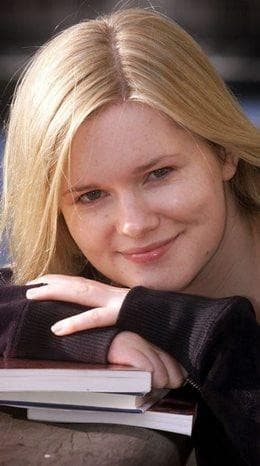
Cecelia Ahern is an Irish author known for her heartwarming and often magical realist fiction. Her debut novel, P.S. I Love You, became an international bestseller and was adapted into a popular film. Ahern's other notable works include "Where Rainbows End" (also adapted for film as "Love, Rosie"), "The Gift," and "The Book of Tomorrow." Her writing frequently explores themes of love, loss, and the power of human connection.
Similar books
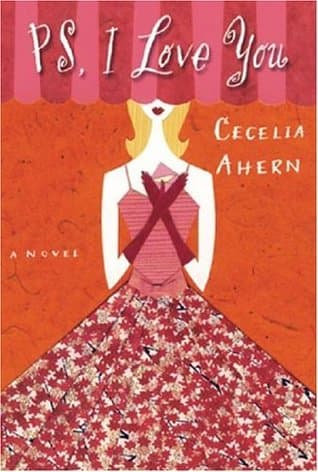
- P.S. I Love You
Cecelia Ahern
4.0 (337k) average on GoodreadsRomanceFeatures a unique premise involving an unconventional form of love and healing after loss, with a touch of magical realism.
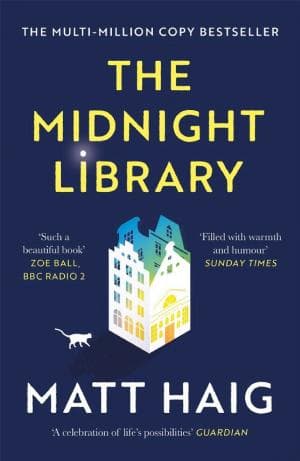
- The Midnight Library
Matt Haig
Explores self-discovery and life choices with a fantastical element, leading the protagonist to a more fulfilling existence.
- A Man Called Ove
Fredrik Backman
4.4 (569k) average on GoodreadsFictionFeatures a curmudgeonly protagonist whose life is transformed by unexpected relationships and a shift in perspective.
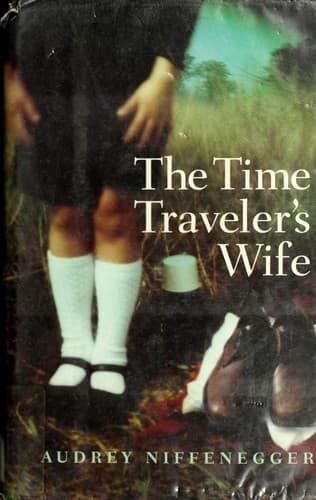
- The Time Traveler's Wife
Audrey Niffenegger
4.0 (1.6M) average on GoodreadsFantasyNiffenegger's novel, while also featuring fantastical elements impacting relationships, is more complex and melancholic, focusing on fate, loss, and the challenges of a love transcending time. Ahern's work is more optimistic and centers on personal healing and rediscovering joy through a whimsical friendship, with a less intricate fantastical framework.
- Harry Potter and the Sorcerer's Stone
J.K. Rowling
4.5 (7M) average on GoodreadsFantasyRescued from a miserable life under the stairs, an orphaned boy discovers he's a wizard destined for a magical school, where he uncovers a dangerous secret tied to the dark wizard who murdered his parents.
- The Hunger Games
Suzanne Collins
4.3 (6.4M) average on GoodreadsFantasyIn a future where children fight to the death on live television, Katniss Everdeen volunteers for the arena, turning a death sentence into a fight for survival and a spark of rebellion.



Enjoyed the summary?
A summary gives you the shape of the book. The book itself has the detail, the examples and the voice.
Find If You Could See Me Now on AmazonAs an Amazon Associate, BookBrief earns from qualifying purchases. How we're funded