
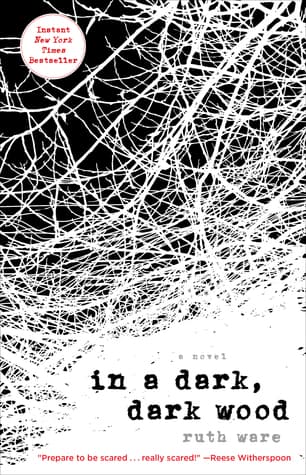
Synopsis
Covers the whole plot, including the ending.
- Difficulty
- Medium
- Pacing
- Moderate
- Mood
- Suspenseful, Claustrophobic, Mysterious, Unsettling
- Read it if
- You enjoy isolated settings, unreliable narrators, and a slow burn mystery with a thrilling climax.
- Skip it if
- You prefer fast-paced action from the start or dislike stories with significant memory loss as a plot device.
In a Dark, Dark Wood Plot Summary
Covers the whole plot, including the ending.
The Invitation and the Accident
Leonora Shaw, a reclusive crime writer known as Lee, receives an unexpected invitation to a hen party for Clare Gault, a childhood friend she hasn't seen in ten years. Despite her hesitation, a sense of obligation and lingering curiosity about their abrupt separation makes her accept. The party is set to take place in a remote, glass house in Northumberland. The story opens with Lee waking up in a hospital bed, disoriented and injured, with no memory of how she got there. Detective Inspector Hallett informs her that someone is dead, and she was found unconscious at the scene, making her a key witness, or possibly more.
Arrival at The Glass House
Lee travels to the remote glass house, a modern structure nestled deep within a dark wood. She is the last to arrive and is immediately struck by the house's isolated and unsettling atmosphere. She reconnects with Nina, another friend from her past with Clare, and meets the other attendees: Flo, Clare's intensely possessive best friend; Tom, Clare's laid-back fiancé; and Melanie, a quiet, pregnant woman who seems out of place. The initial interactions are strained, marked by forced pleasantries and underlying tension, particularly between Lee and Flo.
Unsettling Revelations and Old Tensions
As the hen party continues, the house's isolation amplifies the existing tensions within the group. Flo's controlling nature and fierce loyalty to Clare become more apparent, making Lee uncomfortable. Lee learns that Clare and Tom met through a dating app, and Tom is significantly younger than Clare. Old resentments from their school days, particularly surrounding Lee's sudden departure, resurface. Lee also discovers that Tom has a history with Nina, adding another layer of unspoken tension to the already strained atmosphere. The group's alcohol consumption and the remote setting create an increasingly claustrophobic environment.
The Ouija Board and the Warning
During a tense evening, Flo suggests they play with a Ouija board, despite Lee's and Nina's reluctance. The session quickly turns dark when the board spells out ominous messages, seemingly directed at Clare, warning her to 'be careful' and hinting at betrayal. The atmosphere becomes charged with fear and suspicion, as some believe the board is genuinely communicating with a spirit, while others suspect one of the attendees is manipulating it. This event further heightens the paranoia and distrust among the group, making everyone question each other's motives and secrets.
Lee's Flashbacks and the Missing Phone
Lee begins to experience fragmented flashbacks and a growing sense of unease. She recalls snippets of conversations and unsettling images, but the full picture remains elusive. She realizes her phone is missing, adding to her feeling of vulnerability and isolation. The heavy drinking and lack of sleep contribute to her disorientation. The remote location and the increasing hostility among the group make her feel trapped. She starts to suspect that something truly sinister is at play, and that the 'accident' she was involved in might not have been an accident.
The Confrontation and the Accident
The night of the 'accident' is a blur for Lee, but she gradually pieces together fragments. There was a heated argument, possibly involving Tom and Clare, and then a struggle. Lee recalls being on the stairs, trying to intervene or escape. The exact details are obscured by her trauma and the head injury she sustained. She remembers falling, a sharp pain, and then darkness. She wakes up in the hospital, haunted by the feeling that she witnessed something terrible, but unable to recall the crucial moments that led to the death of one of the partygoers.
Police Investigation and Growing Suspicions
Back in the hospital, Detective Inspector Hallett continues to interview Lee, pressing her for details about the events at the glass house. Lee's amnesia frustrates both herself and the police, as her fragmented memories offer tantalizing clues but no definitive answers. Hallett reveals that Tom, Clare's fiancé, is the deceased. This revelation shocks Lee, but also intensifies her suspicion about the other partygoers. She begins to actively try and recall the events, realizing that her own safety and the truth depend on her memory returning. The atmosphere of suspicion extends to the police, who view Lee as a potential suspect.
The Truth About the Past
As Lee's memories slowly return, she revisits the traumatic event that caused her and Clare's decade-long estrangement. During their school days, Clare had been involved with a manipulative and dangerous boy named Michael. Lee, trying to protect Clare, had confronted Michael, leading to a violent altercation where Michael pushed Lee down a flight of stairs, causing her to break her arm and suffer a severe concussion. Clare, under Michael's influence, had blamed Lee for the incident, leading to their painful separation. This memory highlights Clare's susceptibility and the depth of past betrayals.
The Full Revelation of the Hen Party Events
Lee finally remembers the full sequence of events on the night of Tom's death. She recalls overhearing Clare and Tom arguing, with Clare accusing Tom of infidelity with Nina. Flo, fiercely protective of Clare, had intervened, physically confronting Tom. In the ensuing struggle on the stairs, Flo had pushed Tom, causing him to fall to his death. Lee had witnessed the entire event and, in her attempt to help or intervene, had also fallen, sustaining her own head injury. The memory is clear and horrifying, revealing Flo's desperate act of loyalty and Clare's complicity in the cover-up.
Confrontation and Resolution
Armed with her recovered memories, Lee confronts Clare, who admits to witnessing Flo push Tom and then helping Flo to stage the scene to look like an an accident, fearing the consequences for her friend. Clare also confesses that she was pregnant with Tom's child, adding another layer of tragedy and motive to her actions. Lee then provides her full testimony to DI Hallett, detailing Flo's role in Tom's death and Clare's complicity. Flo is arrested, and Clare faces the repercussions of her actions and her silence. Lee, having faced her past and brought the truth to light, finds closure.
Principal Figures
Leonora 'Lee' Shaw
Protagonist
A reclusive crime writer haunted by her past.
Lee is a successful crime novelist who writes under the pseudonym Leonora Shaw. She is introverted, observant, and carries the weight of a painful past, particularly her abrupt estrangement from her childhood friend, Clare. Her amnesia after the hen party accident forces her to confront long-buried memories and her own role in the unfolding tragedy. She is driven by a strong moral compass, even when it means exposing uncomfortable truths.
Relationships: Clare Gault (Childhood best friend, estranged for ten years, complex and ultimately fractured bond.); Nina (Former school friend, a more distant but rekindled connection.); Flo (Clare's fiercely loyal friend, antagonist to Lee.)
Clare Gault
Central Figure
The bride-to-be, whose past and present actions drive the plot.
Clare is the enigmatic bride whose hen party sets the events in motion. She is charming but also manipulative and prone to self-preservation. She has a history of making poor choices and relying on others to protect her, particularly from the consequences of her actions. Her sudden re-entry into Lee's life forces Lee to confront their shared past. Clare's vulnerability and her capacity for complicity are central to the mystery.
Relationships: Leonora 'Lee' Shaw (Childhood best friend, estranged, complicated by past trauma and present events.); Flo (Fiercely loyal best friend, almost co-dependent.); Tom (Fiancé, their relationship is revealed to be troubled.); Nina (Friend, but also a rival for Tom's affections.)
Flo
Antagonist
Clare's fiercely protective and possessive best friend.
Flo is presented as Clare's overbearing and intensely loyal best friend. She is immediately suspicious of Lee's presence at the hen party and acts as a barrier between Lee and Clare. Her protectiveness verges on obsession, making her volatile and unpredictable. She harbors deep-seated resentment towards anyone she perceives as a threat to Clare, and her actions are driven by a fierce, if misguided, love for her friend. She is revealed to be the true killer.
Relationships: Clare Gault (Obsessively loyal best friend.); Leonora 'Lee' Shaw (Antagonistic, views Lee as a threat to Clare.)
Tom
Victim/Supporting
Clare's charming but problematic fiancé.
Tom is Clare's fiancé and the victim whose death initiates the police investigation. He is depicted as charming and handsome, but also as someone with a questionable past and a tendency towards infidelity. His relationship with Clare is shown to be troubled, and his presence at the hen party, particularly his history with Nina, creates significant tension among the group. His death is the central mystery that Lee must unravel.
Relationships: Clare Gault (Fiancé, but their relationship is fraught with infidelity and arguments.); Nina (Former fling/lover, causing tension at the hen party.)
Nina
Supporting
A former school friend of Lee and Clare, with a connection to Tom.
Nina is another friend from Lee and Clare's school days. She is more grounded and pragmatic than some of the other characters, but also carries her own secrets and resentments. She quickly forms a tentative alliance with Lee at the hen party, sharing a sense of unease. Her past romantic involvement with Tom adds another layer of complexity and motive to the unfolding drama, making her a person of interest in the investigation.
Relationships: Leonora 'Lee' Shaw (Former school friend, rekindled connection.); Clare Gault (Former school friend, but their relationship is strained.); Tom (Former lover, a source of tension and suspicion.)
Melanie
Supporting
A quiet, pregnant woman attending the hen party.
Melanie is an acquaintance of Clare's, seemingly out of place at the raucous hen party. She is pregnant and generally quiet, often observing the escalating tensions rather than participating. Her presence serves as a contrast to the volatile dynamics of the other women. She offers a more detached perspective on the events, though her observations are limited by her desire to avoid conflict and her own physical discomfort.
Relationships: Clare Gault (Acquaintance from work/social circle.)
Detective Inspector Hallett
Supporting
The police officer investigating Tom's death.
DI Hallett is the lead detective assigned to the case of Tom's death. He is persistent, methodical, and initially suspicious of Lee due to her amnesia and her presence at the scene. He patiently interviews Lee, trying to extract information while navigating her memory loss. He represents the external force of justice, pushing Lee to recall the truth and ultimately bringing the culprits to justice.
Relationships: Leonora 'Lee' Shaw (Interrogator/investigator.)
Michael
Mentioned
Clare's manipulative ex-boyfriend from their school days.
Michael is a character from Lee and Clare's past whose manipulative and violent actions led to Lee's injury and the initial estrangement between the friends. Though only appearing in flashbacks, his influence on Clare's character and the traumatic memory he represents are crucial to understanding the underlying dynamics of their relationship and Clare's capacity for poor judgment.
Relationships: Clare Gault (Manipulative ex-boyfriend.); Leonora 'Lee' Shaw (Caused her physical injury and the initial rift with Clare.)
Themes & Insights
The Unreliability of Memory
Lee's amnesia is central to the plot, showing how memory can be fragmented, repressed, and influenced by trauma. The story explores the struggle to reconstruct past events and the gradual, often painful, return of buried truths. This theme is evident from the opening scene where Lee wakes up disoriented in the hospital, and continues as she grapples with fragmented flashbacks, forcing the reader to question what truly happened and who can be trusted.
“My mind was a blank. It was a blank, and then it was a storm, a tempest of images without context, sounds without meaning.”
Friendship, Loyalty, and Betrayal
The novel explores the complex and often destructive nature of female friendships, particularly the intense bond between Clare and Flo, and the fractured history between Clare and Lee. Loyalty is a double-edged sword, leading to both protection and devastating betrayal. Flo's extreme loyalty to Clare ultimately drives her to murder, while Clare's betrayal of Lee in their youth, and her complicity in the cover-up, reveal the darker side of these relationships. The theme questions the boundaries of friendship and the sacrifices one is willing to make.
“Some friendships are like that. So intense, so total, that they become a kind of prison.”
Secrets and Lies
The entire plot is driven by a web of secrets and lies, both past and present. From the decade-old secret of why Lee and Clare stopped speaking to the immediate secrets surrounding Tom's death, the characters are constantly concealing truths. The isolated glass house becomes a pressure cooker for these hidden narratives, forcing them to the surface. The novel shows how secrets can fester, distort relationships, and ultimately lead to tragic consequences, as the truth about Tom's death is slowly and painfully uncovered.
“The truth has a way of coming out, eventually. Even if it's dragged kicking and screaming into the light.”
The Deceptive Nature of Appearances
Many characters and situations in the novel are not as they initially seem. The idyllic setting of the hen party quickly turns sinister, and the characters' outward personas often mask deeper insecurities, resentments, and even violent tendencies. Clare, initially presented as the innocent bride, is revealed to be complicit in a cover-up. Tom, the charming fiancé, has a history of infidelity. This theme highlights the dangers of judging people and situations based on superficial observations, reinforcing the novel's thriller elements.
“The house was all glass, but it held more secrets than any stone castle.”
Plot Devices & Literary Techniques
Amnesia
Lee's temporary memory loss drives the mystery.
Lee's amnesia following her head injury is the primary plot device, creating suspense and forcing both the protagonist and the reader to piece together the events. It allows for a gradual reveal of information, building tension as Lee's fragmented memories slowly return. This device also creates a sense of vulnerability for Lee, making her an unreliable narrator at first and placing her under suspicion, while simultaneously allowing for flashbacks to reveal crucial past events.
Isolated Setting (The Glass House)
A remote, modernist house in a dark wood intensifies claustrophobia.
The remote, modernist glass house, deep within a foreboding wood, serves as a crucial plot device. Its isolation cuts the characters off from the outside world, heightening their paranoia and making escape impossible once events turn sinister. The transparency of the glass walls, ironically, does not offer clarity but rather a distorted view, reflecting the characters' inability to see the truth. The 'dark, dark wood' surrounding it creates a gothic, fairytale-like atmosphere, reinforcing the sense of impending dread.
Flashbacks
Interspersed memories reveal past traumas and motives.
Flashbacks are used throughout the novel to gradually reveal Lee's past with Clare, particularly the traumatic event that led to their estrangement. These fragmented memories are triggered by current events and her attempts to recall the hen party, providing crucial context for the characters' motivations and the deep-seated resentments that contribute to the current tragedy. They serve to deepen the mystery and explain the complex dynamics between the characters, particularly Lee, Clare, and Flo.
Unreliable Narrator
Lee's amnesia makes her an initially untrustworthy perspective.
Due to her amnesia, Lee initially acts as an unreliable narrator. Her inability to recall crucial events means the reader only gets fragmented, subjective information, mirroring her own confusion. This device generates suspense and encourages the reader to question every detail and character. As her memory returns, her reliability increases, but the initial uncertainty keeps the reader engaged in trying to solve the mystery alongside her, fostering a sense of shared discovery and surprise.
In a Dark, Dark Wood Quotes
“In a dark, dark wood, there was a dark, dark house. And in the dark, dark house, there was a dark, dark room. And in the dark, dark room, there was a dark, dark box. And in the dark, dark box, there was...”
“The truth, I'm discovering, is a very malleable thing. It can be twisted, shaped, obscured. It can even be forgotten.”
“Everyone has secrets. It's just a matter of time before they come out.”
“Sometimes the people you think you know best are the ones who surprise you most.”
“Fear is a strange thing. It can make you do things you never thought you were capable of.”
“There are some things you can never outrun, no matter how fast you go.”
“The past is never really dead. It's not even past.”
“We all carry our own baggage, don't we? And sometimes, that baggage is heavier than we let on.”
“It's funny, isn't it? How a single decision can change everything.”
“The more you try to forget something, the more it seems to stick.”
“Sometimes silence is the loudest sound of all.”
“You can never truly know what goes on behind closed doors.”
“There's a fine line between love and hate, and sometimes it's hard to tell which side you're on.”
Quiz
10 questions on the plot and the characters. Each answer comes with a short explanation.
Question 1
What is the primary event that brings Nora Shaw and her old friends together after ten years?
- A high school reunion
- Clare's wedding
- Clare's hen do (bachelorette party)
- A mutual friend's birthday party
Show answer
C. Clare's hen do (bachelorette party) The story begins with Nora receiving an unexpected invitation to Clare's hen do, an event that forces her to confront her past.
Question 2
What is Nora's profession at the beginning of the book?
- Journalist
- Crime novelist
- Teacher
- Lawyer
Show answer
B. Crime novelist Nora is a crime novelist, a detail that adds an interesting meta-narrative layer given the events she experiences.
Question 3
Where does the hen do take place?
- A secluded cabin in the woods
- A glass house in Northumberland
- A remote island retreat
- A luxury hotel in London
Show answer
B. A glass house in Northumberland The hen do is held at a very distinctive glass house in a remote part of Northumberland, which contributes significantly to the isolated and eerie atmosphere.
Question 4
What is the name of the man Clare is marrying, who is also Nora's ex-boyfriend?
- James
- Tom
- Floyd
- Oliver
Show answer
D. Oliver Clare is marrying Oliver, which is a significant source of tension and unresolved feelings for Nora, as Oliver was her ex-boyfriend.
Question 5
What is the key detail Nora initially cannot remember about the night of the murder due to her injuries?
- Who else was present at the house
- The weapon used
- The identity of the victim
- Her own involvement in the events
Show answer
C. The identity of the victim Nora wakes up in the hospital with amnesia regarding the identity of the person who died, a central mystery that drives the first part of the narrative.
Question 6
Which character is presented as the 'host' or organizer of the hen do at the glass house?
- Nora
- Clare
- Flo
- Melanie
Show answer
C. Flo Flo (Floyd) is the enthusiastic, somewhat overbearing organizer of the hen do, who has rented the glass house and planned the activities.
Question 7
What is the significant secret from Nora and Clare's past that resurfaces during the hen do?
- A shared secret admirer
- A prank that went horribly wrong in school
- Nora stealing Clare's boyfriend
- Clare's involvement in a past crime
Show answer
B. A prank that went horribly wrong in school A key piece of their shared history is a school prank involving Oliver's older brother, Tom, which led to tragic consequences and Nora's abrupt departure from school.
Question 8
What is the underlying theme explored through Nora's unreliable narration and memory loss?
- The nature of forgiveness
- The power of social media
- The subjectivity of truth and memory
- The impact of wealth on relationships
Show answer
C. The subjectivity of truth and memory Nora's amnesia and her gradual recovery of memories highlight how personal perspectives and traumatic events can distort or suppress the truth, making the reader question what truly happened.
Question 9
Who is revealed to be the true killer at the end of the novel?
- Clare
- Flo
- Nora
- Tom (Oliver's brother)
Show answer
C. Nora It is revealed that Nora herself, in a moment of extreme stress and self-defense, was responsible for the death during the hen do, a memory she had suppressed.
Question 10
What is the significance of the glass house architecture in the context of the story's themes?
- It symbolizes transparency and honesty among the characters.
- It represents the characters' vulnerability and the inability to hide secrets, despite their attempts.
- It highlights the beauty of nature surrounding the secluded location.
- It serves as a metaphor for modern luxury and detachment from reality.
Show answer
B. It represents the characters' vulnerability and the inability to hide secrets, despite their attempts. The glass house, with its lack of privacy and constant visibility, metaphorically reflects the characters' inability to keep their pasts and secrets hidden, eventually leading to their exposure and confrontation.
In a Dark, Dark Wood FAQ
What is the central premise of 'In a Dark, Dark Wood'?
The story revolves around Leonora Shaw, a reclusive crime writer, who is invited to the hen party of her estranged childhood friend, Clare Cavendish. The party takes place in a remote glass house in the Northumberland woods, and the narrative alternates between Nora's present-day recovery in a hospital after an unspecified incident and the events leading up to it at the hen party.
Who are the key characters attending Clare's hen party?
Besides Nora and Clare, the main attendees are Flo, Clare's intensely loyal best friend and organizer of the hen do; Nina, a university friend of Clare's; Tom, Clare's ex-boyfriend who mysteriously shows up; and Melanie, Tom's new girlfriend. Each character brings their own history and secrets to the secluded gathering.
What event triggers Nora's hospitalization and memory loss?
Nora wakes up in a hospital bed with a head injury and partial amnesia, having been involved in a violent incident at the hen party. She is told that someone is dead, and she is a witness, possibly a suspect, struggling to piece together the chaotic events of the final night, including who was killed and by whom.
What is the significance of the remote glass house setting?
The modern, isolated glass house in the Northumberland woods acts as a character in itself, enhancing the sense of claustrophobia and vulnerability. Its transparent walls offer no real privacy, symbolizing how secrets are exposed, while its remote location cuts the group off from the outside world, intensifying the psychological tension and fear when things go wrong.
What is the primary conflict between Nora and Clare that led to their estrangement?
Nora and Clare were inseparable as children, but their friendship ended abruptly when Nora left school after a traumatic incident involving a boy named David. Nora's abandonment of Clare, coupled with unspoken resentments and perceived betrayals from their shared past, created a decade-long rift that Clare's hen party invitation attempts to bridge, albeit unsuccessfully.
What 'hidden detail' about the hen party's location connects to Nora's past?
The remote glass house is revealed to be owned by Tom, Clare's ex-boyfriend and the very person who was involved in the traumatic incident that caused Nora to leave school and sever ties with Clare. This detail is initially withheld from Nora, adding to her discomfort and suspicion once she discovers it, highlighting the deliberate manipulation of the guest list.
How does the 'dark, dark wood' nursery rhyme motif subtly foreshadow the plot?
The nursery rhyme's progression from a dark wood to a dark house, then a dark room, and finally a coffin, mirrors the increasing isolation and dread experienced by the characters. It subtly foreshadows the descent into violence and death, suggesting that the secrets buried within the 'dark room' of their past will ultimately lead to a grim conclusion.
What seemingly innocuous gift does Nora bring that later takes on a darker significance?
Nora brings a vintage ouija board as a hen party gift, a seemingly playful item meant to evoke childhood nostalgia. However, the ouija board session quickly turns unsettling, with messages hinting at past events and future dangers, becoming a catalyst for revealing buried resentments and escalating the psychological tension among the guests.
What is the true nature of Flo's intense loyalty to Clare?
Flo's unwavering loyalty to Clare is driven by a deep-seated co-dependency and a desire to protect Clare at all costs, bordering on obsession. It's revealed that Flo harbors resentment towards Nora for abandoning Clare and feels a proprietary claim over Clare's affections, making her suspicious and hostile towards Nora's presence.
How does Nora's identity as a crime writer influence her perspective and the narrative?
Nora's profession as a crime writer gives her a natural inclination to observe details, analyze human behavior, and construct narratives, which she applies to the unfolding mystery around her. This also makes her a somewhat unreliable narrator, as her writer's mind might embellish or interpret events in a dramatic fashion, especially given her amnesia.
Discuss the psychological impact of the isolated setting on the characters.
The extreme isolation of the glass house amplifies pre-existing tensions and anxieties among the characters. Cut off from the outside world, they are forced to confront their unresolved conflicts and personal demons, leading to heightened paranoia, irrational behavior, and a rapid breakdown of social norms and civility as the situation deteriorates.
How does Nora's amnesia serve as a psychological device in the narrative?
Nora's amnesia creates suspense and forces the reader to experience the mystery alongside her, piecing together fragmented memories and unreliable accounts. It also highlights the psychological trauma she's endured, and the way the mind can suppress painful truths, making her journey of recovery a quest for self-discovery and a confrontation with her past actions.
Was Clare truly happy about Nora attending her hen party, or was there an ulterior motive?
Clare's true feelings are ambiguous. While she expresses a desire to reconcile, the presence of Tom, the choice of his house, and her passive-aggressive behavior suggest a manipulative element. It's debatable whether she genuinely wanted to mend fences or if she orchestrated the reunion to confront Nora about their past, possibly even for revenge, using the hen party as a stage.
To what extent is Nora responsible for the tragic events at the hen party?
Nora's responsibility is complex and open to interpretation. While she didn't directly cause the death, her past actions (abandoning Clare) and her presence at the hen party certainly ignited old wounds and heightened tensions. Her struggle with memory also makes it difficult to definitively assign blame, as her own actions during the chaotic final night are obscured.
What is the significance of the 'glass house' motif in the context of secrets and truth?
The glass house symbolizes the fragility of appearances and the ultimate inability to hide secrets. Just as the glass walls offer no true privacy, the characters' attempts to conceal their past betrayals and resentments are ultimately futile. The transparency of the house contrasts sharply with the opacity of their hidden truths, which are eventually shattered.
Could the ending be interpreted as a form of poetic justice for the characters?
The ending can be seen as a form of dark poetic justice, where the long-buried secrets and resentments from the characters' pasts finally erupt, leading to fatal consequences. Those who harbored intense bitterness or acted with manipulative intent face severe repercussions, suggesting that unresolved trauma and a lack of accountability will inevitably lead to destruction.
Was the identity of the killer a complete surprise, or were there subtle clues throughout?
While the ultimate reveal of the killer is designed to be a twist, there are subtle clues woven into the narrative for attentive readers. The killer's intense emotional investment, their protective instincts, and their suppressed anger are hinted at through their interactions and reactions to others, particularly concerning Clare and Nora's shared history, making the reveal satisfying rather than completely out of left field.
About the author
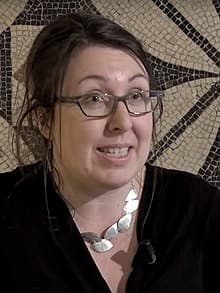
Ruth Ware is a British author known for her psychological thrillers and mysteries. Her notable works include "The Woman in Cabin 10," "In a Dark, Dark Wood," "The Turn of the Key," and "The Death of Mrs. Westaway," all of which explore themes of suspense and intrigue. Ware's writing often features complex characters and intricate plots.
Similar books
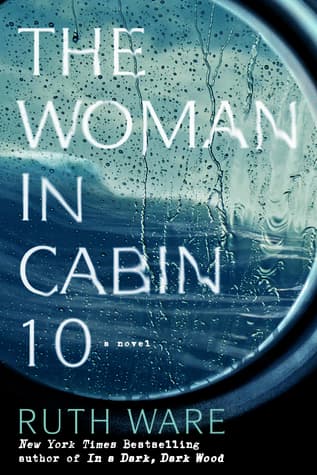
- The Woman in Cabin 10
Ruth Ware
3.7 (375k) average on GoodreadsThrillerAnother Ruth Ware novel with an unreliable narrator, an isolated setting, and a central mystery surrounding a possible murder.
- Gone Girl
Gillian Flynn
4.1 (2.3M) average on GoodreadsThrillerWhile both novels explore psychological manipulation and the darker aspects of relationships, Ware's In a Dark, Dark Wood focuses more on the immediate aftermath of a traumatic event and the protagonist's struggle with memory, whereas Flynn's novel delves deeper into long-term marital deception and a more cynical view of human nature. Ware's unreliable narrator is driven by trauma, while Flynn's is driven by calculated malice.
- The Secret Place
Tana French
3.9 (63k) average on GoodreadsThrillerFrench's novel explores the intricate and often destructive dynamics of adolescent friendships with greater depth and character development over a longer period. Ware's book, while also touching on old friendships, has a narrower focus on a single, isolated event and the immediate psychological impact on the protagonist, with less exploration of the historical nuances of the relationships.
- Angels & Demons
Dan Brown
3.9 (2.7M) average on GoodreadsThrillerA Harvard symbologist races through Rome's ancient sites, deciphering cryptic clues to unmask the Illuminati and stop a vengeful plot to destroy the Vatican with a stolen antimatter weapon.
- The Girl on the Train
Paula Hawkins
3.9 (2.1M) average on GoodreadsThrillerA woman’s fascination with a seemingly perfect couple she watches from her daily train commute leads her into a dark investigation when she witnesses something that shatters their idyllic image.
- The Da Vinci Code
Dan Brown
3.9 (1.9M) average on GoodreadsThrillerA symbologist and a cryptologist race through European landmarks, deciphering ancient codes and uncovering a conspiracy that could rewrite the foundations of Christianity.





Enjoyed the summary?
A summary gives you the shape of the book. The book itself has the detail, the examples and the voice.
Find In a Dark, Dark Wood on AmazonAs an Amazon Associate, BookBrief earns from qualifying purchases. How we're funded