
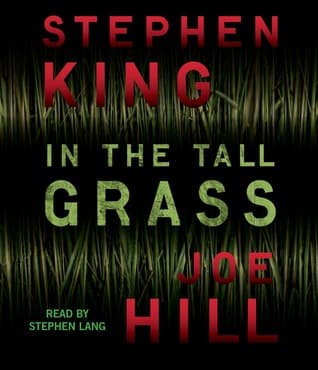
Synopsis
Covers the whole plot, including the ending.
- Difficulty
- Easy
- Pacing
- Fast
- Mood
- Claustrophobic, Suspenseful, Terrifying, Desperate
- Read it if
- You enjoy psychological horror, stories about inescapable traps, and King's signature style of escalating dread.
- Skip it if
- You dislike claustrophobic settings, body horror, or stories with bleak, ambiguous endings.
In the Tall Grass Plot Summary
Covers the whole plot, including the ending.
The Crying Boy
Pregnant Becky DeMuth and her brother Cal DeMuth are on a road trip. They stop their car near an old church in a field of tall grass after hearing a young boy, Tobin, crying for help. Tobin's voice sounds distressed, saying he is lost and cannot find his way out. Becky, despite Cal's hesitation, wants to help him. They both enter the seemingly endless field, calling out to Tobin and trying to find him, but the grass quickly makes them lose their sense of direction. The cries continue, growing more desperate and strange, as they go deeper into the unsettling plants.
Separation and Disorientation
As Cal and Becky go further into the tall grass, they quickly lose sight of each other. Their attempts to talk become distorted; their voices seem to come from different directions, even from behind them, though they faced each other moments before. The grass itself seems to absorb sound and change what they perceive. Tobin's cries continue, but now another voice joins them, an adult male, who also sounds lost and increasingly threatening. Becky, feeling a growing dread and the intense heat, realizes they are in serious trouble. The field itself seems to be playing tricks on their minds and senses, making escape feel impossible.
Encountering Ross
Becky, disoriented and panicked, eventually finds Tobin's father, Ross, who is also lost in the grass. Ross is an unsettling person, speaking in a disjointed, almost hypnotic way about a large, ancient black rock at the center of the field. He claims it is alive and gives knowledge and power, but also traps those who touch it. He seems to be under its influence; his words hint at a sinister connection to the grass and its victims. He tells Becky that he and his family, including his wife Natalie and son Tobin, entered the grass months ago and have been trapped ever since, endlessly wandering.
Cal's Return and the Rock's Influence
Cal eventually finds Becky, but he is not himself. He looks vacant, his eyes glazed over, and he speaks with a strange, unnatural calm. He has touched the black rock. He tells Becky that she must touch the rock too, that it will show her 'everything.' He leads her deeper into the grass, towards the center where the rock is. Becky is scared by Cal's change and realizes the grass, or whatever is in it, has corrupted him. She resists, but Cal, now strong, forces her forward, determined to bring her to the source of his new, terrifying understanding.
The Revelation of Time Loops
Under Cal's forceful guidance, Becky is brought to the large, pulsating black rock. She is repulsed but, compelled by an unseen force, touches its slick, cold surface. Immediately, she is overwhelmed by visions. She sees countless times people entering the grass, including herself and Cal, and becoming lost. She sees the same events repeating, an endless loop of entrapment, death, and rebirth within the field. She understands that time is warped in the grass, and those who enter are destined to relive their suffering, becoming part of the grass's cycle, feeding its evil energy.
The Fate of Tobin and Natalie
Through her connection to the rock, Becky sees the tragic fate of Tobin and his mother, Natalie. She realizes that Tobin's cries for help are not from one moment but are echoes from various points in the grass's cycle. She sees Natalie, driven mad by the grass and Ross's influence, trying to escape only to be pulled back in, eventually becoming one with the field, her body dissolving into the soil. Tobin, too, is trapped, his spirit always calling out, forever luring new victims into the grass's deadly embrace, an unwitting agent of its sinister will. The rock shows her the full extent of the grass's gruesome power.
The Birth
Overwhelmed by the horrors she has seen and the relentless heat, Becky goes into labor. She gives birth in the tall grass, a horrifying and traumatic experience made worse by her isolation and the oppressive atmosphere. The newborn child is immediately exposed to the grass's influence. The rock, in its evil way, seems to claim the infant, drawing it into the endless cycle of life and death within the field. Becky, weakened and despairing, understands that her child is now part of the grass, destined to suffer the same fate as all others who enter this cursed place, fueling its existence.
The Final Encounter with Ross
After the birth, Ross reappears, his madness deepened by the grass. He tries to take the newborn child, saying it belongs to the grass now, and speaking of 'feeding.' He tries to convince Becky to fully accept the grass, to give herself over to its power, just as he has. Becky, despite her weakened state, tries to resist, clinging to her child and what remains of her sanity. Ross, however, is insistent, his eyes gleaming with a disturbing zeal, showing the ultimate corruption the grass inflicts upon its victims, turning them into willing participants in its gruesome cycle.
The Cycle Continues
In a twisted turn, Becky and Cal are eventually absorbed by the grass. Their bodies, their minds, become part of the field's evil network. They are no longer individuals but echoes within the grass, their voices joining the chorus of the lost. They become the new 'Tobins,' their cries for help echoing from within the field, destined to lure future unsuspecting travelers from the road. The cycle continues, an endless loop of entrapment, despair, and absorption, ensuring the grass's continued existence and its power over those who dare to enter its green depths. The road outside remains a silent witness.
Tobin's Warning
As the story ends, a new car pulls over by the tall grass, attracted by the faint cries of a boy. It is Tobin, still trapped, still calling out. However, in a moment of clarity, or perhaps a desperate, final act of free will, he tries to warn the new arrivals. His voice, though still part of the lure, carries a desperate plea for them to stay away, to not enter the grass. It is a tragic, useless attempt, as the grass's power is too strong, and the cycle is destined to repeat, drawing in more unsuspecting souls to feed its hunger, leaving the reader with a chilling sense of dread.
In the Tall Grass Characters
Becky DeMuth
Protagonist
A pregnant woman who enters the tall grass to help a lost boy.
Becky is a kind-hearted, pregnant woman traveling with her brother, Cal. She is initially driven by empathy, insisting on helping Tobin despite Cal's reservations. Her pregnancy makes her particularly vulnerable and heightens the horror of her situation. She experiences the full spectrum of the grass's terror, from disorientation to the profound realization of its time-warping, life-consuming nature. Her maternal instincts are twisted into a horrific ordeal, culminating in her giving birth within the cursed field.
Relationships: Cal DeMuth (Brother; initially supportive, later manipulated and corrupted by the grass.); Tobin (The lost boy she tries to save, whose cries lead her into the grass.); Ross (Tobin's father; an antagonist who is already corrupted by the grass and tries to force Becky to embrace it.)
Cal DeMuth
Supporting
Becky's brother, who accompanies her into the grass and becomes corrupted.
Cal is Becky's older brother, initially more cautious than her about entering the grass. He cares deeply for Becky and tries to protect her, but his resolve quickly crumbles under the grass's influence. He is one of the first to touch the black rock, leading to his rapid mental and physical corruption. He becomes an unsettling, almost zombie-like figure, acting as an agent for the grass, trying to force Becky to join him in its embrace. His transformation highlights the insidious power of the field.
Relationships: Becky DeMuth (Sister; he tries to protect her but later compels her into the grass's embrace after his corruption.)
Tobin
Supporting
The young boy whose cries for help lure people into the tall grass.
Tobin is the child whose desperate cries initiate the entire terrifying ordeal. He is a victim of the grass, trapped within its time-warped dimensions alongside his family. His cries are not just a plea for help but a perpetual lure, part of the grass's mechanism to draw in new victims. He exists in a state of eternal suffering, occasionally regaining enough clarity to attempt to warn new arrivals, highlighting the tragic and inescapable nature of the grass's power. He is the first link in the chain of horror.
Relationships: Ross (Father; also trapped and corrupted by the grass.); Natalie (Mother; also trapped and corrupted by the grass.); Becky DeMuth (One of the many victims he inadvertently lures.)
Ross
Antagonist
Tobin's father, a figure already corrupted by the grass and its rock.
Ross is a primary antagonist, though he is also a victim of the grass. He is Tobin's father, who, along with his family, became trapped in the field months before Becky and Cal. He has succumbed entirely to the influence of the black rock, becoming its zealous devotee. He speaks in a fragmented, disturbing manner, obsessed with the rock's power and the idea of 'feeding' the grass. He actively tries to force Becky and others to touch the rock, acting as the grass's corrupted evangelist, embodying the ultimate loss of humanity within the field.
Relationships: Tobin (Son; both are trapped in the grass.); Natalie (Wife; both are trapped in the grass.); Becky DeMuth (A new victim he tries to convert to the grass's 'truth'.)
Natalie
Mentioned
Tobin's mother, another victim of the tall grass.
Natalie is Tobin's mother and Ross's wife. She is only seen through Becky's visions after touching the black rock. Her fate is a grim illustration of the grass's power: driven to madness and despair, she eventually merges with the grass itself, her body and consciousness dissolving into the field. She represents the ultimate, irreversible absorption into the grass's horrifying ecosystem, a warning of what awaits all who are trapped.
Relationships: Tobin (Son; both trapped in the grass.); Ross (Husband; both trapped in the grass.)
In the Tall Grass Themes
Loss of Self and Identity
The tall grass is a literal and symbolic destroyer of identity. Characters like Cal and Ross lose their sense of self, becoming extensions of the grass's will after touching the black rock. Their personalities, memories, and even their voices are warped and absorbed. Becky's struggle to keep her sanity and individual will against the grass's influence highlights this theme. In the end, all who enter lose their humanity, their unique identities dissolving into the collective consciousness of the field, their cries becoming indistinguishable echoes. This is clearly shown when Cal's voice changes, and later when Becky and Cal become the new 'lures.'
“The grass does not forget. The grass remembers. The grass is alive.”
The Corrupting Power of the Unknown
The tall grass is an evil, unexplainable force that corrupts everything it touches. The black rock at its center is the cause of this corruption, offering 'knowledge' that twists and destroys. Characters are drawn in by a seemingly innocent plea for help, only to face an ancient, unknowable evil that preys on their humanity. The grass does not just kill; it transforms and enslaves, turning victims into agents of its will. Ross's strong devotion to the rock and Cal's vacant eyes after touching it show how the unknown power corrupts and turns people against their own kind, making them willing participants in the horror.
“The rock… it speaks to you. It shows you everything.”
Cyclical Nature of Horror and Entrapment
The story shows an inescapable, repeating cycle of horror. The grass traps its victims in a time loop, constantly luring new people in while the old ones remain, their cries echoing forever. Becky's visions upon touching the rock show this endless repetition, showing countless people, including herself, entering and becoming lost. Tobin's constant cries are a key part of this cycle, as he is always calling for help, accidentally drawing in new victims. The ending reinforces this, with Becky and Cal becoming the new voices, ensuring the cycle continues indefinitely, making escape truly impossible.
“The grass is old, and the grass is patient. It has fed on many, and it will feed on more.”
False Empathy and Deception
The main cause of the horror is the deceptive nature of Tobin's cries. Becky and Cal are drawn into the grass by a genuine desire to help a child in distress, an act of empathy that is cruelly used. The grass uses this natural human compassion as its most effective lure. What seems to be a simple rescue mission quickly becomes a terrifying trap, where kindness leads to their doom. This theme shows how even good intentions can be twisted and used against people by an evil force, making the horror more insidious and heartbreaking.
“Help me! Please, help me! I’m lost!”
Plot Devices & Literary Techniques
The Tall Grass
The primary setting and antagonist, a sentient, disorienting field.
The tall grass itself is more than just a setting; it's a character and the central antagonist. It disorients those who enter, manipulating sound, vision, and time. It's a living entity that absorbs and corrupts, trapping its victims in an endless, cyclical nightmare. Its oppressive nature, combined with its ability to twist perception, creates an overwhelming sense of claustrophobia and helplessness, making escape seem impossible and driving characters to madness. It effectively isolates its victims from the outside world and from each other.
The Black Rock
An ancient, malevolent rock at the center of the grass that corrupts and reveals truths.
The black rock serves as the heart of the grass's power. It's an ancient, mysterious object that grants a terrifying form of 'knowledge' to those who touch it, but at the cost of their sanity and humanity. It's the source of the grass's ability to warp time and absorb consciousness, and it's what transforms victims into agents. It acts as a catalyst for the characters' corruption and provides Becky with horrifying visions, revealing the true, cyclical nature of the grass's entrapment. It's the physical manifestation of the grass's malevolent intelligence.
Disorientation and Sound Manipulation
The grass's ability to confuse senses, making escape impossible.
The grass actively distorts sound and spatial awareness, making it impossible for characters to navigate or even locate each other. Voices seem to come from everywhere and nowhere, often appearing to be right behind them despite no one being there. This constant sensory confusion heightens the psychological horror, inducing panic and a profound sense of helplessness. It's a crucial mechanism for trapping victims, preventing any logical attempt at escape and isolating them further, playing on their deepest fears of being lost and alone.
Time Loop / Temporal Distortion
The grass's ability to warp time, trapping victims in an endless cycle.
The grass operates outside conventional time, trapping its victims in a repeating cycle of events. Becky's visions confirm that people relive their experiences within the grass, and their cries echo across different temporal points, luring new victims. This device means that death is not an escape, but merely another stage in the grass's eternal cycle of consumption. It creates a profound sense of hopelessness, as characters are not just lost, but doomed to an everlasting torment, their suffering perpetually recycled.
In the Tall Grass Quotes
“The tall grass. It’s a place. It wants you. It wants everyone.”
“Sometimes dead is better. But not in the tall grass. Here, dead is just… different.”
“Can you hear it? The crying? It’s not a child, not really. It’s the grass.”
“It keeps moving you. Every time you think you’ve got your bearings, it shifts.”
“The rock. It’s what holds it all together. What makes it powerful.”
“There are things in here that aren’t just grass. Things that watch. Things that wait.”
“You can never leave. Not truly. Even if you walk out, a part of you stays.”
“It feeds on fear. On confusion. That’s why it makes you lost.”
“The sun… it never feels quite right in here. Always too bright, or not bright enough.”
“Don’t trust the voices. They aren’t real. Not in the way you think.”
“It’s a labyrinth, but it’s alive. And it doesn’t want you to find the center.”
“The air itself feels heavy, thick with unseen presences.”
“Every step you take, it feels like it's pulling you deeper.”
“The smell… like wet earth and something else. Something old and hungry.”
Quiz
10 questions on the plot and the characters. Each answer comes with a short explanation.
Question 1
What is the initial reason Cal and Becky stop their car on the side of the road?
- They see a car accident in the grass.
- They hear a young boy crying for help from the tall grass.
- Becky needs to use the restroom.
- They are looking for a shortcut.
Show answer
B. They hear a young boy crying for help from the tall grass. Cal and Becky stop their car because they distinctly hear a young boy's voice, later identified as Tobin, calling for help from within the seemingly endless tall grass.
Question 2
What is Becky's physical condition when she and Cal first enter the tall grass?
- She has a broken leg.
- She is pregnant.
- She is suffering from a severe headache.
- She has a fear of enclosed spaces.
Show answer
B. She is pregnant. Becky is pregnant, which adds to the urgency and vulnerability of her situation as they become disoriented and lost in the grass.
Question 3
Who is the first character Cal and Becky encounter inside the tall grass?
- Tobin
- Ross
- Natalie
- Travis
Show answer
A. Tobin Tobin is the young boy whose cries initially draw Cal and Becky into the grass. He is the first person they directly interact with once inside.
Question 4
What unusual phenomenon do Cal and Becky experience when trying to locate each other and the road in the tall grass?
- Their voices echo back to them from different directions.
- They encounter a thick fog that obscures their vision.
- The ground beneath them shifts and moves like quicksand.
- They are repeatedly attacked by swarms of insects.
Show answer
A. Their voices echo back to them from different directions. A key element of their disorientation is that when they call out to each other, their voices seem to come from different, impossible directions, making it difficult to pinpoint location.
Question 5
What is the significance of the large, black rock mentioned by Tobin?
- It marks the exit from the grass.
- It grants wishes to those who touch it.
- It is a source of power that influences those in the grass, making them lose their minds.
- It is a natural landmark used for navigation.
Show answer
C. It is a source of power that influences those in the grass, making them lose their minds. The large black rock is revealed to be a malevolent entity or source of power within the grass, capable of twisting minds and perpetuating the cycle of entrapment.
Question 6
What happens to Travis, Becky's ex-boyfriend, when he enters the tall grass looking for them?
- He successfully escapes with Tobin.
- He becomes another victim, joining Ross and Tobin under the grass's influence.
- He finds a hidden path that leads to safety.
- He is eaten by a mysterious creature.
Show answer
B. He becomes another victim, joining Ross and Tobin under the grass's influence. Travis, upon entering the grass, also falls under the influence of the mysterious power, eventually becoming part of the sinister 'family' alongside Ross and Tobin.
Question 7
What does Ross, Tobin's father, convince Cal to do that leads to a horrifying discovery?
- To eat the strange berries growing on the ground.
- To touch the large black rock.
- To dig a hole in the ground.
- To climb a particularly tall stalk of grass.
Show answer
B. To touch the large black rock. Ross manipulates Cal into touching the black rock, which causes Cal to briefly see the truth of the grass's influence and the fate of those trapped within it, including the 'stone people'.
Question 8
What is the ultimate fate of Becky and her unborn child within the tall grass?
- She gives birth and escapes with the baby.
- She is forced to give birth, and the baby is taken by Ross, becoming part of the grass's cycle.
- She and the baby are rescued by a passing motorist.
- She miscarries due to the stress and exhaustion.
Show answer
B. She is forced to give birth, and the baby is taken by Ross, becoming part of the grass's cycle. Becky is forced to give birth in the grass, and her newborn baby is then taken by Ross, implied to become another victim or perpetuator of the grass's cycle.
Question 9
How does the story utilize the concept of time and space within the tall grass?
- Time moves incredibly fast, making minutes feel like hours.
- Space is distorted, with distances changing and sounds coming from impossible directions, creating an inescapable labyrinth.
- Time reverses occasionally, allowing characters to relive moments.
- The grass itself physically moves to block paths and create new ones.
Show answer
B. Space is distorted, with distances changing and sounds coming from impossible directions, creating an inescapable labyrinth. The tall grass functions as a non-Euclidean space, where distances are unreliable, sounds are deceptive, and physical location is constantly shifting, making escape virtually impossible.
Question 10
What is the primary thematic message conveyed by the ending of 'In the Tall Grass' regarding the nature of the horror?
- The importance of never trusting strangers.
- The horror lies in the cyclical, inescapable nature of entrapment and corruption, perpetuated by the grass itself.
- The dangers of exploring unknown wilderness areas.
- The power of sibling bonds to overcome any obstacle.
Show answer
B. The horror lies in the cyclical, inescapable nature of entrapment and corruption, perpetuated by the grass itself. The ending reinforces that the horror is not just about being lost, but about a malevolent force that traps, corrupts, and perpetuates a cycle of violence and despair, with new victims continually drawn in.
In the Tall Grass FAQ
What prompts Cal and Becky DeMuth to enter the tall grass in the first place?
Cal and Becky DeMuth are on a road trip when they hear a young boy, Tobin, crying for help from within a vast field of tall grass next to an abandoned church. Becky, pregnant and feeling unwell, initially resists, but Cal's concern for the child overrides their caution, leading them to investigate.
What is the immediate, disorienting effect the tall grass has on Cal and Becky?
Almost immediately upon entering, Cal and Becky become disoriented, finding themselves unable to locate each other despite hearing each other's voices. The grass seems to shift and distort sound and distance, making their progress erratic and their attempts to reunite futile.
Who is Tobin, and what is his role in luring people into the grass?
Tobin is a young boy, part of the extended Humbolt family, who has been trapped in the grass for an extended period. He acts as a lure, crying for help to draw unsuspecting travelers like Cal and Becky into the field, seemingly under the influence of the mysterious rock.
How does the grass manipulate time and space for those trapped within it?
The grass drastically distorts time and space, making it impossible to walk in a straight line or gauge distance accurately. Characters experience time loops, encounter past and future versions of themselves, and find exits and landmarks shifting, creating an inescapable labyrinth.
What happens to Becky's pregnancy while she is trapped in the grass?
Becky's pregnancy progresses rapidly and horrifyingly while she is in the grass. She eventually gives birth to a monstrous, grass-covered creature that is not human, which she later consumes under the influence of the field and its malevolent forces.
What is the significance of the large, black, primordial rock at the center of the field?
The large, black, primordial rock is the source of the grass's malevolent power and its ability to distort reality. It seems to be an ancient, sentient entity that consumes and assimilates those who touch it, granting them distorted senses and making them part of its horrifying ecosystem.
How does Travis's arrival connect to Becky and Cal's initial entry into the grass?
Travis, Becky's boyfriend and the father of her child, enters the grass six months after Cal and Becky, searching for them. He finds their car and hears Tobin's cries, inadvertently stepping into the same trap that ensnared the DeMuth siblings, creating a time paradox where he encounters them at different stages of their ordeal.
What specific details reveal that the Humbolt family has been in the grass for a long time?
The Humbolt family, particularly Ross, shows signs of long-term exposure to the grass. Ross's skin is covered in patches of green, he speaks in cryptic, repetitive phrases, and he exhibits a deep, primal understanding of the grass's power, indicating he has been consumed and transformed by it over an extended period.
How does the 'touching the rock' ritual change the characters who perform it?
Touching the rock grants characters a distorted, 'true' sight, allowing them to perceive the grass's true nature and the fate of others within it. However, it also corrupts them, making them subservient to the rock's will, stripping them of their humanity, and turning them into agents of the grass, as seen with Ross and eventually Cal.
Analyze Cal's psychological transformation from protective brother to malevolent entity.
Cal initially enters the grass out of brotherly concern, but the disorientation and terror quickly erode his sanity. After touching the rock, he becomes a predatory figure, driven by the grass's influence to harm Becky and perpetuate the cycle, losing all vestiges of his former protective nature and becoming a part of the horror.
How does Becky's pregnancy amplify her vulnerability and psychological torment in the grass?
Becky's pregnancy makes her uniquely vulnerable, as she's not only battling the physical and psychological toll of the grass but also the fear for her unborn child. The grotesque birth and subsequent consumption of her 'baby' represent the ultimate violation and psychological torment, stripping her of motherhood and humanity.
Discuss the psychological impact of the constantly shifting environment and the inability to escape.
The perpetually shifting environment and the absolute inability to escape induce profound psychological distress, leading to paranoia, hallucinations, and a complete breakdown of rational thought. Characters lose their sense of self, time, and reality, making them susceptible to the grass's manipulative influence and eventual surrender.
What psychological defense mechanisms, if any, do the characters employ before succumbing?
Initially, characters like Cal and Becky attempt to use logic and calls for help as defense mechanisms, believing they can navigate or be rescued. However, these quickly fail, and as the horror intensifies, their defenses crumble, leading to panic, despair, and eventually, a twisted form of acceptance or submission to the grass's will.
Is there any hope for escape from the tall grass, or is it a predetermined fate for those who enter?
The story strongly suggests that escape from the tall grass is nearly impossible once one is deeply ensnared. While Tobin briefly guides Travis out, this act seems to be part of the grass's cyclical nature, not a true liberation. The ending implies that anyone who enters is eventually consumed and becomes part of its endless, horrifying cycle.
What is the symbolic meaning of the tall grass itself?
The tall grass symbolizes a primal, inescapable trap that preys on human compassion and vulnerability. It represents a living, malevolent entity that consumes and corrupts, distorting reality and time, and reducing humanity to its most basic, predatory instincts. It is a metaphor for being lost, physically and spiritually.
How does the story explore themes of family and sacrifice, albeit in a twisted way?
The story twists themes of family and sacrifice by showing how initial acts of familial concern (Cal for Becky, Travis for Becky) lead directly to their demise. The 'family' within the grass, like the Humbolts, are a corrupted, predatory unit, and sacrifices are made not for love but for the perpetuation of the grass's horror.
Is the ending truly a loop, or is there a subtle progression of events across different cycles?
The ending strongly suggests a cyclical loop, with Tobin perpetually luring new victims by throwing Becky's bloody hair clip back to the road. However, the interactions between characters from different 'time periods' within the grass also hint at a subtle, horrifying progression, where the entities within gain more power and control with each cycle.
What is the ultimate fate of Travis, and how does it connect to the overarching narrative?
Travis's ultimate fate is to be consumed by the grass, becoming another victim. However, his unique role is to momentarily break the cycle by guiding Tobin out, offering a brief glimpse of hope. This act, however, only serves to restart the loop, as Tobin is then able to lure more people, perpetuating the grass's horrific existence.
How does 'In the Tall Grass' comment on the human instinct to help those in distress?
'In the Tall Grass' offers a chilling commentary on the human instinct to help, portraying it as a fatal flaw in certain circumstances. The story exploits this fundamental empathy, turning a cry for help into a trap, suggesting that sometimes, the most compassionate act leads to the most dire consequences.
About the author

Stephen Edwin King is an American author of horror, supernatural fiction, suspense, crime, science-fiction, and fantasy novels. Described as the "King of Horror", his books have sold more than 350 million copies as of 2006, and many have been adapted into films, television series, miniseries, and comic books. King has published over 65 novels/novellas, including seven under the pen name Richard Bachman, and five non-fiction books. He has also written approximately 200 short stories, most of which have been published in book collections.
Similar books
- The Ruins
Scott Smith
3.6 (32k) average on GoodreadsThrillerFeatures a group of people trapped by a sentient, predatory plant in an isolated location.
- Bird Box
Josh Malerman
4.0 (143k) average on GoodreadsThrillerWhile both stories feature environmental, sensory-depriving horror, 'Bird Box's' threat is unseen and external, relying on the fear of what you can't see. 'In the Tall Grass' features a tangible, yet illogical and malevolent environmental antagonist (the grass) whose rules are constantly shifting, creating a more direct and physically oppressive threat.
- Annihilation
Jeff VanderMeer
4.0 (5k) average on GoodreadsFantasyBoth novellas explore mysterious, transforming landscapes. However, 'Annihilation's' horror is more existential, scientific, and focused on mutation and adaptation within 'Area X'. 'In the Tall Grass' leans into a more primal, folk-horror sensibility, where the land itself (the grass and the rock) is an ancient, hungry, and actively predatory entity, rather than merely a transformative force.
- Angels & Demons
Dan Brown
3.9 (2.7M) average on GoodreadsThrillerA Harvard symbologist races through Rome's ancient sites, deciphering cryptic clues to unmask the Illuminati and stop a vengeful plot to destroy the Vatican with a stolen antimatter weapon.
- Gone Girl
Gillian Flynn
4.1 (2.3M) average on GoodreadsThrillerA wife's sudden disappearance on her fifth anniversary reveals a web of lies and psychological warfare, exposing the secrets within a seemingly perfect marriage.
- The Girl on the Train
Paula Hawkins
3.9 (2.1M) average on GoodreadsThrillerA woman’s fascination with a seemingly perfect couple she watches from her daily train commute leads her into a dark investigation when she witnesses something that shatters their idyllic image.




Enjoyed the summary?
A summary gives you the shape of the book. The book itself has the detail, the examples and the voice.
Find In the Tall Grass on AmazonAs an Amazon Associate, BookBrief earns from qualifying purchases. How we're funded