

Synopsis
Covers the whole plot, including the ending.
- Difficulty
- Medium
- Pacing
- Fast
- Mood
- Suspenseful, Gritty, Romantic, Dark
- Read it if
- You enjoy futuristic police procedurals with a strong detective, intricate mysteries, and a touch of romance.
- Skip it if
- You prefer hard science fiction over futuristic crime, or dislike explicit violence and dark themes.
Indulgence in Death Plot Summary
Covers the whole plot, including the ending.
A Vacation Interrupted
Lieutenant Eve Dallas and Roarke are on vacation at Roarke's ancestral home in County Clare, Ireland. Their peace ends when they find the body of Patricia O'Malley in the woods. She has been brutally murdered, her throat cut. Though off-duty, Eve's detective instincts take over, and she helps the local Garda detective, Inspector Declan Finnegan. The murder is disturbing due to its violence and the victim's lack of known enemies. This incident darkens their vacation, showing Eve that violence can happen anywhere, even in a quiet Irish setting.
Return to New York and a New Case
Upon returning to New York City, Eve is immediately pulled into a new, strange murder case. The victim is Arthur Cohen, a driver for a high-end limousine service, found dead in his car with a crossbow bolt in his neck. The unusual weapon and precise kill make this case stand out. The limousine was booked by an executive at a security company, but it turns out the executive's identity was stolen. This detail suggests a calculating killer who is violent and skilled at covering tracks and manipulating digital information. Eve suspects she is dealing with a very intelligent and dangerous person.
The Second Victim: A Bayonet at Coney Island
Days after Arthur Cohen's murder, a second victim is found: Lena Cherish, a high-priced escort, dead at Coney Island. She was killed with a bayonet. Like the first case, the trail leads to a CEO whose identity and credit information were hijacked to book Lena's services. The pattern of identity theft, along with the increasingly dramatic and brutal murder methods, confirms Eve's suspicion that she is hunting a thrill killer. The killer targets people in specific, high-end professions, using stolen identities to arrange encounters, and employing old or unusual weapons, showing a distinct personal style.
Connecting the Dots: The 'Indulgence' Killer
Eve and her team, including Detectives Peabody and McNab, work to connect the two seemingly unrelated murders. The common elements are the high-end services (limo driver, escort), the stolen identities of wealthy individuals, and the unusual, almost ritualistic murder weapons. The killer seems to choose victims who provide a certain 'indulgence' or luxury service. Despite the clear method, the motive remains unclear. There is no obvious link between the victims, nor do the stolen identities seem to be the main target. Eve believes the killer gains perverse pleasure from the act itself, planning each kill for maximum impact and personal satisfaction, labeling him an 'indulgence' killer.
Roarke's Connections and a Lead
As the investigation continues, Eve relies more on Roarke's network and knowledge of the city's elite. The stolen identities belong to people within Roarke's social and business circles, bringing the case uncomfortably close to home. Roarke's connections are vital in tracing the killer's digital footprints, especially in understanding how sophisticated identity theft could happen without immediate detection. His insights into high finance and corporate security provide new avenues for Eve's team to explore, guiding them to potential weaknesses or overlooked details in the killer's digital plan.
The Third Victim and Escalation
The killer escalates with a third murder, reinforcing the 'indulgence' pattern. This time, the victim is a high-end chef, found dead in his kitchen, poisoned. The identity theft again points to a prominent figure. The killer's methods are bolder, and the choice of victims suggests a deliberate progression in the type of 'luxury' targeted. Eve recognizes that the killer is not just trying to kill, but to make a statement, to exert power over the lives of both the victims and the prominent individuals whose identities are stolen. The public nature of some killings hints at a desire for recognition or a twisted artistic expression.
Profiling the Unseen Killer
Working with the department's profiler, Dr. Charlotte Mira, Eve begins to build a detailed psychological profile of the killer. They deduce that the killer is intelligent, organized, and has a strong sense of entitlement and narcissism. The choice of victims and weapons, combined with the use of stolen identities, suggests a killer who sees themselves as superior, playing a twisted game with society's elite. The lack of a clear, conventional motive (like revenge or financial gain) points to a thrill-seeker, someone who gets great satisfaction from planning, executing, and the chaos caused by their actions. The killer is likely a lone operator, working with extreme precision.
The Link to Roarke's Past
As Eve digs into the stolen identities and the backgrounds of the compromised individuals, she finds a disturbing common thread. Many of these people, or their companies, had minor connections to Roarke's early, more illegal ventures or to his father's criminal network. This discovery alarms Eve, suggesting a personal vendetta against Roarke, or at least against his current world. It explains the killer's intimate knowledge of elite circles and their ability to navigate the complex digital world of the wealthy. The investigation shifts from a random thrill killer to one with a deep, personal agenda.
Unmasking the Perpetrator: Julian Cross
Through careful detective work, including forensic analysis of digital trails and reviewing old records, Eve and her team identify the killer as Julian Cross. Cross was a brilliant but troubled individual connected to Roarke's father, Patrick Roarke, in his early days. He felt wronged and overlooked by Patrick, and by extension, by Roarke, who had risen to legitimate power and wealth. Cross sees Roarke as having 'stolen' his rightful place. The 'indulgence' killings are Cross's twisted revenge, targeting the symbols of the elite world he believes Roarke represents and enjoying the chaos he creates.
The Confrontation: A Trap at Roarke's Residence
Knowing Eve is close, Julian Cross plans a final, elaborate act of revenge, setting a trap at Roarke's penthouse apartment. He infiltrates the secure building, intending to confront and potentially kill Roarke and Eve. This confrontation is the climax of his twisted fantasy of retribution. Eve and Roarke, anticipating Cross's move due to his increasing boldness and personal targeting, are prepared. The penthouse becomes a battleground, a high-stakes game where Eve's tactical skills and Roarke's knowledge of his home are tested against a cunning and desperate killer.
The Climax and Resolution
The confrontation in Roarke's penthouse is intense and violent. Cross, armed and dangerous, believes he has the advantage, but Eve's training and determination, along with Roarke's strategic support, overcome him. Eve fights Cross hand-to-hand, showing her combat skills. The battle is fierce, but Eve ultimately subdues and eliminates Cross, ending his terror. The resolution is decisive, but leaves Eve shaken by Cross's madness and the personal nature of his vendetta, confirming that even at home, danger can hide in the past.
Indulgence in Death Characters
Eve Dallas
Protagonist
Lieutenant of the NYPSD Homicide division, pragmatic and driven.
Lieutenant Eve Dallas is a brilliant and dedicated homicide detective for the NYPSD. Haunted by a traumatic past, she channels her pain into a relentless pursuit of justice. She is pragmatic, often blunt, and possesses an incredible intuition for solving crimes. Her logical mind is balanced by a growing capacity for emotional connection, particularly with her husband, Roarke, and her close friends. She finds solace and purpose in her work, believing that every victim deserves justice.
Relationships: Roarke (Husband, confidant, partner in life and sometimes in investigations.); Delia Peabody (Detective partner, loyal friend, and sounding board.); Commander Whitney (Superior officer, mentor, and respected figure.); Dr. Charlotte Mira (Department profiler, therapist, and friend.)
Roarke
Supporting
Billionaire businessman with a mysterious past, Eve's devoted husband.
Roarke is an impossibly wealthy and enigmatic businessman with a shadowy past rooted in criminality. He is fiercely intelligent, resourceful, and utterly devoted to Eve. His vast network of contacts, technological prowess, and understanding of the darker aspects of human nature often prove invaluable to Eve's investigations. Despite his immense power, he remains grounded by his love for Eve and his desire to protect her. He is constantly navigating the tension between his past and his present, striving to be worthy of Eve's trust and affection.
Relationships: Eve Dallas (Wife, soulmate, the center of his world.); Summerset (His majordomo, trusted confidant, and surrogate father figure.); Julian Cross (Former associate of his father, now a vengeful enemy.)
Julian Cross
Antagonist
The 'Indulgence Killer,' a brilliant and vengeful psychopath.
Julian Cross is the primary antagonist, a highly intelligent and meticulous psychopath driven by a profound sense of injustice and entitlement. He was a brilliant hacker and associate of Roarke's criminal father, Patrick Roarke. Cross felt overlooked and betrayed by Patrick, believing he was denied his rightful place and recognition. He views Roarke as having usurped his legacy, leading to a twisted vendetta. He orchestrates elaborate murders, using stolen identities and unusual weapons, seeking a perverse form of artistic expression and revenge against the elite world he believes Roarke embodies. His motivation is not money, but control, recognition, and the thrill of the kill.
Relationships: Roarke (Object of his intense hatred and revenge.); Patrick Roarke (Roarke's father, who Cross felt betrayed by.)
Delia Peabody
Supporting
Eve's loyal and increasingly competent detective partner.
Detective Delia Peabody is Eve's junior partner, known for her vibrant personality, quirky fashion sense, and unwavering loyalty. While initially somewhat naive, Peabody has grown significantly under Eve's mentorship, developing into a sharp and capable detective. She provides a necessary counterpoint to Eve's intensity, often offering a more human perspective and a touch of humor. Her dedication to her work and her friendship with Eve are cornerstones of her character, and she consistently strives to meet Eve's high standards.
Relationships: Eve Dallas (Partner, mentor, and best friend.); Ian McNab (Boyfriend and fellow detective.)
Dr. Charlotte Mira
Supporting
Department profiler and psychologist.
Dr. Charlotte Mira is the NYPSD's resident psychologist and profiler. She is insightful, empathetic, and possesses a deep understanding of the criminal mind. Mira serves as both a professional resource for Eve, helping to construct psychological profiles of killers, and a personal confidante, offering gentle guidance and support for Eve's emotional well-being. Her calm demeanor and sharp intellect make her an invaluable asset to the team, especially when dealing with complex and disturbing cases.
Relationships: Eve Dallas (Professional colleague and trusted friend.)
Ian McNab
Supporting
EDD detective and Peabody's boyfriend.
Detective Ian McNab works in the Electronic Devices Division (EDD) and is Peabody's boyfriend. He is a brilliant tech expert, highly skilled in digital forensics and hacking, often providing crucial technical support for Eve's investigations. McNab is energetic, sometimes irreverent, but always dedicated to his work. His expertise in navigating the complexities of the digital world is essential in tracking the killer's online activities and stolen identities.
Relationships: Delia Peabody (Boyfriend and colleague.); Eve Dallas (Colleague, often providing tech support.)
Commander Whitney
Supporting
Eve's superior officer and mentor.
Commander Jack Whitney is Eve's direct superior, a seasoned and respected officer. He is a firm but fair leader who recognizes Eve's exceptional talent and often grants her the leeway she needs to pursue difficult cases. Whitney provides essential institutional support, managing the political aspects of high-profile cases and ensuring Eve has the resources she requires. He trusts Eve's judgment implicitly, even when her methods are unconventional.
Relationships: Eve Dallas (Superior officer and mentor.)
Summerset
Supporting
Roarke's majordomo and a surrogate father figure.
Summerset is Roarke's loyal and meticulous majordomo, overseeing the vast Roarke estate with impeccable efficiency. He is a traditionalist with a dry wit and a deep affection for both Roarke and Eve. Summerset provides a sense of stability and normalcy in their often-chaotic lives, acting as a calming presence and offering quiet support. He is also a skilled chef and a master of discretion, often aware of more than he lets on.
Relationships: Roarke (Employer, confidant, and surrogate son.); Eve Dallas (Mistress of the house, whom he respects and cares for.)
Indulgence in Death Themes
The Nature of Indulgence and Desire
The novel shows how 'indulgence' appears in different ways, from luxury services to twisted desires. The killer, Julian Cross, targets people who provide high-end services (limo drivers, escorts, chefs), seeing them as symbols of the 'indulgence' he believes Roarke and the wealthy elite represent. His own indulgence is in the careful planning and execution of murders, getting great pleasure from control and revenge. This theme highlights how unchecked desire can lead to extreme violence, and how seeking gratification, whether material or psychological, can become destructive. The story contrasts the killer's dark indulgence with Roarke and Eve's healthy indulgences in their relationship and shared life.
“He didn’t kill for money, or for passion. He killed for indulgence. For the pure, unadulterated pleasure of it.”
The Lingering Shadow of the Past
This theme is central to the story, especially through Roarke's character and his link to the killer. Julian Cross's vendetta comes directly from his past connection with Roarke's criminal father, Patrick Roarke, and his feeling of being wronged. The past, shown by Patrick's legacy and Cross's unresolved anger, actively affects the present, threatening Roarke's legitimate life and endangering Eve. The opening murder during the Irish vacation also sets this tone, showing that even in a calm place, past violence can surface. The novel emphasizes that one's history, especially one as complex as Roarke's, can never be fully escaped and often needs to be confronted.
“The past always came calling, one way or another. Sometimes it came with a smile, sometimes with a knife.”
Identity and Deception
Identity theft is a key plot device, but the theme goes beyond just a criminal technique. The killer, Julian Cross, uses stolen identities of prominent people to commit his crimes, creating a layer of deception that initially hides his true nature and motive. This theme questions the nature of identity in a digital age, where personal information can be easily manipulated and used for harm. Additionally, the killer himself operates under a false persona, hiding his troubled self behind a facade of calculated precision. Eve's challenge is to peel back these layers of deception to reveal the real person behind the violence, showing how easily one's identity can be stolen, manipulated, or hidden.
“He stole their names, their credit, their lives, just long enough to make his kill. A ghost in the machine.”
Justice vs. Revenge
The novel clearly contrasts Eve's pursuit of justice with Julian Cross's quest for revenge. Eve is driven by a strong need to hold criminals accountable and protect the innocent, working within the law, though sometimes bending it. Cross, however, is consumed by a personal vendetta, believing he is carrying out 'justice' for past wrongs by Patrick Roarke. His actions are purely about personal retribution, escalating into extreme violence and causing innocent deaths. This theme explores the destructive nature of unchecked revenge, showing how it corrupts the individual and continues a cycle of harm, standing against the fair and healing goals of true justice.
“Justice wasn't about evening the score. It was about making sure there was a score at all.”
Plot Devices & Literary Techniques
Identity Theft
The killer's primary method for obscuring his tracks and selecting targets.
Identity theft is a crucial plot device that allows the killer, Julian Cross, to operate with a high degree of anonymity and to target specific, high-end service providers without leaving a direct trail back to himself. By hijacking the digital identities of wealthy individuals, he can book luxury services (limo, escort, chef) for his victims, creating a false flag that initially misdirects the investigation. This device not only complicates Eve's work but also highlights the vulnerability of personal data in a technologically advanced society, making the killer seem like a phantom who can exist everywhere and nowhere simultaneously.
Unusual Murder Weapons
Cross's signature, reflecting his theatrical and ritualistic approach to killing.
The use of unusual and antique murder weapons—a crossbow bolt, a bayonet, and poison—serves as a distinct signature for the 'Indulgence Killer.' This device immediately sets the murders apart from typical homicides, signaling a killer who is not only meticulous but also theatrical and perhaps psychologically disturbed. The weapons add to the sense of ritual and personal expression in Cross's crimes, making the acts seem less about efficiency and more about a perverse form of art or statement. It also provides Eve with a unique set of forensic challenges and clues, helping her to profile the killer as someone with specific tastes and a need for control and spectacle.
Roarke's Criminal Past
A narrative device that links the present case to Roarke's dark origins.
Roarke's shadowy past, particularly his connection to his criminal father, Patrick Roarke, and his early illicit ventures, serves as a significant plot device. It provides the underlying motive for Julian Cross's vendetta, transforming what initially appears to be random thrill kills into a deeply personal attack. This device brings the danger uncomfortably close to Eve and Roarke, raising the stakes and forcing Roarke to confront the lingering consequences of his origins. It also allows Roarke to utilize his unique skills and network, which he developed in that past, to aid Eve in solving the case, creating a compelling dynamic where his former life becomes both a source of danger and a tool for justice.
The Irish Murder Prologue
A foreshadowing device that establishes the omnipresence of violence and personal stakes.
The murder of Patricia O'Malley in Ireland, occurring during Eve and Roarke's vacation, acts as a powerful prologue and foreshadowing device. While seemingly unrelated to the main New York City case, it immediately establishes that violence can intrude upon any sanctuary, even one as remote and peaceful as Roarke's ancestral home. This sets a tone of pervasive danger, implicitly preparing both Eve and the reader for the subsequent, more personal threats she will face. It also highlights Eve's inherent nature as a detective, unable to truly escape her calling, and subtly introduces the idea that even Roarke's world, no matter how insulated, is not immune to brutality.
Indulgence in Death Quotes
“She had to think like a killer, walk in their shoes, see through their eyes. And then she had to break them.”
“Roarke was a beautiful, dangerous, complicated man, and he was hers. All of him.”
“The dead don’t lie, but they don’t tell you everything either. It’s up to the living to piece it together.”
“Fear was a tool, like any other. It could paralyze, or it could sharpen.”
“Some people collected art. Some collected lovers. Others collected enemies. It all depended on your taste for trouble.”
“There was a fine line between confidence and arrogance, and some people just loved to dance on it.”
“Money didn't buy happiness, but it sure as hell bought a lot of choices. And choices could lead to happiness, or to ruin.”
“You could build a wall around your heart, but eventually, someone would find a way to climb over it, or blast through it.”
“Justice wasn't a perfect system, but it was the best they had. And she was going to make sure it worked, one case at a time.”
“The city never slept, and neither did its secrets. They just waited for the right person to dig them up.”
“Every victim had a story, even if they couldn’t tell it themselves. It was her job to be their voice.”
“Sometimes the monster wasn't under the bed, it was in the mirror. Or living next door.”
“The past was a stubborn ghost, always lurking, always ready to reach out and grab you when you least expected it.”
“There was a certain kind of peace in knowing you'd done everything you could, even if it wasn't enough.”
Quiz
10 questions on the plot and the characters. Each answer comes with a short explanation.
Question 1
Where are Eve and Roarke vacationing when a murder disrupts their trip at the beginning of 'Indulgence in Death'?
- Paris, France
- Dublin, Ireland
- Venice, Italy
- London, England
Show answer
B. Dublin, Ireland Eve and Roarke are on vacation in Ireland, specifically Dublin, when they encounter a murder, setting the initial tone for the novel.
Question 2
What weapon is used to kill the limousine driver found dead upon Eve's return to New York City?
- A handgun
- A poisoned dart
- A crossbow
- A hunting knife
Show answer
C. A crossbow The first victim in NYC, the limo driver, is found shot through the neck with a crossbow, establishing the killer's unusual weapon choice.
Question 3
Which type of professional is the second victim found at Coney Island?
- A business executive
- A high-priced escort
- A police informant
- A security guard
Show answer
B. A high-priced escort The second victim is described as a 'stunning, high-priced escort' found killed at Coney Island.
Question 4
What common thread links the victims' cases to CEOs whose information has been hijacked?
- They all worked for the same security company.
- Their personal bank accounts were emptied.
- Their identities were stolen to book services or make arrangements related to the murders.
- They were all romantically involved with the CEOs.
Show answer
C. Their identities were stolen to book services or make arrangements related to the murders. In both the limo driver and the escort's cases, the services were booked using the stolen identities of top executives/CEOs.
Question 5
What weapon is used to kill the escort found at Coney Island?
- A crossbow
- A bayonet
- A garrote
- A stiletto
Show answer
B. A bayonet The escort is found with a 'bayonet stuck in her heart,' indicating another unique and violent murder weapon.
Question 6
What does Eve Dallas initially fear she has come across regarding the killer's motivation?
- A serial killer seeking revenge on specific individuals.
- A thrill killer with a taste for the finer things in life.
- A professional assassin targeting high-profile figures.
- A copycat killer mimicking famous historical murders.
Show answer
B. A thrill killer with a taste for the finer things in life. Eve begins to suspect she is dealing with 'that most dangerous of criminals, a thrill killer, but one with a taste for the finer things in life - and death.'
Question 7
How does the investigation eventually tie into Roarke's 'rarefied circle'?
- Roarke becomes a suspect in the murders.
- The killer is an employee of one of Roarke's companies.
- The victims or the hijacked identities lead to people within Roarke's high-society and business connections.
- Roarke's past as a criminal resurfaces and complicates the case.
Show answer
C. The victims or the hijacked identities lead to people within Roarke's high-society and business connections. The summary states that the investigation will take Eve 'to the rarefied circle that Roarke travels in,' implying connections through his high-society and business world.
Question 8
What is a central theme explored through the killer's method of operation and choice of victims?
- The pursuit of social justice and equality.
- The dark side of indulgence and the perversion of luxury.
- The struggle between corporate power and individual freedom.
- The impact of technological advancement on crime.
Show answer
B. The dark side of indulgence and the perversion of luxury. The killer targets individuals associated with 'finer things' and uses stolen identities of executives, leading Eve to believe it's a thrill killer with a taste for luxury, hinting at the theme of perverted indulgence.
Question 9
The identity theft aspect of the murders primarily serves what purpose for the killer?
- To frame the CEOs for the murders.
- To obtain financial gain from the stolen identities.
- To conceal their own identity and create misdirection for the police.
- To establish a connection between the victims and the CEOs.
Show answer
C. To conceal their own identity and create misdirection for the police. By using stolen identities to book services, the killer effectively creates a layer of misdirection, making it harder for Eve to trace the crimes back to them directly.
Question 10
What is the overarching psychological state or characteristic attributed to the killer that Eve eventually uncovers?
- Deep-seated revenge for past injustices.
- A desire for fame and notoriety.
- A calculating and cold detachment.
- The 'perverted heart of madness'.
Show answer
D. The 'perverted heart of madness'. The summary culminates by stating Eve's investigation will lead her 'into the perverted heart of madness,' indicating the extreme psychological state of the killer.
Indulgence in Death FAQ
What is the primary conflict Eve Dallas faces in 'Indulgence in Death'?
Eve Dallas is confronted with a series of seemingly unrelated, yet methodically executed murders across New York City, each involving victims from high-end services and leading back to CEOs whose identities have been stolen. Her main challenge is to identify a thrill killer who operates with a sophisticated taste, leaving behind distinct weapons like a crossbow and a bayonet, while lacking a clear motive beyond pleasure.
How does Eve's vacation in Ireland tie into the main plot?
Eve's Irish vacation with Roarke is initially a respite, but it's disrupted by a local murder, serving as a jarring prelude that reminds her death is omnipresent and sets a darker tone for her return. While not directly linked to the NYC killings, it underscores the theme that danger can strike anywhere, foreshadowing the complex and personal nature of the subsequent investigation.
Who are the initial victims and what connects them?
The first victim is a driver for a high-end limousine service, killed by a crossbow, whose car was booked by an executive whose identity was stolen. The second is a high-priced escort found dead at Coney Island with a bayonet in her heart, again linked to a CEO whose information was hijacked. The connection lies in their professional roles serving the wealthy and the common thread of identity theft targeting their clients.
What kind of killer does Eve suspect she is hunting?
Eve suspects she is hunting a thrill killer, a dangerous type who commits murders for the sheer pleasure and excitement it brings, rather than for traditional motives like revenge or profit. This particular killer also displays a 'taste for the finer things in life - and death,' indicated by their choice of victims and the precise, almost ritualistic nature of the killings.
How does Roarke become involved in the investigation?
Roarke becomes involved because the investigation eventually leads Eve into the 'rarefied circle' he travels in, implying that the victims or their hijacked identities are connected to his business or social sphere. His extensive network and resources prove crucial as Eve delves deeper into the world of the wealthy and the perverted mind behind the killings.
Are there any subtle clues about the killer's background or motivations early in the book?
The killer's use of specific, almost anachronistic weapons like a crossbow and a bayonet, coupled with their targeting of high-end service providers and the identity theft of their wealthy clients, subtly hints at a possible underlying resentment or a desire to exert control and power over those who embody status. This suggests a deep-seated psychological issue rather than a random spree.
What is the significance of the identity theft aspect in the murders?
The identity theft is a critical red herring and a method of misdirection, designed to obscure the killer's true intent and make the victims appear randomly chosen from a pool of clients. It points Eve towards financial or corporate motives, diverting her from the personal psychological pathology driving the murderer, which is rooted in control and perversion.
Does the book reveal any deeper connections between the killer and Roarke's past?
The synopsis indicates that the investigation takes Eve 'into the rarefied circle that Roarke travels in - and into the perverted heart of madness.' This strongly suggests that the killer is either someone Roarke knows, someone connected to his business dealings, or someone whose actions directly impact his world, making the case far more personal and dangerous for both Roarke and Eve.
How does the killer's 'taste for the finer things' manifest beyond the victims?
The killer's 'taste for the finer things' manifests not just in their choice of victims who serve the elite, but also in the precision and almost artistic nature of the kills, using unique weapons and carefully staging the scenes. It suggests a meticulous, almost connoisseur-like approach to murder, viewing it as a sophisticated indulgence rather than a crude act.
How does Eve's past trauma influence her approach to this particular case?
Eve's traumatic past, particularly her experiences with abuse and violence, makes her uniquely attuned to the psychological underpinnings of thrill killers and those who inflict pain for pleasure. This case, involving a 'perverted heart of madness,' likely triggers her deep-seated understanding of such depravity, allowing her to anticipate the killer's moves and motivations with a grim empathy.
What psychological profile can be inferred about the killer from the provided details?
The killer appears to be a highly intelligent, meticulous individual driven by a profound need for control and a perverse pleasure in inflicting death, suggesting psychopathy. Their sophisticated methods, choice of victims from the upper echelons, and the element of identity theft point to someone who enjoys manipulating and dominating, possibly with a deep-seated resentment or superiority complex.
How does the 'thrill killer' aspect challenge Eve's usual investigative methods?
Hunting a thrill killer challenges Eve's usual methods because traditional motives like greed, revenge, or passion are absent or obscured, making it difficult to establish a clear profile or predict the next move. She must delve deeper into psychological profiling and the killer's unique 'taste' rather than relying on conventional forensic or logical deductions to find a pattern or motive.
What is the psychological impact of the case moving into Roarke's 'rarefied circle'?
The case moving into Roarke's 'rarefied circle' has a significant psychological impact on Eve, as it blurs the lines between her professional and personal life, making the threat feel much closer to home. It forces her to confront the potential vulnerability of those she loves and tests her ability to remain objective when the danger touches her husband's world, potentially exposing her own fears.
Is the killer's use of specific, older weapons like a crossbow and bayonet symbolic?
The use of a crossbow and a bayonet, rather than modern firearms, is highly symbolic. It suggests a killer who either fancies themselves a hunter, enjoys the intimacy and control these weapons offer, or perhaps views the acts as a form of ancient ritual or sport. This choice likely reflects a deep-seated psychological need to exert primal power and create a distinct, almost theatrical signature for their crimes.
How might the title 'Indulgence in Death' relate to the killer's mindset?
The title 'Indulgence in Death' directly reflects the killer's mindset, suggesting that they view murder not as a regrettable act but as a luxurious, pleasurable pursuit, a 'finer thing' to be savored. It implies a deep-seated depravity where the act of killing is a form of self-gratification, a decadent pleasure they allow themselves to enjoy without remorse.
What is the thematic significance of the victims being from high-end services?
The thematic significance of the victims being from high-end services lies in the exploration of class, status, and the hidden vulnerabilities within seemingly untouchable circles. It suggests a critique of societal hierarchies or a killer who targets those who facilitate the opulent lives of the wealthy, possibly driven by a desire to expose or corrupt that world, or simply to assert dominance over it.
Could the initial murder in Ireland be a deliberate misdirection by the killer, or merely a narrative device?
While the synopsis doesn't explicitly link the Irish murder to the NYC killings, it's possible it serves as a narrative device to establish the pervasive nature of death and Eve's inability to escape it. However, in a complex thriller, it could also be a subtle, deliberate misdirection by the killer, planting a seed of doubt or an early, less refined 'practice run' before their main campaign in New York.
How does the concept of identity theft contribute to the book's broader themes?
Identity theft contributes to broader themes of anonymity, the erosion of personal security in a digital age, and the idea that outward appearances can be deceiving. It highlights how easily one's carefully constructed persona can be hijacked and used for nefarious purposes, mirroring the killer's ability to operate undetected and manipulate the lives of others, both victims and their clients.
About the author

J.D. Robb is a pseudonym for author Nora Roberts, known for her work in the romance and suspense genres. She is particularly recognized for the "In Death" series, which includes titles such as "Naked in Death," "Glory in Death," "Immortal in Death," "Rapture in Death," "Ceremony in Death," and "Holiday in Death." These novels blend elements of crime fiction with futuristic settings and strong character development.
Similar books
- Naked in Death
J.D. Robb
4.1 (167k) average on GoodreadsThrillerFirst book in the same series, establishing characters and world.
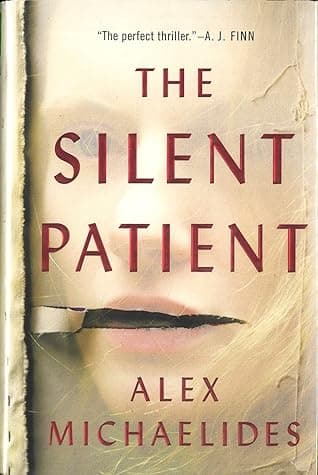
- The Silent Patient
Alex Michaelides
4.1 (507k) average on GoodreadsThrillerFeatures a complex psychological thriller with unexpected twists.
- Still Life
Louise Penny
3.9 (2k) average on GoodreadsLiterary FictionMystery series with a strong detective and atmospheric setting, though less futuristic.
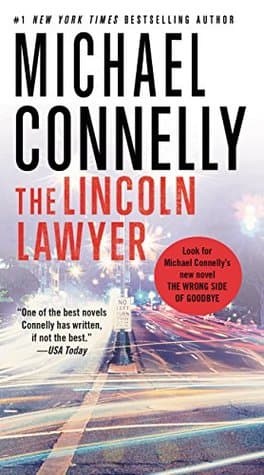
- The Lincoln Lawyer
Michael Connelly
4.2 (193k) average on GoodreadsThrillerConnelly's series focuses more heavily on legal and investigative intricacies with a strong emphasis on realism and procedural detail, often featuring morally ambiguous situations. Robb's 'In Death' series, while also procedural, integrates a significant romance arc and a more defined sense of justice, often with clearer moral lines, and a futuristic setting that Connelly's work lacks. Robb prioritizes character relationships and emotional depth more than Connelly.
- In the Woods
Tana French
3.8 (304k) average on GoodreadsThrillerFrench's Dublin Murder Squad series delves into darker, more psychologically complex mysteries with morally ambiguous protagonists and often unsettling, unresolved conclusions. Robb's series, in contrast, offers a more hopeful tone with clear-cut justice, a stronger focus on the protagonist's personal growth and established relationships, and a less gritty, albeit still violent, futuristic setting. French explores the darker aspects of human nature and systemic failures, while Robb emphasizes individual heroism and the triumph of good over evil.
- Angels & Demons
Dan Brown
3.9 (2.7M) average on GoodreadsThrillerA Harvard symbologist races through Rome's ancient sites, deciphering cryptic clues to unmask the Illuminati and stop a vengeful plot to destroy the Vatican with a stolen antimatter weapon.




Enjoyed the summary?
A summary gives you the shape of the book. The book itself has the detail, the examples and the voice.
Find Indulgence in Death on AmazonAs an Amazon Associate, BookBrief earns from qualifying purchases. How we're funded