
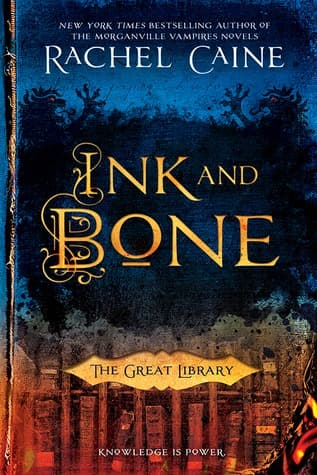
Synopsis
Covers the whole plot, including the ending.
- Difficulty
- Medium
- Pacing
- Moderate
- Mood
- Intriguing, Suspenseful, Thought-provoking, Dark
- Read it if
- You enjoy intricate world-building, high-stakes conspiracies, and a blend of historical and fantasy elements with a dash of dystopian tension.
- Skip it if
- You prefer lighthearted reads or are not interested in stories about the power dynamics of information and censorship.
Ink and Bone Plot Summary
Covers the whole plot, including the ending.
The Brightwell Family Business
Jess Brightwell, a young man from a black market book-smuggling family in Alexandria, is chosen by his father to infiltrate the Great Library of Alexandria. His family deals in illegal physical books, while the Library controls all knowledge through alchemically produced blank books and Obscurists. Jess must gather intelligence on the Library's operations, particularly their weaknesses and any advancements that could threaten his family's trade. He knows the dangers but sees it as his duty. His older brother, Liam, is already a high-ranking Library official, adding complexity to Jess's mission and highlighting the family's deep, if secret, connection to the Library.
Arrival at the Library and Initial Training
Jess arrives at the Library's training facility, a harsh and competitive environment. He meets his fellow recruits: Thomas Schreiber, a kind but naive scholar from Germany; Morgan Hault, a brilliant and independent girl from Philadelphia; Dario Santiago, a wealthy and arrogant Spaniard; and Glain, a quiet but skilled Welsh girl. Scholar Wolfe, their strict and enigmatic instructor, oversees their training, emphasizing obedience, discipline, and the Library's absolute power. Jess quickly learns that the Library's methods are brutal. Trainees face severe penalties, including death, for failure or disobedience. The pressure to succeed and the constant threat of being culled weighs heavily on them.
Morgan's Heresy and the Black Cloth
During a lesson on the limitations of Obscurist alchemy and the dangers of physical books, Morgan Hault, wanting accessible knowledge, secretly develops a device capable of replicating the text of a physical book onto a blank Library volume without an Obscurist. This invention, a form of printing press, directly challenges the Library's monopoly on information and is considered a grave heresy, punishable by death. Jess, who secretly helps her with materials, realizes the immense danger they are in. The device, made from black cloth and other components, represents a terrifying leap in technology that could dismantle the Library's control. Its discovery would lead to severe consequences for Morgan and anyone associated with her.
The Threat of the Burners
As part of their training, the recruits learn about the Burners, a radical cult that believes all knowledge is evil and seeks to destroy the Library and its collections. The Library emphasizes that the Burners are their ultimate enemy, justifying their strict control over information as a necessary defense. Jess and his fellow trainees must understand the Burners' ideology and the methods used to combat them. This exposure supports the Library's narrative of being the sole protector of knowledge, even as Jess privately grapples with the Library's own oppressive nature, which in some ways mirrors the Burners' extremism in its control over what people can know.
Wolfe's Secret and the Test
Scholar Wolfe, Jess's seemingly strict instructor, reveals a hidden side to his character. He is not merely a loyal Library servant but also a member of a secret faction within the Library that seeks to reform it from within. He has been observing Jess closely, aware of his family's background and his potential for independent thought. Wolfe subjects Jess to intense psychological and physical tests, pushing him to his limits and forcing him to confront his loyalties. He hints at a greater purpose for Jess, beyond mere servitude, suggesting that Jess has a unique role to play in the future of the Library. This implies Wolfe knows more about Jess's family than he lets on.
Discovery and Betrayal
Morgan's black cloth device is eventually discovered by the Library authorities. The revelation sends shockwaves through the training program. Morgan is immediately arrested and charged with heresy, a crime punishable by being 'culled' – essentially executed and burned. Jess, along with Thomas, Glain, and even the reluctant Dario, feel immense guilt and fear for Morgan's life. They realize the true ruthlessness of the Library's justice system. Jess, torn between his family's mission and his growing loyalty to his friends, desperately tries to find a way to save Morgan. He understands that her death would be a loss not just for them, but for the future of knowledge itself.
The Rescue Attempt and Escape
Driven by their loyalty to Morgan and a growing disillusionment with the Library's harsh methods, Jess, Thomas, Glain, and Dario hatch a risky plan to rescue Morgan from her impending execution. They use their combined skills and knowledge gained during training, navigating the Library's vast archives and security systems. The escape is perilous, involving confrontations with Library guards and navigating treacherous hidden passages. They manage to free Morgan, but their act of defiance marks them as traitors, forcing them to flee the Library's halls and become fugitives, forever changing their relationship with the institution they once sought to join.
Confrontation with the Obscurists
As they attempt to escape the Library's formidable defenses, Jess and his companions are confronted by the Obscurists, the Library's most powerful and feared operatives. Obscurists manipulate information and perception, making them dangerous adversaries. The pursuit is relentless, showing the Library's unwavering commitment to maintaining control and punishing those who defy it. The fugitives must use all their wits and training to evade capture, highlighting the vast power difference between them and the institution they are fleeing. This confrontation underscores the Library's role as both guardian and jailer of knowledge.
Wolfe's Intervention and the Truth
Just as Jess and his friends seem cornered, Scholar Wolfe unexpectedly intervenes, aiding their escape. He reveals his true allegiance: he is part of a secret faction within the Library that believes the institution has become too rigid and corrupt. Wolfe explains that the Library's extreme control over knowledge is leading to stagnation and that Morgan's invention, while dangerous, represents a potential for positive change. He reveals that the Library elders are suppressing vital information and actively eliminating those who question their authority, including his own past associates. Wolfe's intervention confirms Jess's growing suspicions about the Library's true nature and solidifies his commitment to fighting for accessible knowledge.
The Journey to the Unwritten
With Wolfe's help, Jess, Morgan, Thomas, Glain, and Dario manage to escape the immediate clutches of the Library. They embark on a perilous journey, seeking refuge and allies in a world where the Library's influence is pervasive. Their destination is hinted to be a place or a network associated with the 'Unwritten' – those who live outside the Library's direct control and potentially hold forbidden knowledge. This journey signifies their complete break from their former lives and their dedication to a cause larger than themselves. They carry with them not only their lives but also the dangerous secret of Morgan's device, understanding that it represents both hope and danger for the future of knowledge.
Jess's Conflicted Loyalty
Throughout their escape, Jess is torn between his original mission to spy for his black market family and his deepening bond with his friends and the ideals of open knowledge that Morgan embodies. He understands that his family's trade, while providing access to books, is still a form of control, albeit different from the Library's. His experiences within the Library and witnessing Morgan's persecution have fundamentally shifted his perspective. He realizes that his loyalty now lies with protecting his friends and the potential for a world where knowledge is not hoarded, even if it means betraying his father's trust and risking his family's wrath.
The Price of Knowledge
As they travel, Jess and his companions quickly learn the harsh realities of life beyond the Library's regulated systems. They face scarcity, danger from both Library operatives and other factions, and the constant threat of being discovered. The physical books they carry, once sources of comfort or tools for their family's trade, now become dangerous liabilities. They witness the true cost of forbidden knowledge and the lengths to which the Library will go to suppress it. This period of their journey solidifies their understanding that the fight for open knowledge will be a long and brutal one, demanding sacrifices and unwavering commitment.
New Alliances and the Looming War
Guided by Wolfe's information and their own resourcefulness, the group begins to forge new alliances with other individuals and factions who also oppose the Library's absolute control. They encounter people who cherish physical books and believe in the free flow of information, even at great personal risk. This period marks a shift from mere escape to active resistance. They understand that their actions have ignited a larger conflict, and they must now prepare for a potential war against the most powerful institution in the world. The stakes are incredibly high, with the future of knowledge and humanity's intellectual freedom hanging in the balance.
The Future of the Black Cloth
Morgan's black cloth device, initially a tool of innocent curiosity, transforms into a powerful symbol and potential weapon in the burgeoning conflict. It represents the ability to democratize knowledge, to bypass the Library's control, and to empower individuals with access to information. The group realizes the immense potential and danger of the device. While it offers hope for a future of open knowledge, it also makes them targets of the highest priority for the Library. The decision of how and when to use or reveal the black cloth becomes a central strategic question, knowing its power could either liberate or destroy.
A Divided Loyalty, a Unified Purpose
By the end of the book, Jess has fully shed his role as a spy for his family. His experiences, his friends' suffering, and the revelations about the Library's corruption have solidified his resolve. He chooses to align himself completely with the cause of open knowledge and the rebellion against the Library's tyranny. While his family's influence and the black market will likely remain a part of his life, his primary loyalty now lies with Morgan, Thomas, Glain, Dario, and the nascent movement seeking to break the Library's stranglehold on information. He is no longer just a Brightwell; he is a key player in a revolution that aims to redefine the nature of knowledge.
Ink and Bone Characters
Jess Brightwell
Protagonist
A book-smuggler's son sent to infiltrate the Great Library.
Jess is the youngest son of a powerful black market book-smuggling family. He is intelligent, observant, and possesses a strong moral compass despite his upbringing in a criminal enterprise. Though initially loyal to his family's mission to spy on the Library, his experiences within the institution and his friendships lead him to question his allegiances. He is resourceful and quick-witted, often using his street smarts and knowledge of forbidden books to navigate dangerous situations. He struggles with the inherent conflict between his family's values and the ideals of open knowledge he comes to believe in.
Relationships: Liam Brightwell (Older brother, high-ranking Library official, complex and strained relationship.); Morgan Hault (Close friend, fellow recruit, intellectual partner, and object of his protection.); Thomas Schreiber (Close friend, fellow recruit, moral compass.); Scholar Wolfe (Mentor, complex and manipulative, later revealed as an ally.); His Father (Patriarch of the Brightwell family, commanding and demanding, source of Jess's initial mission.)
Morgan Hault
Protagonist/Catalyst
A brilliant and independent girl whose invention sparks a rebellion.
Morgan is a fiercely intelligent and independent girl from Philadelphia, driven by an insatiable curiosity and a deep belief in the free sharing of knowledge. She is exceptionally gifted in mechanics and innovation, which leads her to invent a device capable of replicating books—a grave heresy in the Library's eyes. Morgan is courageous, headstrong, and unwilling to conform to the Library's oppressive rules. Her invention and subsequent persecution become the central catalyst for the plot, forcing Jess and others to confront the Library's true nature. She represents the potential for technological disruption and the inherent human desire for unrestricted access to information.
Relationships: Jess Brightwell (Close friend, intellectual partner, and protector.); Thomas Schreiber (Friend, fellow recruit, supportive.); Scholar Wolfe (Instructor, later an unexpected ally.)
Thomas Schreiber
Supporting
A kind and moral scholar from Germany, Jess's loyal friend.
Thomas is a gentle and scholarly young man from Germany, characterized by his kindness, strong moral compass, and deep respect for knowledge. He is initially devoutly loyal to the Library, believing in its mission to preserve information. However, witnessing the Library's brutality and the persecution of Morgan slowly erodes his faith. Thomas often acts as Jess's conscience, urging him towards ethical decisions. He is courageous in his own quiet way, willing to risk his life for his friends despite his less combative nature. His transformation reflects the disillusionment many feel towards the Library's oppressive methods.
Relationships: Jess Brightwell (Close friend, fellow recruit.); Morgan Hault (Close friend, fellow recruit.)
Scholar Wolfe
Supporting/Mentor
The enigmatic and manipulative instructor of the Library recruits.
Scholar Wolfe is the strict, intimidating, and highly intelligent instructor of Jess's cohort. He appears to be a staunch enforcer of the Library's rules, known for his harsh discipline and enigmatic demeanor. However, he is revealed to be a member of a secret internal faction seeking to reform the Library from within, believing its current path is unsustainable. Wolfe is a master manipulator, testing his recruits' loyalties and pushing them to their limits to identify those with the potential to challenge the system. He possesses deep knowledge of the Library's secrets and a pragmatic, often ruthless, approach to achieving his goals.
Relationships: Jess Brightwell (Mentor, manipulator, eventual ally.); Morgan Hault (Instructor, later an ally.)
Dario Santiago
Supporting
A wealthy and arrogant Spanish recruit who eventually joins the rebellion.
Dario is a proud, arrogant, and initially self-serving recruit from a wealthy Spanish family. He views his Library training as a means to gain power and prestige. He is often at odds with Jess and Morgan due to his privileged background and disdain for those he considers beneath him. Despite his initial unpleasantness, Dario possesses a surprising sense of loyalty to his cohort, especially after witnessing the Library's injustices. His skills, particularly his knowledge of languages and social maneuvering, prove unexpectedly valuable during their escape. He represents the internal struggle of choosing between personal gain and a greater cause.
Relationships: Jess Brightwell (Rival, then reluctant ally.); Morgan Hault (Antagonistic, then allied out of necessity.)
Glain
Supporting
A quiet and skilled Welsh girl, proficient in combat and survival.
Glain is a quiet, stoic, and highly capable recruit from Wales. She is physically adept, skilled in combat, and possesses a strong sense of self-preservation and loyalty to those she considers her own. Her background is mysterious, hinting at a life of hardship before joining the Library. Glain speaks little but observes much, and her actions often speak louder than words. She is a pragmatic and fierce protector of her friends, proving invaluable in their escape with her combat prowess and survival instincts. She represents the silent strength and resilience found among the oppressed.
Relationships: Jess Brightwell (Fellow recruit, loyal friend.); Morgan Hault (Fellow recruit, loyal friend.)
Liam Brightwell
Supporting
Jess's older brother, a high-ranking and conflicted Library official.
Liam is Jess's older brother, who has risen to a high rank within the Great Library. He is intelligent, ambitious, and seemingly loyal to the Library, but his true allegiances are complex. He maintains a strained relationship with his family, particularly his father, while also protecting Jess when possible. Liam represents the internal conflict within the Brightwell family, as he navigates the dangerous line between his familial ties to the black market and his powerful position within the Library. His actions are often ambiguous, driven by a desire for power and survival, but also a lingering sense of duty to his family.
Relationships: Jess Brightwell (Brother, complex relationship of protection and rivalry.); His Father (Son, strained and demanding relationship.)
The Brightwell Patriarch (Father)
Supporting/Mentioned
The ruthless head of a black market book-smuggling empire.
Jess's father is the powerful and ruthless patriarch of the Brightwell family, who controls a vast black market network dealing in illegal physical books. He is cunning, pragmatic, and utterly dedicated to his family's enterprise, viewing knowledge as a commodity to be bought and sold. He sends Jess to the Library as a spy, expecting unwavering loyalty and intelligence. He represents the established, albeit illegal, power structure that exists in opposition to the Library's monopoly, yet his methods are also controlling. His influence looms large over Jess, even when he is not physically present.
Relationships: Jess Brightwell (Son, agent, source of initial mission.); Liam Brightwell (Son, complex and demanding relationship.)
Ink and Bone Themes
The Control and Free Flow of Knowledge
This is the central theme of the novel. The Great Library of Alexandria controls knowledge, deciding what is accessible and what is suppressed, believing that unrestricted access leads to chaos and war. Physical books are forbidden, and all information is filtered through alchemically produced blank books. In contrast, Morgan's invention of the black cloth and Jess's family's black market trade represent the desire for the free flow of knowledge, even if it means breaking the law. The book explores the ethical implications of both extremes: the Library's oppressive censorship and the potential dangers of uncontrolled information, ultimately arguing for a balance that prioritizes intellectual freedom.
“Knowledge is power, and like all power, it can be abused. But unlike other powers, it is infinite. It can be shared without being diminished, and its growth is exponential.”
Family Loyalty vs. Personal Morality
Jess Brightwell is constantly torn between his loyalty to his black market family and his developing personal morality and loyalty to his friends. His father sends him to infiltrate the Library, expecting him to prioritize family interests. However, as Jess witnesses the Library's brutality and forms deep bonds with Morgan and Thomas, his moral compass shifts. He struggles with betraying his family, but ultimately chooses to protect his friends and fight for a cause he believes in. This theme highlights the difficult choices individuals face when their upbringing conflicts with their emerging sense of justice.
“He was a Brightwell. He was a spy. He was a friend. And those three things, he realized, were pulling him in three different directions.”
The Nature of Heresy and Rebellion
In the world of 'Ink and Bone,' any act that challenges the Great Library's authority over knowledge is deemed heresy, punishable by death. Morgan's invention of the black cloth is the ultimate heresy, as it threatens the Library's entire system of control. Her subsequent persecution and the group's efforts to save her transform them into rebels. The theme explores how acts deemed 'heretical' by an oppressive power can be seen as acts of liberation and progress by others. It questions who defines heresy and whether rebellion is justified when fundamental freedoms are at stake.
“The Library did not just control what you read; it controlled what you thought, what you knew, what you were allowed to be.”
The Dangers of Absolute Power
The Great Library, despite its noble origins, has become a monolithic institution wielding absolute power over knowledge, and by extension, over society. This unchecked power has led to corruption, censorship, and a willingness to commit atrocities, such as culling 'heretics,' to maintain its control. The Library's fear of the Burners, who seek to destroy all knowledge, ironically mirrors its own extremism in controlling it. The novel shows how even institutions founded on good intentions can become tyrannical when given too much authority, highlighting the importance of checks and balances and the dangers of unchecked power in any form.
“Power corrupts. Absolute power corrupts absolutely. And no power was more absolute than the Library's control of knowledge.”
Plot Devices & Literary Techniques
The Black Cloth
Morgan Hault's invention, a printing press that replicates books.
The black cloth is a revolutionary device invented by Morgan Hault that can instantly copy the text of a physical book onto a blank Library volume without the need for an Obscurist. This device is the central MacGuffin and catalyst of the plot, representing the ultimate heresy against the Library's monopoly on knowledge. Its existence threatens to dismantle the Library's entire control system, making Morgan and anyone associated with it targets of the highest priority. It serves as both a symbol of hope for accessible knowledge and a dangerous weapon that could ignite a war.
The Obscurists
Magicians who control and manipulate knowledge within the Library.
Obscurists are individuals with unique magical abilities to manipulate information, bind books, and enforce the Library's will. They are the backbone of the Library's power, capable of instantly transcribing knowledge into blank books and forming powerful magical barriers. They serve as both the Library's scribes and its elite enforcers, making them formidable adversaries. Their existence justifies the Library's control over alchemy and magical practices, emphasizing the fantastical element of the setting and providing a concrete magical threat to the protagonists.
The Black Market for Books
The illegal trade of physical books, run by families like the Brightwells.
The black market for physical books, exemplified by the Brightwell family, serves as a counterpoint to the Library's official system. It highlights the human desire for ownership and direct access to knowledge, even when forbidden. This device establishes Jess's background, his family's motivations, and provides him with unique skills and knowledge that prove invaluable during his time in the Library and his subsequent rebellion. It underscores the theme of control versus freedom of knowledge and introduces a complex moral grey area where 'illegal' activities are driven by a hunger for truth.
The Culling
The Library's method of executing those deemed heretics or failures.
The Culling is the Library's brutal method of executing individuals who commit heresy, fail their training, or otherwise defy its authority. It involves public burning and serves as a stark reminder of the Library's absolute power and ruthless enforcement of its rules. This plot device creates immense tension and raises the stakes, particularly when Morgan is condemned to be culled. It highlights the oppressive nature of the Library and provides a clear, terrifying consequence for disobedience, driving the protagonists to desperate measures.
Ink and Bone Quotes
“Knowledge is power, and power is a dangerous thing.”
“The Library does not forget. The Library does not forgive.”
“There are things worse than death. Being forgotten is one of them.”
“Books are not just paper and ink. They are lives. They are souls.”
“Sometimes, the only way to save something is to break it first.”
“The greatest prison is a mind that refuses to learn.”
“Every book is a door. Choose wisely which ones you open.”
“We are all just stories in the end. Make yours worth telling.”
“Fear can be a weapon, or it can be a shield. It's up to you how you wield it.”
“The truth is not always what you want it to be. Sometimes, it's what you need it to be.”
“Silence can be louder than any scream, if you know how to listen.”
“Even the mightiest walls can crumble with enough time and determination.”
“To truly understand a thing, you must first be willing to question everything you think you know about it.”
“There are no innocent choices, only consequences.”
Quiz
10 questions on the plot and the characters. Each answer comes with a short explanation.
Question 1
What is the primary method the Great Library uses to deliver the content of books to the masses?
- Scribes manually copying texts
- Alchemical replication and instant delivery
- Public readings by Librarians
- Telepathic transfer of knowledge
Show answer
B. Alchemical replication and instant delivery The Great Library uses alchemy to instantly replicate and deliver the content of books, making physical ownership unnecessary and forbidden.
Question 2
What is Jess Brightwell's family's involvement with books?
- They are high-ranking Librarians
- They operate a thriving black market for illegal books
- They are scholars who study ancient texts
- They are inventors of new alchemical processes for the Library
Show answer
B. They operate a thriving black market for illegal books Jess's family is deeply involved in the black market, dealing in illegal physical books, which is how Jess gained much of his early knowledge.
Question 3
What is Jess's initial purpose for being sent to train for the Library's service?
- To genuinely become a loyal Librarian
- To spy for his family within the Library
- To escape his family's illegal activities
- To invent new alchemical devices for the Library
Show answer
B. To spy for his family within the Library Jess is sent to the Library to act as a spy for his family, who are involved in the black market for books.
Question 4
What specific action by Jess's friend leads to a major conflict with the Library?
- Stealing a valuable ancient manuscript
- Publicly denouncing the Library's policies
- Creating a device that could change the world
- Forming a rebellion against the Library
Show answer
C. Creating a device that could change the world Jess's friend inadvertently commits heresy by creating a device with world-changing potential, which challenges the Library's control over knowledge.
Question 5
What is the Great Library's stance on the personal ownership of physical books?
- It is encouraged for all citizens
- It is allowed only for high-ranking officials
- It is expressly forbidden
- It is permitted if books are registered with the Library
Show answer
C. It is expressly forbidden The Great Library strictly forbids the personal ownership of physical books, as they control all access to knowledge through alchemical means.
Question 6
What internal conflict does Jess face during his training?
- Whether to pursue alchemy or traditional scholarship
- His loyalty to his family versus his growing respect for the Library
- His desire for power versus his desire for anonymity
- His fear of failure versus his ambition to become a Master Librarian
Show answer
B. His loyalty to his family versus his growing respect for the Library Jess's loyalties are tested between his family's illicit book trade and the values of the Great Library, which he comes to understand better during his training.
Question 7
What does the Great Library ultimately prioritize above human life, according to the synopsis?
- The spread of literacy
- The preservation of ancient cultures
- The control and value of knowledge
- The individual freedom of thought
Show answer
C. The control and value of knowledge The synopsis states that 'those who control the Great Library believe that knowledge is more valuable than any human life,' highlighting their ruthless prioritization.
Question 8
What is the eventual fate threatened for both heretics and books by the Great Library?
- Imprisonment in a hidden vault
- Public re-education sessions
- Banishment from the Library's services
- Burning
Show answer
D. Burning The synopsis explicitly states that 'soon both heretics and books will burn,' indicating the Library's extreme measures against perceived threats.
Question 9
How does the Great Library govern the flow of knowledge?
- By allowing free and open access to all information globally
- By having a presence in every major city and controlling content delivery
- By only providing knowledge through ancient oral traditions
- By permitting only state-approved scholars to access information
Show answer
B. By having a presence in every major city and controlling content delivery The Great Library is described as 'a presence in every major city, governing the flow of knowledge to the masses,' indicating its widespread and controlled distribution.
Question 10
What is the central conflict represented by Jess's background and his training in the Library?
- The conflict between ancient magic and modern technology
- The conflict between individual freedom and institutional control over knowledge
- The conflict between different political factions vying for power
- The conflict between rural life and urban development
Show answer
B. The conflict between individual freedom and institutional control over knowledge Jess's background with illegal books and his training within the controlling Library highlights the central theme of the struggle between individual access to information and the powerful institution that governs it.
Ink and Bone FAQ
What is the core conflict Jess Brightwell faces when he first arrives at the Library?
Jess is torn between his family's deep-rooted, illegal book smuggling enterprise and his ambition to join the Great Library, which strictly forbids personal ownership of books. He is sent as a spy for his family, creating a constant internal struggle over his loyalties and the true value of knowledge.
How does the Great Library maintain its control over knowledge and society?
The Library controls knowledge through a sophisticated system of instant content delivery via alchemically-enhanced books, effectively eliminating the need for personal ownership. It also maintains a powerful military, the Black Guard, and a strict censorship policy, punishing any deviation from its approved narrative or the creation of original works.
Who are some of the key individuals Jess interacts with during his Library training?
Jess primarily interacts with his fellow initiates, including Thomas Schreiber, a brilliant and naive inventor; Morgan Hault, a strong-willed and resourceful girl from a rival smuggling family; and Khalila Seif, a gifted scholar. He also forms a complex relationship with Scholar Christopher Wolfe, their strict but observant instructor.
What is the significance of the 'Obscurists' in the Library's history?
The Obscurists were a group of scholars who believed in the free exchange of knowledge and were brutally suppressed by the Library centuries ago. Their history is largely erased or demonized by the Library, but their legacy of rebellion and the pursuit of unfettered knowledge subtly influences characters like Jess and Thomas.
What is the 'Codex' and why is it so dangerous to the Library?
The Codex is a legendary device, inadvertently recreated by Thomas Schreiber, that can create new, original content and potentially infinite copies of books, effectively circumventing the Library's control over knowledge. It represents the ultimate heresy because it allows for unauthorized creation and dissemination, threatening the Library's entire power structure.
How does Jess's family background influence his decisions within the Library?
Jess's family background instills in him a deep understanding of the value of physical books and a distrust of absolute authority, even while he initially respects the Library. This upbringing makes him more perceptive to the Library's flaws and ultimately fuels his rebellion when he witnesses its cruelty and censorship firsthand.
What internal conflict does Scholar Christopher Wolfe grapple with regarding his students?
Scholar Wolfe, despite his strict adherence to Library rules, shows subtle signs of caring for his students and their potential. He struggles with the inherent conflict between his duty to the Library's rigid doctrines and his recognition of the brilliance and humanity of individuals like Thomas and Jess, particularly as the stakes rise.
How does Morgan Hault's past shape her resilience and actions?
Morgan Hault's past as part of a rival smuggling family, combined with her experiences of loss and hardship, has made her incredibly resilient, resourceful, and fiercely independent. This background enables her to adapt quickly to dangerous situations and to challenge authority, often acting as a pragmatic counterbalance to Jess's idealism.
What is the true nature of the 'alchemically enhanced books' and their connection to the Library's power?
The alchemically enhanced books are not simply copies; they are living manifestations of knowledge, capable of instantly updating and transmitting information. This alchemical connection gives the Library near-omnipotent control over information, allowing them to rewrite history or censor content with immediate and pervasive effect, making them powerful tools of manipulation.
In what ways does the Library's philosophy of 'knowledge is more valuable than any human life' manifest?
This philosophy manifests through the Library's willingness to execute 'heretics' for creating unauthorized works or owning physical books, as seen with the fate of Thomas. It also justifies their brutal suppression of any dissent and their ruthless pursuit of the Codex, demonstrating that the integrity of their controlled knowledge system takes precedence over individual human lives.
How does Jess's relationship with Thomas Schreiber evolve and impact his moral compass?
Jess initially sees Thomas as a naive but brilliant friend. As Thomas's invention, the Codex, puts him in mortal danger, Jess's loyalty deepens, forcing him to confront the Library's cruelty. Thomas's innocence and eventual fate profoundly solidify Jess's moral compass, pushing him towards open rebellion against the Library's tyranny.
What are the ethical implications of the Library's 'perfect' knowledge system?
The Library's 'perfect' knowledge system, while seemingly efficient, is built on censorship, control, and the suppression of original thought. It creates a society where truth is dictated, history can be rewritten, and individual creativity is punished, raising profound ethical questions about freedom of information versus controlled order.
How does the setting of Alexandria influence the themes of the book?
The historical setting of Alexandria, home to the legendary ancient library, provides a powerful backdrop for the themes of knowledge, destruction, and control. It evokes the tragedy of lost knowledge and implicitly critiques the modern Library's similar, yet more systematic, destruction of intellectual freedom, drawing a parallel between ancient loss and contemporary suppression.
What is the ultimate goal of Jess and his allies by the end of the book?
By the end of the book, Jess and his remaining allies, including Morgan and Khalila, are committed to fighting the Library's oppressive control over knowledge. Their ultimate goal is to protect the Codex and ensure that humanity has the freedom to create, own, and disseminate information without the Library's censorship or brutal oversight.
How does the concept of 'original works' differ from 'copied works' in the Library's view?
The Library vehemently forbids 'original works' as they represent unauthorized creation and independent thought, a direct challenge to its controlled knowledge system. 'Copied works,' on the other hand, are the only acceptable form, as long as they are produced and disseminated by the Library itself, ensuring its monopoly on information.
What role do the Black Guard play in maintaining the Library's authority?
The Black Guard serve as the Library's enforcement arm, a formidable military force responsible for hunting down 'heretics,' confiscating illegal books, and suppressing any rebellion. They are depicted as ruthless and unwavering in their loyalty, embodying the Library's ultimate power and its willingness to use violence to maintain control.
What is the significance of the 'unburned' books Jess encounters in his family's possession?
The 'unburned' books held by Jess's family are physical, original artifacts of literature and knowledge, representing a tangible connection to a past where information was freely owned. They symbolize the rebellion against the Library's digital, ephemeral control and are a constant reminder to Jess of the true, independent value of books.
About the author

Rachel Caine is an author known for her contributions to the fiction genre. Her notable works include "Stillhouse Lake," "Midnight Alley," "Lord of Misrule," "Glass Houses," "Ghost Town," and "Last Breath." Caine's writing often blends elements of suspense and supernatural themes.
Similar books
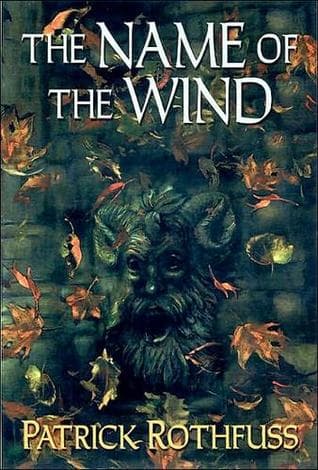
- The Name of the Wind
Patrick Rothfuss
4.5 (716k) average on GoodreadsFantasyFeatures a powerful, secretive institution and a protagonist with a hidden past navigating a complex magical world.
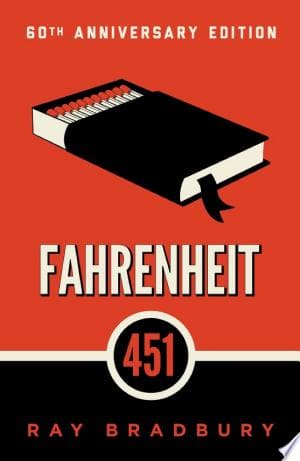
- Fahrenheit 451
Ray Bradbury
4.0 (1.7M) average on GoodreadsFantasyExplores themes of censorship, forbidden knowledge, and the burning of books in a dystopian society.
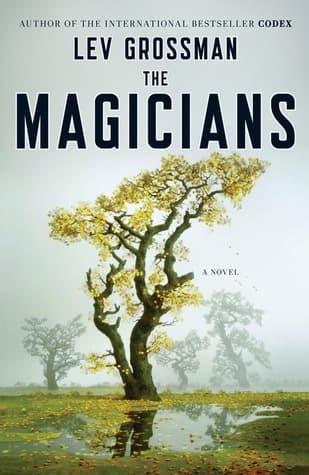
- The Magicians
Lev Grossman
3.5 (232k) average on GoodreadsFantasyFollows students in a magical academy, dealing with complex moral dilemmas and the darker side of power.
- The Giver
Lois Lowry
4.1 (1.8M) average on GoodreadsFantasyWhile both explore controlled societies, 'The Giver' focuses on emotional and experiential suppression, whereas 'Ink and Bone' directly confronts intellectual suppression, censorship, and the manipulation of historical truth through a centralized knowledge institution. Caine's world offers a more nuanced look at how knowledge itself can be controlled, rather than just removed.
- Harry Potter and the Sorcerer's Stone
J.K. Rowling
4.5 (7M) average on GoodreadsFantasyRescued from a miserable life under the stairs, an orphaned boy discovers he's a wizard destined for a magical school, where he uncovers a dangerous secret tied to the dark wizard who murdered his parents.
- The Hunger Games
Suzanne Collins
4.3 (6.4M) average on GoodreadsFantasyIn a future where children fight to the death on live television, Katniss Everdeen volunteers for the arena, turning a death sentence into a fight for survival and a spark of rebellion.



Enjoyed the summary?
A summary gives you the shape of the book. The book itself has the detail, the examples and the voice.
Find Ink and Bone on AmazonAs an Amazon Associate, BookBrief earns from qualifying purchases. How we're funded