

Synopsis
Covers the whole plot, including the ending.
- Difficulty
- Medium
- Pacing
- Moderate
- Mood
- Dystopian, Thought-provoking, Suspenseful, Melancholy
- Read it if
- You enjoy thought-provoking dystopian fiction with themes of censorship, conformity, and the power of knowledge, and appreciate a classic that remains relevant today.
- Skip it if
- You prefer fast-paced action over philosophical exploration, or are looking for a light, optimistic read.
Fahrenheit 451 Plot Summary
Covers the whole plot, including the ending.
The Smell of Kerosene and a Curious Encounter
Guy Montag, a fireman in a future where books are outlawed and burned, enjoys his work. One evening, he meets Clarisse McClellan, his new seventeen-year-old neighbor. Clarisse is different; she likes nature, asks questions, and does not follow the fast, superficial rules of their society. Her questions about Montag's happiness and his job make him doubt things. Their talk leaves Montag feeling uneasy and aware of his own emptiness, a feeling made worse when he finds his wife, Mildred, has overdosed on sleeping pills.
Mildred's Apathy and the Seeds of Doubt
After Mildred's overdose, two indifferent technicians, not doctors, pump her stomach and replace her blood. They treat the event casually. Mildred wakes up with no memory of what happened and returns to watching wall-sized televisions and listening to seashell radios. Montag tries to connect with her, but she shows no empathy. Clarisse continues to challenge Montag's views, describing a world where people talked, thought, and connected, unlike their current society. Her perspective makes Montag more aware of the superficiality and emptiness of his life and others' lives.
The Old Woman's Sacrifice and Montag's Revelation
Montag and his fellow firemen respond to a call at an old woman's house. The woman refuses to leave her books, choosing instead to set herself on fire with her library, saying, 'Play the man, Master Ridley; we shall this day light such a candle, by God's grace, in England, as I trust shall never be put out.' This act of defiance deeply affects Montag, making him realize how valuable books must be for someone to die for them. He secretly takes a book from her house before it burns. The incident leaves him sick and troubled, making him question his job more than ever.
Clarisse's Disappearance and Beatty's Sermon
After the old woman's death, Clarisse disappears. Mildred later tells Montag that Clarisse was hit by a car and her family moved, but the details are vague. Montag, sick with a fever and guilt, refuses to go to work. Captain Beatty, Montag's fire chief, visits him and gives a long, cynical speech about why books are burned. Beatty says books cause conflict, make people unhappy, and promote intellectual snobbery. He argues that society chose to simplify life and remove different ideas for happiness and equality. He reveals he knows Montag has a book and gives him 24 hours to burn it.
A Secret Library and Mildred's Betrayal
Ignoring Beatty's warning, Montag shows Mildred that he has been secretly collecting books, hidden in an air vent. He pulls out many books, hoping to find answers and share his new interest with his wife. Mildred, however, is horrified by the sight of them. She cannot understand their value or Montag's sudden interest. She worries more about the consequences and the disruption to her comfortable, superficial life. Montag tries to read aloud, but Mildred's lack of interest and the constant noise from her 'family' on the parlor walls make any real conversation impossible. He sees the distance between them and his desperate need for help.
Faber, the Former Professor
Remembering a meeting from a year ago, Montag seeks out Faber, a former English professor he met in a park who had recited poetry and hinted at his love for books. Montag brings a Bible to Faber, wanting understanding and a plan. Faber, at first scared, agrees to help Montag. He explains that society lacks good information, time to think, and freedom to act on what is learned. He sees Montag as a possible agent for change. Faber gives Montag a two-way radio earpiece, a 'green bullet,' so they can talk secretly and Faber can guide him.
The Poetry Reading and Mildred's Friends
Montag returns home to Mildred and her friends, Mrs. Bowles and Mrs. Phelps, who are watching their parlor wall programs. With Faber's guidance through the earpiece, Montag becomes agitated by their superficial talks about war, politics, and child-rearing, which show their lack of independent thought or emotion. He suddenly turns off the parlor walls and, despite Mildred's protests, reads the poem 'Dover Beach' aloud. The poem's raw emotion and complex ideas upset the women; Mrs. Phelps cries, and Mrs. Bowles becomes angry. This incident further separates Montag from his wife and her friends, strengthening his decision to resist.
The Final Alarm and Beatty's Demise
Montag goes to the fire station, where Beatty taunts him with literary quotes and philosophical arguments, trying to confuse him. An alarm sounds, and to Montag's shock, the fire truck goes to his own house. Mildred, who betrayed him, comes out with her suitcase, getting into a waiting taxi. Beatty forces Montag to burn his own house with a flamethrower. After the house is a ruin, Beatty finds Montag's 'green bullet' earpiece, realizing he has been talking with Faber. Beatty threatens to find Faber. In a desperate moment, Montag turns the flamethrower on Beatty, burning him and knocking out the other firemen. Montag becomes a fugitive.
Escape and the Mechanical Hound's Hunt
After killing Beatty, Montag takes some hidden books from his yard and flees his burning home. He knows he is now a criminal and a target. As he runs, he barely avoids being hit by a speeding car full of teenagers, a reminder of Clarisse's fate. He reaches Faber's house, gives the professor money, and tells him to go to St. Louis to meet a retired printer. Montag then continues his escape toward the river, with the sound of the Mechanical Hound, a robotic hunter, pursuing him.
The River and the Book People
Montag jumps into the river, letting the current carry him away from the city and the Mechanical Hound. The water washes away the smell of kerosene, marking a new beginning. He emerges on the other side, in the countryside, a place he has never really known. Following a railway line, he meets a group of exiled intellectuals called the 'Book People,' led by Granger. These people have memorized entire books to save them for the future. They welcome Montag, recognizing him from the televised chase.
War and a New Dawn
As Montag and the Book People watch from a distance, the city he left is destroyed by enemy bombers, becoming a mushroom cloud of dust. Mildred and her superficial society are gone. The Book People, who expected this, are ready to rebuild. Granger talks about the Phoenix, a bird that burns itself and rises from its ashes, symbolizing destruction and rebirth. Montag begins to memorize the Book of Ecclesiastes. They walk upstream, away from the destroyed city, hoping to share their preserved knowledge and help rebuild a more thoughtful society after the war, as a new day begins.
Fahrenheit 451 Characters
Guy Montag
Protagonist
A fireman who questions his society and seeks knowledge.
Guy Montag is a third-generation fireman, initially finding pleasure in burning books. He is characterized by his gradual awakening from a life of ignorance and conformity. His journey begins with a chance encounter with Clarisse, which sparks a deep dissatisfaction with his empty existence and his wife, Mildred. He becomes increasingly rebellious, secretly hoarding books and seeking out knowledge from figures like Faber. Montag is driven by a profound sense of loneliness and a yearning for meaning in a superficial world. His actions, from stealing books to killing Captain Beatty, mark his transformation from an enforcer of ignorance to a protector of knowledge.
Relationships: Mildred Montag (Wife, distant and disengaged); Clarisse McClellan (Young neighbor, catalyst for his awakening); Captain Beatty (Fire chief, intellectual antagonist, mentor/tormentor); Faber (Former professor, mentor, intellectual guide); Granger (Leader of the Book People, new mentor)
Mildred Montag
Supporting
Montag's wife, completely absorbed by shallow media.
Mildred is Guy Montag's wife, a representative of the conformist, pleasure-seeking society. She is completely absorbed by her 'parlor family' (wall-sized televisions) and seashell radios, living in a constant state of distraction and emotional numbness. Her attempted suicide by overdose is treated casually, highlighting her profound unhappiness and the society's indifference to suffering. Mildred shows no interest in intellectual pursuits, emotional connection, or the world beyond her immediate, programmed entertainment. Her betrayal of Montag by reporting his books to the authorities underscores her loyalty to the established order and her fear of anything that disrupts her comfortable, albeit empty, existence.
Relationships: Guy Montag (Husband, emotionally distant); Mrs. Bowles (Friend, similarly superficial and emotionally numb); Mrs. Phelps (Friend, similarly superficial and emotionally numb)
Clarisse McClellan
Supporting
Montag's curious teenage neighbor, who challenges his worldview.
Clarisse McClellan is a seventeen-year-old girl who lives next door to Montag. She is an inquisitive, free-spirited, and observant individual, described as 'antisocial' by society's standards because she prefers nature, conversation, and critical thought over television and mindless entertainment. Her innocent yet probing questions about Montag's happiness and the true nature of his work are the initial catalyst for his transformation. Clarisse represents a lost way of life—one of genuine human connection, curiosity, and appreciation for the world. Her mysterious disappearance and reported death symbolize the society's intolerance for individuality and independent thought.
Relationships: Guy Montag (Neighbor, intellectual awakening catalyst); Clarisse's Uncle (Influential figure, taught her to observe and question)
Captain Beatty
Antagonist
Montag's fire chief, a cunning and well-read defender of censorship.
Captain Beatty is the fire chief and Montag's intellectual antagonist. He is a complex character, surprisingly well-read, possessing an encyclopedic knowledge of literature, which he uses to justify the burning of books and the suppression of knowledge. Beatty argues that books cause unhappiness, promote intellectual elitism, and lead to social discord, making him a cynical proponent of the status quo. He is manipulative, insightful, and seems to harbor a deep-seated self-loathing or disillusionment with knowledge itself. Beatty represents the seductive power of ignorance and the dangers of intellectualism twisted for oppressive ends. His death at Montag's hands is a pivotal moment in the protagonist's rebellion.
Relationships: Guy Montag (Fire chief, intellectual adversary, victim); The Firemen (Leader and supervisor)
Faber
Supporting
A reclusive former English professor who mentors Montag.
Faber is a former English professor whom Montag encounters in a park and later seeks out for help. He is an old, timid, and fearful man, initially reluctant to assist Montag due to his cowardice in speaking out against censorship years ago. However, he is ultimately swayed by Montag's passion and desperation. Faber provides Montag with critical insights into the value of books (quality information, leisure to digest it, and the freedom to act on it) and helps him devise a plan to undermine the firemen. He invents the 'green bullet' earpiece, allowing him to communicate with and guide Montag remotely. Faber represents intellectual integrity, the power of knowledge, and the courage that can be found even in the most fearful individuals.
Relationships: Guy Montag (Mentor, intellectual guide); Granger (Future collaborator (implied))
Granger
Supporting
Leader of the 'Book People,' a group of intellectual exiles.
Granger is the leader of a community of intellectual exiles known as the 'Book People' or 'Hobo Intellectuals,' whom Montag encounters after fleeing the city. These individuals have memorized entire books to preserve literature and knowledge for a future generation, effectively becoming living libraries. Granger is intelligent, philosophical, and pragmatic, offering Montag a new perspective on the endurance of knowledge and the importance of memory. He provides Montag with hope and a sense of purpose after the destruction of the city, explaining the concept of the Phoenix and the cyclical nature of destruction and rebirth. He represents the resilience of human intellect and the potential for a better future.
Relationships: Guy Montag (New mentor, leader of his new community); The Book People (Leader and organizer)
Mrs. Bowles
Supporting
Mildred's friend, representative of society's superficiality.
Mrs. Bowles is one of Mildred's friends, a prime example of the superficial and emotionally detached citizens in Montag's society. She is characterized by her indifference to her children, her casual acceptance of war, and her reliance on television for all her emotional and intellectual input. When Montag reads 'Dover Beach,' she becomes enraged and defensive, unable to cope with the raw emotion and complexity of poetry. Her reaction highlights the society's aversion to anything that forces them to think or feel deeply.
Relationships: Mildred Montag (Friend); Mrs. Phelps (Friend)
Mrs. Phelps
Supporting
Mildred's friend, equally superficial and emotionally numb.
Mrs. Phelps is another of Mildred's friends, sharing Mrs. Bowles's and Mildred's characteristics of emotional detachment and reliance on shallow entertainment. She casually discusses her husband going off to war without any apparent concern and expresses no desire for children. When Montag reads 'Dover Beach,' she is unexpectedly moved to tears, a rare display of genuine emotion that quickly turns into confusion and anger. Her momentary vulnerability suggests a repressed humanity beneath the layers of societal conditioning, though she quickly retreats from it.
Relationships: Mildred Montag (Friend); Mrs. Bowles (Friend)
Mechanical Hound
Antagonist
A robotic hunter used by firemen to track down criminals.
The Mechanical Hound is a terrifying, eight-legged robot used by the firemen to track down and neutralize fugitives, particularly those who possess books. Equipped with a powerful olfactory sensor and a retractable needle filled with a lethal tranquilizer, it is a chilling symbol of the government's oppressive control and advanced surveillance technology. The Hound operates without emotion or mercy, making it an unstoppable and relentless hunter. Its presence instills fear in Montag and serves as a constant threat, representing the brutal, dehumanizing force of the state against individual defiance. It is a technological marvel turned instrument of terror.
Relationships: Guy Montag (Hunter and hunted)
Fahrenheit 451 Themes
Censorship and the Suppression of Knowledge
The main idea of 'Fahrenheit 451' is the dangers of censorship and deliberately stopping knowledge. The government, through the firemen, burns books to control thought and keep a superficial sense of happiness and equality. This is clear when Montag, a fireman, starts to question his job after seeing an old woman burn with her books, realizing the power and truth within them. Captain Beatty's reasons for burning books, like preventing unhappiness and intellectual snobbery, show how harmful censorship is, claiming to help people while removing their ability to think and feel.
“You don't have to burn books to destroy a culture. Just get people to stop reading them.”
Ignorance vs. Knowledge
The novel shows the contrast between choosing not to know, which most of society does, and seeking knowledge, which Montag gradually begins. Mildred and her friends show this ignorance; they prefer mindless entertainment from their parlor walls over thinking or feeling. Their lives are empty but 'happy' in a superficial way. In contrast, Clarisse's curiosity and Faber's deep thinking represent the power of knowledge. Montag's journey is from not knowing to understanding, as he wants the truth and complexity that books offer, even if it brings pain and social isolation. This shows that real happiness and understanding come from facing reality, not avoiding it.
“We need not be afraid of the things we do if we are only for ourselves, but if we are for the future, we must be afraid to forget.”
Technology and its Dehumanizing Effects
Bradbury criticizes how technology can make people less human when it controls, distracts, and isolates them. The wall-sized televisions, seashell radios, and the fast pace of life create a society without real human interaction or independent thought. Mildred's obsession with her 'parlor family' shows how technology creates emotional numbness and replaces real relationships. The Mechanical Hound, a terrifying robotic hunter, symbolizes technology as a tool of state oppression and a cold killer. The novel suggests that even advanced technology, when misused, can lead to losing humanity and individuality.
“The television set is the biggest thing in the world, and it's the only thing that matters.”
Conformity vs. Individuality
Society in 'Fahrenheit 451' demands everyone conform; individuality is seen as dangerous. Citizens must follow standard behaviors, thoughts, and entertainment. Anyone different is either 'fixed' or removed. Clarisse's unique perspective and independent thinking make her an outcast, leading to her disappearance. Montag's change is a rebellion against this conformity. He chooses to ask his own questions and seek forbidden knowledge, even if it costs him his safety and social standing. The 'Book People' show the ultimate act of individuality and resistance, preserving human thought and unique perspectives against a society that wants everyone to be the same.
“I am a rare spirit, and I have to be myself.”
The Power of Literature and Memory
The novel shows how literature keeps history alive, encourages independent thinking, and connects people across time. Books are dangerous not because they are evil, but because they hold complex ideas, offer different viewpoints, and challenge the current system, threatening the government's control. The old woman's sacrifice for her books, and Faber's understanding of their value, show how important they are. The 'Book People' further emphasize this by memorizing entire literary works, becoming living records of human knowledge and creativity. They believe that even if physical books are destroyed, the ideas and stories can live on through human memory, waiting for a time when society is ready for them again.
“The books are to remind us what asses and fools we are. They’re Caesar’s praetorian guard, whispering as the parade passes, 'Remember, Caesar, thou art mortal.'”
Plot Devices & Literary Techniques
The Mechanical Hound
Symbol of the state's oppressive technology and surveillance.
The Mechanical Hound is a terrifying, eight-legged robot designed to track down and kill fugitives. It operates on scent, has a retractable needle filled with a lethal tranquilizer, and is a chilling representation of advanced technology used for oppressive control. The Hound embodies the government's absolute power and its ability to eliminate dissenters without emotion. Its constant presence at the fire station and its relentless pursuit of Montag create intense suspense and symbolize the dehumanizing, unthinking force of the state against individual freedom. It is a stark warning against technological advancement without ethical oversight.
The Parlor Walls / 'Family'
Symbol of mass media's pervasive distraction and emotional void.
The 'parlor walls' are wall-sized television screens that completely immerse viewers in interactive, superficial programs. For Mildred, they are her 'family,' providing constant entertainment and a false sense of connection, effectively replacing genuine human relationships and critical thought. They represent the ultimate distraction from reality, fostering emotional numbness and intellectual complacency. This device highlights Bradbury's critique of mass media's potential to control public consciousness, create a shallow culture, and prevent individuals from engaging with complex ideas or their own inner lives, ultimately leading to a society devoid of true happiness or meaning.
Fire / Burning
Symbol of destruction, censorship, and later, purification and rebirth.
Initially, fire is a symbol of destruction and censorship, representing the state's power to eradicate knowledge and enforce conformity. Montag, as a fireman, initially takes pleasure in burning books. However, as the novel progresses, fire takes on more complex meanings. After Montag burns his own house and Beatty, it symbolizes his rebellion and the destruction of his old life. Finally, when the city is destroyed by bombs, fire becomes a symbol of purification and rebirth, clearing the way for a new beginning. Granger's reference to the Phoenix, a bird that rises from its ashes, further reinforces fire's dual nature as both an end and a beginning, a force of both annihilation and renewal.
The 'Green Bullet' Earpiece
Symbol of clandestine communication and intellectual guidance.
The 'green bullet' is a tiny, two-way radio earpiece invented by Faber, which he gives to Montag. It allows Faber to communicate with Montag secretly, providing him with guidance, support, and a constant intellectual connection. This device symbolizes the clandestine network of resistance and the power of shared knowledge in an oppressive society. It represents a lifeline for Montag, enabling him to navigate his dangerous path towards enlightenment and rebellion. The earpiece also highlights the theme of technology being used for connection and resistance, rather than solely for distraction or control, contrasting with the pervasive, dehumanizing technology elsewhere in the novel.
The River
Symbol of escape, cleansing, and a transition to a new life.
The river serves as a powerful symbolic threshold for Montag's escape. When he plunges into it, the water washes away the scent of kerosene that has clung to him, metaphorically cleansing him of his past as a fireman and his complicity in the book-burning regime. It represents a boundary between the oppressive, technological city and the natural, free world of the countryside. Crossing the river signifies his complete break from his old life and his rebirth into a new existence, leading him to the 'Book People' and a path of intellectual and spiritual renewal. It marks a clear transition from destruction to the potential for rebuilding.
Fahrenheit 451 Quotes
“It was a pleasure to burn.”
“We need not to be let alone. We need to be really bothered once in a while. How long is it since you were really bothered? About something important, about something real?”
“There must be something in books, things we can't imagine, to make a woman stay in a burning house; there must be something there. You don't stay for nothing.”
“We are living in a time when flowers are trying to live on flowers, instead of growing on good rain and black loam.”
“Don't ask for guarantees. And don't look to be saved in any one thing, person, machine, or library. Do your own bit of saving, and if you drown, at least die knowing you were heading for shore.”
“If you hide your ignorance, no one will hit you and you'll never learn.”
“The good writers touch life often. The mediocre ones run a quick hand over her. The bad ones rape her and leave her for the flies.”
“We cannot tell the precise moment when friendship is formed. As in filling a vessel drop by drop, there is at last a drop which makes it run over; so in a series of kindnesses there is at last one which makes the heart run over.”
“Stuff your eyes with wonder, he said, live as if you'd drop dead in ten seconds. See the world. It's more fantastic than any dream made or paid for in factories.”
“Everyone must leave something behind when he dies, my grandfather said. A child or a book or a painting or a house or a wall built or a pair of shoes made. Or a garden planted. Something your hand touched some way so your soul has somewhere to go when you die, and when people look at that tree or that flower you planted, you're there.”
“The sun burnt every day. It burnt Time. The world rushed in a circle and turned on its axis and time was busy burning the years and the people anyway, without any help from him.”
“We're going to meet a lot of lonely people in the next week and the next month and the next year. And when they ask us what we're doing, you can say, We're remembering.”
“I'm afraid of children my own age. They kill each other.”
“The books are to remind us what asses and fools we are.”
Quiz
10 questions on the plot and the characters. Each answer comes with a short explanation.
Question 1
What is the primary job of Guy Montag at the beginning of the novel?
- A librarian who secretly preserves books
- A fireman who burns books
- A teacher who educates children about literature
- A police officer who enforces anti-book laws
Show answer
B. A fireman who burns books Guy Montag is introduced as a fireman in a dystopian society where firemen start fires to burn books, rather than putting them out, as part of the government's censorship efforts.
Question 2
What does Mildred, Montag's wife, spend most of her time doing?
- Reading banned books in secret
- Watching interactive television shows on 'parlor walls'
- Working as a government informant
- Volunteering at a local school
Show answer
B. Watching interactive television shows on 'parlor walls' Mildred is depicted as deeply absorbed in the shallow entertainment provided by the parlor walls, which are large television screens, reflecting the society's obsession with mindless media and avoidance of critical thought.
Question 3
Why does the government in Fahrenheit 451 ban books?
- To prevent the spread of infectious diseases carried by paper
- To reduce paper waste and protect the environment
- To avoid offending minority groups with controversial content
- To maintain social harmony by eliminating ideas that cause discomfort or conflict
Show answer
D. To maintain social harmony by eliminating ideas that cause discomfort or conflict The government bans books to suppress dissenting ideas and maintain control, as books are seen as sources of controversy and unhappiness that disrupt the superficial peace of society.
Question 4
Who is the young woman Montag meets early in the story who questions his happiness and introduces him to nature and ideas?
- Clarisse McClellan
- Beatty's wife
- Faber's granddaughter
- A government spy posing as a neighbor
Show answer
A. Clarisse McClellan Clarisse McClellan is a free-spirited teenager who engages Montag in conversations about life, nature, and the emptiness of their society, sparking his initial doubts and curiosity.
Question 5
What event causes Montag to begin secretly collecting and reading books?
- He finds a hidden library in his own home
- He witnesses a woman choose to burn with her books during a fire call
- He is ordered by his captain to study banned literature
- He receives a book as a gift from a stranger
Show answer
B. He witnesses a woman choose to burn with her books during a fire call During a fire call, Montag sees a woman who refuses to leave her books and instead ignites herself with them, which deeply disturbs him and motivates him to understand why books are worth dying for.
Question 6
What is the role of Professor Faber in the story?
- He is the leader of the book-burning firemen
- He is a former English professor who helps Montag understand books and plan rebellion
- He is a government official who tracks down book hoarders
- He is Montag's neighbor who reports him to the authorities
Show answer
B. He is a former English professor who helps Montag understand books and plan rebellion Professor Faber is a retired academic who becomes Montag's mentor, providing insights into the value of literature and assisting him in his quest to preserve knowledge against the oppressive regime.
Question 7
How does Montag ultimately escape the authorities after being pursued for his book-related activities?
- He disguises himself as a fireman and rejoins his old team
- He flees the city and joins a group of intellectuals who memorize books
- He is captured and publicly executed as a warning
- He negotiates a pardon by revealing Faber's location
Show answer
B. He flees the city and joins a group of intellectuals who memorize books Montag escapes the city by floating down a river and finds a community of outcasts who preserve literature by memorizing books, symbolizing hope for cultural rebirth after societal collapse.
Question 8
What symbolic item does Montag use to communicate with Faber while on the run?
- A hidden microphone in his fireman's helmet
- A two-way radio shaped like a seashell earplug
- A series of coded messages in public advertisements
- A carrier pigeon trained to deliver notes
Show answer
B. A two-way radio shaped like a seashell earplug Faber gives Montag a two-way radio, disguised as a seashell earplug (similar to the devices used for entertainment in the society), allowing them to stay in contact and coordinate during Montag's fugitive state.
Question 9
In Captain Beatty's explanation to Montag, what historical reason does he give for the initial move toward book burning?
- A war that destroyed all printing presses
- The rise of television making books obsolete
- Pressure from minority groups to remove offensive content, leading to censorship of all books
- A government decree to standardize education
Show answer
C. Pressure from minority groups to remove offensive content, leading to censorship of all books Beatty describes how society began censoring books to avoid offending various groups, gradually eliminating all literature to maintain superficial happiness and avoid conflict, illustrating the theme of censorship's slippery slope.
Question 10
What is the significance of the title 'Fahrenheit 451'?
- It is the temperature at which lead melts, symbolizing the destruction of industry
- It is the temperature at which book paper catches fire and burns
- It is the optimal temperature for preserving ancient manuscripts
- It is the legal limit for indoor heating in the dystopian society
Show answer
B. It is the temperature at which book paper catches fire and burns The title refers to the autoignition temperature of paper, which Bradbury believed to be 451°F, directly tying to the central act of book burning in the novel and emphasizing the destructive nature of censorship.
Fahrenheit 451 FAQ
What is Fahrenheit 451 about?
Fahrenheit 451 follows Guy Montag, a fireman in a dystopian future where books are banned and burned. After meeting his free-thinking neighbor Clarisse McClellan and witnessing a woman choose to die with her books, Montag begins questioning society, steals books, and joins a rebel group preserving literature through memorization.
Why should I read Fahrenheit 451?
Fahrenheit 451 is a timeless dystopian classic that explores censorship, conformity, and the power of knowledge. Its themes about media saturation, intellectual freedom, and societal control remain highly relevant today, making it a thought-provoking and impactful read.
What is the background/setting of Fahrenheit 451?
The novel is set in a futuristic American society where firemen burn books instead of putting out fires. Technology dominates daily life with wall-sized televisions (parlor walls), seashell radios, and fast cars, while war looms in the background and critical thought is suppressed.
What are the most memorable quotes?
Key quotes include: 'It was a pleasure to burn' (opening line), 'We need not to be let alone. We need to be really bothered once in a while' (Faber's advice), and the title reference: 'Fahrenheit 451—the temperature at which book paper catches fire and burns.'
What writing style does the author use?
Ray Bradbury employs vivid, poetic prose with rich sensory imagery and metaphorical language. The style is fast-paced and fragmented at times, mirroring the society's distraction, yet becomes more reflective during Montag's transformation.
What minor details add significant meaning?
The Mechanical Hound, a robotic creature used to hunt dissidents, symbolizes the state's oppressive surveillance. Mildred's attempted suicide via sleeping pills, which she barely remembers, highlights society's emotional numbness and denial.
What are some subtle foreshadowing moments?
Early on, Clarisse asks Montag if he's happy, planting the seed of doubt that drives his rebellion. The woman who burns with her books foreshadows Montag's own radicalization and the sacrifice required for preserving knowledge.
What unexpected character connections exist?
Captain Beatty, Montag's fire chief, is revealed to have once been an avid reader who turned against books, creating a twisted mentorship. Professor Faber, a former English professor, becomes Montag's guide via a two-way radio earpiece, symbolizing hidden intellectual networks.
What are unspoken character motivations?
Mildred Montag's obsession with parlor walls and avoidance of reality stems from deep-seated unhappiness and fear of confronting her empty life. Captain Beatty's aggressive enforcement of book burning masks his own internal conflict and knowledge of literature's power.
What psychological complexities do characters exhibit?
Montag undergoes a profound psychological shift from unquestioning conformity to rebellious self-awareness, grappling with guilt, fear, and awakening curiosity. Clarisse, though minor, represents untouched innocence and perceptiveness that contrasts with societal numbness.
What are the major emotional turning points?
Montag's emotional journey peaks when he kills Captain Beatty in self-defense, severing ties with his old life. Another key moment is his escape to the countryside with the book people, where he finds hope and purpose in memorizing texts.
How do relationship dynamics evolve?
Montag's marriage to Mildred deteriorates as he grows intellectually, while his bond with Faber deepens into a mentor-student relationship. His initial curiosity about Clarisse sparks his transformation, replacing superficial connections with meaningful alliances.
Which parts remain ambiguous or open-ended?
The fate of society after the city's destruction is left unclear—whether the book people's preservation efforts will lead to rebirth or if civilization is doomed. Montag's exact role in the new world is also open to interpretation.
What are controversial scenes or decisions?
Montag's murder of Captain Beatty is debated—was it necessary self-defense or a violent overreaction? The novel's critique of mass media and anti-intellectualism has sparked controversy regarding its relevance and perceived elitism.
Fahrenheit 451 ending explained: how it ends & what it means
The novel ends with Montag escaping the city after it is bombed in war, joining a group of intellectuals who memorize books to preserve them. This symbolizes hope for cultural rebirth through oral tradition and human connection, contrasting with the destroyed, technology-obsessed society.
About the author
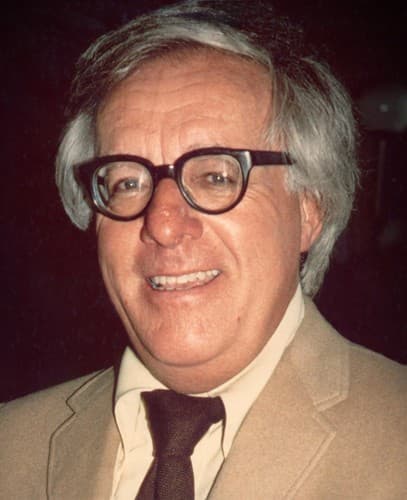
Ray Douglas Bradbury was an American author and screenwriter. One of the most celebrated 20th-century American writers, he worked in a variety of modes, including fantasy, science fiction, horror, mystery, and realistic fiction.
Similar books
- 1984
George Orwell
4.2 (3.1M) average on GoodreadsPoliticsExplores themes of totalitarianism, surveillance, and individual rebellion against oppressive regimes.
- Brave New World
Aldous Huxley
4.0 (1.4M) average on GoodreadsFantasyPresents a dystopian society where conformity is enforced through conditioning and technological control rather than outright suppression.
- The Handmaid's Tale
Margaret Atwood
4.1 (1.5M) average on GoodreadsFantasyFeatures a protagonist struggling for agency and knowledge within a severely restrictive and oppressive society.
- Nineteen Eighty-Four
George Orwell
4.2 (5.5M) average on GoodreadsFictionWhile both are dystopian, Nineteen Eighty-Four focuses on overt governmental surveillance, thought control via 'Big Brother,' and physical torture. Fahrenheit 451 emphasizes self-censorship, the willing surrender of intellectual freedom for comfort, and the destruction of knowledge as the primary control mechanism. Orwell's dystopia is imposed; Bradbury's is, to a significant extent, chosen by the populace.
- Harry Potter and the Sorcerer's Stone
J.K. Rowling
4.5 (7M) average on GoodreadsFantasyRescued from a miserable life under the stairs, an orphaned boy discovers he's a wizard destined for a magical school, where he uncovers a dangerous secret tied to the dark wizard who murdered his parents.
- The Hunger Games
Suzanne Collins
4.3 (6.4M) average on GoodreadsFantasyIn a future where children fight to the death on live television, Katniss Everdeen volunteers for the arena, turning a death sentence into a fight for survival and a spark of rebellion.






Enjoyed the summary?
A summary gives you the shape of the book. The book itself has the detail, the examples and the voice.
Find Fahrenheit 451 on AmazonAs an Amazon Associate, BookBrief earns from qualifying purchases. How we're funded