
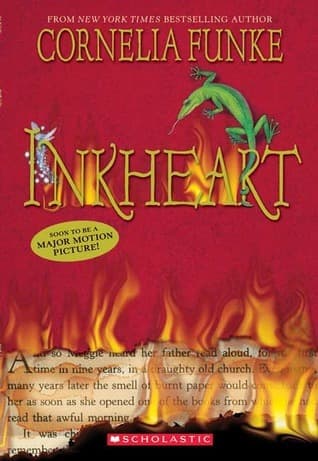
Synopsis
Covers the whole plot, including the ending.
- Difficulty
- Medium
- Pacing
- Moderate
- Mood
- Magical, Adventurous, Whimsical, Suspenseful
- Read it if
- You love stories about the magic of books, unique magical abilities, and an adventure where the line between fiction and reality blurs. Perfect for those who enjoy a blend of fantasy and real-world stakes.
- Skip it if
- You prefer fast-paced thrillers or stories without a strong emphasis on the power of storytelling and literature. If you dislike books where characters literally come to life from pages, this might not be for you.
Inkheart Plot Summary
Covers the whole plot, including the ending.
A Mysterious Stranger and a Hidden Secret
Twelve-year-old Meggie Folchart lives with her father, Mortimer 'Mo' Folchart, a bookbinder. She thinks he 'mends' books. Their quiet life of reading changes when Dustfinger, a strange man, arrives at their house one night. He warns Mo that Capricorn, a dangerous man, is looking for him. Meggie hears their talk and learns Dustfinger is from 'Inkheart,' a book Mo owns but will not read aloud. Mo tells Meggie he can bring book characters to life when he reads aloud, but real people can also go into the book. Nine years before, while reading 'Inkheart,' Mo accidentally brought Dustfinger, the fire-eater, and two of Capricorn's men, Basta and Flatnose, into the real world. At the same time, Meggie's mother, Teresa (Resa), and their two cats went into the book.
Abduction and the Search for the Author
Mo, Meggie, and Dustfinger try to escape, but Basta and Capricorn's men ambush them. Mo is captured and taken to Capricorn's village in Italy, where Capricorn has gathered other creatures and treasures from 'Inkheart.' Dustfinger wants to return to his own world. He makes a deal with Basta to betray Mo, hoping Capricorn will read him back into the book. Meggie is upset and convinces Dustfinger to help her save Mo. They go to Meggie's great-aunt Elinor's house. Elinor is a rich book collector who at first dislikes Mo's 'book mending.' Meggie tells Elinor the truth, and Elinor, despite her disbelief, agrees to help. Elinor's large library might have a copy of 'Inkheart,' which they need to understand Capricorn's plans and save Mo. They soon realize Capricorn is not just collecting copies of the book, but trying to destroy them all.
Capricorn's Village and the Power of the Book
Meggie and Elinor, looking for 'Inkheart,' are captured by Capricorn's men. They are taken to his empty village, a place full of characters and items from the book. Meggie finds Mo there. He is being forced to use his reading ability for Capricorn's evil plans. Capricorn wants Mo to read treasures from other books and, most importantly, to read the Shadow, a mythical creature from 'Inkheart,' which Capricorn thinks will make him unbeatable. Capricorn also says he has been destroying all copies of 'Inkheart' to stop anyone from reading him back into the story or changing his fate. Meggie sees Capricorn's cruel rule and the fear he causes in his followers and the other characters brought from the book. She also learns that Dustfinger initially betrayed them, though his reasons are complex and come from his desire for his own world and family in the book.
The Author's Revelation
While in Capricorn's village, Mo learns that Fenoglio, the author of 'Inkheart,' is alive and lives in a nearby town. Fenoglio, an old and somewhat grumpy man, is surprised to see his fictional creations walking and talking. He is at first doubtful but eventually believes Mo's story. Fenoglio is fascinated that his words have such power. He starts to think about how he might change the story. He gives Mo important details about the book's plot, characters, and the weaknesses of Capricorn and the Shadow. Fenoglio also accidentally reveals details about Dustfinger's past and his deep love for his wife, Roxane, and his two fire-juggling children, who are still in 'Inkheart.' This information is key to Mo and Meggie's plan to defeat Capricorn.
A Desperate Escape and a New Plan
Dustfinger changes his mind after seeing Capricorn's cruelty and realizing he misses his family. With his help, Mo, Meggie, Elinor, and Fenoglio escape Capricorn's village. They hide in Fenoglio's house and make a plan. Fenoglio, knowing the book well, starts writing new passages to change the story's ending. He struggles to make his words powerful enough to affect reality. Mo realizes that while Fenoglio wrote the story, Mo's voice brings it to life. Their plan is to use Mo's ability to read Fenoglio's rewritten words, hoping to undo Capricorn's power and bring Resa back from the book. Dustfinger, still wanting to return to his world, promises to help them because he loves his family and feels loyal to Mo and Meggie.
The Plan Unfolds: The Shadow and the Author's Words
Mo, with Dustfinger and Fenoglio's new pages, returns to Capricorn's village. Capricorn's plan is ready: he will summon the Shadow, a monster from 'Inkheart' he thinks will give him ultimate power, and he forces Mo to read it. Capricorn does not know that Fenoglio has added new plot points to his text to defeat the villain. During the reading, Mo struggles with fear. Meggie, who secretly followed them, finds she also has the 'Silvertongue' gift—the ability to bring characters from books. Her mother, Resa, also has this power, which explains why she went into the book. Meggie's growing ability to read and change the story becomes a key part of their fight against Capricorn.
Meggie's Moment of Power and Capricorn's Downfall
As Mo reads to summon the Shadow, Capricorn seems about to win. However, Meggie, hiding nearby, acts. She has found a pen and Fenoglio's rewritten words. Meggie bravely reads from Fenoglio's changed text, using her own powerful 'Silvertongue.' She reads a passage that calls for Capricorn's end, turning the Shadow against him. The Shadow consumes Capricorn, destroying him completely. In the chaos, Meggie also reads a passage that brings her mother, Resa, back from 'Inkheart.' Resa appears, but her voice is damaged from her time in the book, a side effect. Dustfinger, seeing his chance, convinces Fenoglio to read him back into 'Inkheart,' a sad departure to reunite with his family.
Aftermath and New Beginnings
With Capricorn gone and the Shadow vanished, the remaining 'Inkheart' characters are free. Basta, Capricorn's loyal henchman, is scared and disappears. The villagers, free from Capricorn, begin to rebuild their lives. Mo, Meggie, Resa, and Elinor return to Elinor's house. Resa slowly gets better, though her voice stays a whisper. Fenoglio, having seen the magic of his words, feels wonder and responsibility. Meggie, now fully aware of her 'Silvertongue' ability, understands its power and danger. The family adjusts to their new life, changed by their adventure. The threat of other characters from books remains, and the question of Dustfinger's fate in 'Inkheart' hints at future adventures and the lasting magic of stories.
Inkheart Characters
Meggie Folchart
Protagonist
A curious and brave young girl who discovers she possesses a magical gift for bringing stories to life.
Meggie is a twelve-year-old girl who loves books and lives with her father, Mo. Initially presented as a typical bookish child, she quickly adapts to the extraordinary circumstances that unfold. She is intelligent, observant, and incredibly brave, often showing more resilience than the adults around her. Her deep love for her father and her missing mother drives her actions. She eventually discovers she shares her father's rare ability, the 'Silvertongue,' allowing her to read characters and objects out of books and even alter stories. This realization marks a significant turning point in her character arc, as she steps into her own power.
Relationships: Mortimer 'Mo' Folchart (Father-daughter, deeply loving and protective); Teresa 'Resa' Folchart (Mother-daughter, longing for reunion); Elinor Loredan (Great-aunt, initially strained but grows into affection and trust); Dustfinger (Complex alliance, initially wary but develops into a bond of shared purpose)
Mortimer 'Mo' Folchart
Protagonist
A skilled bookbinder with the magical ability to bring characters out of books, known as a 'Silvertongue.'
Mo, also known as 'Silvertongue,' is Meggie's father and a talented bookbinder. He is a kind, gentle, and deeply protective man haunted by the disappearance of his wife, Resa, whom he accidentally read into the book 'Inkheart' nine years prior. He carries the heavy burden of his magical ability, which he views as both a blessing and a curse. Mo is resourceful and courageous, constantly trying to protect Meggie and find a way to bring Resa back while avoiding Capricorn. His love for his family is his driving force, and he often puts himself in danger for their sake. He is reluctant to use his power due to its unpredictable consequences.
Relationships: Meggie Folchart (Father-daughter, deeply loving and protective); Teresa 'Resa' Folchart (Husband-wife, deep love and longing for reunion); Dustfinger (Complex relationship, initially mistrustful due to betrayal, but becomes an uneasy alliance); Capricorn (Arch-nemesis, forced into servitude)
Capricorn
Antagonist
The cruel and power-hungry villain from the book 'Inkheart' who desires ultimate control over the real world.
Capricorn is the primary antagonist, a ruthless and cold-hearted villain from the fictional world of 'Inkheart' who was accidentally read into the real world by Mo. He despises the book he came from and seeks to destroy all copies of it to prevent anyone from reading him back. He is driven by a desire for power and control, gathering other 'read-out' characters as his henchmen and forcing Mo to use his 'Silvertongue' for his own nefarious purposes. Capricorn is devoid of empathy, inflicting fear and violence upon anyone who opposes him. He is obsessed with summoning the Shadow, a powerful entity from his book, to achieve invincibility. His cruelty is a constant threat throughout the story.
Relationships: Mortimer 'Mo' Folchart (Captor-prisoner, antagonist-protagonist); Basta (Loyal henchman); Dustfinger (Master-servant, manipulative); Meggie Folchart (Threatened victim, later his undoing)
Dustfinger
Supporting
A fire-eater from 'Inkheart' who longs to return to his fictional world and his family.
Dustfinger is a complex and morally ambiguous character, a fire-eater from 'Inkheart' who was read into the real world with Mo. He is haunted by the loss of his family (his wife, Roxane, and two daughters) who remain trapped in the book. His primary motivation is to find a 'Silvertongue' who can read him back into his story. This desperate desire leads him to make questionable choices, including betraying Mo to Capricorn, though he later regrets his actions. He has a marten named Gwin, who is his constant companion. Despite his initial self-serving nature, Dustfinger possesses a hidden loyalty and a strong moral compass that eventually guides him to help Meggie and Mo, especially after witnessing Capricorn's true evil.
Relationships: Mortimer 'Mo' Folchart (Complex, initially treacherous but becomes an ally); Meggie Folchart (Protector and ally); Capricorn (Former master, later an enemy); Fenoglio (The author of his world, a source of hope and frustration)
Elinor Loredan
Supporting
Meggie's wealthy, eccentric great-aunt and an obsessive collector of rare books.
Elinor is Meggie's great-aunt, a formidable and eccentric woman who lives in a grand house filled with an immense and meticulously cared-for library. She is a passionate, almost obsessive, book collector who initially views Mo's 'book mending' as sacrilege. She is skeptical and dismissive of the idea of characters coming to life, but her love for Meggie and a growing sense of curiosity eventually draw her into the adventure. Despite her initial reluctance and occasional grumbling, Elinor proves to be surprisingly brave and resourceful, using her wealth and influence to assist Mo and Meggie. Her library becomes a crucial resource in their search for 'Inkheart' copies.
Relationships: Meggie Folchart (Great-aunt, initially distant but grows very fond and protective); Mortimer 'Mo' Folchart (In-law, initially critical but grows to respect him)
Fenoglio
Supporting
The vain and somewhat grumpy author of 'Inkheart,' whose words hold unexpected power.
Fenoglio is the original author of 'Inkheart.' He is an old, somewhat vain, and grumpy man who is initially disbelieving when confronted by his own fictional characters walking and talking in the real world. Despite his disbelief, he is immensely fascinated by the idea that his words have such power. He is a master storyteller, but he struggles with the unpredictable consequences of his creations coming to life. Fenoglio initially tries to manipulate the story to his own liking, but he eventually understands the responsibility that comes with his gift. He provides crucial insights into the world of 'Inkheart' and helps craft the new ending that ultimately defeats Capricorn.
Relationships: Mortimer 'Mo' Folchart (Collaborator in altering the story); Meggie Folchart (Admires her courage and 'Silvertongue' ability); Dustfinger (Creator and his creation, source of Dustfinger's hope); Capricorn (His creation, whom he despises)
Teresa 'Resa' Folchart
Supporting
Mo's wife and Meggie's mother, who was accidentally read into 'Inkheart' years ago.
Resa is Mo's wife and Meggie's mother. Nine years before the story begins, she was accidentally read into the book 'Inkheart' by Mo. She is a quiet and loving woman, and her absence has cast a long shadow over Mo and Meggie's lives. When she is finally read back out of the book by Meggie, her voice is damaged, reduced to a whisper, a physical manifestation of her time spent within the story. Resa also possesses the 'Silvertongue' ability, explaining why she was susceptible to being read into the book. Her return is the ultimate goal of Mo and Meggie's quest, and her presence brings a sense of healing and completeness to the family.
Relationships: Mortimer 'Mo' Folchart (Wife-husband, deep love and reunion); Meggie Folchart (Mother-daughter, loving reunion)
Basta
Supporting
One of Capricorn's most loyal and superstitious henchmen, read out of 'Inkheart.'
Basta is a character from 'Inkheart' who was read out by Mo. He is one of Capricorn's most devoted and feared henchmen, known for his superstition and his reliance on a lucky knife. He is cruel, violent, and utterly loyal to Capricorn, following his orders without question. Basta is easily frightened by omens and curses, which often makes him a somewhat comical but still dangerous figure. He is relentlessly pursuing Mo and Meggie throughout the first half of the book, acting as Capricorn's primary enforcer. His fear-driven loyalty to Capricorn eventually crumbles after his master's defeat.
Relationships: Capricorn (Loyal henchman); Dustfinger (Uneasy alliance as fellow 'read-out' characters, often antagonistic); Mortimer 'Mo' Folchart (Enemy, pursued him)
Gwin
Supporting
Dustfinger's loyal pet marten, also read out of 'Inkheart.'
Gwin is Dustfinger's pet marten, a small, agile animal with a distinctive scar. He was read out of 'Inkheart' along with Dustfinger and is his constant companion and confidant. Gwin is fiercely loyal to Dustfinger, often acting as his eyes and ears and providing a small measure of comfort in their lonely existence in the real world. He is a silent but significant presence, symbolizing Dustfinger's connection to his own world and his longing for home. Gwin's loyalty mirrors Dustfinger's own complex character, demonstrating a steadfast devotion beneath a sometimes rough exterior.
Relationships: Dustfinger (Loyal pet and companion)
Inkheart Themes
The Power of Storytelling and Words
This theme is central to 'Inkheart,' showing how words and stories can literally shape reality. Mo and Meggie's 'Silvertongue' ability shows that stories are not just passive entertainment but living things that can appear in the physical world. Fenoglio's effort to rewrite his own story highlights the large responsibility that comes with such power. The book stresses that words can create, destroy, and change things, showing the magic in literature. Capricorn's fear of being read back into his book and his destruction of 'Inkheart' copies further show the strong power given to stories and their authors.
“Every book has a soul, Meggie, and if you have ever held one in your hands, if you have ever loved one, then you know that it has a life of its own.”
Family and Belonging
The desire for family and belonging drives many characters in 'Inkheart.' Mo and Meggie's main goal is to bring Resa back, fixing their broken family. Dustfinger's whole reason for acting comes from his strong desire to return to his wife and children in 'Inkheart.' Even Elinor, who is at first alone, finds purpose and connection by helping Meggie and Mo. The story often shows the emotional emptiness caused by separation and the joy of reunion. It stresses that true home is with the people you love, whether in the real world or in a book.
“He knew that there were people who loved books, but he also knew that for some, books were just a place to hide.”
The Nature of Good and Evil
'Inkheart' shows a clear difference between good and evil through its characters. Capricorn is pure evil, driven by greed and a desire for power, and he shows no regret for his cruel actions. Mo and Meggie are good, using their power responsibly and to help others. Dustfinger, a more morally complex character, struggles between his selfish desires and his growing conscience. This shows that even characters from dark stories can choose to do good. The story suggests that while evil can be strong, it cannot win against courage, love, and a good story.
“It's a strange thing, but sometimes, when you are afraid, you can find a strength you never knew you had.”
Escapism vs. Reality
The line between the fictional world of 'Inkheart' and the real world is always blurry, raising questions about escaping reality. Characters like Dustfinger want to return to their fictional world, finding the real world harsh. Capricorn, however, thrives in the real world, escaping the limits of his book. Meggie and Mo, who at first enjoy books as an escape, are put into a situation where their love for stories has real, dangerous results. The book suggests that while stories offer comfort and wonder, one must also deal with and be responsible for the realities they live in, whether fictional or literal.
“Books think they are so important. But they are just paper and ink. Until someone reads them.”
Identity and Self-Discovery
Meggie's journey is about finding her identity. She starts as a girl unaware of her background and unique skills. But through the adventure, she learns about her 'Silvertongue' gift and her mother's similar power. This discovery makes her face who she really is and the strong role she can play. Dustfinger also deals with his identity as a character outside his story, always trying to get back to his original self. The theme shows how situations and challenges reveal hidden strengths and define who someone is, encouraging characters to accept their unique selves.
“Words. Was there anything more powerful than words?”
Plot Devices & Literary Techniques
The 'Silvertongue' Ability
A magical power to read characters and objects out of books and into reality, and vice versa.
The 'Silvertongue' is the central magical ability in 'Inkheart,' possessed by Mo, Meggie, and Resa. It allows a person to literally bring fictional characters and objects out of a book by reading aloud, but with the unpredictable side effect of reading real people or objects into the book. This ability is the catalyst for the entire plot, explaining Capricorn's presence in the real world and Resa's disappearance. It is both a gift and a curse, capable of creation and destruction, and forms the core of the story's magical system and its dangers.
The Book 'Inkheart'
A fictional book within the story that acts as a portal and source of conflict.
The book 'Inkheart' is not just a story; it functions as a literal portal between worlds. It is the origin point for Capricorn, Dustfinger, and other characters, and the destination for Resa. Its physical presence and contents are crucial to the plot, as characters search for copies, Capricorn tries to destroy them, and Fenoglio tries to rewrite them. The book itself is almost a character, holding the fate of many within its pages and representing the profound power of stories to transcend their physical form and influence reality.
Metafiction
The narrative's self-awareness of its own fictional nature and the act of storytelling.
'Inkheart' is a highly metafictional novel, constantly drawing attention to the nature of books, authors, and storytelling. Fenoglio, the author, interacts with his own creations, and his attempts to rewrite the story directly impact the plot. The characters themselves are aware of being from a book, and their discussions about their fictional origins and destinies highlight the constructed nature of narrative. This device allows the author, Cornelia Funke, to explore profound questions about the power of words, the relationship between creator and creation, and the blurred lines between fiction and reality, while still telling an engaging adventure story.
The Shadow
A monstrous, formless entity from 'Inkheart' that embodies death and destruction.
The Shadow is a mythical, terrifying creature from the book 'Inkheart' that Capricorn seeks to summon and control. It is described as a formless being made of ash and darkness, capable of consuming life. It represents ultimate evil and destructive power. As a plot device, the Shadow serves as the ultimate threat that Capricorn hopes to wield, raising the stakes for Mo and Meggie. Its eventual turning against Capricorn, orchestrated by Meggie's 'Silvertongue' ability and Fenoglio's words, provides a dramatic and satisfying climax, demonstrating the power of storytelling to defeat even the most formidable evil.
Inkheart Quotes
“Books have to be heavy because the whole world's inside them.”
“If you take a book with you on a journey, an odd thing happens: The book begins collecting your memories.”
“Stories never really end, Meggie, even if the books like to pretend they do.”
“Writing stories is a kind of magic, too.”
“Some books should be tasted, some devoured, but only a few should be chewed and digested thoroughly.”
“Words were once magic, and they still are.”
“The fire-eater was afraid of fire. That was his secret.”
“A story is a letter that the author writes to himself, to tell himself things that he would be unable to discover otherwise.”
“There are books that are suitable for a million people, others for only a hundred.”
“The written word is a powerful thing. It can bring worlds to life.”
“Sometimes, when you read a book, it feels like the characters are right there with you.”
“Every book has a soul. The soul of the person who wrote it and of those who read it and lived and dreamed with it.”
“Fear is a strange thing. It can make you do things you never thought you would.”
“In books, the good guys always win. In real life, it's not that simple.”
Quiz
10 questions on the plot and the characters. Each answer comes with a short explanation.
Question 1
What is the name of the book that Meggie's father reads aloud from, which causes characters to come to life?
- Inkworld
- Inkheart
- The Shadow
- The Silver Tongue
Show answer
B. Inkheart The book is titled 'Inkheart,' which is also the name of the novel. When read aloud by certain people like Mo, it brings characters from the story into the real world.
Question 2
What is the name of Meggie's father, who has the ability to read characters out of books?
- Dustfinger
- Capricorn
- Mo
- Fenoglio
Show answer
C. Mo Meggie's father is named Mo, short for Mortimer. He is a bookbinder with the rare gift of bringing characters to life by reading aloud.
Question 3
Which character from 'Inkheart' escapes into the real world when Mo reads the book aloud?
- Dustfinger
- Capricorn
- Meggie
- Resa
Show answer
B. Capricorn Capricorn, the evil ruler from the book 'Inkheart,' is brought into the real world when Mo reads aloud. This event sets the main conflict in motion.
Question 4
Why does Dustfinger initially seek out Mo and Meggie?
- To steal the book 'Inkheart' for himself
- To warn them about Capricorn's plans
- To ask Mo to read him back into his own story
- To help Meggie learn to read characters out of books
Show answer
C. To ask Mo to read him back into his own story Dustfinger, a fire-eater from 'Inkheart,' wants to return to his fictional world. He believes Mo can read him back in, as Mo originally read him out.
Question 5
What happens to Meggie's mother, Resa, as a result of Mo reading from 'Inkheart'?
- She is killed by Capricorn
- She is transported into the book 'Inkheart'
- She loses her memory of the event
- She gains the ability to read characters out of books
Show answer
B. She is transported into the book 'Inkheart' When Mo read from 'Inkheart,' Resa was swapped with Capricorn and ended up inside the book. This is why Meggie has grown up without her mother.
Question 6
What is the primary theme explored in 'Inkheart' regarding books and reading?
- The importance of literacy education
- The power of stories to shape reality
- The dangers of censorship in literature
- The history of bookbinding techniques
Show answer
B. The power of stories to shape reality The novel centers on the idea that stories have real power—they can influence and even alter reality, as seen when characters cross between the book world and the real world.
Question 7
How does Meggie discover her own ability related to the book 'Inkheart'?
- By accidentally reading a character out of a book
- Through lessons from her father Mo
- By writing her own story that comes to life
- After being captured by Capricorn's men
Show answer
A. By accidentally reading a character out of a book Meggie realizes she has the same gift as her father when she reads aloud from 'Inkheart' and unintentionally brings the Shadow to life, a creature from the book.
Question 8
What is the significance of the character Fenoglio in the story?
- He is the original author of the book 'Inkheart'
- He is a villain who works for Capricorn
- He is Meggie's grandfather
- He is a bookbinder who helps Mo repair books
Show answer
A. He is the original author of the book 'Inkheart' Fenoglio is the writer of 'Inkheart.' His role becomes crucial as the characters seek his help to understand and potentially alter the story's events.
Question 9
What does Capricorn ultimately want to achieve with the book 'Inkheart'?
- To destroy all copies of the book to erase his existence
- To use it to bring more of his followers into the real world
- To return to the book and rule his fictional world
- To learn how to read characters out himself
Show answer
B. To use it to bring more of his followers into the real world Capricorn aims to build his power in the real world by having Mo or another reader bring his minions from 'Inkheart' into reality, creating an army to dominate.
Question 10
How is the conflict resolved at the end of 'Inkheart'?
- Meggie writes a new ending that defeats Capricorn
- Mo reads Capricorn back into the book, destroying him
- Dustfinger sacrifices himself to kill Capricorn
- Fenoglio rewrites the book to erase all the characters
Show answer
B. Mo reads Capricorn back into the book, destroying him Mo uses his reading ability to send Capricorn back into 'Inkheart,' where he is ultimately defeated by the story's elements, restoring peace.
Inkheart FAQ
What is 'Inkheart' about?
'Inkheart' follows 12-year-old Meggie Folchart, whose father Mo has the magical ability to read characters out of books into the real world. When he accidentally reads the villain Capricorn and his henchmen from the fictional book 'Inkheart' years earlier, it sets off a dangerous chain of events where Meggie must help rescue her kidnapped mother and stop Capricorn from using this power for evil.
Why should I read 'Inkheart'?
You should read 'Inkheart' if you love books about books, magical adventures, and stories that celebrate the power of storytelling. It features a unique premise where fictional characters come to life, explores themes of family and courage, and has memorable characters like Dustfinger the fire-eater and the villainous Capricorn.
What is the background/setting of 'Inkheart'?
The story is set primarily in contemporary Italy and the fictional village of Capricorn's hideout, with key scenes in Elinor's book-filled house. The magical book 'Inkheart' itself creates a medieval fantasy world that characters like Dustfinger originate from, blending real-world and fantasy settings.
What are the most memorable quotes?
Memorable quotes include Mo's warning 'Books have to be heavy because the whole world's inside them,' and Dustfinger's lament 'I miss my home, my story, my ending.' These lines highlight the book's themes of literary magic and belonging.
What writing style does the author use?
Cornelia Funke uses descriptive, atmospheric prose with chapter epigraphs from classic literature that mirror the plot. The style balances adventure pacing with reflective moments about books and storytelling, appealing to both children and adults.
What minor details add significant meaning?
Minor details like Mo's profession as a bookbinder symbolizes healing torn stories, and Meggie's habit of writing in books shows her growing agency. The recurring motif of fire—through Dustfinger's tricks and Capricorn's pyromania—ties to themes of destruction and transformation.
What are some subtle foreshadowing moments?
Early hints include Mo's reluctance to read aloud, foreshadowing his power's dangers, and Meggie's fascination with 'Inkheart' hinting she shares his ability. Dustfinger's longing for his home foreshadows his eventual return to the book's world.
What unexpected character connections exist?
Unexpected connections include Fenoglio, the author of 'Inkheart,' living nearby and helping rewrite the story, and Elinor being Meggie's great-aunt with a shared love of books. Dustfinger's alliance with Meggie despite his initial betrayal adds depth.
What are unspoken character motivations?
Mo's guilt over losing his wife Resa drives his overprotectiveness of Meggie. Dustfinger's desperation to return home makes him serve Capricorn temporarily. Capricorn's desire for power stems from his fictional origins as a tyrant seeking real-world control.
What psychological complexities do characters exhibit?
Meggie grapples with fear and courage as she navigates adult dangers. Dustfinger shows conflicted loyalty between self-preservation and morality. Mo battles trauma from his past mistakes while trying to shield his daughter.
What are the major emotional turning points?
Major turning points include Meggie discovering her own reading power, the reunion with her mute mother Resa, and Dustfinger's sacrifice to save Meggie. The climax where Meggie reads Capricorn back into the book is a cathartic moment of empowerment.
How do relationship dynamics evolve?
Meggie and Mo's relationship shifts from paternal protection to partnership as she proves her capabilities. Meggie and Dustfinger move from distrust to mutual respect. The family unit restores as Resa rejoins them, healing past wounds.
Which parts remain ambiguous or open-ended?
Ambiguities include the full extent of the reading magic's rules and the ultimate fate of the 'Inkheart' world. Dustfinger's return to his story leaves his future uncertain, and minor characters like Basta's end are not fully resolved.
What are controversial scenes or decisions?
Controversial moments include Mo keeping Meggie's mother's fate a secret for years, and Dustfinger's initial betrayal for personal gain. Some readers debate the ethics of reading characters into reality, as it causes them suffering.
'Inkheart' ending explained: how it ends & what it means
The ending sees Meggie using her power to read Capricorn and his men back into 'Inkheart,' restoring order. Resa regains her voice, and Dustfinger returns to his story. It signifies Meggie embracing her role as a storyteller and the theme that stories can be reshaped for good.
About the author

Cornelia Funke is a renowned German author celebrated for her imaginative fantasy novels for young readers. Her internationally acclaimed works include 'Inkheart,' 'Inkdeath,' and 'The Thief Lord,' which have captivated audiences worldwide. Funke's distinctive storytelling blends adventure, magic, and heartfelt characters, earning her a significant place in contemporary children's literature.
Similar books
- The Neverending Story
Michael Ende
4.2 (162k) average on GoodreadsFantasyBoth books explore the immersive power of stories and the blurring of lines between reader and narrative.
- A Wrinkle in Time
Madeleine L'Engle
4.0 (1.1M) average on GoodreadsFantasyFeatures a young protagonist discovering extraordinary abilities and embarking on a quest to save a family member through magical means.
- The Book Thief
Markus Zusak
4.4 (1.8M) average on GoodreadsHistorical FictionWhile different in genre, it shares a deep love and reverence for books and the power of words, seen through a young person's eyes.
- Howl's Moving Castle
Diana Wynne Jones
4.3 (216k) average on GoodreadsFantasyWhile both feature magical realism and strong female protagonists, Inkheart's magic is text-based and tied to narrative, whereas Howl's magic is more traditionally inherited and focused on spells and enchanted objects. Funke's work delves deeper into the nature of stories themselves.
- Harry Potter and the Sorcerer's Stone
J.K. Rowling
4.5 (7M) average on GoodreadsFantasyHarry Potter builds an expansive, external magical world with established rules and institutions. Inkheart's magic is more internal and directly linked to the act of reading and the human voice, making its world less about a hidden society and more about the impact of fiction on reality.
- Sabriel
Garth Nix
4.2 (185k) average on GoodreadsFantasyBoth books feature protagonists navigating dangerous magical worlds with unique rule sets. However, Sabriel's magic is ancient, necromantic, and tied to specific bloodlines and bells, while Inkheart's magic is fundamentally about creation and destruction through the spoken word, focusing on the power of the storyteller rather than a pre-existing magical system.


Enjoyed the summary?
A summary gives you the shape of the book. The book itself has the detail, the examples and the voice.
Find Inkheart on AmazonAs an Amazon Associate, BookBrief earns from qualifying purchases. How we're funded