
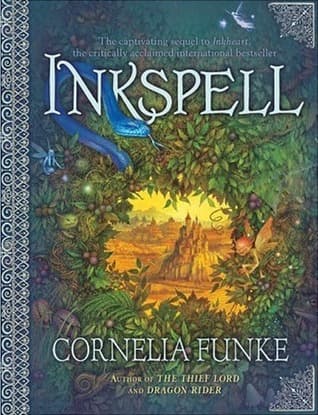
Synopsis
Covers the whole plot, including the ending.
- Difficulty
- Medium
- Pacing
- Moderate
- Mood
- Enchanting, Adventurous, Dangerous, Melancholy
- Read it if
- You loved *Inkheart* and want to delve deeper into its magical world, appreciate rich fantasy with complex characters, or enjoy stories about the power of storytelling itself.
- Skip it if
- You prefer standalone books, dislike complex plots with multiple perspectives, or are not a fan of meta-narratives where authors and readers interact with the story.
Inkspell Plot Summary
Covers the whole plot, including the ending.
Dustfinger's Desperation and the Search for a Reader
A year after the events of *Inkheart*, Dustfinger, the fire-eater 'read out' of the book, is restless and unhappy in the modern world. He wants to return to the Inkworld, his home, and his wife Roxane. He believes he needs another 'Silvertongue' to read him back. Mortola, Capricorn's mother, is still alive and hates Dustfinger and the others. She tells Dustfinger that a storyteller named Orpheus, who also has the gift, might be able to send him back. Dustfinger leaves his apprentice, Farid, to follow this lead, leaving Farid heartbroken and determined to follow him.
Orpheus's Betrayal and Dustfinger's Return
Farid, upset by Dustfinger's leaving, finds Meggie, hoping her reading ability can help him. Meanwhile, Dustfinger finds Orpheus, a man who can read characters into books, but whose readings often have unexpected results, including changing the original story. Orpheus agrees to read Dustfinger back into *Inkheart*, but at a cost. Without Dustfinger knowing, Orpheus also reads Mortola into the book, giving her a chance for revenge. Dustfinger goes back to the Inkworld, but into a different time, and Mortola is now in the story with her own dark plan.
Meggie and Farid Follow Dustfinger
Farid, wanting to be with Dustfinger, asks Meggie to read him into *Inkheart*. Meggie is interested in entering the world she loves and where her mother, Resa, was once trapped, and agrees. She reads both herself and Farid into the book, using a passage that describes Dustfinger. Their entry is not smooth. They arrive in a remote, snowy forest, confused and unprotected. They soon meet a group of traveling players, one of whom recognizes Dustfinger, offering hope that they can find him. Their arrival immediately starts to change the book's story.
The Black Prince and the Castle of the Adderhead
Meggie and Farid learn about the Inkworld: the cruel Adderhead, a character brought to life by Fenoglio, rules from his castle. The Black Prince, a bandit leader, opposes him. They discover that Dustfinger has joined the Black Prince and is involved in the conflict. Meggie's ability to write and read things into existence makes her a target for both sides, as her powers could change who has control in the Inkworld. They are taken to the Black Prince's hideout, where they hope to find Dustfinger.
Fenoglio's Dilemma and the Changing Story
Meggie and Farid eventually find Fenoglio, the author of *Inkheart*, who was also read into his own book. Fenoglio is happy to see Meggie, but he is also frustrated by the events. He struggles to control the story, as characters like the Adderhead and the Black Prince, whom he created, have developed their own lives and desires. He realizes that Meggie's presence and her ability to write can greatly change the story, possibly for the worse. Fenoglio is torn between keeping his original vision and adapting to the new, unpredictable reality of his creation.
The Adderhead's Scheme and Mortola's Revenge
The Adderhead, whose life is tied to the original book and is slowly weakening, looks for a new, blank book to write himself into, believing it will make him immortal. He also wants to capture Meggie, hoping to use her Silvertongue abilities for his own purposes. Meanwhile, Mortola, wanting revenge against Dustfinger for her son Capricorn's death, chases him. She is a dangerous and clever presence in the Inkworld, adding more danger for Dustfinger, Meggie, and Farid. Mortola's presence is a direct result of Orpheus's careless reading.
Dustfinger's Sacrifice and Roxane's Grief
Dustfinger, after reuniting with his wife Roxane, is in a difficult situation. When Farid is captured by the Adderhead's men and is about to be killed, Dustfinger makes a sacrifice. Using his skills as a fire-eater and a plan with the Black Prince, Dustfinger allows himself to be killed by the Adderhead's men, creating a diversion that allows Farid to escape. His death is a shock to Farid and Roxane, who grieve his loss. This event changes the story's direction and greatly affects the characters.
Meggie's Decision and the Rise of the White Women
Overwhelmed by sadness and guilt, Meggie decides to bring Dustfinger back to life. She uses her writing abilities, despite Fenoglio's warnings about the dangers of changing the story. With Fenoglio's reluctant help, Meggie writes new passages, trying to reverse Dustfinger's death. This act also accidentally brings forth the White Women, mythical figures from the Inkworld who represent death and sorrow. Their presence makes the story more complicated, as they are drawn to the suffering from Dustfinger's death and Meggie's attempts to undo it.
Orpheus's Manipulations and the Ambiguous Ending
Orpheus, who was also read into the Inkworld by Fenoglio (and then read himself out and back in again), continues to influence events. He writes characters in and out, often for selfish reasons, further twisting the story. He brings back characters like Basta, and tries to write himself into a position of power. The story ends with Meggie having brought Dustfinger back, though not without a cost. The Inkworld remains a place of unpredictable magic and danger, with the lines between author, character, and reader forever blurred. The future of the world and its inhabitants, including Dustfinger and his family, is uncertain, with new threats and possibilities from Orpheus's continued meddling.
Inkspell Characters
Meggie Folchart
Protagonist
A young girl with the unique ability to read characters into and out of books.
Meggie is the daughter of Mortimer 'Mo' Folchart and Resa. She inherited her father's magical ability to bring book characters to life by reading aloud, a power she fully embraces in *Inkspell*. She is intelligent, courageous, and deeply empathetic, driven by a strong sense of justice and loyalty to her friends and family. Her love for books and the Inkworld is profound, leading her to make bold decisions, including reading herself and Farid into the story. She grapples with the immense responsibility of her power and the consequences of altering a narrative.
Relationships: Mo Folchart (Father, also a Silvertongue); Resa Folchart (Mother, once trapped in Inkheart); Farid (Close friend and companion); Dustfinger (Complex mentor figure, whom she deeply cares for); Fenoglio (The author of Inkheart, a mentor figure)
Dustfinger
Supporting
A fire-eater from the Inkworld, desperate to return home to his wife.
Dustfinger is a complex and morally ambiguous character, a fire-eater brought to life from *Inkheart*. He is driven by an overwhelming longing for his home, the Inkworld, and his wife, Roxane. He is skilled in fire manipulation, agile, and resourceful, but also haunted by a deep sense of melancholy and a fear of death. His loyalty is often tested, and he makes difficult choices, sometimes appearing selfish, but ultimately motivated by love for his family. He has a complicated relationship with Farid, whom he sees as both an apprentice and a surrogate son.
Relationships: Roxane (Wife, deeply loved); Farid (Apprentice, surrogate son); Meggie Folchart (Young friend, potential Silvertongue); Mortola (Sworn enemy, responsible for his death)
Farid
Supporting
Dustfinger's loyal apprentice, devoted to the fire-eater and Meggie.
Farid is a young boy from the modern world who was read out of *One Thousand and One Nights* by Mo. He became Dustfinger's apprentice, learning fire manipulation and developing a profound loyalty and affection for him. He is brave, resourceful, and deeply compassionate, often acting as a moral compass for Dustfinger. His love for Dustfinger drives him to follow him into the Inkworld and to seek Meggie's help. He is also developing romantic feelings for Meggie, adding a layer of emotional complexity to their dangerous adventure.
Relationships: Dustfinger (Mentor and father figure); Meggie Folchart (Close friend and love interest)
Fenoglio
Supporting
The author of *Inkheart*, now living within his own creation.
Fenoglio is the original author of *Inkheart*, a man of vivid imagination and a deep love for his own stories. He was inadvertently read into his book in *Inkheart* and now lives within the Inkworld, experiencing the consequences of his creations firsthand. He is initially delighted by the unfolding narrative, but quickly becomes frustrated by the characters' independent wills and the unpredictable changes. He struggles with his role as creator versus observer, often trying to guide the story back to his original vision while also being fascinated by its new directions. He is both a source of wisdom and a catalyst for complications.
Relationships: Meggie Folchart (Collaborator, intellectual sparring partner); Mo Folchart (Fellow Silvertongue, often at odds with Fenoglio's writing choices); The Adderhead (His tyrannical creation)
Orpheus
Antagonist/Supporting
A Silvertongue with a careless and manipulative approach to reading.
Orpheus is a mysterious and powerful Silvertongue, capable of reading characters into and out of books, much like Mo and Meggie. However, unlike them, he is arrogant, self-serving, and often careless with his power, leading to unpredictable and dangerous consequences. He sees the stories and characters as mere tools for his own amusement or gain, rather than living beings. He plays a pivotal role in reading Dustfinger and Mortola into the Inkworld, setting much of the plot in motion. His actions often complicate the lives of the protagonists, and he is a constant source of narrative instability.
Relationships: Dustfinger (Manipulated by Orpheus to return to Inkworld); Mortola (Read into Inkworld by Orpheus, an unwitting accomplice); Fenoglio (Rival author, often at odds with Orpheus's changes)
The Adderhead
Antagonist
The tyrannical, dying ruler of the Inkworld, seeking immortality.
The Adderhead is the primary antagonist within the Inkworld, a character brought to life from Fenoglio's book. He is a cruel, power-hungry ruler whose life is tied to the physical book *Inkheart*. As the book deteriorates, so does he, his body turning to dust. He is desperate to find a new, blank book to write himself into, believing it will grant him eternal life. His tyranny and fear of death drive much of the conflict in the Inkworld, and he seeks to exploit any Silvertongue, especially Meggie, for his own ends. He is a symbol of corruption and the destructive nature of unchecked power.
Relationships: Fenoglio (His creator, whom he now defies); The Black Prince (His sworn enemy and leader of the resistance); Meggie Folchart (Target for her Silvertongue abilities)
Mortola
Antagonist
Capricorn's vengeful mother, seeking retribution against Dustfinger.
Mortola, known as 'The Magpie,' is the mother of the deceased villain Capricorn. She is a bitter, vengeful woman consumed by hatred for Dustfinger, whom she blames for her son's death. She is cunning and ruthless, willing to go to extreme lengths to exact her revenge. Her unexpected entry into the Inkworld, facilitated by Orpheus, adds a personal and dangerous threat to Dustfinger and his allies. She is a persistent and deadly foe, embodying the destructive force of unresolved grief and anger.
Relationships: Capricorn (Deceased son, whose death she avenges); Dustfinger (Primary target of her revenge); Orpheus (The Silvertongue who read her into Inkworld)
Roxane
Supporting
Dustfinger's devoted and long-suffering wife in the Inkworld.
Roxane is Dustfinger's wife, a loyal and loving woman who has patiently waited for his return to the Inkworld for many years. She is a character of quiet strength and deep emotional resilience, often bearing the burden of Dustfinger's wanderlust and the dangers of their world. Her reunion with Dustfinger is a poignant moment, and her grief at his death is profound. She represents the stability and love that Dustfinger craves, and her presence highlights the personal stakes of the unfolding narrative.
Relationships: Dustfinger (Husband, deeply loved and missed)
The Black Prince
Supporting
A charismatic bandit leader opposing the tyrannical Adderhead.
The Black Prince is a character created by Fenoglio, a charismatic and courageous bandit leader who opposes the tyrannical rule of the Adderhead. He represents a force of rebellion and justice within the Inkworld, fighting for the common people against the Adderhead's oppression. He is a skilled warrior and strategist, offering a safe haven for those who resist the Adderhead. Dustfinger initially aligns himself with the Black Prince, making him a key figure in the struggle for the Inkworld's future.
Relationships: The Adderhead (Sworn enemy); Dustfinger (Temporary ally, fellow rebel)
Inkspell Themes
The Power and Peril of Storytelling
This idea explores how stories shape reality, give power, and unleash dangers. Meggie's ability to read and write characters into existence, Fenoglio's struggles to control his creations, and Orpheus's careless actions all show the impact of words. Characters live and die by the story, showing that stories are not just entertainment but living things with consequences. The ethics of changing a story and the unforeseen results are explored.
“Every story has an end, but in life, every end is a new beginning.”
Identity and Belonging
Many characters deal with their identity and where they belong. Dustfinger's strong desire for the Inkworld, his true home, is an example. Farid, read out of his own book, finds his identity connected to Dustfinger and Meggie. Meggie also questions where she belongs — in the modern world or the fantasy Inkworld. Characters who are 'read out' or 'read in' navigate their origins and find their place in a world not originally theirs. This idea explores that home is not just a place, but where one's heart is.
“Home is where the heart is. And my heart is in Inkheart.”
Love, Loss, and Sacrifice
The novel has many examples of love, loss, and sacrifice. Dustfinger's love for Roxane drives his journey and leads to his sacrifice for Farid. Farid's loyalty to Dustfinger and Meggie makes him face dangers. Roxane's lasting love for Dustfinger is a strong force. The grief of characters like Farid and Roxane after Dustfinger's death shows the emotional weight of their relationships. These ideas show the human capacity for deep connection and how far people will go for those they care about.
“Only love can truly save you, not words. I know this for a fact.”
Good vs. Evil and Moral Ambiguity
The Inkworld shows a struggle between the cruel Adderhead and those who resist him, like the Black Prince. However, the novel also explores moral ambiguity. Characters like Dustfinger often make difficult or seemingly selfish choices, but they are driven by understandable reasons. Even Fenoglio, the author, struggles with the morality of changing his own story. Orpheus represents a more purely self-serving evil, but his actions force others to confront their own ethics. The line between hero and villain is often unclear, showing that good and evil are not always simple, especially with unpredictable living stories.
“The boundary between good and evil, between hero and villain, is often no more than a line of ink.”
Plot Devices & Literary Techniques
The Silvertongue Ability
The magical ability to read characters and objects into and out of books.
This central magical ability is the driving force of the plot. Characters like Mo, Meggie, and Orpheus possess this rare talent, but with varying degrees of control and ethical consideration. It allows for the interdimensional travel between the real world and the Inkworld, directly impacting the lives of all characters. The specific nuances of the ability, such as the need for the reader to truly 'feel' the words and the potential for losing something from the real world, create tension and dictate the plot's direction. It's both a gift and a curse, capable of creation and destruction.
The Book as a Living World
The physical book *Inkheart* acts as a portal and a mutable reality.
The book *Inkheart* is not merely a story but a living, breathing world that characters can enter and exit. Its pages hold the very essence of the Inkworld, and its deterioration directly affects the lives of its inhabitants, particularly the Adderhead. This device blurs the line between fiction and reality, making the narrative itself a character. The physical state of the book and the words written within it have tangible, magical consequences, allowing for characters to be created, destroyed, or revived by altering its text. This emphasizes the power of literature and the fragility of constructed realities.
Metafiction
The story acknowledges its own fictional nature and the role of its author.
*Inkspell* is highly metafictional, as Fenoglio, the author of *Inkheart*, is a character within his own creation. He interacts with his characters, tries to influence the plot, and grapples with the independent will of his creations. This device allows the narrative to explore themes of authorship, free will, and the relationship between creator and created. The characters are aware they are part of a story, and their actions directly impact the narrative's direction, leading to a complex interplay between authorial intent and character agency.
Symbolism of Fire
Represents destruction, creation, purification, and Dustfinger's identity.
Fire is a recurring and powerful symbol, intrinsically linked to Dustfinger. It represents his identity as a fire-eater, his skill, and his very being. But it also symbolizes destruction (the burning of books, the chaos he can unleash), creation (the sparks of life, the warmth of home), and purification. Dustfinger's ability to control fire reflects his volatile and complex nature, and his final act of self-immolation for Farid is a poignant moment of sacrifice. Fire serves as a constant reminder of both danger and fascination in the Inkworld.
Inkspell Quotes
“Books have a secret life, you know. When you close them, they don't just sit there on the shelf. Oh, no. They get up and walk around and go on adventures.”
“Every story is a journey, and every journey is a story. You may not know where you're going, but you know who you are and what you're leaving behind.”
“Fear can make you do terrible things, but it can also make you brave. It just depends on what you do with it.”
“Words are like living things. They can heal, they can wound, and they can even bring things into existence.”
“There are always two sides to every story, and sometimes, the truth is somewhere in between.”
“What is a story if it doesn't change you?”
“Sometimes, the hardest thing is to let go of the stories we've told ourselves, even when they're not true anymore.”
“The world is full of stories, and if you listen closely, you can hear them all around you.”
“Even the most ordinary life can become extraordinary if you just know how to look at it.”
“To truly live in a story, you have to be willing to get a little lost.”
“Every ending is just a new beginning, if you're brave enough to see it.”
“You can't change the past, but you can change how you remember it.”
“The greatest magic isn't in what you can do, but in what you believe you can do.”
Quiz
10 questions on the plot and the characters. Each answer comes with a short explanation.
Question 1
What is Dustfinger's primary motivation at the beginning of 'Inkspell'?
- To find a way to bring his wife, Roxane, into the real world.
- To learn new fire-eating tricks from other performers.
- To return to the world within the book, 'Inkheart'.
- To escape the pursuit of Basta and his men.
Show answer
C. To return to the world within the book, 'Inkheart'. Dustfinger, having been read out of the book 'Inkheart', desperately misses his home world and his family within it. His primary goal is to find a reader who can send him back.
Question 2
Which character possesses the ability to read Dustfinger back into the book?
- Mortola, also known as the Adderhead's wife.
- Fenoglio, the original author of 'Inkheart'.
- A crooked storyteller named Orpheus.
- Meggie, who inherited her father's gift.
Show answer
C. A crooked storyteller named Orpheus. Dustfinger seeks out and eventually finds a storyteller named Orpheus, who has a unique, though 'crooked', ability to read people and objects into and out of books.
Question 3
What is Farid's reaction when Dustfinger leaves him to return to the book?
- He is relieved to be free of Dustfinger's apprenticeship.
- He immediately tries to find another fire-eater to apprentice under.
- He is distraught and goes in search of Meggie for help.
- He decides to return to his old life before meeting Dustfinger.
Show answer
C. He is distraught and goes in search of Meggie for help. Farid is deeply loyal to Dustfinger and considers him a father figure. When Dustfinger disappears back into the book, Farid is heartbroken and seeks Meggie's help, knowing she might have the power to follow.
Question 4
What danger does Meggie face shortly after arriving in the Inkworld?
- She is immediately captured by the Adderhead's soldiers.
- She is attacked by a wild animal in the forest.
- She gets lost and cannot find Farid or Dustfinger.
- She accidentally reads a dangerous creature out of the book.
Show answer
A. She is immediately captured by the Adderhead's soldiers. Soon after Meggie and Farid are read into the Inkworld, they are separated, and Meggie is captured by the Adderhead's men, highlighting the immediate dangers of the medieval setting.
Question 5
How does Fenoglio, the author of 'Inkheart', attempt to regain control over his story in 'Inkspell'?
- By stealing the original copy of the book and rewriting it.
- By convincing the Adderhead to follow his instructions.
- By writing new chapters and having them read into the world.
- By using magic to directly influence the characters' actions.
Show answer
C. By writing new chapters and having them read into the world. Fenoglio finds himself trapped in his own creation and, frustrated by the changes to his plot, attempts to steer the narrative by writing new additions and having Meggie read them aloud.
Question 6
What significant change has occurred with the Adderhead since the events of 'Inkheart'?
- He has become a benevolent ruler, regretting his past actions.
- He has grown weaker and is slowly dying from a mysterious illness.
- He has married Elinor and made her his queen.
- He has abandoned his castle and lives as a hermit.
Show answer
B. He has grown weaker and is slowly dying from a mysterious illness. In 'Inkspell', the Adderhead is depicted as being gravely ill, with a spreading darkness or 'ink disease' that is slowly consuming him, making his reign even more desperate and cruel.
Question 7
Who is Roxane in relation to Dustfinger?
- She is a rival fire-eater in the Inkworld.
- She is Dustfinger's loyal wife, living in the Inkworld.
- She is a powerful witch who curses Dustfinger.
- She is a character that Meggie accidentally reads out of the book.
Show answer
B. She is Dustfinger's loyal wife, living in the Inkworld. Roxane is Dustfinger's wife, whom he left behind in the Inkworld when he was read out. Her safety and his longing for her are major driving forces for his actions.
Question 8
What is the significance of the White Women in the Inkworld?
- They are benevolent healers who aid the sick and wounded.
- They are powerful, ethereal beings associated with death and the afterlife.
- They are a secret society working to overthrow the Adderhead.
- They are the guardians of the book 'Inkheart' itself.
Show answer
B. They are powerful, ethereal beings associated with death and the afterlife. The White Women are mysterious and powerful figures in the Inkworld, often appearing to those on the brink of death or to guide souls to the afterlife. They represent a mystical element of the world.
Question 9
Which character ultimately sacrifices themselves to save Dustfinger?
- Farid, by taking a fatal blow meant for Dustfinger.
- Resa, by using a magical artifact.
- Orpheus, by reading himself into a dangerous situation.
- Farid, by offering his life to the White Women in Dustfinger's stead.
Show answer
D. Farid, by offering his life to the White Women in Dustfinger's stead. In a pivotal moment, after Dustfinger is mortally wounded, Farid makes the ultimate sacrifice by pleading with the White Women to take his life instead of Dustfinger's, thus bringing Dustfinger back to life.
Question 10
What is a central theme explored through Fenoglio's attempts to rewrite his story?
- The power of friendship and loyalty.
- The struggle between authorial intent and a story's evolving life.
- The importance of historical accuracy in fantasy narratives.
- The dangers of unchecked ambition.
Show answer
B. The struggle between authorial intent and a story's evolving life. Fenoglio's frustration with his characters deviating from his original plot, and his subsequent attempts to force them back into line by writing new scenes, directly addresses the theme of an author's control over their creation versus the story's own emergent reality.
Inkspell FAQ
What is Inkspell about?
Inkspell is the sequel to Inkheart, focusing on Meggie's growing desire to enter the magical world within the book Inkheart, just as her father Mo can bring characters out. Dustfinger, desperate to return to his story, finds a reader to send him back, prompting Meggie and Farid to follow him into the medieval world of the book, where the narrative begins to change in unexpected ways.
Why should I read Inkspell?
You should read Inkspell if you loved Inkheart, as it deepens the magic system and explores the consequences of characters interacting with their own stories. It offers a rich, immersive fantasy experience with compelling character development, particularly for Meggie as she grapples with her own powers and identity within the narrative she once only read.
What is the background/setting of Inkspell?
The story begins in the 'real world' a year after the events of Inkheart, primarily in Elinor's house. However, a significant portion of the book transports characters, including Meggie, Farid, and Dustfinger, into the medieval, fantastical world within the book 'Inkheart' itself, complete with castles, bandits, and mythical creatures, where the original story's plot unfolds and diverges.
What are the most memorable quotes?
One memorable quote is, 'Books have a soul.' This encapsulates the core theme of the Inkheart series, emphasizing the living nature of stories and their characters. Another is, 'Words were more powerful than any weapon,' highlighting the extraordinary magic inherent in reading aloud and its ability to shape reality.
What writing style does the author use?
Cornelia Funke employs a lyrical, descriptive writing style rich in imagery, making the fantasy world vivid and immersive. She often uses evocative metaphors and similes to convey emotions and settings, blending adventure with contemplative moments. The narrative is often told from multiple perspectives, allowing readers deep insight into various characters' thoughts.
What minor details add significant meaning?
The detailed descriptions of the 'Inkheart' book itself, from its worn cover to its illustrations, subtly reinforce its status as a living entity. Also, the recurring motif of fire, particularly with Dustfinger, symbolizes both destruction and creation, reflecting his complex nature and his role in the evolving story.
What are some subtle foreshadowing moments?
Meggie's increasing fascination with the 'Inkheart' book and her attempts to read characters into existence subtly foreshadow her eventual journey into its pages. Dustfinger's growing desperation and the secrecy surrounding his plans to return to the book hint at the dangerous path he's about to take, pulling Farid and eventually Meggie into peril.
What unexpected character connections exist?
An unexpected connection is between Dustfinger and his original creator, Fenoglio, the author of 'Inkheart.' Dustfinger's actions in the story directly influence Fenoglio's ongoing writing, creating a unique meta-narrative loop where character and author affect each other's realities. Also, Meggie's developing relationship with Farid, who was once Dustfinger's apprentice, adds an unforeseen romantic dimension.
What are unspoken character motivations?
Dustfinger's unspoken motivation is a profound longing for his home world and his family within the book, particularly his wife Roxane, which drives his reckless decisions. Meggie's unspoken motivation is her desire to understand and control her reading power, and to find her place within the magical world that has so deeply impacted her family, often seeking validation for her unique abilities.
What psychological complexities do characters exhibit?
Dustfinger exhibits complex loyalty, torn between his affection for Farid and his overwhelming need to return to his own story and family, leading to difficult choices. Meggie grapples with her identity, feeling caught between the 'real' world and the book world, and the immense responsibility of wielding her powerful ability to read things into existence.
What are the major emotional turning points?
A major emotional turning point is when Meggie successfully reads herself and Farid into the book, realizing the full extent of her power and the irreversible nature of their journey. Another is when Dustfinger betrays Farid to achieve his own goals, creating a profound sense of loss and disillusionment for Farid and highlighting Dustfinger's desperate priorities.
How do relationship dynamics evolve?
The relationship between Meggie and Farid evolves from a friendship based on shared experiences with Dustfinger into a budding romance as they navigate the dangers of the book world together. Dustfinger's relationship with Farid is severely strained by Dustfinger's self-serving actions, testing Farid's loyalty and forcing him to mature. Meggie's relationship with her father, Mo, also evolves as she begins to understand and share his unique powers and responsibilities.
Which parts remain ambiguous or open-ended?
The full extent of the magical rules governing the 'Inkheart' world and the consequences of altering its narrative remain somewhat ambiguous. The ultimate fate of some minor characters read into or out of the book, and how their altered existences will play out in the long term, is also left open-ended, hinting at future conflicts or resolutions.
What are controversial scenes or decisions?
Dustfinger's decision to abandon Farid and risk his life to return to Roxane, his wife within the book, can be seen as controversial. While understandable from his perspective, it's a harsh betrayal of trust that puts Farid in grave danger and raises questions about the ethics of his pursuit of personal happiness at others' expense.
Inkspell ending explained: how it ends & what it means
Inkspell ends with Meggie, Farid, and Mo all trapped within the pages of 'Inkheart,' with the narrative having significantly deviated from Fenoglio's original story. Dustfinger successfully reunites with Roxane but at a great cost, leaving him in a precarious position. The ending signifies that the characters are now fully immersed in the story they once only read, facing an uncertain future where they must not only survive but also actively shape the evolving plot, setting the stage for the final book, Inkdeath.
About the author

Cornelia Funke is a renowned German author celebrated for her imaginative fantasy novels for young readers. Her internationally acclaimed works include 'Inkheart,' 'Inkdeath,' and 'The Thief Lord,' which have captivated audiences worldwide. Funke's distinctive storytelling blends adventure, magic, and heartfelt characters, earning her a significant place in contemporary children's literature.
Similar books
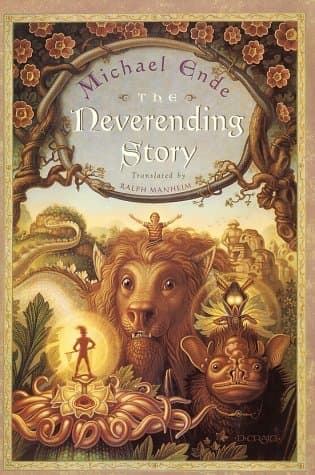
- The Neverending Story
Michael Ende
4.2 (162k) average on GoodreadsFantasyFeatures a child protagonist who enters a magical book world and grapples with its realities.
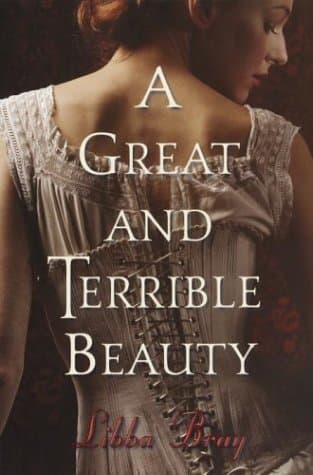
- A Great and Terrible Beauty
Libba Bray
3.8 (208k) average on GoodreadsFantasyInvolves young women discovering hidden magical abilities and navigating dangerous alternate realities.
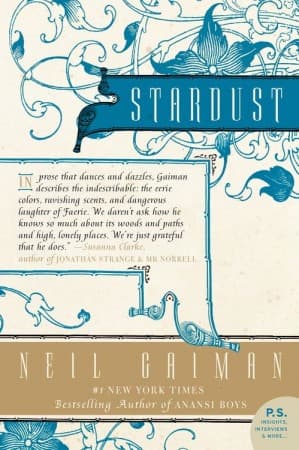
- Stardust
Neil Gaiman
4.1 (359k) average on GoodreadsFantasyA whimsical yet perilous journey through a fantastical land with a strong focus on adventurous quests and magical beings.
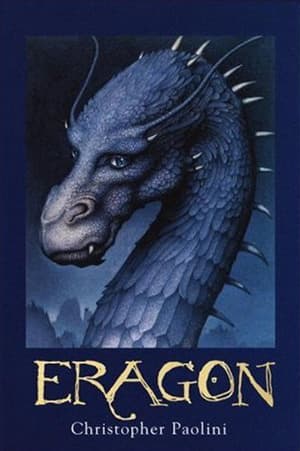
- Eragon
Christopher Paolini
3.9 (1.4M) average on GoodreadsFantasyWhile Eragon focuses on a traditional hero's journey, dragon riders, and a detailed fantasy world, Inkspell delves into a unique metafictional concept where characters literally step out of books. Inkspell prioritizes the philosophical implications of storytelling over straightforward quest narratives and magical systems, offering a more introspective look at the nature of fiction itself.
- Harry Potter and the Sorcerer's Stone
J.K. Rowling
4.5 (7M) average on GoodreadsFantasyRescued from a miserable life under the stairs, an orphaned boy discovers he's a wizard destined for a magical school, where he uncovers a dangerous secret tied to the dark wizard who murdered his parents.
- The Hunger Games
Suzanne Collins
4.3 (6.4M) average on GoodreadsFantasyIn a future where children fight to the death on live television, Katniss Everdeen volunteers for the arena, turning a death sentence into a fight for survival and a spark of rebellion.


Enjoyed the summary?
A summary gives you the shape of the book. The book itself has the detail, the examples and the voice.
Find Inkspell on AmazonAs an Amazon Associate, BookBrief earns from qualifying purchases. How we're funded