

Synopsis
Covers the whole plot, including the ending.
- Difficulty
- Medium
- Pacing
- Moderate
- Mood
- Poignant, Reflective, Hopeful (in despair), Darkly Humorous
- Read it if
- You appreciate poignant, dark humor and a story that explores the human spirit's resilience and the ethics of hope during unimaginable oppression.
- Skip it if
- You prefer fast-paced thrillers or stories with clear-cut happy endings.
Jacob the Liar Plot Summary
Covers the whole plot, including the ending.
The Forbidden Radio and a Life-Saving Lie
Jacob Heym, a Jewish prisoner in a Nazi-occupied ghetto, is called to the German commandant's office for breaking curfew. While waiting, he overhears a radio broadcast reporting that Soviet forces are a few hundred kilometers from Bezanika. This news is forbidden, and owning a radio means death. When a guard questions Jacob about his delay, he quickly invents a lie: he heard the news from his own secret radio. This spontaneous story, meant to protect himself, unexpectedly brings hope to the despairing ghetto residents.
The Spreading Whisper and the Burden of Hope
Word of Jacob's 'secret radio' spreads through the ghetto, first as a whisper. Prisoners, desperate for positive news, cling to this rumor, hoping the war might end. Jacob finds himself surrounded by friends and acquaintances, all asking for updates. Realizing the impact of his lie, he feels he must continue it, inventing daily reports of Soviet advances and Allied victories. This charade brings a glimmer of hope to the bleak ghetto, but it also creates a heavy psychological burden for Jacob, who constantly fears exposure and the consequences for himself and others.
Lina's Curiosity and Jacob's Protective Deception
Jacob takes in Lina, a young girl whose parents were taken away. Lina, innocent and curious, becomes attached to Jacob and his 'radio.' To shield her from the brutal truth of their confinement, Jacob invents elaborate stories about her parents, claiming they are on a secret mission and will return. He uses his 'radio' as the source for these comforting fictions, making up news about their well-being and the war's progress, all to maintain Lina's hope and protect her fragile spirit. This dual deception shows Jacob's deep compassion and his desperate attempt to preserve Lina's childhood.
Mischa's Discovery and Jacob's Confession
Mischa, a former boxer and Jacob's friend, grows suspicious of Jacob's sudden access to news. Driven by his own need for hope, Mischa tries to 'borrow' Jacob's radio, offering to trade his meager rations. Jacob, unable to produce a non-existent radio, confesses to Mischa that the radio is a lie. However, he quickly repeats the truth of the initial news—that the Soviets are advancing—and explains his reason for inventing the radio: to prevent despair. Mischa, though shocked, understands Jacob's intentions and helps maintain the illusion for the ghetto's morale.
The Suicide Attempt and the Power of Hope
Kowalski, a fellow prisoner, reaches a breaking point and tries to hang himself. Just as he is about to die, Jacob, passing by, calls out with a new 'report' from his radio—a very optimistic one about the Allied forces. The news, even as a lie, gives Kowalski a sudden flicker of hope, enough to make him reconsider and struggle to free himself. He is saved, not by physical help, but by the psychological impact of Jacob's fabricated good news. This incident affects Jacob deeply, strengthening his resolve to continue his dangerous charade, understanding hope's life-saving potential in their terrible circumstances.
The Doctor's Dilemma and the Moral Weight of the Lie
Dr. Kirschbaum, a respected ghetto physician, becomes aware of Jacob's 'radio' and the hope it brings. He observes the positive impact on the prisoners' health and morale, noting fewer despair-induced illnesses. However, he also struggles with the ethical problem of a lie, no matter how well-intentioned, especially one that could be exposed with devastating results. He understands that if the truth were revealed, the resulting despair could be even worse. Dr. Kirschbaum becomes a quiet confidante to Jacob, offering unspoken support but also representing the moral complexities of Jacob's actions.
The German Officer's Interrogation
A German officer, bothered by the unusual cheerfulness among the ghetto prisoners, suspects a source of forbidden news. Jacob is called for questioning. The officer, a cruel and clever man, tries to trick Jacob into revealing his radio. Jacob, under great pressure, sticks to his fabricated story, inventing details about the radio's hidden location and its makeshift construction. He manages to convince the officer, or at least avoid direct accusation, through quick wit and the officer's own assumptions about Jewish resourcefulness. This close call further shows the extreme danger Jacob constantly faces.
Lina's Illness and Jacob's Ultimate Story
Lina falls seriously ill, her small body succumbing to the ghetto's harsh conditions. Jacob, heartbroken and desperate to give her peace, tells her a final, elaborate story. He describes her parents returning, disguised as clowns, coming to take her to a beautiful, safe place where they will all be together again. He uses his 'radio' as the source for this news, weaving a tale of fantastical escape and reunion. This last, poignant lie is Jacob's ultimate act of love and protection, a final attempt to offer comfort and hope to the dying child, even as his own world crumbles.
The Deportation and Jacob's Fate
The inevitable happens: the ghetto is emptied. All remaining prisoners, including Jacob, are rounded up and forced onto trains for deportation to an extermination camp. The narrator describes the scene with despair and a lingering sense of the hope Jacob had managed to sustain. Jacob, among the anonymous masses, continues to tell his stories, even on the train, whispering words of impending liberation to those around him. His ultimate fate is somewhat unclear, with the narrator presenting two possible endings: one where he is shot for trying to escape, and another where he dies unnoticed on the train, still whispering hope.
The Narrator's Intervention and the Power of Storytelling
Throughout the story, the unnamed narrator often interrupts, offering personal thoughts, doubts, and alternative scenarios. In the final sections, the narrator discusses the limits of memory, the desire for a more heroic ending, and the impact of Jacob's lies. The narrator reveals that the story comes from a memory, perhaps a legend, from his own childhood in the ghetto. He stresses that Jacob's lies, though unable to prevent the tragedy, still gave meaning, dignity, and moments of joy to people facing terrible horror. The narrator suggests that telling the story itself continues Jacob's legacy of providing hope.
Principal Figures
Jacob Heym
Protagonist
A humble, ordinary man who accidentally becomes a purveyor of hope through lies.
Jacob Heym is an unassuming Jewish man, a former café owner, who finds himself imprisoned in a Nazi ghetto. He is not a natural leader or hero; his initial lie about the radio is born of fear and self-preservation. However, he possesses a profound empathy and a deep sense of responsibility. Witnessing the despair around him, Jacob sacrifices his own peace of mind to maintain the illusion of hope, constantly inventing news to uplift his fellow prisoners. He is a master of improvisation and a compassionate caregiver, particularly towards Lina. His actions are driven by a desire to alleviate suffering, even at great personal risk.
Relationships: Lina (Adoptive father figure, protector, and source of comfort.); Mischa (Friend and eventual confidante in his deception.); Kowalski (Recipient of life-saving hope through Jacob's news.); Dr. Kirschbaum (Moral observer and quiet supporter of Jacob's actions.)
Lina
Supporting
A young, orphaned girl whose innocence and hope are protected by Jacob's stories.
Lina is a young girl, perhaps eight or nine years old, who is orphaned when her parents are taken away by the Germans. She is innocent, curious, and deeply vulnerable. Lina becomes Jacob's primary concern, and her well-being motivates many of his most elaborate lies. She believes implicitly in Jacob's radio and the stories he tells, which provide her with a comforting fantasy world amidst the horrors of the ghetto. Her childlike faith and her dependence on Jacob highlight the profound impact of his deception and the desperate need for innocence in a brutal world. Her declining health and eventual death are a poignant reminder of the ghetto's harsh realities.
Relationships: Jacob Heym (Protected by him, views him as a father figure and source of truth.)
Mischa
Supporting
A former boxer who becomes Jacob's first confidante and accomplice.
Mischa is a strong, physically imposing man, a former boxer, who initially approaches Jacob with suspicion regarding his 'radio.' He represents the pragmatic, often skeptical side of the ghetto inhabitants, yet he is also deeply desperate for any sign of hope. After Jacob confesses the truth about the radio (but not the news itself), Mischa becomes Jacob's first and most trusted confidante. He helps to spread Jacob's fabricated news and protect the secret, understanding the vital role it plays in maintaining morale. Mischa's loyalty and his willingness to participate in the deception underscore the collective need for hope.
Relationships: Jacob Heym (Friend and accomplice in spreading 'news'.)
Kowalski
Supporting
A despairing prisoner whose life is saved by Jacob's timely lie.
Kowalski is a fellow prisoner who embodies the profound despair and hopelessness prevalent in the ghetto. He reaches a point where he can no longer endure the suffering and attempts to take his own life. His desperate act serves as a stark illustration of the psychological toll of their confinement. His subsequent rescue, not by physical intervention but by the timely arrival of Jacob's 'news,' highlights the immediate, life-saving power of hope, even if it is based on a lie. Kowalski's story is a powerful testament to the impact of Jacob's actions on individual lives.
Relationships: Jacob Heym (Recipient of life-saving news.)
Dr. Kirschbaum
Supporting
A compassionate doctor who observes the healing power of Jacob's lies.
Dr. Kirschbaum is a physician in the ghetto who, through his medical observations, notes the tangible positive effects of Jacob's 'radio' on the prisoners' physical and mental health. He represents the intellectual and moral conscience of the ghetto, understanding both the necessity and the ethical complexities of Jacob's deception. While he never directly participates in the lie, he tacitly supports Jacob, recognizing that the hope it provides is a powerful form of medicine. His character adds a layer of intellectual justification to Jacob's actions, showing that sometimes, a lie can serve a greater truth.
Relationships: Jacob Heym (Observing and understanding his actions; a silent supporter.)
The Narrator
Mentioned
An unnamed, omniscient voice who frequently interjects, reflecting on memory and storytelling.
The unnamed narrator is not a character within the story's timeline but a meta-fictional presence. He frequently interrupts the narrative, offering personal commentary, alternative scenarios, and philosophical reflections on memory, truth, and the nature of storytelling. He admits to having heard the story as a child and sometimes struggles with its details, highlighting the subjective nature of truth. The narrator serves as a bridge between the reader and the events, guiding interpretation and emphasizing the enduring power of Jacob's legend. His presence underscores the theme that stories, even those born of lies, can carry profound truths.
Herschel Schtamm
Supporting
A man who questions Jacob's news and represents the skeptical faction.
Herschel Schtamm is a fellow prisoner who, at times, expresses skepticism about Jacob's news. He voices the doubts and fears that many might harbor, questioning the source and veracity of the reports. His questioning serves to highlight the fragile nature of the hope Jacob provides and the constant threat of exposure. Schtamm represents the internal challenges Jacob faces in maintaining the belief among the ghetto inhabitants, reminding the reader that not everyone is easily convinced or equally desperate for the same kind of hope.
Relationships: Jacob Heym (Fellow prisoner, sometimes skeptical of Jacob's 'news'.)
Roman
Supporting
A young man who tries to use Jacob's radio for his own purposes.
Roman is a young man in the ghetto who, like many others, is desperate for news. He tries to pressure Jacob into allowing him to listen to the 'radio' himself, even attempting to steal it for a short period. His actions underscore the raw desperation and the hunger for information that pervades the ghetto, and the inherent dangers that Jacob faces in trying to manage access to a non-existent object. Roman's attempts highlight the challenges Jacob faces in maintaining the illusion while protecting himself.
Relationships: Jacob Heym (Fellow prisoner, initially tries to access Jacob's 'radio'.)
Themes & Insights
The Power of Hope and Deception
This theme explores how hope, even when based on deception, can sustain life in the face of despair. Jacob's lies about the radio, though untrue, give the ghetto residents a reason to live, a belief that liberation is near. This hope prevents suicides, improves morale, and gives people strength to endure suffering. The novel suggests that in extreme situations, the 'truth' of their impending doom is less important than the human spirit's need for optimism. The lies become a way to survive psychologically.
“And Jacob, the simple café owner, the simple man with the simple lie, became a hero. He became the sun, the moon, and the stars for them, because he brought them hope.”
Storytelling as a Means of Survival
The novel shows storytelling not just as entertainment but as a key way to survive psychologically and preserve humanity. Jacob's fabricated news reports and his elaborate stories for Lina are acts of creation that fight the destructive reality of the ghetto. These stories provide a sense of control, purpose, and a connection to a world beyond their immediate suffering. The narrator's own comments throughout the book reinforce this, as he struggles to tell Jacob's story, acknowledging its power and its role in keeping Jacob's legacy alive. Storytelling becomes resistance against forgetting and despair.
“A man needs to know there's something waiting for him, that his end isn't just the end.”
The Burden of Leadership and Responsibility
Jacob, an ordinary man, is given an extraordinary role, along with a heavy burden of responsibility. He constantly fears exposure and the devastating consequences his lies could have if revealed. The weight of sustaining the ghetto's hope falls squarely on him, forcing him to invent daily news, manage expectations, and protect his secret. This theme explores the moral complexities of leadership, especially when it involves deception. Jacob's personal suffering and isolation grow as he becomes the sole keeper of the 'truth' and the fragile hope he has created.
“It was no longer just his lie; it was their life.”
Memory and the Nature of Truth
The narrator's frequent interruptions and his admission of struggling with the details of Jacob's story highlight memory's fallibility and truth's subjective nature, especially in historical trauma. The narrator offers alternative endings and expresses his desire for a more heroic outcome, showing how stories change and are shaped by the teller and the audience's needs. The novel suggests that an event's 'truth' might not be a factual account, but rather its emotional and psychological impact, and the meaning it holds for those who remember it.
“I often ask myself if it really happened exactly this way. But what difference does it make? The important thing is that it could have happened.”
Plot Devices & Literary Techniques
The Unreliable Narrator
A narrator who frequently interjects, questioning the story's facts and offering alternative versions.
The unnamed narrator constantly breaks the fourth wall, directly addressing the reader and admitting to his own uncertainties, biases, and the challenges of recounting the story. He offers different possible endings for Jacob and openly discusses his motivations for telling the tale. This device creates a sense of meta-fiction, reminding the reader that they are engaging with a constructed narrative. It also serves to highlight the themes of memory, the subjective nature of truth, and the power of storytelling itself, making the reader question what is 'real' within the context of the story and encouraging deeper reflection on the historical events it represents.
Dramatic Irony
The audience is aware of Jacob's deception, while most characters are not.
Dramatic irony is prevalent throughout the novel as the reader is made aware early on that Jacob's 'radio' is a fabrication, while the other ghetto inhabitants (with the exception of Mischa and later, perhaps, Dr. Kirschbaum) believe it to be real. This creates tension and suspense, as the reader constantly fears Jacob's exposure and the devastating consequences that would follow. It also allows the reader to appreciate the profound impact of Jacob's lies from an informed perspective, understanding the contrast between the characters' hopeful reactions and the underlying reality of their dire situation. This device emphasizes the power of the lie to create a temporary, life-saving illusion.
Foreshadowing (of the Ghetto's End)
Subtle hints and the pervasive atmosphere of doom that suggest the ghetto's inevitable liquidation.
Despite the temporary hope Jacob instills, the narrative is laced with subtle foreshadowing of the ghetto's ultimate liquidation. The constant threat of German patrols, the dwindling resources, the disappearances of characters, and the narrator's occasional melancholic remarks all hint at the grim fate awaiting the prisoners. This foreshadowing creates a tragic undertone, making the reader acutely aware that Jacob's efforts, while profoundly impactful, cannot ultimately alter the historical outcome. It enhances the pathos of the story, highlighting the fragility of the hope Jacob provides against the backdrop of an inescapable historical tragedy.
Symbolism of the 'Radio'
The non-existent radio symbolizes hope, information, and a connection to the outside world.
The 'radio' is not a physical object, but a powerful symbol. It represents the desperate human need for hope, information, and a connection to a world beyond their confinement. For the ghetto inhabitants, it is a lifeline, a tangible (though imaginary) link to liberation and the end of their suffering. Its non-existence underscores that hope can be conjured from nothing, and that belief itself can be a powerful force. The radio also symbolizes the power of narrative and the human capacity to create meaning and resilience even in the most dehumanizing circumstances. It is a beacon in the darkness, regardless of its material reality.
Jacob the Liar Quotes
“And there was the radio, standing there like a mute witness to the war, a silent oracle, able to speak only when a hand would switch it on. But whose hand?”
“A man needs hope, even if it's a lie. Maybe especially if it's a lie.”
“If you tell a lie long enough, it becomes the truth for those who hear it.”
“The greatest weapon against fear is a good story.”
“Sometimes it's better not to know everything, especially if knowing makes you powerless.”
“In the end, what matters is not what happened, but what people believe happened.”
“A secret is only a secret as long as no one knows it. Once one person knows, it's a burden.”
“Even in the darkest times, a small spark of joy can ignite a whole forest of hope.”
“He didn't lie to deceive them, but to save them from despair.”
“The memory of freedom is a dangerous thing when you are not free.”
“Life is a stage, and we are all actors, some playing our parts better than others.”
“What is courage if not the ability to pretend you're not afraid?”
“They had taken everything from us, but they couldn't take our dreams, not if we kept them alive ourselves.”
“A hero is just someone who doesn't give up, even when it makes no sense.”
Quiz
10 questions on the plot and the characters. Each answer comes with a short explanation.
Question 1
What is the initial reason Jacob Heym goes to the German office, leading him to overhear the radio broadcast?
- He was summoned for questioning about a minor infraction.
- He was trying to report a missing person.
- He was ordered to report for a disciplinary matter after being caught out after curfew.
- He was delivering a package for another prisoner.
Show answer
C. He was ordered to report for a disciplinary matter after being caught out after curfew. Jacob was caught out after curfew and ordered to report to the German office, where he accidentally overheard a radio broadcast about the war's progress.
Question 2
What specific piece of information does Jacob initially claim to know, prompting him to invent the radio lie?
- That the Red Army had liberated a nearby town.
- That the Red Army was only a few hundred kilometers away.
- That the war was officially over.
- That the Germans were planning a mass evacuation.
Show answer
B. That the Red Army was only a few hundred kilometers away. Jacob initially tells Kowalski that the Red Army is only a few hundred kilometers away, forcing him to invent the lie about having a secret radio to explain his knowledge.
Question 3
Which character is the first person Jacob tells a 'lie' to, setting off the chain of events?
- Mischa
- Kowalski
- Lina
- Frankfurter
Show answer
B. Kowalski Kowalski, a friend of Jacob's, is the first person Jacob shares the news with, leading to the fabrication of the radio's existence.
Question 4
What is the primary motivation behind Jacob's continued lying, despite the risks?
- He enjoys the attention and respect it brings him.
- He believes it gives the other prisoners hope and prevents despair.
- He hopes to use the lies to negotiate better treatment for himself.
- He is afraid of being punished if he admits he doesn't have a radio.
Show answer
B. He believes it gives the other prisoners hope and prevents despair. Jacob's main motivation is to provide hope and a reason to live for his fellow prisoners, who are suffering from extreme despair due to their isolation and lack of news.
Question 5
How does Jacob acquire the 'parts' for his imaginary radio, further solidifying his lie?
- He trades his food rations for discarded electrical components.
- He finds various scraps and household items and pretends they are radio parts.
- He barters with a German guard who is sympathetic to his cause.
- He steals components from a German workshop during a labor detail.
Show answer
B. He finds various scraps and household items and pretends they are radio parts. Jacob uses everyday items and scraps, like a piece of wood and some wires, to create the illusion of radio parts, which he then shows to others to maintain his deception.
Question 6
What is the ultimate fate of Kowalski, the first person Jacob confided in?
- He is liberated by the Red Army.
- He commits suicide after Jacob is unable to provide him with further optimistic news.
- He is transferred to another camp.
- He helps Jacob maintain the lie until the end.
Show answer
B. He commits suicide after Jacob is unable to provide him with further optimistic news. Kowalski, unable to cope with the lack of definitive good news and the constant waiting, takes his own life, highlighting the tragic consequences of false hope, even with good intentions.
Question 7
What is the significance of the character Lina in the narrative?
- She is Jacob's secret love interest and confidante.
- She is a young girl Jacob cares for, and her well-being is a major driving force for his lies.
- She is a German officer's daughter who helps the prisoners.
- She is a skeptical prisoner who constantly challenges Jacob's claims.
Show answer
B. She is a young girl Jacob cares for, and her well-being is a major driving force for his lies. Lina is a young orphaned girl whom Jacob cares for. Her innocence and her need for hope are powerful motivators for Jacob to continue his optimistic lies, especially about her parents' return.
Question 8
How does the German officer, Frankfurter, become involved in Jacob's deception?
- He discovers Jacob's radio and tries to use it for his own benefit.
- He suspects Jacob has a radio and interrogates him, inadvertently reinforcing the lie.
- He is a covert resistance member who knows about Jacob's real radio.
- He tries to expose Jacob as a fraud to the other prisoners.
Show answer
B. He suspects Jacob has a radio and interrogates him, inadvertently reinforcing the lie. Frankfurter, suspicious about Jacob's knowledge, interrogates him. Jacob, under pressure, maintains his lie about the radio, and Frankfurter, unable to find evidence, is left to assume it's true, further entrenching the deception.
Question 9
What is the broader thematic message conveyed by Jacob's lies in the context of the concentration camp?
- The inherent dishonesty of people under duress.
- The power of storytelling and hope as a means of survival in dire circumstances.
- The dangers of spreading misinformation and false rumors.
- The futility of resistance against overwhelming oppression.
Show answer
B. The power of storytelling and hope as a means of survival in dire circumstances. Jacob's lies, though fabrications, serve as a vital source of hope and psychological sustenance for the prisoners, illustrating how narratives, even invented ones, can be crucial for human endurance and dignity in extreme conditions.
Question 10
How does the narrator's voice contribute to the overall tone and understanding of the story?
- The narrator is detached and objective, presenting facts without emotion.
- The narrator is a fellow prisoner who shares Jacob's experiences and biases.
- The narrator is an omniscient, slightly ironic voice who often comments on the nature of truth and storytelling.
- The narrator is Jacob himself, reflecting on his actions in hindsight.
Show answer
C. The narrator is an omniscient, slightly ironic voice who often comments on the nature of truth and storytelling. The narrator is an omniscient, often self-aware and ironic voice that frequently interjects with philosophical musings on truth, memory, and the act of storytelling, shaping the reader's perception of Jacob's lies and their impact.
Jacob the Liar FAQ
What is the core premise of 'Jacob the Liar'?
The novel centers on Jacob Heym, a Jewish man imprisoned in a ghetto during World War II. After accidentally overhearing a BBC radio report about the Red Army's advance, he invents a fictitious radio to explain his knowledge, inadvertently sparking hope among the other prisoners who are cut off from all outside information.
Who is Jacob Heym, and what is his initial motivation for lying?
Jacob Heym is a simple, unassuming man in the ghetto. His initial lie about owning a radio is purely accidental, told to avoid punishment for being out after curfew and to explain why he knew the war's progress. He quickly finds himself trapped by this lie as others seek more 'news'.
How does Jacob's lie evolve, and what impact does it have on the ghetto community?
Jacob's initial lie quickly escalates as prisoners, desperate for hope, press him for more news. He fabricates daily reports about the Red Army's progress, creating a powerful sense of anticipation and purpose among the despairing community, even leading to minor acts of defiance and improved morale.
Who is Lina, and what role does she play in Jacob's life and his elaborate deception?
Lina is a young girl, about eight years old, whose parents were taken away. Jacob takes her in and cares for her. He frequently invents stories and 'news' specifically for her, using her innocent belief to reinforce his own need to maintain the illusion of hope for the entire ghetto.
What is the ultimate fate of Jacob and the ghetto inhabitants as depicted in the book?
The book presents two possible endings: one where Jacob is shot after confessing his lie to a German officer, and another, more hopeful, where the ghetto is eventually liberated by the Red Army, though Jacob's own fate remains ambiguous. The narrative often blurs the line between reality and Jacob's hopeful storytelling.
Are there any subtle hints that Jacob's 'radio' is a fabrication even before he explicitly admits it?
Yes, the narrator occasionally drops hints, such as Jacob's struggle to come up with plausible news updates or his internal monologues about the burden of his invention. The sheer convenience of his 'news' often aligns perfectly with what the prisoners most desperately want to hear, subtly indicating its manufactured nature.
What is the significance of the recurring motif of clouds or the sky in the narrative?
The sky and clouds often symbolize the prisoners' confinement and their longing for freedom, yet also the vast, uncaring world outside their ghetto. Jacob frequently looks up, perhaps seeking inspiration for his stories or simply yearning for a world beyond the walls, contrasting with their grounded, bleak reality.
Is there a specific historical event or anecdote that might have inspired Jurek Becker to write this story?
While 'Jacob the Liar' is a work of fiction, Becker himself was a Holocaust survivor, imprisoned in various concentration camps as a child. His personal experiences undoubtedly informed the atmosphere and psychological insights of the novel, reflecting the desperation and resilience he witnessed.
How does Jacob's identity as a 'liar' impact his self-perception and mental state throughout the story?
Initially, Jacob feels a heavy burden and guilt for his lies, fearing discovery and punishment. However, as he sees the positive impact on others, his lies transform into a form of altruism, giving him a renewed sense of purpose and importance, despite the constant pressure.
What psychological defense mechanisms do the other prisoners employ in their eagerness to believe Jacob's news?
The prisoners exhibit strong elements of wishful thinking and denial, desperately clinging to any shred of hope in their dire circumstances. Their collective belief in Jacob's radio serves as a powerful coping mechanism against the overwhelming despair, creating a shared delusion that protects their sanity.
How does the novel explore the psychological impact of hope, both real and fabricated, on individuals facing extreme adversity?
The novel profoundly demonstrates that hope, even if based on lies, can be a vital psychological necessity for survival. It provides motivation, reduces despair, and fosters a sense of community, illustrating how the human spirit can find resilience even in the most brutal conditions.
Discuss the ethical implications of Jacob's lies. Are they justified?
Jacob's lies are arguably ethically justified within the context of the ghetto. While he deceives, his intentions are purely benevolent, saving lives and providing crucial psychological support to a community facing certain death. The harm of truth (despair) outweighs the harm of deception (false hope) in this extreme situation.
The narrator's voice is distinctive. How does it influence the reader's understanding of the events and Jacob's character?
The narrator's voice is often detached, ironic, and somewhat philosophical, frequently interjecting with personal opinions or alternative scenarios. This narrative style creates a sense of tragicomic distance, preventing the story from becoming overly sentimental while highlighting the absurdity and profundity of the characters' plights.
Compare and contrast the two potential endings presented in the novel. What message does offering multiple conclusions convey?
The two endings—one tragic and one hopeful—reflect the inherent uncertainty and arbitrary nature of survival during the Holocaust. By presenting both, Becker emphasizes that while hope is essential, reality could be brutally unforgiving, and ultimately, the power of storytelling (Jacob's and the narrator's) can shape perception.
How does 'Jacob the Liar' comment on the nature of truth and fiction, especially in times of oppression?
The novel suggests that in extreme oppression, the 'truth' can be devastating, while 'fiction' (hope) can be a life-sustaining force. It blurs the lines, arguing that the value of information lies not just in its factual accuracy but in its ability to inspire, motivate, and preserve humanity, making fiction sometimes more 'true' in its effect.
What is the symbolic significance of the German officer's interrogation of Jacob near the end of the story?
The interrogation symbolizes the brutal clash between the oppressors' reality and the prisoners' manufactured hope. The officer, representing the ultimate authority, cannot comprehend the power of Jacob's lies, highlighting the vast psychological chasm between them and the inherent resilience of the human spirit even under duress.
How does the relationship between Jacob and Lina deepen the emotional core of the narrative?
Lina's innocent belief and dependence on Jacob amplify his sense of responsibility and purpose. His desire to protect her from the harsh realities of the ghetto, and his ability to conjure hope specifically for her, underscores his humanity and makes his lies an act of profound love and care.
In what ways does the book challenge traditional notions of heroism?
Jacob is an unlikely hero; he doesn't fight or lead an uprising. His heroism lies in his quiet, persistent act of deception, which provides psychological salvation. The book redefines heroism as the ability to instill hope and preserve human dignity in the face of overwhelming despair, through non-traditional means.
About the author

Jurek Becker was a Polish-born German writer, screenwriter and East German dissident. His most famous novel is Jacob the Liar, which has been made into two films. He lived in Łódź during World War II for about two years and survived the Holocaust.
Similar books
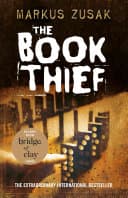
- The Book Thief
Markus Zusak
4.4 (1.8M) average on GoodreadsHistorical FictionFeatures a unique narrative voice and explores the power of words and stories amidst the horrors of Nazi Germany.
- Night
Elie Wiesel
4.3 (970k) average on GoodreadsBiographyA powerful account of the Holocaust, though 'Jacob the Liar' offers a contrasting, more hopeful (albeit tragic) perspective.
- Nineteen Eighty-Four
George Orwell
4.2 (5.5M) average on GoodreadsFictionWinston Smith dreams of truth and rebellion in a world where Big Brother watches all, but he confronts the terrifying power of a regime that controls not just actions, but thoughts.
- The Frozen River
Ariel Lawhon
4.4 (600k) average on GoodreadsFictionIn 1789 Maine, a heroic midwife's diary helps her expose a murder and get justice in a town that wants to silence her.
- A Man Called Ove
Fredrik Backman
4.4 (569k) average on GoodreadsFictionA stubborn widower, who lives by strict rules, finds his quiet world changed by a lively new family next door, making him face his past and find happiness in human connection.
- The Art of Racing in the Rain
Garth Stein
4.2 (452k) average on GoodreadsFictionThrough the eyes of Enzo, a wise and observant dog, a race car driver's family navigates a journey of love, loss, and resilience, learning that life's most important lessons often come in the curves, not just on the straightaways.





Enjoyed the summary?
A summary gives you the shape of the book. The book itself has the detail, the examples and the voice.
Find Jacob the Liar on AmazonAs an Amazon Associate, BookBrief earns from qualifying purchases. How we're funded