

Core Idea
- Difficulty
- Medium
- Read it if
- You want a powerful, firsthand account of the Holocaust from a survivor's perspective, exploring themes of faith, humanity, and trauma.
- Skip it if
- You are not prepared for graphic descriptions of suffering, death, and profound despair, or prefer a less emotionally intense historical account.
Key Takeaways from Night
The Erosion of Faith
How extreme suffering can shatter deeply held spiritual beliefs.
Wiesel's memoir shows the deep spiritual crisis the Holocaust caused. Before Auschwitz, Eliezer was a devout, even mystical, young Hasidic Jew. His life centered on Torah study and prayer, believing in a good God. The systematic dehumanization, arbitrary cruelty, and large scale of death, especially of children, challenged this belief. He sees a young boy (the 'pipel') suffer a long death during a hanging, and this event symbolizes the death of God in his heart. His faith does not just weaken; it is consumed by the crematoria. This is not a gentle fading but a violent, forced separation from a God who, in his eyes, either abandoned humanity or allowed its suffering. The book makes readers confront the 'problem of evil' directly.
“Never shall I forget that night, the first night in camp, which has turned my life into one long night, seven times cursed and seven times sealed. Never shall I forget that smoke. Never shall I forget the small faces of the children whose bodies I saw transformed into smoke under a silent sky. Never shall I forget those flames which consumed my faith forever.”
In the book: Wiesel describes his initial fervent prayer and study, contrasting it with his later refusal to fast on Yom Kippur, a deliberate act of rebellion against God, feeling that God had broken His covenant with the Jewish people. The hanging of the 'pipel' is a pivotal moment where he states, 'Behind me, I heard the man asking: 'For God's sake, where is God?' And from within me, I heard a voice answer: 'Where He is? This is where - hanging here on this gallows...''
Try this: This takeaway challenges individuals to reflect on the nature of faith and suffering. It encourages empathy for those whose beliefs are tested by trauma and prompts contemplation on how one's spiritual or ethical framework might withstand extreme adversity. It's a call to understand that faith is not static but a dynamic process, often reshaped or even destroyed by lived experience.
Related ideas: holocaust-theology, problem-of-evil, spiritual-crisis, dehumanization
The Fragility of Humanity
How extreme conditions strip away civility, revealing both depravity and fleeting acts of kindness.
Wiesel details the systematic dehumanization in the camps, turning people into 'numbers' and reducing human behavior to its most basic needs. The fight for survival often made prisoners turn against each other, leading to theft, betrayal, and abandonment, even among family. Hunger, cold, and constant fear removed the appearance of civilization. Yet, amidst this horror, there are moments of human connection and kindness—a shared piece of bread, a word of encouragement, a father's sacrifice. These opposing behaviors show the complex nature of humanity when pushed to its limits, revealing that while evil can be organized, the human spirit, even when broken, can show both good and bad.
“The instincts of self-preservation, of self-defense, of pride, had all deserted us. In the end, there was no longer any difference between the living and the dead.”
In the book: Wiesel recounts a son, Rabbi Eliahu's son, abandoning his father during a death march, and another instance where a son kills his own father for a piece of bread. Conversely, characters like Juliek, who plays his violin until his last breath, or the French girl who offers a kind word, demonstrate resilience and compassion.
Try this: This takeaway urges critical examination of societal structures and the conditions that allow for dehumanization. It serves as a stark warning about the ease with which human dignity can be stripped away and underscores the importance of actively cultivating empathy and compassion, even in ordinary circumstances, to fortify against such erosion.
Related ideas: dehumanization, survival-instinct, human-dignity, moral-collapse
The Power of Witnessing
The imperative to remember and testify against atrocity to prevent its recurrence.
Wiesel's act of writing 'Night' shows the importance of witnessing. He stayed silent for ten years, dealing with the unspeakable. His decision to speak out came from a belief that silence when faced with evil is agreement. The book is not just a personal memoir; it is a historical document, a moral request, and a warning. It makes the reader witness the horrors with him, confront them directly, and carry that knowledge. This act of witnessing is essential for honoring the victims and for protecting humanity's future by ensuring such atrocities are never forgotten and, hopefully, never repeated. Wiesel believed that forgetting is a form of betrayal, a second death for those who died.
“For the survivor who chooses to testify, it is clear: his duty is to bear witness for the dead and for the living. He has no right to deprive future generations of a past that belongs to our collective memory. To forget would be not only dangerous but offensive; to forget the dead would be akin to killing them a second time.”
In the book: The entire book serves as evidence, but specifically, Wiesel's preface and epilogue, where he reflects on his decade of silence and the moral obligation that compelled him to write. His consistent message in later life, reiterating 'never again,' is rooted in this principle.
Try this: This takeaway calls on individuals to actively engage with history, particularly difficult histories, and to speak out against injustice and hatred in their own communities. It emphasizes the responsibility of each person to challenge denial, misinformation, and prejudice, ensuring that the lessons of the past are learned and applied to contemporary issues.
Related ideas: historical-memory, never-again, moral-responsibility, testimony
The Death of Innocence
The irreversible loss of childhood and purity in the face of unimaginable evil.
Wiesel enters Auschwitz as an observant, somewhat naive teenager. His world is one of religious study, family warmth, and youthful hopes. The camps systematically remove every part of this innocence. He sees terrible things no child should ever see: the murder of infants, the brutal treatment of adults, the death of his own family. This exposure to absolute evil does not just traumatize him; it changes how he sees the world and himself. The 'child' he once was, full of faith and hope, is gone, replaced by a hardened survivor. The spiritual and emotional scars are so deep that he feels an emptiness, a permanent 'night' inside him. This loss is not just personal but represents a collective trauma for a generation.
“The child who was I, died that night, and with him my God, my soul, and the dreams that were like embers, waiting to be rekindled. They were consumed by the flames.”
In the book: Wiesel's descriptions of his early life in Sighet, filled with religious devotion and family, stand in stark contrast to his later descriptions of himself as a 'corpse' looking back from the mirror, devoid of emotion or recognition. The scene where he is separated from his mother and sister, and his subsequent indifference to their fate due to the immediate need for survival, illustrates this profound loss.
Try this: This takeaway prompts reflection on the sanctity of childhood and the devastating long-term impact of trauma, especially on young minds. It underscores the importance of protecting children from violence and hatred and highlights the generational consequences of conflict and persecution. It also challenges us to consider what truly constitutes 'innocence' and how easily it can be shattered.
Related ideas: trauma, childhood-loss, existentialism, psychological-impact
The Bond of Father and Son
A visceral portrayal of love, dependence, and the ultimate test of familial devotion under extreme duress.
The relationship between Eliezer and his father, Shlomo, is the emotional center of 'Night.' At first, Eliezer's father is a respected community leader, somewhat separate from his son's spiritual intensity. However, in the camps, their roles shift. Eliezer, though still a child, often becomes his father's protector and only support as Shlomo weakens. Their dependence is deep: Eliezer's will to live often depends on his father's survival, and his father finds his last hopes in his son. The slow, painful death of his father, and Eliezer's mixed feelings of grief, duty, and momentary relief, show familial love under conditions where such bonds are systematically destroyed. It shows both the strength and the breaking point of human connection.
“My father's presence was a comfort. He was always there, a solid presence, a source of strength, even in the midst of the chaos and despair.”
In the book: Wiesel's constant efforts to keep his father alive, sharing his rations, protecting him from beatings, and trying to secure him a doctor, are central to the narrative. The scene where his father is dying of dysentery and Eliezer, while tending to him, also feels a fleeting sense of relief at the thought of being free from the burden, is a brutally honest moment.
Try this: This takeaway encourages deep reflection on family bonds, particularly the complex dynamics between parents and children. It prompts consideration of the sacrifices made for loved ones and the difficult moral choices that can arise in desperate situations. It also highlights the importance of supporting and caring for elderly or vulnerable family members, recognizing the profound impact of their presence.
Related ideas: familial-love, interdependence, moral-dilemma, grief
The Banality of Evil
How ordinary individuals can become instruments of systematic, unimaginable cruelty.
While Wiesel focuses on the victims' experience, 'Night' also shows the 'banality of evil' – the idea that horrific acts are often done by ordinary people following orders, rather than by inherently evil individuals. The SS guards, Kapos, and even some fellow prisoners who brutalize others are not always shown as simply evil, but often as indifferent, bureaucratic, or desperate. This suggests that the system itself, with its dehumanizing ideas and structures, allowed and even encouraged cruelty, turning normal people into parts of a genocidal machine. The book makes us confront the uncomfortable truth that evil is not always grand but can appear in quiet compliance and administrative efficiency, making it more terrifying.
“How was it possible that men, women, and children were being burned and that the world kept silent?”
In the book: Wiesel describes the guards as often cold and efficient, following procedures. He notes the Kapos (prisoner-overseers) who were often more brutal than the SS, demonstrating how the system corrupted even victims. The indifference of the world outside the camps, particularly the lack of intervention, further underscores this banality.
Try this: This takeaway serves as a crucial warning to be vigilant against systems and ideologies that promote dehumanization, even in seemingly minor ways. It challenges individuals to question authority, resist groupthink, and recognize their personal responsibility in preventing the normalization of injustice. It encourages active citizenship and critical thinking to dismantle the precursors to systemic evil.
Related ideas: banality-of-evil, systemic-evil, conformity, moral-indifference
The Silence of the World
The devastating impact of international inaction and indifference during genocide.
Wiesel repeatedly points to the question of why the world, especially the Allied powers, did not act sooner or more decisively to stop the Holocaust. The prisoners in the camps, including Eliezer, held onto hopes of liberation, often fueled by rumors of approaching armies. The reality of long suffering and the scale of the genocide, however, showed the truth of international indifference. This silence, Wiesel argues, was not just passive; it was a form of agreement that allowed the atrocities to continue. The deep sense of abandonment felt by the victims is a central theme, raising questions about international moral obligations and humanitarian intervention. It criticizes global conscience.
“The world remained silent. And that silence was more terrifying than the screams.”
In the book: Wiesel describes the hope of the prisoners when they hear news of the Red Army's advance, only to be forced on death marches. He also recounts the initial dismissal of warnings about the extermination camps by those outside, highlighting the world's reluctance to believe or act.
Try this: This takeaway urges individuals and nations to actively speak out against human rights abuses and genocides wherever they occur. It underscores the moral imperative of intervention and the dangers of political expediency over humanitarian concerns. It encourages advocacy for international justice and accountability mechanisms to prevent future atrocities and to ensure that 'never again' is a promise, not just a lament.
Related ideas: international-relations, humanitarian-intervention, genocide-prevention, moral-complicity
The Lingering Shadow of Trauma
The indelible psychological scars left by extreme suffering, enduring long after liberation.
The end of 'Night' is not a triumphant liberation but a chilling depiction of deep, lasting trauma. When Eliezer sees his reflection after liberation, he does not recognize himself; he sees a 'corpse,' reflecting the spiritual death he experienced. This image is a strong metaphor for the irreversible psychological damage caused by the Holocaust. The book suggests that for survivors, the 'night' does not truly end with freedom; it continues inside. The loss of faith, the shattered innocence, the memory of his father's death, and the weight of what he witnessed leave a lasting mark. This emphasizes that trauma is not just temporary but a fundamental change of self, requiring lifelong processing and affecting every part of a survivor's life. The silence Wiesel kept for ten years after the war further shows this deep trauma.
“From the depths of the mirror, a corpse gazed back at me. The look in his eyes, as they stared into mine, has never left me.”
In the book: The final lines of the book, where Wiesel describes seeing his reflection and the 'look in his eyes,' are the most direct evidence. His subsequent decade of silence before writing 'Night' also speaks volumes about the difficulty of processing and articulating such immense trauma.
Try this: This takeaway fosters empathy for survivors of trauma, recognizing that their struggles often continue long after the immediate danger has passed. It highlights the importance of mental health support, compassionate listening, and understanding the complex ways trauma manifests. It also encourages caution against simplistic narratives of 'overcoming' trauma, acknowledging its deep and lasting impact.
Related ideas: post-traumatic-stress, psychological-trauma, survivor-guilt, memory-and-trauma
The Peril of Indifference
A moral condemnation of apathy as the most dangerous response to suffering.
While not explicitly stated in the book's 1956 text, Wiesel's later thoughts and speeches, shaped by 'Night,' convey a main message: indifference is the ultimate evil. The Holocaust was not just done by active hatred, but allowed by a vast amount of apathy—the indifference of those who knew but did nothing, the indifference of bureaucratic systems, and the world's general unwillingness to confront uncomfortable truths. 'Night' itself shows what happens when indifference wins. It argues that to be human is to feel, to care, and to act. To stay silent, to turn away from suffering, is to give up one's humanity and to let evil grow. This is an urgent call to moral action.
“The opposite of love is not hate, it's indifference. The opposite of art is not ugliness, it's indifference. The opposite of faith is not heresy, it's indifference. And the opposite of life is not death, it's indifference.”
In the book: The entire narrative, from the initial disbelief of the Jews in Sighet regarding the impending danger to the lack of intervention from the outside world, implicitly argues against indifference. The suffering of the prisoners, often ignored by guards and even fellow prisoners, shows its devastating effects. Although the quote itself is from a later speech, it perfectly encapsulates the underlying moral argument of 'Night.'
Try this: This takeaway demands active engagement with social and political issues, urging individuals to confront injustice and suffering rather than turning a blind eye. It promotes empathy, advocacy, and critical awareness of global events. It encourages a personal commitment to stand against all forms of bigotry and persecution, recognizing that even small acts of indifference can contribute to larger societal failures.
Related ideas: moral-courage, empathy, social-responsibility, activism
Night Quotes
“Never shall I forget that night, the first night in camp, which has turned my life into one long night, seven times cursed and seven times sealed.”
“Human suffering anywhere concerns men and women everywhere.”
“I pray to the God within me that He will give me the strength to ask Him the right questions.”
“The opposite of love is not hate, but indifference.”
“We were all going to die here. All limits had been passed. No one had any strength left. And the night seemed endless.”
“From the depths of the mirror, a corpse gazed back at me. The look in his eyes, as they stared into mine, has never left me.”
“There are a thousand and one gates leading into the orchard of mystical truth. Every human being has his own gate.”
“I did not deny God's existence, but I doubted His absolute justice.”
“The night was gone. The morning star was shining in the sky. I too had become a completely different person.”
“Our first act as free men was to throw ourselves onto the provisions. We thought only of that. Not of revenge, not of our families. Nothing but bread.”
“For the survivor, writing is not a profession, but a necessity, a condition for survival.”
“Where is God now? And I heard a voice within me answer him: Where is He? Here He is—He is hanging here on this gallows.”
“We were masters of nature, masters of the world. We had forgotten everything—death, fatigue, our natural needs.”
“One more stab to the heart, one more reason to hate. One less reason to live.”
Quiz
10 questions on the main ideas. Each answer comes with a short explanation.
Question 1
What is the primary setting where Elie Wiesel and his family are first taken after being removed from their home in Sighet?
- Buchenwald concentration camp
- Auschwitz concentration camp
- Dachau concentration camp
- Treblinka extermination camp
Show answer
B. Auschwitz concentration camp In 'Night', Elie Wiesel and his family are first transported to Auschwitz in 1944 after being taken from Sighet, Transylvania. This is a key event in the memoir that marks the beginning of his horrific experiences in the camps.
Question 2
What is the central theme of 'Night' as described in the book summary?
- The triumph of human spirit over adversity
- A deeply observant Jew confronting the absolute evil of man
- The political history of World War II concentration camps
- A love story set during the Holocaust
Show answer
B. A deeply observant Jew confronting the absolute evil of man The summary explicitly states that 'Night' is about Elie Wiesel's experience as 'a deeply observant Jew confronting the absolute evil of man.' This theme of grappling with faith and evil in the face of the Holocaust is central to the memoir.
Question 3
Who is credited with creating the new translation of 'Night' mentioned in the book description?
- Elie Wiesel himself
- Marion Wiesel, his wife
- A team of Holocaust historians
- The original French publisher
Show answer
B. Marion Wiesel, his wife The description notes that the new translation is by 'Marion Wiesel, his wife and most frequent translator,' who corrected important details to provide the most accurate English rendering of Wiesel's testimony.
Question 4
According to the book description, what does 'Night' record about Elie Wiesel's experiences?
- Only the historical facts of the concentration camps
- His memories of the death of his family and his own innocence
- A detailed account of all prisoners in Auschwitz
- His escape and resistance efforts during the Holocaust
Show answer
B. His memories of the death of his family and his own innocence The description specifies that 'Night' is 'the terrifying record of Elie Wiesel's memories of the death of his family, the death of his own innocence, and his despair.' This highlights the personal and psychological impact rather than just historical facts.
Question 5
What message does 'Night' convey about the events described, according to the book summary?
- That such horrors are an inevitable part of human history
- That this horror must simply never be allowed to happen again
- That forgiveness is the only path forward
- That the Holocaust was a unique event with no broader lessons
Show answer
B. That this horror must simply never be allowed to happen again The summary ends by stating that the book presents Wiesel's 'unforgettable message that this horror must simply never be allowed to happen again.' This underscores the memoir's purpose as a warning and call to action.
Question 6
How does the book description characterize Elie Wiesel's perspective in 'Night'?
- As a detached historical observer
- As a teenager experiencing the events firsthand
- As an older man reflecting with full understanding
- As a fictional narrator creating an allegory
Show answer
B. As a teenager experiencing the events firsthand The description notes that Wiesel 'was a teenager when he and his family were taken' in 1944, indicating that 'Night' is written from the perspective of his youthful experiences during the Holocaust, adding to its raw and immediate impact.
Question 7
What is the significance of the new translation of 'Night' mentioned in the description?
- It adds fictional elements to make the story more engaging
- It corrects important details and provides the most accurate English rendering
- It shortens the book for modern readers
- It focuses only on the historical context
Show answer
B. It corrects important details and provides the most accurate English rendering The description emphasizes that Marion Wiesel's translation 'corrects important details and presents the most accurate rendering in English of Elie Wiesel's testimony,' highlighting its role in preserving the authenticity and precision of his account.
Question 8
Which of the following best describes the genre of 'Night' as indicated in the book description?
- Fiction based on true events
- Biography, memoir, and history
- Pure historical analysis
- A religious scripture
Show answer
B. Biography, memoir, and history The description explicitly lists 'Biography, Memoir, History' as the genres, reflecting that 'Night' is a personal account (memoir) of Wiesel's life (biography) set against the historical backdrop of the Holocaust (history).
Question 9
What does the book description imply about the emotional impact of 'Night'?
- It is a hopeful tale of survival and resilience
- It is a terrifying record of memories and despair
- It is an academic study of evil
- It is a celebration of human kindness in dark times
Show answer
B. It is a terrifying record of memories and despair The description uses phrases like 'terrifying record' and 'despair' to convey the intense emotional weight of Wiesel's memories, emphasizing the horror and psychological toll rather than uplifting aspects.
Question 10
Based on the description, what is the ultimate purpose of 'Night' beyond recounting personal experiences?
- To provide a detailed timeline of World War II events
- To serve as a testimony and warning to prevent future horrors
- To criticize specific political regimes
- To promote a particular religious viewpoint
Show answer
B. To serve as a testimony and warning to prevent future horrors The description frames 'Night' as Wiesel's 'testimony to what happened in the camps' with a message that 'this horror must simply never be allowed to happen again,' indicating its role as a moral witness and preventive tool against similar atrocities.
Night FAQ
What is 'Night' by Elie Wiesel about?
'Night' is Elie Wiesel's memoir detailing his experiences as a Jewish teenager during the Holocaust, including his deportation from Sighet to Auschwitz and Buchenwald concentration camps, the death of his family, and his struggle with faith and humanity in the face of absolute evil.
Is 'Night' a true story?
Yes, 'Night' is a non-fiction memoir based on Elie Wiesel's personal experiences during the Holocaust. It is considered one of the most important first-hand accounts of the atrocities committed in Nazi concentration camps.
What is the significance of the title 'Night'?
The title 'Night' symbolizes the darkness, despair, and loss of faith that Wiesel experienced during the Holocaust. It represents both the literal nights spent in concentration camps and the metaphorical darkness that enveloped humanity during this period.
How does 'Night' differ from other Holocaust memoirs like 'The Diary of Anne Frank'?
While both are crucial Holocaust accounts, 'Night' focuses on Wiesel's direct experiences in concentration camps as a teenager, whereas 'The Diary of Anne Frank' documents Anne's life in hiding before her capture. 'Night' also deeply explores theological questions about God's silence during suffering.
Does 'Night' work as an educational text about the Holocaust?
Yes, 'Night' is widely used in educational settings as a powerful first-person account of the Holocaust. Its concise narrative and emotional depth make it accessible for students while conveying the historical reality and human impact of the genocide.
What is Elie Wiesel's 'unforgettable message' in 'Night'?
Wiesel's central message is that such horrors must never be allowed to happen again. He emphasizes the importance of remembrance, bearing witness to atrocities, and speaking out against injustice and indifference to prevent future genocides.
How does the Marion Wiesel translation differ from earlier versions?
Marion Wiesel's translation, being Elie's wife and frequent translator, corrects important details and provides the most accurate English rendering of his testimony. It stays truer to the original Yiddish and French versions while maintaining the emotional power of the narrative.
What role does faith play in 'Night'?
Faith is central to 'Night' as Wiesel documents his transformation from a deeply observant Jewish boy to someone who questions God's existence in the face of unimaginable suffering. The memoir explores the crisis of faith experienced by many Holocaust victims.
Is 'Night' appropriate for young readers?
While 'Night' contains graphic descriptions of Holocaust atrocities, it is often taught to middle and high school students with proper context and guidance. The age-appropriateness depends on individual maturity and should involve discussion about the difficult content.
How does 'Night' contribute to Holocaust remembrance?
As one of the most widely read Holocaust memoirs, 'Night' serves as a vital testament that keeps the memory of the victims alive. Wiesel's work ensures that new generations understand the consequences of hatred, indifference, and the importance of human rights.
About the author
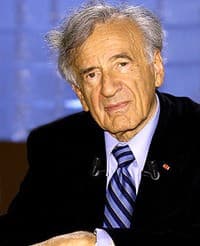
Elie Wiesel was a Jewish writer and Holocaust survivor known for his powerful narratives exploring themes of suffering and faith. His notable works include "Night," a memoir detailing his experiences in Nazi concentration camps, and "Day," which reflects on the aftermath of trauma. Wiesel received the Nobel Peace Prize in 1986 for his efforts in promoting human rights and combating indifference.
Similar books
- The Diary of a Young Girl
Anne Frank
4.2 (2.7M) average on GoodreadsBiographyOffers another intimate, personal account of the Holocaust from a young person's perspective, though from hiding rather than the camps.
- Man's Search for Meaning
Viktor E. Frankl
4.4 (401k) average on GoodreadsBiographyA memoir by a Holocaust survivor, focusing on finding meaning and purpose amidst suffering in concentration camps.
- Eat, Pray, Love
Elizabeth Gilbert
3.6 (1.5M) average on GoodreadsLifestyleA heartbroken writer leaves her conventional life for a year-long global search for pleasure in Italy, spiritual devotion in India, and unexpected love and balance in Bali.
- Steve Jobs
Walter Isaacson
4.1 (957k) average on GoodreadsBusinessSteve Jobs was a visionary who fused creativity and technology to revolutionize six industries and shape our digital world.
- The Glass Castle
Jeannette Walls
4.3 (903k) average on GoodreadsBiographyJeannette Walls's memoir describes her unusual childhood with brilliant, free-spirited parents whose poverty-stricken life shaped her independence and love despite family problems.
- Bossypants
Tina Fey
4.0 (848k) average on GoodreadsBiographyFrom a 'vicious nerd' with stress dreams to the comedic force behind Liz Lemon and 'Weekend Update,' Tina Fey chronicles her journey to proving that 'you're no one until someone calls you bossy.'






Enjoyed the summary?
A summary gives you the shape of the book. The book itself has the detail, the examples and the voice.
Find Night on AmazonAs an Amazon Associate, BookBrief earns from qualifying purchases. How we're funded