
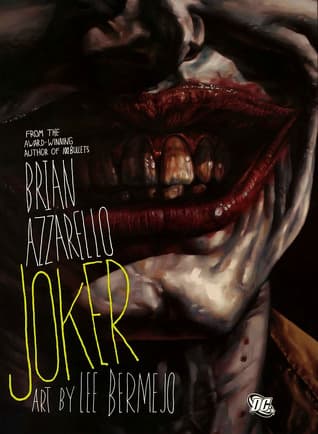
Synopsis
Covers the whole plot, including the ending.
- Difficulty
- Medium
- Pacing
- Fast
- Mood
- Dark, Gritty, Violent, Psychological, Noir
- Read it if
- You want a gritty, character-driven look into the mind of the Joker from a henchman's perspective, with a focus on psychological horror and crime noir.
- Skip it if
- You prefer traditional superhero comics, are sensitive to extreme violence and dark themes, or dislike morally ambiguous protagonists.
Joker Plot Summary
Covers the whole plot, including the ending.
Welcome Home, Mr. J
Jonny Frost, a low-level thug, is sent by Harvey Dent (Two-Face) to pick up the Joker from Arkham Asylum. The Joker is calm but quickly shows his dominance. He asks about his territory and money during his time in jail. Jonny, a family man, feels drawn to the Joker's charisma and unpredictability. As they drive through Gotham, the Joker's unsettling manner and Jonny's growing unease set the stage for the night. The Joker's first stop is to reclaim what he believes is his, signaling his brutal return to Gotham's criminal world.
The Penguin's Predicament
The Joker, with Jonny Frost, makes his first move to rebuild his empire by confronting Oswald Cobblepot, the Penguin. They arrive at the Iceberg Lounge, where the Penguin, initially dismissive, quickly understands the situation. The Joker brutally assaults one of Penguin's men, showing his renewed violence. He demands his money back, which Penguin had been 'holding onto.' The Penguin, intimidated, reluctantly hands over cash. This encounter shows Jonny the Joker's ruthlessness and the fear he causes among Gotham's criminals, solidifying Jonny's reluctant loyalty.
Riddler's Riddle
Next, the Joker and Jonny visit Edward Nygma, the Riddler, who has a strip club. The Riddler tries to use the Joker's return to his advantage, offering information. However, the Joker sees through his act and mocks his attempts to be a legitimate businessman. The Joker wants to reclaim his territory and make a statement. He humiliates the Riddler by forcing him to do a degrading act for his henchmen. This shows that even Gotham's intellectual criminals are not safe from his terror. This scene highlights the Joker's contempt for anyone who tries to profit from his absence or challenge his authority.
Harley's Welcome Back
The Joker and Jonny arrive at an apartment building, where Harley Quinn waits. Her devotion to the Joker is clear, almost obsessive. Their reunion is a twisted display of affection, with Harley eager to join the Joker's violence. She has a hostage, whom the Joker brutally tortures and kills, with Harley's participation. Jonny sees their depraved relationship and the Joker's ability to corrupt others. This scene shows the Joker's manipulative power and Harley's complete submission to him, reinforcing the destructive nature of their bond and the night's escalating violence.
Killer Croc's Territory
The Joker, with Jonny and Harley, goes into Killer Croc's territory, a brothel. Croc has been running a protection racket, and the Joker is there to take it back. The confrontation is violent. Killer Croc, a strong figure, believes he can stand up to the Joker. However, the Joker, using his mix of psychological manipulation and unexpected attacks, subdues Croc. The fight is intense, showing the Joker's willingness to use extreme violence to achieve his goals. This encounter further shows the Joker's ability to overcome even physically strong opponents through madness and cunning.
Meeting Two-Face
The Joker and his crew arrive at Harvey Dent's (Two-Face) headquarters. Two-Face, who arranged the Joker's release, expects cooperation or negotiation. However, the Joker has no intention of following anyone else's rules. The meeting is tense as the Joker dismisses Two-Face's attempts to reason or control him. The Joker mocks Dent's reliance on his coin, showing the random nature of his justice. This encounter highlights the difference between the Joker's chaotic nihilism and Two-Face's structured, though fractured, sense of order. It shows that even powerful criminals fear the Joker's unpredictability.
The Bank Heist
The Joker, instead of settling into a routine, plans a daring and chaotic bank robbery. This is not just about money; it is about making a statement and causing chaos. The robbery happens with the Joker's theatricality and extreme violence, leaving a trail of bodies and fear. Jonny Frost is forced to participate, seeing the Joker's destructive glee. The Joker's actions during the heist are not rational or profit-driven; they are purely for causing terror and proving his dominance. This event is a brutal show of the Joker's return and his contempt for societal norms.
The Intervention of Batman
During the Joker's rampage, Batman makes a brief, shadowy appearance. He does not directly confront the Joker in a long battle, but his presence is felt, a looming threat to the Joker's chaotic rule. Batman's intervention reminds both the Joker and the criminal underworld that there are limits to the chaos he can unleash. His appearance, even if short, disrupts the Joker's plans and forces him to react, highlighting the struggle between the two arch-enemies. This moment emphasizes the Joker's obsession with Batman and how Batman's existence defines much of the Joker's purpose, even when not directly present.
Jonny's Transformation
Throughout the night, Jonny Frost sees the Joker's growing madness and violence. He witnesses horrors, is forced to participate in crimes, and slowly loses his moral compass. The Joker's psychological manipulation and the terror Jonny experiences erode his identity as a family man. He feels both repulsed and fascinated by the Joker. This transformation shows how easily an ordinary person can be drawn into depravity when exposed to extreme evil. Jonny's internal struggle and eventual giving in show the Joker's corrupting influence.
The Showdown at the Amusement Mile
The night's chaos ends at the Amusement Mile, a fitting backdrop for the Joker's final act. Here, the story's threads meet, leading to a violent confrontation that involves the Joker and Jonny, and possibly other Gotham criminals. The Joker's goal becomes clearer: not just money or territory, but an assertion of his chaotic philosophy and a confrontation with anyone in his way. The scene is a peak of violence and madness, leaving a lasting impact on Jonny and solidifying the Joker's terrifying return to Gotham.
The Bridge and the Bullet
In the aftermath of the Amusement Mile, Jonny Frost is in a desperate situation. Whether to protect the Joker, prove loyalty, or out of a twisted sense of belonging that has consumed him, Jonny makes a fatal decision. He is either killed or kills someone in a final act of violence, possibly by Batman or at the Joker's command. His journey from hesitant driver to implicated participant in the Joker's madness reaches its tragic end, showing the destructive power of the Joker's influence and the irreversible consequences of aligning with evil.
Batman's Final Words
In the end, Batman surveys the damage and reflects on the Joker's latest rampage. His thoughts or a brief interaction summarize the endless battle against the Joker. Batman acknowledges the Joker's unique evil — not driven by greed or power, but by a desire for chaos and destruction of order. He understands that the Joker cannot be truly 'cured' or stopped permanently, only contained. This final scene reinforces the core dynamic between the two characters and the grim reality of Batman's war on crime in Gotham, always shadowed by the Joker's madness.
Principal Figures
The Joker
Antagonist
The chaotic, nihilistic supervillain and criminal mastermind.
The Joker is the embodiment of pure, unadulterated chaos and evil. He is a criminal mastermind with no discernible motive beyond spreading anarchy and proving the inherent madness of humanity. His actions are unpredictable, his violence extreme, and his charisma terrifyingly magnetic. He operates on a different plane than other criminals, seeing their greed and ambition as mundane. His return from Arkham is not about reclaiming power for its own sake, but about reasserting his unique brand of terror and reminding Gotham of his singular, destructive presence.
Relationships: Jonny Frost (Manipulator/Victim, a reluctant accomplice drawn into his madness.); Harley Quinn (Abuser/Abused, a twisted romantic and criminal partnership based on her obsessive devotion.); Batman (Arch-nemesis, the object of his obsession and the only one who truly understands his destructive philosophy.)
Jonny Frost
Protagonist/Narrator
A low-level thug who becomes the Joker's reluctant driver and witness.
Jonny Frost is an ordinary, low-level criminal trying to make a living and provide for his family. He is initially fearful and cautious, representing the 'normal' person's reaction to the Joker's madness. Throughout the story, he is forced to confront the Joker's extreme violence and nihilism, slowly becoming desensitized and psychologically corrupted. He serves as the reader's eyes into the Joker's world, a man caught between his desire for a normal life and the terrifying allure of absolute chaos. His internal conflict and eventual degradation are central to the narrative.
Relationships: The Joker (Driver/Accomplice, an unwilling participant who becomes psychologically manipulated.); His Wife (Distant, a connection to the 'normal' world he is forced to leave behind.)
Harley Quinn
Supporting
The Joker's devoted, equally unhinged sidekick and lover.
Harley Quinn is completely devoted to the Joker, her love bordering on a pathological obsession. She is just as unhinged and violent as the Joker, eager to participate in his schemes and inflict pain. Her character embodies the Joker's corrupting influence, as she was once Dr. Harleen Quinzel, a psychiatrist. Her presence highlights the destructive nature of their relationship, where her loyalty is constantly exploited and abused. She serves as a mirror to the Joker's own madness, reflecting his chaotic energy and gleefully engaging in his depravity.
Relationships: The Joker (Lover/Accomplice, a deeply abusive and obsessive relationship.); Jonny Frost (Fellow accomplice, often dismissive or cruel towards him.)
Harvey Dent (Two-Face)
Supporting
The former district attorney turned criminal boss, divided by his coin.
Harvey Dent, now Two-Face, is a significant figure in Gotham's criminal underworld. He is characterized by his scarred face and his reliance on a two-headed coin to make all decisions, embodying a fractured sense of justice and fate. He orchestrates the Joker's release from Arkham, hoping to use him as a tool or leverage, but quickly finds himself outmaneuvered and underestimated. Two-Face represents a more structured, albeit dark, form of criminality that stands in stark contrast to the Joker's pure chaos, making him a target for the Joker's contempt.
Relationships: The Joker (Employer/Manipulator, attempts to use the Joker, but is ultimately outmaneuvered.); Jonny Frost (Employer, sends Jonny to pick up the Joker.)
Oswald Cobblepot (The Penguin)
Supporting
The refined, yet ruthless, criminal proprietor of the Iceberg Lounge.
The Penguin is a prominent Gotham crime lord, known for his intelligence, business acumen, and his control over various illicit operations, particularly through the Iceberg Lounge. He represents the 'old guard' of Gotham's organized crime. When the Joker returns, Penguin is among the first to be confronted, forced to give back money he had been 'safeguarding.' He is cunning but ultimately intimidated by the Joker's unpredictable violence, highlighting the Joker's superior position in the criminal hierarchy. He values his money and territory above all else, making him an easy target for the Joker's reassertion of power.
Relationships: The Joker (Victim/Competitor, forced to return stolen assets to the Joker.)
Edward Nygma (The Riddler)
Supporting
The intellectual criminal who attempts to profit from the Joker's return.
The Riddler, Edward Nygma, is a criminal who thrives on intellectual challenges and puzzles. In this story, he has rebranded himself as a strip club owner, trying to operate within the fringes of legitimacy while still engaging in criminal activities. He attempts to use his intellect and information to gain favor with the Joker, but his efforts are met with contempt and humiliation. The Joker sees through his pretenses and mocks his attempts at being a 'smart' criminal, reinforcing the Joker's belief that all other criminals are beneath him. He represents the more flamboyant and less physically intimidating side of Gotham's rogue's gallery.
Relationships: The Joker (Victim/Competitor, mocked and humiliated by the Joker.)
Killer Croc
Supporting
The monstrous, physically imposing criminal operating in the sewers and slums.
Killer Croc is a physically formidable and bestial criminal, mutated with reptilian features, who operates in the darker, more brutal corners of Gotham, running protection rackets and exploiting vulnerable individuals. He is a creature of instinct and brute force. When the Joker confronts him to reclaim territory, Croc's physical prowess is no match for the Joker's cunning and sheer, deranged violence. His defeat at the hands of the Joker emphasizes that even the strongest physically cannot withstand the Joker's unique brand of madness and determination. He represents the raw, animalistic side of Gotham's underworld.
Relationships: The Joker (Victim/Competitor, brutally defeated by the Joker.)
Batman
Mentioned
Gotham's vigilante protector and the Joker's ultimate adversary.
Batman is the silent, looming presence throughout the narrative, the ever-present counterpoint to the Joker's chaos. While he doesn't have extensive dialogue or direct interaction until the very end, his shadow hangs over every criminal act the Joker commits. He represents order, justice, and the relentless fight against crime. The Joker's actions are often a perverse dance for Batman's attention, and Batman's brief appearances serve as a reminder that the Joker's reign of terror is never absolute. He is the only one who can truly challenge the Joker's philosophy.
Relationships: The Joker (Arch-nemesis, the eternal conflict between order and chaos.)
Themes & Insights
The Corrupting Influence of Evil
This theme is shown through Jonny Frost's journey. Initially a reluctant participant, Jonny is drawn into the Joker's madness, losing his moral compass. Scenes like the bank robbery, where Jonny is forced into violence, and his growing desensitization to the horrors, show this. The story suggests that prolonged exposure to evil can erode one's humanity, making an ordinary man capable of terrible acts. The Joker's ability to warp perception and morality is central to this theme.
“He's a monster, Jonny. A monster who makes other monsters.”
Chaos vs. Order
The story's main conflict is the battle between chaos and order. The Joker embodies pure chaos, acting without logical motive beyond disruption. His actions against the Penguin, Riddler, and Two-Face, who represent structured criminality, highlight this. The Joker's contempt for their 'business' and 'rules' shows his nihilistic philosophy. Batman, though often unseen, represents order, constantly trying to contain the Joker's destructive force, creating a tension that drives the narrative.
“Some men just want to watch the world burn.”
The Nature of Fear
Fear is a constant element throughout the graphic novel, showing the Joker's ultimate weapon. He does not just cause physical pain; he instills psychological terror that paralyzes his victims and even his own associates. Jonny Frost's constant dread, the fear of the Penguin and Riddler when confronted, and the general apprehension among Gotham's criminal underworld all illustrate this. The Joker uses fear to assert dominance, break wills, and achieve his chaotic objectives, showing that true power for him lies in inspiring terror.
“The only sensible way to live in this world is without rules.”
Identity and Self-Deception
This theme is seen through several characters, especially Jonny Frost and the Joker. Jonny initially clings to his identity as a family man, but this crumbles under the Joker's influence, showing a darker side. The Joker, on the other hand, fully embraces his chaotic identity, but his existence is a form of self-deception, denying any underlying humanity. The Riddler's attempt to be a legitimate businessman, and Two-Face's reliance on a coin, also show how characters deceive themselves about their true nature in Gotham's underworld.
“You want to know why I use a knife? Guns are too quick. You can't savor all the... little emotions.”
Plot Devices & Literary Techniques
First-Person Narration (Jonny Frost)
The story is told entirely from the perspective of a low-level criminal.
This device immerses the reader directly into the Joker's terrifying world through the eyes of an ordinary, relatable character. Jonny Frost's internal monologues provide a raw, unfiltered view of the Joker's madness and the psychological toll it takes. This perspective allows the reader to experience the fear, confusion, and eventual corruption alongside Jonny, making the Joker's actions even more visceral and disturbing. It also humanizes the criminal underworld, showing the struggles and vulnerabilities of those caught in its web, while simultaneously highlighting the Joker's profound otherness.
The Joker's Unpredictability
The Joker's actions and motives are consistently illogical and chaotic.
This device is central to the Joker's character and the narrative's tension. The Joker's lack of clear, rational motives (like greed or power) makes him profoundly terrifying. He might demand money one moment, then destroy it the next; he might kill a henchman for a minor infraction or spare an enemy for a perverse joke. This unpredictability keeps both the characters and the reader on edge, reinforcing the theme of chaos and ensuring that no one can truly anticipate his next move, making him an unstoppable force of nature within Gotham's underworld.
Symbolism of Gotham City
Gotham itself acts as a character, reflecting the story's dark themes.
Gotham City in this graphic novel is portrayed as a dark, decaying, and morally corrupt place that perfectly mirrors the Joker's madness. The dilapidated buildings, seedy clubs, and general atmosphere of despair contribute to the story's grim tone. It's not just a backdrop but an active participant, a city that breeds and is consumed by its villains. The city's decay symbolizes the erosion of hope and order, making it an ideal playground for the Joker's nihilistic philosophy and reinforcing the sense of an inescapable, oppressive environment.
The Psychological Thriller Aspect
The narrative focuses heavily on the mental and emotional impact of the events.
Beyond the physical violence, the story delves deep into the psychological torment experienced by Jonny Frost and the twisted psyche of the Joker. It uses Jonny's internal struggles, his growing fear, and his eventual desensitization to create a sense of dread and unease. The Joker's manipulations and mind games are as potent as his physical attacks, making the story a harrowing exploration of how a person's mind can be broken and reshaped by extreme circumstances and exposure to pure evil. This focus elevates it beyond a simple crime story into a study of mental degradation.
Joker Quotes
“See, that's the thing about crazy... it's not a choice. It's a gift.”
“You want to know why I use a knife? Guns are too quick. You can't savor all... the little emotions.”
“Smile. Because it confuses people. Because it's easier than explaining what is killing you inside.”
“This city... it needs a villain. A monster. And I'm happy to oblige.”
“Everyone's got a breaking point. Everyone. You just gotta find it.”
“Some men just want to watch the world burn. I'm one of 'em.”
“The only sensible way to live in this world is without rules.”
“You really think you're different, don't you? You're not. You're just another one of them.”
“Batman... he completes me. Without him, I'm just... a clown.”
“Why so serious? Let's put a smile on that face!”
“It's all a joke, Jonny. All of it. And the punchline... is you.”
“You know what the difference between you and me is, Batsy? I've had a bad day. You just keep having them.”
“Chaos... is fair.”
“I'm not a monster. I'm just ahead of the curve.”
Quiz
10 questions on the plot and the characters. Each answer comes with a short explanation.
Question 1
Who is the narrator of 'Joker' by Brian Azzarello?
- The Joker
- Batman
- Jonny Frost
- Harvey Dent
Show answer
C. Jonny Frost The story is told from the perspective of Jonny Frost, a low-level thug who becomes the Joker's driver and confidante after his release from Arkham.
Question 2
Upon his release from Arkham Asylum, what is The Joker's primary objective?
- To defeat Batman
- To regain control of his criminal enterprises in Gotham
- To escape Gotham City permanently
- To recruit a new gang of supervillains
Show answer
B. To regain control of his criminal enterprises in Gotham The Joker is furious that other villains have taken over his rackets while he was incarcerated and immediately sets out to reclaim them.
Question 3
Which of the following villains does The Joker NOT confront or interact with during his night of revenge?
- The Penguin
- The Riddler
- Scarecrow
- Killer Croc
Show answer
C. Scarecrow The Joker encounters The Penguin, The Riddler, Two-Face, and Killer Croc as he reclaims his territory, but Scarecrow does not appear in the graphic novel.
Question 4
What significant act of violence does The Joker commit against Harley Quinn in this story?
- He shoots her in the leg
- He pushes her out of a moving car
- He sexually assaults her
- He forces her to betray Batman
Show answer
C. He sexually assaults her In one of the most disturbing scenes, The Joker sexually assaults Harley Quinn, highlighting the dark and abusive nature of their relationship.
Question 5
What does The Joker demand from The Penguin when he confronts him?
- Information about Batman's whereabouts
- A share of his profits and a new suit
- Access to his weapons cache
- That he leaves Gotham City
Show answer
B. A share of his profits and a new suit The Joker demands that The Penguin provide him with a substantial cut of his earnings and a new suit, symbolizing his reassertion of dominance.
Question 6
What is the ultimate fate of Jonny Frost at the end of the graphic novel?
- He escapes Gotham and starts a new life
- He is killed by Batman
- He is shot and left for dead by The Joker
- He becomes The Joker's permanent second-in-command
Show answer
C. He is shot and left for dead by The Joker After a final confrontation with Batman, The Joker shoots Jonny Frost, leaving him mortally wounded, seemingly as a final act of twisted loyalty or a loose end.
Question 7
What theme is most prominent throughout 'Joker' by Brian Azzarello?
- The triumph of good over evil
- The corrupting influence of power and absolute nihilism
- The importance of family bonds
- Redemption and second chances
Show answer
B. The corrupting influence of power and absolute nihilism The graphic novel delves deep into the Joker's nihilistic philosophy and the corrupting, destructive nature of his influence on those around him, especially Jonny Frost.
Question 8
What is the primary artistic style used in the graphic novel, contributing to its dark tone?
- Bright, cartoony, and expressive
- Realistic, gritty, and heavily shadowed
- Minimalist with abstract shapes
- Manga-inspired with dynamic action lines
Show answer
B. Realistic, gritty, and heavily shadowed Lee Bermejo's art is known for its hyper-realistic, dark, and gritty style, using heavy shadows and detailed textures to enhance the grim atmosphere of the story.
Question 9
How does The Joker typically treat his henchmen, as exemplified by his interactions with Jonny Frost?
- With respect and fair compensation
- As expendable tools to be manipulated and discarded
- As trusted friends and equals
- With stern but just discipline
Show answer
B. As expendable tools to be manipulated and discarded The Joker consistently views his henchmen, including Jonny Frost, as disposable pawns in his games, manipulating them and ultimately discarding them when they no longer serve his purpose.
Question 10
What is the symbolic significance of The Joker's constant, unsettling laughter throughout the narrative?
- It represents his genuine joy and happiness
- It is a psychological coping mechanism for his past trauma
- It underscores his nihilistic view of the world and his contempt for order and meaning
- It is a coded signal to his hidden network of informants
Show answer
C. It underscores his nihilistic view of the world and his contempt for order and meaning The Joker's laughter is not born of joy but of a profound, disturbing understanding of the absurdity and meaninglessness of existence, which he weaponizes against the structured world.
Joker FAQ
What is the central premise of Brian Azzarello's 'Joker' graphic novel?
The graphic novel follows the Joker's chaotic and brutal return to Gotham City after being mysteriously released from Arkham Asylum. He embarks on a violent campaign to reclaim his territory and assets, which have been divided among other Gotham villains during his absence, all narrated from the perspective of a low-level henchman named Jonny Frost.
Who is Jonny Frost and what is his role in the story?
Jonny Frost is a newly released convict who, upon his wife's insistence, seeks to work for the Joker. He becomes the Joker's driver and confidante for the night, serving as the reader's primary lens into the Joker's unpredictable and terrifying actions, while also undergoing a significant psychological transformation himself.
Which prominent Gotham villains does Joker confront during his rampage?
The Joker confronts several established Gotham villains, including the Penguin, who now runs the Iceberg Lounge; the Riddler, who has transitioned into a legitimate-seeming information broker; Two-Face, who has taken over a significant portion of the Joker's old territory; and Killer Croc, whom Joker uses as a brutal enforcer.
How does the Joker react to Two-Face's control over his former territory?
The Joker is particularly incensed by Two-Face's encroachment on his territory, viewing it as a personal affront. He brutally confronts Two-Face, demanding his assets back and demonstrating his unique brand of chaotic violence to reassert his dominance over the Gotham underworld, culminating in a gruesome act of 'redecoration'.
What is the significance of Harley Quinn's presence in this story?
Harley Quinn appears as the Joker's loyal, albeit abused, companion and enforcer, often participating in his brutal acts. Her devotion highlights the Joker's manipulative power, and her presence underscores the disturbing nature of their relationship, showing her as both a victim and an active participant in his madness.
Is Batman explicitly featured in Azzarello's 'Joker'?
Batman's presence in the narrative is largely implied rather than explicit. He appears briefly at the very end of the story, serving as a silent, looming force that the Joker acknowledges and seemingly anticipates, reinforcing the cyclical nature of their conflict and the Joker's ultimate obsession.
What is the 'joke' that the Joker seems to be playing throughout the narrative?
The 'joke' is multifaceted; it's the chaotic unraveling of order, the absurdity of human suffering, and his manipulation of everyone around him, especially Jonny Frost. He revels in demonstrating that even the most 'sane' individuals can be pushed to madness, viewing the entire city and its inhabitants as players in his macabre theater.
How does the art style by Lee Bermejo contribute to the book's dark tone?
Lee Bermejo's highly detailed, gritty, and realistic art style, characterized by heavy shadows and intense expressions, significantly amplifies the book's grim and violent tone. His rendering of the characters, particularly the Joker's scarred and unsettling appearance, immerses the reader in the story's brutal and unsettling atmosphere, making the violence feel visceral.
What does the transformation of Jonny Frost symbolize?
Jonny Frost's transformation symbolizes the corrupting influence of the Joker and the seductive nature of chaos and power. He starts as a hesitant follower but gradually descends into violence and madness, losing his moral compass and ultimately becoming a reflection of the Joker's nihilistic worldview, ultimately sacrificing his own identity.
How is the Joker's madness portrayed psychologically in this story?
The Joker's madness is portrayed not just as random chaos, but as a calculated and deeply disturbing philosophy of nihilism and control through fear. He understands human psychology, using manipulation, intimidation, and extreme violence to break individuals and assert his will, demonstrating a chillingly self-aware form of insanity.
What role does fear play in the Joker's methods of control?
Fear is the Joker's primary tool for control, both over his subordinates and rival villains. He instills absolute terror through unpredictable violence and psychological torment, ensuring loyalty through dread and re-establishing his dominance in Gotham. He revels in the fear he creates, seeing it as a testament to his power.
How does the graphic novel explore the concept of morality in a criminal underworld?
The novel explores morality by presenting a spectrum of criminal ethics, from the Penguin's pragmatic business sense to Two-Face's twisted justice, all overshadowed by the Joker's complete amorality. It suggests that in this underworld, morality is a fluid concept, easily discarded or perverted, especially under the influence of extreme figures like the Joker.
Is the ending ambiguous regarding Jonny Frost's ultimate fate or allegiance?
The ending leaves Jonny Frost's ultimate fate and allegiance ambiguous, as he is last seen in a precarious position with the Joker. His final actions suggest a complete psychological break and a full embrace of the Joker's ideology, but his physical survival and future role remain unconfirmed, highlighting his complete subjugation.
What is the significance of the Joker's monologue about a 'bad day'?
The Joker's monologue about a 'bad day' is a direct nod to 'The Killing Joke,' suggesting that a single traumatic event can push anyone to madness. In this context, it serves as a justification for his own actions and a philosophical framework for corrupting others, implying that everyone is just one 'bad day' away from becoming like him.
Does this story offer any new insights into the Joker's origin or motivations?
While it doesn't provide a definitive origin story, the graphic novel delves deep into the Joker's motivations, portraying him as a force of nature driven by a desire for chaos, recognition, and the complete dismantling of order. It emphasizes his philosophical commitment to anarchy rather than a simple criminal agenda, reinforcing his unique brand of evil.
How does this 'Joker' compare to other popular iterations of the character?
Azzarello's 'Joker' presents a particularly grounded, gritty, and terrifyingly realistic portrayal of the character, emphasizing his criminal ruthlessness and psychological manipulation over theatricality. It leans into the horror aspects of the Joker, making him less of a cartoonish villain and more of a visceral, almost tangible threat compared to some other interpretations.
What is the symbolic meaning of the Joker's constant laughter in such a dark story?
The Joker's laughter in this dark narrative is not an expression of joy, but rather a manifestation of his nihilistic worldview and his perverse delight in chaos and suffering. It's a mocking, unsettling sound that underscores the absurdity he perceives in the world and his own actions, serving as a constant reminder of his derangement and control.
About the author

Brian Azzarello is an American comic book writer known for his work in the graphic novel genre. He is particularly recognized for his book "Joker," which offers a dark and gritty take on the iconic character from the DC Comics universe. Azzarello's storytelling often explores complex themes and characters, contributing to his reputation in contemporary comics.
Similar books
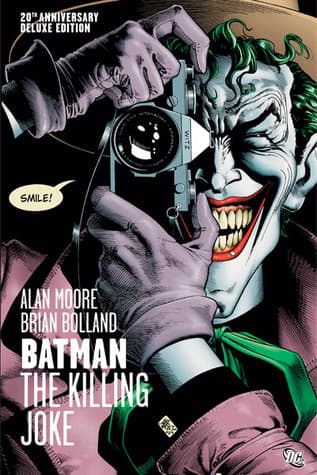
- Batman: The Killing Joke
Alan Moore
4.4 (170k) average on GoodreadsFantasyExplores the Joker's psyche and his twisted relationship with Batman, with a dark, psychological tone.
- Nineteen Eighty-Four
George Orwell
4.2 (5.5M) average on GoodreadsFictionWinston Smith dreams of truth and rebellion in a world where Big Brother watches all, but he confronts the terrifying power of a regime that controls not just actions, but thoughts.
- The Frozen River
Ariel Lawhon
4.4 (600k) average on GoodreadsFictionIn 1789 Maine, a heroic midwife's diary helps her expose a murder and get justice in a town that wants to silence her.
- A Man Called Ove
Fredrik Backman
4.4 (569k) average on GoodreadsFictionA stubborn widower, who lives by strict rules, finds his quiet world changed by a lively new family next door, making him face his past and find happiness in human connection.
- The Art of Racing in the Rain
Garth Stein
4.2 (452k) average on GoodreadsFictionThrough the eyes of Enzo, a wise and observant dog, a race car driver's family navigates a journey of love, loss, and resilience, learning that life's most important lessons often come in the curves, not just on the straightaways.
- The Colour of Magic
Terry Pratchett
4.0 (425k) average on GoodreadsFictionOn a discworld hurtling through space on the back of a giant turtle, an inept wizard and his naive, walking-luggage-toting tourist embark on a chaotic, belief-fueled journey to the very edge of their flat planet, encountering dragons that only exist if you believe in them.





Enjoyed the summary?
A summary gives you the shape of the book. The book itself has the detail, the examples and the voice.
Find Joker on AmazonAs an Amazon Associate, BookBrief earns from qualifying purchases. How we're funded