

Synopsis
Covers the whole plot, including the ending.
- Difficulty
- Medium
- Pacing
- Fast
- Mood
- Dark, Disturbing, Psychological, Intense, Tragic
- Read it if
- You are a fan of dark, psychological thrillers, enjoy exploring the origins of iconic villains, or want to delve into one of the most impactful and controversial Batman stories.
- Skip it if
- You are sensitive to graphic violence, sexual assault themes (implied), or prefer more optimistic superhero narratives.
Batman Plot Summary
Covers the whole plot, including the ending.
Batman's Visit to Arkham Asylum
Batman visits Arkham Asylum, hoping to speak with the Joker to establish a truce or, failing that, to understand his madness before their conflict escalates to a fatal conclusion. He believes that one of them will eventually kill the other, and he wants to prevent it. However, the guards inform him that the Joker has escaped. This immediately puts Batman on high alert, knowing that the Joker's freedom always means disaster and chaos for Gotham City, setting the stage for his next horrifying scheme.
Barbara Gordon's Attack and Kidnapping
The Joker, after his escape, targets Commissioner James Gordon. He arrives at Gordon's home and shoots Barbara Gordon, who answers the door, through the spine, permanently paralyzing her. He then strips her naked, photographs her injured and traumatized body, and kidnaps Commissioner Gordon. This act is not merely an attack on the Gordons but a calculated move by the Joker to prove a twisted point about the fragility of human sanity. Batman arrives at the scene to find Barbara alive but gravely wounded, intensifying his personal vendetta against the Joker.
The Joker's Origin Story - Part 1
The story flashes back to the Joker's past. He is a failed, nameless stand-up comedian struggling to make ends meet and support his pregnant wife, Jeannie. Desperate for money, he agrees to help two criminals with a heist at the chemical plant where he used to work. Despite his moral reservations, his love for Jeannie and the impending birth of their child push him to accept the dangerous proposition, hoping this one job will secure their future.
The Joker's Origin Story - Part 2
On the day of the planned heist, the comedian receives devastating news: his wife, Jeannie, and their unborn child have died in a household accident. Devastated, he tries to back out of the robbery, but the criminals force him to go through with it, putting him in a red hood disguise. During the botched heist at Ace Chemical Processing Plant, Batman appears. Frightened, the comedian falls into a vat of chemicals, emerging with bleached skin, green hair, and a permanent rictus grin. This traumatic event, combined with his earlier grief, shatters his mind, giving birth to the Joker.
Commissioner Gordon's Torture
The Joker takes Commissioner Gordon to an abandoned amusement park, where he tortures him psychologically. He forces Gordon to view disturbing photographs of his injured daughter, Barbara, and parades him around the derelict park, forcing him to witness freak show exhibits and listen to the Joker's deranged monologues about madness. The Joker's goal is to break Gordon's sanity, to prove that even the most righteous man can be driven insane by 'one bad day,' mirroring his own perceived transformation.
Batman's Investigation and Rescue Mission
Upon discovering Barbara's attack and Gordon's abduction, Batman immediately begins his investigation. He uses his detective skills, interrogating informants like the mentally unstable 'Carl' and analyzing clues left behind by the Joker. His main objective is to locate Commissioner Gordon and rescue him from the Joker's clutches before the villain can succeed in his plan to drive the commissioner mad. The urgency of the situation is heightened by the personal nature of the attack, pushing Batman's resolve to its limits.
Gordon's Resilience
Despite the Joker's horrific psychological assault, Commissioner Gordon maintains his sanity. He endures the grotesque displays, the taunts, and the forced viewing of Barbara's photographs, clinging to his moral compass and his belief in order. He silently resists the Joker's attempts to push him over the edge, showing incredible strength of will. His internal monologue reveals his determination to prove the Joker wrong and to maintain his own humanity, even when facing unspeakable evil.
The Confrontation at the Carnival
Batman tracks the Joker to the abandoned amusement park and confronts him. A brutal fight ensues between the two arch-nemeses amidst the decaying rides and macabre attractions. During the fight, Batman manages to free Commissioner Gordon, who, despite his ordeal, urges Batman to capture the Joker 'by the book' to show him that their way of justice is the correct one, even after everything he has endured. This request shows Gordon's unwavering commitment to his principles.
The Climax and Joker's Final 'Joke'
Batman defeats the Joker, who, even in defeat, offers a final, dark joke about two inmates escaping an asylum. One jumps a roof successfully, while the other is too scared to try and asks for a flashlight to see the way. The first inmate offers to shine it, but the second says, 'What do you think I am? Crazy? You'd turn it off when I was halfway across!' This joke, a metaphor for their own relationship and the Joker's view of sanity, causes Batman to laugh. The two share a moment of understanding, a shared laughter in the face of their eternal, grim dance.
An Ambiguous Ending
As their laughter subsides, the panel focuses on Batman's hand reaching out and possibly grabbing the Joker's shoulder, or perhaps even his neck. The siren of a police car approaches, growing louder until it abruptly cuts off, leaving the final outcome ambiguous. It is left to the reader to interpret whether Batman finally breaks his one rule and kills the Joker, or if he merely subdues him to hand him over to the authorities. The abrupt silence of the siren makes the conclusion unsettling and uncertain.
Batman Characters
Batman / Bruce Wayne
Protagonist
Gotham's dark knight, driven by justice and a desire to understand his arch-nemesis.
Batman is presented as a relentless, morally upright vigilante deeply committed to protecting Gotham and upholding justice, even when faced with extreme personal provocation. He is driven by a strong moral code, particularly his refusal to kill. In this story, he attempts to reach out to the Joker before the violence escalates irreversibly, demonstrating a desire to understand the root of his enemy's madness. His determination to save Commissioner Gordon and bring the Joker to justice, without succumbing to the villain's nihilistic worldview, is central to his character. The attack on the Gordons pushes him to his emotional limits.
Relationships: The Joker (Arch-nemesis, complex and symbiotic relationship); Commissioner James Gordon (Trusted ally, colleague, friend); Barbara Gordon (Ally (Batgirl), victim of the Joker's attack)
The Joker
Antagonist
Batman's insane arch-nemesis, seeking to prove the fragility of sanity.
The Joker is depicted as a nihilistic force of chaos, convinced that sanity is a 'bad joke' and that anyone can be driven mad by 'one bad day.' His origin story, though presented as potentially unreliable, shows him as a failed comedian who suffered immense personal tragedy and a transformative accident, leading to his madness. He is a master manipulator and sadist, using psychological torture and physical violence to break his victims. His primary goal in this story is to prove his warped philosophy by driving Commissioner Gordon insane, thereby validating his own existence and worldview.
Relationships: Batman (Arch-nemesis, obsessive relationship); Commissioner James Gordon (Target for psychological torment); Barbara Gordon (Victim of his brutality)
Commissioner James Gordon
Supporting
Gotham's police commissioner, a symbol of unwavering moral strength.
Commissioner Gordon serves as a moral anchor in the story, representing the resilience of the human spirit in the face of unimaginable horror. He is a dedicated public servant and a loving father. After witnessing his daughter's brutal attack and enduring the Joker's psychological torture, he remarkably maintains his sanity and his commitment to justice 'by the book.' His defiance against the Joker's attempts to break him underscores the theme of perseverance and the importance of upholding principles, even when personally devastated. He is a steadfast ally to Batman.
Relationships: Batman (Trusted ally, colleague); Barbara Gordon (Daughter, victim of the Joker's attack)
Barbara Gordon / Batgirl
Supporting
Commissioner Gordon's daughter and former vigilante, brutally attacked by the Joker.
Barbara Gordon, formerly Batgirl, is a pivotal character whose suffering drives much of the story's emotional weight. She is a brave and intelligent woman, a librarian by profession, who is brutally attacked and paralyzed by the Joker. Her victimization is not merely an act of violence but a calculated move by the Joker to torment her father and destabilize Batman. Her fate serves as a tragic example of the Joker's cruelty and the high stakes involved in Batman's war on crime, leaving her permanently disabled and changing her life forever.
Relationships: Commissioner James Gordon (Father); Batman (Ally (as Batgirl), protector); The Joker (Attacker, tormentor)
Jeannie
Mentioned
The Joker's pregnant wife, whose death contributes to his madness.
Jeannie is the pregnant wife of the struggling comedian who would become the Joker. She is only seen in flashbacks, representing the Joker's last tether to sanity and a 'normal' life. Her accidental death, along with their unborn child, is a crucial catalyst in the comedian's descent into madness. Her memory haunts the Joker's origin story, providing a glimpse into the tragic circumstances that preceded his transformation, though the reliability of this memory is left ambiguous.
Relationships: The Joker (as the comedian) (Wife)
The Two Thugs
Supporting
Criminals who coerce the comedian into a heist.
These two unnamed thugs are instrumental in the Joker's origin story. They are common criminals who pressure the struggling comedian into participating in a robbery at the Ace Chemical Processing Plant. They represent the external forces that push the comedian towards his fateful encounter with Batman and the chemicals. Their callous disregard for the comedian's personal tragedy and their insistence on the heist contribute to his ultimate downfall and transformation into the Joker.
Relationships: The Joker (as the comedian) (Criminal associates)
Batman Themes
Insanity and the Fragility of Sanity
The central theme is the nature of madness and how easily one can descend into it. The Joker's entire plan is based on proving that 'one bad day' is all it takes to break a man, referencing his own origin. He tries to push Commissioner Gordon over the edge by torturing him with images of his paralyzed daughter, Barbara. The book questions whether sanity is merely a thin veil over chaos, and if the Joker's philosophy holds any truth. Despite the Joker's efforts, Gordon's resilience ultimately challenges this nihilistic view, suggesting that some individuals possess an unwavering moral compass.
“All it takes is one bad day to reduce the sanest man alive to lunacy. That's how far the world is from where I am. Just one bad day.”
The Cycle of Violence and Obsession
The conflict between Batman and the Joker is a self-perpetuating cycle of violence and mutual obsession. Batman visits Arkham at the beginning, hoping to break this cycle, acknowledging that one of them will eventually kill the other. The Joker's actions against the Gordons are a direct provocation, designed to get a violent response from Batman. Their final confrontation, ending in a shared, dark laugh, symbolizes their intertwined destinies and the difficulty of escaping their roles. The ambiguity of the ending further emphasizes the unending nature of their struggle.
“I mean, what do you think would happen if I ever *stopped* laughing?”
Moral Boundaries and Personal Codes
The story tests the moral boundaries of its characters, particularly Batman and Commissioner Gordon. Batman adheres strictly to his code of not killing, even when facing the Joker's most heinous acts. Commissioner Gordon, despite enduring unimaginable personal suffering, insists that Batman capture the Joker 'by the book,' showing his unwavering commitment to justice and law. Their resistance to succumbing to the Joker's nihilism highlights the importance of maintaining one's moral code when facing profound evil. This contrasts sharply with the Joker's complete lack of such boundaries.
“I want him brought in by the book, Batman! Do you hear me? BY THE BOOK!”
Trauma and Origin
The narrative explores the concept of origin and how trauma can shape an individual. The Joker's fragmented and potentially unreliable origin story suggests that a series of tragic events — the death of his pregnant wife, his failure as a comedian, and his chemical accident — led to his transformation. While the story offers a possible explanation for his madness, it also questions the definitive nature of any single origin. Barbara Gordon's paralysis is another trauma that forever alters her life, mirroring the transformative power of 'one bad day' but without succumbing to madness. This offers a counterpoint to the Joker's philosophy.
“If I'm going to have a past, I prefer it to be multiple choice!”
Plot Devices & Literary Techniques
Unreliable Narrator (The Joker's Origin)
The Joker's backstory is presented as ambiguous and possibly fabricated.
The Joker's origin story is deliberately ambiguous, with the Joker himself stating, 'If I'm going to have a past, I prefer it to be multiple choice!' This device makes the reader question the veracity of the flashbacks, suggesting that the Joker's memories might be distorted or entirely made up. It reinforces his chaotic nature and the idea that his madness is so profound that even his own history is fluid, preventing any definitive understanding of his transformation. This challenges the reader to grapple with the mystery of his insanity rather than providing a simple explanation.
Parallel Narratives / Dual Timelines
Interweaving the present-day conflict with flashbacks to the Joker's past.
The story employs parallel narratives, intercutting the Joker's present-day torment of Commissioner Gordon with flashbacks detailing his possible origin as a struggling comedian. This juxtaposition serves to provide context for the Joker's philosophy and actions, showing the reader the 'one bad day' that he believes transformed him. It creates a powerful contrast between his past humanity and his present monstrosity, while also building suspense and allowing the thematic exploration of sanity's fragility to resonate more deeply by showing its potential genesis.
Symbolism of the Carnival/Amusement Park
The setting reflects the Joker's twisted worldview and the fragility of joy.
The abandoned amusement park where the Joker tortures Gordon is highly symbolic. Carnivals and amusement parks are typically places of joy and escapism, but in their derelict state, they represent the Joker's perversion of these concepts. The decaying rides, freak show exhibits, and distorted funhouse mirrors reflect his twisted sense of humor and his belief that life itself is a 'bad joke.' It's a setting where the veneer of happiness has rotted away, exposing the underlying chaos and despair that the Joker embodies and seeks to impose on others.
The Final Laugh
An ambiguous shared moment of dark humor between Batman and the Joker.
The story culminates in Batman and the Joker sharing a laugh after the Joker tells a joke about two asylum inmates. This 'final laugh' is a powerful and ambiguous device. It suggests a moment of profound, albeit dark, understanding between the two, highlighting their unique and symbiotic relationship. It can be interpreted as Batman's acknowledgement of the Joker's twisted point, or perhaps his own descent into a shared madness. The laughter, followed by the abrupt silence, leaves the ultimate fate of the Joker, and the nature of their relationship, unsettlingly unresolved and open to multiple interpretations.
Batman Quotes
“All it takes is one bad day to reduce the sanest man alive to lunacy.”
“I'm not exactly sure what it was. Sometimes I remember it one way, sometimes another... If I'm going to have a past, I prefer it to be multiple choice!”
“Why aren't you laughing?”
“I've been thinking lately. About you and me. About what's going to happen to us, in the end.”
“Maybe it's just that I'm not as particular as you are.”
“I don't want to hurt you. I don't want either of us to end up killing the other.”
“It's all a joke! Everything anybody ever valued or struggled for... it's all a monstrous, demented gag!”
“You had a bad day once, am I right? I know I am. I can tell. You had a bad day and everything changed.”
“I'm not talking about killing you. I'm talking about letting you live.”
“We could try to understand one another.”
“I'm not a monster. I'm just ahead of the curve.”
“What do you get when you cross a mentally ill loner with a society that abandons him and treats him like trash?”
“Sometimes I remember it one way, sometimes another. If I'm going to have a past, I prefer it to be multiple choice!”
“You see, I'm not a monster... I'm just ahead of the curve.”
Quiz
10 questions on the plot and the characters. Each answer comes with a short explanation.
Question 1
What does the Joker do to Barbara Gordon at the beginning of the story?
- He kidnaps her to lure Batman
- He shoots her, causing permanent paralysis
- He poisons her with a toxin
- He brainwashes her to attack Commissioner Gordon
Show answer
B. He shoots her, causing permanent paralysis The Joker shoots Barbara Gordon (Batgirl) at her home, which results in her being permanently paralyzed. This brutal act is central to his plan to prove that anyone can be driven insane.
Question 2
What is the Joker's main goal in 'The Killing Joke'?
- To steal a large sum of money from Gotham City
- To prove that any person can be pushed to madness
- To kill Batman once and for all
- To take over Gotham as its new ruler
Show answer
B. To prove that any person can be pushed to madness The Joker aims to demonstrate that even the most sane and moral individuals, like Commissioner Gordon, can be broken and driven insane through a single traumatic event, as part of his philosophy on the nature of madness.
Question 3
How does Commissioner Gordon respond to the Joker's attempts to drive him insane?
- He becomes temporarily insane but recovers
- He refuses to give up and maintains his sanity with Batman's help
- He joins forces with the Joker out of despair
- He loses his memory of the events
Show answer
B. He refuses to give up and maintains his sanity with Batman's help Despite being tortured and subjected to horrific psychological attacks, Gordon remains resolute and insists on being brought in 'by the book,' showing his unwavering moral integrity and sanity.
Question 4
What tragic event from the Joker's past is revealed as his origin story in this book?
- He was a failed comedian who turned to crime after his family abandoned him
- He was a chemical engineer who fell into a vat of chemicals during a heist
- He was a soldier who went mad after witnessing war atrocities
- He was a scientist who accidentally created a toxin that drove him insane
Show answer
B. He was a chemical engineer who fell into a vat of chemicals during a heist The Joker's origin is depicted as a failed comedian who agrees to help criminals with a heist at a chemical plant. After his wife dies, he is forced to continue, falls into a vat of chemicals, and emerges disfigured and insane, becoming the Joker.
Question 5
Where does the Joker take Commissioner Gordon after kidnapping him?
- To an abandoned circus
- To the Batcave
- To Arkham Asylum
- To a dilapidated theater
Show answer
A. To an abandoned circus The Joker kidnaps Gordon and takes him to an abandoned amusement park or carnival-like setting, often referred to as a circus or funhouse, where he subjects him to psychological torture.
Question 6
What does Batman offer the Joker at the end of the story in an attempt to resolve their conflict?
- A chance to escape Gotham and start a new life
- Rehabilitation and help to cure his insanity
- A final battle to the death
- A large ransom in exchange for Gordon's release
Show answer
B. Rehabilitation and help to cure his insanity Batman reaches out to the Joker, offering to help him and try to rehabilitate him, suggesting that they don't have to keep fighting. This highlights the theme of redemption and the thin line between sanity and madness.
Question 7
How does the Joker attempt to psychologically torture Commissioner Gordon?
- By forcing him to watch videos of his daughter being shot repeatedly
- By stripping him naked and parading him in front of carnival freaks
- By locking him in a room with no light or sound
- By convincing him that Batman has betrayed him
Show answer
B. By stripping him naked and parading him in front of carnival freaks The Joker strips Gordon naked, cages him, and forces him to view disturbing images and sideshow freaks, all while taunting him to break his spirit and drive him insane.
Question 8
What is the significance of the 'one bad day' concept in the story?
- It refers to Batman's worst day when his parents were killed
- It is the Joker's belief that a single traumatic event can drive anyone mad
- It describes the day Barbara Gordon decided to become Batgirl
- It marks the anniversary of the Joker's first crime in Gotham
Show answer
B. It is the Joker's belief that a single traumatic event can drive anyone mad The Joker argues that all it takes is 'one bad day' to reduce the sanest person to lunacy, a theory he tests on Commissioner Gordon to prove that anyone can break under extreme circumstances.
Question 9
In the Joker's origin flashback, what happens to his wife that contributes to his descent into madness?
- She is killed in a random accident
- She dies in a household electrical accident
- She leaves him for another man
- She is murdered by criminals he owes money to
Show answer
B. She dies in a household electrical accident The Joker's wife dies in a household accident involving a faulty baby bottle heater, which adds to his desperation and leads him to participate in the heist at the chemical plant, setting off his transformation.
Question 10
What ambiguous element occurs at the very end of 'The Killing Joke' that has been widely debated by readers?
- Whether Batman actually kills the Joker
- Whether Commissioner Gordon survives the ordeal
- Whether Barbara Gordon recovers from her paralysis
- Whether the Joker's origin story is true or a lie
Show answer
A. Whether Batman actually kills the Joker The story ends with Batman and the Joker sharing a laugh, followed by panels showing Batman's hand reaching out and then silence, with police sirens in the background. This has led to interpretations that Batman might have killed the Joker, though it is left ambiguous.
Batman FAQ
What is 'Batman: The Killing Joke' about?
The story follows the Joker's attempt to prove that anyone can be driven insane by pushing Commissioner Gordon to his breaking point. After shooting and paralyzing Barbara Gordon (Batgirl), the Joker kidnaps Gordon and subjects him to psychological torture at an abandoned amusement park, while Batman races to stop him. The narrative also includes flashbacks revealing the Joker's possible origin as a failed comedian who turns to crime.
Why should I read 'Batman: The Killing Joke'?
It's a seminal Batman story that explores the psychological battle between Batman and the Joker, delving into themes of madness, trauma, and morality. The graphic novel is famous for its dark tone, Alan Moore's writing, and Brian Bolland's artwork, and it had a lasting impact on the Batman mythos, particularly with Barbara Gordon's paralysis leading to her Oracle identity.
What is the background/setting of 'Batman: The Killing Joke'?
The story is set in Gotham City, primarily at an abandoned amusement park that the Joker uses as his base for torturing Commissioner Gordon. The grim, rain-soaked urban environment contrasts with the bright, garish colors of the amusement park, symbolizing the clash between order and chaos. Flashbacks show the Joker's past in a gritty, realistic setting before his transformation.
What are the most memorable quotes from 'Batman: The Killing Joke'?
Key quotes include the Joker's line, 'All it takes is one bad day to reduce the sanest man alive to lunacy,' which encapsulates his philosophy. Another is Batman's offer, 'I don't want to hurt you. I don't want either of us to end up killing the other,' highlighting their twisted relationship. The Joker's joke at the end about two inmates escaping an asylum is also iconic for its ambiguous meaning.
What writing style does Alan Moore use in 'The Killing Joke'?
Alan Moore employs a dark, psychological narrative with tight, poetic prose that delves into characters' inner thoughts. The story blends nonlinear storytelling through flashbacks to the Joker's origin, creating a parallel between his past and present actions. Moore's writing is introspective, focusing on themes of insanity and morality, with dialogue that heightens the tension between Batman and the Joker.
What minor details add significant meaning to 'The Killing Joke'?
The recurring motif of laughter and jokes underscores the Joker's nihilistic view of life as a cruel punchline. Barbara Gordon's photography hobby, shown early in the story, foreshadows her role in capturing evidence later as Oracle. The amusement park's dilapidated state mirrors the Joker's broken psyche, and the rain throughout symbolizes the pervasive despair in Gotham.
What are some subtle foreshadowing moments in 'The Killing Joke'?
The Joker's origin flashbacks hint at his eventual madness, with scenes like his failed comedy career and the 'Red Hood' incident suggesting a man on the edge. Barbara's casual interaction with her father before the shooting foreshadows the trauma to come. Batman's early concern about the Joker's escalating behavior predicts the violent climax at the amusement park.
What unexpected character connections exist in 'The Killing Joke'?
The story deepens the connection between Batman and the Joker, portraying them as two sides of the same coin—both shaped by trauma. Barbara Gordon's paralysis links her to her father's ordeal, strengthening their bond as survivors. The Joker's origin ties him to ordinary life, suggesting he was once a family man, which contrasts sharply with his monstrous actions.
What are the unspoken character motivations in 'The Killing Joke'?
The Joker is driven by a desire to prove that sanity is fragile and that anyone can become like him, seeking validation for his own madness. Batman's motivation goes beyond stopping crime; he wants to save Gordon and possibly redeem the Joker, reflecting his own fear of crossing into insanity. Gordon's refusal to break stems from a deep-seated belief in justice and protecting his family.
What psychological complexities do characters exhibit in 'The Killing Joke'?
The Joker displays a chaotic psyche, using humor as a defense mechanism against his traumatic past, while Batman grapples with his rigid moral code and empathy for his enemy. Commissioner Gordon shows resilience under torture, clinging to sanity through duty and love for his daughter. Barbara's trauma from the shooting leads to a transformation, highlighting her strength in adversity.
What are the major emotional turning points in 'The Killing Joke'?
The shooting of Barbara Gordon is a pivotal moment, causing shock and grief that drives the plot. Gordon's torture at the amusement park tests his mental fortitude, with his refusal to break serving as an emotional climax. The final confrontation between Batman and the Joker, ending with Batman's offer of help and the ambiguous joke, leaves readers questioning the nature of their relationship.
How do relationship dynamics evolve in 'The Killing Joke'?
Batman and the Joker's relationship intensifies, moving from adversarial to almost symbiotic, as Batman acknowledges their shared madness. Gordon's bond with Batman strengthens through their shared ordeal, while his relationship with Barbara becomes more protective after her injury. The Joker's isolation is emphasized, showing how his actions alienate him even from those he tries to connect with.
Which parts of 'The Killing Joke' remain ambiguous or open-ended?
The Joker's origin is presented as 'one possible version,' leaving his true past uncertain and adding to his enigmatic nature. The ending, where Batman and the Joker share a laugh before an implied violent conclusion, is ambiguous—it's unclear if Batman kills the Joker or if they continue their cycle. The final joke's meaning is also open to interpretation, symbolizing the futility of their conflict.
What are controversial scenes or decisions in 'The Killing Joke'?
The shooting and paralysis of Barbara Gordon is highly controversial, criticized for using her as a plot device to motivate male characters, though it later inspired her Oracle persona. Some readers debate the ethics of Batman's near-lethal response to the Joker, questioning his no-kill rule. The dark, graphic torture of Gordon also sparked discussions about the story's mature themes.
'The Killing Joke' ending explained: how it ends & what it means
The story ends with Batman capturing the Joker after Gordon's rescue, but instead of violence, Batman offers to help him, saying they don't have to kill each other. The Joker tells a joke about two inmates escaping an asylum, and they share a laugh, suggesting a moment of connection. This ambiguous ending implies that their conflict is endless, with madness and sanity inextricably linked, and leaves Batman's ultimate action open to interpretation.
About the author

Alan Moore is an English author known primarily for his work in comic books including Watchmen, V for Vendetta, The Ballad of Halo Jones, Swamp Thing, Batman: The Killing Joke, and From Hell. He is widely recognised among his peers and critics as one of the best comic book writers in the English language. Moore has occasionally used such pseudonyms as Curt Vile, Jill de Ray, Brilburn Logue, and Translucia Baboon; also, reprints of some of his work have been credited to The Original Writer when Moore requested that his name be removed.
Similar books
- Batman: Year One
Frank Miller
4.2 (206k) average on GoodreadsFantasyExplores the early days of Batman and Gordon with a grounded, gritty tone.
- Watchmen
Alan Moore
4.4 (487k) average on GoodreadsFantasyA deconstruction of the superhero genre with complex characters and dark themes.
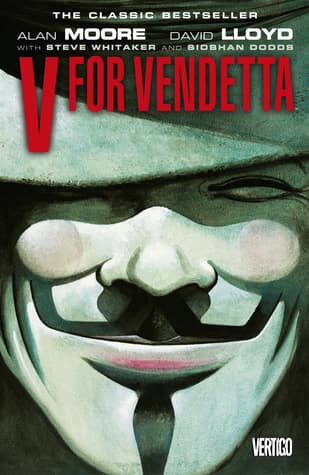
- V for Vendetta
Alan Moore
4.3 (264k) average on GoodreadsPoliticsAnother Alan Moore work exploring themes of anarchy, freedom, and psychological torment.
- Harry Potter and the Sorcerer's Stone
J.K. Rowling
4.5 (7M) average on GoodreadsFantasyRescued from a miserable life under the stairs, an orphaned boy discovers he's a wizard destined for a magical school, where he uncovers a dangerous secret tied to the dark wizard who murdered his parents.
- The Hunger Games
Suzanne Collins
4.3 (6.4M) average on GoodreadsFantasyIn a future where children fight to the death on live television, Katniss Everdeen volunteers for the arena, turning a death sentence into a fight for survival and a spark of rebellion.
- 1984
George Orwell
4.2 (3.1M) average on GoodreadsPoliticsIn a future where surveillance and thought control are absolute, a man's search for truth clashes with the Party, showing that hope can be a form of rebellion.





Enjoyed the summary?
A summary gives you the shape of the book. The book itself has the detail, the examples and the voice.
Find Batman on AmazonAs an Amazon Associate, BookBrief earns from qualifying purchases. How we're funded