

Synopsis
Covers the whole plot, including the ending.
- Difficulty
- Medium
- Pacing
- Slow
- Mood
- Atmospheric, Witty, Scholarly, Enigmatic, Dark
- Read it if
- You love richly detailed historical fantasy with complex characters, a dry wit, and a slow-burn epic plot.
- Skip it if
- You prefer fast-paced action, simple prose, or stories with straightforward magical systems.
Jonathan Strange & Mr Norrell Plot Summary
Covers the whole plot, including the ending.
The Reawakening of English Magic
In 1806, English magicians, part of groups like the York Society of Magicians, believe practical magic no longer exists. They spend their time discussing old texts. However, Mr. Norrell, a private and wealthy magician from Hurtfew Abbey, changes this. He appears before the York Society and, to their surprise, makes the cathedral statues speak and move. This shows that true magic is not lost, just forgotten. Norrell, wanting to bring magic back to England, announces he will move to London and offer his help to the government in the war against Napoleon.
Norrell's Debut in London
In London, Mr. Norrell faces doubt from the government, especially from Sir Walter Pole. To prove himself, Norrell agrees to bring back Sir Walter's fiancée, Lady Pole, who died just before their wedding. He successfully performs the difficult magic, bringing Lady Pole back to life. However, she is now linked to the fairy world and haunted by the Gentleman with the Thistle-down Hair. This act establishes Norrell as England's only practical magician. He begins to help the war effort, creating phantom fleets and roads to confuse the French.
The Emergence of Jonathan Strange
Meanwhile, in Shropshire, Jonathan Strange, a wealthy but aimless young man, is told by a street magician, Vinculus, that he will be a great magician. Strange initially dismisses this but soon finds himself doing magic without explanation. He travels to London, meets Norrell, and becomes his student. Their personalities clash immediately: Norrell is careful, precise, and obsessed with control, while Strange is intuitive, adventurous, and drawn to older, wilder forms of magic, especially those linked to the legendary Raven King. Despite their differences, they work together on several magical projects for the war.
Magic in the Peninsular War
Jonathan Strange joins the Duke of Wellington's army in Portugal. His magic proves very useful. He creates roads, conjures illusions to trick the enemy, and even moves forests for strategic advantage. His practical, battlefield magic earns him fame and the admiration of soldiers, including the Duke. This success, however, highlights the philosophical divide between Strange and Norrell. Strange's willingness to experiment and embrace magic's chaotic side deeply worries Norrell, who believes such practices are dangerous and uncivilized, fearing they will awaken past horrors.
The Fairy Hostage and the Gentleman
The Gentleman with the Thistle-down Hair, a powerful and unpredictable fairy, becomes obsessed with Stephen Black, the butler to Sir Walter and Lady Pole. The Gentleman, who was involved in Lady Pole's resurrection and now holds part of her soul, often visits Stephen in the fairy realm of Lost-hope. He promises Stephen power and a kingdom, manipulating him with grand visions and hinting at a deeper connection to the Raven King. Stephen, despite his initial reluctance, becomes more involved in the fairy's plans, becoming a pawn in the Gentleman's long-term goal to bring the Raven King back to England.
The Growing Rift
The gap between Strange and Norrell's ideas widens. Strange publishes a book, 'The History and Practice of English Magic,' arguing for the return of the Raven King's wilder, older magic. This directly contradicts Norrell's conservative views. Norrell, angered by Strange's defiance and what he sees as reckless ideas, publicly denounces him. Their animosity leads to a bitter public argument and a complete break in their relationship. Strange, feeling limited by Norrell's rules, decides to find the lost magic of the Raven King on his own.
Strange's Search for the Raven King
Driven by his interest in the Raven King, Jonathan Strange travels across Europe, seeking old magical texts and forgotten lore. He studies in Venice and other historical centers, delving deeper into the history of the Raven King's magic, which Norrell had always forbidden. Meanwhile, Norrell, increasingly isolated and paranoid, continues his cautious approach to magic, but his influence lessens as Strange's reputation grows. Norrell's former student, Childermass, tries to mediate, but the divide is too great. Strange's journey leads him to increasingly dangerous and obscure magical practices.
Arabella's Abduction
While Strange is abroad, his wife, Arabella, is taken by the Gentleman with the Thistle-down Hair. The Gentleman, having previously taken part of Lady Pole's sanity, now claims Arabella, taking her into the fairy realm of Lost-hope. Strange, upon his return, is devastated by his wife's disappearance. He believes she has died and, overwhelmed by grief, blames himself and his pursuit of magic. This tragedy pushes him into a desperate and dangerous search for her. He believes only by mastering the darkest magic of the Raven King can he rescue her from the fairy.
The Invisible Road and the Nameless Dread
In their individual pursuits of magic, both Norrell and Strange become caught in a powerful and dangerous enchantment known as the Nameless Dread, or the Invisible Road. This magic, a form of imprisonment, traps them physically within a magical darkness. They are invisible to the outside world and cannot fully interact with it. They are conscious but isolated, their bodies flickering in and out of existence. This is a direct result of their pride and the dangerous magic they invoked, especially Strange's attempts to raise the dead and Norrell's initial resurrection of Lady Pole.
Stephen Black's Ascension
The Gentleman with the Thistle-down Hair continues to manipulate Stephen Black, slowly drawing him deeper into the fairy world. The Gentleman, wanting to undermine the Raven King's legacy, arranges for Stephen to be crowned King of England within the fairy realm of Lost-hope. Stephen, initially reluctant, gradually accepts his new role, finding a sense of belonging and power. This act challenges the historical link between the Raven King and the English throne, both mortal and magical, setting the stage for a confrontation between the human and fairy worlds.
The Raven King's Prophecy and the Thistle-down Hair
Vinculus, the enigmatic street magician, is more than he seems. He carries the 'book' of the Raven King's prophecy, tattooed on his skin, and acts as a reluctant messenger for the ancient magic. He often appears to both Strange and Norrell, delivering cryptic messages about magic's return and England's fate. The Gentleman with the Thistle-down Hair, a powerful fairy, is linked to the Raven King's prophecy, having been one of the fairies who took the young boy to Faerie. His actions come from a mix of jealousy, ambition, and a desire to take over the Raven King's legacy.
The Confrontation in Lost-hope
Jonathan Strange, learning Arabella's true fate, finally enters the fairy realm of Lost-hope to confront the Gentleman with the Thistle-down Hair. He is helped by Childermass, Norrell's former assistant, and eventually by Norrell himself, who has also been drawn into the same magical space. The confrontation is a desperate battle of wills and magic. Strange uses all his knowledge of the Raven King's ancient, wild magic. He discovers Arabella is alive but enchanted, and he must break the Gentleman's hold over her and others, including Stephen Black.
The Raven King's Return and the End of the Invisible Road
In the climax, as the confrontation between Strange, Norrell, and the Gentleman peaks, the Raven King briefly appears. His power, though short-lived, is enough to disrupt the Gentleman's enchantments and break the Invisible Road spell that trapped Strange and Norrell. This momentary return allows Strange to rescue Arabella from the Gentleman. The Raven King's intervention signifies the rebalancing of magic in England, though his presence quickly vanishes, leaving magic's future to the human magicians once more.
The Perpetual Road
Despite the Raven King's intervention and Arabella's rescue, Jonathan Strange and Mr. Norrell remain bound by a powerful and complex magical entanglement. They find themselves constantly traveling on an 'Invisible Road' of their own making. They cannot fully return to the mortal world or fully escape each other's presence. Others see them only as fleeting glimpses. This represents their intertwined destinies and their shared responsibility for the return of English magic, as well as a continued penance for their pride and the dangerous paths they chose.
The Future of English Magic
With Norrell and Strange trapped on their Perpetual Road, the future of English magic is uncertain but open. Childermass, Lascelles, and others are left to manage, knowing that magic is now undeniably real and possibly accessible to more people. Norrell's restrictive, scholarly magic has been challenged by Strange's wilder, older approach, and the Raven King's influence has been acknowledged. The Gentleman with the Thistle-down Hair is banished, and Stephen Black is freed from his control, finding his own path. The novel ends with a sense of potential and an acknowledgment that magic, once awakened, cannot be easily contained or controlled.
Jonathan Strange & Mr Norrell Characters
Mr. Gilbert Norrell
Protagonist
The reclusive, conservative magician who reintroduces practical magic to England.
Mr. Norrell is a scholarly, reclusive, and deeply conservative magician. He is meticulous, cautious, and intensely possessive of his magical knowledge, believing himself to be the sole guardian of English magic. His primary motivation is to restore magic to England, but only on his own terms: orderly, respectable, and free from any fairy influence. He fears the wild, ancient magic of the Raven King and views it as dangerous and uncivilized, leading him to suppress any mention or practice of it. His pride and insecurity often make him rigid and unwilling to compromise, particularly with Jonathan Strange.
Relationships: Jonathan Strange (Rival, pupil, eventual magical adversary and co-dependent); Childermass (Loyal, long-suffering assistant and confidante); Lady Pole (Recipient of his magic, whose resurrection binds her to the fairy world)
Jonathan Strange
Protagonist
The intuitive, daring magician who champions the return of the Raven King's ancient magic.
Jonathan Strange is a charming, intelligent, and initially aimless gentleman who discovers his magical abilities. In contrast to Norrell, Strange is intuitive, adventurous, and drawn to the wilder, more ancient forms of magic, particularly those associated with the legendary Raven King. He is less concerned with respectability and more with practical application and exploration. His love for his wife, Arabella, is his strongest motivation, driving him to increasingly dangerous magical pursuits. He is proud and stubborn, unwilling to be confined by Norrell's restrictive views on magic, leading to their eventual rivalry.
Relationships: Mr. Norrell (Mentor, rival, eventual magical adversary and co-dependent); Arabella Strange (Beloved wife, his primary motivation and source of grief); The Gentleman with the Thistle-down Hair (Antagonist, abductor of his wife)
Arabella Strange
Supporting
Jonathan Strange's beloved wife, who becomes a pawn in the fairy world.
Arabella Strange is Jonathan's devoted and sensible wife. She is intelligent, kind, and initially skeptical of magic, though supportive of her husband's pursuits. Her love for Jonathan is a central anchor for him. She is tragically abducted by the Gentleman with the Thistle-down Hair and taken to the fairy realm of Lost-hope, where she lives under an enchantment, unaware of her true plight. Her abduction serves as a major catalyst for Jonathan's desperate and dangerous quest for the Raven King's magic, highlighting the personal cost of venturing into the magical world.
Relationships: Jonathan Strange (Devoted wife); The Gentleman with the Thistle-down Hair (Abductor and captor)
The Gentleman with the Thistle-down Hair
Antagonist
A powerful, capricious fairy who manipulates humans for his own amusement and power.
The Gentleman with the Thistle-down Hair is a powerful and ancient fairy, characterized by his pale skin, red eyes, and a crown of thistles. He is incredibly vain, cruel, and capricious, taking delight in manipulating humans and causing chaos. He becomes obsessed with Stephen Black and abducts Arabella Strange, holding them captive in his fairy kingdom, Lost-hope. He embodies the dangerous, unpredictable side of magic that Norrell fears. His motivations are complex, rooted in a desire to challenge the legacy of the Raven King and to exert his own power over the human world.
Relationships: Stephen Black (Obsessed captor and manipulator); Arabella Strange (Captor); Lady Pole (The cause of her strange affliction); The Raven King (Rival, one of his original abductors)
Stephen Black
Supporting
Sir Walter Pole's butler, drawn into the fairy realm and destined for a strange kingship.
Stephen Black is Sir Walter Pole's intelligent, dignified, and long-suffering black butler. He is observant and principled, often caught between the demands of his employers and the increasing intrusions of the magical world. He becomes a target of the Gentleman with the Thistle-down Hair, who sees in him a potential figurehead for a new fairy-dominated England. Stephen is initially a reluctant participant in the fairy's schemes but gradually accepts his role, finding a strange sense of agency and belonging in the magical realm. He represents the marginalized and the overlooked, who nonetheless possess significant inner strength.
Relationships: The Gentleman with the Thistle-down Hair (Captor, manipulator, and eventual 'patron'); Lady Pole (Close confidant and fellow victim of the Gentleman)
Childermass
Supporting
Mr. Norrell's enigmatic and loyal chief assistant, possessing his own subtle magical knowledge.
John Childermass is Mr. Norrell's long-serving and intensely loyal chief assistant. He is a pragmatic, observant, and often cynical man, with a dry wit and a deep understanding of Norrell's temperament. Childermass possesses a subtle, intuitive understanding of magic that often surpasses Norrell's academic knowledge, and he occasionally performs minor magical feats himself. He acts as a mediator, a protector, and a truth-teller, often trying to guide Norrell away from his most extreme tendencies. He is also connected to the ancient magic and prophecies of the Raven King, hinting at a deeper, more mystical past.
Relationships: Mr. Norrell (Loyal assistant, confidante, and occasional conscience); Jonathan Strange (Observer, reluctant ally in the climax)
Vinculus
Supporting
A mad street magician and prophet of the Raven King, whose body is tattooed with ancient prophecy.
Vinculus is a ragged, seemingly mad street magician who prophesies the return of English magic and the coming of two magicians. His body is literally covered in the tattooed words of the Raven King's prophecy, making him a living conduit for ancient magic. He is often dismissed as a drunkard or a lunatic, but his pronouncements are always significant, guiding the narrative and revealing crucial information about the Raven King and the nature of magic. He is a figure of mystery and fate, embodying the chaotic and unpredictable elements of true magic.
Relationships: Jonathan Strange (Prophetic messenger, catalyst for Strange's magic); Mr. Norrell (Annoying, yet significant, source of information)
Lady Pole
Supporting
A woman resurrected by Norrell's magic, forever bound to the fairy realm and driven mad.
Emma Pole is Sir Walter Pole's fiancée, who dies and is subsequently resurrected by Mr. Norrell's magic. Her resurrection, however, comes at a terrible cost: a part of her soul is taken by the Gentleman with the Thistle-down Hair, binding her to the fairy realm. She becomes prone to fits of madness, speaking in fragmented, prophetic verses that hint at the fairy world and the Gentleman's schemes. She is a tragic figure, a victim of powerful magic, whose suffering highlights the dangers and unforeseen consequences of Norrell's cautious approach.
Relationships: Mr. Norrell (The magician who resurrected her); The Gentleman with the Thistle-down Hair (The fairy who enchanted her); Stephen Black (Fellow victim and confidant)
Sir Walter Pole
Supporting
A government official and the husband of the resurrected Lady Pole.
Sir Walter Pole is a government official and the husband of Lady Pole. He is a pragmatic and somewhat pompous man, initially skeptical of magic but willing to accept its benefits when Norrell proves his abilities. His primary concern is his wife's well-being, though he struggles to understand or cope with her strange affliction after her resurrection. He represents the mundane, political world that Norrell and Strange navigate, and his inability to grasp the true nature of the magical forces at play underscores the otherworldly nature of the events unfolding around him.
Relationships: Lady Pole (Husband); Mr. Norrell (Employer of his magical services)
Drawlight
Supporting
A sycophantic, opportunistic gentleman who attaches himself to Norrell and then Strange.
Henry Drawlight is a fop and a social climber, a man of limited means but immense ambition. He attaches himself first to Mr. Norrell and then to Jonathan Strange, acting as a go-between, a gossip, and a general nuisance. He is opportunistic and self-serving, always looking for a way to profit from the magicians' fame and power. Despite his often-annoying presence, he sometimes inadvertently provides crucial information or acts as a catalyst for events, though usually for his own gain. He embodies the superficiality and social maneuvering of London society.
Relationships: Mr. Norrell (Former associate); Jonathan Strange (Former associate); Lascelles (Fellow opportunist and associate)
Jonathan Strange & Mr Norrell Themes
The Nature of English Magic
The novel explores the basic differences between two ways of approaching magic: Mr. Norrell's careful, academic, and restrictive view, and Jonathan Strange's intuitive, wild, and ancient approach. Norrell believes magic should be controlled, documented, and kept separate from fairy influence, fearing the chaos and danger of the Raven King's magic. Strange, however, is drawn to the forgotten, powerful magic of the Raven King, seeing it as the true core of English magic. This conflict is central to the plot, driving the rivalry between the two magicians and ultimately shaping magic's future in England. The novel suggests that true magic is inherently wild and cannot be easily organized or confined.
“'What is the point of a magician who does not work magic?'”
The Cost of Power and Knowledge
The pursuit and practice of magic come with significant personal and societal costs. Mr. Norrell's resurrection of Lady Pole, while a success, binds her to the fairy realm and drives her to madness. Jonathan Strange's search for the Raven King's magic leads to his wife Arabella's abduction and plunges him into despair and dangerous practices. Both magicians, in their pride and ambition, become trapped by their own enchantments, isolated from the world. The novel shows that wielding great power requires great responsibility and often leads to unexpected and tragic outcomes, affecting not only the magicians but also those around them.
“'Magic is not a game you play for amusement. It is a terrible, a dangerous, a most solemn business.'”
Colonialism and Otherness
The novel subtly explores themes of colonialism and otherness, particularly through Stephen Black. As a Black butler in early 19th-century England, Stephen is marginalized and used, even by those who claim to care for him. The Gentleman with the Thistle-down Hair's promises of a kingdom and power in Lost-hope can be seen as a twisted colonial fantasy, offering a 'better' life under fairy control. The story also touches on the English view of magic as uniquely 'English,' often dismissing or fearing foreign magical traditions. This reflects historical imperial attitudes towards other cultures. The fairies themselves, as 'others,' are seen with suspicion and fear by the English magicians.
“'He was a king in a foreign land. He was a black king and he had no subjects.'”
The Power of Story and History
The story often highlights the importance of stories, books, and historical accounts in shaping understanding and belief. The entire premise of the novel relies on the forgotten history of English magic and the Raven King. Norrell's library shows the power of accumulated knowledge, while Strange's book challenges Norrell's established narrative. Vinculus, with the Raven King's prophecy tattooed on his body, literally embodies the power of ancient stories. How history is remembered, or forgotten, directly affects the present and future of magic. The novel suggests that history is not static but a living, evolving story that can be rediscovered and reinterpreted, with significant consequences.
“'Books are for reading, not for keeping. And a magician who does not read is no magician at all.'”
Madness and Enchantment
Madness and enchantment are closely linked throughout the novel, often as a result of contact with the fairy world or powerful magic. Lady Pole's fits of prophetic madness, from her partial soul being held by the Gentleman, are a clear example. The Gentleman himself, with his unpredictable and cruel nature, embodies a form of magical madness. The magical 'Invisible Road' that traps Norrell and Strange can also be seen as a form of enchanted isolation, bordering on madness. The novel explores how the human mind struggles to understand or cope with the non-rational, often giving in to altered states when faced with magic's raw power, blurring the lines between sanity and enchantment.
“'The trouble with magic is that it is not at all like a science. It is not like a book with a beginning and an end. It is like a forest, full of paths and dangers, and you can get lost in it.'”
Plot Devices & Literary Techniques
The Raven King's Prophecy
An ancient, tattooed prophecy foretelling the return of English magic and two magicians.
The Raven King's prophecy is a central plot device, literally carried on the body of Vinculus. It foretells the reawakening of English magic and the emergence of two magicians, one who will 'raise the dead' and another who will 'find the lost.' This prophecy guides the narrative, shaping the destinies of Norrell and Strange, even as they attempt to understand or defy it. It provides a sense of overarching fate and mystery, hinting at a larger magical design beyond the characters' immediate understanding. The ambiguity of the prophecy allows for multiple interpretations and drives the magicians' differing approaches to magic.
The Invisible Road / Nameless Dread
A magical affliction that traps individuals in a state of invisibility and isolation.
The Invisible Road, also referred to as the Nameless Dread, is a powerful and dangerous enchantment that affects both Norrell and Strange. It is a magical prison that renders its victims invisible and intangible to the mortal world, while they remain conscious and aware. This device symbolizes the isolation and self-inflicted traps that come with unchecked magical ambition and hubris. It forces the two rival magicians into an unwilling, perpetual proximity, highlighting their intertwined destinies and the consequences of their actions. It also serves to remove them from the immediate world, allowing for a shift in the magical landscape.
Fairy Abduction/Enchantment
The act of fairies taking humans into their realm, often with devastating consequences.
Fairy abduction and enchantment are recurrent plot devices, primarily demonstrated through Lady Pole's resurrection and Arabella Strange's capture by the Gentleman with the Thistle-down Hair. This device introduces the unpredictable and often malevolent nature of the fairy world, contrasting sharply with the more controlled magic practiced by humans. It highlights the dangers of interacting with fairies and serves as a major catalyst for the magicians' actions, particularly Strange's desperate quest to rescue Arabella. It also underscores Norrell's deep-seated fear of fairy magic and its corrupting influence on human affairs.
Magic as a Weapon of War
The practical application of magic in the Napoleonic Wars.
The use of magic in the Napoleonic Wars is a significant plot device that grounds the fantasy elements in a historical context. Norrell initially uses magic to create phantom fleets and roads, while Strange applies his magic directly on battlefields, creating illusions, moving forests, and aiding Wellington's army. This device not only demonstrates the practical power of magic but also contrasts the two magicians' approaches: Norrell's cautious, strategic use from afar versus Strange's direct, hands-on involvement. It earns Strange fame and respect, further fueling the rivalry and showcasing magic's potential as a transformative force in the mundane world.
Jonathan Strange & Mr Norrell Quotes
“The English have always been a magical race. They have simply forgotten it.”
“Magic is not a game. It is a terrible, a dangerous, an unholy thing.”
“He who would be a magician must change himself from the ordinary to the extraordinary.”
“A gentleman, as I understand the word, is one who is never rude unintentionally.”
“There are no ordinary things. There are only things that we do not understand.”
“The Raven King, of course, was never really gone. He was simply waiting.”
“It is a strange thing to be a magician. You are surrounded by beauty, and yet you are always alone.”
“Norrell had always believed that the only proper use of magic was to make things orderly and safe.”
“Strange, on the other hand, was of the opinion that magic should be wild and free.”
“The desire to be useful, to be of service, is a very strong one in England.”
“He knew that the world was full of wonders, and that most of them were quite terrible.”
“The more you study magic, the more you realise how much there is to be afraid of.”
“A gentleman does not boast of his powers. He simply uses them.”
“What is the good of magic, if it cannot make a man happy?”
Quiz
10 questions on the plot and the characters. Each answer comes with a short explanation.
Question 1
What is Mr Norrell's primary motivation for bringing magic back to England?
- To gain fame and fortune as the most powerful magician.
- To assist the English government in the war against Napoleon Bonaparte.
- To revive the ancient traditions of the Raven King.
- To impress the magical societies of London.
Show answer
B. To assist the English government in the war against Napoleon Bonaparte. Mr Norrell, upon moving to London, offers his magical services to the government to aid in the ongoing war with Napoleon, creating rain-ships and other effects.
Question 2
What significant magical feat does Mr Norrell perform early in the novel that establishes his capabilities?
- He conjures a powerful storm over the English Channel.
- He raises a beautiful young woman from the dead.
- He transports a regiment of soldiers across the battlefield instantly.
- He turns lead into gold for the Treasury.
Show answer
B. He raises a beautiful young woman from the dead. One of Mr Norrell's first public displays of magic in London is raising a young woman from the dead, which astounds society.
Question 3
What is Jonathan Strange's initial attitude towards magic, distinguishing him from Mr Norrell?
- He believes magic should be kept secret and only practiced by a select few.
- He is attracted to the wildest, most perilous forms of magic and practices it on battlefields.
- He thinks magic should only be used for academic study and historical preservation.
- He sees magic primarily as a means to achieve political power.
Show answer
B. He is attracted to the wildest, most perilous forms of magic and practices it on battlefields. The description states that 'Jonathan Strange will always be attracted to the wildest, most perilous forms of magic. He thinks nothing of enduring the rigors of campaigning with Wellington's army and doing magic on battlefields.'
Question 4
What ancient, legendary figure does Jonathan Strange become particularly fascinated by?
- King Arthur, the legendary British monarch.
- Merlin, the wizard of Camelot.
- The Raven King, who was king of both England and Faerie.
- Prospero, the magician from Shakespeare's 'The Tempest'.
Show answer
C. The Raven King, who was king of both England and Faerie. Jonathan Strange becomes 'fascinated by the ancient, shadowy figure of the Raven King, a child taken by fairies who became king of both England and Faerie, and the most legendary magician of all.'
Question 5
What is the primary difference in the philosophies of magic held by Mr Norrell and Jonathan Strange?
- Norrell believes magic should be used for personal gain, while Strange believes it should be used for the good of the nation.
- Norrell believes magic is something to be cautiously controlled, while Strange is drawn to its wilder, more perilous forms.
- Norrell believes magic is innate, while Strange believes it must be learned from books.
- Norrell believes magic is a gift from God, while Strange believes it is a power of nature.
Show answer
B. Norrell believes magic is something to be cautiously controlled, while Strange is drawn to its wilder, more perilous forms. The text explicitly states: 'For Mr Norrell, their power is something to be cautiously controlled, while Jonathan Strange will always be attracted to the wildest, most perilous forms of magic.'
Question 6
What role do 'fairy servants' play in the history of English magic, as described at the beginning of the novel?
- They were once an essential part of a magician's power, but by the 1800s, they are a fading memory.
- They are a modern invention, brought back by Mr Norrell's efforts.
- They are malicious creatures that magicians always sought to banish.
- They are merely fictional beings, never truly part of English magic.
Show answer
A. They were once an essential part of a magician's power, but by the 1800s, they are a fading memory. The introduction states: 'English magicians were once the wonder of the known world, with fairy servants at their beck and call... But by the early 1800s... fairy servants are nothing but a fading memory.'
Question 7
Where does Mr Norrell initially assemble his library of lost and forgotten magical books?
- In a hidden chamber beneath the Tower of London.
- At Hurtfew Abbey in Yorkshire.
- At the British Museum in London.
- In a private estate in the Scottish Highlands.
Show answer
B. At Hurtfew Abbey in Yorkshire. The text states: 'But at Hurtfew Abbey in Yorkshire, the rich, reclusive Mr Norrell has assembled a wonderful library of lost and forgotten books from England's magical past.'
Question 8
What is the ultimate consequence of Jonathan Strange's 'heedless pursuit of long-forgotten magic'?
- He becomes the most revered magician in English history.
- He successfully restores the Raven King to his throne.
- It threatens to destroy his partnership with Norrell and everything he holds dear.
- He accidentally creates an alliance between England and Faerie.
Show answer
C. It threatens to destroy his partnership with Norrell and everything he holds dear. The summary concludes: 'Eventually Strange's heedless pursuit of long-forgotten magic threatens to destroy not only his partnership with Norrell, but everything that he holds dear.'
Question 9
How do the established English magicians of the early 1800s, prior to Norrell, primarily engage with magic?
- They perform grand public spectacles to entertain the populace.
- They engage in long, dull academic papers about magic, having lost the ability to perform it.
- They secretly practice dark magic in hidden covens.
- They serve as advisors to the government, though without practical magic.
Show answer
B. They engage in long, dull academic papers about magic, having lost the ability to perform it. The text states: 'But by the early 1800s they have long since lost the ability to perform magic. They can only write long, dull papers about it.'
Question 10
What specific magical contribution does Mr Norrell make to the war effort against Napoleon Bonaparte?
- He provides enchanted weapons to the soldiers.
- He creates ghostly fleets of rain-ships to confuse and alarm the French.
- He makes the English army invisible to the French.
- He summons ancient magical beasts to fight alongside the British.
Show answer
B. He creates ghostly fleets of rain-ships to confuse and alarm the French. The text mentions: 'Soon he is lending his help to the government in the war against Napoleon Bonaparte, creating ghostly fleets of rain-ships to confuse and alarm the French.'
Jonathan Strange & Mr Norrell FAQ
What is the central conflict between Mr Norrell and Jonathan Strange?
The central conflict stems from their vastly different philosophies of magic. Mr Norrell believes magic should be a controlled, academic, and practical tool, primarily for the benefit of the English government and under his sole authority. In contrast, Jonathan Strange views magic as a wild, untamed force, deeply connected to ancient lore and the Raven King, which should be explored and embraced in all its perilous forms.
How does the Raven King influence the plot and the two magicians?
The Raven King, John Uskglass, is a legendary figure who took a child from Faerie and ruled both England and the fae realm, embodying a powerful, ancient form of magic. He deeply influences Jonathan Strange, who seeks to understand and replicate his wild magic, eventually leading Strange to the dangerous path of the 'magic of the soul'. Mr Norrell, however, views the Raven King and his magic with suspicion and fear, preferring to keep magic confined to human understanding.
What role does Lady Pole play in the narrative, and how is she connected to the fae?
Lady Pole is a young woman whom Mr Norrell resurrects from the dead early in the novel. However, her resurrection comes at a price: the gentleman with the thistledown hair, a powerful fae, takes half of her life, leaving her in a state of perpetual melancholy and unable to speak. She becomes a victim of the fae's whims and a symbol of the dangers of uncontrolled magic, eventually being rescued by Strange and Norrell's combined efforts.
How do the Napoleonic Wars impact the practice of magic in the book?
The Napoleonic Wars provide a practical context for Mr Norrell's initial reintroduction of magic to England. He uses his abilities to create phantom fleets and roads, aiding the British military efforts against Napoleon. This showcases magic's potential for national defense and establishes Norrell's initial public recognition, though Strange later also employs magic on the battlefield.
What is the significance of the gentleman with the thistledown hair?
The gentleman with the thistledown hair is a powerful and capricious faerie who becomes the primary antagonist from the fae realm. He is responsible for taking half of Lady Pole's life and later enslaving Stephen Black and others in Lost-hope, his faerie kingdom. He represents the seductive danger and amorality of Faerie, and his actions drive much of the suffering and conflict in the human world.
What is 'The Bound' and how does it relate to Strange and Norrell?
The Bound is a magical curse that inextricably links Jonathan Strange and Mr Norrell together, preventing them from leaving each other's presence. It is a consequence of their combined, powerful magic during the rescue of Lady Pole and Stephen Black. This magical tether forces them into a reluctant, often antagonistic, co-existence, highlighting their intertwined destinies despite their animosity.
What is the true nature of the Raven King's 'magic of the soul' that Strange seeks?
The 'magic of the soul' is a profound and dangerous form of magic, distinct from the more practical or academic magic practiced by Norrell. It involves drawing power directly from one's own being and the very essence of the world, often leading to madness or transformation. Strange's pursuit of it aligns him more closely with the ancient, wild magic of the Raven King, pushing him beyond conventional human limitations.
What is the significance of Childermass's loyalty to Norrell despite his own magical inclinations?
Childermass's loyalty to Norrell is complex. He is Norrell's practical, shrewd servant who often acts as a buffer and interpreter for his master, but he also possesses his own subtle magical abilities and a deep, perhaps even ancient, knowledge of magic. His loyalty is not blind; he understands Norrell's flaws but ultimately believes in the necessity of Norrell's controlled magic for England, while subtly pushing him towards greater understanding.
How does Arabella Strange's experience in Faerie affect her and Jonathan?
Arabella Strange is taken to Faerie by the gentleman with the thistledown hair, where she lives a dream-like existence, believing she is married to him. Her time there leaves her physically and emotionally drained, and she returns to England deeply traumatized and altered. Her disappearance and suffering are a major catalyst for Jonathan Strange's increasingly desperate and dangerous magical pursuits to find and rescue her.
How does Mr Norrell's reclusiveness and fear of 'wild magic' shape his character arc?
Mr Norrell's reclusiveness and deep-seated fear of 'wild magic' stem from a desire for control and a belief that ancient, untamed magic is inherently dangerous and chaotic. This shapes his character by making him rigid, secretive, and resistant to new ideas, ultimately isolating him and preventing him from fully understanding the broader scope of magic, until the very end when he is forced to confront it.
Analyze Jonathan Strange's ambition and its psychological drivers.
Jonathan Strange's ambition is driven by a profound intellectual curiosity and a romantic yearning for the lost grandeur of English magic, particularly that of the Raven King. He is less concerned with practical applications and more with pure exploration and understanding the deepest mysteries of magic. His pursuit becomes increasingly obsessive, fueled by personal tragedy and a desire to transcend conventional magical boundaries.
How does Stephen Black's character embody themes of agency and fate in a magically manipulated world?
Stephen Black, a black butler, is repeatedly manipulated and enslaved by the gentleman with the thistledown hair, losing his agency and becoming a pawn in the fae's schemes. Despite this, he retains a strong inner resolve and a desire for freedom, eventually finding a path to self-determination and even a form of magical power through his connection to the Raven King, embodying the struggle for individual will against powerful external forces.
Discuss the psychological impact of magic on the human characters, particularly those who are victims of the fae.
Magic, particularly fae magic, has a profound and often devastating psychological impact. Lady Pole and Arabella Strange suffer from trauma, memory loss, and a sense of unreality after their encounters with the gentleman with the thistledown hair. Stephen Black endures prolonged psychological torment and enslavement. The novel illustrates how magic, while powerful, can deeply wound the human psyche, leaving lasting scars.
Is the ending of the novel ultimately optimistic or pessimistic regarding the future of magic in England?
The ending is complex and arguably both. While Strange and Norrell are 'bound' together in eternal sleep in the Nameless House, the Raven King's return is hinted at, and Stephen Black gains a degree of freedom and power, suggesting a resurgence of wild magic. However, the two main protagonists are removed from the world, leaving the future of magic in England uncertain and perhaps more chaotic than before.
How does the book critique or comment on the nature of English identity and history through the lens of magic?
The book uses magic to explore and comment on English identity by contrasting its pragmatic, empirical side (Norrell) with its ancient, wild, and forgotten mystical heritage (Strange and the Raven King). It suggests that England's true magical past was far grander and more dangerous than its polite, academic present, and that reclaiming this past involves confronting uncomfortable truths about its history and its relationship with the supernatural.
What is the significance of the 'Nameless House' where Strange and Norrell are left at the end?
The Nameless House is a liminal space, neither fully in England nor Faerie, where Strange and Norrell are left in a state of eternal sleep, 'bound' together. It signifies their ultimate fate: forever intertwined by their magic and their shared but conflicting legacy, removed from the world but not truly dead. It suggests a transcendent, yet isolated, conclusion to their magical journey, leaving their ultimate purpose ambiguous.
Could the gentleman with the thistledown hair be seen as a necessary catalyst for the return of true magic, despite his villainy?
It's debatable. While undeniably villainous in his actions, the gentleman with the thistledown hair's interference forces the human magicians to confront the true power and danger of Faerie and ancient magic. His abduction of Arabella and enslavement of Stephen directly motivate Strange's deeper magical explorations and ultimately contribute to the breaking of the spell that had held the Raven King dormant, thus acting as a dark catalyst for change.
How does the novel use humor and satire to comment on society and the magic community?
The novel employs dry wit and satire to lampoon the pompous, academic 'theoretician' magicians who prefer writing papers to practicing magic, highlighting the absurdity of a world that has forgotten its own power. It also subtly satirizes English societal norms, class distinctions, and the bureaucratic government, often through the contrast of their mundane concerns with the extraordinary magical events unfolding around them.
About the author
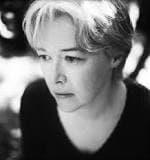
Susanna Mary Clarke is an English author known for her debut novel Jonathan Strange & Mr Norrell (2004), a Hugo Award-winning alternative history. Clarke began Jonathan Strange in 1993 and worked on it during her spare time. For the next decade, she published short stories from the Strange universe, but it was not until 2003 that Bloomsbury bought her manuscript and began work on its publication. The novel became a best-seller.
Similar books
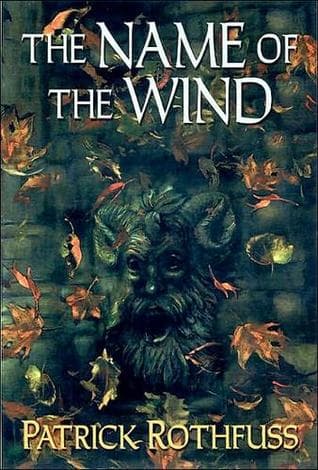
- The Name of the Wind
Patrick Rothfuss
4.5 (716k) average on GoodreadsFantasyEpic scope, intricate world-building, and a focus on the learning and application of magic.
- A Wizard of Earthsea
Ursula K. Le Guin
4.0 (241k) average on GoodreadsFantasyExplores the responsible use of magic and the consequences of its misuse.
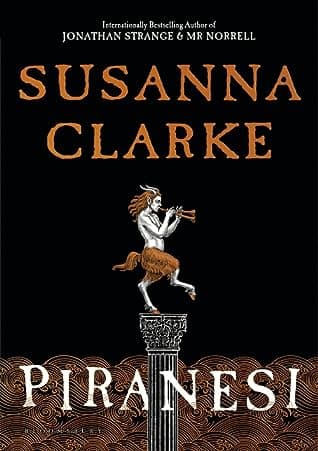
- Piranesi
Susanna Clarke
4.4 (10k) average on GoodreadsLiterary FictionFeatures Clarke's unique voice, atmospheric mystery, and subtle magic.
- Harry Potter and the Sorcerer's Stone
J.K. Rowling
4.5 (7M) average on GoodreadsFantasyRescued from a miserable life under the stairs, an orphaned boy discovers he's a wizard destined for a magical school, where he uncovers a dangerous secret tied to the dark wizard who murdered his parents.
- The Hunger Games
Suzanne Collins
4.3 (6.4M) average on GoodreadsFantasyIn a future where children fight to the death on live television, Katniss Everdeen volunteers for the arena, turning a death sentence into a fight for survival and a spark of rebellion.
- 1984
George Orwell
4.2 (3.1M) average on GoodreadsPoliticsIn a future where surveillance and thought control are absolute, a man's search for truth clashes with the Party, showing that hope can be a form of rebellion.




Enjoyed the summary?
A summary gives you the shape of the book. The book itself has the detail, the examples and the voice.
Find Jonathan Strange & Mr Norrell on AmazonAs an Amazon Associate, BookBrief earns from qualifying purchases. How we're funded