

Synopsis
Covers the whole plot, including the ending.
- Difficulty
- Medium
- Pacing
- Moderate
- Mood
- Epic, Ambitious, Dramatic, Intense, Sweeping
- Read it if
- You love sprawling family sagas, intense rivalries, and stories of ambition and power spanning multiple decades.
- Skip it if
- You prefer fast-paced thrillers with a single, contained plot, or dislike stories with morally ambiguous characters.
Kane and Abel Plot Summary
Covers the whole plot, including the ending.
A Tale of Two Births: Privilege and Poverty
The story opens with two boys born on April 18, 1906. William Lowell Kane is born into wealth in Boston, Massachusetts, heir to the Kane & Cabot banking empire. His early life is comfortable. Across the world, in a Polish forest, a baby is found abandoned and adopted by a trapper's family. Named Wladek Koskiewicz, he is soon orphaned again. He is taken to Baron Rosnovski, who renames him Abel Rosnovski and raises him in his castle. This provides him with an education and a life far from his humble beginnings, giving him ambition and a strong work ethic. This initial contrast sets the stage for their different paths.
Abel's Ascent: From Siberia to America
Abel's life with Baron Rosnovski ends with World War I and the Russian Revolution. The Baron is killed, and Abel, still a young boy, is captured by Bolsheviks and sent to a Siberian labor camp. He survives terrible conditions, witnessing brutality and starvation, due to his intelligence and resilience. He plans his escape, executes it, and makes a dangerous journey across Russia. He reaches the Polish consulate and secures passage to America, arriving in New York as a penniless immigrant, determined to succeed.
Kane's Early Career and Abel's Hospitality Dreams
William Kane, after a privileged upbringing and education at Harvard, joins the family bank, Kane & Cabot. He shows a mind for finance and a sense of responsibility, being prepared to take over the family business. Meanwhile, Abel, arriving in America with only a silver locket, works as a busboy in a New York hotel. Despite the menial labor, he observes the hotel industry, learning English and American customs. His ambition drives him to learn every aspect of the hotel business, saving his earnings and planning for his future.
The First Encounter: A Fateful Misunderstanding
Abel, through hard work and investments, buys a small hotel in New York and wants to expand. He asks Kane & Cabot for a loan to buy a second hotel. William Kane, a rising figure in the bank, reviews Abel's application. A misunderstanding happens during their meeting; William, following banking rules, denies the loan because Abel lacks established credit history, despite Abel's progress. Abel, feeling dismissed and insulted by Kane's perceived arrogance, vows to remember the slight. This meeting starts their bitter, lifelong rivalry, fueled by pride and Abel's desire for revenge.
The Great Depression and Shifting Fortunes
The Great Depression hits, affecting the American economy. Kane & Cabot, like many financial institutions, faces pressure and losses. William Kane works to protect his family's legacy and the bank's stability, making difficult decisions. Abel Rosnovski, however, sees opportunity. He buys struggling hotels and properties at low prices, expanding his hotel empire. While Kane's fortune diminishes, Abel's grows, widening the gap between their financial standings and intensifying their rivalry. Abel sees his success as a direct defiance of Kane's earlier rejection.
Family and Love: Different Paths
William Kane marries Anne, and they have two children, Richard and Florentyna. William balances his demanding career with his family responsibilities. Abel Rosnovski, after achieving financial success, marries Zaphia, a Polish immigrant he meets through his business. They also have two children, George and Victoria. Both men find motivation in their families. Their approaches to fatherhood reflect their different upbringings, with Abel driven to provide his children with everything he never had.
Escalating Rivalry: From Business to Personal
The rivalry between William Kane and Abel Rosnovski becomes a force in both their lives, going beyond business into personal vendettas. They constantly try to outmaneuver each other, through hostile takeovers, financial manipulations, or public embarrassments. William, a figure in banking, considers a political career. Abel, with a hotel chain, also has political ambitions, wanting influence and respect. Their animosity becomes legendary, a contest that consumes their energies and affects their families, who are largely unaware of the extent of the personal hatred.
The Next Generation: Florentyna and George
As years pass, the children of William Kane and Abel Rosnovski grow up. William's daughter, Florentyna Kane, is intelligent and ambitious, wanting a career in politics. Abel's son, George Rosnovski, is also bright and driven, initially following his father into the hotel business. Fate intervenes when Florentyna and George meet at a party and fall in love, unaware of the hatred between their fathers. Their romance becomes a central irony of the story, setting the stage for a clash between love and inherited animosity, forcing them to confront their parents' feud.
The Revelation and the Ultimatum
When William Kane and Abel Rosnovski discover that their children, Florentyna and George, are in love and plan to marry, their animosity increases. Both fathers are furious, seeing the union as a betrayal and a continuation of their rivalry. They forbid their child from marrying into the 'enemy' family, threatening disinheritance. This forces Florentyna and George to choose between their love and loyalty to their families, creating emotional turmoil and a conflict that highlights the destructive nature of their fathers' hatred.
Florentyna's Political Rise and Abel's Support
Defying her father, Florentyna pursues her political ambitions, running for Congress. Despite William Kane's initial disapproval of her relationship with George, he accepts her independence. Abel Rosnovski, though still competitive with William, respects Florentyna's drive. In a twist, and without William's knowledge, Abel secretly provides financial backing to Florentyna's political campaign through a third party. He sees her as a worthy opponent, and perhaps a symbol of his own ambition, even if she is his rival's daughter, showing a complex change in his character.
The Unveiling and Reconciliation
Years pass, and Florentyna achieves political success, becoming a senator. William Kane, now elderly, discovers Abel's secret financial support for Florentyna's early campaigns. This revelation makes him re-evaluate his lifelong animosity towards Abel. He realizes that despite their rivalry, Abel had seen and supported his daughter's potential, something William himself had initially struggled with. This understanding begins to chip away at the hatred, leading to reflection and a slow shift towards reconciliation in their later years, as the true cost of their feud becomes apparent.
A Shared Legacy and the End of an Era
In their old age, both William Kane and Abel Rosnovski die within a short time of each other. Their deaths mark the end of an extraordinary rivalry that spanned over six decades. They leave behind vast empires — Kane & Cabot and the Rosnovski Hotel chain — and a complex legacy for their children. Florentyna Kane, a political figure, and George Rosnovski, having found his own path, navigate the world without their fathers. Their love, which defied the generational feud, becomes the ultimate symbol of breaking the cycle of hatred, carrying forward a future where their families, once enemies, are now bound by love and shared history.
Kane and Abel Characters
William Lowell Kane
Protagonist
Born into Boston aristocracy, heir to a banking empire, driven by duty and family legacy.
William Kane is the scion of a powerful Boston banking family, Kane & Cabot. From birth, he is destined for a life of privilege and responsibility. Educated at Harvard, he is intelligent, principled, and deeply committed to upholding his family's reputation and financial legacy. He is initially portrayed as somewhat rigid and traditional, adhering strictly to rules and protocols. His ambition is tempered by a strong sense of duty and integrity. The rivalry with Abel Rosnovski consumes a significant portion of his life, fueling his drive but also leading to moments of bitterness and regret, particularly concerning his family's happiness. He eventually softens, especially in his relationship with his daughter, Florentyna.
Relationships: Abel Rosnovski (Lifelong bitter rival, driven by a fateful misunderstanding); Anne Kane (Devoted wife, supportive and elegant); Florentyna Kane (Ambitious daughter, he eventually supports her political career despite her defiance); Richard Kane (Son, follows in his footsteps within the banking world)
Abel Rosnovski (Wladek Koskiewicz)
Protagonist/Antagonist
A penniless Polish immigrant, survivor of Siberian exile, who builds a vast hotel empire in America.
Abel Rosnovski, originally Wladek Koskiewicz, is a character defined by his resilience, ambition, and a relentless drive for success. Orphaned and exiled to Siberia, he endures unimaginable hardship, forging an iron will and a deep-seated distrust of authority. Arriving in America with nothing, he systematically builds a hotel empire from the ground up, displaying extraordinary business acumen and a ruthless determination. His rivalry with William Kane is the central motivation for much of his life, fueled by perceived slights and a desire for revenge and validation. Despite his harsh exterior, he possesses a deep love for his family and a hidden capacity for magnanimity, as seen in his support for Florentyna.
Relationships: William Lowell Kane (Lifelong bitter rival, driven by a fateful misunderstanding); Zaphia Rosnovski (Loving and supportive wife); George Rosnovski (Son, initially groomed to take over the hotel empire); Victoria Rosnovski (Daughter)
Florentyna Kane
Supporting/Protagonist in later stages
William Kane's ambitious daughter, who defies her father to pursue a political career and marry George Rosnovski.
Florentyna is the intelligent, independent, and strong-willed daughter of William Kane. Unlike her brother, she is not content to follow traditional paths and possesses a fierce ambition for a career in politics. She is deeply in love with George Rosnovski, Abel's son, and bravely defies her father's wishes to be with him. Her character embodies the breaking of generational cycles of hatred, as she pursues her own destiny and ultimately achieves significant political power. She inherits her father's integrity and her mother's grace, combined with a modern drive for self-determination.
Relationships: William Lowell Kane (Father, whose approval she seeks but ultimately defies); Anne Kane (Mother, who supports her); George Rosnovski (Husband, love interest and son of her father's rival); Abel Rosnovski (Father-in-law, who secretly supports her political career)
George Rosnovski
Supporting
Abel Rosnovski's son, who falls in love with Florentyna Kane, defying his father's wishes.
George Rosnovski is the son of Abel Rosnovski, initially expected to inherit and expand his father's hotel empire. He possesses a kind and gentle nature, often acting as a foil to his father's more ruthless personality. He falls deeply in love with Florentyna Kane, a relationship that places him in direct opposition to his father's wishes and the deeply ingrained family feud. George struggles with his loyalty to his father versus his love for Florentyna but ultimately chooses love. He later finds his own path outside his father's direct business, demonstrating his independence and desire for a peaceful life.
Relationships: Abel Rosnovski (Father, with whom he has a complex and often strained relationship); Zaphia Rosnovski (Mother); Florentyna Kane (Wife, love interest and daughter of his father's rival)
Anne Kane
Supporting
William Kane's elegant and supportive wife, a pillar of strength for her family.
Anne Kane is William's devoted wife and the mother of Florentyna and Richard. She embodies the traditional elegance and grace of Boston society. Anne is a supportive and understanding partner to William, often acting as his emotional anchor. She is deeply protective of her children and tries to mediate the tensions that arise, particularly concerning Florentyna's relationship with George. While she often defers to William, she possesses an inner strength and a quiet wisdom that helps her family navigate their challenges. She represents stability and the moral compass within the Kane household.
Relationships: William Lowell Kane (Husband, whom she deeply loves and supports); Florentyna Kane (Daughter, whom she encourages and supports); Richard Kane (Son)
Zaphia Rosnovski
Supporting
Abel Rosnovski's steadfast wife, a Polish immigrant who shares his journey to success.
Zaphia Rosnovski is Abel's wife, a fellow Polish immigrant whom he meets in America. She is a strong, resilient woman who provides a stable and loving home for Abel and their children. Zaphia is aware of Abel's ambition and the intensity of his rivalry with William Kane, often trying to temper his more extreme impulses. She is fiercely loyal to Abel and their family, providing emotional support throughout his relentless pursuit of success. She represents the home and heart that Abel built for himself after his traumatic early life, a stark contrast to his cutthroat business dealings.
Relationships: Abel Rosnovski (Husband, whom she loves and supports unconditionally); George Rosnovski (Son); Victoria Rosnovski (Daughter)
Baron Rosnovski
Supporting/Mentioned
Polish aristocrat who adopts and raises young Abel, instilling in him a love for learning and ambition.
Baron Rosnovski is the kind and cultured Polish nobleman who finds and adopts the orphaned Wladek (Abel). He gives Abel his new name and raises him as his own son, providing him with an education and a stable, loving environment. The Baron instills in Abel a strong sense of self-worth, ambition, and a love for learning, which proves crucial for Abel's survival and later success. His tragic death during World War I is a formative event for Abel, driving him to honor the Baron's memory and ensure he never again experiences such helplessness.
Relationships: Abel Rosnovski (Adoptive father and mentor)
Richard Kane
Supporting
William Kane's son, who follows in his father's footsteps in the banking world.
Richard Kane is William and Anne's son, and Florentyna's older brother. He is more traditional than his sister and dutifully follows his father into the family banking business, Kane & Cabot. Richard is a steady, reliable character, but lacks the intense ambition or fire of either his father or his sister. He represents the continuation of the family legacy in a more conventional sense, often contrasting with Florentyna's rebellious spirit. He is a loyal son and brother, though his role in the central rivalry is less prominent.
Relationships: William Lowell Kane (Father, whose footsteps he follows); Anne Kane (Mother); Florentyna Kane (Sister)
Henry Osborne
Supporting
William Kane's trusted and loyal assistant at Kane & Cabot.
Henry Osborne is William Kane's long-serving and highly loyal assistant at Kane & Cabot. He is a steady, reliable presence in William's professional life, handling many of the day-to-day operations and offering discreet counsel. Osborne represents the unwavering commitment and professionalism within the old-money banking world. He is a quiet observer of the Kane-Rosnovski rivalry, always supporting William without directly engaging in the feud. His character highlights the intricate network of support that allows powerful men like Kane to operate.
Relationships: William Lowell Kane (Employer and trusted confidante)
Kane and Abel Themes
Rivalry and Obsession
The central theme of 'Kane and Abel' is the rivalry between the two protagonists. It starts from a misunderstanding and grows into a lifelong obsession. Their lives become linked through their competition in business, wealth, and influence. This rivalry drives their decisions, shapes their empires, and impacts their families. For Abel, it is a quest for revenge against the establishment, personified by Kane. For Kane, it is a battle to protect his legacy. The theme explores how hatred can be a destructive, yet also motivating force, blinding individuals to common ground.
“He had vowed he would never forget the name of William Kane, and that one day he would destroy him.”
Social Mobility and the American Dream
The novel shows the contrast between inherited wealth and self-made success, exploring the American Dream. William Kane represents the established aristocracy, born into power. Abel Rosnovski embodies the immigrant's journey from poverty to wealth, overcoming adversity — poverty, war, exile — to build an empire through determination and intelligence. The story contrasts inherited status with the effort needed for upward mobility, questioning whether true success is from birth or individual effort. Abel's journey shows that in America, one can redefine their destiny regardless of origins.
“He had arrived in the land of opportunity with nothing but his name and a silver locket, and he would leave it as a prince.”
Fate vs. Free Will
The narrative often says that Kane and Abel are 'destined' to cross paths, born on the same day on opposite sides of the world. This raises questions about fate versus individual choices. While their initial meeting might seem fated, their actions, driven by personal vendettas and ambitions, dictate their rivalry. The theme explores whether their lives were predetermined to clash, or if their personalities and reactions created their shared destiny. The ending, with their children falling in love, suggests that while fate might bring people together, free will shapes the outcomes.
“Two men, born on the same day, on opposite sides of the world, their paths destined to cross.”
Family Legacy and Intergenerational Conflict
The rivalry between Kane and Abel affects their families, especially their children. Both men want to build and protect their legacies, but their obsession with each other threatens to consume the next generation. Florentyna and George's love affair challenges the hatred, forcing them to choose between family loyalty and personal happiness. This theme explores how parents' actions and animosities can affect their children, and whether the new generation can break free from inherited conflicts to forge their own paths.
“The hatred that had sustained two powerful men for over sixty years could not be inherited by their children.”
Power and Corruption
As both Kane and Abel gain wealth and influence, the novel explores the complexities of power. Kane uses power through financial institutions and political connections. Abel builds his through will, business dealings, and sometimes ambiguous tactics. The theme examines how power can corrupt, how it can be used for constructive and destructive purposes, and the ethical compromises often made in its pursuit. It also highlights how power is used by those who inherit it versus those who gain it from nothing, showing the nature of both business and politics.
“Power was the only thing that counted in America, and he was determined to acquire it.”
Plot Devices & Literary Techniques
Parallel Narrative
Alternating chapters follow the separate lives of Kane and Abel, highlighting their contrasting journeys.
The novel employs a parallel narrative structure, with chapters often alternating between the lives of William Kane and Abel Rosnovski. This device effectively highlights the stark contrasts in their origins, upbringings, and initial paths, while simultaneously building anticipation for their inevitable collision. It allows the reader to deeply understand each character's motivations, struggles, and triumphs independently, making their eventual rivalry more impactful. This structure emphasizes the 'two sides of the coin' nature of their story, showcasing how different circumstances can lead to equally formidable personalities and ambitions.
Foreshadowing
Early hints and declarations of lifelong animosity set the stage for the epic rivalry.
Foreshadowing is used extensively, particularly in the initial interactions and internal monologues of Kane and Abel. From Abel's early vow to 'never forget' William Kane's name after the denied loan, to the narrator's consistent reminders that their paths are 'destined to cross,' these hints build tension and expectation. This device ensures the reader is constantly aware of the underlying conflict that will define their lives, making each success or setback for one character feel like a step closer to a confrontation with the other. It reinforces the idea of an epic, predetermined struggle.
The Silver Locket
A symbolic heirloom representing Abel's past, identity, and hidden origins.
The silver locket is a crucial symbolic object for Abel Rosnovski. It is the only possession he has from his birth family (or adoptive Polish family) and serves as a constant reminder of his lost past and his true origins as Wladek Koskiewicz. He carries it throughout his life, representing his identity, his resilience, and the secrets of his past. The locket connects him to his humble beginnings and the trauma he endured, contrasting sharply with the opulent life he builds. It symbolizes a hidden truth and the enduring weight of his personal history, which he guards closely.
The Hotel Empire
A tangible symbol of Abel's self-made success and defiance against the establishment.
Abel Rosnovski's sprawling hotel empire serves as a powerful symbol of his self-made success and his triumph over adversity. Starting as a busboy, his methodical acquisition and expansion of hotels represent his relentless ambition, business acumen, and his ability to create wealth from nothing. The hotels are his personal kingdom, a direct counterpoint to Kane's inherited banking empire. Each hotel acquired signifies a victory in his personal war against poverty and the establishment, making it a tangible manifestation of his 'American Dream' achieved through sheer force of will and a burning desire for validation.
The Banking Dynasty
A symbol of inherited power, tradition, and the American aristocracy.
Kane & Cabot, William Kane's family banking dynasty, symbolizes inherited power, tradition, and the established American aristocracy. It represents centuries of wealth, influence, and a particular way of doing business rooted in integrity, reputation, and old-money networks. For William, the bank is not just a business but a sacred trust, a legacy he is bound to protect and uphold. It contrasts sharply with Abel's self-made empire, highlighting the difference between inherited status and earned power. The bank's struggles during the Depression underscore the vulnerability even of established institutions.
Kane and Abel Quotes
“I will make a fortune and be a gentleman, and you will be proud of me.”
“To be a millionaire, you have to think like one.”
“The greatest luxury a man can afford is to be himself.”
“Revenge is a dish best served cold.”
“There are two kinds of people in the world: those who make things happen, and those who watch things happen.”
“He learned that money did not buy happiness, but it certainly bought a better class of misery.”
“The only way to get rid of a temptation is to yield to it.”
“Some men are born great, some achieve greatness, and some have greatness thrust upon them.”
“He knew that the only way to climb to the top was to be prepared to step on other people.”
“Life is a game of chess, and to win, you must always be several moves ahead.”
“The past is never dead. It's not even past.”
“He had discovered that the only way to truly defeat an enemy was to make them irrelevant.”
“The greatest battles are fought in the mind.”
“It was not enough to survive; one had to triumph.”
Quiz
10 questions on the plot and the characters. Each answer comes with a short explanation.
Question 1
What is the primary motivation behind William Kane's initial animosity towards Abel Rosnovski?
- Abel's superior intellect in their academic pursuits.
- A misunderstanding over Abel's perceived theft of a valuable family heirloom.
- Abel's accidental involvement in a scandal that threatened Kane's political career.
- A dispute over the ownership of a valuable piece of real estate.
Show answer
C. Abel's accidental involvement in a scandal that threatened Kane's political career. Kane's initial hatred for Abel is sparked by Abel's accidental involvement in a scandal concerning the stolen university exam papers, which implicates Kane's family name and jeopardizes his future political aspirations.
Question 2
Abel Rosnovski's original surname before he immigrated to America was:
- Koszko
- Waszynski
- Sikorski
- Zielinski
Show answer
B. Waszynski Abel was born Wladek Waszynski in Poland. He changed his name to Abel Rosnovski upon his arrival and adoption in America.
Question 3
What business industry does Abel Rosnovski primarily build his fortune in?
- Automobile manufacturing
- Shipping and logistics
- Hotels and hospitality
- Oil and gas exploration
Show answer
C. Hotels and hospitality Abel Rosnovski starts from humble beginnings and eventually builds a vast empire in the hotel industry, starting with the Richmond Group.
Question 4
Which significant historical event impacts Abel Rosnovski's early life in Poland?
- The Russian Revolution
- World War I
- The Great Depression
- The Spanish Flu Pandemic
Show answer
B. World War I Abel's early life is profoundly shaped by the turmoil of World War I, during which he is orphaned and must fight for survival in war-torn Poland.
Question 5
What is the primary theme explored through the rivalry between Kane and Abel?
- The corrupting influence of power on family relationships.
- The enduring nature of love and forgiveness across generations.
- The destructive nature of hatred and revenge, and the pursuit of the American Dream.
- The clash between old money and new money in American society.
Show answer
C. The destructive nature of hatred and revenge, and the pursuit of the American Dream. The core theme is the all-consuming hatred between the two men, fueled by misunderstandings and a desire for revenge, which ironically drives them to achieve great success while simultaneously impacting their personal lives.
Question 6
How do William Kane and Abel Rosnovski's paths ironically intertwine beyond their rivalry?
- They become business partners in a major international venture.
- Their children fall in love and marry each other.
- They discover they are long-lost brothers.
- They are forced to collaborate to expose a common enemy.
Show answer
B. Their children fall in love and marry each other. The ultimate irony and twist in their intertwined lives come when William Kane's daughter, Florentyna, falls in love with and marries Abel Rosnovski's son, Richard.
Question 7
What role does George Rosnovski play in Abel's life?
- He is Abel's biological father.
- He is the wealthy benefactor who sponsors Abel's education.
- He is the kind Polish immigrant who adopts Abel in America.
- He is Abel's first major business partner.
Show answer
C. He is the kind Polish immigrant who adopts Abel in America. George Rosnovski is the compassionate Polish immigrant who takes in the young, orphaned Wladek (Abel) when he arrives in America, giving him a new family and surname.
Question 8
What is William Kane's ambition for his political career?
- To become the Governor of Massachusetts.
- To serve as a Supreme Court Justice.
- To become President of the United States.
- To be appointed Secretary of State.
Show answer
C. To become President of the United States. William Kane, from a prominent Boston family, harbors the lifelong ambition of becoming the President of the United States, a dream that his rivalry with Abel both fuels and complicates.
Question 9
Which of the following best describes the novel's structure regarding its timeline?
- It follows a non-linear narrative, jumping between different periods.
- It primarily focuses on a single year in the lives of the characters.
- It spans sixty years, detailing the intertwined lives of the two protagonists.
- It uses flashbacks extensively to reveal past events.
Show answer
C. It spans sixty years, detailing the intertwined lives of the two protagonists. As stated in the book description, 'Kane and Abel is the marvellous story, spanning sixty years, of two powerful men...', indicating a broad chronological narrative.
Question 10
What is the ultimate fate of both William Kane and Abel Rosnovski?
- They reconcile their differences and become close friends in old age.
- They both die on the same day, still consumed by their rivalry, but unknowingly linked by their grandchildren.
- One outlives the other, achieving a final victory in their long-standing feud.
- They both retire from their respective empires to live quiet lives, leaving their children to continue the rivalry.
Show answer
B. They both die on the same day, still consumed by their rivalry, but unknowingly linked by their grandchildren. In a final, poignant twist of fate, both men die on the same day, their lives ending as they began – on the same day, but on opposite sides, still entangled by their rivalry but also by the love between their grandchildren.
Kane and Abel FAQ
What is 'Kane and Abel' about?
'Kane and Abel' is an epic saga spanning sixty years, chronicling the lives of two men, William Lowell Kane and Abel Rosnovski, born on the same day but on opposite sides of the world. Their lives become intertwined through a bitter rivalry in business and personal spheres, fueled by ambition, betrayal, and an all-consuming hatred, ultimately leading them to save and then destroy each other.
Why should I read 'Kane and Abel'?
You should read 'Kane and Abel' for its compelling narrative of ambition, rivalry, and fate. It offers a sweeping historical backdrop from the early 20th century through post-WWII, showcasing the rise of two powerful individuals, William Kane and Abel Rosnovski, whose lives are dramatically shaped by their opposing origins and relentless drive for success and revenge. The intricate plot keeps readers engrossed through its various twists and turns.
What is the background/setting of 'Kane and Abel'?
The book's setting spans multiple decades from the early 1900s to the 1970s. It begins with Abel Rosnovski's harsh upbringing in a Polish village and his journey to America, contrasting with William Kane's privileged Bostonian childhood. The narrative primarily unfolds in the United States, particularly in the financial and political landscapes of Boston and New York, against the backdrop of significant historical events like World War I, the Great Depression, and World War II.
What are the most memorable quotes?
While the book is more known for its plot than specific lines, a recurring theme is the idea of destiny and the relentless pursuit of one's goals, often echoed in the characters' internal monologues about overcoming adversity or achieving financial dominance. The narrative consistently reinforces the idea that 'fortune favors the bold,' a principle both Kane and Abel embody in their respective journeys.
What writing style does the author use?
Jeffrey Archer employs a direct, fast-paced, and engaging writing style. He uses clear prose to drive the plot forward, focusing on strong character development and intricate plotting. The narrative is often told from an omniscient perspective, allowing readers insight into the thoughts and motivations of both William Kane and Abel Rosnovski as their lives intersect and diverge.
What minor details add significant meaning?
A minor detail that adds significant meaning is the shared birthdate of Kane and Abel. This seemingly small coincidence underscores the theme of parallel lives and destined rivalry. Another is Abel's initial identity as Wladek, a detail that highlights his complete reinvention in America and the profound impact of his early struggles on his adult persona as Abel Rosnovski.
What are some subtle foreshadowing moments?
Subtle foreshadowing occurs early in the narrative when Abel's relentless drive and sharp intelligence are shown during his time in the baron's estate, hinting at his future success despite his humble beginnings. Similarly, William Kane's unwavering commitment to his family's bank, even as a young man, foreshadows his eventual rise to power and his strong, sometimes rigid, sense of duty.
What unexpected character connections exist?
The most significant unexpected connection is the romantic relationship between Florentyna Rosnovski, Abel's daughter, and Richard Kane, William Kane's son. This union of the children of the two bitter rivals creates a powerful personal dilemma for both patriarchs, forcing them to confront their long-standing hatred with the prospect of family reconciliation, even if reluctantly.
What are unspoken character motivations?
Beyond the explicit desire for success and revenge, Abel Rosnovski harbors an unspoken, deep-seated need for acceptance and validation, stemming from his impoverished and orphaned beginnings. For William Kane, an unspoken motivation is the preservation of his family's legacy and honor, which sometimes makes him blind to the true character of others, especially when it comes to Abel.
What psychological complexities do characters exhibit?
Abel Rosnovski exhibits a complex blend of ruthlessness born from survival instincts and a deep capacity for love and loyalty towards his chosen family. William Kane, while seemingly upright, struggles with pride and a rigid sense of justice that often borders on unforgiveness, leading him to perpetuate the feud with Abel even when it harms his own family's happiness.
What are the major emotional turning points?
A major emotional turning point for Abel is his arrival in America and the realization of the opportunities available, solidifying his ambition. For William, the loss of his father and taking over the bank at a young age is a crucial moment, forcing him into a role of immense responsibility. Another significant turning point for both is the marriage of their children, which forces a re-evaluation of their lifelong animosity.
How do relationship dynamics evolve?
The core relationship dynamic between Kane and Abel evolves from initial professional rivalry into a deeply personal, all-consuming hatred fueled by misunderstandings and perceived betrayals. Despite their animosity, there is a strange, almost symbiotic, evolution where their actions often inadvertently benefit the other's business empire. Their relationship ultimately culminates in a grudging, late-life respect, largely influenced by their children's union.
Which parts remain ambiguous or open-ended?
While the main plot lines are resolved, the long-term emotional reconciliation between William Kane and Abel Rosnovski remains somewhat ambiguous. Although they reach a détente, the depth of their forgiveness for each other is left for the reader to interpret, especially considering their decades of bitter animosity. The full impact of their children's political careers also leaves room for future exploration, which is picked up in the sequel.
What are controversial scenes or decisions?
One controversial decision is William Kane's unwavering refusal to acknowledge Abel's legitimate business successes, often attributing them to underhanded tactics, which perpetuates their feud unnecessarily. Another is Abel's extreme measures to undermine Kane's bank, even when he knows it will cause significant personal distress, showcasing his ruthless commitment to revenge over potential peace.
'Kane and Abel' ending explained: how it ends & what it means
The book ends with both William Kane and Abel Rosnovski, now elderly and weakened, reaching a fragile, almost unspoken truce, largely influenced by the success and marriage of their children, Florentyna and Richard. They die on the same day, mirroring their shared birthdate, signifying the ultimate conclusion of their intertwined lives and rivalry. The ending suggests that while personal hatred can consume lives, the next generation can transcend such bitterness, embodying both their parents' ambition and a capacity for unity.
About the author

Jeffrey Howard Archer, Baron Archer of Weston-super-Mare is an English novelist, life peer, convicted criminal, and former politician. Before becoming an author, Archer was a Member of Parliament (1969–1974), but did not seek re-election after a financial scandal that left him almost bankrupt.
Similar books
- The Godfather
Mario Puzo
4.4 (335k) average on GoodreadsThrillerExplores powerful family dynamics, ambition, and rivalries within a sprawling narrative.
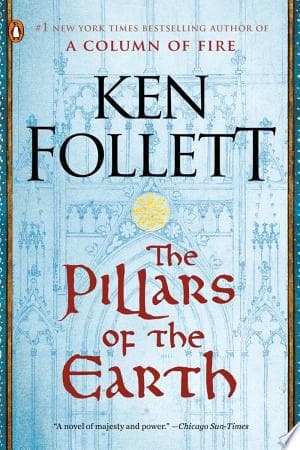
- The Pillars of the Earth
Ken Follett
4.3 (649k) average on GoodreadsFantasyA historical saga spanning generations, focusing on ambition, building, and overcoming adversity.
- The Thorn Birds
Colleen McCullough
4.2 (314k) average on GoodreadsHistorical FictionBoth Kane and Abel and The Thorn Birds are multi-generational sagas spanning significant historical periods, focusing on ambition, love, and family dynasties. However, The Thorn Birds offers a more intense focus on character psychology and emotional depth, particularly regarding forbidden love and the complexities of faith, making its character arcs feel more nuanced and tragic. While Archer prioritizes plot momentum, McCullough delves deeper into the internal lives and moral dilemmas of her characters, often at a slower narrative pace.
- Angels & Demons
Dan Brown
3.9 (2.7M) average on GoodreadsThrillerA Harvard symbologist races through Rome's ancient sites, deciphering cryptic clues to unmask the Illuminati and stop a vengeful plot to destroy the Vatican with a stolen antimatter weapon.
- Gone Girl
Gillian Flynn
4.1 (2.3M) average on GoodreadsThrillerA wife's sudden disappearance on her fifth anniversary reveals a web of lies and psychological warfare, exposing the secrets within a seemingly perfect marriage.
- The Girl on the Train
Paula Hawkins
3.9 (2.1M) average on GoodreadsThrillerA woman’s fascination with a seemingly perfect couple she watches from her daily train commute leads her into a dark investigation when she witnesses something that shatters their idyllic image.





Enjoyed the summary?
A summary gives you the shape of the book. The book itself has the detail, the examples and the voice.
Find Kane and Abel on AmazonAs an Amazon Associate, BookBrief earns from qualifying purchases. How we're funded