
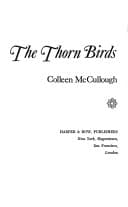
Synopsis
Covers the whole plot, including the ending.
- Difficulty
- Medium
- Pacing
- Moderate
- Mood
- Epic, Romantic, Melancholy, Dramatic, Poignant
- Read it if
- You love epic, multi-generational sagas with sweeping romance, forbidden love, and a strong sense of place, exploring themes of duty, desire, and sacrifice.
- Skip it if
- You dislike lengthy historical novels, stories with significant religious themes, or narratives where the central romance is ultimately tragic and unfulfilled.
The Thorn Birds Plot Summary
Covers the whole plot, including the ending.
The Clearys Arrive at Drogheda
In 1915, the Cleary family, led by Paddy, moves from their New Zealand home to Drogheda, a sheep station in the Australian outback. This move is at the request of Paddy's wealthy sister, Mary Carson, who has no heirs and offers Paddy a job as her station manager. Among the children is four-year-old Meggie, who is drawn to the young Catholic priest, Father Ralph de Bricassart. Father Ralph, ambitious and worldly, finds himself drawn to Meggie, forming a bond that will shape their lives. The family struggles with life at Drogheda and Mary Carson's demanding personality.
Meggie's Childhood and Father Ralph's Ambition
Years pass, and Meggie grows into a young woman on Drogheda. Her childhood affection for Father Ralph becomes a deep, unspoken love, which he, despite his vows, feels in return. Father Ralph, torn between his religious calling and worldly ambition, uses his connection to Mary Carson to advance his career in the Catholic Church. Mary Carson knows about Father Ralph's ambition and his feelings for Meggie, and she manipulates him, often using her wealth. She watches the bond between the priest and the young girl with a cruel amusement, setting up future conflicts.
Mary Carson's Death and Devastating Revelation
In 1930, Mary Carson dies, leaving her fortune not to her brother Paddy or his family, but to the Catholic Church, with Father Ralph de Bricassart as the executor. Her will includes a final condition: she reveals her long-standing love for Father Ralph and states that the Church will only inherit if he gives up all personal claims to the Cleary family and dedicates himself to God. This act ensures Father Ralph's rise in the Church but leaves Meggie heartbroken and confirms her fears about his priorities.
Tragedy Strikes Drogheda
Soon after Mary Carson's death and the details of her will are known, tragedy happens at Drogheda. A bushfire sweeps through the property, killing Paddy Cleary and his oldest son, Frank. Frank, who had left Drogheda earlier to become a boxer after a fight with Paddy, returns only to die with his father. This double loss leaves the Cleary family in deep sorrow and makes Meggie feel more alone. Father Ralph returns for the funerals, offering comfort, but his presence only increases Meggie's grief and her desire for a life with him that cannot be. The Clearys must rebuild their lives and the station.
Luke O'Neill and Meggie's Desperate Marriage
Heartbroken and feeling left by Father Ralph, who has gone to Rome for his church career, Meggie wants to escape Drogheda and her unfulfilled desires. She meets Luke O'Neill, a charming but selfish shearer. Mistaking his attention for real affection and a chance at a normal life, Meggie marries him. Luke is only interested in her inheritance from Mary Carson's will and soon shows his true nature. He takes a job cutting cane in northern Queensland, leaving Meggie in a small, isolated shack while he works, rarely visiting and sending her little money. Meggie lives a lonely and hard life, giving birth to their daughter, Justine.
The Reunion and Dae's Conception
After several years of an unhappy marriage to Luke, Meggie gets puerperal fever and becomes very ill. Father Ralph, now a Cardinal, hears of her condition and travels to Queensland to see her. He finds her weak and sad, and during a short, intense reunion on a remote island, their long-held love finally happens. This meeting leads to the conception of their son, Dane. Meggie, knowing she cannot tell anyone Dane's true father, decides to leave Luke and return to Drogheda, saying she is pregnant with his child. Father Ralph, not knowing the full result of their night together, returns to his duties, still focused on his ambition.
Raising Dane and Justine on Drogheda
Meggie returns to Drogheda with her daughter Justine and soon gives birth to Dane. Dane grows into a golden-haired boy who looks like Father Ralph, a fact many notice but do not speak about. Meggie focuses on raising her children, finding happiness in Dane and seeing in him the outcome of her love for Father Ralph. Justine, however, is more independent and wants to leave Drogheda to live her own life. The family continues to run Drogheda, with the younger Cleary brothers and Fee's quiet strength keeping the station going, while Father Ralph continues to rise in the Vatican.
Dane's Vocation and Justine's Ambition
As Dane grows older, he announces his plan to become a priest, which secretly pains Meggie. She sees similarities between Dane and Father Ralph, in looks and their dedication to the Church, and fears he will follow a similar path of sacrifice and unfulfilled love. Meggie tries to change his mind, but Dane is firm. Meanwhile, Justine, after finishing her education, leaves Drogheda to pursue an acting career in London and then Rome, moving away from rural life and her family. She has a complex, often argumentative relationship with Rainer Moerling, a German politician, who becomes important in her life.
Dane's Tragic Death
Dane, during a holiday in Greece before his ordination, drowns while trying to save two women caught in a current. His body is found by Father Ralph, who rushes to the scene after being contacted because of Dane's connection to the Church. The news devastates Meggie, who travels to Greece for the funeral. In a grief-filled talk, Meggie tells Father Ralph that Dane was their son, the result of their one night together. Father Ralph is crushed by the news, realizing the cost of his ambition and the love he gave up. He understands the 'thorn bird' story, realizing he has killed his most precious thing.
Father Ralph's Death and Justine's Future
Father Ralph, overwhelmed by the news of Dane's father and the weight of his choices, returns to Drogheda with Meggie. He dies soon after, in Meggie's arms, fulfilling his own sad prediction of a life spent giving up love for ambition. Meggie is left to mourn both her son and the man she loved her entire life. Justine, after Dane's death, is drawn back to Rainer Moerling, and despite her initial hesitation to commit, she marries him, choosing a life of international politics and intellectual pursuits over the traditional life of Drogheda. The novel ends with Meggie thinking about her life, her loves, and the lasting mark of the Cleary family on Drogheda.
Principal Figures
Meggie Cleary
Protagonist
The central figure, whose life is defined by her enduring love for Father Ralph and her family.
Meggie is introduced as a sensitive four-year-old girl, the only daughter among many sons, and quickly develops an intense, lifelong adoration for Father Ralph de Bricassart. She grows into a beautiful and resilient woman, deeply rooted in the land of Drogheda. Her life is a series of heartbreaks and unfulfilled desires, primarily due to Father Ralph's clerical vows and ambition. She is loyal, passionate, and often naive, but also possesses an inner strength that allows her to endure immense personal suffering, from her unhappy marriage to Luke O'Neill to the tragic loss of her beloved son, Dane. She embodies the enduring power of love and sacrifice.
Relationships: Father Ralph de Bricassart (Lifelong, forbidden love); Paddy Cleary (Father, distant but loving); Fee Cleary (Mother, distant but understanding); Luke O'Neill (Husband, manipulative and unloving); Dane O'Neill (Son, product of her love with Ralph); Justine O'Neill (Daughter, independent and intellectual)
Father Ralph de Bricassart
Protagonist/Antagonist (to himself)
An ambitious, charismatic priest torn between his spiritual calling and his love for Meggie.
Father Ralph is a handsome, intelligent, and deeply ambitious Catholic priest. He is initially drawn to Drogheda as a stepping stone for his ecclesiastical career, leveraging his charm and intelligence. Despite his vows, he develops a profound and forbidden love for Meggie Cleary, which becomes the central conflict of his life. He is constantly torn between his spiritual devotion, his ambition to rise within the Church, and his human desires. His choices, particularly his acceptance of Mary Carson's inheritance, consistently prioritize his career over personal happiness, leading to a life of emotional sacrifice and regret. He embodies the 'thorn bird' myth, sacrificing his deepest love for a higher, yet ultimately lonely, calling.
Relationships: Meggie Cleary (Lifelong, forbidden love); Mary Carson (Manipulative admirer and benefactor); Paddy Cleary (Employer and friend); Dane O'Neill (Unacknowledged son, tragically lost)
Fee Cleary
Supporting
Meggie's stoic and often distant mother, burdened by her own past.
Fee is Meggie's mother, a woman of aristocratic Irish lineage who was disowned by her family after falling in love with a married man and having a child, Frank, out of wedlock. This past has made her stoic, emotionally reserved, and often seemingly cold, especially towards Meggie. She rarely shows affection, but her actions demonstrate a deep, if unspoken, love for her family. She is a survivor, enduring hardship with quiet strength. Her relationship with Meggie is complex, marked by distance and a lack of overt warmth, yet Fee often understands Meggie's pain better than anyone, recognizing the echoes of her own forbidden love in her daughter's life.
Relationships: Paddy Cleary (Husband, loyal but passionless); Meggie Cleary (Daughter, complex and distant but ultimately loving); Frank Cleary (Firstborn son, deeply cherished); Mary Carson (Sister, resentful and estranged)
Paddy Cleary
Supporting
Meggie's hardworking and honest father, devoted to his family and Drogheda.
Paddy is the patriarch of the Cleary family, a hardworking, honest, and somewhat gruff man. He is devoted to his family, though not always expressive of his emotions. He works tirelessly as the manager of Drogheda, taking immense pride in his work and the land. His relationship with his wife, Fee, is one of quiet loyalty rather than passionate love. He is initially oblivious to the complexities of Meggie's feelings for Father Ralph, representing a simpler, more straightforward morality. His death in the bushfire is a significant turning point for the family, leaving a void that is deeply felt.
Relationships: Fee Cleary (Wife, loyal but passionless); Meggie Cleary (Daughter, beloved); Mary Carson (Sister, estranged but benefactor)
Mary Carson
Supporting/Antagonist
The wealthy, manipulative owner of Drogheda, who harbors a secret love for Father Ralph.
Mary Carson is Paddy Cleary's immensely wealthy and childless sister, the owner of Drogheda. She is a shrewd, manipulative, and ultimately cruel woman who holds power over the Cleary family. Secretly, she harbors a deep, unrequited love for Father Ralph de Bricassart, which fuels her desire to both help and punish him. She uses her wealth and influence to tempt Ralph, ultimately leaving her entire fortune to the Church with him as executor, a final act of manipulation designed to force him to choose ambition over any personal life, particularly with Meggie. Her actions are the catalyst for many of the novel's tragic events.
Relationships: Father Ralph de Bricassart (Unrequited love, object of manipulation); Paddy Cleary (Brother, estranged but employs him); Fee Cleary (Sister-in-law, disliked)
Frank Cleary
Supporting
Meggie's fiery eldest brother, burdened by his illegitimate birth and a desire for independence.
Frank is Meggie's eldest brother and Fee's firstborn son from a previous relationship, a secret he carries with anger and resentment. He is a rebellious and hot-headed individual, constantly clashing with Paddy and feeling out of place on Drogheda. He dreams of a life beyond the station and eventually runs away to become a boxer, achieving some success. His illegitimate birth deeply affects his identity and his relationship with his family. He has a fierce, protective love for Meggie, but his own struggles prevent him from finding lasting happiness. His tragic death in the bushfire alongside Paddy is a significant blow to the family.
Relationships: Fee Cleary (Mother, deeply loved); Paddy Cleary (Stepfather, antagonistic); Meggie Cleary (Sister, protective and loving)
Luke O'Neill
Supporting/Antagonist
Meggie's selfish and manipulative husband, who only cares for her inheritance.
Luke O'Neill is a charming but ultimately selfish and manipulative shearer whom Meggie marries in an attempt to escape her unrequited love for Father Ralph. He is solely interested in Meggie's inheritance from Mary Carson's will, which she is not yet old enough to access. He forces her into a life of hardship and isolation while he works as a cane-cutter, rarely visiting or providing for her. He is indifferent to her happiness and treats her as little more than a means to an end. His lack of genuine affection leaves Meggie deeply unhappy and drives her back towards Father Ralph.
Relationships: Meggie Cleary (Wife, exploited for her inheritance)
Dane O'Neill
Supporting
Meggie and Father Ralph's son, unknowingly following in his biological father's footsteps.
Dane is Meggie's golden-haired, beautiful, and deeply beloved son, secretly fathered by Father Ralph de Bricassart. He bears a striking physical resemblance to Ralph and exhibits a similar spiritual inclination, choosing to enter the priesthood. He is pure-hearted, kind, and deeply devoted to God, embodying the best qualities of both his parents. His decision to become a priest fills Meggie with a bittersweet sense of destiny and dread, fearing he will suffer a similar fate of unfulfilled love. His tragic death by drowning, before his ordination, is the ultimate sacrifice and the catalyst for Meggie's confession to Father Ralph.
Relationships: Meggie Cleary (Mother, deeply loved); Father Ralph de Bricassart (Biological father, unknown to Dane); Justine O'Neill (Sister, close bond)
Justine O'Neill
Supporting
Meggie's independent and intellectual daughter, seeking a life beyond Drogheda.
Justine is Meggie's daughter by Luke O'Neill, though she is starkly different from her mother. She is intelligent, independent, headstrong, and often cynical, with little interest in the traditional life of Drogheda. She values intellectual pursuits and a career over domesticity and romantic love. She leaves Australia to pursue an acting career and later works in international politics in Europe. Her relationship with her mother is often strained due to their differing personalities and life choices. She forms a complex, argumentative, but ultimately loving relationship with Rainer Moerling, a German politician, embodying a more modern, liberated woman.
Relationships: Meggie Cleary (Mother, complex and often strained); Dane O'Neill (Brother, close bond); Rainer Moerling (Intellectual partner and eventual husband)
Themes & Insights
Forbidden Love and Sacrifice
The main theme involves the lifelong, forbidden love between Meggie Cleary and Father Ralph de Bricassart. Ralph's commitment to the Catholic Church and his ambition always stop their love. Both characters make big sacrifices: Ralph gives up personal happiness and a family for his church career, while Meggie gives up her emotional well-being for a love that cannot fully happen. This theme connects to the 'thorn bird' myth, where the most beautiful song costs the bird its life, symbolizing the pain and beauty of their love and the price paid for it, especially with their son Dane's death.
“There is a legend, a prophecy, about a bird with no legs that lives its whole life on the wing. It builds no nest, it rests on no branch, for it has no feet. It sleeps on the wind. And it sings only once in its life, a song more beautiful than any other creature has ever heard. And when it sings, it impales itself on a thorn, and dies.”
Ambition vs. Love
Father Ralph's story shows the conflict between ambition and love. As a young priest, Ralph wants to rise in the Church, using his charm and intelligence. This ambition causes him to choose his career over his deep feelings for Meggie many times. Mary Carson's will directly forces this choice, as she manipulates Ralph into securing his church future at the cost of a personal life with Meggie. Ralph achieves his highest goals but dies realizing how empty a life lived without fully embracing his deepest love is, especially after learning Dane's father.
“One day, Meggie, you will understand that a man can be torn in two by what he wants and what he must do.”
The Harshness and Beauty of the Australian Outback
Drogheda, the Australian sheep station, is more than a setting; it shapes the lives of the Cleary family. The harsh realities of the outback — droughts, bushfires, and isolation — build the characters' strength and define their struggles. The land demands perseverance, but it also offers a wild beauty and a deep sense of belonging for those who endure its challenges. This theme shows the connection between people and nature, demonstrating how the environment can both harm and support.
“Drogheda was a place where dreams were born and died, where hopes were nurtured and crushed, where life was lived in vast, raw sweeps of joy and sorrow.”
Family Dynamics and Legacy
The novel covers several generations of the Cleary family, exploring the complex family relationships and what is passed down. From Fee and Paddy to Frank, Meggie, and her children, Justine and Dane, the story looks at how family secrets, inherited traits, and past choices affect future generations. The theme questions what family means, the burden of expectations, and the different paths individuals take within a shared family line. Drogheda's constant presence ties them together, even as they go their separate ways.
“Families were like trees, she thought. They grew in strange and twisted ways, but they grew together, and their roots were intertwined.”
Identity and Self-Discovery
Several characters struggle with their identity throughout the novel. Meggie tries to define herself outside of her love for Ralph and her role as a mother, eventually finding strength in her resilience. Frank is affected by his illegitimate birth, which shapes his rebellious nature and desire for a life away from Drogheda. Justine actively seeks to create her own identity, rejecting traditional roles and pursuing an intellectual career. Father Ralph's identity is always split between his religious calling and his human desires, leading to inner conflict and, in the end, tragedy. The journey of self-discovery is often hard and involves challenging what society expects.
“Who was she, really, without him? A woman with a past, a mother, a Cleary of Drogheda. But without Ralph, a part of her was always missing.”
Plot Devices & Literary Techniques
The Thorn Bird Myth
A central metaphor for the cost of ultimate beauty and profound love.
The myth of the thorn bird serves as the overarching metaphor for the novel's central theme of forbidden love and sacrifice. The bird sings its most beautiful song only when it impales itself on a thorn, dying in the process. This symbolizes Father Ralph's life-long sacrifice of his profound love for Meggie and their son, Dane, for his ambition within the Church. It also reflects Meggie's enduring pain and the ultimate tragedy of their love, where the greatest beauty (their love, and Dane) comes at an unbearable cost (loss and suffering). The myth is explicitly referenced and understood by the characters, giving a deeper, almost mythical resonance to their personal tragedies.
Drogheda as a Character/Setting as Fate
The vast sheep station that shapes the lives and destinies of the Cleary family.
Drogheda is not merely a backdrop but an active force in the characters' lives, almost a character in itself. Its vastness, its harsh climate (droughts, fires), and its isolation dictate the Clearys' existence, providing both sustenance and hardship. For Meggie, it represents home, family, and a constant reminder of her past and her love for Ralph. For others, like Frank and Justine, it is a place to escape from. The land binds them, defines their work, and often reflects their inner struggles. The cyclical nature of life on Drogheda – births, deaths, and the ever-present struggle against nature – mirrors the enduring and often tragic cycles of the Cleary family's lives.
Symbolism of Names
Character names subtly hint at their roles or fates.
The names of certain characters carry symbolic weight. 'Meggie' (Margaret) can mean 'pearl,' suggesting her preciousness to Ralph and her often hidden depth. 'Ralph' (meaning 'wolf counsel' or 'famous wolf') hints at his cunning ambition and perhaps his predatory, albeit unintentional, influence on Meggie's life. 'Frank' (meaning 'free') underscores his desperate desire for independence and his struggle against his origins. 'Dane,' with its association to a powerful, noble breed of dog, suggests his strong, pure nature and his ultimate sacrifice. These names add a layer of subtext to their personalities and destinies, reinforcing their roles in the larger narrative.
Generational Saga
Narrative structure spanning multiple generations of the Cleary family.
The novel employs a generational saga structure, beginning with Paddy and Fee Cleary and their children, primarily focusing on Meggie, then extending to her children, Justine and Dane. This allows the narrative to explore the long-term impacts of choices, the inheritance of traits, and the evolution of family dynamics over decades. It highlights how the past influences the present and future, showing patterns of love, loss, and ambition repeating across generations. This structure provides a rich, expansive canvas for exploring themes of legacy, identity, and the enduring nature of human emotion against the backdrop of historical change in Australia.
The Thorn Birds Quotes
“There is a legend about a bird which sings just once in its life, more sweetly than any other creature on the face of the earth. From the moment it leaves the nest it searches for a thorn tree, and does not rest until it has found one.”
“We are all fools in love.”
“I am a priest, Meggie. I cannot marry you.”
“The only thing worth having is that which you have paid for with a piece of your soul.”
“I've always known what I wanted, and that was to be a priest. But I never knew I could want something else so much.”
“There is no happiness like that of being loved by your fellow creatures, and feeling that your presence is an addition to their comfort.”
“I am what I am, and I will not change for anyone.”
“The heart has its reasons which reason knows nothing of.”
“We are all born with a thorn in our side, and we spend our lives trying to pull it out.”
“I would rather have had one breath of her hair, one kiss of her mouth, one touch of her hand, than an eternity without it.”
“The land is in our blood, and we are in the land's.”
“There is no sin but ignorance.”
“I have loved you all my life, and I will love you until I die.”
“We pay for our pleasures with our pains.”
Quiz
10 questions on the plot and the characters. Each answer comes with a short explanation.
Question 1
What is the primary setting of 'The Thorn Birds'?
- A sheep station in the Australian Outback
- A coastal town in New Zealand
- A vineyard in rural France
- A cattle ranch in Texas
Show answer
A. A sheep station in the Australian Outback The story is set primarily on Drogheda, a sheep station in the Australian Outback, which serves as the backdrop for the Cleary family's struggles and relationships.
Question 2
Who is the central female protagonist of the novel?
- Meggie Cleary
- Fiona Cleary
- Justine O'Neill
- Anne Mueller
Show answer
A. Meggie Cleary Meggie Cleary is the central character, whose life and forbidden love for Father Ralph de Bricassart drive much of the plot from childhood to old age.
Question 3
What is the forbidden love at the heart of the story?
- Meggie's love for her brother
- Meggie's love for Father Ralph de Bricassart
- Fiona's love for Paddy Cleary
- Justine's love for a married man
Show answer
B. Meggie's love for Father Ralph de Bricassart The central conflict revolves around Meggie's lifelong, forbidden love for Father Ralph de Bricassart, a Catholic priest bound by vows of celibacy.
Question 4
Why does Father Ralph initially befriend the Cleary family?
- To convert them to Catholicism
- To gain control of Mary Carson's inheritance
- To escape his duties in the church
- To find a wife among them
Show answer
B. To gain control of Mary Carson's inheritance Father Ralph befriends the Clearys because Mary Carson, the wealthy owner of Drogheda, hints she might leave her fortune to the Church, and he sees an opportunity to advance his career.
Question 5
What tragic event occurs during a bushfire on Drogheda?
- Meggie loses her first child
- Paddy Cleary is killed
- Father Ralph renounces his vows
- The station is completely destroyed
Show answer
B. Paddy Cleary is killed During a devastating bushfire, Paddy Cleary, Meggie's father, is killed, which marks a turning point in the family's dynamics and Meggie's reliance on Father Ralph.
Question 6
Who is Dane O'Neill in relation to Meggie?
- Her husband
- Her son with Father Ralph
- Her brother
- Her cousin
Show answer
B. Her son with Father Ralph Dane O'Neill is Meggie's son, fathered by Father Ralph during a brief affair on Matlock Island. He grows up to become a priest, unaware of his true parentage.
Question 7
What theme is symbolized by the title 'The Thorn Birds'?
- The beauty of nature in Australia
- The pain and beauty of love and sacrifice
- The struggle of immigrants
- The corruption of the Church
Show answer
B. The pain and beauty of love and sacrifice The thorn bird legend, referenced in the novel, symbolizes the idea that the most beautiful things (like love) often come with great pain and sacrifice, mirroring the characters' experiences.
Question 8
How does Father Ralph ultimately betray Meggie?
- By marrying another woman
- By revealing her secrets to the Church
- By choosing his ambition over her love
- By abandoning her during the bushfire
Show answer
C. By choosing his ambition over her love Father Ralph repeatedly prioritizes his ambition to rise in the Catholic Church over his love for Meggie, such as by accepting a promotion that takes him away from her, leading to lifelong heartache.
Question 9
What is the significance of the emerald ring Father Ralph gives to Meggie?
- It symbolizes their secret marriage
- It represents his promise to leave the Church
- It is a token of his love and a connection to Drogheda
- It is a family heirloom from Mary Carson
Show answer
C. It is a token of his love and a connection to Drogheda The emerald ring, given by Father Ralph to Meggie, serves as a tangible symbol of their forbidden love and his ties to Drogheda, which she keeps throughout her life.
Question 10
How does the novel end for Meggie and Father Ralph?
- They marry and live happily on Drogheda
- Father Ralph dies in Meggie's arms after learning Dane was his son
- Meggie forgives him and moves on with her life
- They both die in a tragic accident
Show answer
B. Father Ralph dies in Meggie's arms after learning Dane was his son In the poignant ending, Father Ralph dies in Meggie's arms after she reveals that Dane was his son. This moment encapsulates the lifelong tragedy of their love, marked by sacrifice and loss.
The Thorn Birds FAQ
What is 'The Thorn Birds' about?
'The Thorn Birds' follows the Cleary family across generations in the Australian Outback, centering on the forbidden love between Meggie Cleary and Father Ralph de Bricassart, a Catholic priest. Spanning from 1915 to 1969, it explores themes of sacrifice, ambition, and the tension between earthly desires and spiritual duty, set against the harsh beauty of Drogheda, the family's sheep station.
Why should I read 'The Thorn Birds'?
This epic novel offers a sweeping, emotionally charged saga that blends romance, family drama, and historical context, with richly drawn characters and vivid descriptions of Australian life. Its exploration of love, faith, and the costs of ambition has made it a beloved classic, appealing to readers who enjoy multi-generational stories with deep psychological insights.
What is the background/setting of 'The Thorn Birds'?
The story is set primarily on Drogheda, a vast sheep station in the Australian Outback, from 1915 to 1969. It captures the harsh realities of rural life, including droughts, fires, and economic struggles, while also touching on historical events like World War I and II, which impact the Cleary family's fortunes and personal lives.
What are the most memorable quotes?
Key quotes include: 'There is a legend about a bird which sings just once in its life... it impales itself upon the longest, sharpest thorn' (the novel's opening metaphor for sacrifice), and Father Ralph's lament, 'I've spent my life trying to climb to God, and all the while I should have been climbing to you, Meggie.' These lines encapsulate the central themes of love and sacrifice.
What writing style does the author use?
Colleen McCullough employs a lush, descriptive prose style that vividly paints the Australian landscape and delves deeply into characters' inner lives. The narrative is epic in scope, with a third-person omniscient perspective that shifts between characters, blending dramatic dialogue with introspective passages to explore emotional and moral complexities.
What minor details add significant meaning?
The recurring motif of roses, such as the pink roses Meggie tends, symbolizes her purity and later her hidden passions, contrasting with the harsh Outback. Small gestures, like Father Ralph giving Meggie a garnet necklace as a child, foreshadow their lifelong bond and the material vs. spiritual conflicts that define their relationship.
What are some subtle foreshadowing moments?
Early scenes where Meggie clings to Father Ralph as a child hint at her future obsession, while his internal struggles with ambition foreshadow his eventual betrayal of her for church advancement. The barrenness of Drogheda's land mirrors the emotional barrenness in characters' lives, subtly predicting themes of loss and unfulfilled desires.
What unexpected character connections exist?
Meggie's son Dane is later revealed to be Father Ralph's biological child, a secret kept for years that ties the priest's spiritual and personal lives inextricably. Additionally, Fee Cleary's cold demeanor stems from a hidden past love, linking her emotional distance to Meggie's own romantic struggles across generations.
What are unspoken character motivations?
Father Ralph's drive for power within the Church masks a deep fear of poverty and insignificance from his humble origins, while Meggie's pursuit of him is partly a rebellion against her constrained life as a woman in rural Australia. Fee's aloofness hides grief over losing her first love, which she never openly discusses.
What psychological complexities do characters exhibit?
Meggie evolves from an innocent girl to a woman grappling with obsession and sacrifice, showing resilience mixed with stubbornness. Father Ralph embodies internal conflict, torn between divine calling and human love, leading to guilt and self-deception. Justine, Meggie's daughter, displays independence and emotional guardedness as a reaction to family dysfunction.
What are the major emotional turning points?
Key moments include Meggie's realization of her love for Father Ralph during her teenage years, his decision to prioritize his career over her by not stopping her marriage to Luke, the birth of Dane revealing their secret affair, and Dane's death, which forces Father Ralph to confront his failures and leads to his own demise.
How do relationship dynamics evolve?
Meggie and Father Ralph's relationship shifts from paternal care to forbidden romance, strained by his ambitions and her marriages. Meggie's marriage to Luke O'Neill deteriorates due to his neglect, highlighting themes of loneliness. Justine's bond with her mother is marked by tension but softens over time, reflecting generational changes in women's roles.
Which parts remain ambiguous or open-ended?
The novel leaves open whether Father Ralph's spiritual redemption is achieved or if his sacrifices were in vain, and it doesn't fully resolve Justine's future beyond her career success and tentative relationship with Rainer. Meggie's ultimate peace after so much loss is hinted at but not explicitly detailed, inviting reader interpretation.
What are controversial scenes or decisions?
Father Ralph's sexual relationship with Meggie, while he is a priest, sparks debate over morality and hypocrisy. His choice to advance in the Church by betraying Meggie's trust is often criticized as selfish. Additionally, Meggie's decision to marry Luke despite loving Ralph raises questions about self-destructive behavior and societal pressures.
'The Thorn Birds' ending explained: how it ends & what it means
The novel ends with Father Ralph dying in Meggie's arms after their son Dane's death, symbolizing the culmination of their lifelong sacrifice and love. Meggie reflects on the 'thorn bird' legend, suggesting that true beauty and meaning come from painful struggles. It implies that while their love was tragic, it defined their lives, leaving Meggie to carry on with a mix of sorrow and acceptance.
About the author
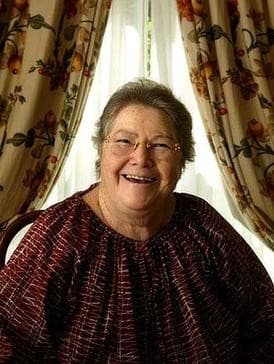
Colleen Margaretta McCullough was an Australian author known for her novels, her most well-known being The Thorn Birds and The Ladies of Missalonghi.
Similar books
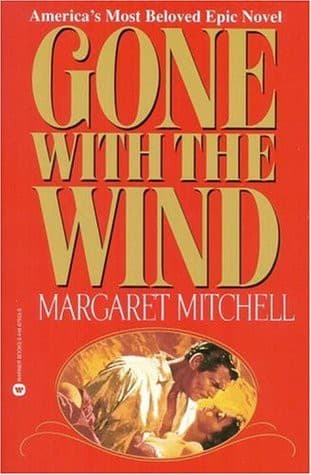
- Gone with the Wind
Margaret Mitchell
4.3 (1.1M) average on GoodreadsHistorical FictionA sprawling historical romance with a strong female protagonist and a complex, often unrequited love story set against a backdrop of societal upheaval.
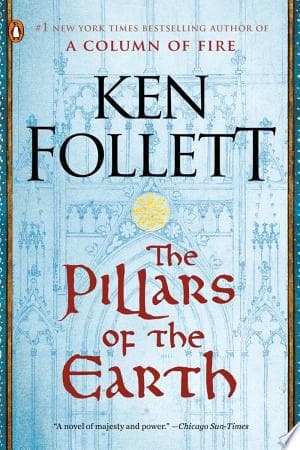
- The Pillars of the Earth
Ken Follett
4.3 (649k) average on GoodreadsFantasyA multi-generational historical saga with intricate character relationships, ambition, and conflict, though with less focus on romance.
- Outlander
Diana Gabaldon
4.2 (824k) average on GoodreadsFantasyFeatures a powerful, passionate romance with significant historical detail and a sense of enduring love across challenging circumstances.
- Giant
Edna Ferber
4.0 (3k) average on GoodreadsLiterary FictionBoth novels are multi-generational sagas set in demanding, iconic landscapes (Australian outback vs. Texas ranch). While Ferber's Giant focuses more on oil wealth, social change, and the clash of cultures, McCullough's The Thorn Birds delves deeper into the psychological torment of forbidden love and religious conflict, offering a more intense emotional core despite similar themes of legacy and endurance.
- One Hundred Years of Solitude
Gabriel García Márquez
4.1 (753k) average on GoodreadsLiterary FictionBoth works chronicle the lives of a family over many generations, exploring destiny and the passage of time. However, The Thorn Birds adheres to a more traditional historical realism, grounding its drama in verifiable historical contexts and human psychology, whereas Márquez's novel is a seminal work of magical realism, using fantastical elements to explore broader themes of history, memory, and the human condition. McCullough's focus is more on the personal, romantic tragedy within a historical setting.
- To Kill a Mockingbird
Harper Lee
4.3 (4.5M) average on GoodreadsHistorical FictionIn the 1930s Jim Crow South, Harper Lee writes about racial injustice, moral growth, and the quiet courage of a lawyer father, Atticus Finch, as seen through his young daughter's eyes.



Enjoyed the summary?
A summary gives you the shape of the book. The book itself has the detail, the examples and the voice.
Find The Thorn Birds on AmazonAs an Amazon Associate, BookBrief earns from qualifying purchases. How we're funded