

Synopsis
Covers the whole plot, including the ending.
- Difficulty
- Hard
- Pacing
- Moderate
- Mood
- Dark, Tragic, Intense, Philosophical
- Read it if
- You are interested in classic tragedy, the destructive nature of unchecked power, familial betrayal, and the descent into madness.
- Skip it if
- You prefer lighthearted stories, happy endings, or find archaic language difficult to follow without annotation.
King Lear Plot Summary
Covers the whole plot, including the ending.
The Division of the Kingdom
Aged King Lear decides to retire from kingship and divide his realm among his three daughters: Goneril, Regan, and Cordelia. He creates a test, asking each daughter to declare her love for him publicly. Goneril and Regan, with their husbands the Duke of Albany and the Duke of Cornwall, give elaborate, false speeches of devotion, earning them large parts of the kingdom. Cordelia, Lear's youngest and favorite daughter, refuses this false show, saying she loves him 'according to her bond; no more nor less.' Angered by her plainness, Lear disinherits her, despite pleas from his loyal Earl of Kent, who is then banished for speaking up. The King of France, seeing Cordelia's goodness, marries her without a dowry, while the Duke of Burgundy rejects her.
Edmund's Treachery Begins
Meanwhile, the Earl of Gloucester introduces his illegitimate son, Edmund, to Kent. Edmund, bitter about his birth status and societal bias, immediately plots against his legitimate older brother, Edgar. He fakes a letter, supposedly from Edgar, detailing a plan to kill Gloucester and take his inheritance. Gloucester, naive and quick to believe the worst, easily accepts Edgar's guilt. Edmund then warns Edgar of Gloucester's supposed anger, advising him to pretend madness and flee, which confirms Gloucester's belief in Edgar's guilt and allows Edmund to gain his father's trust and favor.
Lear's Diminished Retinue
Lear begins his rotating stay with Goneril, who quickly tires of his hundred knights and their loud behavior. She tells her servants to treat Lear disrespectfully to provoke him. Lear, sensing her scorn, is deeply hurt. Kent, disguised as 'Caius,' offers his service to Lear and is accepted. Lear confronts Goneril, who demands he dismiss half his retinue. Outraged by her lack of gratitude, Lear curses her and decides to leave for Regan's castle, believing his second daughter will be more welcoming. His Fool, always present, offers sharp comments on Lear's mistake, pointing out his loss of power and wisdom.
Regan's Cruelty
Lear arrives at Gloucester's castle, where Regan and Cornwall are staying. To his shock, he finds Kent (as Caius) in the stocks, put there by Cornwall for assaulting Goneril's steward, Oswald. Regan, supported by Cornwall, refuses to see Lear immediately and then, upon meeting him, demands he dismiss all his remaining knights, leaving him with none. She argues that even Goneril's allowance of fifty knights is too many. Lear, completely devastated by this double betrayal, realizes the extent of his daughters' cruelty. He has no refuge and nowhere to go, as both Goneril and Regan conspire to deny him any comfort or authority.
The Storm and Madness
Driven to madness by his daughters' ingratitude, Lear rushes out into a violent storm on the open heath, accompanied only by his loyal Fool and the disguised Kent. The storm mirrors Lear's inner turmoil and shattered mind. He rages against the elements, seeing them as helping his daughters' cruelty. His sanity quickly breaks down as he struggles with the unfairness of his situation. Meanwhile, Edgar, disguised as 'Poor Tom,' a mad beggar, wanders the same heath, having fled from his father, Gloucester. Their paths are set to cross, adding more suffering and despair to the already bleak scene.
Gloucester's Betrayal and Blinding
Gloucester, seeing Lear's suffering and learning of a French invasion supporting Lear, feels pity and tries to help the king. He secretly sends Lear to Dover for safety. However, Edmund, wanting to secure his inheritance and power, betrays his father to Cornwall and Regan, revealing Gloucester's loyalty to Lear and his knowledge of the French forces. Cornwall, enraged by Gloucester's 'treason,' brutally blinds Gloucester by gouging out his eyes, with Regan encouraging the act. A servant tries to intervene but is killed by Regan. Gloucester, now blind, realizes Edmund's treachery and Edgar's innocence, a realization that comes too late.
Edgar Guides Gloucester
Blind and hopeless, Gloucester is cast out. He meets Edgar, still disguised as 'Poor Tom.' Unrecognized by his father, Edgar agrees to lead Gloucester to Dover, where Gloucester plans to kill himself by jumping from the cliffs. Edgar, in this role, uses his disguise to protect his father and subtly guide him towards a form of redemption and understanding. He prevents Gloucester's suicide by tricking him into believing he has fallen from a great height, thus giving Gloucester a renewed will to live and endure his suffering. This journey becomes a test of endurance and a path to deeper spiritual insight for Gloucester.
Cordelia's Return and Battle
Cordelia, having learned of her father's mistreatment, returns to Britain with a French army, determined to restore Lear to his rightful place. She finds Lear, still mad, wandering near Dover and lovingly cares for him. Lear slowly regains some sanity, recognizing Cordelia and expressing remorse for his past actions. The French and British armies prepare for battle. Meanwhile, Goneril and Regan compete bitterly over Edmund, both wanting him. The battle begins, and the French forces, led by Cordelia, are defeated by the British army, commanded by Albany and Edmund.
The Deaths of the Sisters and Edmund
After the British victory, Lear and Cordelia are captured. Edmund orders their execution. Albany, having discovered Goneril's treachery and her affair with Edmund through a letter she sent, confronts her. Regan, poisoned by Goneril out of jealousy over Edmund, dies. Albany then challenges Edmund to single combat. Edgar, revealing his true identity, fights Edmund and fatally wounds him. Before he dies, Edmund, touched by Edgar's goodness, confesses his wickedness and reveals his order for Lear and Cordelia's deaths, trying a last-minute act of redemption by sending a messenger to stop the execution.
Lear's Final Grief and Death
Despite Edmund's late attempt to save them, the messenger arrives too late. Lear enters, carrying Cordelia's dead body. He is utterly heartbroken and consumed by grief, unable to understand her death. He speaks of her innocence and laments her loss, imagining her still alive. The accumulated suffering, the loss of his beloved daughter, and the weight of his past errors finally overwhelm him. Lear dies of a broken heart, leaving Albany, Edgar, and Kent to witness the king's tragic end. The kingdom is left in chaos, with the survivors facing the huge task of rebuilding after such widespread devastation and loss.
Principal Figures
King Lear
Protagonist
The aging King of Britain who unwisely divides his kingdom.
Lear is a proud, autocratic, yet ultimately loving father whose initial fatal flaw is his vanity and inability to distinguish between genuine affection and flattery. He demands outward displays of love, leading him to disinherit Cordelia and banish Kent. His journey is one of immense suffering, stripped of power, dignity, and sanity, as he confronts the harsh realities of human nature and his own errors. He experiences a profound psychological and emotional breakdown, descending into madness on the heath.
Relationships: Cordelia (Most beloved daughter, disinherited but eventually his only true comfort.); Goneril (Eldest daughter, deceitful and cruel, betrays and abuses him.); Regan (Middle daughter, equally deceitful and cruel, conspires against him.); Kent (Loyal servant, banished but returns in disguise to protect him.); Fool (Loyal companion, provides wisdom and comfort through jest.)
Cordelia
Supporting
Lear's youngest and most virtuous daughter.
Cordelia embodies truth, honesty, and selfless love. She refuses to flatter her father, leading to her disinheritance, but her actions are driven by integrity. She is a symbol of purity and compassion, returning with a French army not for power, but to rescue her suffering father. Her quiet strength and unwavering loyalty contrast sharply with her sisters' perfidy. She represents the potential for redemption and genuine affection in a world consumed by ambition and cruelty.
Relationships: King Lear (Her father, whom she loves genuinely despite his initial rejection.); Goneril (Sister, whom she despises for her deceit.); Regan (Sister, whom she despises for her deceit.); King of France (Her husband, who marries her for her virtue, not her dowry.)
Goneril
Antagonist
Lear's eldest daughter, driven by ambition and cruelty.
Goneril is ruthless, manipulative, and power-hungry. She quickly strips Lear of his authority and dignity, displaying a shocking lack of filial affection. She is characterized by her aggressive nature and her pursuit of power, which she shares with her sister Regan. Her lust extends to Edmund, leading to a fatal rivalry with Regan. Goneril represents unchecked ambition and the destructive potential of human evil, showing no remorse for her heinous actions.
Relationships: King Lear (Her father, whom she abuses and betrays.); Duke of Albany (Her husband, whom she scorns for his moral awakening.); Regan (Her sister, with whom she initially conspires but later rivals for Edmund's affection.); Edmund (Her lover, with whom she plots against her husband and father.)
Regan
Antagonist
Lear's middle daughter, equally cruel and ambitious as Goneril.
Regan mirrors Goneril in her cruelty and ambition, often surpassing her sister in the brutality of her actions, such as her involvement in Gloucester's blinding. She is equally adept at flattery and manipulation, quickly turning on her father once he has given away his power. Her rivalry with Goneril over Edmund highlights her own lust and moral depravity. Regan represents the depths of human depravity when unchecked by conscience or familial bonds.
Relationships: King Lear (Her father, whom she abuses and betrays.); Duke of Cornwall (Her husband, with whom she shares a cruel and violent nature.); Goneril (Her sister, with whom she initially conspires but later rivals for Edmund's affection.); Edmund (Her lover, with whom she plots.)
Edmund
Antagonist
Gloucester's illegitimate son, a Machiavellian schemer.
Edmund is a cunning, cynical, and ruthless opportunist. He resents his bastard status and the social stigma attached to it, driving him to plot against his legitimate brother, Edgar, and his father, Gloucester, to gain power and wealth. He is a master manipulator, using flattery, deception, and betrayal to achieve his ends. Edmund represents pure, amoral ambition and self-interest, viewing human bonds and loyalties as mere tools for his advancement. His intelligence and charm make him a formidable villain.
Relationships: Earl of Gloucester (His father, whom he betrays for personal gain.); Edgar (His legitimate brother, whom he frames and schemes against.); Goneril (His lover, whom he manipulates.); Regan (His lover, whom he manipulates.)
Edgar
Supporting
Gloucester's legitimate son, forced to disguise himself as 'Poor Tom'.
Edgar is initially naive and trusting, making him an easy victim of Edmund's schemes. Forced to flee and disguise himself as the mad beggar 'Poor Tom,' he undergoes immense suffering and transformation. Through his disguise, he witnesses the depths of human despair and cruelty, particularly in his interactions with Lear and his blind father, Gloucester. He embodies resilience, loyalty, and a strong sense of justice, eventually becoming a moral compass for the shattered kingdom.
Relationships: Earl of Gloucester (His father, whom he protects and guides in disguise.); Edmund (His illegitimate brother, who frames him.); King Lear (Witnesses Lear's madness and suffering, offering a strange comfort as 'Poor Tom'.)
Earl of Gloucester
Supporting
A nobleman whose fate parallels Lear's.
Gloucester is a loyal nobleman but, like Lear, is initially blind to the true nature of his children. He is easily deceived by Edmund's lies and unjustly banishes Edgar. His physical blinding serves as a powerful metaphor for his earlier moral and intellectual blindness. Through suffering, he gains insight and compassion, recognizing his folly and the true loyalty of Edgar. His journey is one of profound suffering and eventual spiritual redemption, mirroring Lear's own tragic path.
Relationships: King Lear (Loyal friend and subject, shares a parallel tragic fate.); Edgar (His legitimate son, whom he unjustly disinherits but later learns to trust and cherish.); Edmund (His illegitimate son, who betrays him.)
Earl of Kent
Supporting
Lear's loyal and outspoken nobleman.
Kent is a steadfastly loyal and honest nobleman. He is banished for speaking the truth to Lear about Cordelia, yet he remains devoted to his king. He disguises himself as 'Caius' to continue serving and protecting Lear, enduring hardship and humiliation without complaint. Kent represents unwavering loyalty, integrity, and courage, willing to sacrifice his own well-being for the sake of his king. He is a moral anchor in a world of treachery and deceit.
Relationships: King Lear (His loyal lord, whom he serves despite banishment.)
Fool
Supporting
Lear's jester, who provides wisdom through riddles and songs.
The Fool is Lear's constant companion after his rejection by Goneril and Regan. He uses humor, paradox, and biting satire to comment on Lear's folly, the injustice of the world, and the true nature of power. His riddles and songs often contain profound truths that Lear, in his madness, sometimes grasps. The Fool's loyalty and affection for Lear are evident, even as he criticizes him. He disappears from the play after Lear's madness takes hold, perhaps symbolizing the loss of reason and the triumph of despair.
Relationships: King Lear (His master and companion, whom he loves and tries to guide.)
Themes & Insights
Justice and Injustice
The play explores the nature of justice, especially divine justice. Lear and Gloucester suffer great injustice from their children, leading them to question the universe's order. The suffering of the innocent, like Cordelia, alongside the wicked, challenges the audience to reconcile a seemingly indifferent or cruel cosmic order with human ideas of fairness. The play suggests that while human justice often fails, a natural order eventually reasserts itself, punishing the wicked, though often with terrible collateral damage. Gloucester's brutal blinding and Lear's descent into madness show the arbitrary and often cruel nature of suffering. Edgar's eventual rise to power offers a hint of hope for a just future.
“As flies to wanton boys are we to the gods; / They kill us for their sport.”
Blindness and Insight
Both physical and metaphorical blindness are central to the play. Lear is initially 'blind' to Cordelia's true love and Goneril and Regan's deceit, leading to his tragic choices. His madness, ironically, brings him insight into the human condition, the nature of power, and the suffering of the poor. Gloucester's literal blinding symbolizes his earlier moral blindness in trusting Edmund over Edgar. Through his physical suffering, he gains spiritual sight, recognizing his mistakes and the true nature of his sons. The theme suggests that true understanding often comes through suffering and the removal of illusions.
“I have no way, and therefore want no eyes; / I stumbled when I saw.”
Filial Ingratitude
The betrayal of Lear by his daughters Goneril and Regan drives the tragedy. Their deep ingratitude, after receiving their inheritance, is shown as a monstrous and unnatural act that shatters Lear's world and sanity. This theme explores the breakdown of basic human bonds and the pain of parental rejection. Lear's repeated curses on his daughters and his laments over their cruelty highlight the psychological torment their actions cause. The play suggests that breaking such sacred bonds leads to chaos and destruction.
“How sharper than a serpent's tooth it is / To have a thankless child!”
Nature and the Unnatural
The play often contrasts 'nature' as a force of order and love with 'unnatural' acts of cruelty and betrayal. Goneril and Regan are often called 'unnatural hags' or 'monsters of the deep' because their actions violate natural family bonds. Edmund, in his speeches, embraces a 'nature' that is ruthless and self-serving, rejecting social norms and traditional morality. The storm on the heath symbolizes the chaotic, 'unnatural' state of both Lear's mind and the kingdom, reflecting the breakdown of social and family order. The play explores what happens when people defy the natural order of affection and duty.
“Thou, Nature, art my goddess; to thy law / My services are bound.”
Madness
Lear's descent into madness is a central part of the play, caused by his daughters' cruelty and his loss of power. His madness is not just mental derangement but a way to gain deep philosophical insight. In his delirium, he strips away the illusions of royalty and status, showing humanity's raw, vulnerable core. He rails against social injustice, hypocrisy, and corrupt power, becoming a prophetic figure. The madness also helps him cope with unbearable suffering, allowing Lear to escape the full reality of his situation while also confronting deeper truths.
“O, let me not be mad, not mad, sweet heaven! / Keep me in temper; I would not be mad!”
Plot Devices & Literary Techniques
Disguise
Characters assume false identities to achieve their goals or protect themselves.
Kent disguises himself as 'Caius' to remain loyal to Lear and protect him after his banishment. Edgar disguises himself as 'Poor Tom,' a mad beggar, to escape Edmund's treachery and later to guide his blind father, Gloucester. Disguise allows characters to observe events from a different perspective, gain insights, and act without revealing their true intentions or vulnerability. It highlights the theme of appearance versus reality and the deception inherent in the human world, while also enabling acts of selfless loyalty and protection.
The Storm on the Heath
A powerful natural phenomenon that mirrors Lear's internal turmoil and the chaos in the kingdom.
The violent storm that Lear endures on the heath is a pathetic fallacy, reflecting both the king's internal madness and the cosmic disorder unleashed by his and his daughters' actions. It serves as a literal and metaphorical backdrop for Lear's descent into madness, intensifying his suffering and stripping him of his remaining illusions. The storm also symbolizes the 'unnatural' state of the kingdom and the breakdown of social and familial bonds, underscoring the play's themes of nature and chaos.
Letters and Forgery
Written communications used to manipulate and betray.
Letters play a crucial role in advancing the plot through deception. Edmund forges a letter from Edgar to Gloucester, convincing his father of Edgar's treachery. Later, Goneril's letter to Edmund, detailing her plans to poison Albany, is intercepted and exposes her wickedness. These letters highlight the power of written communication to be twisted for malicious purposes, driving the plot forward by creating misunderstandings, betrayals, and ultimately, exposing the villainy of characters like Edmund and Goneril.
Parallel Plots
Two distinct but thematically linked storylines that mirror each other.
The play features two parallel plots: King Lear's tragic experience with his three daughters and the Earl of Gloucester's similar fate with his two sons. Both fathers are deceived by their wicked children (Goneril and Regan for Lear; Edmund for Gloucester) and reject their loyal, loving children (Cordelia for Lear; Edgar for Gloucester). This structural device intensifies the play's themes of filial ingratitude, blindness, and justice, demonstrating that such tragic folly is not unique to a king but a universal human failing, making the suffering more profound and widespread.
King Lear Quotes
“How sharper than a serpent's tooth it is / To have a thankless child!”
“Nothing will come of nothing. Speak again.”
“Thou, nature, art my goddess; to thy law / My services are bound.”
“As flies to wanton boys are we to th' gods; / They kill us for their sport.”
“I am a man / More sinned against than sinning.”
“The gods are just, and of our pleasant vices / Make instruments to plague us.”
“O, let me not be mad, not mad, sweet heaven! / Keep me in temper; I would not be mad!”
“When we are born, we cry that we are come / To this great stage of fools.”
“Ripeness is all.”
“Is there any cause in nature that makes these hard hearts?”
“All friends shall taste / The wages of their virtue, and all foes / The cup of their deservings.”
“Through tattered clothes small vices do appear; / Robes and furred gowns hide all.”
“The weight of this sad time we must obey; / Speak what we feel, not what we ought to say.”
“Let me not stay a jot for dinner; go, get it ready.”
Quiz
10 questions on the plot and the characters. Each answer comes with a short explanation.
Question 1
At the beginning of the play, which of Lear's daughters expresses her love for him in the most effusive, yet ultimately insincere, terms?
- Cordelia
- Regan
- Goneril
- Ophelia
Show answer
C. Goneril Goneril is the first to declare her love in exaggerated terms, stating she loves Lear 'more than words can wield the matter' and 'dearer than eyesight, space, and liberty.'
Question 2
What is the primary reason King Lear decides to divide his kingdom among his daughters?
- To test their loyalty and love for him.
- To prevent future conflicts over succession.
- To unburden himself of the cares of state in his old age.
- To reward them for their past services to the kingdom.
Show answer
C. To unburden himself of the cares of state in his old age. Lear explicitly states his intention to 'shake all cares and business from our age, conferring them on younger strengths' so he can 'unburdened crawl toward death.'
Question 3
Which character disguises himself as 'Poor Tom' to accompany King Lear during his madness on the heath?
- Kent
- Edgar
- Oswald
- Fool
Show answer
B. Edgar Edgar, after being falsely accused by Edmund, flees and adopts the disguise of a mad beggar named 'Poor Tom' to avoid capture.
Question 4
What is the fate of Gloucester's eyes, inflicted by Cornwall and Regan?
- He is blinded by being stabbed in the eyes with a dagger.
- He is forced to look at the sun until he goes blind.
- He is given a potion that gradually diminishes his sight.
- His eyes are gouged out by a heated poker.
Show answer
A. He is blinded by being stabbed in the eyes with a dagger. In one of the play's most brutal scenes (Act 3, Scene 7), Cornwall explicitly states 'Upon these eyes of thine I'll set my foot!' and proceeds to gouge out Gloucester's eyes with his heel and then a dagger.
Question 5
What is the primary thematic significance of the storm scene on the heath in Act 3?
- It symbolizes the chaos and disorder within the kingdom.
- It reflects Lear's internal turmoil and descent into madness.
- It highlights the indifference of nature to human suffering.
- It foreshadows a literal battle between Lear's forces and those of his daughters.
Show answer
B. It reflects Lear's internal turmoil and descent into madness. The violent storm directly parallels Lear's escalating madness and his internal struggle with his daughters' betrayal, mirroring his mental state with the external chaos.
Question 6
Which of the following characters remains loyal to King Lear throughout the play, even after being banished?
- Oswald
- Cornwall
- Kent
- Albany
Show answer
C. Kent Kent, banished for defending Cordelia, disguises himself as 'Caius' and serves Lear faithfully, enduring the stocks and remaining by his side during his madness.
Question 7
What is the specific cause of Cordelia's death?
- She dies of grief after seeing Lear's condition.
- She is executed by hanging on Edmund's orders.
- She is killed in battle during the invasion.
- She commits suicide after her defeat.
Show answer
B. She is executed by hanging on Edmund's orders. After the battle, Edmund sends Cordelia and Lear to prison and secretly orders Cordelia to be hanged, despite his later attempt to retract the order.
Question 8
How does Edmund ultimately meet his end?
- He is killed by Goneril in a fit of rage.
- He is executed by order of Albany after his treachery is exposed.
- He is killed in a trial by combat by his legitimate brother, Edgar.
- He commits suicide after his plans unravel.
Show answer
C. He is killed in a trial by combat by his legitimate brother, Edgar. Edgar, disguised, challenges Edmund to a duel, revealing his identity only after fatally wounding his brother. Edmund dies acknowledging the 'wheel is come full circle.'
Question 9
What is the profound realization Lear makes about the nature of justice and suffering while he is mad on the heath?
- That divine intervention will ultimately restore order.
- That wealth and power corrupt, and the poor are often more virtuous.
- That suffering is a necessary part of the human condition.
- That he was always a benevolent and just ruler.
Show answer
B. That wealth and power corrupt, and the poor are often more virtuous. Lear, stripped of his power and exposed to the elements, realizes the hypocrisy of societal justice and empathizes with the 'poor naked wretches' he previously ignored, understanding that 'superflux' makes men 'proud'.
Question 10
Which specific animal imagery does Lear repeatedly use to describe his ungrateful daughters Goneril and Regan?
- Serpents and vipers
- Tigers and lions
- Wolves and hyenas
- Vultures and pelicans
Show answer
D. Vultures and pelicans Lear frequently refers to his daughters as 'pelican daughters' (Act 3, Scene 4) and uses imagery of birds of prey, such as 'vultures' (Act 2, Scene 4), to depict their parasitic and cruel nature.
King Lear FAQ
What is the core premise of 'King Lear'?
King Lear, an aging monarch, decides to divide his kingdom among his three daughters based on their public declarations of love. He is flattered by Goneril and Regan's elaborate speeches but disinherits Cordelia for her honest, understated reply, setting in motion a tragic chain of events that strips him of his power, sanity, and family.
How does Lear's initial decision regarding his kingdom directly lead to his downfall?
Lear's decision to banish Cordelia and Kent, while entrusting his power to the manipulative Goneril and Regan, immediately isolates him from his most loyal allies. This creates a vacuum where his two elder daughters can systematically strip him of his remaining authority and dignity, leaving him vulnerable to the elements and madness.
Who is the Fool, and what is his primary role in the play?
The Fool is Lear's loyal companion, offering cynical yet profound commentary on Lear's folly through songs, riddles, and jests. He serves as a voice of truth and reason that Lear initially ignores, providing a sharp contrast to Lear's deteriorating mental state and highlighting the absurdity of his choices.
What is the purpose of the Gloucester subplot, and how does it parallel Lear's story?
The Gloucester subplot mirrors Lear's narrative by featuring a father, Gloucester, who is similarly blind to the true nature of his children. He disinherits his legitimate son Edgar based on the lies of his illegitimate son Edmund, leading to his own physical blinding and eventual suffering, thus amplifying the play's themes of filial ingratitude and misguided judgment.
How do Goneril and Regan's actions escalate throughout the play?
Goneril and Regan initially flatter Lear to gain power, then swiftly begin to diminish his retinue and authority, culminating in their refusal to shelter him during the storm. Their cruelty intensifies as they vie for Edmund's affection and ultimately turn against each other, leading to their violent deaths.
What is the significance of the storm scene for Lear's character development?
The storm scene is pivotal for Lear, as it physically and mentally strips him bare, forcing him to confront his own vulnerability and the suffering of the poor. Exposed to the elements, he begins to shed his kingly arrogance and develops empathy, achieving a tragic kind of self-awareness and understanding of human misery.
Are there any subtle indications of Cordelia's true character before her banishment?
Cordelia's refusal to engage in the public spectacle of exaggerated love, stating she loves Lear 'according to her bond; no more nor less,' subtly reveals her integrity and honesty. Her brief, direct replies contrast sharply with her sisters' verbose flattery, hinting at a deeper, more genuine affection that she cannot articulate for show.
What is the symbolic meaning of Edgar's disguise as 'Poor Tom'?
Edgar's transformation into 'Poor Tom,' a mad beggar, allows him to observe the unfolding tragedies from a safe distance and to minister to his blind father, Gloucester, without revealing his identity. This disguise symbolizes the stripping away of social status and highlights the shared human experience of suffering and vulnerability.
How does Edmund manipulate those around him, and what are his motivations?
Edmund, driven by his illegitimate status and desire for power, skillfully manipulates his father Gloucester, his brother Edgar, and both Goneril and Regan through cunning lies and forged letters. His motivations stem from a resentment of his birthright and a ruthless ambition to rise above his social standing, regardless of the ethical cost.
Analyze Lear's descent into madness from a psychological perspective.
Lear's madness is a psychological response to profound grief, betrayal, and the sudden loss of identity and power. Initially fueled by rage and despair, his mind fragments, leading to hallucinations and disjointed speech, but also paradoxically to moments of profound insight and empathy, as his ego dissolves under extreme duress.
How do Goneril and Regan's actions reflect a form of narcissistic personality disorder?
Goneril and Regan exhibit traits of narcissistic personality disorder through their exaggerated self-importance, lack of empathy, and exploitative behavior. They demand adoration from Lear while viewing him as a means to an end, demonstrating a profound disregard for his emotional well-being and an insatiable hunger for power and control.
What is the psychological impact of Gloucester's blinding on his character?
Gloucester's physical blinding serves as a brutal metaphor for his earlier moral blindness, forcing him to confront the truth about Edmund and Edgar. This trauma leads to deep despair and suicidal ideation, but ultimately, guided by Edgar, he experiences a spiritual awakening and a profound shift in perspective, valuing inner sight over physical vision.
Discuss the psychological dynamics of the relationship between Lear and his Fool.
The Fool acts as Lear's externalized conscience and a psychological mirror, reflecting Lear's folly and pain through humor and satire. Their dynamic is one of codependency, where the Fool provides harsh truths that Lear needs to hear, even as Lear's deteriorating mind makes him increasingly reliant on the Fool's presence for comfort and reality checks.
Is 'King Lear' ultimately a play about justice, or the lack thereof?
'King Lear' presents a complex view of justice, often depicting a world where the wicked prosper and the innocent suffer, leading to questions about divine intervention or natural order. While some characters like Edmund meet a form of poetic justice, Cordelia's tragic death and Lear's prolonged suffering suggest a universe indifferent to human morality, making it a powerful commentary on the absence of clear justice.
How does the play explore the theme of 'blindness' in both a literal and metaphorical sense?
The play profoundly explores blindness: Lear is initially metaphorically blind to Cordelia's true love and Goneril and Regan's deceit, while Gloucester is blind to Edmund's treachery. Gloucester's literal blinding then serves to open his 'eyes' to the truth, highlighting how insight often comes from suffering and the loss of physical sight.
To what extent is Lear responsible for his own suffering, versus being a victim of circumstance?
Lear is significantly responsible for his suffering, primarily due to his initial act of pride, vanity, and poor judgment in disinheriting Cordelia and dividing his kingdom unwisely. However, he also becomes a victim of his daughters' extreme cruelty and the harshness of the natural world, suggesting a tragic interplay between his flawed choices and external forces.
What is the significance of the ending of 'King Lear' – particularly Cordelia's death?
Cordelia's death, shortly after her reunion with Lear, is arguably the most devastating moment, signifying a world where even pure love cannot triumph over evil and chaos. It denies Lear any lasting solace and pushes him into a final, fatal despair, reinforcing the play's bleak vision of human existence and the ultimate fragility of hope.
Does the play offer any hope or redemption amidst its tragic events?
While the ending is overwhelmingly tragic, some argue that there are glimmers of redemption in Lear's newfound humility and empathy, and in Edgar's steadfast loyalty and eventual leadership. The survival of characters like Edgar and Kent, who represent virtue and resilience, suggests a possibility of rebuilding, though the immediate impact is one of profound loss.
About the author
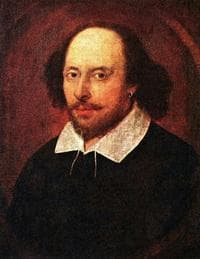
William Shakespeare was an English playwright, poet and actor. He is widely regarded as the greatest writer in the English language and the world's pre-eminent dramatist. He is often called England's national poet and the "Bard of Avon". His extant works, including collaborations, consist of some 39 plays, 154 sonnets, three long narrative poems, and a few other verses, some of uncertain authorship. His plays have been translated into every major living language and are performed more often than those of any other playwright. Shakespeare remains arguably the most influential writer in the English language, and his works continue to be studied and reinterpreted.
Similar books
- Hamlet
William Shakespeare
4.0 (501) average on GoodreadsYoung AdultExplores themes of madness, revenge, and the collapse of a royal family.
- Othello
William Shakespeare
3.9 (315k) average on GoodreadsFictionFocuses on betrayal, jealousy, and a tragic downfall orchestrated by a manipulative villain.
- Nineteen Eighty-Four
George Orwell
4.2 (5.5M) average on GoodreadsFictionWinston Smith dreams of truth and rebellion in a world where Big Brother watches all, but he confronts the terrifying power of a regime that controls not just actions, but thoughts.
- The Frozen River
Ariel Lawhon
4.4 (600k) average on GoodreadsFictionIn 1789 Maine, a heroic midwife's diary helps her expose a murder and get justice in a town that wants to silence her.
- A Man Called Ove
Fredrik Backman
4.4 (569k) average on GoodreadsFictionA stubborn widower, who lives by strict rules, finds his quiet world changed by a lively new family next door, making him face his past and find happiness in human connection.
- The Art of Racing in the Rain
Garth Stein
4.2 (452k) average on GoodreadsFictionThrough the eyes of Enzo, a wise and observant dog, a race car driver's family navigates a journey of love, loss, and resilience, learning that life's most important lessons often come in the curves, not just on the straightaways.






Enjoyed the summary?
A summary gives you the shape of the book. The book itself has the detail, the examples and the voice.
Find King Lear on AmazonAs an Amazon Associate, BookBrief earns from qualifying purchases. How we're funded