

Synopsis
Covers the whole plot, including the ending.
- Difficulty
- Medium
- Pacing
- Slow
- Mood
- Intimate, Thought-provoking, Melancholy, Intense, Poignant
- Read it if
- You enjoy character-driven stories exploring deep psychological themes, unconventional relationships, and the power of storytelling amidst oppression. Ideal for readers interested in LGBTQ+ themes, political commentary, and the human spirit's resilience.
- Skip it if
- You prefer fast-paced plots with clear action, or are uncomfortable with detailed discussions of sexuality and political torture.
Kiss of the Spider Woman Plot Summary
Covers the whole plot, including the ending.
A Cell Divided: Molina's Fantasies and Valentin's Reality
The novel begins in a Buenos Aires prison cell shared by Luis Molina, a homosexual man imprisoned for corrupting a minor, and Valentin Arregui, a young Marxist revolutionary incarcerated for his political activities. Molina often entertains Valentin by retelling old Hollywood film plots in detail, especially romantic melodramas. Valentin, at first dismissive of these 'bourgeois' distractions, sees them as a frivolous escape from their harsh reality, preferring to focus on his political ideals and the revolutionary cause. Their first interactions show their differences: Molina is effeminate, nurturing, and sentimental, while Valentin is stern, intellectual, and focused on political theory and the physical discomforts of prison life, including pain from his recent torture.
The First Act of Care: Molina Nurses a Sick Valentin
Valentin suffers from severe food poisoning, experiencing intense stomach cramps and vomiting. Molina, despite Valentin's initial protests and his own discomfort with bodily functions, becomes his caregiver. He cleans Valentin, brings him a bedpan, and offers comforting words. This selfless act is a turning point in their relationship. Valentin, weakened and vulnerable, begins to see Molina not just as an annoying cellmate but as a compassionate person. The physical closeness forced by Valentin's illness starts to break down the intellectual and social barriers Valentin had built, creating a new sense of trust and dependency.
The Interrogation and the Pact: Molina's Secret Mission
Through internal monologues and a later conversation, it becomes clear that Molina is secretly working with the prison warden. He has been offered an early release and better treatment if he can get information about Valentin's revolutionary cell and its activities. Molina, initially motivated by freedom and a desire to see his ailing mother, struggles with this moral problem. He begins to subtly ask Valentin for details, but his growing affection for Valentin complicates his mission. He feels torn between his wish for freedom and his developing emotional bond with his cellmate, which makes betraying Valentin harder.
Shared Vulnerabilities: Valentin's Past Loves
As their bond deepens, Valentin, still recovering and feeling the emotional strain of his imprisonment, begins to open up to Molina. He tells stories of his past loves, especially his complicated relationship with Marta, a fellow revolutionary, and his lingering feelings for her. He also shares details about his political struggles, his commitment to the cause, and his sacrifices. These intimate confessions show a more vulnerable, human side to Valentin, contrasting sharply with his earlier stoic manner. Molina listens carefully, offering comfort and understanding, further cementing their emotional connection and blurring their initial roles.
The Warden's Pressure and Molina's Growing Conflict
The warden continues to pressure Molina for specific information about Valentin's revolutionary contacts. Molina, while pretending to comply during his meetings with the warden, finds himself unable to betray Valentin. He offers vague, unhelpful details, trying to gain time. His internal conflict grows as he weighs the promise of freedom against his deepening affection for Valentin. He recognizes the moral implications of his task and the potential harm he could inflict on Valentin and his comrades. This internal struggle is a key part of Molina's character development, moving him beyond his initial self-interest.
A Night of Intimacy: Love and Betrayal
One night, after an emotional conversation, Molina and Valentin share sexual intimacy. This act is ambiguous, born from a mix of affection, loneliness, and perhaps a manipulative element from Molina to gain Valentin's trust, though it also represents a genuine emotional connection. For Valentin, it's a confusing experience, challenging his heterosexual identity and his rigid political ideology. The morning after, both men deal with the implications of their intimacy, which deepens their bond but also increases Molina's guilt about his secret mission and Valentin's emotional turmoil.
Molina's Release and a Dangerous Request
Molina receives news of his impending early release. Before he leaves, Valentin, trusting Molina completely after their shared intimacy, asks him to deliver a crucial message to his revolutionary contacts outside the prison. This request puts Molina in a dangerous position. He understands that relaying the message would expose him to authorities and definitively align him with the revolutionary cause, risking his freedom and life. Despite his fear, Molina agrees to Valentin's request, showing his loyalty and love for Valentin, going beyond his initial self-serving reasons for freedom.
Freedom and Fatal Betrayal
Upon his release, Molina tries to carry out Valentin's mission. He goes to the pre-arranged location to meet Valentin's contacts. However, he is under surveillance by the secret police, who have been monitoring his release as part of their plan to uncover the revolutionary cell. As Molina tries to pass the message, he is intercepted by the police. In a moment of defiance and loyalty to Valentin, Molina refuses to cooperate or reveal any information. He is shot and killed by the police, becoming a martyr for a cause he initially had no part in, and for the man he came to love.
Valentin's Despair and a Dream of Reunion
Back in prison, Valentin is informed of Molina's death. The news devastates him, increasing his grief, guilt, and loneliness. He recognizes Molina's sacrifice and the depth of his love. Later, suffering from a severe fever and the lingering effects of his torture, Valentin is given a sedative by the prison doctor. Under its influence, he drifts into a vivid dream. In this dream, he is reunited with Molina on a beautiful, tranquil island, where they are together and free from suffering. This dream provides a poignant, if tragic, sense of closure, showing the transformative power of their relationship.
Kiss of the Spider Woman Characters
Luis Molina
Protagonist
A homosexual window dresser imprisoned for corrupting a minor, who finds unexpected love and purpose.
Molina is a flamboyant and sensitive man, imprisoned for 'corrupting a minor.' He entertains Valentin by recounting elaborate film plots, using them as an escape from the harsh prison reality. Initially self-centered and focused on his own release, he is secretly pressured by the warden to spy on Valentin. However, through his interactions and care for Valentin, Molina undergoes a profound transformation. He develops deep affection and loyalty, eventually sacrificing his life to protect Valentin and his cause. He represents the power of love, empathy, and personal courage in the face of political oppression.
Relationships: Valentin Arregui (Cellmate, lover, and object of his affection and ultimate sacrifice); The Warden (Manipulative authority figure, pressuring him to spy); Molina's Mother (His primary familial connection and motivation for seeking early release)
Valentin Arregui
Protagonist
A young, intellectual Marxist revolutionary, imprisoned and tortured for his political activities.
Valentin is a stern, intellectual, and politically committed Marxist revolutionary. Initially dismissive of Molina's 'bourgeois' films, he is focused on his political ideals and the revolutionary struggle. He is proud, stoic, and initially resistant to emotional vulnerability, especially after enduring torture. However, Molina's persistent care and affection gradually break down his defenses, leading him to confide his past loves and fears. He struggles with his own prejudices and the unexpected intimacy with Molina, ultimately recognizing Molina's profound loyalty and love. His character represents the human cost of political struggle and the softening of rigid ideology through personal connection.
Relationships: Luis Molina (Cellmate, lover, and a source of emotional connection and profound grief); Marta (Former revolutionary lover, a source of past romantic longing); His Revolutionary Comrades (His political affiliation and primary external loyalty)
The Warden
Antagonist
The manipulative prison official who pressures Molina to spy on Valentin.
The Warden is the unseen but powerful authority figure who orchestrates the scheme to use Molina as an informant. He represents the oppressive state apparatus and its willingness to exploit individuals for political gain. He holds Molina's freedom as leverage, playing on his desire to be released and his love for his mother. His interactions with Molina are always off-stage, relayed through Molina's internal monologues or brief mentions, emphasizing his manipulative and detached nature. He is a symbol of the systemic cruelty and moral corruption inherent in the authoritarian regime.
Relationships: Luis Molina (Manipulator and manipulated); Valentin Arregui (Target of his political espionage)
Marta
Supporting
Valentin's former revolutionary lover, a significant figure from his past.
Marta is a figure from Valentin's past, a fellow revolutionary with whom he had a passionate but complicated romantic relationship. She is frequently mentioned by Valentin during his confessions to Molina, symbolizing his lingering emotional attachments and the sacrifices he has made for the cause. Her character, though never physically present, provides insight into Valentin's emotional depth and his struggles to reconcile love with his political commitments. She represents a lost love and a connection to Valentin's life before imprisonment, stirring his vulnerability.
Relationships: Valentin Arregui (Former lover and comrade)
The Prison Doctor
Supporting
The doctor who attends to Valentin and administers sedatives.
The Prison Doctor is a minor character who appears briefly to treat Valentin's illness and, later, to administer a sedative after Molina's death. He represents a detached, professional presence within the harsh prison environment. While his actions are medically necessary, he also symbolizes the system's control over the prisoners' physical and mental states. His administration of the sedative to Valentin leads to the novel's poignant dream sequence, providing a temporary escape from reality.
Relationships: Valentin Arregui (Patient and doctor)
Molina's Mother
Mentioned
Molina's ailing mother, a primary motivation for his desire for early release.
Molina's Mother is a significant off-stage character whose ailing health is a key motivator for Molina's initial willingness to cooperate with the warden. Molina frequently expresses his love and concern for her, highlighting his nurturing and familial side. Her existence anchors Molina's desire for freedom in a tangible, emotional reality, making his eventual sacrifice for Valentin even more poignant. She represents the domestic life and personal connections Molina longs to return to.
Relationships: Luis Molina (Son and mother, a deep familial bond)
Kiss of the Spider Woman Themes
Love and Sacrifice
The novel explores the power of love, especially between Molina and Valentin. Molina's initial self-interest in securing his release gives way to a selfless love for Valentin, ending in his sacrifice. Valentin learns to open himself to love and vulnerability, moving beyond his rigid political ideology. Their relationship shows how love can go beyond social barriers, personal prejudices, and political divides, leading to acts of courage and devotion, as seen when Molina tries to deliver Valentin's message despite the danger.
“What a strange thing, a love like this. That comes to you in prison. And makes you forget all your suffering.”
Identity and Self-Discovery
Molina and Valentin both undergo journeys of self-discovery. Molina, initially defined by his homosexuality and his role as an entertainer, finds a deeper purpose and courage through his love for Valentin. He challenges his own perceived weakness and becomes a hero. Valentin, a staunch Marxist, faces his emotional vulnerabilities, his prejudices against Molina's sexuality, and his capacity for intimate connection beyond political alliances. The confined prison space forces them to shed external identities and confront their true selves, leading to unexpected growth and understanding.
“I never thought I could feel this way about anyone, not like this. It's... it's confusing everything I believed.”
The Power of Storytelling and Fantasy
Molina's retelling of film plots is a central theme, showing how storytelling creates escape, connections, and ways to interpret reality. These fantasies offer refuge from the harsh prison life and become a way for the two men to express and understand emotions. The films, at first dismissed by Valentin as frivolous, gradually become a shared language, allowing them to explore themes of love, betrayal, and heroism in a safe, indirect way. Ultimately, the film narratives mirror and foreshadow the real-life drama in their cell.
“And the music, Valentin, the violins just swell, and you know, you just know, that this is true love, no matter what happens.”
Political Oppression and Resistance
The novel is set against an authoritarian Argentine regime, where political prisoners like Valentin are tortured and exploited. The prison itself is a small example of the oppressive state, with the warden representing its manipulative power. Molina's forced collaboration and ultimate sacrifice show how political oppression reaches into individual lives. However, it also shows resistance beyond overt political action, such as Molina's quiet defiance and his ultimate act of loyalty, demonstrating that human connection can be a strong form of resistance against dehumanizing systems.
“They want me to tell them everything. They want names, addresses. But I won't. I won't betray anyone.”
Plot Devices & Literary Techniques
Dialogue-Only Narrative
The entire novel is presented almost exclusively through dialogue and internal monologues.
Puig primarily uses dialogue between Molina and Valentin, interspersed with Molina's detailed film narrations and occasional footnotes providing academic information, to drive the narrative. There is no omniscient narrator describing scenes or actions. This unique structure immerses the reader directly into the characters' minds and interactions, allowing their personalities, emotions, and the nuances of their relationship to unfold solely through their spoken words and thoughts. It emphasizes the confined, intimate nature of their existence and forces the reader to actively interpret their unspoken feelings and the subtle shifts in their dynamic.
Film Narrations
Molina's detailed recounting of old Hollywood films.
Molina's elaborate descriptions of various films serve multiple crucial functions. They act as a primary plot device for character development, revealing Molina's romantic sensibility and his escapist tendencies. For Valentin, they initially represent bourgeois distraction but gradually become a means of emotional connection and a way to explore complex feelings indirectly. The films' plots often parallel or foreshadow the events and emotional arcs within the cell, providing a meta-narrative layer. They also offer a vivid contrast between the harsh prison reality and the idealized worlds of cinema, highlighting the human need for fantasy and beauty.
Footnotes
Academic, psychoanalytic footnotes providing commentary on homosexuality.
Throughout the novel, Puig includes academic-style footnotes that discuss theories of homosexuality, psychoanalysis, and gender roles. These footnotes often appear at moments when Molina's sexuality or gender identity is being discussed or implicitly explored. This device serves to intellectualize and contextualize Molina's character, providing a counterpoint to the emotional immediacy of the dialogue. It also challenges the reader to consider the social and scientific interpretations of sexuality, adding a layer of critical analysis to the personal narrative and subtly commenting on the societal prejudices Molina faces.
Confined Setting (Prison Cell)
The single, unchanging setting of the prison cell.
The entire story unfolds within the claustrophobic confines of a single prison cell. This restricted setting intensifies the psychological drama and forces the characters into an inescapable intimacy. It strips away external distractions, making their internal lives and their interactions the sole focus. The cell becomes a crucible where their personalities clash, merge, and transform under extreme pressure. The lack of external action emphasizes the power of dialogue, internal thought, and imagination to create a rich narrative world within a physically barren space, highlighting the human capacity for connection even in isolation.
Kiss of the Spider Woman Quotes
“I think that in life, the only thing that's important is to be happy.”
“The only thing that matters is that you're not alone.”
“I'm not a woman, I'm a man who likes to act like a woman.”
“Reality is what you make of it.”
“In the movies, everything is possible.”
“You have to learn to live with your contradictions.”
“Love is the only thing that can save us.”
“I don't want to be a hero, I just want to be myself.”
“The world outside is full of monsters.”
“We are all prisoners of something.”
“Sometimes, the truth is too painful to bear.”
“In the end, we only have each other.”
“Beauty is a form of resistance.”
“You can't change the world with violence.”
Quiz
10 questions on the plot and the characters. Each answer comes with a short explanation.
Question 1
What is the primary setting of 'Kiss of the Spider Woman'?
- A Buenos Aires apartment
- An Argentine prison cell
- A rural guerrilla camp
- A police interrogation room
Show answer
B. An Argentine prison cell The entire novel takes place in a single prison cell in Argentina, where Molina and Valentin are cellmates, emphasizing their isolation and the confined nature of their relationship.
Question 2
Why is Valentin imprisoned in the novel?
- For theft and fraud
- For being a Marxist revolutionary
- For homosexual acts
- For murdering a police officer
Show answer
B. For being a Marxist revolutionary Valentin is a young Marxist political prisoner, incarcerated for his revolutionary activities against the Argentine government, which contrasts with Molina's imprisonment for a different reason.
Question 3
What does Molina do to pass time and comfort Valentin in prison?
- He teaches Valentin to dance
- He tells stories from movies
- He writes letters for Valentin
- He shares his food rations
Show answer
B. He tells stories from movies Molina, a film enthusiast, recounts plots of movies, particularly romantic and melodramatic ones, to entertain and distract Valentin, which becomes a key bonding activity in their friendship.
Question 4
How do the police officials pressure Molina regarding Valentin?
- By threatening to harm his family
- By offering him a reduced sentence in exchange for spying
- By torturing him physically
- By blackmailing him with evidence of his crimes
Show answer
B. By offering him a reduced sentence in exchange for spying The police offer Molina an early release if he agrees to spy on Valentin and extract information about his revolutionary contacts, creating a moral dilemma that threatens their friendship.
Question 5
What is a central theme explored through Molina and Valentin's relationship?
- The corruption of the justice system
- The clash between political ideology and personal connection
- The importance of family loyalty
- The dangers of urban life
Show answer
B. The clash between political ideology and personal connection The novel delves into how Valentin's rigid Marxist ideals initially conflict with Molina's apolitical, romantic worldview, but their friendship gradually bridges this divide, highlighting themes of empathy and human connection.
Question 6
Why was Molina originally imprisoned?
- For political activism
- For corruption as a government official
- For a 'moral offense' related to his homosexuality
- For smuggling contraband
Show answer
C. For a 'moral offense' related to his homosexuality Molina is imprisoned for a 'corruption of minors' charge, which in the context of the novel is implied to be related to his homosexuality, reflecting the societal prejudices of the time.
Question 7
How does the novel's structure incorporate elements beyond dialogue?
- It includes flashbacks to the characters' childhoods
- It uses footnotes with psychological theories
- It features illustrations of the prison
- It alternates with third-person narration
Show answer
B. It uses footnotes with psychological theories Puig includes extensive footnotes that discuss psychological and sociological theories, such as Freudian analysis, to provide deeper context on themes like sexuality and politics, blending narrative with academic discourse.
Question 8
What significant change occurs in Valentin's attitude toward Molina over the course of the novel?
- He becomes more dismissive of Molina's stories
- He develops romantic feelings for Molina
- He starts to view Molina as a political ally
- He grows to resent Molina's homosexuality
Show answer
B. He develops romantic feelings for Molina Initially skeptical and ideological, Valentin gradually softens and forms a deep emotional and romantic bond with Molina, symbolizing the transcendence of personal connection over political dogma.
Question 9
What role do Molina's movie narratives play in the novel's exploration of reality versus illusion?
- They serve as mere entertainment with no deeper meaning
- They provide an escape that ultimately reinforces the characters' imprisonment
- They blur the lines between fantasy and reality, offering commentary on the characters' lives
- They are used by the police to manipulate Molina
Show answer
C. They blur the lines between fantasy and reality, offering commentary on the characters' lives The movie stories, often melodramatic and idealized, mirror the characters' desires and struggles, allowing Puig to explore how fantasy can shape and reflect reality, especially in a confined, oppressive setting.
Question 10
How does the novel's ending relate to Molina's deal with the police?
- Molina betrays Valentin and is released, but feels guilty
- Molina refuses to spy and is killed, while Valentin survives
- Molina is killed after being released, and Valentin is tortured but survives with Molina's memory
- Both characters escape prison together and start a new life
Show answer
C. Molina is killed after being released, and Valentin is tortured but survives with Molina's memory In a tragic turn, Molina is released as part of the deal but is later killed by revolutionary associates who suspect him of being a spy. Valentin is tortured and hallucinates about Molina, showing how their bond endures beyond death.
Kiss of the Spider Woman FAQ
What is 'Kiss of the Spider Woman' about?
The novel follows two cellmates in an Argentine prison: Molina, a gay window dresser imprisoned for 'corruption of minors,' and Valentin, a Marxist revolutionary jailed for political activism. Their unlikely friendship develops through Molina's retellings of old Hollywood films, but is tested when prison authorities pressure Molina to spy on Valentin in exchange for early release.
Why should I read 'Kiss of the Spider Woman'?
The novel offers a profound exploration of human connection across ideological divides, examining how storytelling can bridge political and personal differences. Through its innovative structure blending dialogue, film narratives, and psychological depth, it provides insight into Argentina's political repression while celebrating the transformative power of empathy and imagination.
What is the background/setting of 'Kiss of the Spider Woman'?
Set in a Buenos Aires prison during Argentina's 'Dirty War' period (likely the 1970s), the novel reflects the political repression and human rights abuses of that era. The confined prison cell becomes a microcosm where personal and political identities collide, with the outside world's violence and surveillance constantly threatening the characters' fragile sanctuary.
What are the most memorable quotes?
Key quotes include Molina's 'I'm not a hero, I'm a woman' challenging gender norms, and Valentin's realization that 'Maybe the only way to change the world is through stories.' The repeated motif 'the spider woman's kiss' symbolizes both dangerous seduction and transformative connection, reflecting the novel's central tension between manipulation and genuine intimacy.
What writing style does the author use?
Puig employs a unique dialogic structure with minimal narration, presenting the story almost entirely through the cellmates' conversations and Molina's film retellings. The text includes footnotes discussing psychoanalytic theories (particularly about homosexuality), creating a layered narrative that blends fiction with academic discourse and political commentary.
What minor details add significant meaning?
Molina's careful preparation of food for Valentin becomes a subtle act of care that transcends their ideological differences. The specific films Molina chooses—like the Nazi propaganda film 'Destiny' and the romantic melodrama 'Cat People'—mirror the novel's themes of political manipulation and hidden identities, with each film's plot paralleling the prisoners' evolving relationship.
What are some subtle foreshadowing moments?
Early conversations about Molina's potential release foreshadow the warden's eventual proposition. Molina's retelling of 'Cat People,' where a woman's kiss can transform her lover into a panther, subtly predicts how his 'kiss' of betrayal (or connection) will fundamentally change both men. The spider woman motif itself foreshadows the dangerous entanglement of their fates.
What unexpected character connections exist?
Despite their surface differences—Molina's apolitical femininity versus Valentin's revolutionary masculinity—both men share a deep loneliness and desire for human connection. Their relationship evolves to mirror the mother-son dynamic (with Molina as nurturing caretaker) while also developing genuine romantic and sexual intimacy that transcends their initial stereotypes.
What are unspoken character motivations?
Molina's film retellings reveal his unspoken longing for romantic fantasy and escape from his marginalized existence. Valentin's initial ideological rigidity masks his deep need for emotional vulnerability and physical comfort. Both men use their conversations to indirectly express desires they cannot acknowledge directly—for love, validation, and human touch in their dehumanizing environment.
What psychological complexities do characters exhibit?
Molina performs femininity as both authentic identity and strategic survival mechanism, while Valentin's Marxist ideals conflict with his growing emotional dependence. Their relationship demonstrates how political convictions and personal needs constantly negotiate with each other, with both men experiencing cognitive dissonance as their friendship deepens across ideological lines.
What are the major emotional turning points?
Key moments include Valentin's illness, where Molina's care breaks through his political detachment; their first sexual encounter, which transforms their relationship from transactional to intimate; and Molina's confession about the warden's proposition, creating a crisis of trust. Each turning point forces both characters to reconsider their identities and loyalties.
How do relationship dynamics evolve?
The relationship progresses from wary coexistence to genuine friendship, then to physical intimacy and deep emotional bond. Initially defined by Molina's storytelling as entertainment, it becomes a means of survival and mutual healing. The power dynamics constantly shift—from Valentin's intellectual dominance early on to Molina's emotional and practical care during illness, creating a complex interdependence.
Which parts remain ambiguous or open-ended?
The novel leaves ambiguous whether Molina ultimately betrays Valentin or protects him, and whether their intimacy represents genuine love or situational dependency. The footnotes' psychoanalytic interpretations of homosexuality remain unresolved against the characters' lived experiences. The ending's fate of both men—particularly what happens after Molina's release—is deliberately open to interpretation.
What are controversial scenes or decisions?
The sexual relationship between Molina and Valentin challenges both homophobic and revolutionary orthodoxies. Molina's potential collaboration with prison authorities raises ethical questions about survival versus principle. The novel's sympathetic portrayal of a gay character (unusual for its time) and its critique of revolutionary masculinity through Valentin's emotional transformation were particularly controversial in its political context.
'Kiss of the Spider Woman' ending explained: how it ends & what it means
The novel ends with Molina's release and subsequent death (implied to be orchestrated by authorities), while Valentin remains imprisoned but hallucinates a spiritual union with Molina. This ambiguous conclusion suggests their connection transcends death and political violence, with Molina's sacrifice potentially redeeming both men. The ending questions whether personal bonds can survive within—or ultimately undermine—systems of oppression.
What political commentary does the novel offer?
Through Valentin's Marxism and Molina's apolitical stance, the novel examines how political ideologies can both empower and dehumanize. It critiques Argentina's authoritarian regime while also questioning revolutionary movements' rigid gender and sexual norms. The prison setting becomes an allegory for how all identities—political, sexual, personal—are constrained and performed under surveillance.
How does storytelling function in the novel?
Molina's film narratives serve multiple purposes: as entertainment, emotional escape, covert communication, and psychological revelation. The stories allow both men to safely explore dangerous themes—betrayal, love, identity—while the novel's footnotes create a meta-commentary on how narratives shape our understanding of reality. Storytelling becomes both survival strategy and revolutionary act.
What role do the footnotes play?
The academic footnotes discussing psychoanalytic theories (particularly about homosexuality) create a dialogic tension with the main narrative. They represent society's clinical, pathologizing view of characters like Molina, contrasting with the novel's humanizing portrayal. This formal innovation questions who has authority to interpret human experience—institutions or individuals living that experience.
About the author
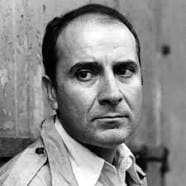
Juan Manuel Puig Delledonne, commonly called Manuel Puig, was an Argentine author. Among his best-known novels are La traición de Rita Hayworth, Boquitas pintadas, and El beso de la mujer araña which was adapted into the film released in 1985, directed by the Argentine-Brazilian director Héctor Babenco; and a Broadway musical in 1993.
Similar books
- A Single Man
Christopher Isherwood
4.1 (24k) average on GoodreadsLiterary FictionExplores a gay man's interior life and relationships amidst societal judgment.
- One Hundred Years of Solitude
Gabriel García Márquez
4.1 (753k) average on GoodreadsLiterary FictionRich, atmospheric prose and deep character studies within a Latin American context.
- Darkness at Noon
Arthur Koestler
4.0 (26k) average on GoodreadsPoliticsWhile both novels explore political imprisonment and psychological torment, Koestler focuses on the intellectual and ideological erosion under totalitarianism, whereas Puig emphasizes emotional intimacy, fantasy, and the human need for connection as a form of resistance and transformation, moving beyond purely political discourse.
- Nineteen Eighty-Four
George Orwell
4.2 (5.5M) average on GoodreadsFictionWinston Smith dreams of truth and rebellion in a world where Big Brother watches all, but he confronts the terrifying power of a regime that controls not just actions, but thoughts.
- The Frozen River
Ariel Lawhon
4.4 (600k) average on GoodreadsFictionIn 1789 Maine, a heroic midwife's diary helps her expose a murder and get justice in a town that wants to silence her.
- A Man Called Ove
Fredrik Backman
4.4 (569k) average on GoodreadsFictionA stubborn widower, who lives by strict rules, finds his quiet world changed by a lively new family next door, making him face his past and find happiness in human connection.






Enjoyed the summary?
A summary gives you the shape of the book. The book itself has the detail, the examples and the voice.
Find Kiss of the Spider Woman on AmazonAs an Amazon Associate, BookBrief earns from qualifying purchases. How we're funded