

Synopsis
Covers the whole plot, including the ending.
- Difficulty
- Medium
- Pacing
- Moderate
- Mood
- Epic, Melancholy, Magical, Grand, Reflective
- Read it if
- You love rich, imaginative prose, epic family sagas, and a blend of the magical with the mundane. Perfect for those who enjoy exploring themes of time, solitude, and destiny through a unique narrative lens.
- Skip it if
- You prefer straightforward, linear plots without a large cast of characters, or if you dislike magical realism and symbolic storytelling.
One Hundred Years of Solitude Plot Summary
Covers the whole plot, including the ending.
The Founding of Macondo and José Arcadio Buendía's Obsession
The story starts with José Arcadio Buendía and his wife, Úrsula Iguarán, who are cousins. They marry despite fears of incest leading to children with pig tails. After José Arcadio kills Prudencio Aguilar for insulting him, the couple and their companions travel for two years. They eventually found the isolated village of Macondo by a clear river. José Arcadio Buendía, a strong and imaginative man, becomes absorbed in various scientific and philosophical pursuits. These are introduced by the yearly visits of the gypsy Melquíades. He tries to invent perpetual motion, studies alchemy, and seeks the philosopher's stone, often neglecting his family. Úrsula, practical and strong, becomes the family's matriarch, ensuring their survival and the village's stability.
The First Generation: Love, Loss, and Prophecy
José Arcadio Buendía and Úrsula have three children: José Arcadio (the elder), Colonel Aureliano Buendía, and Amaranta. José Arcadio (the elder) runs off with the gypsy girl Pilar Ternera, who has his son, Arcadio. He then leaves them to travel the world with gypsies. Colonel Aureliano Buendía, a quiet man, falls in love with Remedios Moscote, the young daughter of the new magistrate, Don Apolinar Moscote. He marries her after she becomes an adult, but she dies while pregnant. Amaranta, meanwhile, loves Pietro Crespi without return and later rejects him, then Gerineldo Márquez. Melquíades, the gypsy, returns to Macondo with a mysterious manuscript written in Sanskrit. He claims it holds the family's complete history, to be read only at the end of their line.
The Civil Wars and Colonel Aureliano's Rise and Fall
Macondo's peace ends with the arrival of conservative government forces and the civil wars between Liberals and Conservatives. Colonel Aureliano Buendía, at first not wanting to join, becomes a famous Liberal general. He fights in 32 wars and loses all of them. He fathers 17 sons, all named Aureliano and born to different women during his campaigns. These sons are later tragically marked with an ash cross on their foreheads. Despite his military skill, Aureliano becomes tired of war and politics, seeing endless cycles of violence and corruption. He eventually signs a peace treaty, returns to Macondo, and spends his remaining years in his workshop, making small gold fish and melting them down. This symbolizes his deep solitude and the uselessness of his past struggles.
The Second Generation: Arcadio's Tyranny and Aureliano Segundo's Excesses
Arcadio, the son of José Arcadio (the elder) and Pilar Ternera, becomes the temporary leader of Macondo during one of Colonel Aureliano's campaigns. He rules as a harsh dictator, creating a reign of terror, executing opponents, and imposing unfair laws. He is then overthrown and executed by the returning Conservatives. He leaves his wife Santa Sofía de la Piedad and three children: Remedios the Beauty, Aureliano Segundo, and José Arcadio Segundo. Aureliano Segundo, a loud and lavish man, wants prosperity. He has a passionate, difficult love triangle with his wife Fernanda del Carpio and his mistress Petra Cotes. Their animals multiply miraculously when they are together. José Arcadio Segundo, his twin, joins labor movements.
Remedios the Beauty's Ascension and Macondo's Development
Remedios the Beauty, Arcadio's daughter with Santa Sofía de la Piedad, is known for her otherworldly beauty that drives men to madness and death. She remains pure and untouched by worldly things, living in a state that makes her unaffected by others' desires and suffering. She rejects all suitors, seemingly unaware of her effect. One afternoon, while folding sheets, she is suddenly lifted into the sky and goes to heaven, leaving only the scent of her beauty. Meanwhile, Macondo modernizes with the arrival of the railroad, electricity, and foreign investors, especially the banana company. This brings both progress and exploitation.
The Banana Company and the Massacre
The United Fruit Company (the banana company) builds a large plantation near Macondo, bringing thousands of foreign workers and changing the town into a busy, but exploitative, center. The company brings modern comforts but also harsh labor practices, causing widespread unhappiness among workers. José Arcadio Segundo Buendía leads the workers' movement, organizing a large strike for better conditions. The company and government respond harshly, ordering the army to stop the strike. Thousands of striking workers gather in the town square, where soldiers shoot them with machine guns. The bodies are loaded onto a two-hundred-car train and dumped into the sea. The government later denies the event happened, causing Macondo to forget it.
The Great Rain and Macondo's Decline
After the banana company massacre and the government's cover-up, Macondo is hit by constant rain that lasts for four years, eleven months, and two days. This huge flood destroys the town, washing away homes and infrastructure, and causing widespread despair. The banana company leaves, leaving behind abandoned machinery and a ruined land. Macondo quickly declines, losing its former energy and becoming a desolate, forgotten place. The surviving Buendías, including Aureliano Segundo and Fernanda del Carpio, struggle to keep their decaying house. It slowly fills with debris and memories. The rain symbolizes both punishment and the irreversible decay of Macondo and the Buendía family's fortunes, as the town slowly disappears.
The Final Generations and Incestuous Love
After the long rain, the Buendía family shrinks and becomes more isolated inside their decaying mansion. Aureliano Segundo and Fernanda del Carpio's children, José Arcadio (the younger, sent to Rome) and Meme, are the next-to-last generation. Meme has a secret, passionate affair with Mauricio Babilonia, a mechanic. Fernanda, horrified, arranges a shooting that cripples Mauricio and sends Meme to a convent, where she gives birth to Aureliano Babilonia. Later, José Arcadio (the younger) returns from Rome, having wasted his inheritance. He finds brief, incestuous comfort with Amaranta Úrsula, the last female Buendía, who has returned from Europe with her husband, Gastón. The family's line becomes more tangled and solitary, as they search for meaning in their inherited loneliness.
Aureliano Babilonia and the Deciphering of the Parchments
Aureliano Babilonia, the son of Meme and Mauricio Babilonia, grows up in the decaying Buendía house, mostly ignored and alone. He spends his life studying and trying to read Melquíades's old Sanskrit parchments, guided by Melquíades's ghost. He makes friends with intellectuals and spends his days with dusty books, putting together the family's history and fate. During this time, he falls deeply in love with Amaranta Úrsula, his aunt, unaware they are related. Their incestuous passion is the family's final, most intense love story, showing both the curse and the end of the Buendía line. Their love is pure and all-consuming, briefly breaking through the family's inherited solitude.
The Birth of the Child with the Pig's Tail and the End of Macondo
Aureliano Babilonia and Amaranta Úrsula have a child, fulfilling Úrsula Iguarán's old fear of incest. The child is born with a pig's tail, the final sign of the family's curse. Amaranta Úrsula dies soon after childbirth from bleeding, leaving Aureliano heartbroken and alone with their infant son. In his grief, Aureliano forgets the child for a moment, and ants then eat him. Overwhelmed by sorrow and his family's history, Aureliano finally reads Melquíades's parchments. He realizes the manuscript is not only his family's story but also the prophecy of their complete destruction. As he finishes reading, a hurricane sweeps through Macondo, wiping the town and the last traces of the Buendía family from the earth. This fulfills the repeating and fated destiny told in the parchments.
Principal Figures
José Arcadio Buendía
Patriarch/Protagonist
The visionary founder of Macondo, driven by insatiable curiosity and scientific obsession.
José Arcadio Buendía is the strong-willed, imaginative patriarch who, along with his wife Úrsula, founds Macondo. He is a man of immense physical strength and intellectual curiosity, constantly seeking to understand the mysteries of the world through inventions, alchemy, and philosophy, often to the detriment of his family. His initial drive for discovery and progress eventually gives way to madness and isolation, as he becomes fixated on the unachievable. He represents the idealistic and pioneering spirit that first breathes life into Macondo, but also the intellectual solitude that begins the family's tragic cycle.
Relationships: Úrsula Iguarán (wife, cousin, pragmatic foil); Melquíades (mysterious gypsy, intellectual mentor, prophet)
Úrsula Iguarán
Matriarch/Protagonist
The resilient and pragmatic matriarch who tirelessly holds the Buendía family together.
Úrsula Iguarán is the indomitable matriarch of the Buendía family, a practical, hardworking, and incredibly long-lived woman who witnesses generations of her family's triumphs and tragedies. She is the true backbone of the family, providing stability, managing finances, and constantly trying to counteract the destructive tendencies and eccentricities of her husband and children. Her fear of incest, rooted in the family's initial marriage, becomes a recurring motif, and her unwavering love and determination are a constant, if ultimately futile, force against the family's predetermined solitude. She is the practical anchor to José Arcadio's flights of fancy.
Relationships: José Arcadio Buendía (husband, cousin, source of both love and frustration); Amaranta (daughter, whom she tries to guide)
Colonel Aureliano Buendía
Protagonist
A legendary Liberal general, whose numerous wars lead to profound disillusionment and solitude.
Colonel Aureliano Buendía is the second son of José Arcadio Buendía and Úrsula. Initially quiet and introspective, he becomes a revered, yet ultimately tragic, Liberal general, fighting in 32 civil wars and losing them all. He is a man of immense honor and principle, but also of profound solitude, unable to connect deeply with others despite his many lovers and 17 sons. His experiences in war strip him of his idealism, leaving him bitter and withdrawn. He spends his later years in his workshop, endlessly crafting and melting down small golden fish, symbolizing the futility of his life's struggles and his ultimate isolation.
Relationships: Remedios Moscote (young wife, whose death deeply affects him); Gerineldo Márquez (loyal friend and comrade-in-arms)
Amaranta
Supporting
The tormented daughter, who nurses unrequited love and a bitter, self-imposed solitude.
Amaranta is the third child of José Arcadio Buendía and Úrsula. She is characterized by her emotional complexity, nursing a deep, unrequited love for Pietro Crespi and a bitter rivalry with her adopted sister Rebeca. Plagued by pride and an inability to express her true feelings, she tragically rejects Pietro Crespi and later Gerineldo Márquez, condemning herself to a life of spinsterhood and solitude. Her character embodies the Buendía family's recurring theme of unfulfilled love and self-imposed isolation. She eventually dies knitting her own shroud, a final act of control over her solitary existence.
Relationships: Rebeca (adopted sister, rival for Pietro Crespi's affection); Pietro Crespi (object of her unrequited love)
Rebeca
Supporting
The adopted child, who brings strange habits and a passionate, unconventional love to the family.
Rebeca is the mysterious adopted daughter who arrives at the Buendía house as a child, bringing with her the strange habits of eating dirt and whitewash, and sucking her thumb. She falls passionately in love with José Arcadio (the elder), Úrsula's first son, and marries him against Úrsula's wishes, leading to a permanent estrangement from the family. Her love for José Arcadio is fiercely possessive and unconventional. After his sudden, mysterious death, she lives out the rest of her life in complete isolation in her house, never speaking to anyone, symbolizing another facet of the Buendía solitude.
Relationships: José Arcadio (the elder) (husband, object of her passionate love); Amaranta (adopted sister, rival)
Aureliano Segundo
Supporting
The boisterous twin, known for his hedonism, extravagant nature, and a passionate love triangle.
Aureliano Segundo is the gregarious and hedonistic twin of José Arcadio Segundo. Unlike his twin, he is robust, jovial, and driven by an insatiable appetite for life, food, and love. He engages in a passionate, tumultuous love triangle with his aristocratic wife, Fernanda del Carpio, and his earthy, generous mistress, Petra Cotes, whose animals miraculously multiply when they are together. He devotes himself to extravagant parties and seemingly endless pursuits of pleasure and prosperity, embodying the more exuberant, yet ultimately fleeting, aspects of the Buendía spirit before the family's final decline. He dies at the exact same moment as his twin.
Relationships: Fernanda del Carpio (wife, symbol of aristocratic rigidity); Petra Cotes (mistress, symbol of earthy passion and good fortune)
José Arcadio Segundo
Supporting
The introspective twin, who becomes a labor leader and a witness to the banana company massacre.
José Arcadio Segundo is the quiet, introspective twin of Aureliano Segundo. He becomes deeply involved in the workers' movement against the banana company, leading a massive strike. He is one of the few survivors and witnesses to the horrific banana company massacre, an event that profoundly traumatizes him and drives him to spend the rest of his life trying to convince others of its reality, only to be met with denial and forgetfulness. He embodies the political consciousness and tragic memory of Macondo's exploitation, and his solitude stems from his inability to share the truth he witnessed. He dies at the exact same moment as his twin.
Relationships: Aureliano Segundo (twin brother, opposite in temperament); Melquíades (posthumous friend, shares his wisdom)
Fernanda del Carpio
Supporting
A proud, aristocratic wife, who introduces rigid Catholicism and social conventions to the Buendía household.
Fernanda del Carpio is Aureliano Segundo's wife, a woman of aristocratic lineage who arrives in Macondo with her own set of rigid traditions, strict Catholicism, and social pretensions. She attempts to impose order, conventionality, and a sense of propriety on the chaotic Buendía household, often clashing with Úrsula's more pragmatic approach. Her constant yearning for a lost past and her efforts to maintain appearances contribute to the family's growing isolation. She is responsible for Meme's tragic fate and ultimately becomes a symbol of the decaying aristocracy and the futility of clinging to outdated customs.
Relationships: Aureliano Segundo (husband, whose hedonism she disapproves of); Meme (daughter, whom she tragically controls)
Meme (Renata Remedios Buendía)
Supporting
The lively daughter of Aureliano Segundo and Fernanda, whose passionate love is tragically suppressed.
Meme (Renata Remedios Buendía) is the daughter of Aureliano Segundo and Fernanda del Carpio. Initially a lively, intelligent, and unconventional young woman, she defies her mother's strictures by pursuing her own interests and forging a secret, passionate relationship with Mauricio Babilonia, a mechanic. Her mother, Fernanda, discovers their affair and cruelly intervenes, arranging for Mauricio to be shot and paralyzed, and sending Meme to a convent for the rest of her life. Meme gives birth to Aureliano Babilonia in the convent and dies years later without ever speaking again, a tragic victim of her mother's pride and the family's destructive patterns.
Relationships: Mauricio Babilonia (secret lover, father of her child); Fernanda del Carpio (mother, her oppressor)
Melquíades
Supporting/Mentioned
The mystical gypsy who introduces wonders to Macondo and prophecies the Buendía family's fate.
Melquíades is the enigmatic gypsy who regularly visits Macondo in its early days, bringing with him inventions, knowledge, and a sense of wonder. He becomes a close friend and intellectual mentor to José Arcadio Buendía. After his supposed death, he returns as a ghost, living in the Buendía house and dedicating himself to writing a vast, cryptic manuscript in Sanskrit. This parchment contains the complete, cyclical history of the Buendía family, a prophecy that can only be deciphered at the very end of their lineage, revealing their ultimate, inevitable destruction. He represents the magical realism and the cyclical nature of time within the novel.
Relationships: José Arcadio Buendía (friend, intellectual companion); Aureliano Babilonia (posthumous guide to the parchments)
Aureliano Babilonia
Protagonist
The last Buendía, who deciphers the family's prophecy and brings about their ultimate end.
Aureliano Babilonia is the last true Buendía, the son of Meme and Mauricio Babilonia, raised in obscurity within the decaying mansion. He is an intellectual, dedicating his life to deciphering Melquíades's ancient parchments. He falls passionately in love with his aunt, Amaranta Úrsula, unaware of their incestuous relation. Their love produces a child with a pig's tail, fulfilling the family's original curse. His ultimate act is to finally decipher the parchments, revealing the entire, cyclical history and inevitable destruction of the Buendía family and Macondo. He is the one who understands the prophecy and witnesses its final, cataclysmic fulfillment.
Relationships: Amaranta Úrsula (aunt, lover, mother of his child); Melquíades (posthumous guide, author of the parchments)
Amaranta Úrsula
Supporting
The spirited aunt, whose incestuous love with Aureliano Babilonia culminates the Buendía lineage.
Amaranta Úrsula is the vibrant and outgoing daughter of Aureliano Segundo and Fernanda del Carpio. She is sent to Europe for her education and returns to Macondo with her husband, Gastón, full of modern ideas and a desire to revitalize the decaying family mansion. Unlike many of her ancestors, she is optimistic and free-spirited. She falls passionately in love with her nephew, Aureliano Babilonia, unaware of their blood relation. Their incestuous relationship, though pure and all-consuming, leads to the birth of the child with the pig's tail, fulfilling the family's curse and bringing about its final annihilation. She represents a fleeting burst of joy and life before the ultimate end.
Relationships: Aureliano Babilonia (nephew, lover, father of her child); Gastón (husband, whom she eventually leaves)
Themes & Insights
Solitude
Solitude is the main theme, affecting nearly every Buendía character. From José Arcadio Buendía's scientific isolation to Colonel Aureliano Buendía's political and emotional distance, and Amaranta's choice to remain unmarried, each generation experiences a unique type of deep loneliness. Even passionate relationships are short-lived or lead to more isolation. The family's inability to truly connect, despite their large numbers, ends with the last Aureliano Babilonia alone, reading the parchments and understanding that the family was destined to live 'one hundred years of solitude' without a second chance.
“The first of the line is tied to a tree and the last is being eaten by ants.”
The Cyclical Nature of Time and History
The novel often shows that time is cyclical, not linear. History repeats itself through generations. Characters share names, traits, and fates, often making the same mistakes. Civil wars recur, passions are rekindled, and the family's final doom is set. Melquíades's parchments embody this theme, telling the entire family history before it happens. This suggests that all events are just echoes of the past and predictions of the future, caught in an endless, unavoidable loop. Macondo's own rise and fall mirrors this repeating pattern.
“It was as if time had turned around and gone backward, and not only the names but the characteristics of the family were repeated from generation to generation.”
Incest and Forbidden Love
The fear of incest, specifically of a child being born with a pig's tail, starts with the marriage of José Arcadio Buendía and Úrsula Iguarán. This fear stays with the family for generations, becoming a recurring symbol and curse. While earlier generations avoid this specific outcome, the final, passionate love affair between Aureliano Babilonia and Amaranta Úrsula, who are aunt and nephew, ultimately fulfills the prophecy. This incestuous union, though shown as a pure and all-consuming love, directly leads to the birth of the child with the pig's tail, marking the end of the Buendía line and the completion of their fated cycle.
“Only then did Úrsula understand why the ancient prophecies had terrified her. For the first time, one hundred years after, the family was about to complete the circle of its destiny.”
Memory and Oblivion
The conflict between memory and forgetting is central to the novel. Macondo experiences periods of collective amnesia, most notably after the banana company massacre. The government successfully erases the event from public memory. Characters like José Arcadio Segundo are distressed by their inability to make others remember the truth. The Buendía family itself struggles with its past, often forgetting details or repeating ancestral patterns. Melquíades's parchments try to defy forgetting, to preserve the family's entire history, ensuring their story, however sad, is not lost to time and oblivion.
“One day, when Aureliano was a grown man, he would remember that Macondo had once been a village of twenty houses of clay and caña brava built on the bank of a river of clear waters that ran along a bed of polished stones, which were white and enormous, like prehistoric eggs.”
Magical Realism
Magical realism is a key theme, blending the ordinary and the miraculous. Extraordinary events, like Remedios the Beauty going to heaven, a man followed by yellow butterflies, or a four-year rain, are presented as normal occurrences in the story. This mix of the fantastic with the everyday shows a deeper truth about Macondo and the Buendía family. Dreams, superstitions, and supernatural elements are as real and influential as historical events. This allows the novel to explore deep human experiences through an expanded, wondrous reality.
“She was not lifted up by the angels, as one might have supposed, but by the force of her own uncontainable spirit.”
Plot Devices & Literary Techniques
Melquíades's Parchments
A prophetic manuscript that details the entire history and ultimate fate of the Buendía family.
Melquíades's parchments are a central plot device, serving as a meta-narrative within the novel. Written in Sanskrit, they contain the complete, cyclical history of the Buendía family, prophesying their entire lineage from beginning to end, including their ultimate annihilation. The parchments are a symbol of destiny, predetermination, and the cyclical nature of time. Their deciphering by the final Aureliano provides the ultimate revelation and simultaneously triggers the family's final destruction, fulfilling the prophecy contained within them. They blur the line between recorded history and prophecy.
Repetition of Names
The cyclical reuse of 'José Arcadio' and 'Aureliano' for male descendants, signifying recurring traits and fates.
The consistent repetition of the names 'José Arcadio' and 'Aureliano' for male Buendía descendants is a powerful plot device emphasizing the cyclical nature of time and the family's predetermined destiny. Those named José Arcadio tend to be impulsive, strong, and driven by passion, while those named Aureliano are often introspective, scholarly, and prone to solitude. This device highlights how the family's traits and fates are recycled through generations, creating a sense of inevitability and demonstrating that despite different historical contexts, the core essence of the Buendías remains unchanged, trapped in a repeating pattern.
The Pig's Tail
The physical manifestation of the family's incestuous curse, foretelling their ultimate annihilation.
The pig's tail is a potent symbol and plot device, introduced early in the novel as Úrsula Iguarán's greatest fear regarding her marriage to her cousin, José Arcadio Buendía. It represents the hereditary curse of incest that looms over the family. Although avoided for many generations, its eventual appearance on the child born to Aureliano Babilonia and Amaranta Úrsula serves as the definitive fulfillment of the prophecy and the ultimate signifier of the Buendía line's end. Its grotesque nature underscores the tragic consequences of their inherited solitude and the fatal culmination of their incestuous patterns.
The Banana Company Massacre
A historical event that introduces political reality and collective amnesia into Macondo's fantastical world.
The banana company massacre is a pivotal plot device that grounds the magical realism of Macondo in a harsh historical reality, reflecting real-world events in Latin America. It serves as a turning point, marking the end of Macondo's idyllic isolation and the beginning of its decline. The government's subsequent cover-up and the collective amnesia of the townspeople highlight themes of memory, truth, and the manipulation of history. This event shatters the illusion of Macondo's untouched innocence and introduces a brutal, undeniable political dimension, directly contributing to the town's physical and spiritual decay.
One Hundred Years of Solitude Quotes
“Many years later, as he faced the firing squad, Colonel Aureliano Buendía was to remember that distant afternoon when his father took him to discover ice.”
“Things have a life of their own. It's simply a matter of waking up their souls.”
“He really had been through death, but he had returned because he could not bear the solitude.”
“The secret of a good old age is simply an honorable pact with solitude.”
“It's enough for me to be sure that you and I exist at this moment.”
“He was still too young to know that the heart's memory eliminates the bad and magnifies the good, and that thanks to this artifice we manage to endure the burden of the past.”
“There is always something left to love.”
“The world must be all fucked up when men travel first class and literature goes as freight.”
“He did not know that the more he sank into the slumber of death, the more his memory would awaken.”
“Macondo was already a fearful whirlwind of dust and rubble being spun about by the wrath of the biblical hurricane.”
“She discovered that the happiness of her body did not depend on the love of her soul.”
“He had never paused to consider that literature was the best plaything that had ever been invented to make fun of people.”
“The only thing that came to her in her sleepless nights was the certainty that she was alone.”
“He was so methodical that from a certain time on he did nothing else but release little yellow butterflies whenever he went to visit her.”
Quiz
10 questions on the plot and the characters. Each answer comes with a short explanation.
Question 1
What is the name of the founder of Macondo and the patriarch of the Buendía family?
- Aureliano Buendía
- José Arcadio Buendía
- Colonel Aureliano Buendía
- Melquíades
Show answer
B. José Arcadio Buendía José Arcadio Buendía is the founder of Macondo and the original patriarch of the Buendía family, whose obsession with alchemy and exploration sets the family's trajectory.
Question 2
What recurring physical trait do many Buendía family members share?
- A scar on the forehead
- A pig's tail
- Webbed feet
- Green eyes
Show answer
B. A pig's tail The fear of a child being born with a pig's tail recurs throughout the novel due to the family's history of incest, culminating in the birth of such a child at the end.
Question 3
What is the name of the gypsy who brings new inventions to Macondo and leaves behind mysterious manuscripts?
- Pilar Ternera
- Úrsula Iguarán
- Melquíades
- Petra Cotes
Show answer
C. Melquíades Melquíades is the gypsy who introduces technologies like magnets and ice to Macondo and writes the prophetic manuscripts that Aureliano Babilonia later deciphers.
Question 4
Why does Colonel Aureliano Buendía start his 32 failed rebellions?
- To avenge his father's death
- To oppose the Conservative government's electoral fraud
- To claim the throne of Macondo
- To escape his solitude
Show answer
B. To oppose the Conservative government's electoral fraud Colonel Aureliano Buendía launches his rebellions after witnessing the Conservative government's manipulation of election results, though his motivations become murkier over time.
Question 5
What event leads to the massacre of thousands of banana plantation workers?
- A strike organized by the workers
- A rebellion led by Colonel Aureliano
- A flood that destroys the plantation
- An invasion by foreign armies
Show answer
A. A strike organized by the workers The banana company workers go on strike to protest poor conditions, leading the government to violently suppress them, an event later erased from official history.
Question 6
Which character lives for over a century and witnesses most of Macondo's history?
- Amaranta
- Úrsula Iguarán
- Fernanda del Carpio
- Rebeca
Show answer
B. Úrsula Iguarán Úrsula Iguarán, the matriarch, lives to be over 115 years old, providing stability and continuity as she observes the family's cycles of repetition and decline.
Question 7
What is the primary theme illustrated by the Buendía family's repetitive names and fates?
- The triumph of love over adversity
- The inevitability of progress
- The cyclical nature of history and solitude
- The conflict between science and religion
Show answer
C. The cyclical nature of history and solitude The repetition of names (e.g., Aureliano, José Arcadio) and similar destinies across generations underscores themes of historical cycles and inescapable solitude.
Question 8
How does Aureliano Babilonia finally decipher Melquíades's manuscripts?
- By studying them for years in solitude
- With the help of a dictionary from Melquíades
- As he reads them during the hurricane that destroys Macondo
- Through a vision from his dead ancestors
Show answer
C. As he reads them during the hurricane that destroys Macondo Aureliano Babilonia deciphers the Sanskrit manuscripts just as a hurricane begins to erase Macondo, realizing they prophesy the family's entire history.
Question 9
What symbolic event marks the decline of Macondo and the Buendía family?
- The arrival of the railroad
- The four-year, eleven-month, and two-day rain
- The death of Colonel Aureliano Buendía
- The burning of the Buendía house
Show answer
B. The four-year, eleven-month, and two-day rain The prolonged rainstorm symbolizes decay and isolation, accelerating Macondo's ruin and the family's fragmentation, as described in magical realist style.
Question 10
Which character's death is foreshadowed by yellow butterflies?
- Mauricio Babilonia
- Memé Buendía
- José Arcadio Segundo
- Mauricio Babilonia and later, his son Aureliano Babilonia
Show answer
D. Mauricio Babilonia and later, his son Aureliano Babilonia Yellow butterflies are associated with Mauricio Babilonia and later his son Aureliano Babilonia, serving as a magical realist motif that foreshadows their deaths and connects to themes of love and fate.
One Hundred Years of Solitude FAQ
What is 'One Hundred Years of Solitude' about?
The novel chronicles seven generations of the Buendía family in the fictional town of Macondo, founded by José Arcadio Buendía and Úrsula Iguarán. It blends magical realism with historical events, exploring themes of solitude, love, time, and the cyclical nature of history, culminating in the family's prophesied demise.
Why should I read 'One Hundred Years of Solitude'?
It's a masterpiece of magical realism that revolutionized Latin American literature, offering a rich tapestry of imagination, profound philosophical insights, and a unique narrative style. The book's exploration of universal themes like love, solitude, and the passage of time resonates deeply with readers across cultures.
What is the background/setting of 'One Hundred Years of Solitude'?
Set in the isolated, fictional town of Macondo in Colombia, the story spans from its founding in the early 19th century through periods of civil war, foreign exploitation (e.g., the banana company), and modernization, reflecting Latin America's colonial and post-colonial history.
What are the most memorable quotes from 'One Hundred Years of Solitude'?
Key quotes include: 'Many years later, as he faced the firing squad, Colonel Aureliano Buendía was to remember that distant afternoon when his father took him to discover ice.' and 'He really had been through death, but he had returned because he could not bear the solitude.' These lines encapsulate the novel's themes of memory, solitude, and fate.
What writing style does Gabriel García Márquez use in this book?
Márquez employs magical realism, blending fantastical elements (like flying carpets and prophetic manuscripts) with realistic historical events in a matter-of-fact tone. His prose is lush, cyclical, and dense with symbolism, often using repetition and nonlinear timelines to mirror the Buendía family's recurring patterns.
What minor details add significant meaning to the story?
Small details like the recurring appearance of yellow butterflies (associated with Mauricio Babilonia), the pervasive smell of gunpowder around Colonel Aureliano Buendía, and the constant presence of ants foreshadow decay and fate. These elements subtly reinforce themes of love, war, and inevitable destruction.
What are some subtle foreshadowing moments in the novel?
Early instances include Melquíades' prophecies in his manuscripts, which predict the family's end, and the insomnia plague that causes memory loss, hinting at Macondo's eventual oblivion. The birth of a child with a pig's tail, repeatedly warned against, foreshadows the Buendía lineage's culmination.
What unexpected character connections exist in the Buendía family?
The family is marked by incestuous relationships, such as the marriage of founding couple José Arcadio Buendía and Úrsula (who are cousins), and later unions like Aureliano José's love for his aunt Amaranta. These connections underscore the isolation and cyclical patterns that doom the family.
What are the unspoken motivations of key characters like Colonel Aureliano Buendía?
Colonel Aureliano Buendía's relentless involvement in 32 failed wars stems from a deep-seated sense of solitude and a desire to escape his family's fate, yet he remains emotionally detached, symbolized by his gold fish crafts. His actions mask an inner void and fear of intimacy.
What psychological complexities do characters like Úrsula Iguarán exhibit?
Úrsula embodies resilience and pragmatism, outliving most family members while grappling with the burden of memory and tradition. Her fear of incest and determination to uphold family honor drive many decisions, yet she also shows vulnerability, especially in her later years as Macondo declines.
What are the major emotional turning points in the novel?
Key moments include the massacre of banana company workers, which shatters Macondo's innocence; the death of Úrsula, marking the loss of the family's moral center; and the final deciphering of Melquíades' manuscripts, revealing the Buendías' predestined end and evoking a sense of tragic inevitability.
How do relationship dynamics evolve among the Buendías over generations?
Relationships shift from the founding couple's passionate but fraught bond to later generations marked by increasing isolation, infidelity, and incest. Love becomes more destructive (e.g., Amaranta's lifelong virginity from jealousy), reflecting the family's descent into solitude and fragmentation.
Which parts of the novel remain ambiguous or open-ended?
Ambiguities include the exact nature of Remedios the Beauty's ascension to heaven—whether it's literal or metaphorical—and the interpretation of Melquíades' manuscripts as fate versus free will. The cyclical ending also leaves open whether history will repeat beyond the Buendías.
What are controversial scenes or decisions in the book?
Controversial elements include the pervasive incest (e.g., Aureliano and Amaranta Úrsula's relationship), the graphic violence of wars and massacres, and the magical realism that blurs reality, which some readers find disorienting or morally challenging.
How does 'One Hundred Years of Solitude' end, and what does it mean?
The novel ends with Aureliano Babilonia deciphering Melquíades' manuscripts just as a hurricane destroys Macondo, revealing that the Buendía family's story was predestined and culminating with the birth of a child with a pig's tail. This symbolizes the completion of a cyclical, inescapable fate, emphasizing themes of solitude, memory, and the ephemeral nature of existence.
About the author
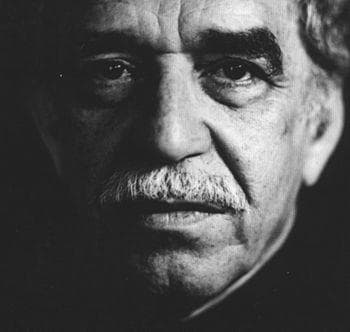
Gabriel José de la Concordia García Márquez was a Colombian novelist, short-story writer, screenwriter, and journalist, known affectionately as Gabo or Gabito throughout Latin America. Considered one of the most significant authors of the 20th century, particularly in the Spanish language, he was awarded the 1972 Neustadt International Prize for Literature and the 1982 Nobel Prize in Literature. He pursued a self-directed education that resulted in leaving law school for a career in journalism. From early on he showed no inhibitions in his criticism of Colombian and foreign politics. In 1958, he married Mercedes Barcha Pardo; they had two sons, Rodrigo and Gonzalo.
Similar books
- The House of the Spirits
Isabel Allende
4.2 (190k) average on GoodreadsFantasyAnother multi-generational saga from Latin America, blending historical events with magical realism and strong female characters.
- Love in the Time of Cholera
Gabriel García Márquez
3.9 (412k) average on GoodreadsLiterary FictionShares García Márquez's distinctive prose and exploration of love and solitude, though with a more focused narrative.
- The Death of Artemio Cruz
Carlos Fuentes
3.9 (9k) average on GoodreadsHistorical FictionBoth are seminal works of the Latin American Boom. Fuentes' novel is more experimental in its fragmented narrative and multiple perspectives, focusing on the psychological complexity and moral ambiguity of a single protagonist's life and the legacy of the Mexican Revolution. García Márquez, in contrast, offers a more unified, epic narrative sweep, focusing on the collective fate of a family and a town as an allegory for a continent's history, with a broader historical and mythical scope.
- The Old Man and the Sea
Ernest Hemingway
3.8 (831k) average on GoodreadsLiterary FictionA Cuban fisherman's long struggle with a giant marlin becomes a story of endurance and dignity, now retold for young adults with illustrations, phonetic guides, and writing prompts in Traditional Chinese.
- The Goldfinch
Donna Tartt
3.9 (720k) average on GoodreadsLiterary FictionHaunted by a tragic explosion and clutching a stolen Dutch masterpiece, a young orphan navigates the opulent drawing rooms of New York and the gritty underbelly of the art world, desperately seeking connection and redemption amidst a life spiraling into crime and obsession.
- Little Fires Everywhere
Celeste Ng
4.1 (713k) average on GoodreadsLiterary FictionIn Shaker Heights, an artist and her daughter move in, and their free-spirited lives clash with a rule-bound matriarch, revealing hidden conflicts beneath a perfect surface.





Enjoyed the summary?
A summary gives you the shape of the book. The book itself has the detail, the examples and the voice.
Find One Hundred Years of Solitude on AmazonAs an Amazon Associate, BookBrief earns from qualifying purchases. How we're funded