
Synopsis
Covers the whole plot, including the ending.
- Difficulty
- Medium
- Pacing
- Moderate
- Mood
- Mysterious, suspenseful, historical, slightly dark
- Read it if
- you enjoy historical mysteries with a touch of the supernatural, strong female protagonists, and medieval castle intrigue.
- Skip it if
- you prefer contemporary settings, fast-paced thrillers without historical detail, or shy away from darker themes and violence.
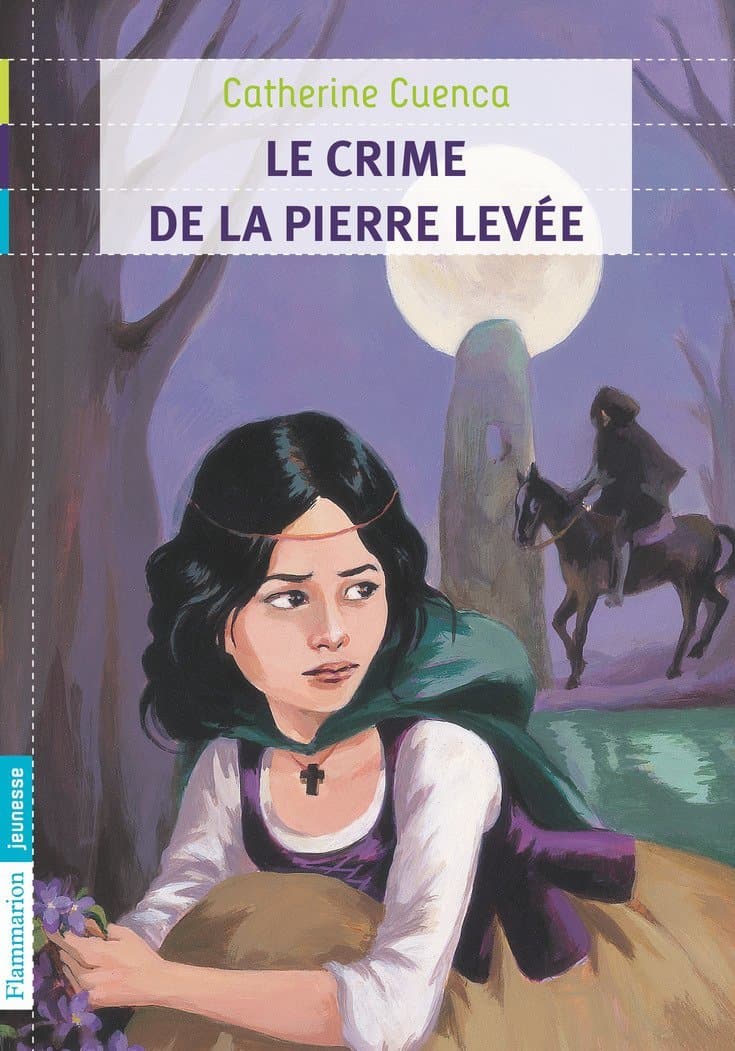
Le crime de la pierre levée Plot Summary
Covers the whole plot, including the ending.
Arrival at Roquemaure
Bruna, a young girl from a poor village, arrives at the large Château de Roquemaure in June 1101 to work in the kitchens. Her family sent her, eager for her to earn money. She quickly learns she is replacing another girl, Agnès, who was found dead near the Bois de la Pierre Levée (Wood of the Standing Stone). The official story is that wolves killed Agnès, a common tragedy then. But the castle staff, especially other servants, whisper and exchange uneasy glances, suggesting more to Agnès's death. Bruna immediately feels uneasy.
The Mystery of Agnès's Death
As Bruna starts her new job, she pays close attention to the details of Agnès's death. She learns from other servants that Agnès was lively and somewhat rebellious. Bruna also hears different stories about where Agnès was last seen and how her body was found. The wounds on Agnès's body, described by those who saw it, do not quite match a typical wolf attack. Bruna's curiosity and observation skills make her question the official explanation. She suspects someone murdered Agnès and staged her death to look like an animal attack. She feels a growing sense of injustice for the dead girl.
The Standing Stone and Local Legends
Bruna becomes more interested in the Bois de la Pierre Levée, where Agnès's body was found. Older castle residents and local villagers tell her about the ancient standing stone in the woods, which has many local legends and superstitions. Some believe it has magical powers, while others fear it as a place of dark energy or old spirits. People say the stone is a site of both healing and evil. These tales add mystery and danger to the already suspicious circumstances of Agnès's death. Bruna wonders if the stone or its legends played a part in what happened. She notes that the death occurred close to this legendary site.
The Introduction of Father Barberin
Father Barberin, a new priest, arrives at Roquemaure to serve the castle and village. He acts like a devout and kind man, quickly gaining the trust and admiration of many, including the Lord and Lady of Roquemaure. However, Bruna, with her sharp instincts, finds something unsettling about him. His piety seems a little too fake, and his gaze is intensely unsettling. Bruna watches his interactions, noticing small inconsistencies in his behavior and comments. She begins to suspect that Father Barberin might not be as good as he seems and could be connected to the castle's dark secrets and the recent death.
Another Victim
The calm at Roquemaure breaks with another death. A second young girl, also a castle servant, is found murdered in similar mysterious ways. This event terrifies the castle and village, making it impossible to dismiss the deaths as accidents or animal attacks. The similarities between this new murder and Agnès's death strengthen Bruna's belief that a killer is operating in or near the castle. This second murder confirms her initial suspicions and pushes her deeper into her own investigation, as she realizes anyone, including herself, could be next. Finding the truth becomes urgent.
Bruna's Secret Investigations
Driven by a sense of justice and self-preservation, Bruna begins to investigate the murders secretly. She uses her kitchen position and access to different parts of the castle to observe people, listen to conversations, and search for clues when no one is watching. She notices small details: a discarded item, an unusual stain, a suspicious comment overheard. Bruna's cleverness and resourcefulness help her piece together information others miss. She knows the immense danger she is in, knowing that if the killer discovers her snooping, she could become their next target. Her secret operations are full of tension and fear.
An Unexpected Ally
As Bruna's investigation progresses, she realizes she cannot continue alone. She cautiously confides in an unexpected ally: a young stable boy or perhaps a guard, someone who also doubts the official explanations and is observant. This individual, initially hesitant, is convinced by Bruna's arguments and her genuine desire for justice. Together, they form a secret alliance, sharing information and coordinating their efforts to uncover the truth. This partnership gives Bruna much-needed support and expands their reach within the castle, allowing them to access areas and information she could not alone. Their combined efforts speed up the investigation.
The Magical Stone's Connection
Through her investigations and shared knowledge with her ally, Bruna starts to link the murders directly to the Bois de la Pierre Levée and, specifically, to the ancient standing stone. She discovers that the victims may have interacted with the stone or its area, or perhaps the killer uses the stone for some bad purpose. The local legends about its magical properties and its reputation as a place of dark rituals take on a new, sinister meaning. Bruna suspects the stone is not just a backdrop but a central part of the killer's motives or methods, possibly connected to old beliefs or a hidden power. This realization is a breakthrough in understanding the crime.
Confrontation and Revelation
Bruna and her ally gather enough evidence to identify Father Barberin as the killer. They discover his dark secrets, including his twisted interpretation of ancient beliefs about the Pierre Levée, which he uses to justify his terrible acts. They learn he has been manipulating the castle's inhabitants and exploiting local superstitions. The climax involves a tense confrontation with Father Barberin, possibly near the Standing Stone. During this confrontation, he reveals his true, psychotic nature and his motives, which are rooted in a desire for power, a warped sense of religious fanaticism, and a belief that he is performing some divine ritual. Bruna and her ally are in grave danger as they face the unstable killer.
Justice and Aftermath
Through quick thinking, bravery, and the evidence they carefully collected, Bruna and her ally expose Father Barberin's crimes. With help from other castle residents who finally believe their story, Father Barberin is arrested, ending his reign of terror. The Roquemaure community is shaken but relieved that the killer has been brought to justice. Bruna, no longer just a kitchen servant, becomes a courageous and intelligent young woman who risked everything to uncover the truth. While the scars of the murders remain, a fragile peace returns to the castle, and Bruna's bravery is quietly recognized, though her future at Roquemaure remains uncertain.
Le crime de la pierre levée Characters
Bruna
Protagonist
A resourceful and courageous young kitchen servant.
Bruna is a perceptive and intelligent young woman, observant beyond her years. Initially quiet and unassuming, her strong sense of justice and curiosity drives her to investigate the suspicious deaths at Château de Roquemaure. She is resourceful, using her position to gather clues and listen to whispers, often putting herself in danger. Despite her humble background, she possesses remarkable courage and resilience, refusing to be intimidated by the dark events unfolding around her. Her sharp mind allows her to piece together disparate fragments of information that others overlook.
Relationships: Agnès (Replacement, initial victim); Father Barberin (Antagonist, object of suspicion); Ally (Stable Boy/Guard) (Confidant and co-investigator)
Father Barberin
Antagonist
A seemingly pious priest with a dark secret.
Father Barberin is introduced as a new priest, initially presenting himself as a devout, compassionate, and trustworthy spiritual leader. He quickly gains the respect of the castle's inhabitants and the villagers with his seemingly benevolent demeanor. However, beneath this facade lies a deeply disturbed and manipulative individual. He is cunning and ruthless, using his position and the prevailing superstitions to carry out his heinous crimes. His motives are rooted in a warped sense of power and a twisted interpretation of ancient beliefs, making him a truly terrifying figure.
Relationships: Bruna (Adversary, object of suspicion); Agnès (Victim); Other castle servants (Potential victims, manipulated followers)
Agnès
Supporting
The initial victim whose death sparks Bruna's investigation.
Agnès is the young girl Bruna replaces in the castle kitchens and the first victim of the mysterious murders. Though she is already deceased at the story's beginning, her presence is felt throughout the narrative. She is described through the memories and whispers of others as a lively, perhaps somewhat rebellious, young woman. Her suspicious death, initially attributed to wolves, serves as the catalyst for Bruna's investigation and the unraveling of the castle's dark secrets. Her tragic fate highlights the vulnerability of young women in that era and fuels Bruna's quest for justice.
Relationships: Bruna (Predecessor, indirect motivator); Father Barberin (Killer); Other castle servants (Acquaintances, source of information)
Bruna's Ally
Supporting
A trusted confidant and co-investigator.
This character, whether a stable boy, guard, or another servant, becomes Bruna's indispensable partner in her investigation. They share Bruna's skepticism about the official explanations for the murders and possess their own keen observations and access to different parts of the castle. Loyal and brave, this ally provides emotional support, practical assistance, and a second pair of eyes and ears. Their collaboration is crucial to uncovering the truth, as they pool their resources and courage to face the dangerous killer. Their presence offers Bruna a much-needed sense of solidarity in her perilous quest.
Relationships: Bruna (Confidant, co-investigator); Father Barberin (Adversary)
Lord and Lady of Roquemaure
Supporting
The castle's rulers, initially oblivious to the true danger.
The Lord and Lady of Roquemaure are the feudal rulers of the castle and its surrounding lands. They represent the established authority and social order. Initially, they are presented as figures who accept the official explanations for the deaths, perhaps out of a desire to maintain order or a genuine belief in the wolf attack theory. They are somewhat detached from the daily lives of their servants, making them initially blind to the sinister events unfolding beneath their noses. Their eventual realization of the truth is crucial for Father Barberin's apprehension.
Relationships: Bruna (Employer); Father Barberin (Trusted spiritual advisor (initially)); Other castle servants (Subjects, employees)
Other Castle Servants
Supporting
The castle's staff, sources of rumor and fear.
This group comprises the various cooks, maids, stable hands, and other workers within Château de Roquemaure. They are the primary source of local gossip, superstitions, and initial information regarding Agnès's death. Their whispers and anxieties reflect the growing fear within the castle as more murders occur. While some are fearful and prefer to remain silent, others provide Bruna with crucial, albeit fragmented, pieces of information. They represent the collective consciousness of the oppressed and vulnerable population within the castle walls, deeply affected by the unfolding tragedy.
Relationships: Bruna (Colleague, source of information); Agnès (Colleague, fellow victim); Father Barberin (Spiritual guide (initially), feared figure)
Le crime de la pierre levée Themes
Justice for the Vulnerable
The novel explores seeking justice for those without power or a voice, especially young women in a medieval, male-dominated society. Bruna, a humble servant, investigates the deaths of other young, forgotten girls when official channels fail or dismiss their fates. This theme highlights the inequalities of the time and the courage needed to challenge established stories and seek truth for the marginalized. It shows that every life, regardless of social standing, deserves dignity and justice.
“Les loups, toujours les loups... Personne ne voulait chercher plus loin. Mais Agnès méritait mieux que l'oubli.”
The Dangers of Blind Faith and Superstition
The story examines how blind faith, especially in religious figures, and unchecked local superstitions can be used for evil. Father Barberin uses his priest position and the fears around the 'Pierre Levée' to manipulate and commit his crimes, showing how easily belief can turn into fanaticism. It warns against accepting stories without critical thought and shows how old legends, when misunderstood or used as weapons, can become tools of terror. The villagers' initial acceptance of the 'wolf attack' and their respect for Barberin allow the killer to continue.
“On craignait les esprits de la Pierre Levée, mais le vrai démon était en chair et en os, drapé de piété.”
Courage and Resourcefulness of the Ordinary
This theme celebrates the courage and cleverness found in seemingly ordinary people. Bruna, a simple kitchen servant, has no special status or training, yet her sharp mind, determination, and bravery drive the entire investigation. She relies on her wits, observation skills, and ability to form unexpected alliances to confront a powerful and dangerous enemy. The novel suggests that heroism is not only for knights or nobles but can come from the most unexpected places when injustice is present.
“Elle n'était qu'une servante, mais son cœur était plus fort que les murs du château.”
Secrets and Deception within Closed Communities
Roquemaure castle works as a small, closed community where secrets and deception thrive. The murders reveal the hidden tensions, fears, and unspoken truths among its inhabitants. Everyone seems to have something to hide, or at least a reason to stay silent, which contributes to the initial confusion about the crimes. The novel illustrates how fear and social hierarchy can create an environment where truth is suppressed, and appearances are maintained at all costs, even when lives are at stake. Solving the mystery requires uncovering layers of pretense.
“Sous les voûtes du château, les secrets étaient plus lourds que les pierres.”
Plot Devices & Literary Techniques
Red Herring
Misleading clues distracting from the true killer.
The initial explanation of the girls being killed by wolves serves as a major red herring. This widely accepted, seemingly plausible, and fear-inducing explanation diverts suspicion from human involvement. It exploits the common dangers of the medieval period and the fear of the wilderness, allowing the true killer to operate undetected for a significant period. This device builds suspense and highlights Bruna's unique perceptiveness for seeing beyond the obvious and questioning the convenient narrative, making her investigation more challenging and compelling.
Foreshadowing
Hints and clues that suggest future events.
Foreshadowing is subtly woven throughout the narrative, creating a sense of impending dread and guiding the reader's suspicions. The hushed whispers among the servants about Agnès's death, the uneasy feeling Bruna gets from Father Barberin, and the ominous legends surrounding the 'Pierre Levée' all hint at the darker truths to come. These early indications build tension and prepare the reader for the shocking revelations, making the unfolding mystery more impactful. It allows the reader to piece together clues alongside Bruna, enhancing engagement.
The MacGuffin (The Pierre Levée)
A mysterious object driving the plot, though its true nature is secondary.
The 'Pierre Levée' (Standing Stone) functions as a MacGuffin in the story. While it is central to the location of the murders and the killer's warped ideology, its specific magical properties or historical significance are less important than its role in motivating the killer and attracting the victims. It serves as a focal point for local superstitions and fears, which the antagonist exploits. The stone's mystique provides a compelling backdrop and a tangible, yet ambiguous, element around which the sinister events revolve, driving both the killer's actions and Bruna's investigation.
Social Hierarchy as an Obstacle
Bruna's low social status hinders her investigation.
Bruna's position as a humble kitchen servant significantly impacts her ability to investigate. Her low social status means she is often overlooked, dismissed, and lacks the authority to question those in power. This creates significant obstacles, forcing her to rely on stealth, observation, and the cultivation of secret alliances. It highlights the power dynamics of medieval society, where the word of a lord or a priest far outweighs that of a servant. This device amplifies Bruna's courage and resourcefulness, as she must overcome not only the killer but also the societal barriers that seek to silence her.
Le crime de la pierre levée Quotes
“La vie est une énigme, et nous sommes tous des enquêteurs.”
“Les apparences sont souvent trompeuses, surtout dans ce village.”
“La vérité se cache parfois là où on s'y attend le moins.”
“Chaque pierre a une histoire à raconter, si l'on sait l'écouter.”
“Le passé n'est jamais mort, il hante le présent.”
“La confiance est une fleur fragile, difficile à cultiver et aisée à briser.”
“Les mensonges construisent des murs, la vérité construit des ponts.”
“Il y a plus de courage dans la vulnérabilité que dans la force apparente.”
“Les ombres cachent autant de choses que la lumière révèle.”
“L'intuition est la voix de notre subconscient, qu'il ne faut jamais ignorer.”
“Ce qui semble un simple accident peut être le fruit d'une main calculatrice.”
“Le plus grand mystère n'est pas le crime, mais l'âme humaine.”
“La justice est parfois aveugle, mais elle finit toujours par trouver son chemin.”
“Dans le silence, on entend parfois les cris les plus forts.”
Quiz
10 questions on the plot and the characters. Each answer comes with a short explanation.
Question 1
Quel est le nom du château où Bruna commence à travailler ?
- Château de la Pierre levée
- Château de Roquemaure
- Château de Bruna
- Château de Barberin
Show answer
B. Château de Roquemaure Bruna quitte son village natal pour travailler aux cuisines du château de Roquemaure.
Question 2
Dans quelle année se déroule l'histoire ?
- 1100
- 1101
- 1102
- 1103
Show answer
B. 1101 L'histoire se déroule en Juin 1101.
Question 3
Comment la jeune fille que Bruna remplace a-t-elle été retrouvée ?
- Disparue sans laisser de traces
- Morte dans son lit
- Dévorée par les loups
- Victime d'une maladie soudaine
Show answer
C. Dévorée par les loups La jeune fille qu'elle remplace a été découverte morte, dévorée par les loups, à la lisière des bois de la Pierre levée.
Question 4
Où la jeune fille morte a-t-elle été trouvée ?
- Dans les cuisines du château
- Au cœur du village
- À la lisière des bois de la Pierre levée
- Dans la chapelle du château
Show answer
C. À la lisière des bois de la Pierre levée La jeune fille a été découverte morte, dévorée par les loups, à la lisière des bois de la Pierre levée.
Question 5
Quel élément surnaturel est mentionné dans le résumé comme étant potentiellement lié au crime ?
- Une malédiction ancienne
- Une pierre magique
- Un fantôme vengeur
- Une prophétie obscure
Show answer
B. Une pierre magique Il y a cette pierre magique, le père Barberin... et toujours plus de meurtres...
Question 6
Qui est mentionné comme une figure potentiellement suspecte ou importante dans l'intrigue ?
- Le seigneur de Roquemaure
- Le père Barberin
- Le chef des loups
- Le maire du village
Show answer
B. Le père Barberin Il y a cette pierre magique, le père Barberin... et toujours plus de meurtres...
Question 7
Sur qui Bruna peut-elle compter pour survivre dans cette situation dangereuse ?
- Sur les autres cuisinières du château
- Sur le père Barberin
- Sur elle-même et un allié inattendu
- Sur les villageois de son ancien village
Show answer
C. Sur elle-même et un allié inattendu Bruna ne pourra compter que sur elle-même et sur un allié inattendu pour survivre.
Question 8
Quel est le nom du bois mentionné dans le contexte de la mort de la jeune fille ?
- Bois des loups
- Bois de Roquemaure
- Bois de la Pierre levée
- Bois des secrets
Show answer
C. Bois de la Pierre levée La jeune fille a été découverte morte, dévorée par les loups, à la lisière des bois de la Pierre levée.
Question 9
Quel est le principal métier que Bruna exerce au château ?
- Servante
- Cuisinière
- Infirmière
- Chambrière
Show answer
B. Cuisinière Bruna quitte son village natal pour travailler aux cuisines du château de Roquemaure.
Question 10
Quel terme décrit le mieux la nature de l'allié que Bruna trouvera ?
- Prévu et attendu
- Classique et conventionnel
- Inattendu et surprenant
- Malveillant et trompeur
Show answer
C. Inattendu et surprenant Bruna ne pourra compter que sur elle-même et sur un allié inattendu pour survivre.
Le crime de la pierre levée FAQ
What is the plot of 'Le crime de la pierre levée'?
'Le crime de la pierre levée' follows Bruna, a young woman who takes a job in the kitchens of Roquemaure castle in June 1101. She soon discovers that her predecessor died mysteriously, supposedly mauled by wolves near the 'Pierre levée' woods, but the truth seems more sinister.
Who is the main character in 'Le crime de la pierre levée'?
The main character is Bruna, a young woman who leaves her village to work at Roquemaure castle. She finds herself entangled in a murder investigation and must rely on her own wit to uncover the truth.
What is the setting of the book 'Le crime de la pierre levée'?
The story is set in June 1101, primarily around the castle of Roquemaure and its surrounding woods, specifically near a mysterious landmark known as the 'Pierre levée' (the standing stone).
What are the key mysterious elements in 'Le crime de la pierre levée'?
The book features the suspicious death of a young girl, the presence of a potentially magical stone ('la pierre levée'), and a recurring priest named Father Barberin, all contributing to a growing sense of mystery and danger with subsequent murders.
What genre is 'Le crime de la pierre levée'?
'Le crime de la pierre levée' is a historical mystery novel, blending elements of crime, suspense, and a historical setting.
Does Bruna have allies in her investigation?
Yes, Bruna must navigate the dangerous situation mostly on her own, but she does find help from an unexpected ally who aids her in her quest for survival and truth.
What is the significance of the 'Pierre levée'?
The 'Pierre levée' is a prominent landmark in the woods near Roquemaure and is associated with the mysterious events, possibly holding clues or having a mystical significance related to the crimes.
Is 'Le crime de la pierre levée' a standalone novel?
Based on the provided description, 'Le crime de la pierre levée' appears to be a standalone novel focusing on Bruna's investigation and survival within its specific historical context.
Similar books
- The Name of the Rose
Umberto Eco
4.1 (301k) average on GoodreadsHistorical FictionHistorical setting, monastic/castle intrigue, murder mystery with intellectual depth.
- The Pillars of the Earth
Ken Follett
4.3 (649k) average on GoodreadsFantasyDetailed historical fiction set in medieval times, with elements of struggle and mystery.
- Les Misérables
Victor Hugo
4.2 (683k) average on GoodreadsHistorical FictionWhile "Le crime de la pierre levée" is a mystery, it shares Hugo's deep dive into 19th-century French society, particularly the lives of the working class and the pervasive social injustices. Both authors excel at creating a vivid sense of time and place, making the setting almost a character in itself. However, Cuenca focuses on a contained, specific crime, whereas Hugo's scope is epic and sprawling, examining broader philosophical and political themes through the lives of many interconnected characters. Cuenca's narrative is more tightly focused on the puzzle, while Hugo's embraces digressions into history and philosophy.
- Harry Potter and the Sorcerer's Stone
J.K. Rowling
4.5 (7M) average on GoodreadsFantasyRescued from a miserable life under the stairs, an orphaned boy discovers he's a wizard destined for a magical school, where he uncovers a dangerous secret tied to the dark wizard who murdered his parents.
- The Hunger Games
Suzanne Collins
4.3 (6.4M) average on GoodreadsFantasyIn a future where children fight to the death on live television, Katniss Everdeen volunteers for the arena, turning a death sentence into a fight for survival and a spark of rebellion.
- Nineteen Eighty-Four
George Orwell
4.2 (5.5M) average on GoodreadsFictionWinston Smith dreams of truth and rebellion in a world where Big Brother watches all, but he confronts the terrifying power of a regime that controls not just actions, but thoughts.





Enjoyed the summary?
A summary gives you the shape of the book. The book itself has the detail, the examples and the voice.
Find Le crime de la pierre levée on AmazonAs an Amazon Associate, BookBrief earns from qualifying purchases. How we're funded