
Synopsis
Covers the whole plot, including the ending.
- Difficulty
- Hard
- Pacing
- Variable
- Mood
- Epic, Melancholy, Hopeful, Philosophical, Dramatic
- Read it if
- You love epic historical sagas with profound philosophical themes, intricate character development, and a sweeping narrative of redemption and social justice.
- Skip it if
- You prefer fast-paced plots without extensive digressions, or find detailed explorations of social issues and moral dilemmas less engaging than pure adventure.
Les Misérables Plot Summary
Covers the whole plot, including the ending.
Jean Valjean's Release and Transformation
Jean Valjean is released from the Bagne of Toulon after 19 years. He served five for stealing a loaf of bread and fourteen for attempting to escape. Branded by a yellow passport, he is shunned everywhere he goes. He arrives in Digne and is refused lodging until Bishop Myriel offers him shelter. Valjean repays the Bishop's kindness by stealing his silver plate and candlesticks. When caught by gendarmes, Bishop Myriel saves him by claiming he gave Valjean the items and even adds the candlesticks, making Valjean promise to use the silver to become an honest man. This act of grace shakes Valjean, leading him to commit one last theft, from a young Savoyard, before resolving to change his life and become a new man under a new identity.
Monsieur Madeleine and Fantine's Downfall
Under the name Monsieur Madeleine, Jean Valjean becomes a successful factory owner and the benevolent mayor of Montreuil-sur-Mer. His prosperity and good deeds earn him the love and respect of the town. Meanwhile, Fantine, a young woman who worked in Valjean's factory, is forced to leave after her illegitimate daughter, Cosette, is discovered by the gossiping foreman. Desperate to pay the Thénardiers for Cosette's care, Fantine sells her hair, two front teeth, and eventually turns to prostitution. She is arrested by Javert for attacking a bourgeois man who harassed her. Mayor Madeleine intervenes, seeing her plight, and promises to rescue Cosette and care for Fantine, who is dying of tuberculosis.
Valjean's Sacrifice and Escape
Inspector Javert, now stationed in Montreuil-sur-Mer, suspects Monsieur Madeleine is the escaped convict Jean Valjean. When an innocent man, Champmathieu, is mistakenly identified as Valjean and is about to be tried, Valjean faces a moral dilemma. He reveals his true identity at the court to save Champmathieu, sacrificing his freedom and his new life. After being rearrested, Valjean manages to escape custody by faking his death during a fall from a ship's rigging. He then goes to Montfermeil to fulfill his promise to Fantine, who dies shortly after hearing that Valjean has gone to retrieve Cosette, unaware of his rearrest and escape.
Cosette's Rescue and the Convent
Valjean arrives in Montfermeil and finds Cosette, a timid and abused child, fetching water in the woods for the cruel Thénardier family. They run an inn and exploit her relentlessly. He pays the Thénardiers 1,500 francs to take Cosette with him. They escape to Paris, but Javert is still pursuing Valjean. They narrowly evade capture by Javert, who corners them in a dead-end street. Valjean, with Cosette, scales a wall and lands in the convent of Petit-Picpus. The gardener, Fauchelevent, whom Valjean had once saved, recognizes him and helps them both find refuge and employment within the convent walls, where Cosette receives an education.
Parisian Life and Marius's Family
Years pass, and Valjean and Cosette live peacefully in the convent until Cosette reaches adolescence. Valjean decides they must leave for Cosette to experience the world. They settle in Paris, moving frequently to avoid Javert. Meanwhile, Marius Pontmercy, a young lawyer, lives with his Royalist grandfather, Monsieur Gillenormand. Marius discovers his deceased father, Colonel Pontmercy, was a Bonapartist hero and a baron of the Empire, whom Gillenormand had kept secret. Marius embraces his father's republican ideals, causing a rift with his grandfather and leading him to leave home. He lives in poverty, studying law and frequenting the Luxembourg Gardens.
Marius and Cosette's Love
Marius frequently visits the Luxembourg Gardens, where he first sees Cosette with Valjean, now disguised as Monsieur Fauchelevent. He is instantly smitten but doesn't know her identity. Valjean, noticing Marius's lingering gazes, becomes alarmed and moves them to a new house on Rue Plumet. Marius eventually discovers their new address and begins a secret courtship with Cosette, exchanging notes and falling deeply in love. Simultaneously, the Thénardiers, having fallen into destitution, are now living in the Gorbeau House in Paris, under the name Jondrette. Marius lives in the adjacent apartment and unknowingly becomes their neighbor.
The Gorbeau House Plot
Marius, observing his neighbors through a crack in the wall, discovers the Jondrette family is actually the Thénardiers. He overhears their plot to ambush a wealthy benefactor who regularly gives them money. To his horror, the benefactor turns out to be Jean Valjean. Marius, conflicted between his loyalty to Valjean (as Cosette's guardian) and his desire to expose the Thénardiers, reports the plot to Javert. Javert gives Marius two pistols and instructs him to fire one as a signal for the police to raid the apartment. The Thénardiers and their gang attempt to extort and torture Valjean, but Javert and his officers burst in, arresting the criminals.
The ABC Friends and the June Rebellion
Marius, though he lives among them, is not fully committed to the revolutionary student group, the Friends of the ABC, led by Enjolras. This group, including Courfeyrac, Combeferre, and the street urchin Gavroche, is preparing for an insurrection against the monarchy, fueled by the death of General Lamarque. Meanwhile, Valjean, having been recognized by Thénardier during the Gorbeau House incident, decides it's too dangerous to remain in Paris. He plans to move to England with Cosette, breaking Marius's heart when Cosette informs him of their impending departure. Marius, distraught, resolves to die on the barricades.
The Barricade and Valjean's Intervention
The June Rebellion erupts, and the students, including Marius, erect a barricade in the Saint-Denis district. Gavroche bravely assists them. Javert, disguised as a spy, is captured by the students, who intend to execute him. Valjean, having discovered Marius's involvement through a note left for Cosette, arrives at the barricade, disguised as a volunteer. He offers to execute Javert, but instead, secretly frees him, telling Javert to 'go'. During the fierce fighting, Marius is severely wounded while protecting the barricade, falling unconscious. Valjean, seeing Marius's critical state, makes the decision to save him.
Escape Through the Sewers
With the barricade falling and the other students killed, Valjean carries the unconscious Marius on his back and descends into the sewers of Paris. He navigates the dark, treacherous labyrinth, facing filth, rats, and the risk of getting lost or succumbing to the noxious gases. He eventually encounters Thénardier in the sewers, who is scavenging from the dead. Thénardier, mistaking Valjean for a murderer, helps him open a grate to escape, but only after extorting money from him, unknowingly taking a piece of Marius's coat. Valjean emerges near the Seine, only to be confronted by Javert, who has been waiting for him.
Javert's Dilemma and Suicide
Javert, seeing Valjean's selfless act of saving Marius and his consistent benevolence, experiences a crisis of conscience. His rigid worldview, based on absolute law and order, cannot reconcile Valjean's inherent goodness with his status as a convict. He allows Valjean to take Marius to his grandfather's house and then returns to the Seine. Unable to live with the collapse of his moral framework, and the realization that the law he so zealously upheld might be flawed, Javert commits suicide by throwing himself into the river. His death shows the triumph of mercy and grace over inflexible justice.
Marius's Recovery and Revelation
Marius slowly recovers at his grandfather's house and is reunited with Cosette. Monsieur Gillenormand, softened by Marius's near-death experience, approves of their marriage. Valjean, recognizing that Cosette's future happiness depends on her knowing the truth, reveals his criminal past to Marius after the wedding. Horrified by the revelation, Marius, still clinging to societal prejudices and not fully understanding Valjean's transformation, believes Valjean is a dangerous man and gradually limits his access to Cosette. Cosette, though confused, loves Marius and follows his lead, causing Valjean immense pain and isolation.
Thénardier's Final Revelation and Valjean's Death
Thénardier, now a blackmailer, visits Marius, intending to expose Valjean's supposed crimes. However, in his attempt to extort money, he inadvertently reveals the truth: Valjean saved Marius from the barricade, carried him through the sewers, and that the money he gave Thénardier for Cosette was legitimate. He also confirms Javert's suicide. Marius is overwhelmed by the truth of Valjean's heroism and self-sacrifice. He and Cosette rush to Valjean's humble dwelling. They arrive just as Valjean is dying, and he passes away peacefully, surrounded by the love of his adopted daughter and her husband, having finally achieved redemption and peace.
Les Misérables Characters
Jean Valjean
Protagonist
A former convict who transforms into a benevolent figure through a life of self-sacrifice and redemption.
Jean Valjean begins as a hardened man, unjustly imprisoned for stealing bread. Bishop Myriel's act of grace profoundly changes him, leading him to adopt a new identity as Monsieur Madeleine and dedicate his life to good. He is driven by a deep sense of justice, compassion, and the desire to atone for his past, constantly evading Javert while protecting Cosette. His internal struggle between his past and his present, and his unwavering love for Cosette, define his journey. He embodies the themes of redemption and the power of love over law.
Relationships: Bishop Myriel (spiritual mentor, catalyst for transformation); Fantine (object of his compassion and promise); Cosette (adopted daughter, his greatest love and responsibility); Javert (relentless pursuer and moral foil); Marius Pontmercy (Cosette's husband, whom he saves and eventually reconciles with)
Inspector Javert
Antagonist
A rigid, unyielding police inspector obsessed with upholding the law and pursuing Jean Valjean.
Javert is a man of absolute principles, born in a prison and dedicated to the law. He believes in strict justice and sees no room for mercy or redemption. His life's purpose becomes the pursuit of Jean Valjean, whom he considers an unchangeable criminal. He represents the unbending, unforgiving nature of the legal system. His inability to reconcile Valjean's good deeds with his past identity leads to a profound existential crisis, ultimately culminating in his suicide.
Relationships: Jean Valjean (nemesis, object of his obsessive pursuit); Fantine (her arresting officer)
Fantine
Supporting
A beautiful, impoverished woman forced into prostitution to support her daughter, Cosette.
Fantine is a tragic figure, a young woman abandoned by her lover and forced to leave her daughter, Cosette, with the Thénardiers. She works in Valjean's factory but is dismissed due to gossip. Desperate to pay for Cosette's care, she descends into poverty, selling her hair and teeth, and ultimately becoming a prostitute. She embodies the suffering of the poor and the vulnerability of women in 19th-century France. Her unwavering love for Cosette is her defining characteristic, and her death deeply affects Valjean.
Relationships: Cosette (daughter); Jean Valjean (her rescuer and benefactor); Thénardiers (the exploitative guardians of her daughter)
Cosette
Protagonist
Fantine's daughter, rescued and raised by Jean Valjean, symbolizing innocence and hope.
Cosette endures a miserable childhood under the cruel Thénardiers, suffering abuse and neglect. Rescued by Valjean, she is raised with love and protection, first in a convent and then in Paris. She grows into a beautiful, sheltered young woman. Her innocence and purity are a source of light and purpose for Valjean. She falls deeply in love with Marius, becoming a symbol of the future and the happiness Valjean seeks to provide. Her initial ignorance of Valjean's past and her subsequent reconciliation with him highlight the complexities of love and forgiveness.
Relationships: Fantine (biological mother); Jean Valjean (adoptive father and protector); Marius Pontmercy (husband); Thénardiers (abusive foster parents)
Marius Pontmercy
Protagonist
A young, idealistic lawyer and student revolutionary who falls in love with Cosette.
Marius is an intelligent, passionate young man, initially raised by his Royalist grandfather. He discovers his father's Bonapartist heroism, leading him to embrace republican ideals and live in poverty. He is a member of the Friends of the ABC but is more driven by personal passions than political ideology. His love for Cosette consumes him, leading him to the barricades. He initially struggles with societal prejudices when he learns of Valjean's past, but eventually recognizes Valjean's heroism and selflessness.
Relationships: Cosette (wife, object of his love); Jean Valjean (Cosette's guardian, his savior, and later, father-in-law); Monsieur Gillenormand (grandfather); Colonel Pontmercy (father); Friends of the ABC (fellow revolutionaries)
Thénardier
Antagonist
A greedy, cruel, and unscrupulous innkeeper who exploits others and falls into a life of crime.
Thénardier is a thoroughly evil character, driven by avarice and malice. He and his wife cruelly exploit Cosette as a child, then later fall into destitution in Paris, becoming leaders of a criminal gang. He constantly seeks to extort money from others, including Valjean, and is responsible for much suffering. His character represents the depths of human depravity and the corrupting influence of poverty combined with an evil nature. Ironically, his final act of attempted blackmail inadvertently reveals Valjean's true heroism.
Relationships: Madame Thénardier (wife and accomplice); Cosette (abusive foster child); Jean Valjean (victim of his exploitation and later, blackmailer); Gavroche (neglected son)
Madame Thénardier
Supporting
Thénardier's equally cruel and greedy wife, who abuses Cosette.
Madame Thénardier is as malevolent and avaricious as her husband. She delights in tormenting Cosette and is a willing participant in the Thénardiers' schemes. She is coarse, gluttonous, and utterly devoid of maternal affection, favoring her own daughters, Éponine and Azelma, while neglecting and abusing Cosette. Her character reinforces the oppressive environment Cosette endures before Valjean rescues her.
Relationships: Thénardier (husband and accomplice); Cosette (abused foster child); Éponine (daughter); Azelma (daughter)
Éponine Thénardier
Supporting
The Thénardiers' elder daughter, who is in love with Marius and sacrifices herself for him.
Éponine grows up neglected and impoverished, but unlike her parents, she possesses a complex mix of malice and selflessness. She is deeply, unrequitedly in love with Marius and helps him find Cosette, despite her jealousy. She eventually saves Marius's life by taking a bullet meant for him on the barricade. Her character represents the tragic consequences of poverty and unrequited love, showcasing a glimmer of humanity within the Thénardier family.
Relationships: Thénardier (father); Madame Thénardier (mother); Marius Pontmercy (object of her unrequited love); Cosette (rival for Marius's affection)
Gavroche Thénardier
Supporting
The Thénardiers' neglected son, a brave and spirited street urchin who dies heroically on the barricade.
Gavroche is a lively, resourceful, and utterly charming street boy, abandoned by his parents, the Thénardiers. He lives by his wits in the streets of Paris, embodying the spirit of the Parisian working class. Despite his poverty, he is generous, courageous, and fiercely independent. He joins the student revolutionaries on the barricade, providing comic relief and performing heroic acts, ultimately dying collecting ammunition. He symbolizes the innocence and sacrifice of the common people during the rebellion.
Relationships: Thénardier (father (neglected)); Madame Thénardier (mother (neglected)); Friends of the ABC (allies on the barricade)
Bishop Myriel
Supporting
The benevolent Bishop of Digne whose act of mercy transforms Jean Valjean.
Bishop Myriel, also known as Monseigneur Bienvenu, is a saintly and compassionate man who lives a life of selfless charity. He welcomes Jean Valjean into his home and, through an extraordinary act of forgiveness and faith, saves Valjean from being re-imprisoned for theft. His profound kindness and belief in Valjean's potential for good are the catalyst for Valjean's redemption, setting the entire narrative in motion. He represents the ideal of Christian charity and the transformative power of grace.
Relationships: Jean Valjean (spiritual guide and benefactor)
Les Misérables Themes
Redemption and Forgiveness
The central theme is Jean Valjean's lifelong journey of redemption, initiated by Bishop Myriel's act of forgiveness. Valjean constantly strives to atone for his past and live a moral life, despite being perpetually hunted by Javert. His acts of kindness, self-sacrifice, and love for Cosette show the possibility of transformation and the power of grace over rigid law. The novel argues that true justice is mercy and that individuals can overcome their past through good deeds.
“To love another person is to see the face of God.”
Justice vs. Mercy/Law vs. Grace
This theme is in the conflict between Jean Valjean and Inspector Javert. Javert represents the inflexible, absolute application of the law, where a criminal can never truly change or be forgiven. Valjean, particularly after his encounter with Bishop Myriel, embodies mercy, compassion, and the possibility of human transformation. The novel critiques a legal system that punishes disproportionately and offers no path to redemption. It argues that true justice must be tempered with understanding and grace. Javert's ultimate crisis and suicide highlight the destructive nature of an unbending, unforgiving code.
“There are no such things as bad plants or bad men. There are only bad cultivators.”
Poverty and Social Injustice
Hugo vividly portrays the devastating effects of poverty and social injustice in 19th-century France. Fantine's tragic descent into prostitution, the Thénardiers' criminality, and the struggles of the Parisian street children like Gavroche all show the systemic failures that push individuals to desperate measures. The novel argues that societal neglect and harsh legal systems create 'misérables' – the wretched – and that poverty is often a root cause of crime, rather than an inherent moral failing.
“The greatest of social evils is poverty.”
Love and Sacrifice
Love, in its various forms, is a powerful driving force in the novel. Valjean's profound, paternal love for Cosette leads him to countless acts of sacrifice and selflessness, enduring hardship and danger to ensure her happiness. Fantine's desperate love for Cosette drives her to unimaginable suffering. Éponine's unrequited love for Marius leads to her ultimate sacrifice. These acts of love and sacrifice are presented as the highest human virtues, capable of overcoming adversity and bringing meaning to life, even in the face of despair.
“To love is to act.”
Revolution and Social Change
The June Rebellion of 1832 is a backdrop, showing the students' idealistic struggle for a better society. The barricades become a symbol of revolutionary fervor, hope, and tragic loss. Hugo explores the motivations behind such uprisings, the courage of those who fight for change, and the often-brutal realities of political conflict. While the revolution ultimately fails, it shows the ongoing struggle for social justice and the yearning for a more equitable world, reflecting Hugo's own political convictions.
“The future has several names. For the weak, it is the impossible; for the faint-hearted, it is the unknown; for the thoughtful and the valiant, it is the ideal.”
Plot Devices & Literary Techniques
The Yellow Passport / Convict Brand
A physical symbol of social ostracization and the indelible mark of a criminal past.
The yellow passport issued to Jean Valjean upon his release from prison is a powerful symbol of his perpetual ostracization. It marks him as an outcast, preventing him from finding honest work or lodging, and forcing him to adopt new identities. It represents society's unforgiving nature and the difficulty of escaping a criminal past, even after punishment has been served. It drives much of Valjean's initial desperation and his need to constantly evade detection, embodying the theme of justice versus mercy.
Coincidence and Fate
Frequent, improbable encounters that drive the plot and highlight the interconnectedness of characters.
Hugo frequently employs significant coincidences to advance the plot and bring characters together. Examples include Javert repeatedly encountering Valjean, Marius unknowingly living next to the Thénardiers, and Valjean finding refuge in the convent where Fauchelevent works. While sometimes stretching credulity, these coincidences serve to emphasize the hand of fate or Providence in the characters' lives, creating dramatic tension and allowing Hugo to explore the moral implications of their interconnected destinies.
The Parisian Sewers
A symbolic setting representing society's underbelly, purification, and a descent into the infernal.
The Parisian sewers serve as a crucial setting for Valjean's escape with Marius. Symbolically, they represent the hidden, foul underbelly of society, a place where refuse and crime lurk. Valjean's journey through them is a descent into a hellish realm, a trial of endurance and a metaphorical purification. Emerging from the sewers with Marius signifies a rebirth and a cleansing, while also highlighting the harsh realities of urban life and the lengths to which Valjean will go for love.
Extended Digressions
Long narrative interruptions providing historical, philosophical, or architectural context.
Hugo frequently interrupts the main narrative with lengthy digressions on topics such as the Battle of Waterloo, the history of convents, the Parisian sewers, or the political climate of the 1830s. These digressions, while sometimes slowing the plot, serve to provide rich historical and philosophical context, demonstrating Hugo's encyclopedic knowledge and his ambition to create a comprehensive portrait of 19th-century France. They elevate the novel beyond a simple story, making it a profound social and political commentary.
Les Misérables Quotes
“Even the darkest night will end and the sun will rise.”
“To love another person is to see the face of God.”
“He never went out without a book under his arm, and he often came back with two.”
“The future has several names. For the weak, it is impossible; for the fainthearted, it is unknown; but for the valiant, it is ideal.”
“A garden to walk in and immensity to dream in—what more could he ask? A few flowers at his feet and above him the stars.”
“The supreme happiness of life is the conviction that we are loved.”
“It is nothing to die. It is frightful not to live.”
“Those who do not weep, do not see.”
“The pupil dilates in darkness and in the end finds light, just as the soul dilates in misfortune and in the end finds God.”
“Love is the foolishness of men, and the wisdom of God.”
“The human soul has still greater need of the ideal than of the real.”
“To die is nothing; but it is terrible not to live.”
“The book which the reader now has before his eyes is, from one end to the other, in its whole and in its details... a progress from evil to good, from injustice to justice, from falsehood to truth, from night to day.”
“The reduction of the universe to a single being, the expansion of a single being even to God, that is love.”
Quiz
10 questions on the plot and the characters. Each answer comes with a short explanation.
Question 1
What crime initially sends Jean Valjean to prison?
- Assaulting a police officer
- Stealing a loaf of bread
- Forging documents
- Breaking into a wealthy home
Show answer
B. Stealing a loaf of bread Valjean is imprisoned for stealing a single loaf of bread to feed his sister's starving children, highlighting Hugo's critique of harsh punishments for minor crimes driven by poverty.
Question 2
Who adopts Cosette after her mother Fantine's death?
- Inspector Javert
- The Thénardiers
- Jean Valjean
- Marius Pontmercy
Show answer
C. Jean Valjean Valjean rescues Cosette from the abusive Thénardiers and raises her as his own daughter, fulfilling a promise to the dying Fantine and symbolizing redemption through love.
Question 3
What historical event serves as the backdrop for the novel's climax?
- The French Revolution of 1789
- The July Revolution of 1830
- The June Rebellion of 1832
- The Paris Commune of 1871
Show answer
C. The June Rebellion of 1832 The climax occurs during the June Rebellion of 1832, where students and workers build barricades in Paris, reflecting Hugo's engagement with political unrest and social injustice.
Question 4
Why does Inspector Javert relentlessly pursue Jean Valjean throughout the novel?
- He believes Valjean owes him money
- He is motivated by a personal vendetta from their childhood
- He sees Valjean as a symbol of law-breaking that must be punished
- He wants to claim a reward offered by the Thénardiers
Show answer
C. He sees Valjean as a symbol of law-breaking that must be punished Javert represents rigid adherence to the law, viewing Valjean's parole violation and assumed identity as unforgivable crimes, which drives his obsessive chase and embodies the theme of justice vs. mercy.
Question 5
What pivotal act of mercy does Valjean show toward Javert that profoundly affects the inspector?
- He saves Javert from drowning in the Seine
- He spares Javert's life during the barricade fight
- He gives Javert money to start a new life
- He testifies in Javert's defense at a trial
Show answer
B. He spares Javert's life during the barricade fight At the barricades, Valjean has the chance to kill Javert but instead releases him, an act of compassion that conflicts with Javert's black-and-white worldview and leads to his crisis of conscience.
Question 6
How does Fantine support her daughter Cosette after losing her job?
- By begging on the streets of Paris
- By selling her hair and teeth, then turning to prostitution
- By stealing from the wealthy
- By working as a seamstress in secret
Show answer
B. By selling her hair and teeth, then turning to prostitution Fantine's descent into selling her hair, teeth, and body illustrates the desperation of the poor and Hugo's critique of a society that forces such sacrifices, emphasizing themes of suffering and social neglect.
Question 7
What role do the Thénardiers play in Cosette's early life?
- They are kind guardians who raise her as their own
- They exploit her as unpaid labor while pocketing Fantine's money
- They educate her to become a noblewoman
- They help reunite her with Valjean after Fantine's death
Show answer
B. They exploit her as unpaid labor while pocketing Fantine's money The Thénardiers abuse and neglect Cosette, using her for chores and extorting money from Fantine, representing amorality and greed that contrast with Valjean's redemption.
Question 8
What ultimately leads to Javert's suicide?
- He is dishonorably discharged from the police force
- He fails to capture Valjean and faces public humiliation
- He cannot reconcile Valjean's mercy with his rigid belief in the law
- He discovers he is Valjean's long-lost brother
Show answer
C. He cannot reconcile Valjean's mercy with his rigid belief in the law Javert's worldview shatters when Valjean spares him, showing that goodness can exist outside the law; unable to process this moral complexity, he chooses suicide, highlighting the theme of inflexible justice.
Question 9
How does Marius Pontmercy initially learn about Valjean's true identity and past?
- Javert confesses it to him in a letter
- Valjean reveals it himself during a heartfelt conversation
- He overhears Thénardier attempting to blackmail Valjean
- Cosette tells him after they are married
Show answer
C. He overhears Thénardier attempting to blackmail Valjean Marius eavesdrops on Thénardier's extortion attempt, where Thénardier exposes Valjean as an ex-convict, leading Marius to misunderstand and initially reject Valjean, a key plot twist.
Question 10
What symbolic object does Valjean keep throughout the novel, representing his moral journey?
- A silver candlestick given by Bishop Myriel
- The loaf of bread he stole
- A locket containing Fantine's portrait
- Javert's handcuffs
Show answer
A. A silver candlestick given by Bishop Myriel Bishop Myriel's gift of silver candlesticks after Valjean steals from him sparks Valjean's transformation, symbolizing grace, redemption, and the choice to live virtuously, which he carries as a reminder.
Les Misérables FAQ
What is 'Les Misérables' about?
The novel follows Jean Valjean, a peasant imprisoned for 19 years for stealing a loaf of bread, as he seeks redemption while being relentlessly pursued by Inspector Javert. Through interconnected stories including Fantine's tragic descent into prostitution, the Thénardiers' criminal schemes, and the 1832 Paris uprising, Hugo explores themes of justice, mercy, and social inequality in post-revolutionary France.
Why should I read 'Les Misérables'?
Beyond its epic narrative spanning decades, 'Les Misérables' offers profound philosophical insights into human nature, social justice, and redemption. Hugo's masterful character development—particularly the moral evolution of Valjean and Javert's rigid obsession with law—creates timeless psychological drama, while the historical backdrop of revolutionary France provides rich political commentary still relevant today.
What is the background/setting of 'Les Misérables'?
Set primarily in France between 1815 and 1832, the novel moves from provincial towns to the Parisian underworld, culminating in the June Rebellion of 1832 at the barricades. Hugo meticulously depicts post-Napoleonic French society, highlighting extreme poverty, judicial harshness, and political unrest that fueled revolutionary sentiments among students and workers.
What are the most memorable quotes?
Key quotes include Valjean's realization 'To love another person is to see the face of God,' Javert's crisis 'He had just been dealt a terrible blow: his conscience had been wounded,' and Hugo's social commentary 'So long as there shall exist... social damnation artificially creating hells.' These encapsulate the novel's themes of redemption, moral conflict, and societal critique.
What writing style does Victor Hugo use?
Hugo employs a sweeping, digressive style combining intense character drama with lengthy historical essays (like the 50-page Waterloo digression). His prose shifts between gritty realism in depicting poverty and lyrical idealism in exploring moral themes, using dramatic irony and parallel narratives to connect characters across social classes.
What minor details add significant meaning?
The silver candlesticks Bishop Myriel gives Valjean become symbols of grace transforming his life, while Javert's meticulously recorded notebook represents his rigid worldview. The sewer system where Valjean carries Marius mirrors society's hidden corruption, and Cosette's childhood shovel—her only toy—visually represents her deprived innocence under the Thénardiers.
What are some subtle foreshadowing moments?
Early scenes foreshadow key developments: Valjean's superhuman strength lifting the cart in Montreuil-sur-Mer hints at his later sewer escape, Javert's report calling him 'an extremely dangerous convict' establishes their lifelong conflict, and Gavroche's street-smart confidence previews his heroic death at the barricades. Even Fantine selling her hair and teeth subtly predicts her bodily sacrifice for Cosette.
What unexpected character connections exist?
Multiple characters unknowingly intersect: Thénardier once served at Waterloo where he robbed the wounded Pontmercy—Marius's father. Éponine Thénardier falls for Marius, whose life her parents tried to destroy. Most crucially, Javert's biological parents were criminals, creating psychological irony in his pursuit of Valjean, a reformed criminal.
What are unspoken character motivations?
Javert's obsession with Valjean stems from unacknowledged self-hatred about his criminal lineage, while Valjean's attachment to Cosette masks his need for familial redemption. Fantine's descent into prostitution is driven by shame about her illegitimate child, and Marius's revolutionary fervor compensates for paternal abandonment. Thénardier's amorality hides deep resentment toward societal structures that marginalized him.
What psychological complexities do characters exhibit?
Valjean embodies cognitive dissonance—simultaneously seeing himself as criminal and saint—while Javert represents black-and-white thinking shattered by Valjean's mercy. Éponine demonstrates attachment disorder from parental neglect yet capacity for selfless love. Fantine shows how societal shame internalizes oppression, and Marius displays youthful idealism blinding him to Éponine's affections.
What are the major emotional turning points?
Key emotional shifts include Valjean's transformation after the bishop's forgiveness, Fantine's heartbreaking surrender of Cosette, Javert's suicide upon realizing mercy transcends law, and Valjean's deathbed confession to Marius and Cosette. The barricade scenes—particularly Gavroche's death and Enjolras's execution—mark turning points from idealism to tragic sacrifice.
How do relationship dynamics evolve?
Valjean and Cosette's relationship evolves from rescuer/ward to father/daughter to his painful release as she marries. Javert and Valjean's dynamic shifts from hunter/prey to mutual recognition of each other's humanity. Marius transitions from revolutionary comrade to Éponine's unrequited love object to Cosette's husband, while the Thénardiers descend from abusive caretakers to outright predators.
Which parts remain ambiguous or open-ended?
Hugo leaves ambiguous whether Valjean truly achieves redemption or remains trapped by his past, and whether Javert's suicide represents defeat or paradoxical freedom. The novel doesn't clarify if the 1832 uprising was noble futility or necessary sacrifice, nor whether Cosette ever fully understands Valjean's sacrifices. Thénardier's survival suggests evil persists despite individual redemption.
What are controversial scenes or decisions?
Debated elements include Valjean's prolonged deception about his past to Cosette, Javert's rigid adherence to law over morality, and Hugo's graphic depiction of Fantine's prostitution. Some criticize the lengthy historical digressions interrupting narrative flow, while others debate whether Marius's abandonment of his grandfather for politics constitutes filial ingratitude or necessary rebellion.
'Les Misérables' ending explained: how it ends & what it means
The novel concludes with Valjean's death after confessing his criminal past to Marius and Cosette, who reconcile with him. His tombstone bears no name, symbolizing his completed transformation. The ending suggests redemption comes through love and self-sacrifice rather than legal absolution, with Hugo implying societal change requires both revolutionary action (the barricades) and individual moral transformation (Valjean's journey).
About the author
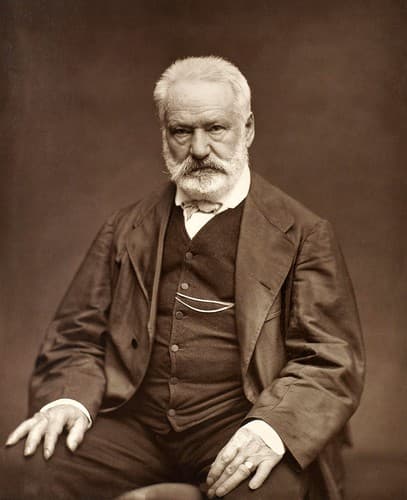
Victor-Marie Hugo was a French Romantic writer and politician. During a literary career that spanned more than sixty years, he wrote in a variety of genres and forms. He is considered to be one of the greatest French writers of all time.
Similar books
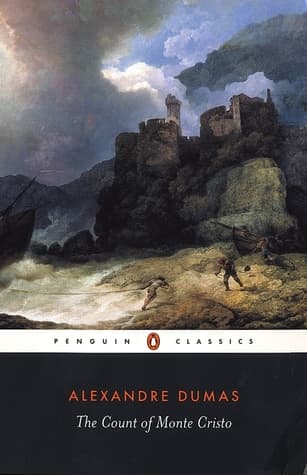
- The Count of Monte Cristo
Alexandre Dumas
4.3 (746k) average on GoodreadsHistorical FictionFeatures a protagonist seeking justice and redemption after wrongful imprisonment, with a grand scale and historical setting.
- A Tale of Two Cities
Charles Dickens
3.9 (810k) average on GoodreadsHistorical FictionAn epic historical novel set during a revolution, exploring themes of sacrifice, love, and social injustice.
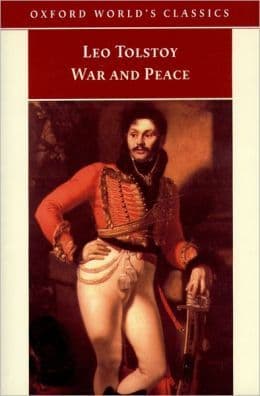
- War and Peace
Leo Tolstoy
4.1 (265k) average on GoodreadsHistorical FictionA monumental historical novel with a vast cast of characters, exploring philosophical ideas amidst significant historical events.
- Oliver Twist
Charles Dickens
3.9 (319k) average on GoodreadsHistorical FictionWhile both address 19th-century poverty and social injustice, Les Misérables is far more expansive in its philosophical reach and historical detail. Dickens focuses on individual plight within a more contained narrative, whereas Hugo attempts to encapsulate the entire moral and political landscape of an era and includes extensive social commentary.
- To Kill a Mockingbird
Harper Lee
4.3 (4.5M) average on GoodreadsHistorical FictionIn the 1930s Jim Crow South, Harper Lee writes about racial injustice, moral growth, and the quiet courage of a lawyer father, Atticus Finch, as seen through his young daughter's eyes.
- The Great Gatsby
F. Scott Fitzgerald
3.9 (3.8M) average on GoodreadsHistorical FictionIn the opulent Roaring Twenties, a mysterious millionaire's lavish parties hide his desperate, tragic pursuit of a lost love, exposing the emptiness within the American Dream.



Enjoyed the summary?
A summary gives you the shape of the book. The book itself has the detail, the examples and the voice.
Find Les Misérables on AmazonAs an Amazon Associate, BookBrief earns from qualifying purchases. How we're funded