

Synopsis
Covers the whole plot, including the ending.
- Difficulty
- Medium
- Pacing
- Fast
- Mood
- Suspenseful, Tense, Patriotic, Action-packed
- Read it if
- You enjoy high-stakes political thrillers with espionage, nuclear threats, and a race against time.
- Skip it if
- You prefer character-driven dramas over plot-heavy action, or find detailed military/espionage tactics unengaging.
Liberty Plot Summary
Covers the whole plot, including the ending.
The Chilling Disclosure
Admiral Jake Grafton, retired and working for a defense contractor, meets his old KGB adversary and friend, Jake Janos Illin, in Manhattan. Illin, looking unwell, reveals a shocking secret: a rogue Russian general, General Boris Yazykov, sold four tactical nuclear warheads to a radical Islamic terrorist group called the Sword of Islam. Their leader, known as 'The Engineer,' plans to detonate these devices in the United States to start a catastrophic holy war between the West and the Muslim world. Illin stresses the urgency and the potential devastation, urging Grafton to act immediately and discreetly, as official channels might be compromised.
Initial Investigations and Presidential Briefing
Alarmed by Illin's news, Jake Grafton begins to gather information quietly. He reconnects with his former colleague, Toad Tarkington, now a high-ranking intelligence official. They start to piece together clues, but information is fragmented and hard to verify through official channels due to its sensitive nature and potential for internal leaks. Grafton eventually gets an unscheduled meeting with President George Lawrence, a former friend and Naval Academy classmate. He presents the urgent intelligence. President Lawrence, initially skeptical of the unofficial report, is convinced by Grafton's conviction and the situation's gravity. He authorizes Grafton to investigate with limited oversight.
The First Nuclear Threat
Intelligence analysts, working with Grafton and Tarkington, intercept a coded message hinting at the activation of one nuclear device. The signal is traced to the greater Washington D.C. area. A large, covert search operation begins, involving multiple federal agencies. The city is on high alert, though the public is unaware of the specific threat. Grafton and his team race against time, following every lead, including suspicious cargo manifests and unusual movements of individuals tied to extremist groups. They realize the terrorists could be anywhere, and a detonation could happen at any moment, threatening the heart of American government.
Uncovering Domestic Treachery
As the investigation deepens, Grafton and Tarkington notice patterns suggesting the Sword of Islam is getting help from inside the United States. They find that key information is being leaked, and some government officials seem to be blocking their efforts or misdirecting them. Grafton suspects Roger Cumming, a powerful figure close to the President, a top advisor with a history of controversial political actions. This adds a new, horrifying dimension to the threat: the enemy is not just external but has infiltrated the highest levels of American power, making the hunt for the warheads even more dangerous.
The Betrayal of Roger Cumming
Grafton and Tarkington meticulously gather evidence against Roger Cumming. They discover that Cumming, driven by a twisted ideology of American isolationism and a desire to purge what he sees as a corrupt political system, is secretly working with 'The Engineer.' Cumming believes a catastrophic terror attack will force the US to withdraw from global affairs, allowing him and his allies to reshape the nation according to their ultranationalist vision. His plan involves using the terror attacks to destabilize the government, frame foreign entities, and seize control. This discovery is a shock, as a high-ranking American official is actively helping to destroy his own country for ideological reasons.
The Hunt for 'The Engineer'
With Cumming's betrayal exposed, the focus shifts to 'The Engineer,' the mysterious leader of the Sword of Islam. Grafton and his team use advanced intelligence techniques, including signal interception and human intelligence, to track the terrorist's movements and communications. They learn that 'The Engineer' is intelligent, meticulous, and deeply committed to his apocalyptic vision. The chase takes them across various locations, revealing a sophisticated network of cells and operatives. The challenge is immense, as 'The Engineer' uses many layers of deception and security, making him a difficult target to find before he can carry out his devastating plan.
The Second Warhead and a Close Call
As the investigation continues, another nuclear warhead is found, this time in a major American city. The discovery triggers a frantic, high-stakes operation to disarm the device. Bomb disposal experts work under immense pressure and with limited information, racing against the clock. Grafton and his team coordinate the effort, providing critical intelligence and tactical support. The situation is tense and dangerous, as one mistake could cause a catastrophe. The successful defusal of this second warhead is a crucial, though temporary, victory, but it highlights the urgent need to find the remaining devices and neutralize 'The Engineer' and his network.
Confrontation and Capture of Cumming
With undeniable evidence, Jake Grafton orchestrates Roger Cumming's confrontation and capture. The arrest is a high-stakes operation, as Cumming is a powerful figure with connections and resources. He tries to evade justice, using his influence, but Grafton and his allies are prepared. The confrontation is tense, showing Cumming's chilling resolve and his belief in his twisted ideology. His capture sends shockwaves through the political establishment, exposing deep-seated corruption and ideological extremism that threatened the nation from within. Cumming's apprehension is a significant victory, but the immediate nuclear threat remains.
The Final Showdown
Intelligence from Cumming and other sources finally leads Jake Grafton to 'The Engineer' and the remaining nuclear warheads. The terrorists planned a simultaneous detonation in multiple key American cities for maximum chaos and destruction. Grafton, Toad Tarkington, and a specialized team launch a desperate, last-ditch effort to intercept 'The Engineer' before he can act. The climax involves a series of intense, coordinated raids and pursuits, with Grafton personally leading the charge. The fate of the nation is at stake as they close in on the terrorist mastermind and his deadly cargo.
Preventing Armageddon
In a confrontation, Jake Grafton and his team corner 'The Engineer' and his remaining operatives. The scene is a desperate struggle against time and a fanatical enemy. Grafton uses his combat and strategic experience to outmaneuver the terrorists. Through precise intelligence, decisive action, and personal bravery, they disable the remaining nuclear warheads and neutralize 'The Engineer.' The country is saved from an unprecedented catastrophe. The experience leaves a mark on everyone involved, showing the fragility of peace and the constant vigilance needed to protect liberty.
Liberty Characters
Jake Grafton
Protagonist
Retired admiral turned civilian investigator, dedicated to national security.
Jake Grafton is a highly decorated former Navy admiral, now working in the private sector. He possesses keen intellect, exceptional leadership skills, and an unwavering moral compass. Despite being officially retired, his sense of duty compels him to act when he receives the dire warning from Illin. Grafton is pragmatic, resourceful, and unafraid to challenge authority when he believes the nation is at risk. He is driven by a deep love for his country and a desire to protect its citizens from harm, often putting himself in harm's way.
Relationships: Jake Janos Illin (Old adversary turned trusted informant and friend.); Toad Tarkington (Long-time friend and colleague, now a high-ranking intelligence official.); President George Lawrence (Former Naval Academy classmate and friend, now the President of the United States.)
Jake Janos Illin
Supporting
Former KGB spymaster and Grafton's trusted, albeit dying, informant.
Illin is a former high-ranking KGB officer, a cunning and intelligent spymaster who developed a complex relationship with Grafton over decades, evolving from adversary to a peculiar form of friendship. He is dying and, in a final act of conscience, chooses to reveal the critical intelligence about the stolen warheads to Grafton, bypassing official channels he no longer trusts. Illin is cynical but ultimately demonstrates a concern for global stability, recognizing the catastrophic implications of the terrorist plot. His role is pivotal in initiating the entire crisis.
Relationships: Jake Grafton (Old adversary who became a trusted confidante and friend.)
Toad Tarkington
Supporting
Grafton's loyal friend and an indispensable ally within the intelligence community.
Toad Tarkington is Jake Grafton's long-time friend and former flying mate, now holding a significant position within the U.S. intelligence apparatus. He is intelligent, capable, and fiercely loyal to Grafton and to the nation's security. Toad provides Grafton with crucial access to intelligence resources, analysis, and official backing, often bending rules to assist his friend. He acts as Grafton's eyes and ears within the official system, navigating bureaucratic hurdles and internal politics to ensure the investigation progresses. His unwavering support is vital to Grafton's success.
Relationships: Jake Grafton (Best friend and trusted colleague.)
President George Lawrence
Supporting
The President of the United States, grappling with an unprecedented threat.
George Lawrence is the President of the United States, a former Naval Academy classmate and friend of Jake Grafton. He is a man of integrity and patriotism, but initially struggles to fully grasp the unconventional nature and severity of the threat presented by Grafton, especially given the unofficial sources. As the evidence mounts, he places his trust in Grafton, granting him the authority needed to pursue the investigation. Lawrence represents the immense burden of leadership during a crisis, balancing national security with political realities and the need for discretion.
Relationships: Jake Grafton (Former Naval Academy classmate and friend, now a trusted advisor during crisis.)
Roger Cumming
Antagonist
A powerful presidential advisor and a domestic traitor with an ultranationalist agenda.
Roger Cumming is a highly influential and seemingly patriotic presidential advisor. Beneath his facade, he harbors a radical ultranationalist ideology, believing the United States needs to be purged of its perceived corruption and global entanglements. He is a cold, calculating, and ruthless individual, driven by a desire to reshape America through extreme means. Cumming secretly collaborates with 'The Engineer,' believing that the nuclear terror attacks will create the chaos necessary for his political faction to seize control and implement their isolationist vision. He represents the insidious danger of ideological extremism from within.
Relationships: President George Lawrence (Presidential advisor, secretly betraying his trust.); 'The Engineer' (Co-conspirator, using him to further his ultranationalist agenda.)
'The Engineer'
Antagonist
The elusive and fanatical leader of the Sword of Islam.
'The Engineer' is the enigmatic and highly intelligent leader of the radical Islamic terrorist group, the Sword of Islam. His true identity remains largely unknown, adding to his mystique and effectiveness as a shadowy mastermind. He is driven by an extreme, apocalyptic vision of a holy war between Western civilization and the Muslim world, believing that nuclear strikes on American soil will trigger this cataclysm. He is meticulous in his planning, ruthless in his execution, and adept at evading capture, making him a formidable and terrifying adversary for Grafton. He is the ultimate external threat.
Relationships: Roger Cumming (Co-conspirator, utilizing Cumming's influence and resources.)
General Boris Yazykov
Mentioned
Rogue Russian general who sold the nuclear warheads to terrorists.
General Boris Yazykov is a corrupt and rogue Russian general who, driven by greed and possibly disillusionment, sold four tactical nuclear warheads to 'The Engineer' and the Sword of Islam. He does not appear directly in the narrative but is the initial catalyst for the entire plot. His actions highlight the dangers of unsecured WMDs and the potential for rogue elements within powerful nations to destabilize global security for personal gain. His betrayal sets in motion the entire terrifying sequence of events that Grafton must unravel.
Liberty Themes
The Fragility of Liberty
The novel shows how easily liberty can be threatened, not just by external enemies but by internal forces. The plot, involving nuclear terrorism, directly endangers the physical safety and freedom of American citizens. More subtly, Roger Cumming's treachery highlights how ideological extremism from within, disguised as patriotism, can be just as destructive to a free society's principles. The constant vigilance needed to protect these freedoms, as shown by Jake Grafton's efforts, emphasizes that liberty is fragile and always contested, especially when the nation faces nuclear chaos.
“Eternal vigilance is the price of liberty.”
The Nature of Patriotism and Treachery
The book explores the complex and often twisted definitions of patriotism. Jake Grafton embodies true patriotism: a selfless dedication to protecting his country and its people, even outside official channels. In contrast, Roger Cumming's actions show a perverted patriotism. He believes he is acting for America's good by helping to destroy it to rebuild it according to his ultranationalist ideals. This theme explores how noble intentions can be corrupted by extremism, blurring the lines between loyalty and betrayal. It shows that the greatest threats can sometimes come from those who claim to love their country the most.
“Some men cloak their darkest ambitions in the flag.”
The Burden of Leadership and Moral Responsibility
President Lawrence and Jake Grafton both carry heavy burdens of leadership and moral responsibility. Lawrence must make life-or-death decisions under immense pressure, balancing official protocols with the urgent, unconventional intelligence Grafton presents. Grafton, though retired, feels a strong moral obligation to act, stepping outside the system to prevent catastrophe. Their decisions involve ethical dilemmas, especially concerning potential massive civilian casualties and the need for secrecy. The novel highlights the personal cost and courage needed to lead and make the right choices when the nation's survival is at stake.
“The weight of the world, he thought, sometimes rested on the shoulders of one man.”
The Dangers of Global Terrorism and WMD Proliferation
At its core, the novel warns about the threat of global terrorism, especially with Weapons of Mass Destruction. The plot centers on rogue elements selling nuclear warheads to a radical group, illustrating a terrifying real-world scenario. The Sword of Islam's goal is not just destruction but to start a global holy war, showing the ideological extremism that drives such groups. The story emphasizes how difficult it is to track and neutralize such threats, and the catastrophic consequences if even one device detonates. It serves as a reminder of the vigilance required in a post-9/11 world.
“Four warheads, Jake. Four apocalypses.”
Plot Devices & Literary Techniques
The Ticking Clock
An ever-present and accelerating deadline for preventing nuclear catastrophe.
The ticking clock is a central and pervasive plot device in "Liberty." From Illin's initial warning about imminent detonation to the frantic search for each warhead, the narrative is constantly driven by the race against time. The terrorists' plan for simultaneous detonations creates an escalating sense of urgency, forcing Grafton and his team to act with extreme speed and precision. This device heightens suspense, creates dramatic tension, and emphasizes the high stakes involved, making every decision and every lead critical as the potential for unimaginable destruction looms closer with each passing moment.
The Unreliable Informant / Unexpected Ally
Jake Janos Illin, a former adversary, provides crucial but unofficial intelligence.
Jake Janos Illin serves as both an unreliable informant and an unexpected ally. As a former KGB spymaster, his past actions make him inherently untrustworthy in official circles. However, his personal relationship with Grafton and his dire condition lend credence to his warning. This device forces Grafton to act outside conventional intelligence channels, adding a layer of risk and complexity to his mission. Illin's role highlights the blurred lines between enemies and allies in the shadowy world of espionage and emphasizes that critical truths can come from the most unexpected, and potentially compromised, sources.
Internal Betrayal
A high-ranking government official is secretly working with the enemy.
The device of internal betrayal, embodied by Roger Cumming, adds a profound layer of complexity and danger to the plot. It shifts the threat from solely external terrorism to an insidious enemy within the highest echelons of power. This betrayal creates suspicion and paranoia, making it difficult for Grafton to trust anyone and forcing him to operate with extreme discretion. It underscores the theme that the greatest threats can sometimes come from within, challenging the very fabric of national unity and making the task of identifying and neutralizing the enemy infinitely more difficult.
The Shadowy Mastermind
The elusive and enigmatic leader of the terrorist group, 'The Engineer'.
'The Engineer' functions as a shadowy mastermind, a figure whose true identity and whereabouts are initially unknown. This device creates a formidable and terrifying antagonist, as his anonymity makes him difficult to track and predict. His intelligence and ruthlessness are conveyed through the devastating effectiveness of his plans rather than direct interaction. This keeps the audience on edge, constantly guessing his next move and amplifying the sense of a pervasive, unseen threat until Grafton finally manages to unmask and confront him.
Liberty Quotes
“The price of freedom is eternal vigilance. And a lot of sweat, and sometimes, a lot of blood.”
“Democracy is not a spectator sport. It's a full-contact brawl, and if you don't show up, you lose.”
“Power corrupts, and absolute power corrupts absolutely. It's not a cliché; it's a law of nature.”
“Terrorism isn't about killing people; it's about killing hope. And we can't let them win that war.”
“There are no easy answers, only hard choices. And sometimes, the hardest choice is the only right one.”
“A lie travels halfway around the world while the truth is still putting on its shoes.”
“The greatest weapon against tyranny is not a sword, but a free mind.”
“Fear is a powerful motivator, but it's a terrible master.”
“You can't negotiate with fanatics. They don't want a deal; they want your soul.”
“Sometimes, doing nothing is the most dangerous thing you can do.”
“The enemy of my enemy is not necessarily my friend. Sometimes, he's just another enemy waiting for his turn.”
“Liberty isn't given; it's taken. And once taken, it must be fiercely defended.”
“The only thing necessary for the triumph of evil is for good men to do nothing. It's a cliché, but it's true.”
“Technology amplifies human nature, for good and for ill. It doesn't change it.”
Quiz
10 questions on the plot and the characters. Each answer comes with a short explanation.
Question 1
Who delivers the initial chilling secret message about the nuclear warheads to Jake Grafton?
- The President of the United States
- A radical Islamic terrorist
- Spymaster Jake Janos Illin
- A rogue American general
Show answer
C. Spymaster Jake Janos Illin The book states that spymaster Jake Janos Illin delivers the secret message to Jake Grafton on a park bench in Manhattan.
Question 2
What is the name of the radical Islamic terrorist group that purchased the nuclear warheads?
- The Hand of Allah
- The Sword of Islam
- The Desert Vipers
- The Sons of Jihad
Show answer
B. The Sword of Islam The provided text explicitly names 'the Sword of Islam' as the radical Islamic Terrorist Group that bought the warheads.
Question 3
Where does Jake Janos Illin meet Jake Grafton to deliver the secret message?
- Inside the White House
- On a quiet park bench in Manhattan
- At a secret CIA safe house
- At a military base in Virginia
Show answer
B. On a quiet park bench in Manhattan The opening line of the summary states, 'On a quiet park bench in Manhattan... spymaster Jake Janos Illin delivers a chilling secret message to Jake Grafton.'
Question 4
What is the ultimate goal of the terrorist group in detonating the nuclear warheads in America?
- To extort money from the U.S. government
- To trigger a holy war between Western civilization and the Muslim world
- To establish a new caliphate in the Middle East
- To destroy all major U.S. financial institutions
Show answer
B. To trigger a holy war between Western civilization and the Muslim world The text explicitly states the group intends to detonate them in America 'the apocalypse that will trigger a holy war between Western civilization and the Muslim world.'
Question 5
How many nuclear warheads did the rogue Russian general sell to the terrorist group?
- Two
- Three
- Four
- Five
Show answer
C. Four The summary mentions, 'A rogue Russian general has sold four nuclear warheads to a radical Islamic Terrorist Group.'
Question 6
What is the primary motivation for Jake Grafton's investigation?
- To avenge the World Trade Center attacks
- To prevent the detonation of nuclear warheads in America
- To uncover corruption within the U.S. government
- To rescue hostages held by the Sword of Islam
Show answer
B. To prevent the detonation of nuclear warheads in America Jake Grafton's main objective is to stop the planned nuclear attack, as he 'hunts for terrorists' immediately after learning about their intentions.
Question 7
What surprising discovery does Jake Grafton make about the terrorists during his investigation?
- They are funded by a rival superpower.
- They are operating from within American soil and have high-level connections.
- They are not actually Islamic but a different extremist group.
- They have already detonated one warhead in an undisclosed location.
Show answer
B. They are operating from within American soil and have high-level connections. The text reveals, 'As Jake hunts for terrorists, he also discovers that the terrorists don't all come from the Middle East. They come from places close to home; some may even have the president's ear.'
Question 8
The setting for the initial information exchange between Illin and Grafton is significant because it is miles from what major historical event site?
- The Pentagon
- The Statue of Liberty
- The ruins of the World Trade Center
- Ground Zero Memorial
Show answer
C. The ruins of the World Trade Center The summary explicitly states the meeting takes place 'just miles from the ruins of the World Trade Center,' adding a layer of thematic relevance.
Question 9
The phrase 'apocalypse that will trigger a holy war' suggests which overarching theme of the novel?
- The futility of war
- The clash of civilizations and religious extremism
- The importance of international diplomacy
- The psychological impact of terrorism
Show answer
B. The clash of civilizations and religious extremism The terrorists' stated goal is to initiate 'a holy war between Western civilization and the Muslim world,' directly reflecting a theme of civilizational conflict driven by religious extremism.
Question 10
What is implied about the potential reach and influence of the domestic terrorists Jake Grafton uncovers?
- They are low-level operatives with limited resources.
- They are isolated individuals acting without coordination.
- They have significant access and potentially influence at the highest levels of government.
- They are foreign agents masquerading as Americans.
Show answer
C. They have significant access and potentially influence at the highest levels of government. The text states that some of these domestic terrorists 'may even have the president's ear,' implying a dangerous level of influence and access within the government.
Liberty FAQ
What is the central premise of 'Liberty'?
The central premise of 'Liberty' involves spymaster Jake Janos Illin revealing to Jake Grafton that a rogue Russian general has sold four nuclear warheads to the Sword of Islam, a radical Islamic Terrorist Group. This group plans to detonate the warheads in America to instigate a holy war between Western civilization and the Muslim world, prompting Jake Grafton to race against time to prevent the catastrophe.
Who are the main protagonists tasked with stopping the nuclear attack?
The main protagonists are Jake Grafton, a key figure entrusted with the critical mission, and Jake Janos Illin, the spymaster who delivers the initial chilling intelligence. Together, they must navigate a complex web of international intrigue and domestic threats to locate and neutralize the nuclear warheads before they can be detonated by the Sword of Islam.
What is the primary objective of the terrorist group, the Sword of Islam?
The Sword of Islam's primary objective is to detonate four nuclear warheads in America, an act they believe will trigger an 'apocalypse' and ignite a global holy war between Western civilization and the Muslim world. Their ultimate goal is to exploit the resulting chaos and conflict to advance their radical ideology and reshape the geopolitical landscape.
How does the book broaden the definition of 'terrorist' beyond typical expectations?
The book broadens the definition of 'terrorist' by revealing that not all threats originate from the Middle East, as Jake Grafton discovers. It suggests that some terrorists come from 'places close to home,' implying domestic extremists or individuals with powerful connections, potentially even those with the president's ear, complicating the hunt significantly.
What is the significance of the World Trade Center ruins mentioned in the synopsis?
The World Trade Center ruins serve as a poignant backdrop, reminding readers of past terror attacks on American soil and underscoring the severe stakes of the current threat. Its proximity to where Jake Janos Illin delivers his message to Jake Grafton emphasizes the enduring vulnerability of the nation and the chilling echoes of prior tragedies.
What specific details are known about the rogue Russian general involved in the sale?
The synopsis only identifies him as a 'rogue Russian general' who sold four nuclear warheads to the Sword of Islam. His motivations, name, and specific ties to the Russian government or other factions are not detailed, leaving his role as a mysterious catalyst for the global catastrophe.
Are there any clues about the identity of the domestic terrorists or those with the president's ear?
The synopsis deliberately keeps the identities of the domestic terrorists and those potentially with the president's ear vague, creating suspense and a sense of pervasive danger. It suggests a deep-seated conspiracy that extends into the highest echelons of power, forcing Jake Grafton to question who he can truly trust.
How does Jake Janos Illin obtain his 'chilling secret message'?
The synopsis does not specify how Jake Janos Illin acquired his intelligence about the nuclear warheads and the Sword of Islam. It implies his role as a high-level spymaster grants him access to critical, clandestine information, positioning him as the crucial initial link in uncovering the plot.
What is the psychological impact on Jake Grafton of discovering domestic threats?
The discovery that terrorists come from 'places close to home' and potentially have the president's ear would likely induce significant psychological strain on Jake Grafton. This revelation shatters his assumptions about the enemy, fostering paranoia and a profound sense of betrayal, making his mission far more complex and personally harrowing.
How does the novel explore the psychology of radicalization within the Sword of Islam?
While the synopsis highlights their objective to trigger a holy war, it doesn't delve into the specific psychology of radicalization within the Sword of Islam. The narrative likely explores their extreme ideological motivations and their belief that a nuclear apocalypse is a necessary catalyst for their desired global conflict.
What psychological toll might the constant threat of nuclear detonation have on the characters?
The constant, looming threat of four nuclear warheads detonating in America would impose immense psychological pressure on the characters, particularly Jake Grafton. This would likely manifest as extreme stress, sleep deprivation, heightened anxiety, and a relentless sense of urgency, impacting their decision-making and personal well-being.
Does the book suggest a deeper psychological motive for the rogue Russian general's actions?
The synopsis doesn't explicitly reveal a deeper psychological motive for the rogue Russian general's actions beyond simply selling the warheads. However, his 'rogue' status implies a departure from state loyalty, suggesting personal gain, ideological alignment, or a desire for chaos might drive his willingness to arm a terrorist group with such destructive power.
How does 'Liberty' interpret the concept of 'holy war' in a modern context?
'Liberty' interprets 'holy war' not just as a religious conflict but as a deliberate act orchestrated by the Sword of Islam to pit Western civilization against the Muslim world, using nuclear terrorism as the catalyst. This interpretation suggests a cynical manipulation of religious fervor for geopolitical destabilization rather than purely spiritual motivations.
What societal fears or anxieties does the book tap into regarding terrorism?
The book taps into deep societal fears regarding nuclear proliferation, the unpredictable nature of rogue actors, and the potential for domestic betrayal, especially in the wake of 9/11. It exploits anxieties about the vulnerability of national security and the insidious ways extremist ideologies can infiltrate even trusted institutions.
Does the novel offer any solutions or reflections on preventing future acts of global terrorism?
The synopsis doesn't explicitly state whether the novel offers solutions, but thrillers often implicitly reflect on preventing future terrorism through the protagonist's actions and the exposure of vulnerabilities. It likely suggests that vigilance, strong intelligence networks, and addressing both foreign and domestic threats are crucial to global security.
How does the title 'Liberty' relate to the themes of the book, given the threat of nuclear annihilation?
The title 'Liberty' directly contrasts with the existential threat of nuclear annihilation and the potential for a global holy war, highlighting what is at stake. It implies that the characters are fighting to preserve freedom and democratic values against forces seeking to dismantle them, making the defense of 'liberty' the ultimate goal.
Is the 'apocalypse' mentioned by the Sword of Islam purely physical, or does it have a metaphorical meaning?
The 'apocalypse' mentioned by the Sword of Islam primarily refers to the physical devastation caused by nuclear detonations in America. However, it also carries a metaphorical meaning, signifying the end of the existing world order and the dawn of a new, desired era of conflict, which the group believes will lead to their ultimate triumph.
Similar books
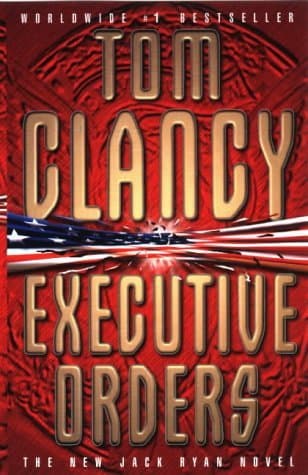
- Executive Orders
Tom Clancy
4.1 (46k) average on GoodreadsPoliticsDeals with large-scale terrorist threats against the U.S. and a strong military/intelligence protagonist.
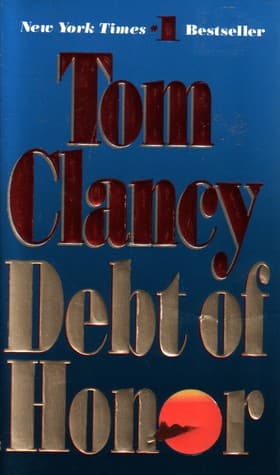
- Debt of Honor
Tom Clancy
4.0 (45k) average on GoodreadsThrillerInvolves a devastating attack on the U.S. and a protagonist working to prevent further catastrophe.
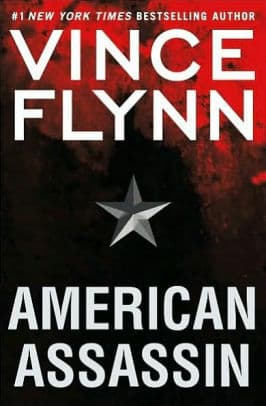
- American Assassin
Vince Flynn
4.2 (75k) average on GoodreadsThrillerCoonts' Liberty operates on a more institutional and presidential level, focusing on the strategic responses of government agencies to a crisis. Flynn's American Assassin, conversely, centers on a lone-wolf operative and personal vendettas, emphasizing visceral action and individual heroism, a stark contrast to the team-oriented, systemic approach in Liberty.
- Angels & Demons
Dan Brown
3.9 (2.7M) average on GoodreadsThrillerA Harvard symbologist races through Rome's ancient sites, deciphering cryptic clues to unmask the Illuminati and stop a vengeful plot to destroy the Vatican with a stolen antimatter weapon.
- Gone Girl
Gillian Flynn
4.1 (2.3M) average on GoodreadsThrillerA wife's sudden disappearance on her fifth anniversary reveals a web of lies and psychological warfare, exposing the secrets within a seemingly perfect marriage.
- The Girl on the Train
Paula Hawkins
3.9 (2.1M) average on GoodreadsThrillerA woman’s fascination with a seemingly perfect couple she watches from her daily train commute leads her into a dark investigation when she witnesses something that shatters their idyllic image.



Enjoyed the summary?
A summary gives you the shape of the book. The book itself has the detail, the examples and the voice.
Find Liberty on AmazonAs an Amazon Associate, BookBrief earns from qualifying purchases. How we're funded