
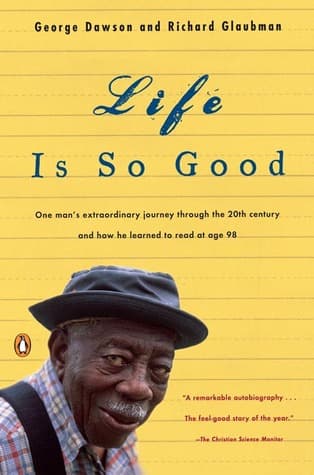
Core Idea
- Difficulty
- Easy
- Read it if
- You are looking for an inspiring true story about overcoming adversity, the lifelong value of learning, and maintaining a positive outlook despite immense challenges.
- Skip it if
- You prefer books with complex narratives or deep philosophical analyses over straightforward, heartwarming personal accounts.
Key Takeaways from Life is So Good
Never Too Late to Learn
Age is just a number when it comes to acquiring new skills and knowledge.
George Dawson's most important lesson is the power of learning throughout life, shown by his decision to learn to read at 98. This was not a casual hobby; it was a personal and life-changing act that opened new worlds and allowed him to read for the first time. His story breaks the idea that certain skills are best learned in youth, proving that people can grow and adapt well into old age. It shows that curiosity, when encouraged, can lead to great personal enrichment at any point in life, changing one's view and opportunities.
“I was 98 years old when I learned to read. Best thing I ever did.”
In the book: Dawson's personal narrative of learning to read at 98, detailed throughout the book, including his initial struggles and eventual triumph.
Try this: Identify one skill you've always wanted to learn but thought you were 'too old' for. Dedicate consistent, small blocks of time each day or week to begin learning it, embracing the process over immediate mastery.
Related ideas: lifelong-learning, cognitive-plasticity, personal-growth
Resilience in the Face of Hardship
Adversity shapes character but doesn't have to define one's spirit.
Dawson's life covers a century marked by huge social changes and personal difficulties, including Jim Crow's systemic racism, the Great Depression, and two World Wars. Yet, his story is consistently one of resilience, not bitterness. He talks about hardships directly, focusing on how people adapted, supported each other, and found joy even when little was available. This shows the human ability to endure and even do well under great pressure, suggesting that a positive outlook and strong community ties are vital for handling life's problems. His story demonstrates the power of the human spirit to not just survive, but to find reasons for hope and gratitude.
“We had hard times, sure, but we always found a way to make it through. You just keep going.”
In the book: His descriptions of growing up in poverty, working dangerous jobs from a young age, and experiencing segregation, yet maintaining a positive outlook and sense of purpose.
Try this: When facing a personal challenge, consciously shift focus from the problem itself to potential solutions or lessons learned. Seek out community support and practice gratitude for what remains positive in your life.
Related ideas: resilience, adversity, grit, optimism
The Power of a Positive Outlook
Cultivating gratitude transforms perception, even in difficult circumstances.
Despite experiencing great injustices and personal losses, George Dawson's phrase, 'Life is so good,' is not naive optimism but a deep belief formed through experience. It shows a conscious choice to appreciate simple joys and progress, rather than focusing on past wrongs or current problems. This takeaway emphasizes that happiness is often a choice, a view developed through gratitude and a focus on small improvements. His ability to find goodness even when facing systemic oppression offers a strong example of how to keep inner peace and joy, regardless of outside circumstances. It reminds us that one's inner state can protect against outside negativity.
“Life is so good. I do believe it's getting better.”
In the book: His consistent use of the phrase 'Life is so good,' even when discussing historical atrocities or personal struggles, and his focus on positive changes over time.
Try this: Start a daily gratitude practice. Each day, list three specific things you are grateful for, no matter how small. Make it a habit to verbally express appreciation to others.
Related ideas: gratitude, positive-psychology, mindset, happiness
History Through a Personal Lens
Firsthand accounts offer invaluable insights beyond textbooks.
Dawson's memoir is a living history book, giving a unique, ground-level view of 20th-century America. His experiences show the deep impact of major historical events—from segregation and the Civil Rights Movement to the Great Depression and World Wars—on the lives of ordinary people, especially African Americans. This takeaway highlights how important oral histories and personal stories are for understanding the past. It shows how big historical trends become small realities, offering a richer, more detailed, and often more understanding view than academic texts alone. His voice makes history real and deeply human.
“I saw a lot of things change in this country. Some for the good, some not so much.”
In the book: His detailed recollections of living under Jim Crow laws, his experiences with racial discrimination, and his observations of societal shifts over decades.
Try this: Seek out and engage with oral histories or memoirs from individuals who lived through significant historical periods. Consider interviewing older family members or community elders to preserve their unique perspectives.
Related ideas: oral-history, memoir, social-history, racial-justice
The Value of Simple Pleasures
Contentment often lies in appreciating the everyday and the fundamental.
In a world often focused on getting more, Dawson's life offers a refreshing different story. He finds deep satisfaction not in wealth or status, but in life's basic needs and simple joys: a warm meal, a comfortable home, meaningful work, and human connection. This takeaway shows that true contentment is not tied to material things but to appreciating basic comforts and relationships. His view encourages readers to rethink their own priorities and find joy in the present moment and the accessible parts of their lives, rather than always trying for more.
“A good meal, a warm bed, good company – that's all you really need.”
In the book: His descriptions of enjoying simple meals, working hard and finding satisfaction in his labor, and cherishing time with family and friends.
Try this: Take time each day to consciously appreciate a simple pleasure: a cup of coffee, a walk in nature, a conversation with a loved one. Reduce reliance on external stimuli for happiness.
Related ideas: minimalism, contentment, gratitude, simple-living
Work Ethic and Dignity
Hard work isn't just about survival, but about purpose and self-respect.
Throughout his life, George Dawson did physically demanding labor, from farming to working in sawmills. His story consistently shows a strong work ethic, not as a burden, but as a source of dignity and purpose. He finds satisfaction in contributing, in earning his way, and in the clear results of his efforts. This takeaway highlights the often-overlooked psychological benefits of honest labor, suggesting that work, when done with integrity, can provide a deep sense of self-worth and meaning. It challenges modern ideas of work as just a means to an end, instead placing it as essential to a fulfilling life.
“I always worked hard. It felt good to earn my keep.”
In the book: His detailed accounts of various jobs he held throughout his life, his pride in his physical capabilities, and his consistent commitment to providing for his family.
Try this: Approach your own work with a renewed sense of purpose, focusing on the quality of your effort and the value you create, rather than solely on the outcome or compensation. Find ways to contribute meaningfully, even outside of paid employment.
Related ideas: work-ethic, dignity-of-labor, purpose, self-worth
Forgiveness and Moving Forward
Releasing grudges is key to personal peace, even in the face of injustice.
Despite enduring systemic racism, personal insults, and great hardship, Dawson's story is notably free of bitterness or lasting anger. He acknowledges injustice but chooses not to dwell on it, instead focusing on moving forward and finding goodness. This takeaway shows the deep personal freedom that comes from forgiveness, not necessarily of the oppressor, but of oneself from the weight of resentment. His ability to let go of grudges allowed him to keep a positive spirit and enjoy his long life, offering a strong lesson on emotional resilience and the destructive nature of prolonged anger.
“No sense holding on to anger. It just hurts you more than anyone else.”
In the book: His calm and almost detached recounting of discriminatory experiences, without expressing deep-seated resentment, and his focus on positive changes over time.
Try this: Identify a past grievance you are still holding onto. Practice active forgiveness, understanding that it is a gift to yourself, not necessarily an absolution for the other party. Focus on releasing the emotional burden.
Related ideas: forgiveness, emotional-resilience, letting-go, inner-peace
The Enduring Power of Family and Community
Strong connections provide essential support and meaning throughout life.
Throughout his life, George Dawson consistently emphasizes the central role of family and community in his survival, happiness, and overall well-being. From his childhood in a close, supportive home to his later years surrounded by children and grandchildren, these relationships provided a safety net, shared joy, and a sense of belonging. This takeaway highlights how essential human connection is, especially in times of scarcity and struggle. It argues that strong social bonds are not just pleasant additions to life, but fundamental supports that provide resilience, meaning, and identity. His story is a strong example of the lasting strength found in collective support.
“Family was everything. We always looked out for each other.”
In the book: His frequent anecdotes about family gatherings, mutual support during hard times, and the joy he derived from his children and grandchildren.
Try this: Prioritize nurturing your relationships with family and close friends. Actively participate in your community, offering and seeking support, and fostering a sense of belonging.
Related ideas: community, family-bonds, social-support, belonging
Embrace Change and Progress
While acknowledging the past, celebrate societal advancements.
Having lived through the most dramatic social and technological changes in history, Dawson has a unique view on progress. He does not avoid talking about past injustices, especially racial segregation, but he also clearly states and celebrates the improvements he saw. This takeaway encourages a balanced view of history, acknowledging past wrongs while also recognizing and appreciating the hard-won advancements in civil rights, technology, and living standards. It reminds us that while perfection is hard to reach, progress is real and worth celebrating, encouraging an optimistic outlook on humanity's ability to improve.
“Things got better, slowly but surely. You gotta see that.”
In the book: His comparisons between life under Jim Crow and the civil rights era, his observations on technological advancements like cars and electricity, and his consistent belief that 'it's getting better.'
Try this: Reflect on a specific area of societal progress you've witnessed in your lifetime. Actively support initiatives that aim for positive change, contributing to continued progress rather than succumbing to cynicism.
Related ideas: social-progress, historical-perspective, optimism, societal-change
The Richness of an Unconventional Life
Life's deepest lessons often come from experiences outside the mainstream.
George Dawson's life, mostly without formal education until late in life, shows the deep wisdom gained through experience. His 'education' came from hard work, observing people, handling challenges, and simply living for over a century. This takeaway challenges the idea that academic achievement is the only valuable kind of knowledge, suggesting that deep understanding and practical wisdom often come from direct engagement with the world. His story validates the intelligence and insight of those whose lives do not fit traditional molds, reminding us that valuable lessons can be found everywhere, especially from those who have faced life's raw realities directly.
“I didn't go to no school, but I learned a lot from living.”
In the book: His lack of formal schooling until age 98, yet his clear articulation of complex societal issues and profound life philosophies, all drawn from personal experience and observation.
Try this: Seek out perspectives from individuals with vastly different life experiences than your own. Value 'street smarts' and practical wisdom as highly as academic knowledge. Engage in hands-on learning and new experiences regularly.
Related ideas: experiential-learning, wisdom, unconventional-paths, life-lessons
Life is So Good Quotes
“Life is so good. I do not have a single regret. I am a happy man.”
“It's never too late to learn.”
“I always told myself, 'If you're going to do something, do it right.'”
“You got to keep moving, keep busy. That's how you stay young.”
“There's no use in being mad about something you can't change.”
“I saw things change, slowly but surely. You just had to live long enough to see it.”
“Treat people the way you want to be treated. It's simple as that.”
“I never had much, but I always had enough.”
“Education is important. It opens up doors.”
“A man's word is his bond. You say you're going to do something, you do it.”
“The good Lord has been good to me.”
“Don't let nobody tell you what you can't do.”
“Every day is a gift. You just got to appreciate it.”
Quiz
10 questions on the main ideas. Each answer comes with a short explanation.
Question 1
At what age did George Dawson learn to read, a central theme highlighted in his memoir?
- 65
- 80
- 98
- 100
Show answer
C. 98 The book prominently features George Dawson's achievement of learning to read at the remarkable age of 98, demonstrating his lifelong pursuit of knowledge.
Question 2
What was George Dawson's primary occupation for much of his working life, as detailed in the book?
- Teacher
- Farmer
- Log pond worker
- Railroad conductor
Show answer
C. Log pond worker George Dawson spent many years working at a log pond, a physically demanding job that he describes in detail, reflecting on the hard work and dangers involved.
Question 3
George Dawson's perspective on segregation and the Civil Rights Movement is shaped by his firsthand experiences. Which of the following best represents his general outlook on these changes?
- He believed the changes were too slow and ineffective.
- He viewed the progress as significant and a testament to the country's ability to improve.
- He felt that while laws changed, attitudes remained largely the same.
- He largely ignored political events, focusing only on his personal life.
Show answer
B. He viewed the progress as significant and a testament to the country's ability to improve. Despite enduring immense hardships due to segregation, Dawson maintains an optimistic view, often expressing gratitude for the progress made and believing that 'Life is so good' and 'getting better,' even in the context of civil rights.
Question 4
What is the overarching message or philosophy that George Dawson frequently reiterates throughout the book?
- Focus on personal wealth accumulation.
- Life is so good, and it's getting better.
- Never trust anyone outside your family.
- The past is always better than the present.
Show answer
B. Life is so good, and it's getting better. The book's title itself, 'Life is So Good,' directly reflects George Dawson's enduring positive outlook, which he often complements with the belief that things are 'getting better,' even in the face of adversity.
Question 5
How does George Dawson's personal experience with education, or lack thereof in his youth, influence his later life choices and perspectives?
- It made him resentful of those who had formal education.
- It fueled his desire to learn and value education deeply, culminating in learning to read at an old age.
- He felt that practical skills were far more important than formal schooling.
- He discouraged his own children from pursuing higher education.
Show answer
B. It fueled his desire to learn and value education deeply, culminating in learning to read at an old age. Dawson's inability to attend school as a child due to his family's circumstances fostered a profound appreciation for learning, leading him to finally learn to read at 98 and emphasizing its importance throughout his life.
Question 6
The book highlights George Dawson's simple yet profound approach to happiness. Which of the following best describes a key element of his philosophy for a good life?
- Accumulating wealth and possessions.
- Focusing on hard work, family, and appreciating simple pleasures.
- Avoiding all forms of responsibility and stress.
- Constantly seeking new adventures and travel.
Show answer
B. Focusing on hard work, family, and appreciating simple pleasures. Dawson's narrative consistently emphasizes the value of honest labor, the love and support of his family, and finding contentment in the everyday aspects of life, rather than material pursuits.
Question 7
Richard Glaubman, the co-author, plays a crucial role in bringing George Dawson's story to life. What was Glaubman's primary method for capturing Dawson's 'irresistible voice' and experiences?
- He pieced together Dawson's story from historical documents and family letters.
- He conducted extensive recorded interviews with Dawson over a period of time.
- He wrote the book based on a single, long conversation with Dawson.
- He transcribed Dawson's handwritten memoirs.
Show answer
B. He conducted extensive recorded interviews with Dawson over a period of time. The introduction and context of the book explain that Glaubman spent significant time interviewing Dawson, allowing him to capture his authentic voice and narrative in a way that feels direct and personal.
Question 8
George Dawson was the grandson of a slave. How does this lineage and his family's history of slavery and emancipation influence his understanding of freedom and opportunity in America?
- It made him deeply cynical about the concept of freedom in America.
- It gave him a profound appreciation for the freedoms he gained and witnessed, despite the ongoing struggles.
- He felt disconnected from his ancestors' experiences, focusing only on his own life.
- He believed that true freedom was only achievable through leaving the United States.
Show answer
B. It gave him a profound appreciation for the freedoms he gained and witnessed, despite the ongoing struggles. Dawson's background as a slave's grandson gives him a unique historical perspective, leading him to highly value the progress towards freedom and equality he observed throughout his long life, even while acknowledging past and present injustices.
Question 9
The book covers many defining moments of the 20th century. Which of these historical events does George Dawson provide a unique, firsthand perspective on, often through the lens of how it impacted ordinary Black Americans?
- The invention of the internet and the space race.
- World War I, the Great Depression, and the Civil Rights Movement.
- The fall of the Berlin Wall and the rise of globalization.
- The American Revolution and the Gold Rush.
Show answer
B. World War I, the Great Depression, and the Civil Rights Movement. As someone who lived through the entire 20th century, Dawson shares personal recollections and observations on major events like the world wars, the economic hardships of the Great Depression, and the societal shifts brought by the Civil Rights Movement.
Question 10
What practical lesson can readers take from George Dawson's life regarding adversity and resilience, as portrayed in the memoir?
- Adversity is best overcome by avoiding challenges and seeking an easy life.
- It's essential to harbor grudges and seek revenge for past wrongs.
- Maintain a positive outlook, work hard, and find joy in simple things, even when facing significant hardships.
- Success is solely dependent on formal education and high-paying jobs.
Show answer
C. Maintain a positive outlook, work hard, and find joy in simple things, even when facing significant hardships. Dawson''s life story is a testament to enduring resilience. Despite facing poverty, racial discrimination, and personal loss, he consistently emphasizes hard work, gratitude, and an unwavering belief that 'Life is so good,' offering a powerful example of overcoming adversity with a positive spirit.
Life is So Good FAQ
Who is George Dawson and what is his book about?
George Dawson was a remarkable man, a grandson of a slave, who learned to read at the age of 98. His book, 'Life is So Good,' is a memoir and historical account where he reflects on his 103 years of life, sharing his firsthand experiences of 20th-century America and offering profound lessons on living.
Does George Dawson's story offer practical advice for dealing with hardship?
Yes, through his incredible resilience and optimistic outlook, George Dawson's story offers numerous insights into overcoming adversity, finding happiness amidst hardship, and maintaining a positive perspective, emphasizing that 'Life is so good' despite challenges.
What historical events are covered in 'Life is So Good'?
'Life is So Good' provides a unique, firsthand perspective on major 20th-century American historical events, including segregation, the Civil Rights Movement, various wars, and the presidencies and defining moments that shaped the nation.
How is George Dawson's memoir different from other historical biographies?
Unlike many historical biographies, Dawson's memoir offers a deeply personal, lived experience of history from the perspective of an ordinary man who witnessed and endured extraordinary changes, delivering historical context through his unique voice and reflections rather than just factual retelling.
What is the central message or theme of 'Life is So Good'?
The central message of 'Life is So Good' is one of enduring optimism and resilience. George Dawson's life story inspires readers with the profound belief that, despite all challenges, 'Life is so good' and constantly getting better.
Does George Dawson's literacy journey play a significant role in the book?
Absolutely. George Dawson learning to read at 98 is a pivotal and inspiring aspect of his story, symbolizing lifelong learning, the power of education, and his determination, which profoundly impacted his ability to share his life's wisdom.
What kind of insights into humanity does George Dawson provide?
Through his long life and experiences with diverse people and societal changes, George Dawson offers profound insights into human nature, resilience, the impact of kindness, and the enduring spirit of hope and community.
How does 'Life is So Good' inspire readers?
'Life is So Good' inspires readers by showcasing George Dawson's incredible journey, his unwavering optimism in the face of immense challenges, and his belief in the continuous improvement of life, encouraging a positive outlook and appreciation for one's own experiences.
Similar books
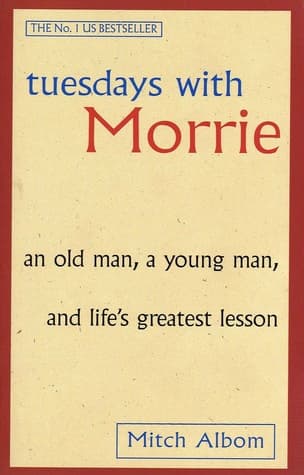
- Tuesdays with Morrie
Mitch Albom
4.1 (782k) average on GoodreadsBiographyExplores life lessons and wisdom shared by an elderly individual facing mortality.
- The Last Lecture
Randy Pausch
4.3 (303k) average on GoodreadsBiographyOffers inspirational life advice and a positive outlook in the face of personal challenges.
- A Long Way Gone: Memoirs of a Boy Soldier
Ishmael Beah
4.2 (163k) average on GoodreadsBiographyA memoir showcasing extreme resilience and a journey towards healing and learning after profound hardship.
- The Glass Castle
Jeannette Walls
4.3 (903k) average on GoodreadsBiographyWhile both Life is So Good and The Glass Castle are memoirs detailing difficult childhoods and resilience, Walls' book delves into a more dysfunctional family dynamic and the complex psychological scars left by poverty and neglect. Dawson's narrative, in contrast, emphasizes a simpler, more stoic acceptance and a profound lack of resentment despite similar or greater external hardships. Walls' work is more introspective and critical of her upbringing, whereas Dawson's is largely celebratory of life itself, despite its difficulties.
- Angela's Ashes
Frank McCourt
4.1 (540k) average on GoodreadsBiographyMcCourt's Angela's Ashes shares themes of extreme poverty, hardship, and a childhood marked by deprivation, much like Dawson's early life. However, McCourt's memoir is characterized by a biting wit and a more cynical, yet often humorous, recounting of his struggles in Ireland. Dawson's tone, while acknowledging hardship, maintains an unwavering optimism and a profound sense of gratitude, presenting a stark contrast to McCourt's more jaded, albeit brilliant, perspective on survival. McCourt's narrative is also more focused on the intricate details of Irish Catholic culture and family dynamics, while Dawson's provides a broader, more direct historical lens on American life.
- The Diary of a Young Girl
Anne Frank
4.2 (2.7M) average on GoodreadsBiographyDuring the Nazi occupation, a teenage girl's diary, written from a secret annex, shares observations on humanity, hope, and the wait for freedom.





Enjoyed the summary?
A summary gives you the shape of the book. The book itself has the detail, the examples and the voice.
Find Life is So Good on AmazonAs an Amazon Associate, BookBrief earns from qualifying purchases. How we're funded