

Core Idea
- Difficulty
- Easy
- Read it if
- You want a deeply personal, poignant, and historically significant first-hand account of the Holocaust from the perspective of a young girl, exploring themes of hope, resilience, and the human spirit.
- Skip it if
- You are looking for a broad historical analysis of World War II or the Holocaust's political intricacies, as this is a personal memoir focused on daily life and internal reflections.
Key Takeaways from The Diary of a Young Girl
The Power of the Pen in Confinement
Writing as a lifeline for sanity and self-discovery amidst isolation.
Anne Frank's diary, 'Kitty,' shows the helpful nature of writing, especially in hard situations. Confined to the Secret Annexe, without freedom, education, or social interactions, Anne found comfort and purpose in her daily entries. Writing was her confidante, a safe place to share frustrations, explore her growing sexuality, express her dreams, and observe the complex dynamics of her hidden world. This act of writing helped her process the trauma and monotony of her life and supported her intellectual and emotional growth. It changed a scared girl into a thoughtful young woman with a clear sense of identity and ambition, even as her physical world became smaller. Her diary was not just a record; it helped her survive and grow.
“I can shake off everything if I write; my sorrows disappear, my courage is reborn.”
In the book: Anne consistently refers to her diary as 'Kitty,' addressing it directly and sharing her most intimate thoughts, reflecting a deep personal connection and reliance on the act of writing for emotional release and intellectual engagement.
Try this: Cultivate a regular journaling practice to process emotions, clarify thoughts, and track personal growth, especially during challenging or isolating periods. Use it as a private space for uncensored self-expression.
Related ideas: journaling-therapy, self-discovery, resilience
The Microcosm of Humanity in Hiding
Confinement reveals the best and worst of human nature under duress.
The Secret Annexe, a few rooms, became a place where the personalities and flaws of eight people were amplified under the pressure of constant fear and forced closeness. Anne carefully records the small arguments over food, the clashing egos, the moments of selfishness, and the acts of kindness and shared humanity. The Van Daans (the van Pels in reality), especially Mrs. Van Daan's focus on possessions and Mr. Van Daan's selfishness about food, were different from the Franks' attempts to keep dignity and education. This forced shared living removed social appearances, showing the raw realities of human character when survival is key and privacy does not exist. It is a reminder that even when united against an outside threat, internal conflicts continue and can even get worse.
“The Annexe is a small piece of the world, but it contains all the world's problems.”
In the book: Anne's detailed descriptions of arguments over rationing, the distribution of food, and the constant friction between her mother and Mrs. Van Daan, as well as her own struggles with her mother and Mr. Dussel.
Try this: When facing prolonged close-quarter interactions, practice empathy and self-awareness to mitigate conflicts. Recognize that stress amplifies both positive and negative traits in individuals, and strive for understanding over judgment.
Related ideas: group-dynamics, psychology-of-confinement, human-nature
Adolescence Under Siege
Coming of age in extraordinary circumstances accelerates growth and introspection.
Anne's diary is not just a historical document; it is a record of adolescence happening in extreme conditions. She deals with common teenage concerns—her changing body, her first crush (on Peter Van Daan), her difficult relationship with her mother, her search for identity, and her intellectual ambitions—all while living in constant fear of discovery. The isolation and forced self-reflection, along with the threat to her life, made her mature quickly. She developed a strong self-awareness, an understanding of human psychology, and a sophisticated view of the world beyond her years. Her dreams of becoming a writer and journalist were not passing thoughts but deep aspirations that gave her hope and purpose in a hopeless situation, showing great resilience.
“I want to be useful or bring enjoyment to all people, even those I've never met. I want to go on living even after my death!”
In the book: Anne's detailed descriptions of her physical changes, her evolving feelings for Peter, her critical analysis of her parents' marriage, and her articulated ambitions for a career in writing and journalism.
Try this: Recognize that adversity can be a catalyst for accelerated personal growth and self-discovery. Encourage self-reflection and the pursuit of passions, even when circumstances are challenging, as they can provide purpose.
Related ideas: adolescent-psychology, identity-formation, resilience-in-youth
The Enduring Power of Hope
Maintaining optimism and belief in humanity amidst pervasive darkness.
The most surprising part of Anne Frank's diary is her belief in the goodness of humanity, even as she saw and experienced its darkest parts. Despite the constant threat of capture, the reports of terrible acts, and the difficult personalities in the Annexe, Anne consistently found reasons to hope. She looked forward to the end of the war, dreamed of a future where she could write, and found beauty in nature through a small window. This optimism, not from being naive but from choosing to look for good, shows the human spirit's ability to be resilient. It challenges us to keep our ideals and compassion even when faced with evidence against it, offering a lesson in keeping hope during despair.
“It's a wonder I haven't abandoned all my ideals, they seem so absurd and impractical. Yet I cling to them because I still believe, in spite of everything, that people are truly good at heart.”
In the book: Anne's frequent expressions of hope for the future, her deep appreciation for nature (like the chestnut tree outside the window), and her famous quote about believing in people's goodness despite all evidence.
Try this: Actively seek out sources of hope and beauty in everyday life, even in difficult times. Cultivate an optimistic mindset by focusing on future possibilities and the positive aspects of human nature.
Related ideas: optimism, human-spirit, psychological-resilience
The Hidden Heroes of History
The quiet courage of those who risk everything to protect others.
The survival of the eight people in the Secret Annexe for over two years depended on the courage and loyalty of their helpers: Miep Gies, Bep Voskuijl, Victor Kugler, and Johannes Kleiman. These individuals, non-Jewish employees of Otto Frank's company, risked their lives daily to provide food, news, and emotional support to those in hiding. Their actions show the moral courage needed to defy an oppressive regime and offer help, knowing that discovery meant death or imprisonment. Their selfless acts contrast with the widespread cooperation and indifference of the time, reminding us that even in the darkest times, individuals can choose to stand for humanity and justice, often without expecting reward.
“Our protectors are angels, they do everything for us.”
In the book: Anne's detailed accounts of Miep and Bep bringing food, books, and news from the outside world, as well as the constant risks they took to ensure the Annexe's inhabitants had what they needed.
Try this: Recognize and support individuals and organizations who advocate for justice and protect vulnerable populations, often at great personal risk. Consider how one can act with moral courage in their own sphere of influence.
Related ideas: moral-courage, altruism, holocaust-rescuers
The Fragility of Freedom
Appreciating fundamental rights when they are brutally stripped away.
Anne Frank's time in hiding reminds us of the value of basic freedoms often taken for granted. Her desire for simple things—to walk outside, to go to school, to look out a window without fear, to have privacy—shows how deeply connected our sense of self and well-being are to our liberty. The forced confinement, the constant threat of discovery, and the loss of basic rights like movement, speech, and assembly illustrate the impact of tyranny on the individual spirit. Her diary makes readers think about the value of these rights and the constant need to protect them, showing that freedom is a fragile condition that can be easily lost.
“The best remedy for those who are afraid, lonely or unhappy is to go outside, somewhere where they can be quiet, alone with the heavens, nature and God. Because only then does one feel that all is as it should be.”
In the book: Anne's recurring expressions of yearning for the outside world, her descriptions of watching the sky and the chestnut tree, and her frustration with the lack of privacy and freedom of movement within the Annexe.
Try this: Actively participate in democratic processes, advocate for human rights, and appreciate the freedoms available. Avoid complacency regarding civil liberties, understanding their historical fragility.
Related ideas: civil-liberties, tyranny, human-rights
The Weight of a Secret Life
The psychological toll of perpetual secrecy and fear.
Living in the Secret Annexe was not just physical confinement but a psychological burden. The inhabitants had to remain silent, move carefully, and hide any signs of their presence. This constant secrecy created an environment of anxiety, paranoia, and internal tension. Anne's diary reveals the mental effort needed to keep this facade, the fear of every noise, every footstep, and the weight of knowing their lives depended on absolute discretion. This stress damaged trust, made small irritations worse, and changed their personalities, showing the psychological scars left by prolonged fear and hiding one's true self. It is a lesson in the hidden costs of oppression.
“We've been cut off from the outside world, from friends and school, and we're living in such a way that we can't be ourselves.”
In the book: Anne's frequent mentions of having to be quiet during the day, the fear of the Gestapo, the tension during air raids, and the general atmosphere of anxiety and suspicion within the Annexe.
Try this: Recognize the psychological toll of living under constant stress or secrecy. Prioritize mental well-being and seek healthy outlets for stress. Understand the importance of open communication and trust in relationships.
Related ideas: psychological-trauma, anxiety, mental-health-in-captivity
The Universal Voice of Youth
A young girl's perspective transcends time and circumstance.
Despite her life's circumstances, Anne Frank's voice is universal because she expresses the experiences and concerns of adolescence. Her diary captures the emotions of teenage angst, first love, family conflict, the search for identity, and intellectual curiosity. This relatability, the fact that a young girl's thoughts on her parents, her body, and her dreams feel familiar, makes her story powerful beyond its historical context. She shows that the inner world of a young person, with all its complexities and hopes, stays constant regardless of outside problems. Her perspective gives a way to understand not only the Holocaust but also the human experience of growing up and seeking meaning.
“I often think how much more difficult it would be if we were boys. A boy has a far harder time here than a girl.”
In the book: Anne's detailed descriptions of her crushes, her arguments with her mother, her reflections on her own character flaws and strengths, and her dreams for a future career.
Try this: Value and listen to the voices of young people, recognizing the depth of their insights and experiences. Understand that fundamental human experiences transcend cultural and historical barriers.
Related ideas: universal-themes, youth-perspective, coming-of-age
The Legacy of Bearing Witness
One individual's story ensures history is remembered and lessons are learned.
Anne Frank's diary, initially a private record, became one of the most important historical documents of the Holocaust after her death. Her detailed and personal account offers a human perspective on the horrors of that period, making the abstract statistics of war real and relatable. By telling her story through writing, Anne ensures that victims are not just numbers but are remembered as individuals with dreams, fears, and complex inner lives. Her legacy shows the importance of personal stories in understanding history and preventing future terrible acts. It is a reminder that every individual story matters in documenting human experience and fighting for justice.
“I hope I shall be able to confide completely in you, as I have never been able to do in anyone before, and I hope you will be a great source of comfort and support.”
In the book: The very existence of the diary, preserved by Miep Gies, and its subsequent publication and global impact as a primary source for understanding the Holocaust.
Try this: Support and engage with personal testimonies and memoirs, especially from marginalized communities, to gain deeper insights into history and current events. Encourage the documentation of personal stories for future generations.
Related ideas: holocaust-education, historical-memory, personal-narrative
The Nuance of Family Bonds
Love and conflict coexist and evolve under extreme pressure.
The close quarters of the Annexe made the already complex dynamics of the Frank family and their co-habitants more intense. Anne's diary gives an unfiltered look into her changing relationships, especially her often-difficult connection with her mother, Edith. While she loved her father, Otto, whom she saw as her intellectual equal and confidante, her relationship with her mother had misunderstandings and criticism, a common adolescent struggle made worse by confinement. Over time, Anne's view of her mother softened, showing a growing empathy as she matured. This shows how family bonds, even under stress and with friction, can grow and lead to deeper understanding. It is a reminder that love can exist with conflict, and empathy can develop even in challenging relationships.
“Mother and I are two opposites. Father understands me better.”
In the book: Anne's early critical remarks about her mother's perceived lack of understanding, contrasted with later entries showing more compassion and an attempt to understand her mother's perspective.
Try this: Practice empathy and patience in family relationships, especially during periods of stress. Recognize that perspectives can evolve, and understanding can deepen over time through conscious effort.
Related ideas: family-dynamics, parent-child-relationships, empathy-development
The Diary of a Young Girl Quotes
“In spite of everything, I still believe that people are really good at heart.”
“How wonderful it is that nobody need wait a single moment before starting to improve the world.”
“I can shake off everything as I write; my sorrows disappear, my courage is reborn.”
“Think of all the beauty still left around you and be happy.”
“I don't think of all the misery, but of the beauty that still remains.”
“Parents can only give good advice or put them on the right paths, but the final forming of a person's character lies in their own hands.”
“Where there's hope, there's life. It fills us with fresh courage and makes us strong again.”
“I want to go on living even after my death!”
“The best remedy for those who are afraid, lonely or unhappy is to go outside, somewhere where they can be quiet, alone with the heavens, nature and God.”
“Laziness may appear attractive, but work gives satisfaction.”
“I must uphold my ideals, for perhaps the time will come when I shall be able to carry them out.”
“No one has ever become poor by giving.”
“I see the world being slowly transformed into a wilderness; I hear the approaching thunder that, one day, will destroy us too.”
“Who would ever think that so much went on in the soul of a young girl?”
Quiz
10 questions on the main ideas. Each answer comes with a short explanation.
Question 1
What was the primary reason Anne Frank and her family went into hiding in 1942?
- To escape poverty during the Great Depression
- To avoid persecution by the Nazis as Jewish people
- To protect themselves from Allied bombings
- To join a resistance movement against the occupation
Show answer
B. To avoid persecution by the Nazis as Jewish people The Frank family went into hiding specifically because they were Jewish and facing increasing persecution, deportation, and likely death under Nazi occupation of Holland during World War II.
Question 2
What nickname did Anne Frank give to her diary?
- My Secret Friend
- Kitty
- Hope
- The Annex Companion
Show answer
B. Kitty Anne addressed many of her diary entries to 'Kitty,' treating her diary as a confidante and friend during her isolation in the Secret Annex.
Question 3
Where was the 'Secret Annexe' located where the Frank family hid?
- In a farmhouse in the Dutch countryside
- In the basement of a church in Amsterdam
- In an attic above Otto Frank's office building
- In a hidden room in their former home
Show answer
C. In an attic above Otto Frank's office building The Secret Annex was concealed behind a movable bookcase in the attic of the office building at Prinsengracht 263 in Amsterdam, where Otto Frank had previously worked.
Question 4
Besides the Frank family, which other family shared the Secret Annex with them?
- The Van Pels family
- The De Vries family
- The Schmidt family
- The Cohen family
Show answer
A. The Van Pels family The Van Pels family (referred to as the Van Daans in Anne's diary) joined the Franks in hiding, consisting of Hermann, Auguste, and their son Peter.
Question 5
What was one of the major themes Anne Frank explored in her diary regarding her personal growth?
- Her desire to become a famous actress after the war
- Her struggle with her identity as a young woman in confinement
- Her plans to emigrate to America immediately after the war
- Her interest in studying medicine at university
Show answer
B. Her struggle with her identity as a young woman in confinement Anne frequently wrote about her inner conflicts, aspirations, and maturation into a young woman despite the extreme limitations of life in hiding, reflecting on her relationships and self-identity.
Question 6
How did the inhabitants of the Secret Annex primarily receive news and supplies from the outside world?
- Through a secret radio they listened to at night
- Via helpers like Miep Gies who risked their lives to assist them
- By sending coded messages through the mail
- Through a hidden telephone line in the attic
Show answer
B. Via helpers like Miep Gies who risked their lives to assist them Miep Gies and other trusted employees of Otto Frank brought food, supplies, and news to the annex, acting as crucial links to the outside while keeping their hiding place secret.
Question 7
What ultimately happened to the Frank family and the others in hiding?
- They were liberated by Allied forces in 1945
- They were betrayed, arrested by the Gestapo, and sent to concentration camps
- They escaped to Switzerland in 1944
- They remained in hiding until the end of the war
Show answer
B. They were betrayed, arrested by the Gestapo, and sent to concentration camps After over two years in hiding, they were betrayed (the exact source remains unknown), arrested on August 4, 1944, and deported to concentration camps. Only Otto Frank survived.
Question 8
In her diary, Anne Frank expressed a desire to become what after the war?
- A journalist or writer
- A teacher
- A nurse
- A politician advocating for peace
Show answer
A. A journalist or writer Anne often wrote about her ambition to be a writer or journalist, and she even revised her diary with future publication in mind, hoping to share her story with the world.
Question 9
Which of the following best describes a key argument Anne makes about human nature in her diary?
- That people are fundamentally selfish and cannot change
- That despite suffering, people still have goodness and a desire for a better world
- That war brings out the best in humanity through solidarity
- That religious faith is the only source of hope in times of crisis
Show answer
B. That despite suffering, people still have goodness and a desire for a better world Despite the horrors around her, Anne frequently expressed optimism and belief in the inherent goodness of people, famously writing, 'In spite of everything, I still believe that people are really good at heart.'
Question 10
What practical challenge did Anne highlight as particularly difficult during the long periods of confinement in the Annex?
- The lack of educational materials for the children
- The constant fear of air raids and bombings
- The boredom and interpersonal tensions from living in close quarters
- The inability to celebrate religious holidays properly
Show answer
C. The boredom and interpersonal tensions from living in close quarters Anne wrote extensively about the monotony, quarrels, and psychological strain of being confined with seven other people in a small space for over two years, which tested their patience and relationships daily.
The Diary of a Young Girl FAQ
What is 'The Diary of a Young Girl' about?
It is the real diary of Anne Frank, a Jewish teenager who documented her life while hiding from the Nazis in Amsterdam during World War II. The diary details her experiences, thoughts, and emotions during two years in hiding with her family and others in a concealed annex.
Is Anne Frank's diary a true story?
Yes, it is a genuine, first-hand account written by Anne Frank herself between 1942 and 1944. It is a non-fiction memoir and historical document that provides a personal perspective on the Holocaust.
How does Anne Frank's diary differ from other Holocaust memoirs?
Anne's diary is unique because it was written by a young girl in real-time during the events, offering an intimate, immediate, and often hopeful voice. Unlike many retrospective accounts, it captures the daily life, fears, and dreams of a teenager in hiding, making the historical tragedy deeply personal.
Does reading the diary work as an educational tool for understanding WWII?
Yes, it serves as a powerful educational resource by humanizing the statistics of the Holocaust. Through Anne's vivid descriptions and reflections, readers gain insight into the emotional and psychological impact of war, persecution, and resilience on individuals.
What is the 'Secret Annexe'?
The 'Secret Annexe' refers to the hidden living quarters behind a bookcase in an Amsterdam office building where Anne Frank, her family, and four others hid from the Nazis for over two years. It was their refuge but also a confined space that shaped their daily struggles.
How different is Anne Frank's diary from fictional war stories?
Unlike fictional narratives, Anne's diary is an authentic, unedited record of real events and emotions, providing raw, unfiltered insights into the Holocaust. Its historical accuracy and personal authenticity make it a unique and impactful testimony compared to dramatized accounts.
What happened to Anne Frank after the diary ends?
The diary ends when the occupants of the Secret Annexe were betrayed and arrested by the Gestapo in August 1944. Anne and her sister Margot were sent to concentration camps, where they died of typhus in early 1945, just weeks before liberation.
Does the diary include only sad or tragic content?
No, while it addresses the horrors of war, the diary also contains thoughtful, moving, and surprisingly humorous moments. Anne writes about her dreams, relationships, and personal growth, showcasing her spirit and resilience amidst adversity.
How is Anne Frank's diary relevant today?
It remains relevant as a timeless reminder of the dangers of prejudice, discrimination, and war, while celebrating the human spirit's strength. Anne's insights into hope, identity, and morality continue to inspire readers worldwide to reflect on social justice and empathy.
What makes Anne Frank's diary a world classic?
Its universal themes of courage, fear, hope, and the struggle for identity during oppression resonate across cultures and generations. Anne's eloquent writing and honest self-portrait transform a personal story into a powerful symbol of resilience and a cautionary tale against hatred.
About the author

Anne Frank was a German-born diarist and Holocaust victim. Her posthumously published diary, "The Diary of a Young Girl," became one of the world's most widely read books, offering a poignant account of her experiences hiding from the Nazis during World War II. Her writings provide a powerful testament to the human spirit in the face of persecution.
Similar books
- Night
Elie Wiesel
4.3 (970k) average on GoodreadsBiographyAnother powerful first-hand account of the Holocaust, offering a different yet equally profound perspective on survival and loss.
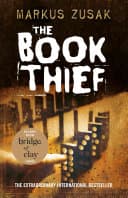
- The Book Thief
Markus Zusak
4.4 (1.8M) average on GoodreadsHistorical FictionExplores the human experience during WWII in Germany, focusing on resilience, the power of words, and hidden acts of kindness.
- Eat, Pray, Love
Elizabeth Gilbert
3.6 (1.5M) average on GoodreadsLifestyleA heartbroken writer leaves her conventional life for a year-long global search for pleasure in Italy, spiritual devotion in India, and unexpected love and balance in Bali.
- Steve Jobs
Walter Isaacson
4.1 (957k) average on GoodreadsBusinessSteve Jobs was a visionary who fused creativity and technology to revolutionize six industries and shape our digital world.
- The Glass Castle
Jeannette Walls
4.3 (903k) average on GoodreadsBiographyJeannette Walls's memoir describes her unusual childhood with brilliant, free-spirited parents whose poverty-stricken life shaped her independence and love despite family problems.
- Bossypants
Tina Fey
4.0 (848k) average on GoodreadsBiographyFrom a 'vicious nerd' with stress dreams to the comedic force behind Liz Lemon and 'Weekend Update,' Tina Fey chronicles her journey to proving that 'you're no one until someone calls you bossy.'





Enjoyed the summary?
A summary gives you the shape of the book. The book itself has the detail, the examples and the voice.
Find The Diary of a Young Girl on AmazonAs an Amazon Associate, BookBrief earns from qualifying purchases. How we're funded