
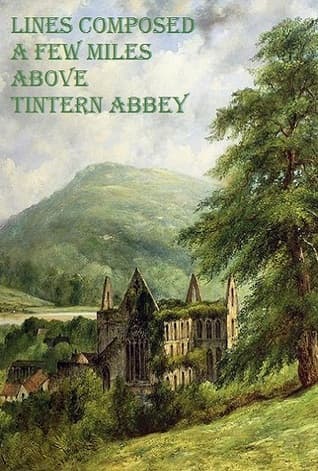
Synopsis
Covers the whole plot, including the ending.
- Difficulty
- Medium
- Pacing
- Slow
- Mood
- Reflective, Meditative, Serene, Philosophical, Nostalgic
- Read it if
- You appreciate reflective poetry about nature, personal growth, and the human-nature connection, or are studying Romanticism.
- Skip it if
- You prefer fast-paced narratives, contemporary language, or find extended philosophical musings in poetry unengaging.
Lines Composed a Few Miles Above Tintern Abbey Plot Summary
Covers the whole plot, including the ending.
First Visit and Memory's Return
Five years have passed since William Wordsworth last visited the Wye River banks and the Tintern Abbey ruins. He returns with his sister, Dorothy, and the familiar landscape immediately brings back strong memories. He remembers the 'beauteous forms' of the steep cliffs, the farms, the orchards, and the 'wreaths of smoke' from the woods. These natural scenes, though not seen, have lived in his memory as a source of comfort and inspiration during his time in 'towns and cities.' They gave him 'sensations sweet' and a quiet renewal, even without him knowing it. He thinks about how these memories have shaped his character, encouraging kindness and love, and giving him a deeper spiritual understanding of humanity.
The Power of Nature in Absence
Wordsworth explains the deep effect the Wye landscape's memory has had on him. He describes how, even in the 'din of towns and cities,' these remembered scenes offered him 'sweet sensations' that are more than just sensory pleasure. They created a 'blessed mood' where the world's burdens lessen, and the spirit lifts. More than just temporary joy, these memories have led to a deeper, lasting peace. They have guided his morals and increased his ability for 'unremembered pleasure' in kind acts and love. He feels a 'genial mood' where he can see the 'sublime' in nature and people, a gift from his connection with the natural world.
A Past Self Recalled
The poet thinks about his earlier visit to the Wye, describing the strong, almost animal-like joy he felt as a young man. He remembers a time when nature was 'all in all,' and he rushed through the woods and over the mountains with thoughtless energy. He sought only 'appetite' and 'a feeling and a love, / That had no need of a remoter charm, / By thought supplied, nor any interest / Unborrowed from the eye.' He admits that this 'aching joy' and 'dizzy raptures' of youth have faded. He no longer experiences nature with the same raw intensity, feeling a loss for that pure, primary connection.
The Maturing Perspective
Wordsworth explains that while the 'coarser pleasures' of his youth are gone, he has gained something much deeper and more lasting. He now sees in nature 'a sense sublime / Of something far more deeply interfused,' a spiritual presence that connects everything. This 'presence' is felt in the 'light of setting suns,' the 'ocean and the living air,' the 'blue sky,' and the 'mind of man.' He has learned to look at nature not just with his eyes but with deep thought and spiritual understanding, hearing 'the still, sad music of humanity' and finding comfort and wisdom in nature's 'healing power.' This new view offers a 'joy / Of elevated thoughts; a sense sublime.'
Nature as a Spiritual Guide
For Wordsworth, nature is no longer just beautiful but a deep spiritual guide. He speaks of 'a presence that disturbs me with the joy / Of elevated thoughts; a sense sublime / Of something far more deeply interfused.' This 'something' is a living spirit, a 'motion and a spirit, that impels / All thinking things, all objects of all thought, / And rolls through all things.' Through this perception, he finds comfort and moral direction. He believes nature can 'so inform / The mind that is within us, so impress / With quietness and beauty, and so feed / With lofty thoughts, that neither evil tongues, / Rash judgments, nor the sneers of selfish men, / Nor greetings where no kindness is, nor all / The dreary intercourse of daily life, / Shall e'er prevail against us.'
Dorothy's Presence and Hope
Wordsworth turns to his younger sister, Dorothy, who is with him on this visit. He sees in her 'the shooting of my own sweet thoughts,' and in her 'wild eyes' and 'solitary pleasure,' he recognizes the strong, unthinking love of nature that was his own youth. He hopes she, too, will find in nature the same lasting comfort and spiritual support he has found. He believes that even when the 'coarser pleasures' of youth fade for her, the memory of these natural experiences will serve as a 'storehouse' for future comfort and wisdom, protecting her from the world's harshness and guiding her moral growth.
A Prayer for Dorothy
Addressing Dorothy directly, Wordsworth offers a strong prayer for her future, closely tied to nature. He hopes that 'Nature never did betray / The heart that loved her' and that she will always find 'in nature's healing power' a refuge from 'the sneers of selfish men' and 'the dreary intercourse of daily life.' He imagines nature as a constant companion and guide for her, a 'guardian of my heart, and soul of all my moral being.' He wishes for her to keep seeing nature with joy and wonder, and for the memory of these moments to sustain her, just as they have sustained him. He hopes that even when the 'coarser pleasures' of youth pass, 'the memory of what has been, / And never more will be, shall be a joy / To thee.'
Nature's Enduring Legacy
In his closing thoughts, Wordsworth confirms nature's lasting and transformative power. He reflects on how the 'beauteous forms' of the Wye valley have shaped his 'intellectual and moral being' over the years, giving him 'many a sweet emotion' and 'many a tranquil mood.' He hopes that for Dorothy, too, this landscape will become a treasured memory, a 'fountain of all her future years.' He believes that even when he is gone, the memory of this shared experience and nature's continued presence will ensure that she 'shall not want / The blessed mood in which she sees into the life of things.' He finds comfort in the idea that nature will remain a loyal friend to both of them, showing its deep and lasting influence.
The 'Spirit' of the Landscape
Wordsworth explains the 'presence' he feels in nature, describing it as 'a motion and a spirit, that impels / All thinking things, all objects of all thought, / And rolls through all things.' This is not just seeing beauty but a deep spiritual connection. He feels 'a sense sublime / Of something far more deeply interfused' in the 'light of setting suns,' the 'ocean and the living air,' and 'the blue sky.' This spiritual dimension lets him go beyond how things look and connect with a deeper, unifying force. This 'spirit' provides the deep 'joy / Of elevated thoughts' and the 'blessed mood' in which he can see the true 'life of things,' offering a feeling of universal connection.
Nature as a Moral Anchor
Wordsworth strongly believes in nature's power to protect the human spirit from the world's negative forces. He states that nature can 'so inform / The mind that is within us, so impress / With quietness and beauty, and so feed / With lofty thoughts, that neither evil tongues, / Rash judgments, nor the sneers of selfish men, / Nor greetings where no kindness is, nor all / The dreary intercourse of daily life, / Shall e'er prevail against us.' This protective quality comes from the deep peace and elevated thoughts that connection with nature inspires. It acts as a moral anchor, strengthening the person against societal pressures and building a strong inner life based on goodness and calm, ensuring the heart stays open to kindness and beauty.
Principal Figures
William Wordsworth (The Poet)
Protagonist
The reflective speaker, meditating on nature's influence over time.
Wordsworth is the central figure, a deeply reflective and philosophical individual. He is highly sensitive to the beauty and spiritual power of nature, finding in it not just aesthetic pleasure but profound moral and intellectual sustenance. His journey from youthful, unthinking joy in nature to a mature, contemplative understanding forms the core of the poem. He is driven by a desire to articulate this evolving relationship and to share its transformative power, particularly with his sister.
Relationships: Dorothy Wordsworth (Loving brother, mentor, and confidant; sees his past self in her.)
Dorothy Wordsworth
Supporting
The poet's younger sister, representing youthful innocence and a future hope.
Dorothy is Wordsworth's beloved younger sister, accompanying him on his return to Tintern Abbey. She serves as a mirror for the poet's past self, embodying the youthful, unadulterated joy and passion for nature that he once possessed. She is described with 'wild eyes' and a 'solitary pleasure,' suggesting a deep, intuitive connection to the natural world. For Wordsworth, she represents hope for the future, a vessel for the continued transmission of nature's spiritual lessons, and a living testament to its enduring power.
Relationships: William Wordsworth (Beloved sister, recipient of his wisdom and hopes for her future.)
Nature (The Wye Valley)
Central Element/Antagonist (in terms of change)
The setting and spiritual force that shapes the poet's consciousness.
Nature, specifically the landscape of the Wye Valley around Tintern Abbey, is arguably the most significant 'character' in the poem. It functions not merely as a backdrop but as an active, living entity that inspires, comforts, and teaches. It evolves from being a source of 'aching joy' in youth to a profound spiritual presence, 'a motion and a spirit,' in the poet's maturity. Nature is the 'nurse, / The guide, the guardian of my heart, and soul / Of all my moral being,' offering solace and wisdom against the corrupting influences of society.
Relationships: William Wordsworth (Spiritual guide, source of comfort, inspiration, and moral sustenance.); Dorothy Wordsworth (Potential spiritual guide and source of enduring joy.)
Themes & Insights
The Evolving Relationship with Nature
The poem carefully shows how Wordsworth's view of nature changes over time. In his youth, he loved nature with an unthinking, almost animalistic passion, seeking 'appetite' and 'a feeling and a love, / That had no need of a remoter charm.' Five years later, this 'aching joy' has been replaced by a deeper, more thoughtful, and spiritual connection. He now sees 'a sense sublime / Of something far more deeply interfused' in the natural world, a 'motion and a spirit' that connects everything. This change shows a maturing of the self, where raw emotion gives way to thoughtful wisdom, finding deeper meaning beyond surface beauty.
“For I have learned / To look on nature, not as in the hour / Of thoughtless youth; but hearing oftentimes / The still, sad music of humanity, / Nor harsh nor grating, though of ample power / To chasten and subdue.”
Memory and Its Sustaining Power
Memory is a key ability that lets nature's beauty and comfort last and provide solace even when it is not physically present. Wordsworth clearly says that the 'beauteous forms' of the Wye have lived in his memory, giving 'sensations sweet, / Felt in the blood, and felt along the heart' during his time in 'towns and cities.' These remembered scenes act as a renewing force, bringing 'unremembered pleasure' and even influencing his moral actions. For Dorothy, too, he hopes that the 'memory of what has been' will be a source of future joy and strength, protecting her from the world's harshness.
“These beauteous forms, / Through a long absence, have not been to me / As is a landscape to a blind man's eye: / But oft, in lonely rooms, and 'mid the din / Of towns and cities, I have owed to them, / In hours of weariness, sensations sweet, / Felt in the blood, and felt along the heart;”
Nature as a Spiritual and Moral Guide
Beyond just being beautiful, nature in the poem is a deep spiritual and moral teacher. Wordsworth finds in it 'a sense sublime / Of something far more deeply interfused,' a unifying spirit that gives life to all existence. This spiritual view gives him 'joy / Of elevated thoughts' and a 'blessed mood' where he can 'see into the life of things.' Also, nature acts as a moral guide, able to 'so inform / The mind that is within us' that it protects against 'evil tongues, / Rash judgments, nor the sneers of selfish men.' It is the 'nurse, / The guide, the guardian of my heart, and soul / Of all my moral being.'
“And I have felt / A presence that disturbs me with the joy / Of elevated thoughts; a sense sublime / Of something far more deeply interfused, / Whose dwelling is the light of setting suns, / And the round ocean and the living air, / And the blue sky, and in the mind of man:”
The Loss and Gain of Maturity
The poem looks at the mixed feelings of getting older: losing youthful intensity but gaining deeper understanding. Wordsworth admits his 'aching joy' and 'dizzy raptures' – the raw, unthinking passion he once felt for nature – are fading. He misses the time when 'nature then / (The coarser pleasures of my boyish days, / And their glad animal movements all gone by) / To me was all in all.' However, he sees this loss not as a tragedy but as a necessary change. In its place, he has gained 'abundant recompense' in a deeper, more thoughtful, and spiritual appreciation of nature, letting him see its 'healing power' and 'the still, sad music of humanity.'
“Though changed, no doubt, from what I was when first / I came among these hills; when like a roe / I bounded o'er the mountains, by the sides / Of the deep rivers, and the lonely streams, / Wherever nature led: more like a man / Flying from something that he dreads, than one / Who sought the thing he loved.”
Plot Devices & Literary Techniques
Apostrophe
Direct address to an absent person or personified entity.
Wordsworth frequently uses apostrophe, most notably when he addresses his sister, Dorothy. This device makes the poem feel intimate and personal, as if the reader is privy to a private conversation and heartfelt reflection. By speaking directly to Dorothy, the poet not only conveys his love and hopes for her but also uses her as a representative of his past self, allowing him to reflect on his own development in contrast to her youthful experience. It also extends to his address of 'Nature' itself, personifying it as a guide and guardian.
Retrospection
A literary device where the narrator reflects on past events or states of mind.
The entire poem is built upon Wordsworth's act of retrospection. He revisits a place from his past and uses the present moment as a springboard to reflect on his earlier experiences and how his relationship with nature has evolved over five years. This allows him to juxtapose his youthful, unthinking joy with his mature, philosophical understanding. Retrospection is crucial for exploring the theme of memory's power and the concept of loss and gain through the passage of time, providing depth to his spiritual and emotional journey.
Personification of Nature
Attributing human qualities or actions to nature.
Wordsworth consistently personifies nature, elevating it beyond a mere landscape to an active, conscious, and even moral agent. He describes nature as a 'nurse,' 'guide,' and 'guardian' of his moral being. He speaks of 'a motion and a spirit' that 'rolls through all things,' suggesting a living, breathing entity with its own will and influence. This personification underscores the poem's central theme of nature's spiritual power and its capacity to teach, heal, and protect the human spirit, making it a dynamic rather than static presence.
Juxtaposition of Past and Present
The contrast between different states or experiences at different times.
Wordsworth masterfully uses juxtaposition to highlight the profound changes in his perception of nature. He contrasts his past self, who experienced nature with 'aching joy' and 'dizzy raptures' driven by 'thoughtless youth,' with his present self, who perceives 'a sense sublime / Of something far more deeply interfused.' This contrast emphasizes the journey from a purely sensory appreciation to a more intellectual and spiritual understanding. It allows the poet to articulate both the nostalgia for lost youth and the gratitude for acquired wisdom, showcasing the evolution of his consciousness.
Lines Composed a Few Miles Above Tintern Abbey Quotes
“Five years have past; five summers, with the length Of five long winters! and again I hear These waters, rolling from their mountain-springs With a sweet inland murmur.—Once again Do I behold these steep and lofty cliffs, That on a wild secluded scene impress Thoughts of more deep seclusion; and connect The landscape with the quiet of the sky.”
“Though absent long, These forms of beauty have not been to me, As is a landscape to a blind man's eye: But oft, in lonely rooms, and 'mid the din Of towns and cities, I have owed to them, In hours of weariness, sensations sweet, Felt in the blood, and felt along the heart; And passing even into my purer mind With tranquil restoration.”
“I have learned To look on nature, not as in the hour Of thoughtless youth; but hearing oftentimes The still, sad music of humanity, Nor harsh nor grating, though of ample power To chasten and subdue.”
“And I have felt A presence that disturbs me with the joy Of elevated thoughts; a sense sublime Of something far more deeply interfused, Whose dwelling is the light of setting suns, And the round ocean and the living air, And the blue sky, and in the mind of man: A motion and a spirit, that impels All thinking things, all objects of all thought, And rolls through all things.”
“Therefore am I still A lover of the meadows and the woods, And mountains; and of all that we behold From this green earth; of all the mighty world Of eye, and ear,—both what they half create, And what perceive; well pleased to recognize In nature and the language of the sense, The anchor of my purest thoughts, the nurse, The guide, the guardian of my heart, and soul Of all my moral being.”
“For I have learned to look on nature not as in the hour of thoughtless youth, but hearing oftentimes the still sad music of humanity.”
“My former pleasures may be so; but 'tis the common fate of all things to pass away.”
“To them I owe another gift, Of aspect more sublime; that blessed mood, In which the burthen of the mystery, In which the heavy and the weary weight Of all this unintelligible world, Is lighten'd.”
“Therefore let the moon Shine on thee in thy solitary walk; And let the misty mountain-winds be free To blow against thee: and, in after years, When these wild ecstasies shall be matured Into a sober pleasure; when thy mind Shall be a mansion for all lovely forms, Thy memory be as a dwelling-place For all sweet sounds and harmonies;”
“For thou art with me here upon the banks Of this fair river; thou my dearest Friend, My dear, dear Friend; and in thy voice I catch The language of my former heart, and read My former pleasures in the shooting lights Of thy wild eyes.”
“Knowing that Nature never did betray The heart that loved her; 'tis her privilege, Through all the years of this our life, to lead From joy to joy: for she can so inform The mind that is within us, so impress With quietness and beauty, and so feed With lofty thoughts, that neither evil tongues, Rash judgments, nor the sneers of selfish men, Nor greetings where no kindness is, nor all The dreary intercourse of daily life, Shall e'er prevail against us, or disturb Our cheerful faith, that all which we behold Is full of blessings.”
“Nor less, I trust, To them I may have owed another gift, Of aspect more sublime; that blessed mood, In which the burthen of the mystery, In which the heavy and the weary weight Of all this unintelligible world, Is lighten'd:—that serene and blessed mood, In which the affections gently lead us on,— Until, the breath of this corporeal frame, And even the motion of our human blood, Almost suspended, we are laid asleep In body, and become a living soul:”
“If I should be where I no more can hear Thy voice, nor catch from thy wild eyes these gleams Of past existence—wilt thou then forget That on the banks of this delightful stream We stood together; and that I, so long A worshipper of Nature, hither came Unwearied in that worship: thither came With many recognitions dim and faint, And somewhat of a sad perplexity, The picture of the mind.”
Quiz
10 questions on the plot and the characters. Each answer comes with a short explanation.
Question 1
What is the primary setting described in 'Lines Composed a Few Miles Above Tintern Abbey'?
- The Scottish Highlands
- The banks of the River Wye near Tintern Abbey
- The bustling streets of London
- A remote island in the Atlantic
Show answer
B. The banks of the River Wye near Tintern Abbey The poem explicitly states its setting in the title and throughout the verses, describing the natural beauty along the River Wye.
Question 2
How many years have passed since the speaker's last visit to Tintern Abbey?
- Two years
- Five years
- Ten years
- One year
Show answer
B. Five years The speaker explicitly states, 'Five years have passed; five summers, with the length / Of five long winters!'
Question 3
Which of the following best describes the speaker's feeling towards nature in his youth, as recounted in the poem?
- A detached, scientific interest
- An intense, thoughtless passion driven by physical sensation
- A fear of its wildness and unpredictability
- A desire to conquer and control it
Show answer
B. An intense, thoughtless passion driven by physical sensation Wordsworth describes his youthful connection to nature as 'animal movements, 'unreflecting love,' and 'A feeling and a love, / That had no need of a remoter charm, / By thought supplied, nor any interest / Unborrowed from the eye.'
Question 4
What 'gift' does the speaker say he has received from his memories of nature, even when absent from it?
- Wealth and social status
- A sense of peace and a 'tranquil restoration' to his mind
- Inspiration for political activism
- A desire to travel the world
Show answer
B. A sense of peace and a 'tranquil restoration' to his mind He speaks of 'sensations sweet, / Felt in the blood, and felt along the heart; / And passing even into my purer mind, / With tranquil restoration.'
Question 5
Which specific family member accompanies the speaker on his present visit to Tintern Abbey?
- His brother, John
- His wife, Mary
- His sister, Dorothy
- His cousin, William
Show answer
C. His sister, Dorothy The poem concludes with an address to his 'dear, dear Sister,' who is identified as Dorothy in historical context and within the poem's dedication.
Question 6
How does the speaker's perception of nature evolve from his youth to his present state?
- From a spiritual connection to a purely aesthetic appreciation
- From a thoughtless, sensory joy to a deeper, more reflective understanding of its spiritual power
- From indifference to an intense, overwhelming fear
- From a desire for solitude to a need for constant companionship in nature
Show answer
B. From a thoughtless, sensory joy to a deeper, more reflective understanding of its spiritual power He describes moving from 'coarser pleasures' and 'glad animal movements' to 'a sense sublime / Of something far more deeply interfused,' a spiritual presence.
Question 7
What philosophical concept is most strongly conveyed by the lines: 'I have learned / To look on nature, not as in the hour / Of thoughtless youth; but hearing oftentimes / The still, sad music of humanity'?
- Nihilism
- Empiricism
- The interconnectedness of humanity and nature, and a deeper, more empathetic understanding of life
- Solipsism
Show answer
C. The interconnectedness of humanity and nature, and a deeper, more empathetic understanding of life This quote signifies a mature understanding where nature is not just a source of personal joy but a medium through which to understand and feel the 'music of humanity,' suggesting a profound empathy and interconnectedness.
Question 8
The speaker mentions 'The anchor of my purest thoughts, the nurse, / The guide, the guardian of my heart, and soul / Of all my moral being.' To what is he referring with these descriptions?
- His religious faith
- His sister's unwavering support
- The power and influence of nature
- His intellectual pursuits and studies
Show answer
C. The power and influence of nature These lines refer to nature's profound and foundational role in shaping his moral and spiritual being, indicating its central importance in his philosophy.
Question 9
What does the speaker hope his sister will gain from their shared experience of nature at Tintern Abbey?
- A desire to leave the countryside for city life
- A lasting source of comfort, healing, and moral guidance for her future
- A newfound interest in botany
- A deeper understanding of ancient monastic history
Show answer
B. A lasting source of comfort, healing, and moral guidance for her future He expresses the hope that the 'memory of this our present pleasure' will be a future 'healing thought,' a 'fountain of sweet tears' and a 'moral stay' for her.
Question 10
The 'presence that disturbs me with the joy / Of elevated thoughts; a sense sublime / Of something far more deeply interfused' refers to what?
- The specific architecture of Tintern Abbey
- The physical beauty of the River Wye itself
- A spiritual, unifying force or divine presence within and through nature
- The ghost of a monk from the abbey
Show answer
C. A spiritual, unifying force or divine presence within and through nature This describes Wordsworth's mature pantheistic view, where nature is imbued with a spiritual essence, a 'motion and a spirit, that impels / All thinking things, all objects of all thought, / And rolls through all things.'
Lines Composed a Few Miles Above Tintern Abbey FAQ
What is the central theme of 'Lines Composed a Few Miles Above Tintern Abbey'?
The poem explores the profound and evolving relationship between humanity and nature, specifically how the memory and experience of natural beauty can sustain one through life's changes. It highlights nature's ability to provide solace, moral guidance, and spiritual insight, contrasting youthful, impulsive appreciation with a maturer, more philosophical understanding.
Who is the 'Friend' mentioned towards the end of the poem, and what is her significance?
The 'Friend' is Wordsworth's younger sister, Dorothy Wordsworth, who accompanied him on the walking tour. Her presence allows Wordsworth to reflect on his past self and to articulate his hope that she will also find the same enduring comfort and wisdom in nature that he has discovered, thus extending his philosophy to another generation.
How does Wordsworth's perception of nature change between his first visit and the present one?
On his first visit, Wordsworth appreciated nature with a 'thoughtless youth's' 'aching joys' and 'dizzy raptures,' focusing on its immediate sensory impact. In contrast, his current visit brings a 'sense sublime / Of something far more deeply interfused,' a mature understanding of nature as a source of spiritual and philosophical insight, rather than just physical excitement.
What role do memories of nature play in Wordsworth's life when he is away from the countryside?
Memories of nature act as a profound source of solace and renewal, providing 'sensations sweet, / Felt in the blood, and felt along the heart.' These memories offer refuge from the 'fretful stir' of urban life, bestowing 'tranquil restoration' and enabling acts of kindness and love even when physically absent from the natural world.
What is the significance of the poem's subtitle, 'On Revisiting the Banks of the Wye during a Tour. July 13, 1798'?
The subtitle grounds the philosophical reflections in a specific time and place, emphasizing the autobiographical and experiential nature of the poem. It underscores that the profound insights are not abstract theories but arise directly from a concrete, repeated encounter with a particular landscape, making the philosophy deeply personal and rooted.
Are there any specific literary allusions or influences subtly woven into the poem?
While not overt allusions, the poem reflects influences from earlier pastoral traditions and the emerging Romantic sensibility, particularly in its emphasis on individual emotion and the sublime. Its focus on the 'still, sad music of humanity' and nature's moral guidance connects it to broader philosophical currents of the late 18th century, echoing some aspects of Rousseau's thought on nature.
What is the implied time gap between Wordsworth's first visit and the current one described in the poem?
Wordsworth explicitly states that 'Five years have passed; five summers, with the length / Of five long winters!' since his last visit to the Wye. This specific timeframe allows him to mark the significant personal and philosophical evolution that has occurred within him during this period.
What does the 'still, sad music of humanity' refer to, and how does it connect to nature?
The 'still, sad music of humanity' refers to the underlying melancholic awareness of human suffering, impermanence, and the complexities of life beyond nature's peace. For Wordsworth, nature, particularly through its 'sublime' presence, provides a profound antidote and a deeper understanding that helps one bear this 'music,' offering spiritual comfort and a sense of interconnectedness that transcends individual woes.
How does Wordsworth's use of sensory details evolve throughout the poem?
Initially, Wordsworth focuses on vivid, immediate sensory experiences like 'wreaths of smoke,' 'orchard-tufts,' and 'green to the very door.' As the poem progresses, the sensory details become more internal and abstract, describing a 'sense sublime' and a 'motion and a spirit,' indicating a shift from external observation to internal, spiritual apprehension.
How does the poem reflect a shift in Wordsworth's psychological state over time?
The poem charts a psychological journey from youthful impulsiveness and unthinking joy to a more mature, contemplative state marked by a deeper understanding of suffering and a profound spiritual connection to nature. This evolution shows a mind that has found solace and wisdom through introspection and sustained engagement with the natural world, moving beyond superficial pleasure.
What psychological comfort does Wordsworth find in the idea of 'something far more deeply interfused'?
The 'something far more deeply interfused' provides profound psychological comfort by suggesting a universal, unifying spirit present in all of nature and within himself. This belief mitigates feelings of isolation and transience, imbuing existence with meaning and purpose, and offering a stable, spiritual anchor against life's 'fretful stir' and 'weary weight.'
In what way does the poem suggest a form of psychological 'healing' through nature?
The poem suggests that nature offers psychological healing by providing 'tranquil restoration' and 'sweet sensations' that soothe the mind burdened by the 'fretful stir' of human life. It allows for a re-centering of the self, fostering a sense of peace and a renewed capacity for 'acts of kindness and of love' by connecting the individual to a larger, benevolent force.
How does the presence of Dorothy contribute to Wordsworth's self-understanding?
Dorothy's presence allows Wordsworth to externalize and reflect upon his past self, seeing his 'former pleasures' mirrored in her 'wild ecstasies.' This enables him to articulate the growth he has undergone and to find renewed purpose in wishing her the same enduring comfort from nature, thus solidifying his own philosophical journey through empathy.
Is 'Tintern Abbey' purely an ode to nature, or does it contain a critique of human society?
While primarily an ode to nature, the poem implicitly critiques human society by contrasting nature's restorative power with the 'fretful stir' and 'weary weight' of the 'unintelligible world.' The solace found in nature suggests that urban and social life can be draining and spiritually depleting, highlighting nature as an essential refuge from its stresses.
How does the poem's structure (blank verse, monologue) contribute to its impact?
The use of blank verse (unrhymed iambic pentameter) gives the poem a natural, conversational flow, mimicking the thought process of a speaker in contemplation, which enhances its authenticity and intimacy. The monologue format allows for deep introspection and a direct, personal sharing of profound philosophical insights, drawing the reader into the speaker's mind.
To what extent can 'Tintern Abbey' be considered a religious or spiritual poem?
The poem is deeply spiritual, though not overtly religious in a dogmatic sense. Wordsworth describes a 'sense sublime / Of something far more deeply interfused,' a universal spirit akin to a divine presence in nature. This suggests a pantheistic or panentheistic outlook, where nature is imbued with a sacred quality that inspires awe and moral guidance, fulfilling a spiritual need.
Does the poem offer a universally applicable philosophy, or is it specific to Wordsworth's personal experience?
While rooted in Wordsworth's personal experience and specific landscape, the poem strives for a universally applicable philosophy regarding humanity's relationship with nature. The stages of appreciation, the role of memory, and nature's capacity for solace and spiritual insight are presented as archetypal human experiences, inviting readers to find similar resonance in their own lives.
How does the poem address the theme of loss or change over time?
The poem directly addresses change by acknowledging the loss of youthful 'dizzy raptures' and 'thoughtless youth.' However, it reframes this loss not as a deficit but as a necessary evolution, replaced by 'abundant recompense' in the form of a deeper, more philosophical understanding and a profound spiritual connection to nature that offers enduring solace.
About the author
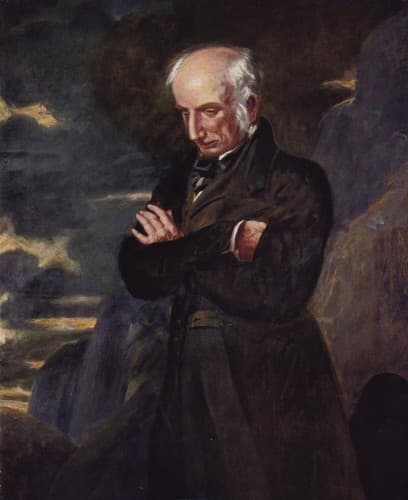
William Wordsworth was an English Romantic poet who, with Samuel Taylor Coleridge, helped to launch the Romantic Age in English literature with their joint publication Lyrical Ballads (1798).
Similar books
- The Prelude
William Wordsworth
3.9 (4k) average on GoodreadsWordsworth's autobiographical epic exploring his development as a poet and his relationship with nature.
- The Rime of the Ancient Mariner
Samuel Taylor Coleridge
4.0 (54k) average on GoodreadsFantasyColeridge's "The Rime of the Ancient Mariner" shares with "Tintern Abbey" a spiritual journey and a deep engagement with nature, but it approaches these themes through a narrative of guilt, punishment, and redemption, often employing supernatural elements and a more dramatic, allegorical framework. Wordsworth's poem is more introspective and personal, grounded in a realistic landscape and the psychological evolution of the speaker. While both poets are foundational Romantics, Coleridge's work often delves into the darker, more mysterious aspects of the human psyche and the sublime terror of nature, whereas Wordsworth typically finds a more benevolent, harmonizing spiritual presence in the natural world.
- Harry Potter and the Sorcerer's Stone
J.K. Rowling
4.5 (7M) average on GoodreadsFantasyRescued from a miserable life under the stairs, an orphaned boy discovers he's a wizard destined for a magical school, where he uncovers a dangerous secret tied to the dark wizard who murdered his parents.
- The Hunger Games
Suzanne Collins
4.3 (6.4M) average on GoodreadsFantasyIn a future where children fight to the death on live television, Katniss Everdeen volunteers for the arena, turning a death sentence into a fight for survival and a spark of rebellion.
- Nineteen Eighty-Four
George Orwell
4.2 (5.5M) average on GoodreadsFictionWinston Smith dreams of truth and rebellion in a world where Big Brother watches all, but he confronts the terrifying power of a regime that controls not just actions, but thoughts.
- Pride & Prejudice
Jane Austen
4.3 (4.9M) average on GoodreadsElizabeth Bennet and Mr. Darcy navigate love and misunderstanding, learning that first impressions can be wrong.





Enjoyed the summary?
A summary gives you the shape of the book. The book itself has the detail, the examples and the voice.
Find Lines Composed a Few Miles Above Tintern Abbey on AmazonAs an Amazon Associate, BookBrief earns from qualifying purchases. How we're funded