
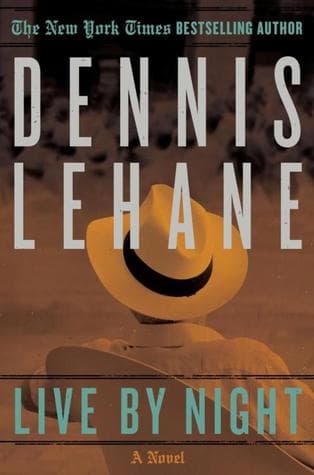
Synopsis
Covers the whole plot, including the ending.
- Difficulty
- Medium
- Pacing
- Moderate
- Mood
- Gritty, Epic, Dark, Atmospheric, Suspenseful
- Read it if
- You enjoy sweeping historical crime sagas with complex characters, moral ambiguities, and a strong sense of place.
- Skip it if
- You prefer lighthearted stories or are turned off by graphic violence and morally compromised protagonists.
Live by Night Plot Summary
Covers the whole plot, including the ending.
The Boston Heist and Betrayal
In 1926 Boston, Joe Coughlin, the rebellious son of Police Captain Thomas Coughlin, is a small-time criminal specializing in bank robberies. He and his crew, including his best friend Dion Bartolo and moll Loretta Figgis, operate outside the major Irish and Italian gangs. Joe becomes infatuated with Emma Gould, the mistress of Irish mob boss Albert White. Ignoring warnings, Joe continues his affair with Emma. During a bank robbery, Joe and his crew are ambushed by Albert White's men, who were tipped off by Emma. Joe escapes, but Dion is captured and Loretta is killed. This betrayal sets Joe on a path of revenge and a deeper dive into the criminal underworld.
Prison and a New Path
After the botched robbery, Joe is caught and sentenced to three years in Charlestown State Prison. While in prison, he connects with Maso Pescatore, the head of the Italian mafia in Boston. Maso, seeing Joe's intelligence and ruthlessness, offers him a proposition: upon his release, Joe will go to Ybor City, Tampa, Florida, to run Maso's rum-running operations and help establish a presence against the existing Cuban and independent gangs. Joe accepts, seeing an opportunity for power and a fresh start away from Boston and the threat of Albert White. He learns the rum trade and the brutal realities of gang warfare.
Arrival in Ybor City
Upon his release, Joe travels to Ybor City, Tampa, a multicultural hub for illegal liquor. He quickly establishes himself, using Maso's name and his own cunning. He recruits Dion Bartolo, who has also been released from prison, as his right-hand man. Joe navigates the complex world of Cuban, Italian, and local criminal groups. He forms an alliance with Esteban Flores, a Cuban rum runner, and begins to build a strong enterprise, importing rum from Cuba and distributing it throughout Florida. His methods are often brutal, but effective, earning him respect and fear.
Meeting Graciela Corrales
While in Ybor City, Joe meets and falls in love with Graciela Corrales, an intelligent Cuban woman who runs a local community center. Graciela is a strong, independent woman who challenges Joe's criminal lifestyle and inspires him to consider a more legitimate path. Their relationship deepens, and Joe finds himself torn between his ambition in the criminal underworld and his desire for a peaceful, family life with Graciela. He begins to invest in legitimate businesses, such as a molasses factory, to launder money and eventually transition out of crime, hoping to provide a stable future for them both.
The Rise of the Klan
As Joe's rum-running business grows, a new and dangerous force emerges in Florida: the Ku Klux Klan, led by the charismatic R.D. Pruitt. The Klan, fueled by religious fervor and racial hatred, targets Joe's diverse workforce, his Cuban allies, and his relationship with Graciela. They disrupt his operations, burn down his properties, and commit violence against the black and Cuban communities. Joe finds himself in a direct conflict with the Klan, not just for his business, but for the safety of Graciela and his friends, forcing him to confront a different kind of enemy.
Confrontation with Pruitt
The Klan's escalating violence forces Joe to act. He orchestrates a series of brutal retaliations against Klan members and their supporters, using his criminal network to undermine their power and instill fear. He targets their meeting places and their financial backers, showing that he will not tolerate their interference. The conflict becomes deeply personal when the Klan targets Graciela and her family. Joe's actions lead to a direct and violent confrontation with R.D. Pruitt, who sees Joe as a godless force corrupting his vision of a pure America. This battle pushes Joe's moral limits further.
Emma Gould's Return
In a shocking turn, Joe discovers that Emma Gould, the woman who betrayed him to Albert White years ago, is now married to R.D. Pruitt. Emma, having found religion and reinvented herself, becomes a prominent figure in Pruitt's evangelical movement. Her reappearance brings back old wounds and complicates Joe's battle against the Klan. He confronts her, seeking answers and closure, but finds her transformed and seemingly committed to her new life. Emma's presence connects Joe's past with his present struggles, adding another layer of personal conflict to the already dangerous situation.
The Miami Expansion and Betrayal
As Joe's operations in Ybor City solidify, Maso Pescatore orders him to expand into Miami, a move that Joe views as dangerous overreach. Maso's son, Digger Pescatore, arrives to oversee the expansion, proving to be incompetent and reckless. This creates friction between Joe and the Pescatore family. Joe's attempts to establish a stable enterprise in Miami are constantly undermined by Digger's poor judgment and Maso's increasing demands. The tension culminates in a direct confrontation, as Joe realizes Maso is more interested in power than in the stability of their operations, leading to a growing sense of betrayal and the inevitability of conflict.
The War with Maso Pescatore
Frustrated by Maso Pescatore's unreasonable demands, Digger's incompetence, and the constant threats to his legitimate life with Graciela, Joe finally breaks ties with the Italian boss. This decision starts a full-scale gang war between Joe's organization and the Pescatore family. The conflict is brutal and bloody, with both sides suffering heavy losses. Joe, with Dion and Esteban's loyalty, fights to protect his territory, his people, and his vision for a future free from the dictates of others. The war forces Joe to commit increasingly violent acts, further entrenching him in the life he wants to leave behind.
The Final Showdown and Aftermath
The war with Maso Pescatore reaches its climax, culminating in a violent confrontation that leaves many dead. Joe also faces a final, tragic reckoning with R.D. Pruitt and Emma Gould, whose paths are intertwined with his own. In the aftermath, Joe attempts to secure his legitimate businesses and protect Graciela and their son. However, the life of crime he led ultimately catches up to him. He faces the harsh realities of his choices, understanding that true escape is impossible. The novel concludes with Joe reflecting on his past, his loves, and the enduring price of living by night, leaving his ultimate fate ambiguous but acknowledging the heavy toll his ambition has taken.
Principal Figures
Joe Coughlin
Protagonist
A rebellious son of a police captain who rises through the ranks of organized crime.
Joe Coughlin is a complex and ambitious man, initially driven by a desire to defy his father and carve his own path outside the law. He possesses a keen intellect, ruthless efficiency, and a surprising capacity for loyalty and love. While he commits violent acts, he is not entirely heartless, often displaying a moral code, especially when it comes to protecting those he cares about. His ambition is tempered by a yearning for a legitimate life, particularly after meeting Graciela.
Relationships: Thomas Coughlin (Estranged son, later reconciled); Dion Bartolo (Best friend and loyal lieutenant); Emma Gould (Former lover and betrayer); Graciela Corrales (Wife and moral compass); Maso Pescatore (Criminal mentor and later enemy); R.D. Pruitt (Arch-nemesis and ideological opponent)
Dion Bartolo
Supporting
Joe's loyal best friend and trusted enforcer.
Dion Bartolo is Joe's childhood friend and remains his most loyal companion and enforcer throughout his criminal career. He is fiercely devoted to Joe, often acting as his muscle and confidante. Dion is less introspective than Joe, more comfortable with the brutality of their lifestyle, but his loyalty is unwavering. He follows Joe from Boston to Tampa, always ready to fight by his side, embodying the idea of chosen family in a dangerous world.
Relationships: Joe Coughlin (Best friend and partner in crime)
Graciela Corrales
Supporting
A strong and independent Cuban woman who becomes Joe's wife and moral anchor.
Graciela Corrales is a compassionate, intelligent, and fiercely independent Cuban woman who runs a community center in Ybor City. She is educated, speaks multiple languages, and possesses a strong moral compass. Graciela provides Joe with a vision of a life beyond crime, becoming his moral anchor and the inspiration for his attempts at legitimacy. She is not naive about Joe's activities but demands honesty and respect, representing a path to redemption and a stable future.
Relationships: Joe Coughlin (Wife and lover)
Emma Gould
Antagonist/Supporting
Joe's former lover who betrays him and later reappears as a religious zealot.
Emma Gould is a beautiful and manipulative woman, initially the mistress of Irish mob boss Albert White. She betrays Joe early in the story, leading to his capture and imprisonment. Years later, she resurfaces in Florida as the seemingly reformed, devout wife of KKK leader R.D. Pruitt, now a fervent evangelist. Emma represents the destructive power of ambition and the capacity for radical transformation, or perhaps, simply a new form of manipulation.
Relationships: Joe Coughlin (Former lover and betrayer); Albert White (Mistress of); R.D. Pruitt (Wife of)
Maso Pescatore
Antagonist
The powerful Boston Italian mob boss who sends Joe to Florida.
Maso Pescatore is the calculating and ruthless head of the Italian mafia in Boston. He recognizes Joe's potential in prison and leverages him to expand his rum-running operations into Florida. Maso is a traditional gangster, valuing power, loyalty (to him), and territory above all else. He becomes increasingly demanding and ultimately tyrannical, leading to his inevitable conflict with Joe, who seeks independence.
Relationships: Joe Coughlin (Boss/subordinate, later enemies); Digger Pescatore (Son)
R.D. Pruitt
Antagonist
A charismatic and fanatical leader of the Ku Klux Klan in Florida.
R.D. Pruitt is a powerful and dangerous figure, a former baseball player turned evangelical preacher and Grand Wizard of the Ku Klux Klan in Florida. He is driven by a twisted sense of religious righteousness and racial purity, seeing Joe and his diverse enterprise as a threat to his vision of America. Pruitt is cunning and charismatic, capable of inspiring fervent loyalty among his followers, making him a formidable and ideological enemy for Joe.
Relationships: Joe Coughlin (Arch-nemesis); Emma Gould (Wife of)
Thomas Coughlin
Supporting
Joe's estranged father and a respected Boston Police Captain.
Thomas Coughlin is Joe's father, a highly respected and incorruptible Boston Police Captain. He represents the law and order Joe rebels against, and their relationship is deeply strained by Joe's criminal choices. Despite his disappointment, Thomas still cares for his son, offering him warnings and advice, and eventually playing a subtle role in his protection. He embodies the moral center Joe abandoned but can never fully escape.
Relationships: Joe Coughlin (Father)
Esteban Flores
Supporting
A Cuban rum-runner and Joe's crucial ally in Tampa.
Esteban Flores is a shrewd and capable Cuban rum-runner who becomes one of Joe's most important allies in Ybor City. He provides Joe with crucial connections, knowledge of the local landscape, and a loyal network. Esteban is pragmatic and resourceful, understanding the need for alliances in the cutthroat world of Prohibition. He represents the diverse criminal underworld of Tampa and the trust Joe builds outside of his immediate Boston circle.
Relationships: Joe Coughlin (Business partner and ally)
Themes & Insights
The Elusive American Dream
The novel explores how the American Dream, about prosperity and freedom, is pursued through illegal means during Prohibition. Joe Coughlin's journey from a small-time thief to a powerful rum-runner is his twisted version of seeking success and independence. He builds an empire, acquires wealth, and even attempts to legitimize his life, but the violence and moral compromises of his path constantly undermine any true sense of peace or freedom. The dream is always just out of reach, tainted by the blood and betrayal necessary to achieve it, as seen in Joe's constant struggle to escape his past and protect his family.
“He didn't want to be a cop. He didn't want to be a gangster. He wanted to be a man.”
Betrayal and Loyalty
Betrayal is a recurring element that drives much of the story. Emma Gould's initial betrayal of Joe sets him on his criminal path. Later, Maso Pescatore's escalating demands and eventual conflict with Joe represent a betrayal of their initial understanding. Conversely, loyalty is highly valued, particularly the strong bond between Joe and Dion Bartolo, which remains constant amidst the shifting allegiances of the criminal world. The novel shows how trust is fragile in a world where everyone is looking out for themselves, and how betrayal can have long-lasting, devastating consequences.
“You live by night, you die by night. You live by loyalty, you die by betrayal.”
The Corrupting Influence of Power
As Joe Coughlin gains power and wealth, he becomes more entrenched in a cycle of violence and moral compromise. His initial desire for independence transforms into a ruthless pursuit of control, leading him to commit acts he might have once hesitated to do. The novel shows how power, even when used for seemingly defensive purposes (like fighting the Klan), can corrupt, making it harder to return to a 'normal' life. Maso Pescatore's tyranny further shows this theme, as his absolute power leads to his downfall. Joe's struggle to legitimize his businesses reflects his battle against the corrupting force of his own success.
“The more power he accumulated, the more it felt like a cage.”
Racial and Social Prejudice
The novel clearly portrays the racial and social prejudice of the 1920s and 30s, especially through the rise of the Ku Klux Klan in Florida. The Klan, led by R.D. Pruitt, targets black, Cuban, and Jewish communities, disrupting Joe's diverse operations and threatening his life with Graciela. This theme explores the destructive power of bigotry and the violence it causes. Joe, though a criminal, finds himself fighting against a greater evil, showing how prejudice can unite different groups in a common struggle for survival and dignity in a deeply divided society.
“Hate was a fire that consumed everything in its path, and Ybor City was burning.”
The Search for Redemption
Despite his life of crime, Joe Coughlin often grapples with a desire for redemption. His relationship with Graciela and his attempts to build a legitimate future for their son show his yearning to escape his past and atone for his actions. He invests in legitimate businesses, tries to maintain a moral code (however twisted), and fights against the Klan not just for profit, but for the safety of his community. However, the novel suggests that true redemption is an incredibly difficult, if not impossible, task for someone so deeply involved in violence and lawlessness, leaving Joe's ultimate fate as a reflection of the ongoing struggle between his criminal past and his aspirations for a better future.
“He wanted to wash the blood from his hands, but some stains never truly came out.”
Plot Devices & Literary Techniques
Foreshadowing
Hints at future events and consequences.
Lehane frequently uses foreshadowing to build tension and emphasize the inevitable consequences of Joe's choices. Early warnings from Joe's father about the dangers of his path, or the grim fates of other gangsters, constantly remind the reader that Joe's life of crime carries a heavy price. This device creates a sense of impending doom, suggesting that despite Joe's successes, his ultimate fate is likely tragic, reinforcing the theme that 'living by night' comes with an expiration date.
Moral Ambiguity
Characters exist in a grey area between good and evil.
The novel thrives on moral ambiguity, presenting characters like Joe Coughlin who are both ruthless criminals and capable of love and loyalty. Joe commits violent acts but also fights against the blatant evil of the Ku Klux Klan. This device challenges the reader to grapple with complex ethical questions, blurring the lines between hero and villain. It highlights the idea that in the brutal world of Prohibition, survival often necessitates morally questionable actions, and 'good' and 'evil' are rarely clear-cut, making characters more realistic and relatable despite their flaws.
The Femme Fatale
A seductive woman who leads the protagonist into danger.
Emma Gould serves as a classic femme fatale, particularly in the early stages of the novel. Her allure and manipulation lead Joe into a dangerous affair with Albert White's mistress, directly resulting in his betrayal, capture, and imprisonment. Her later reappearance as the wife of R.D. Pruitt extends her role as a source of complex personal danger for Joe. This device highlights themes of temptation, betrayal, and the destructive power of illicit desire, shaping Joe's early trajectory and influencing his subsequent caution in relationships.
Historical Setting as a Character
The Prohibition era and its distinct locations shape the narrative.
The historical setting of Prohibition-era Boston, Ybor City (Tampa), and Cuba is more than just a backdrop; it actively shapes the plot and characters. The illegality of alcohol creates the entire industry Joe operates within, dictating his rise and fall. The cultural melting pot of Ybor City fuels both opportunity and racial tension (with the Klan), directly influencing Joe's alliances and conflicts. This device immerses the reader in the period, demonstrating how specific historical circumstances and social dynamics directly impact individual lives and choices, making the setting an almost palpable force in the story.
Live by Night Quotes
“Every man has to go through hell to get to heaven.”
“Life's what happens while you're busy making other plans.”
“You can take the boy out of the outlaw, but you can't take the outlaw out of the boy.”
“There are no good guys and bad guys. There are just guys.”
“The devil, he thought, was in the details, and the details were in the blood.”
“Sometimes you have to do bad things to do good things.”
“He knew the difference between a good man and a bad man was often nothing more than a split-second decision.”
“The past wasn't dead. It was never dead. It was just waiting.”
“Money was a great antiseptic. It cleaned away all the dirt, all the blood, all the moral compromises.”
“God forgives, but the streets don't.”
“He had wanted to be a hero, but he'd settled for being a king.”
“There was a fine line between faith and delusion, and sometimes the line was invisible.”
“You can't outrun the devil, not if he's in your own head.”
“Every man builds his own prison. He just doesn't always know it.”
Quiz
10 questions on the plot and the characters. Each answer comes with a short explanation.
Question 1
What is Joe Coughlin's relationship to the prominent Boston police captain, Thomas Coughlin?
- He is Thomas Coughlin's nephew.
- He is Thomas Coughlin's youngest son.
- He is Thomas Coughlin's estranged brother.
- He is Thomas Coughlin's former partner.
Show answer
B. He is Thomas Coughlin's youngest son. Joe Coughlin is explicitly stated to be the youngest son of the prominent Boston police captain, Thomas Coughlin.
Question 2
In what major city does Joe Coughlin begin his career in organized crime, turning his back on his upbringing?
- New York City
- Chicago
- Boston
- Miami
Show answer
C. Boston The story begins in Boston, 1926, where Joe Coughlin is involved with the city's mobsters.
Question 3
During which historical period does 'Live by Night' primarily take place, characterized by Prohibition and the rise of organized crime?
- The Roaring Twenties
- The Great Depression
- World War I era
- The Post-War Boom
Show answer
A. The Roaring Twenties The book description clearly states 'Boston, 1926. The '20s are roaring,' indicating the Jazz Age or Roaring Twenties.
Question 4
What is the primary illegal activity that fuels the rise of gangsters and corrupt cops during the novel's setting?
- Gambling
- Drug trafficking
- Prohibition-era liquor trade
- Counterfeiting
Show answer
C. Prohibition-era liquor trade The synopsis explicitly states, 'Prohibition has given rise to an endless network of underground distilleries, speakeasies, gangsters, and corrupt cops,' making illegal liquor the central trade.
Question 5
Joe Coughlin's journey in organized crime takes him to several distinct geographical locations. Which of the following is NOT mentioned as a place he travels to?
- Tampa's Latin Quarter
- The streets of Cuba
- New Orleans' French Quarter
- Jazz Age Boston
Show answer
C. New Orleans' French Quarter The text mentions 'Jazz Age Boston to the sensual shimmer of Tampa's Latin Quarter to the sizzling streets of Cuba,' but New Orleans is not listed.
Question 6
What is a major theme explored in the novel regarding trust and relationships within the criminal underworld?
- The unwavering loyalty among family members.
- The inherent trustworthiness of all allies.
- The idea that no one—neither family nor friend, enemy nor lover—can be trusted.
- The ease of forging lasting romantic relationships.
Show answer
C. The idea that no one—neither family nor friend, enemy nor lover—can be trusted. The description states, 'no one - neither family nor friend, enemy nor lover - can be trusted,' highlighting a key theme of betrayal and distrust.
Question 7
The synopsis describes 'Live by Night' as being a 'sweeping love story' and a 'compelling saga of revenge.' What other significant thematic element is mentioned alongside betrayal and redemption?
- Politics and espionage
- Art and literature
- Music and murder
- Science and innovation
Show answer
C. Music and murder The text explicitly calls it 'a spellbinding tour de force of betrayal and redemption, music and murder.'
Question 8
The novel portrays a diverse cast of characters battling for their 'piece of the American dream.' Which seemingly contradictory group is mentioned alongside tough rumrunners and Klansmen?
- Philanthropic industrialists
- Bible-quoting evangelists
- Suffragette activists
- Avant-garde artists
Show answer
B. Bible-quoting evangelists The description mentions 'tough rumrunners and sultry femmes fatales, Bible-quoting evangelists and cruel Klansmen,' highlighting the broad spectrum of society involved.
Question 9
Beyond money, power, and the threat of prison, what specific 'fate' is highlighted as most likely for men like Joe Coughlin in this era?
- A quiet retirement
- Political office
- An early death
- Becoming a legitimate businessman
Show answer
C. An early death The text directly states, 'Beyond money and power, even the threat of prison, one fate seems most likely for men like Joe: an early death.'
Question 10
What is the overarching sentiment or attitude that Joe Coughlin and his friends share, given the dangerous nature of their lives, as described in the synopsis?
- A desire for repentance and reform.
- A determination to live life to the hilt.
- An ambition to escape the criminal world entirely.
- A resignation to a life of quiet despair.
Show answer
B. A determination to live life to the hilt. Despite the threat of an early death, the synopsis concludes, 'But until that day, he and his friends are determined to live life to the hilt.'
Live by Night FAQ
What is Joe Coughlin's initial motivation for becoming a criminal, despite his upbringing as the son of a police captain?
Joe Coughlin initially rejects his father's strict moral code and the perceived hypocrisy of the law, seeking the thrill, notoriety, and freedom that a life of crime offers. He finds a sense of belonging and purpose among outlaws, believing he can make his own rules and carve out his own destiny beyond his father's shadow.
How does Joe's relationship with Emma Gould impact the trajectory of his early criminal career?
Joe's affair with Emma Gould, the girlfriend of powerful gangster Albert White, directly leads to his brutal beating, subsequent imprisonment, and the tragic death of his associate, Dion Bartolo's brother. This event solidifies his hatred for White and fuels his relentless quest for revenge throughout the narrative.
What role does Prohibition play in shaping the criminal landscape and Joe's opportunities?
Prohibition creates a massive black market for alcohol, allowing Joe to rise quickly by leveraging his skills in rum-running and distribution. The illegality of liquor fosters an environment of corruption, violence, and vast profit, which Joe exploits to build his empire in Tampa and Cuba.
Who is Maso Pescatore, and what is his significance in Joe's rise to power?
Maso Pescatore is the ambitious Italian mob boss who takes Joe under his wing after his release from prison, sending him to Tampa to establish a rum-running operation. Pescatore provides Joe with the resources, connections, and protection needed to build his empire, though their relationship is always underscored by a tense power dynamic.
How does Joe's move to Tampa, Florida, change his criminal enterprise and personal life?
In Tampa, Joe transitions from a small-time Boston robber to a powerful rum-runner, overseeing a vast operation and forging alliances with Cuban gangs and local politicians. He also falls in love with Graciela Corrales, a Cuban woman, and attempts to build a more legitimate life, albeit one still steeped in crime.
What is the significance of the repeated motif of 'living by night' versus 'living by day'?
The phrase 'live by night' symbolizes the illicit, dangerous, and morally ambiguous world Joe inhabits, where rules are bent and violence is commonplace. 'Living by day' represents the legitimate, conventional life he occasionally yearns for, particularly with Graciela, highlighting his internal conflict between his criminal identity and a desire for peace.
How does the author use the character of Chief Thomas Coughlin, Joe's father, to comment on justice and morality?
Chief Thomas Coughlin embodies a rigid, uncompromising sense of justice and duty, often clashing with Joe's more pragmatic and morally gray worldview. His unwavering integrity, even in a corrupt world, serves as a moral compass that Joe constantly rebels against but is also subtly influenced by, highlighting the complexities of law versus personal code.
What is the true nature of Joe's relationship with Dion Bartolo, and how does it evolve?
Dion Bartolo is Joe's loyal, lifelong friend and right-hand man, bound by shared history and a deep, unspoken loyalty. Their relationship is one of brotherhood, surviving prison and countless dangers, representing a constant in Joe's turbulent life and contrasting with the betrayal he experiences from others.
How does Loretta Figgis's journey from aspiring actress to evangelist reflect broader societal changes or themes in the book?
Loretta Figgis's transformation from a young woman corrupted by the gangster lifestyle to a fervent evangelist mirrors the era's social upheavals and the search for redemption amid widespread vice. Her story highlights the powerful influence of religious revivalism and the desperate desire for moral cleansing in a period of excess and lawlessness.
Does Joe Coughlin ever truly seek redemption, or is his pursuit of a 'legitimate' life merely a strategic move?
Joe's pursuit of legitimacy, particularly with Graciela, seems to stem from a genuine desire for peace and a stable family life, suggesting a longing for redemption. However, his methods often remain violent and cunning, indicating that his criminal instincts are deeply ingrained, making his 'redemption' a complex and often contradictory process.
How does the trauma of his early experiences, particularly with Emma Gould and prison, shape Joe's emotional landscape?
The betrayal by Emma and the brutal realities of prison harden Joe, making him emotionally guarded and distrustful. These experiences instill in him a ruthless pragmatism and a deep-seated desire for control, but also leave him with a lingering pain that fuels his drive for revenge and later, his longing for a more stable existence.
Discuss the psychological motivations behind Joe's constant need for control and independence.
Joe's need for control and independence stems from his rejection of his father's authority and his early experiences of being manipulated and imprisoned. He strives to be beholden to no one, orchestrating his own rise to power to ensure he is never again vulnerable or a pawn in someone else's game.
How does the concept of 'family' (both blood and chosen) influence Joe's decisions and loyalties?
Joe's complex relationship with his biological family, particularly his father, creates a void he attempts to fill with his 'chosen family' of loyal associates like Dion. While he often rebels against his father, the underlying lessons of loyalty and honor from his upbringing still subtly influence his code, even within the criminal underworld.
Is Joe Coughlin a hero, an anti-hero, or simply a villain caught in circumstances?
Joe Coughlin is best characterized as an anti-hero. While he commits violent acts and operates outside the law, he also exhibits a strong moral code towards his chosen family, seeks justice for wrongs, and ultimately desires a peaceful life. His journey is fraught with morally ambiguous choices, making him a complex figure rather than a clear-cut villain or hero.
What is the novel's commentary on the American Dream during the Prohibition era?
The novel suggests that the American Dream during Prohibition was often achieved through illicit means, where ambition, ruthlessness, and the exploitation of vice could lead to immense wealth and power. It critiques the idea that success must be legitimate, showing how many, like Joe, found their version of the dream in the shadows.
How does the setting of Florida and Cuba contribute to the novel's themes and atmosphere?
Florida and Cuba provide a vibrant, exotic backdrop that contrasts with Boston's grimness, symbolizing Joe's expansion and the global reach of rum-running. The humid climate, diverse cultures, and open corruption in these settings enhance the novel's sensual atmosphere and underscore the pervasive nature of organized crime.
Does Joe ultimately achieve peace or a form of justice by the end of the novel?
Joe achieves a bittersweet form of peace, but it comes at a tremendous cost. While he eliminates his enemies and secures a future for his family, he remains a hunted man, forever marked by his past. His 'justice' is often violent and personal, leaving him with a quiet, melancholic existence rather than true serenity.
What is the significance of the final confrontation between Joe and Maso Pescatore, and what does it reveal about Joe's character?
The final confrontation with Maso Pescatore is Joe's ultimate assertion of independence and control, eliminating the last major figure who held power over him. It reveals Joe's unwavering resolve and his capacity for ruthlessness, even against a former mentor, solidifying his identity as a self-made man who answers to no one.
About the author

Dennis Lehane is a critically acclaimed author known for his gritty crime novels set in Boston. His notable works include "Mystic River," "Shutter Island," and the award-winning "Live by Night." Lehane's powerful storytelling and complex characters have earned him a dedicated readership and numerous accolades.
Similar books
- The Godfather
Mario Puzo
4.4 (335k) average on GoodreadsThrillerExplores the rise and fall of a crime family, moral dilemmas, and the allure of power.
- Mystic River
Dennis Lehane
4.2 (128k) average on GoodreadsThrillerAnother Lehane novel with a dark, gritty atmosphere, complex characters, and themes of crime and consequence.
- The Given Day
Dennis Lehane
4.0 (24k) average on GoodreadsThrillerWhile both are historical novels by Lehane exploring early 20th-century America, "The Given Day" is arguably more focused on social and political upheaval (the Boston Police Strike, labor movements) through an ensemble cast, whereas "Live by Night" centers more singularly on Joe Coughlin's personal criminal odyssey. "The Given Day" offers a broader societal panorama, while "Live by Night" delves deeper into the psychology of a single outlaw.
- Angels & Demons
Dan Brown
3.9 (2.7M) average on GoodreadsThrillerA Harvard symbologist races through Rome's ancient sites, deciphering cryptic clues to unmask the Illuminati and stop a vengeful plot to destroy the Vatican with a stolen antimatter weapon.
- Gone Girl
Gillian Flynn
4.1 (2.3M) average on GoodreadsThrillerA wife's sudden disappearance on her fifth anniversary reveals a web of lies and psychological warfare, exposing the secrets within a seemingly perfect marriage.
- The Girl on the Train
Paula Hawkins
3.9 (2.1M) average on GoodreadsThrillerA woman’s fascination with a seemingly perfect couple she watches from her daily train commute leads her into a dark investigation when she witnesses something that shatters their idyllic image.




Enjoyed the summary?
A summary gives you the shape of the book. The book itself has the detail, the examples and the voice.
Find Live by Night on AmazonAs an Amazon Associate, BookBrief earns from qualifying purchases. How we're funded