
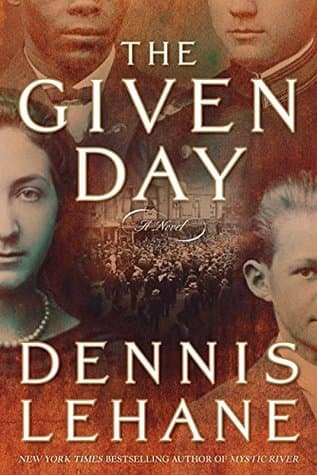
Synopsis
Covers the whole plot, including the ending.
- Difficulty
- Medium
- Pacing
- Moderate
- Mood
- Atmospheric, Gritty, Expansive, Reflective, Suspenseful
- Read it if
- You love richly detailed historical fiction that weaves personal stories with major historical events and real figures, enjoy police procedurals and crime dramas, or are fascinated by early 20th-century American history.
- Skip it if
- You prefer fast-paced, action-only thrillers, dislike lengthy historical exposition, or are sensitive to graphic depictions of violence and social injustice.
The Given Day Plot Summary
Covers the whole plot, including the ending.
The Tulsa Incident
In 1918, Luther Laurence, a Black man in Tulsa, Oklahoma, is in a deadly fight with the crime boss Deacon Pruitt. Luther, a good baseball player, must run away after a conflict leads to Pruitt's brother's death and Luther himself is badly hurt. He leaves his pregnant wife, Lila, promising to return. This escape begins his journey north, seeking safety and anonymity, and sets the stage for his arrival in Boston, where he hopes to earn enough money to bring Lila.
Danny Coughlin's Disillusionment
Danny Coughlin, a young Irish-American police officer in Boston, feels distant from his powerful and politically connected father, Captain Thomas Coughlin. Danny is troubled by the widespread corruption in the police force and the city's political system, controlled by figures like Mayor Andrew J. Peters. He deals with his hidden sexuality and finds comfort in reading and watching the societal changes around him, feeling more and more uneasy with how things are.
Arrival in Boston and New Employment
After a difficult journey, Luther Laurence arrives in Boston, needing work and a place to hide. Through various contacts, he finds a job as a houseman and chauffeur for the influential Coughlin family. He quickly sees the clear class and racial divisions in the city, managing the expectations of the white household while staying quiet and observant. His main goal remains saving money to reunite with Lila, whom he constantly worries about.
The Red Scare and Anarchist Plots
As World War I ends, the United States is gripped by the 'Red Scare,' a strong fear of communist and anarchist plots. Attorney General A. Mitchell Palmer, with help from a young J. Edgar Hoover, starts a wide campaign to find and deport suspected radicals. In Boston, the police department, including Captain Coughlin, investigates a series of bombings and alleged conspiracies. Danny, as a beat cop, is somewhat involved but grows more skeptical of the government's harsh methods and the created panic.
The Spanish Flu Pandemic
The Spanish Influenza pandemic hits Boston hard, killing many people across all social groups. The city's hospitals are overwhelmed, and public life nearly stops. The Coughlin family, like many others, experiences the fear and sadness of the epidemic. This shared vulnerability briefly crosses class and racial lines, showing how fragile life is and the great suffering of the time. Luther also sees the terrible impact, strengthening his wish for his family's safety.
Danny's Union Involvement
Unhappy with the police department's working conditions, low pay, and political interference, Danny Coughlin secretly joins the growing Boston Police Union. He attends secret meetings, drawn to the idea of working together for better treatment for officers. This decision puts him directly against his father, Captain Coughlin, who, along with Governor Calvin Coolidge, sees unionization as defiance and a threat to public order and police authority. Danny struggles with this rebellion, but his beliefs push him forward.
The Search for Arnie Meserve
During the Red Scare, Danny is assigned to a special team to track down Arnie Meserve, a dangerous anarchist and radical linked to recent bombings. Meserve is a complex character, a former soldier turned disappointed revolutionary. Danny's pursuit of Meserve mixes with his own moral questions, as he starts to question what justice truly is and who society's real enemies are. This investigation brings Danny into contact with the city's criminal side and the hidden networks of political disagreement.
Luther's Ties to the Underworld
While working for the Coughlins, Luther meets people from Boston's criminal underworld, including members of the Italian mafia. His past in Tulsa, especially his conflict with Deacon Pruitt, still affects him. Pruitt's influence proves to be far-reaching, and Luther fears his new life in Boston is not as safe as he hoped. He must carefully handle these dangerous new connections while trying to protect his identity and ensure his eventual reunion with Lila.
The Impending Police Strike
The disagreement between Boston police officers and the city's leaders reaches a critical point. Governor Calvin Coolidge and Police Commissioner Edwin Upton Curtis refuse to recognize the police union, leading to a final demand. The officers, including Danny, vote to strike, asking for better pay and the right to unionize. The city prepares for a possible breakdown of law and order, with Captain Coughlin caught between his loyalty to the force and his duty to the city, while Danny deals with the serious effects of his actions.
The Boston Police Strike of 1919
On September 9, 1919, the Boston Police go on strike, leaving the city largely unprotected. Looting, violence, and disorder break out, showing how easily civil order can fall apart. Danny is on the picket line, seeing the immediate results of the strike, while Luther watches the chaos from the Coughlin household. Governor Coolidge calls in the state militia to restore order, calling the strike a threat to public safety. The strike fails, leading to the firing of all striking officers, including Danny, and a lasting impact on labor relations in America.
Aftermath and New Beginnings
After the failed strike, Danny Coughlin is fired from the police force, his career forever changed. He faces an uncertain future, but also feels free from the corrupt system he hated. Luther, having survived his encounters with criminals and the strike's chaos, finally arranges for Lila to join him in Boston. The two men, despite their different backgrounds, find a shared understanding and a new hope for a better future, having seen the difficult start of a new American era.
The Given Day Characters
Danny Coughlin
Protagonist
A conflicted Boston police officer seeking truth and justice.
Danny is a young, intelligent, and morally upright Irish-American police officer from a prominent Boston family. He grapples with his hidden homosexuality and a profound sense of disillusionment with the corruption and hypocrisy of the police force and the city's political machine. He is an introspective man, drawn to books and intellectual pursuits, which set him apart from his working-class peers and his powerful father. His quest for personal integrity drives his involvement with the nascent police union and his pursuit of radical figures.
Relationships: Captain Thomas Coughlin (Son, strained and conflicted); Nora Coughlin (Sister, supportive but often unaware of his inner struggles); Luther Laurence (Employer/employee, evolving into a complex bond of mutual respect); Arnie Meserve (Hunter/hunted, a complex, almost sympathetic pursuit)
Luther Laurence
Protagonist
A Black man on the run, seeking safety and a future for his family.
Luther is a resourceful, resilient, and deeply moral Black man from Tulsa, Oklahoma. Forced to flee his home after a violent incident with a crime boss, he embarks on a perilous journey to Boston. He is driven by his love for his pregnant wife, Lila, and his determination to create a safe life for them. Intelligent and observant, Luther navigates the racial and class complexities of early 20th-century America with quiet dignity and a keen sense of self-preservation, often relying on his quick wit and physical prowess.
Relationships: Lila Laurence (Wife, deep love and primary motivation); Captain Thomas Coughlin (Employer, respectful but wary); Danny Coughlin (Employer/employee, evolving into a complex bond of mutual respect); Deacon Pruitt (Antagonist, source of his flight and constant threat)
Captain Thomas Coughlin
Supporting
Danny's powerful and traditional police captain father.
Captain Coughlin is a formidable and respected figure in the Boston Police Department, deeply entrenched in the city's Irish political machine. He embodies the old guard, valuing loyalty, order, and traditional power structures. He genuinely loves his family but struggles to understand his son Danny's progressive views and moral conflicts. He is a pragmatic man, willing to make difficult decisions to maintain stability, often at the expense of individual liberties, especially during the Red Scare and the police strike.
Relationships: Danny Coughlin (Father, deeply conflicted and often disapproving); Nora Coughlin (Father, doting and protective); Luther Laurence (Employer, sees him as a reliable servant); Governor Calvin Coolidge (Subordinate, loyal to authority and the state)
Nora Coughlin
Supporting
Danny's kind and observant sister, often a bridge between family members.
Nora is Danny's older sister, a compassionate and intelligent woman who often serves as the emotional anchor of the Coughlin family. She is more attuned to the nuances of human behavior than her father and is generally supportive of Danny, though she doesn't fully grasp the depth of his internal struggles. She represents a blend of traditional values and a quiet empathy, observing the societal changes around her with a thoughtful perspective. She cares deeply for Luther and tries to ensure his well-being in the household.
Relationships: Danny Coughlin (Sister, supportive and understanding); Captain Thomas Coughlin (Daughter, respectful and dutiful); Luther Laurence (Employer/friend, kind and protective); Connie Coughlin (Mother, caring daughter)
Arnie Meserve
Antagonist/Supporting
A disillusioned WWI veteran turned anarchist bomber.
Arnie Meserve is a complex and tragic figure, a veteran of World War I who returns home deeply traumatized and disillusioned by the war's horrors and societal inequities. He becomes a radical anarchist, believing that only through violent revolution can true justice be achieved. He is intelligent and charismatic but also deeply unstable and prone to extreme acts. His actions, particularly the bombings, fuel the Red Scare and become a central focus of Danny's investigation, forcing Danny to confront the blurred lines between villainy and justified outrage.
Relationships: Danny Coughlin (Target of his pursuit, a complex cat-and-mouse game); Other Anarchists (Comrade in arms, often a leader)
Deacon Pruitt
Antagonist
A ruthless Tulsa crime boss with far-reaching influence.
Deacon Pruitt is a powerful and vengeful crime boss from Tulsa, Oklahoma, whose actions force Luther Laurence to flee. He is a formidable antagonist, representing the pervasive nature of crime and the long shadow of past violence. Pruitt's influence extends beyond Tulsa, demonstrating how difficult it is for Luther to truly escape his past. He is driven by a desire for control and retribution, making him a constant threat to Luther's new life.
Relationships: Luther Laurence (Nemesis, driven by revenge)
Lila Laurence
Supporting/Mentioned
Luther's pregnant wife, his primary motivation and hope for the future.
Lila is Luther's beloved wife, pregnant with their child, whom he is forced to leave behind in Tulsa. Though she appears briefly and is mostly mentioned, her presence is a constant motivating force for Luther. She represents home, family, and the future that Luther desperately strives to secure. Her strength and resilience are implied through Luther's unwavering devotion and his efforts to reunite with her, symbolizing the personal cost of the era's social and racial injustices.
Relationships: Luther Laurence (Wife, deep love and primary motivation)
Governor Calvin Coolidge
Mentioned/Supporting
The stern Massachusetts governor who famously broke the police strike.
Calvin Coolidge, the then-Governor of Massachusetts, is a key historical figure whose actions significantly impact the plot. He is portrayed as a stern, unyielding man of principle, staunchly opposed to the police union and the strike. His famous declaration, 'There is no right to strike against the public safety by anybody, anywhere, any time,' becomes a pivotal moment in American labor history. He represents the conservative political forces determined to maintain order and suppress perceived radicalism, setting him directly against the striking officers and their sympathizers.
Relationships: Captain Thomas Coughlin (Superior, expects loyalty and obedience)
A. Mitchell Palmer
Mentioned/Supporting
U.S. Attorney General, architect of the Red Scare 'Palmer Raids'.
A. Mitchell Palmer is the U.S. Attorney General who spearheads the 'Red Scare' and the notorious Palmer Raids. He is a zealous prosecutor of suspected radicals, driven by a fear of communism and anarchism. His policies and rhetoric create an atmosphere of paranoia and suspicion throughout the nation, directly influencing the political climate in Boston and the police's hunt for figures like Arnie Meserve. He embodies the governmental overreach and suppression of civil liberties during this tumultuous period.
Relationships: J. Edgar Hoover (Mentor/boss, instrumental in the raids)
The Given Day Themes
The American Dream and its Disillusionment
The novel explores how the American Dream is broken and changed for different people after WWI. For Luther Laurence, it's the hard-to-reach hope of safety, stability, and family, always threatened by racism and his past. For Danny Coughlin, it's the disappointment with corrupt power systems and the realization that traditional paths to success are wrong. The 'dream' is shown as impossible for many, especially minorities and the working class, leading to anger and radicalization, as seen in Arnie Meserve. The war, the flu, and economic hardship show how fragile this dream is.
“America was a land of promise, a land of freedom, a land where a man could build a life. But some promises were only whispered, some freedoms were only for the few, and some lives were built on sand.”
Social and Political Upheaval
The novel is set in a time of strong social and political unrest, showing the worries of a nation at a turning point. The Red Scare, the rise of labor movements, the Spanish Flu pandemic, and racial tensions all create instability. The Boston Police Strike of 1919 is the main event, showing the conflict between old power (Governor Coolidge, Captain Coughlin) and the desire for change (Danny, the striking officers). The book clearly shows the fear of revolution, the fight for workers' rights, and the deep divisions in society, reflecting a country trying to find its identity.
“The world was changing, rushing forward, and those who clung to the past would be swept away.”
Identity and Belonging
Both main characters struggle with who they are and where they belong. Danny deals with his hidden sexuality and his moral conflict with his family's past and the police force, feeling like an outsider in his own world. Luther, a Black man escaping violence, constantly searches for a safe place to belong, wanting to create a home for his family away from the widespread racism of the time. The novel explores how outside forces—race, class, political beliefs, and societal expectations—shape a person's identity and the often-painful search for a true self and community.
“He was a man without a country, a man without a past, a man who had to invent himself anew every day.”
Family and Loyalty
The idea of family, both by birth and by choice, and the complex demands of loyalty are key to the story. Danny's loyalty to his family (his father, sister) clashes with his loyalty to his beliefs and the new police union. Captain Coughlin's loyalty to the system and his idea of order creates a split with his son. Luther's strong loyalty to his wife, Lila, drives all his actions, making him endure great hardship. The novel also shows how loyalty can be misused or misplaced, and how new forms of 'family' can be created during crises, as seen in the unexpected bond between Danny and Luther.
“Family was a bond, a burden, a blessing, all at once. And sometimes, it was the thing that broke you.”
Justice and Corruption
A common theme is the struggle between true justice and systemic corruption. Danny Coughlin daily faces the widespread bribery in the Boston Police Department and the political system, making him question the very institutions meant to uphold justice. The Red Scare shows how justice can be twisted by fear and political ambition, leading to the persecution of innocent people. Luther's flight from Deacon Pruitt shows the failure of justice in a world where power often wins over fairness. The novel examines who defines justice and for whom it truly works.
“Justice was a word people threw around, but it rarely meant the same thing to the rich as it did to the poor, or to the white as it did to the colored.”
Plot Devices & Literary Techniques
Dual Protagonist Narrative
Alternating perspectives of Danny Coughlin and Luther Laurence.
The novel utilizes a dual protagonist structure, alternating between the perspectives of Danny Coughlin, a white Boston police officer, and Luther Laurence, a Black man fleeing Tulsa. This device allows Lehane to present a panoramic view of early 20th-century America, contrasting the experiences of different races and social classes. It highlights the vast disparities in opportunity and safety, while also revealing shared human experiences of struggle and hope. The eventual intersection of their lives creates a rich tapestry of the era's complexities.
Historical Figures and Events Integration
Weaving real historical figures and events into the fictional narrative.
Lehane masterfully integrates real historical figures like Babe Ruth, Eugene O'Neill, W.E.B. DuBois, A. Mitchell Palmer, J. Edgar Hoover, and Calvin Coolidge, as well as pivotal events like the Spanish Flu pandemic and the Boston Police Strike of 1919, into the fictional plot. This device grounds the story in a vivid, authentic historical context, giving depth and weight to the characters' struggles. It allows the reader to experience the era's major forces through the personal lens of the protagonists, blurring the lines between fact and fiction.
Foreshadowing and Parallelism
Hints of future events and recurring thematic echoes.
The novel employs foreshadowing through ominous descriptions of the political climate, the growing unrest, and the lurking threat of Luther's past. Parallelism is evident in the similar struggles for dignity and survival faced by both Danny and Luther, despite their vastly different circumstances. For instance, both men are outsiders in their respective worlds, seeking a form of justice or escape. This device deepens the thematic resonance, connecting their individual journeys to the larger historical forces at play and building suspense towards key events.
Symbolism of Boston
Boston as a microcosm of early 20th-century America.
Boston itself functions as a powerful symbol in the novel, representing a microcosm of early 20th-century America. It is a city of stark contrasts: old money and immigrant poverty, intellectualism and political corruption, racial divisions and burgeoning social change. The city's neighborhoods, its police force, and its political machinery all reflect the larger national struggles. Lehane uses Boston as a stage where the forces of tradition and modernity, order and chaos, clash, embodying the 'given day' of a nation at a pivotal turning point.
The Given Day Quotes
“They were good men, most of them, and they had died for nothing. And the world went on, indifferent to their sacrifice.”
“History is a wheel, and it always turns back to where it started. Always.”
“”
“Justice ain't about what's right. It's about what you can prove.”
“Sometimes you gotta break a few rules to do the right thing.”
“Fear is a powerful thing. It can make you do things you never thought you were capable of.”
“There's no such thing as an innocent bystander, not when the world's on fire.”
“Every man has his price, and every woman her weakness.”
“The truth is a luxury few can afford.”
“Hope is a dangerous thing. It can keep you alive, or it can kill you.”
“Some scars never heal, no matter how much time passes.”
“The world don't care about your good intentions. It cares about what you do.”
“Even in the darkest of times, there are always those who fight for the light.”
“”
“The city has a way of swallowing people whole, if you let it.”
Quiz
10 questions on the plot and the characters. Each answer comes with a short explanation.
Question 1
Which major historical event serves as a culmination point for the novel's plot, involving many of its characters?
- The Great Boston Fire of 1872
- The Boston Tea Party
- The Boston Police Strike of 1919
- The Sacco and Vanzetti Trial
Show answer
C. The Boston Police Strike of 1919 The Boston Police Strike of 1919 is explicitly mentioned as the culminating event of the novel, deeply impacting the main characters.
Question 2
What is the primary reason Luther Laurence is on the run at the beginning of the novel?
- He was accused of deserting the army during WWI.
- He had a deadly confrontation with a crime boss in Tulsa.
- He was involved in a bank robbery in New York City.
- He was fleeing racial violence during the Red Summer.
Show answer
B. He had a deadly confrontation with a crime boss in Tulsa. The synopsis states Luther is 'on the run after a deadly confrontation with a crime boss in Tulsa.'
Question 3
Danny Coughlin, a beat cop, becomes involved with what specific movement within the police force?
- A movement to establish a new police academy.
- A burgeoning union movement.
- A reform movement to end police corruption.
- A secret society investigating paranormal activities.
Show answer
B. A burgeoning union movement. Danny Coughlin 'joins a burgeoning union movement' according to the summary.
Question 4
Which historical figure, known for his baseball career, is mentioned as an influential figure of the era within the novel?
- Ty Cobb
- Lou Gehrig
- Babe Ruth
- Honus Wagner
Show answer
C. Babe Ruth Babe Ruth is specifically listed among the influential figures of the era featured in the book.
Question 5
What significant health crisis of the early 20th century is woven into the events of 'The Given Day'?
- The Cholera Epidemic of 1832
- The Spanish Influenza pandemic
- The Polio Epidemic
- The Tuberculosis Outbreak
Show answer
B. The Spanish Influenza pandemic The novel 'cours[es] through some of the pivotal events of the time—including the Spanish Influenza pandemic.'
Question 6
What is the relationship between Danny Coughlin and his father?
- Danny is estranged from his father, who abandoned the family.
- Danny's father is a corrupt politician who opposes Danny's union involvement.
- Danny is the son of one of the city's most beloved and powerful police captains.
- Danny's father is a factory worker who supports the anarchist movement.
Show answer
C. Danny is the son of one of the city's most beloved and powerful police captains. Danny is described as 'the son of one of the city's most beloved and powerful police captains,' indicating a significant family connection within the police force.
Question 7
Which political figure, known for his 'Red-chasing' as Attorney General, plays a role in the novel?
- Theodore Roosevelt
- Franklin D. Roosevelt
- Mitchell Palmer
- Eugene V. Debs
Show answer
C. Mitchell Palmer Mitchell Palmer, 'Woodrow Wilson's ruthless Red-chasing attorney general,' is explicitly named as an influential figure.
Question 8
A central theme of the novel involves the struggle of individuals and families to define themselves amidst what overarching societal conditions?
- A period of unprecedented economic prosperity and stability.
- Increasingly turbulent times, marked by political and social unrest.
- A return to traditional values and strict social hierarchies.
- A quiet era of post-war recovery and national unity.
Show answer
B. Increasingly turbulent times, marked by political and social unrest. The summary states 'As Danny, Luther, and those around them struggle to define themselves in increasingly turbulent times,' aligning with the 'political and social unrest' mentioned earlier.
Question 9
Beyond the Coughlin family, what other specific type of family dynamic is highlighted as central to the narrative?
- An aristocratic Boston Brahmin family facing financial ruin.
- A family of Irish immigrants struggling to assimilate.
- Two families—one black, one white—swept up in the maelstrom.
- A family of powerful ward bosses attempting to maintain control.
Show answer
C. Two families—one black, one white—swept up in the maelstrom. The description explicitly states the novel 'tells the story of two families—one black, one white—swept up in a maelstrom.'
Question 10
What is the ultimate outcome for Danny, Luther, and those around them as they navigate the challenging period depicted in the novel?
- They find themselves increasingly isolated and alone.
- They achieve significant personal wealth and political power.
- They gradually find family in one another and ride a rising storm of hardship, deprivation, and hope.
- They leave the country to escape the unrest and seek peace abroad.
Show answer
C. They gradually find family in one another and ride a rising storm of hardship, deprivation, and hope. The summary concludes that they 'gradually find family in one another and, together, ride a rising storm of hardship, deprivation, and hope that will change all their lives.'
The Given Day FAQ
What is the central conflict driving the plot of 'The Given Day'?
'The Given Day' is primarily driven by the political and social unrest in post-WWI America, particularly the clash between burgeoning labor movements, revolutionary anarchists, and the established powers seeking to suppress dissent. This conflict culminates in the real-life Boston Police Strike of 1919, which serves as a major narrative anchor.
Who are the main protagonists and what are their individual struggles?
The main protagonists are Danny Coughlin, a white Boston beat cop torn between loyalty to his powerful police captain father and his involvement in a police union, and Luther Laurence, a Black man on the run from a Tulsa crime boss, seeking to return to his pregnant wife while working for the Coughlin family. Both grapple with their identities and survival amidst societal upheaval.
How does the Spanish Influenza pandemic affect the characters and the plot?
The Spanish Influenza pandemic profoundly impacts the characters by creating a pervasive sense of dread and loss, highlighting the fragility of life and the inadequacy of public health systems. It adds another layer of chaos and hardship to an already turbulent era, influencing character decisions and the overall grim atmosphere.
What role does the Boston Police Strike of 1919 play in the novel?
The Boston Police Strike of 1919 is the novel's climactic event, serving as a crucible for many characters, especially Danny Coughlin. It forces him to make definitive choices about his loyalties and convictions, while also illustrating the broader struggle between labor rights and government authority during this period.
Which historical figures are prominently featured and how do they interact with the fictional characters?
Prominent historical figures include Attorney General Mitchell Palmer, Governor Calvin Coolidge, and a young J. Edgar Hoover, who represent the forces of government repression. Figures like Babe Ruth and Eugene O'Neill make appearances that ground the narrative in its historical setting, sometimes interacting directly or indirectly influencing the fictional characters' world.
What is the significance of the 'Given Day' title?
The title 'The Given Day' likely refers to the idea that each day presents new challenges and opportunities, particularly in a time of such profound change and uncertainty. It also subtly hints at the predetermined or fated nature of certain events, such as the police strike, which feel inevitable.
How does Danny Coughlin's relationship with Nora fit into the larger narrative?
Danny Coughlin's relationship with Nora, a passionate radical and anarchist, introduces a significant personal and ideological conflict. She challenges his traditional worldview and deepens his involvement with the revolutionary movement, pulling him further away from his family's expectations and into dangerous territory.
What is the true nature of Danny's father, Captain Coughlin, beyond his public persona?
Beyond his public persona as a beloved and powerful police captain, Danny's father, Thomas Coughlin, is a complex figure deeply entrenched in the city's political machine, capable of both fierce loyalty and ruthless pragmatism. He harbors secrets and makes morally ambiguous decisions to protect his family and maintain his power.
How does Luther Laurence's past in Tulsa influence his actions and motivations in Boston?
Luther Laurence's violent past in Tulsa, specifically his confrontation with a crime boss, constantly fuels his desire to escape and return to his pregnant wife. This desperation makes him cautious and resourceful, but also vulnerable, as he tries to stay hidden while navigating the racial and social complexities of Boston.
What is the symbolic importance of baseball legend Babe Ruth's presence in the novel?
Babe Ruth's presence symbolizes the burgeoning popular culture and the escapism it offered during a tumultuous era. He represents a force of nature, a larger-than-life figure whose exploits provide a stark contrast to the grim realities of political unrest and social hardship faced by many characters.
How does Lehane explore themes of racial injustice and class struggle through the intertwined narratives?
Lehane explores racial injustice through Luther's experiences with discrimination and violence, and class struggle through both Danny's union involvement and the plight of immigrant communities. The intertwined narratives highlight how these issues intersect, showing how privilege and oppression operate differently across racial and social lines.
What psychological impact does the constant threat of violence and political upheaval have on characters like Danny and Luther?
The constant threat of violence and political upheaval leaves characters like Danny and Luther with deep psychological scars, fostering paranoia, distrust, and a heightened sense of urgency. It forces them to confront their own morality and resilience, often leading to difficult and life-altering choices.
How do the female characters, particularly Nora and Connie, contribute to the novel's themes?
Female characters like Nora, a radical activist, and Connie, a resilient working-class woman, contribute to the novel's themes by showcasing the diverse roles and struggles of women in that era. They challenge societal norms, fight for their beliefs, and provide emotional anchors, often demonstrating remarkable strength in adversity.
What is the significance of the revolutionary and anarchist movements in the context of the novel's historical setting?
The revolutionary and anarchist movements are significant as they represent the extreme end of the social unrest following WWI, embodying the deep-seated frustrations with economic inequality and government perceived as corrupt. They serve as both a genuine threat and a convenient scapegoat for authorities like Palmer and Hoover to consolidate power.
How does the novel portray the concept of 'family' beyond traditional blood ties?
The novel portrays 'family' beyond traditional blood ties by showing how characters like Danny and Luther, from vastly different backgrounds, form deep bonds of loyalty and mutual support. They find a sense of belonging and protection in unexpected alliances, creating chosen families that help them survive the tumultuous times.
What internal conflicts does Danny Coughlin face regarding his sexual identity?
Danny Coughlin grapples with significant internal conflicts regarding his sexual identity, particularly his homosexual desires, which are deeply suppressed in the rigid and homophobic society of post-WWI Boston. This struggle adds another layer of isolation and vulnerability to his character, influencing his choices and relationships.
How does Lehane utilize the setting of Boston to enhance the narrative?
Lehane masterfully utilizes the setting of Boston, from its Brahmin elite to its working-class neighborhoods and corrupt ward politics, to enhance the narrative. The city itself becomes a character, its distinct social strata, historical architecture, and specific events like the police strike providing a vivid and authentic backdrop for the unfolding drama.
What is the ultimate fate of Luther Laurence and his quest to return home?
Luther Laurence's quest to return home to his pregnant wife is fraught with peril and sacrifice. While he ultimately makes his way back, the journey leaves him irrevocably changed, and the reunion is tinged with the lingering effects of his traumatic experiences and the harsh realities of his circumstances.
In what ways do the characters find hope amidst the pervasive hardship and violence?
Amidst the pervasive hardship and violence, the characters find hope in their resilience, their newfound bonds of friendship and chosen family, and the enduring human spirit. Even small acts of kindness or defiance, and the dream of a better future, provide glimmers of optimism against the dark backdrop.
About the author

Dennis Lehane is a critically acclaimed author known for his gritty crime novels set in Boston. His notable works include "Mystic River," "Shutter Island," and the award-winning "Live by Night." Lehane's powerful storytelling and complex characters have earned him a dedicated readership and numerous accolades.
Similar books
- Ragtime
E.L. Doctorow
3.9 (38k) average on GoodreadsLiterary FictionEpic historical fiction blending fictional characters with real historical figures during a period of significant social change.
- World Without End
Ken Follett
4.3 (198k) average on GoodreadsFantasySprawling historical narrative with multiple interwoven plotlines and a deep dive into a specific historical era.
- Mystic River
Dennis Lehane
4.2 (128k) average on GoodreadsThrillerLehane's signature blend of crime, psychological depth, and a strong sense of place, exploring the dark underbelly of Boston.
- The Alienist
Caleb Carr
4.1 (182k) average on GoodreadsFictionCarr's 'The Alienist' also immerses readers in a specific historical period (late 19th-century New York) and features a detailed exploration of social issues and nascent forensic science, much like Lehane's deep dive into early 20th-century Boston and the Red Scare. Both novels are historical mysteries/thrillers with a strong sense of place and time. However, 'The Alienist' is more tightly focused on a traditional detective procedural with a clear antagonist and a team of investigators, whereas 'The Given Day' is broader in scope, encompassing multiple protagonists, political intrigue, and a more sprawling, less singular mystery, delving more into systemic issues rather than just solving a crime.
- Angels & Demons
Dan Brown
3.9 (2.7M) average on GoodreadsThrillerA Harvard symbologist races through Rome's ancient sites, deciphering cryptic clues to unmask the Illuminati and stop a vengeful plot to destroy the Vatican with a stolen antimatter weapon.
- Gone Girl
Gillian Flynn
4.1 (2.3M) average on GoodreadsThrillerA wife's sudden disappearance on her fifth anniversary reveals a web of lies and psychological warfare, exposing the secrets within a seemingly perfect marriage.



Enjoyed the summary?
A summary gives you the shape of the book. The book itself has the detail, the examples and the voice.
Find The Given Day on AmazonAs an Amazon Associate, BookBrief earns from qualifying purchases. How we're funded