
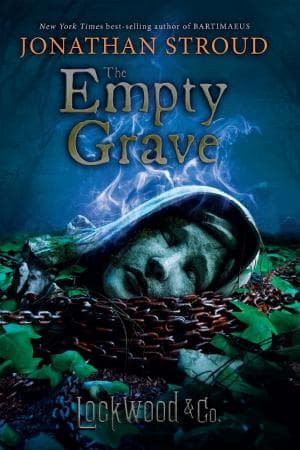
Synopsis
Covers the whole plot, including the ending.
- Difficulty
- Medium
- Pacing
- Fast
- Mood
- Suspenseful, Adventurous, Humorous, Climactic, Bittersweet
- Read it if
- You love intricate urban fantasy with a strong sense of danger, witty banter, and a satisfying conclusion to a beloved series.
- Skip it if
- You prefer standalone novels or don't enjoy series finales that leave some doors open for future exploration.
Lockwood & Co. Plot Summary
Covers the whole plot, including the ending.
The Fittes Mausoleum Heist
Five months after 'The Creeping Shadow,' Lockwood & Co. (Anthony Lockwood, Lucy Carlyle, George Cubbins) and their temporary allies, Quill Kipps's team (Flo Bones, Bobby Vernon, Paul Harrison), infiltrate the heavily guarded Fittes Mausoleum. Their objective is to investigate the grave of the legendary psychic, Marissa Fittes, believing her death and burial were faked. They navigate elaborate traps and spectral defenses, including a Type Three ghost known as the 'Mausoleum Watcher.' During the chaotic infiltration, Lucy uses her enhanced listening abilities to pinpoint the true location of the supposed coffin. They discover the coffin is empty, confirming their suspicions and setting the stage for a deeper conspiracy.
The Skull's Revelation and Operation Blacklight
After their daring escape from the mausoleum, Lockwood, Lucy, and George return to Portland Row. The Skull in the jar, a powerful Type Three ghost confined in their home, confirms their suspicions about Marissa Fittes. It reveals that Marissa Fittes was actually a pseudonym for a skilled psychic named Annie Ward, who was murdered by the psychically gifted Dr. Edmund Bickerstaff. The Skull further divulges that Annie Ward created the Fittes Agency and was the true genius behind its methods. More disturbingly, it speaks of 'Operation Blacklight,' a mysterious project that Bickerstaff was developing, hinting at a darker purpose for the agencies and the Problem itself.
The Investigation into Bickerstaff's Past
Driven by the Skull's revelations, George Cubbins researches Dr. Edmund Bickerstaff in historical archives and old agency records. He uncovers disturbing information about Bickerstaff's early career and his controversial experiments into the nature of Visitors and psychic abilities. George discovers that Bickerstaff was obsessed with controlling and manipulating the Gift, performing unethical procedures on psychically sensitive individuals. These findings paint a picture of Bickerstaff not as a pioneering scientist, but as a dangerous and power-hungry figure who may have intentionally worsened the Problem for his own gain, or to further 'Operation Blacklight.'
The Meeting with Inspector Barnes
Lockwood, Lucy, and George arrange a clandestine meeting with Inspector Barnes of Fittes Agency, hoping to share their findings about Marissa Fittes and Bickerstaff. They present their evidence, including proof of the empty grave and the Skull's testimonies. However, Barnes, deeply ingrained in the Fittes hierarchy and loyal to Penelope Fittes, dismisses their claims as a desperate attempt to discredit the agency and avoid being shut down. He warns them against further investigation, threatening severe repercussions if they continue to undermine the official narrative, making it clear they are now considered enemies of Fittes.
The Escape from Portland Row
Following their warning from Inspector Barnes, Lockwood & Co. find Portland Row under siege. A large contingent of Fittes agents, led by Penelope Fittes herself, raids their headquarters. They are attempting to seize the Skull and any incriminating evidence. Lockwood, Lucy, George, Holly, and Kipps's team are forced to fight their way out, using their combined ghost-hunting skills and knowledge of the house's hidden passages. The escape is fraught with danger and narrow misses, highlighting the ruthlessness of Penelope Fittes and solidifying the agency's status as fugitives. They manage to escape with the Skull, but lose their home and most of their possessions.
The Journey to the Other Side
With the Skull's guidance, Lockwood and Lucy make the decision to enter the Other Side, the realm where ghosts reside. Their goal is to confront the ghost of Dr. Edmund Bickerstaff and extract more information about 'Operation Blacklight' and the true nature of the Problem. This journey is incredibly dangerous, requiring them to use powerful psychic abilities and protective talismans. Inside the Other Side, they encounter terrifying specters and distorted realities. They eventually locate Bickerstaff's tormented spirit, who, in his deranged state, reveals fragmented but crucial details about his experiments and the ultimate purpose of his project.
The Truth of Operation Blacklight
In the depths of the Other Side, the ghost of Dr. Edmund Bickerstaff, driven by madness and his twisted scientific ambition, reveals the truth behind 'Operation Blacklight.' He confesses that he not only discovered how to summon the dead, but also how to amplify the Problem, making the veil between worlds thinner and increasing the number and power of Visitors. His ultimate goal was to create a perpetual source of psychic energy, believing he could harness it for humanity's benefit, or perhaps, his own. He also admits to murdering Annie Ward (Marissa Fittes) because she opposed his unethical and dangerous research.
The Confrontation with Penelope Fittes
Armed with the knowledge from the Other Side and Bickerstaff's ghost, Lockwood & Co., along with their allies, confront Penelope Fittes. They present their evidence, including the Skull's testimony and the details gleaned from Bickerstaff. It becomes clear that Penelope Fittes, Marissa's daughter, has been aware of Operation Blacklight and Bickerstaff's true nature for years. She has been actively covering up the truth to maintain the Fittes Agency's power and legacy, and possibly to continue Bickerstaff's work in a more controlled manner. The confrontation is tense, revealing the deep corruption at the heart of the agencies.
The Battle at the Tower of London
The final confrontation erupts at the Tower of London, a site chosen by Penelope Fittes for its historical significance and spectral energies. Fittes has gathered an army of her most loyal agents, some enhanced by Bickerstaff's methods, making them dangerous. Lockwood & Co., with Kipps's team and other unexpected allies (including members of the Guild of Independent Agents), engage in a chaotic and perilous battle. The fight involves both physical combat and psychic duels against powerful Visitors and Fittes's agents, pushing everyone to their limits. The fate of London, and indeed the world, hangs in the balance.
The Sacrifice and the Resolution
During the battle, Lockwood makes a personal sacrifice to defeat Penelope Fittes and dismantle Operation Blacklight. Details of this sacrifice are tied to his family's past and a deeper connection to the Problem. In the aftermath, the truth about Bickerstaff, Annie Ward, and the deliberate amplification of the Problem begins to be revealed to the public, albeit slowly. The Fittes Agency's dominance is shattered, and the future of ghost-hunting in London is thrown into disarray. Lockwood & Co., though victorious, are changed by their experiences, and the world is left to grapple with the implications of the Problem's true origins.
Principal Figures
Anthony Lockwood
Protagonist
Charismatic, enigmatic leader of Lockwood & Co.
Anthony Lockwood is the charming, often reckless, but fiercely loyal leader of Lockwood & Co. He possesses exceptional sword-fighting skills and a keen strategic mind. Driven by a deep-seated desire to uncover the truth about his family's past and the nature of the Problem, he often keeps his emotions hidden behind a facade of composure. His charisma inspires loyalty in his team, but his secretive nature can sometimes frustrate Lucy and George. He is profoundly affected by the loss of his family and haunted by the mysteries surrounding his parents' deaths.
Relationships: Lucy Carlyle (Deep, complex bond evolving from friendship to unspoken romantic tension and profound trust.); George Cubbins (Reliable, long-standing friendship and professional partnership, often exasperated by George's quirks.); Holly Munro (Professional colleague and trusted team member.); Quill Kipps (Initially a rival, evolves into a grudging alliance and mutual respect.)
Lucy Carlyle
Protagonist
A talented Listener and Touch-talent, the heart of Lockwood & Co.
Lucy Carlyle is a gifted Listener, capable of hearing the echoes and whispers of ghosts, and a powerful Touch-talent, able to sense residual psychic energy from objects. She is brave, impulsive, and deeply empathetic, often acting as the emotional core of the agency. Her unique abilities are crucial to their investigations, but also expose her to intense psychic strain. She grapples with her growing feelings for Lockwood and her desire for his trust and openness. Her narration provides much of the story's emotional depth and perspective.
Relationships: Anthony Lockwood (Deep, complex bond evolving from friendship to unspoken romantic tension and profound trust.); George Cubbins (Close friendship and professional partnership, often sharing a bond over Lockwood's eccentricities.); The Skull (Unsettling but vital symbiotic relationship, relying on its knowledge while wary of its manipulative nature.); Holly Munro (Initially tense, evolving into a supportive friendship.)
George Cubbins
Protagonist
Brilliant researcher and analyst for Lockwood & Co.
George Cubbins is the intellectual backbone of Lockwood & Co., a brilliant but often socially awkward researcher. He possesses an encyclopedic knowledge of ghosts, history, and paranormal phenomena, and his meticulous research is indispensable to the agency's success. He is pragmatic, cautious, and deeply loyal to his friends, though his bluntness can sometimes rub others the wrong way. George is driven by a thirst for knowledge and a desire to understand the underlying mechanics of the Problem, often spending hours poring over dusty tomes and obscure documents.
Relationships: Anthony Lockwood (Reliable, long-standing friendship and professional partnership, often exasperated by Lockwood's recklessness.); Lucy Carlyle (Close friendship and professional partnership, often sharing a bond over Lockwood's eccentricities.); Holly Munro (Collaborative professional relationship.)
The Skull (in the jar)
Supporting
A powerful, manipulative Type Three ghost trapped in a jar.
The Skull is a highly intelligent and ancient Type Three ghost, imprisoned in a glass jar at Portland Row. It is a cynical, sarcastic, and often manipulative entity, but possesses vast knowledge about the Problem, the Other Side, and historical events related to psychic phenomena. It communicates telepathically with Lucy, offering cryptic clues and unsettling insights. While dangerous and untrustworthy, its information is invaluable to Lockwood & Co.'s investigations, particularly in uncovering the truth about Marissa Fittes and Dr. Bickerstaff.
Relationships: Lucy Carlyle (Unsettling but vital symbiotic relationship, relying on its knowledge while wary of its manipulative nature.); Anthony Lockwood (Wary alliance, with Lockwood tolerating its presence for its utility.)
Penelope Fittes
Antagonist
The formidable head of the Fittes Agency.
Penelope Fittes is the powerful and imposing head of the Fittes Agency, the largest and most prestigious ghost-hunting organization in London. She is the daughter of the legendary Marissa Fittes and fiercely protective of her agency's legacy and power. Cold, calculating, and ruthless, she projects an image of unwavering authority. She is determined to maintain the established order and will stop at nothing to silence those who threaten it, including Lockwood & Co. Her motivations are complex, rooted in a desire to preserve her family's reputation and potentially control the very nature of the Problem.
Relationships: Anthony Lockwood (Antagonistic, as Lockwood & Co. threaten her authority and expose her secrets.)
Quill Kipps
Supporting
Former Fittes agent, now an independent operative allied with Lockwood & Co.
Quill Kipps was once a rival agent from the Fittes Agency, haughty and competitive. After being fired, he formed his own small, struggling agency, taking on odd jobs. He is a skilled agent, though less intuitive than Lockwood. Over time, his rivalry with Lockwood & Co. evolves into a grudging respect and, eventually, a crucial alliance. He is pragmatic and loyal to his team, and despite his initial disdain for Lockwood's unconventional methods, he comes to appreciate their effectiveness and integrity, especially when facing a greater threat.
Relationships: Anthony Lockwood (Initially a rival, evolves into a grudging alliance and mutual respect.); Lucy Carlyle (Professional colleague, some lingering tension but growing respect.)
Holly Munro
Supporting
Efficient and organized operative for Lockwood & Co.
Holly Munro is the highly organized and efficient operative who joined Lockwood & Co. from the now-defunct Fittes Agency. She is meticulous, practical, and a skilled administrator, bringing much-needed order to the chaotic Portland Row. While initially a source of friction for Lucy due to her perceived perfection and closeness to Lockwood, Holly proves herself to be a brave and reliable member of the team. She is dedicated to the agency and her friends, using her intelligence and resourcefulness to aid in their investigations and survival.
Relationships: Anthony Lockwood (Professional colleague and trusted team member.); Lucy Carlyle (Initially tense, evolving into a supportive friendship.); George Cubbins (Collaborative professional relationship.)
Dr. Edmund Bickerstaff
Antagonist (posthumous)
The brilliant but mad scientist behind 'Operation Blacklight.'
Dr. Edmund Bickerstaff was a pioneering, though deeply unethical, psychic researcher and the true mastermind behind 'Operation Blacklight.' He possessed an unparalleled understanding of the Other Side and the nature of Visitors. Driven by a desire to control and amplify psychic energy, he performed horrific experiments and ultimately murdered Annie Ward (Marissa Fittes) when she opposed his methods. His ghost, encountered in the Other Side, is a tormented, deranged entity, still obsessed with his work and revealing the horrifying scope of his ambition to deliberately worsen the Problem.
Relationships: Marissa Fittes (Annie Ward) (Former colleague and mentor, whom he eventually murdered.)
Marissa Fittes (Annie Ward)
Mentioned
The true founder of the Fittes Agency, murdered by Bickerstaff.
Marissa Fittes was the legendary psychic heroine credited with founding the Fittes Agency and developing many of its ghost-hunting methods. However, her true identity is revealed to be Annie Ward, a gifted psychic who genuinely sought to help humanity. She was Bickerstaff's colleague and initially supported his research until she discovered the horrifying and unethical direction of 'Operation Blacklight.' She was murdered by Bickerstaff to prevent her from exposing his plans and was subsequently replaced by an imposter to maintain the Fittes legacy.
Relationships: Dr. Edmund Bickerstaff (Former colleague and mentor, who eventually murdered her.)
Themes & Insights
The Corruption of Power and Legacy
This theme explores how power, especially within established institutions like the Fittes Agency, can lead to corruption and the suppression of truth. Penelope Fittes's efforts to cover up Bickerstaff's crimes and the true nature of the Problem highlight how individuals will go to extreme lengths to protect a legacy, even if it's built on lies and suffering. The revelation that Marissa Fittes's identity was faked and her agency co-opted for darker purposes shows that even heroic legacies can be twisted and exploited for personal gain and control.
“History is written by the victors, and in our world, the victors are those who control the narrative of the dead.”
The Nature of Truth and Deception
Central to the narrative is the pursuit of truth in a world rife with deception. Lockwood & Co. constantly challenge the official narratives presented by the Fittes Agency and the adult establishment. The empty grave of Marissa Fittes, the true identity of Annie Ward, and the revelations about 'Operation Blacklight' all dismantle long-held beliefs. The story emphasizes that what is presented as fact can be a carefully constructed lie, and that uncovering the truth often requires dangerous and unconventional methods, forcing characters to question everything they thought they knew.
“Sometimes the greatest dangers aren't the ghosts you can see, but the secrets hidden in plain sight.”
Sacrifice and Consequences
The novel explores the toll that fighting the Problem takes on the young agents, both physically and emotionally. Lockwood's personal sacrifice during the climax, tied to his family's past, demonstrates the ultimate price of heroism. Lucy's journey into the Other Side and the psychic strain she endures highlight the personal consequences of wielding extraordinary abilities. The choices made by characters, from Bickerstaff's unethical experiments to Penelope Fittes's cover-ups, all have far-reaching and devastating consequences, showing that every action, especially in a world of life and death, carries a significant cost.
“Every secret comes with a price, and some prices are paid in blood.”
The Bonds of Friendship and Loyalty
Amidst the danger and deception, the unwavering loyalty and deep bonds of friendship within Lockwood & Co. (and eventually with Kipps's team) remain a crucial theme. Despite their individual quirks and disagreements, Lockwood, Lucy, and George consistently support and protect each other. Their trust in one another is their greatest strength, allowing them to face overwhelming odds and powerful enemies. The evolution of Kipps from a rival to a trusted ally further emphasizes the importance of these alliances in a world where the official agencies cannot be trusted.
“We're not just an agency, Lucy. We're a family. And we stick together.”
Plot Devices & Literary Techniques
The Empty Grave
A physical symbol of a vast cover-up.
The discovery of Marissa Fittes's empty grave serves as the initial catalyst for Lockwood & Co.'s deeper investigation. It's a concrete piece of evidence that shatters the official narrative and proves that the foundations of the Fittes Agency are built on a lie. This device immediately establishes a sense of conspiracy and prompts the protagonists to question everything they know about the Problem and its history, driving the entire plot forward as they seek to uncover the truth behind this glaring deception.
The Skull in the Jar
An unreliable narrator and source of crucial exposition.
The Skull is a powerful Type Three ghost confined to a jar at Portland Row, capable of telepathic communication with Lucy. It acts as an invaluable, albeit manipulative and cryptic, source of information. Its revelations about Annie Ward, Bickerstaff, and 'Operation Blacklight' are critical plot points, providing exposition that could not be obtained elsewhere. The Skull's unreliable nature adds tension and requires Lucy to constantly weigh its words, highlighting the dangers of trusting entities from the Other Side while relying on their unique knowledge.
The Other Side
A dangerous realm for exposition and character development.
The 'Other Side' is the spectral dimension where ghosts reside, accessible to powerful psychics. It functions as a crucial plot device by allowing Lockwood and Lucy to directly confront the ghost of Dr. Edmund Bickerstaff. This perilous journey is not only a source of intense danger and horror but also serves as the primary means of extracting the deepest, most guarded secrets about 'Operation Blacklight' and the true origins of the Problem. It pushes the characters to their psychic limits and profoundly impacts their understanding of their world.
The Fittes Agency's Cover-up
A pervasive institutional antagonist and source of conflict.
The Fittes Agency, under Penelope Fittes, functions as a powerful institutional antagonist. Its systematic cover-up of Bickerstaff's crimes and the truth about Annie Ward creates constant conflict for Lockwood & Co. This device drives the plot by forcing the protagonists into direct opposition with a seemingly invincible authority. The agency's resources, agents, and influence are consistently used to obstruct Lockwood & Co.'s investigation, creating high stakes and demonstrating the pervasive nature of the corruption they are fighting against.
Lockwood & Co. Quotes
“We'd made it this far, hadn't we? Through all the hauntings, the dangers, the betrayals. We were still standing.”
“Some things are worth fighting for, even if you know you might lose.”
“The past isn't just behind us, it's under our feet, in the air we breathe. It's always there, waiting to be disturbed.”
“You can't save everyone, Lockwood. But you can try to save the ones who matter.”
“Fear is a weapon, but so is hope. And hope is a damn sight harder to put down.”
“There are always choices, even when it feels like there aren't any.”
“It wasn't about being fearless. It was about being brave enough to act despite the fear.”
“Sometimes the greatest dangers aren't the ones you can see, but the ones you refuse to believe in.”
“We were a team, for better or worse. Mostly worse, but that was half the fun.”
“The dead don't care about your rules, your laws, your polite society. They just are.”
“It’s hard to let go of the past when it keeps trying to drag you back into the grave.”
“The world was full of shadows, but sometimes, just sometimes, you could make your own light.”
“We were a family, not by blood, but by fire and fear and all the things that truly bind people together.”
“The greatest trick the ghost ever pulled was convincing the world it didn't exist.”
Quiz
10 questions on the plot and the characters. Each answer comes with a short explanation.
Question 1
What is the primary objective of Lockwood & Co.'s perilous night mission at the beginning of 'The Empty Grave'?
- To recover a stolen relic from the Fittes family vault.
- To investigate a new outbreak of spectral activity in the mausoleum.
- To determine if Marissa Fittes' body is actually within her mausoleum.
- To rescue a trapped associate from inside the Fittes Mausoleum.
Show answer
C. To determine if Marissa Fittes' body is actually within her mausoleum. The initial mission involves breaking into the Fittes Mausoleum to ascertain if Marissa Fittes' body is truly there, questioning her death.
Question 2
Which character is explicitly mentioned as an associate joining Lockwood, Lucy, George, and Holly on their initial mission in the Fittes Mausoleum?
- Flo Bones
- Quill Kipps
- Barnes
- Pamela Joplin
Show answer
B. Quill Kipps The synopsis explicitly states, 'we join Lockwood, Lucy, George, Holly, and their associate Quill Kipps on a perilous night mission.'
Question 3
How long after the events of 'The Creeping Shadow' does 'The Empty Grave' begin?
- One month
- Three months
- Five months
- One year
Show answer
C. Five months The book description states, 'Five months after the events in The Creeping Shadow, we join Lockwood, Lucy, George, Holly, and their associate Quill Kipps'.
Question 4
What significant personal secret is Lucy curious about regarding Lockwood, as hinted in the book's description?
- His true feelings for her.
- His connection to the Fittes agency.
- More about his family's past.
- The source of his psychic abilities.
Show answer
C. More about his family's past. The description asks, 'Will Lockwood ever reveal more about his family's past to Lucy?', indicating this is a key question.
Question 5
What potential consequence of their 'trip to the Other Side' is raised for Lucy and Lockwood?
- They might lose their psychic abilities.
- They could be forever changed.
- They might become permanently visible to ghosts.
- They could uncover a new type of Type Three.
Show answer
B. They could be forever changed. The description poses the question: 'Will their trip to the Other Side leave Lucy and Lockwood forever changed?'
Question 6
Who is identified as a potential antagonist attempting to shut down Lockwood & Co.'s agency?
- George Cubbins
- Penelope Fittes
- Frederick Barnes
- The Golden Blade
Show answer
B. Penelope Fittes The text asks, 'Will Penelope Fittes succeed in shutting down their agency forever?', clearly identifying her as a threat.
Question 7
In the climactic battle, what kind of assistance will the young agents need to prevail against their greatest enemy?
- Advanced technological gadgets from Scotland Yard.
- Guidance from the spectral form of Marissa Fittes.
- Help from surprising and shadowy allies.
- A new, potent source of psychic energy.
Show answer
C. Help from surprising and shadowy allies. The description states, 'And to prevail they will have to rely on help from some surprising--and shadowy--allies.'
Question 8
What specific type of threats must the young agents survive before facing their greatest enemy?
- Only spectral attacks from powerful Type Threes.
- Attacks from foes both spectral and human.
- Environmental hazards and booby traps.
- Internal conflicts and betrayals within their own team.
Show answer
B. Attacks from foes both spectral and human. The text specifies, 'The young agents must survive attacks from foes both spectral and human before they can take on their greatest enemy.'
Question 9
What is the intended effect of the revelations in 'The Empty Grave' on readers, according to the description?
- To make them eagerly anticipate the next book in the series.
- To inspire them to research real-life ghost hunting techniques.
- To send them back to Book 1 to start the series all over again.
- To encourage them to debate the ethical implications of ghost-hunting.
Show answer
C. To send them back to Book 1 to start the series all over again. The description concludes with, 'The revelations will send readers back to Book 1 to start the series all over again.'
Question 10
What exclusive content is included in the paperback edition of 'The Empty Grave'?
- An interview with Jonathan Stroud and concept art.
- A map of haunted London and character profiles.
- A Lockwood & Co. short story, 'The Dagger in the Desk,' and an illustrated ghost guide.
- Deleted scenes from the Netflix series adaptation.
Show answer
C. A Lockwood & Co. short story, 'The Dagger in the Desk,' and an illustrated ghost guide. The synopsis explicitly states: 'Exclusive to this paperback edition: a Lockwood & Co. short story, 'The Dagger in the Desk,' and an illustrated ghost guide.'
Lockwood & Co. FAQ
What is the primary objective of Lockwood & Co.'s initial mission in 'The Empty Grave'?
Lockwood, Lucy, George, Holly, and Kipps break into the heavily booby-trapped Fittes Mausoleum. Their goal is to exhume the body of Marissa Fittes, the legendary psychic heroine, to investigate anomalies surrounding her death and burial, which they suspect is a cover-up.
What significant discovery do the agents make inside the Fittes Mausoleum regarding Marissa Fittes?
Inside the mausoleum, the agents discover that Marissa Fittes's coffin is empty. This shocking revelation confirms their suspicions that her death and burial were faked, leading them to believe she is still alive and involved in the ongoing conspiracy.
How does the trip to the 'Other Side' impact Lucy Carlyle and Anthony Lockwood?
Lucy and Lockwood's journey to the 'Other Side' leaves them profoundly changed. They gain a deeper understanding of the true nature of Type Three manifestations and the source of the Problem, and both experience intense psychological and emotional trauma from the experience, enhancing their abilities but also their vulnerability.
Who are some of the 'surprising—and shadowy—allies' that assist Lockwood & Co. in their mission?
Lockwood & Co. receive unexpected help from several sources, including the Fittes 'Skull' (a powerful Type Three entity), and various criminal underworld figures like the Golden Blade. These alliances are forged out of necessity and a shared interest in exposing Penelope Fittes and her secrets.
What is the ultimate fate of Penelope Fittes in 'The Empty Grave'?
Penelope Fittes is ultimately defeated and exposed for her role in manipulating the psychic world and faking her mother's death. She is revealed to be the true antagonist, orchestrating events to maintain her power and control over the psychic industry, leading to a climactic confrontation.
What is the significance of the Fittes 'Skull' and its connection to Marissa Fittes?
The Fittes 'Skull' is revealed to be a Type Three entity that contains a fragment of Marissa Fittes's consciousness or a powerful aspect of her psychic energy. It acts as an informant and guide, providing crucial information to Lucy and Lockwood, hinting at Marissa's true nature and the conspiracy.
What new information is revealed about Lockwood's family past, specifically related to the Fittes conspiracy?
It is revealed that Lockwood's parents were involved with Marissa Fittes and her early research into the Problem. Their deaths were not accidental but were connected to Penelope Fittes's machinations, making Lockwood's personal quest deeply intertwined with the larger conspiracy.
How does the 'Dagger in the Desk' short story connect to the main narrative or character arcs?
The 'Dagger in the Desk' short story, exclusive to the paperback, likely offers a standalone adventure or a glimpse into a character's past, possibly deepening the understanding of Lockwood's early days as an agent or a specific item within the agency, subtly enriching the world-building.
What is the true nature of the 'Problem' as revealed in 'The Empty Grave'?
The true nature of the 'Problem' is revealed to be a complex, multi-faceted phenomenon involving Type Three entities, the 'Other Side,' and the manipulation of psychic energy. It's not just about ghosts but a deeper, more ancient force that certain individuals, like Marissa Fittes, sought to understand or control.
How does Lucy's experience in the 'Other Side' contribute to her character development?
Lucy's journey to the 'Other Side' significantly enhances her psychic abilities, particularly her Talent for listening. It also forces her to confront profound fears and the boundaries of life and death, solidifying her resolve and her unique connection to the supernatural world, making her more formidable but also more vulnerable.
In what ways does Anthony Lockwood's leadership style evolve throughout the climactic events of the book?
Lockwood's leadership style matures as he faces immense pressure and personal revelations. He learns to rely more on his team, particularly Lucy and George, and makes difficult moral choices, demonstrating a shift from his often reckless independence to a more collaborative and strategic approach.
How does George Cubbins's role as a researcher and his intellectual curiosity impact the resolution of the mystery?
George's meticulous research and vast knowledge are crucial to unraveling the Fittes conspiracy. His ability to connect disparate pieces of information, decipher ancient texts, and understand the mechanics of the 'Problem' provides the intellectual backbone for the agency's strategy, directly leading to key breakthroughs.
What psychological toll does the constant exposure to death and danger take on the young agents, particularly Lucy and Lockwood?
The constant exposure to death and danger, especially the trip to the 'Other Side,' leaves deep psychological scars on Lucy and Lockwood. They both grapple with trauma, fear of mortality, and the blurring lines between life and death, leading to moments of profound introspection and emotional strain.
Is Marissa Fittes truly a heroic figure, or is her legacy more morally ambiguous?
The book reveals Marissa Fittes's legacy to be morally ambiguous. While hailed as a heroine, her actions and experiments prior to her 'death' suggest a willingness to cross ethical boundaries in pursuit of understanding the Problem, implying a darker side to her genius and influence.
How does the ending of 'The Empty Grave' set up potential future conflicts or character arcs for the series?
The ending resolves the immediate Fittes conspiracy but leaves several threads open, such as the full extent of the 'Problem,' the future of the psychic industry, and the evolving relationship between Lucy and Lockwood. It suggests a new era for Lockwood & Co., facing a world now aware of deeper supernatural truths.
What is the thematic significance of the 'empty grave' itself?
The 'empty grave' symbolizes deception, the unraveling of established truths, and the revelation that appearances are misleading. It represents the core mystery of the book – that what was believed to be true about Marissa Fittes and the world of ghosts was a carefully constructed lie.
How does the relationship between Lucy and Lockwood evolve, and what does the book imply about their future?
Lucy and Lockwood's relationship deepens significantly, moving beyond professional partnership to a profound emotional bond, hinted at by their shared trauma and mutual reliance. The book implies a future where their connection is central to their survival and the ongoing fight against the supernatural, with romantic undertones becoming more pronounced.
Does the book offer a definitive solution to the 'Problem,' or does it suggest it's an ongoing, evolving threat?
While the book uncovers significant truths about the 'Problem,' it does not offer a definitive solution, instead suggesting it's an ongoing, evolving threat. The revelations open up new avenues of understanding but also hint at greater, more complex supernatural forces at play beyond the immediate conflict with Penelope Fittes.
What is the significance of Quill Kipps's involvement with Lockwood & Co. in this book?
Quill Kipps's involvement signifies his transformation from rival to ally, demonstrating his growing respect for Lockwood & Co. and his disillusionment with the larger agencies. His experience and connections prove invaluable, offering a contrast to the younger agents' methods and providing crucial support in their dangerous missions.
About the author
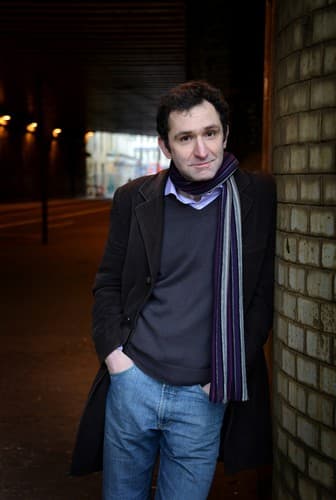
Jonathan Stroud is a British author known for his work in children's and young adult fiction. His notable books include "Lockwood & Co.: The Empty Grave," "The Whispering Skull," and "The Amulet of Samarkand," which is part of the Bartimaeus series. Stroud's writing often features elements of fantasy and adventure, appealing to a wide range of readers.
Similar books
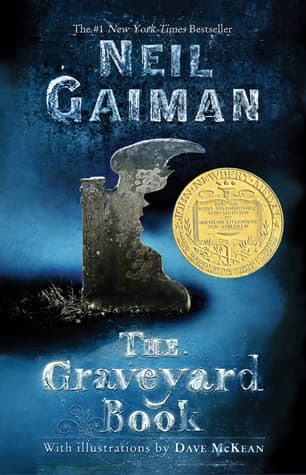
- The Graveyard Book
Neil Gaiman
4.1 (438k) average on GoodreadsFantasyFeatures a young protagonist navigating a world intertwined with the supernatural and facing dark threats.
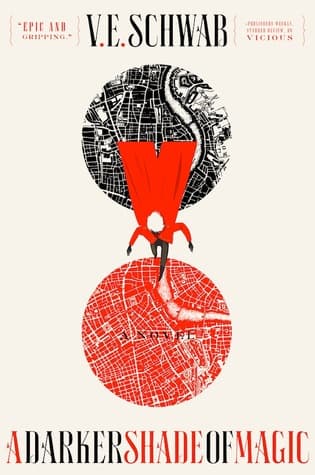
- A Darker Shade of Magic
V.E. Schwab
4.1 (201k) average on GoodreadsFantasyWhile both 'The Empty Grave' and Schwab's 'A Darker Shade of Magic' feature intricate magical systems and compelling protagonists navigating dangerous alternate realities, Stroud's work grounds its supernatural elements more firmly in a gothic, almost Victorian aesthetic and focuses on a team dynamic. Schwab's series, by contrast, emphasizes individual power and the consequences of wielding it across distinct, parallel Londons, feeling more high-fantasy in its execution. Stroud’s narrative leans into the investigative procedural aspect, even amidst grand revelations, whereas Schwab's is more about grand adventure and political intrigue between worlds. Both excel at world-building, but Stroud's is built on a foundation of pervasive, everyday horror, while Schwab's is about the wonder and danger of magic itself.
- Harry Potter and the Sorcerer's Stone
J.K. Rowling
4.5 (7M) average on GoodreadsFantasyRescued from a miserable life under the stairs, an orphaned boy discovers he's a wizard destined for a magical school, where he uncovers a dangerous secret tied to the dark wizard who murdered his parents.
- The Hunger Games
Suzanne Collins
4.3 (6.4M) average on GoodreadsFantasyIn a future where children fight to the death on live television, Katniss Everdeen volunteers for the arena, turning a death sentence into a fight for survival and a spark of rebellion.
- Nineteen Eighty-Four
George Orwell
4.2 (5.5M) average on GoodreadsFictionWinston Smith dreams of truth and rebellion in a world where Big Brother watches all, but he confronts the terrifying power of a regime that controls not just actions, but thoughts.
- Pride & Prejudice
Jane Austen
4.3 (4.9M) average on GoodreadsElizabeth Bennet and Mr. Darcy navigate love and misunderstanding, learning that first impressions can be wrong.



Enjoyed the summary?
A summary gives you the shape of the book. The book itself has the detail, the examples and the voice.
Find Lockwood & Co. on AmazonAs an Amazon Associate, BookBrief earns from qualifying purchases. How we're funded