
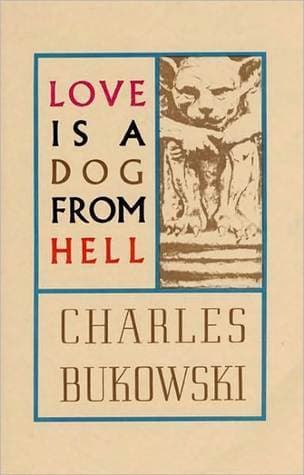
Synopsis
Covers the whole plot, including the ending.
- Difficulty
- Easy
- Pacing
- Moderate
- Mood
- Gritty, cynical, melancholic, defiant, introspective, dark humor
Love Is a Dog from Hell Plot Summary
Covers the whole plot, including the ending.
The Poet's Routine
The book starts with poems showing the narrator's ordinary, often squalid life, a clear reflection of Bukowski himself. He wakes up, usually hungover, in a cheap apartment filled with empty bottles and the mess of a hard-drinking life. His mornings often involve more drinking, a trip to the racetrack, or simply staring at the ceiling, thinking about his poverty and how pointless his writing seems. He constantly struggles between wanting to write and the strong pull of alcohol and despair. He watches his neighbors—prostitutes, bums, and the general decay of his city—finding a strange beauty or truth in their struggles, which he tries to turn into poetry. This first section sets the book's raw, direct tone.
Love and Lust in the Lower Depths
Many poems describe the narrator's relationships with women, which are almost always difficult and often fueled by alcohol and desperation. He writes about encounters with prostitutes, barmaids, and various temporary lovers. These relationships are rarely gentle; instead, they involve raw desire, arguments, and a deep loneliness that neither person seems able to fix. The women are often as broken as he is, looking for comfort or escape with him, only to find more chaos. Despite his cynicism, he has an underlying desire for connection, a brief hope before things inevitably fall apart into disillusionment and more isolation. He is both attracted to and repelled by these women, seeing them as mirrors of his own fragmented self.
The Racetrack and the Gamble
The racetrack appears repeatedly and is a big part of the narrator's life. He spends hours there, watching the horses, placing bets, and often losing his meager money. The racetrack is more than just a place to gamble; it is a social setting where he sees humanity at its most basic—the hopeful, the desperate, the con artists, and the broken. It is a symbol for life's unpredictability, a place where fortunes can be made or lost quickly, reflecting the narrator's own unstable life. The thrill of the gamble, even when he loses, gives him a brief sense of purpose and excitement, a temporary escape from his grim daily life. He finds a certain poetic rhythm in the track's chaos.
Alcohol as Muse and Master
Alcohol is everywhere in the book, both inspiring and tormenting the narrator. He drinks constantly, from morning to night, using it to dull life's pain, to fuel his writing, and to escape the heavy weight of reality. He describes the physical and mental toll of alcoholism: hangovers, blackouts, and self-hatred. Yet, he also sees it as a necessary evil, a way to reach deeper truths and keep a certain distance from the world's absurdity. The poems often detail the act of drinking, the types of liquor, and the often violent or pathetic results of his binges, showing the contradictory role alcohol plays in his life as a writer.
The Writer's Struggle
A large part of the poems explores the narrator's identity as a writer. He struggles with the creative process, the difficulty of writing, and constant rejection from publishers. He feels a deep frustration and bitterness about not being recognized, but he also has an unwavering belief in his own artistic vision. He writes about the loneliness of his craft, the endless hours at a typewriter, and the sacrifices he makes for his art. Despite the despair, he shows a stubborn resilience, refusing to give up on his calling, even when it seems pointless. He sees himself as an outsider, an observer whose job is to record the raw, ugly truths of human existence, often at great personal cost.
Reflections on Death and Mortality
As the book continues, there is more focus on aging, decay, and death. The narrator often thinks about his own coming death, the deaths of friends and acquaintances, and life's general fleeting nature. He sees the physical decline of those around him and feels time's effects on his own body, often because of his excessive drinking and hard life. These thoughts are not necessarily morbid; instead, they are presented with stark realism, an acceptance of life's ultimate limits. He often finds dark humor in these thoughts, a defiant acceptance of what is inevitable, which adds a poignant depth to his observations of the human condition. The poems show his survival against the odds.
Observations of Society's Underbelly
The poems are full of vivid descriptions of the urban poor, the outcasts, and society's forgotten members. The narrator observes and interacts with drunks, prostitutes, derelicts, and other people from the lower classes. He does not romanticize their lives but presents them with brutal honesty, often highlighting their struggles, small victories, and deep loneliness. He sees a shared humanity in their brokenness, recognizing parts of himself in their situation. These observations comment on the larger society, exposing its hypocrisies and its disregard for those on the fringes. His empathy, though often expressed cynically, is clear, making these characters feel real and understandable.
The Absurdity of Existence
A constant theme throughout the book is life's inherent absurdity and meaninglessness. The narrator often questions the purpose of his struggles, his writing, and even existence itself. He sees the world as a chaotic, indifferent place where suffering is common and justice is rare. This existential dread is often balanced by a dark, cynical humor, a way to cope with the bleakness. He finds humor in the grotesque, the pathetic, and the mundane, using it as a shield against despair. This mix of nihilism and wit gives the poems their distinct voice, allowing him to face life's harsh realities without completely giving in to hopelessness, finding small moments of rebellion or defiance.
Moments of Fleeting Beauty
While much of the book is characterized by its raw, gritty realism and cynicism, there are moments when the narrator glimpses unexpected beauty or tenderness amidst the squalor. These moments are often brief and understated—a ray of sunlight on a dirty floor, the sound of music from a distant window, a fleeting connection with another person, or the quiet satisfaction of a perfectly written line of poetry. These instances contrast with the prevailing bleakness, suggesting that even in the darkest parts of human experience, there are sparks of light and moments of grace. They are not grand revelations but subtle affirmations of life's lasting, though often hidden, appeal, reminding the reader of the poet's sensitivity.
Defiance and Resilience
Throughout the book, despite the overwhelming difficulties and constant struggle, the narrator shows a strong sense of defiance and resilience. He refuses to conform to society's expectations, to give up on his writing, or to surrender to the despair that constantly threatens him. A rebellious spirit runs through his observations and actions, a refusal to be broken by his harsh environment. He finds strength in his individuality, his outsider status, and his commitment to speaking his truth, no matter how ugly or unpopular it may be. This enduring spirit, even when facing repeated setbacks, forms the core of his character and gives the book its lasting power, making him a survivor.
The Nature of 'Love'
The title, 'Love Is a Dog from Hell,' is more than a provocative statement; it is a theme woven throughout the entire book. Love, in Bukowski's world, is rarely ideal or romantic. Instead, it is often shown as a destructive, painful, and ultimately disappointing force. It appears as desperate lust, fleeting connections, abusive relationships, and the deep loneliness that follows their collapse. The 'dog from hell' metaphor suggests something wild, untamed, and potentially dangerous, capable of both fierce loyalty and brutal betrayal. The poems explore how love can torment, mislead, and ultimately leave one more wounded than before, yet the narrator continually seeks it out, highlighting the inherent paradox of human desire for connection despite its potential for pain.
The Poetic Voice's Evolution
As the book progresses, Bukowski's unique poetic voice becomes clearer and more confident. He refines his minimalist, direct, and often prose-like style, avoiding traditional poetic devices for a raw, conversational tone. The poems, though distinct, collectively build a cohesive story of the narrator's life and philosophy. There is a sense of an artist finding his rhythm, improving his ability to capture the gritty realities of his world with unflinching honesty and a dark, sardonic wit. The progression of the poems shows a deepening of his observational skills and a more nuanced understanding of the human condition, even as his circumstances remain largely unchanged. His voice is the central character, an evolving consciousness.
Love Is a Dog from Hell Characters
The Narrator (Henry Chinaski/Charles Bukowski)
Protagonist
A cynical, hard-drinking writer seeking truth in the urban underbelly.
The narrator is a semi-autobiographical figure, deeply cynical and disillusioned with society, yet possessing a relentless drive to create art. He is an alcoholic, a womanizer, and a chronic gambler, often living in squalor in Los Angeles. Despite his rough exterior and self-destructive tendencies, he is highly observant, intelligent, and possesses a unique poetic sensibility. He sees himself as an outsider, a chronicler of the marginalized, and is fiercely independent. His experiences with poverty, failed relationships, and constant rejection fuel his writing, which is characterized by its raw honesty and lack of sentimentality. He is perpetually searching for meaning amidst the chaos and ugliness of life.
Relationships: Various Women (lovers, prostitutes, fleeting companions (often tumultuous and transactional)); His Typewriter (confidante, tool of creation, source of frustration); Alcohol (addiction, muse, destroyer); Horse Racing (obsessive hobby, metaphor for life, source of fleeting hope and loss)
The Women
Supporting
A composite of transient lovers, barmaids, and prostitutes.
The women in the narrator's life are rarely given individual names or extensive backstories, serving more as archetypes or reflections of his own desires and disappointments. They are often as damaged and desperate as he is, seeking connection, money, or escape. They range from aggressive and volatile to quietly despairing. Their interactions with the narrator are frequently marked by arguments, drunken sex, and a profound lack of genuine intimacy, yet they occasionally provide moments of fleeting tenderness or companionship. They represent the chaotic and often painful landscape of his romantic and sexual life, embodying the 'dog from hell' aspect of love.
Relationships: The Narrator (lovers, companions, antagonists)
Fellow Drunks/Bums
Supporting
The anonymous denizens of bars and streets, sharing a common fate.
These are the nameless, faceless individuals who populate the bars, streets, and racetracks of the narrator's world. They are fellow alcoholics, down-and-out figures, and marginalized members of society. The narrator observes them with a mix of disdain, empathy, and recognition, seeing aspects of his own life reflected in theirs. They provide a backdrop to his existence, a shared community of the forgotten, and occasionally offer brief, transactional interactions or serve as subjects for his poetic observations. They are the 'extras' in the grand, gritty drama of urban decay, highlighting the widespread nature of suffering and the resilience of the human spirit in adversity.
Relationships: The Narrator (fellow sufferers, casual acquaintances)
Bar Owners/Bartenders
Supporting
Figures of authority and providers of sustenance in the narrator's drinking world.
These characters represent the consistent, often weary, presence behind the bars where the narrator spends much of his time. They are purveyors of alcohol, listeners to drunken confessions, and sometimes enforcers of order. They are typically pragmatic, accustomed to the chaos and despair of their clientele, and often indifferent to the narrator's artistic aspirations. While not deeply developed, they are essential to establishing the atmosphere of the bars and taverns, which serve as crucial settings for many of the poems. They symbolize the routine and structure within the narrator's otherwise chaotic existence, providing a stable, if impersonal, point of contact.
Relationships: The Narrator (customer-supplier, casual acquaintance)
The Horses
Supporting
Subjects of gambling, symbols of hope and ultimate futility.
The horses at the racetrack are more than just animals; they are central to the narrator's ritualistic escape and his philosophical musings. Each horse represents a gamble, a fleeting hope for a win that could momentarily alleviate his poverty. They are observed with intense scrutiny, their names and odds memorized, becoming symbols of fate and chance. In their raw power and unpredictability, they reflect the narrator's own untamed spirit and the chaotic nature of life itself. When they win, they offer a brief high; when they lose, they reinforce the pervasive sense of futility, yet the narrator returns to them endlessly, drawn by the perpetual possibility of a miracle.
Relationships: The Narrator (objects of obsession and speculation)
Publishers/Editors
Antagonistic
The gatekeepers of the literary world, often rejecting the narrator's work.
These figures represent the mainstream literary establishment that consistently rejects or ignores the narrator's raw and unconventional writing. They are unseen but powerful forces, symbolized by the rejection slips and unanswered letters. They embody the narrator's frustration with the art world and its perceived phoniness and pretension. While not personified, their collective influence acts as an antagonist, pushing him further into his outsider status and reinforcing his belief that true art is often unappreciated by the masses. Their existence fuels his defiance and his commitment to his unique, uncompromised voice.
Relationships: The Narrator (rejectors of his work)
Love Is a Dog from Hell Themes
The Brutality and Beauty of Life's Underbelly
Bukowski directly shows the squalor, desperation, and violence of the urban poor, the alcoholic, and the marginalized. Within this harsh reality, he finds a raw, honest beauty and truth he believes is missing from more conventional society. He celebrates the resilience, dark humor, and direct honesty of those living on the fringes, suggesting that deep human experience often exists in the most unexpected and ignored places. The poems show finding meaning and poetry amidst decay and despair.
“the world is not ready for me / as I am not ready for the world / but here I am, I am here.”
Alcoholism and Addiction
Alcohol is a central part of the narrator's life. It is shown as both a destructive addiction that leads to squalor, violence, and self-hatred, and a contradictory inspiration that dulls pain, unlocks creativity, and provides a twisted form of comfort. This theme explores the cyclical nature of addiction, the brief highs, and the inevitable crashes, highlighting the narrator's complex, love-hate relationship with drinking as a way to survive and express himself in a world he finds unbearable. It is not glorified but presented as a brutal reality.
“I drank myself into a state of grace, / an alcoholic holy man.”
The Futility of Love and Connection
The book's title captures this theme. Love, in Bukowski's world, rarely brings joy or lasting happiness. Instead, it is often presented as a destructive, painful, and ultimately pointless effort. Relationships involve lust, arguments, betrayal, and deep loneliness, leaving people more wounded than before. Despite this bleak view, there is an underlying, desperate longing for connection, a paradox that highlights the human need for intimacy even when it causes suffering. Love is a 'dog from hell' – wild, unpredictable, and capable of inflicting great pain.
“love is a dog from hell / and if you're smart / you'll never let it out of its cage.”
The Artist's Struggle and Defiance
A central theme is the struggling writer. The narrator grapples with the creative process, constant rejection from mainstream society, and the sacrifices needed for his art. He is an outsider, refusing to change his raw, honest voice for commercial success. This theme explores the loneliness of the artistic path, self-doubt, and the unwavering belief in one's own vision despite a world that often dismisses it. His defiance against conformity and his relentless pursuit of truth through writing define his life as an artist.
“they say I am a bad poet. / they say I am a dirty poet. / they say I am a drunk poet. / I say I am a poet.”
Mortality and the Passage of Time
Many poems reflect on aging, decay, and death. The narrator often thinks about his own mortality, the physical toll of his lifestyle, and life's impermanence. These reflections are presented with stark realism, often with dark humor, rather than sentimentality. The theme explores how individuals face their own end, the legacy they leave (or don't leave), and the ultimate meaning (or lack thereof) of human existence when facing oblivion. It is a practical acceptance of the cycle of life and death.
“we are here to unlearn the teachings of the church, state, and our educational system. / we are here to drink beer. / we are here to kill war. / we are here to laugh at the odds and live our lives so well that death will tremble to take us.”
Plot Devices & Literary Techniques
First-Person Narrative (Chinaski Persona)
Immersive, unfiltered perspective of the author's alter ego.
The entire collection is presented through the unfiltered, highly personal voice of the narrator, who is widely understood to be Bukowski's alter ego, Henry Chinaski. This device creates an immediate sense of intimacy and authenticity, allowing the reader direct access to the narrator's thoughts, feelings, and raw experiences. It blurs the line between author and character, enhancing the confessional and autobiographical feel of the poems. The first-person perspective is crucial for establishing the distinctive tone – cynical, defiant, and brutally honest – and for immersing the reader in the narrator's chaotic inner and outer worlds, making his observations feel incredibly real and immediate.
Repetition and Motif
Recurring images and themes reinforce the cyclical nature of the narrator's life.
Bukowski frequently employs repetition of certain images, objects, and themes throughout the collection. The act of drinking, the racetrack, specific types of women, cheap apartments, rejection slips, and the typewriter are all recurring motifs. This device serves to emphasize the cyclical and often unchanging nature of the narrator's life and struggles. It creates a sense of familiar despair and resilience, reinforcing the idea that despite individual events, the underlying patterns of his existence remain constant. The repetition also helps to build a cohesive world and a strong sense of character, making these elements iconic symbols of the Bukowski universe.
Free Verse and Conversational Tone
Unfettered poetic form mirroring the rawness of everyday speech.
Bukowski largely abandons traditional poetic structures, rhyme schemes, and meter in favor of free verse and a highly conversational, prosaic tone. This device makes the poems feel immediate, accessible, and authentic, mimicking the natural rhythms of speech rather than formal poetry. It allows him to convey his raw experiences and cynical observations without the perceived artificiality of more conventional forms. The lines often break abruptly, reflecting the fragmented nature of thought or the sudden shifts in mood. This informal style is essential to establishing the narrator's anti-establishment persona and his commitment to an unvarnished truth, directly engaging the reader.
Dark Humor and Irony
Cynical wit used to cope with and comment on life's absurdities.
Throughout the collection, Bukowski employs dark humor and irony as a primary coping mechanism and a critical lens. He finds humor in the grotesque, the pathetic, and the mundane aspects of his life and the world around him. This device allows the narrator to confront the bleakness of his existence, the futility of his struggles, and the absurdity of society without succumbing entirely to despair. The irony often highlights the gap between expectation and reality, or between societal ideals and the gritty truth. It adds a layer of complexity to the poems, preventing them from being purely depressing and instead infusing them with a defiant, cynical wit that is characteristic of his voice.
Quiz
10 questions on the plot and the characters. Each answer comes with a short explanation.
Question 1
What is the primary genre of Charles Bukowski's "Love Is a Dog from Hell"?
- Novel
- Short Stories
- Poetry Collection
- Play
Show answer
C. Poetry Collection "Love Is a Dog from Hell" is widely recognized as a collection of poems.
Question 2
According to the description, what do the poems in "Love Is a Dog from Hell" primarily draw inspiration from?
- Mythology and folklore
- Historical events
- Bukowski's personal experiences
- Abstract philosophical concepts
Show answer
C. Bukowski's personal experiences The description explicitly states that the poems rise from and return to Bukowski's personal experiences.
Question 3
The poems in the collection are described as reflecting on which of the following?
- Fictional characters and imaginary worlds
- People, objects, places, and events of the external world
- Dreams and subconscious thoughts
- Scientific theories and discoveries
Show answer
B. People, objects, places, and events of the external world The description states the poems reflect on "people, objects, places, and events of the external world."
Question 4
The phrase "rising from and returning to" in the description suggests a cyclical nature to Bukowski's poetic process. What does this imply about the relationship between his experiences and his work?
- His experiences are merely a starting point, and the poems diverge significantly.
- His poems create a new reality separate from his life.
- His experiences are the foundation and ultimate destination of his poetic themes.
- His experiences are forgotten once the poems are written.
Show answer
C. His experiences are the foundation and ultimate destination of his poetic themes. The phrase indicates that his personal experiences are the source and the subject matter that the poems continually revisit and are based upon.
Question 5
What is the tone often associated with Charles Bukowski's writing, particularly evident in collections like "Love Is a Dog from Hell"?
- Optimistic and whimsical
- Formal and academic
- Cynical, raw, and often humorous
- Romantic and idealistic
Show answer
C. Cynical, raw, and often humorous Bukowski's work is frequently characterized by its raw, unfiltered portrayal of life, often with a cynical and darkly humorous edge.
Question 6
The title "Love Is a Dog from Hell" itself suggests a particular perspective on the theme of love. What might this perspective be?
- Love is a purely divine and uplifting experience.
- Love is a difficult, painful, or even destructive force.
- Love is a concept too complex to be understood.
- Love is a fleeting and insignificant emotion.
Show answer
B. Love is a difficult, painful, or even destructive force. The title uses a metaphor that equates love with something infernal, suggesting it brings suffering or is inherently problematic.
Question 7
Given Bukowski's reputation and the description, what kind of language and imagery would one likely find in "Love Is a Dog from Hell"?
- Euphemistic and highly metaphorical
- Colloquial, direct, and sometimes vulgar
- Abstract and theoretical
- Formal and archaic
Show answer
B. Colloquial, direct, and sometimes vulgar Bukowski is known for his direct, unpretentious style, often using everyday language and gritty imagery to reflect his experiences.
Question 8
The description mentions the poems reflecting on things "on their way out and back." This cyclical reflection suggests a process of:
- Objective observation without personal involvement
- Escapism from reality into fantasy
- Processing and re-examining life's experiences and their impact
- Creating a purely fictional narrative
Show answer
C. Processing and re-examining life's experiences and their impact The phrasing implies a continuous engagement with experiences, looking at them as they fade and then returning to them, suggesting a deep processing and contemplation.
Question 9
If Bukowski's poems reflect on the external world, what does this imply about the nature of his poetry, despite its personal roots?
- His poetry is entirely solipsistic and inward-looking.
- His poetry offers a commentary or interpretation of the world as he experienced it.
- His poetry is purely imagistic, devoid of any meaning.
- His poetry deliberately avoids any connection to reality.
Show answer
B. His poetry offers a commentary or interpretation of the world as he experienced it. While rooted in personal experience, reflecting on the external world means the poems engage with and offer a perspective on reality, acting as a form of commentary.
Question 10
Considering the title and the description of the poems' subject matter, what kind of emotional landscape is likely explored in "Love Is a Dog from Hell"?
- Uncomplicated joy and serenity
- A complex mix of pain, desire, disillusionment, and perhaps fleeting moments of connection
- Purely intellectual detachment and logical analysis
- Naivety and innocent wonder
Show answer
B. A complex mix of pain, desire, disillusionment, and perhaps fleeting moments of connection The title suggests difficulty and pain in love, and Bukowski's typical subject matter includes the gritty realities of human relationships, often marked by struggle and complex emotions rather than simple happiness.
Love Is a Dog from Hell FAQ
What is Love Is a Dog from Hell about?
Love Is a Dog from Hell is a collection of poems by Charles Bukowski that delves into the raw and often brutal realities of love, life, and human connection. The poems draw heavily from Bukowski's personal experiences, reflecting on people, places, and events with his characteristic unflinching honesty.
Who is Charles Bukowski?
Charles Bukowski was a prolific and influential poet, novelist, and short-story writer. He is known for his gritty, autobiographical style, often focusing on the underbelly of American life, drinking, relationships, and the struggles of the working class.
What is the tone of Love Is a Dog from Hell?
The tone of Love Is a Dog from Hell is typically raw, cynical, and often darkly humorous. Bukowski doesn't shy away from the pain and ugliness of life, but he also finds moments of unexpected beauty and profound truth within it.
What kind of themes are explored in Bukowski's poems?
Themes in Bukowski's poetry include love and its complexities, loneliness, alienation, poverty, drinking, the absurdity of life, and the search for meaning in a seemingly meaningless world.
Is Love Is a Dog from Hell a good starting point for reading Bukowski?
Yes, Love Is a Dog from Hell is often considered a good entry point into Bukowski's work. It showcases his signature style and themes in a collection that is both accessible and representative of his broader literary output.
What is the significance of the title Love Is a Dog from Hell?
The title suggests a view of love as something primal, untamed, and potentially destructive, yet also an inescapable part of the human condition. It reflects Bukowski's often tumultuous and challenging experiences with romantic relationships.
How does Bukowski's personal experience influence his poetry?
Bukowski's poetry is deeply autobiographical. He uses his own life – his relationships, his struggles with alcohol, his jobs, his observations of society – as the primary source material for his poems, lending them a powerful sense of authenticity and immediacy.
Where can I buy Love Is a Dog from Hell?
Love Is a Dog from Hell can be purchased from most major online booksellers, independent bookstores, and often found in used book stores. It is widely available in both print and ebook formats.
What makes Bukowski's writing style unique?
Bukowski's style is characterized by its directness, simplicity, and lack of pretension. He uses colloquial language, short lines, and a conversational tone to convey potent emotions and stark observations, making his work relatable and impactful.
Is Love Is a Dog from Hell suitable for all readers?
Due to its mature themes, explicit language, and often bleak outlook on life and relationships, Love Is a Dog from Hell may not be suitable for all readers. It's best suited for those who appreciate raw, unfiltered, and unconventional poetry.
About the author
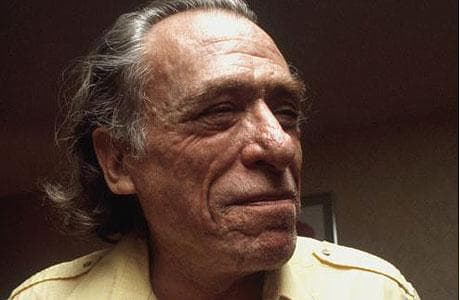
Charles Bukowski was a prolific German-American poet and novelist, often celebrated for his raw, autobiographical style. His notable works include 'Notes of a Dirty Old Man,' 'Factotum,' and 'Ham on Rye,' which vividly depict the gritty realities of working-class life and his own struggles with alcohol and poverty. Bukowski's unflinching prose and anti-establishment themes have cemented his status as a counter-culture icon.
Similar books
- Leaves of Grass
Walt Whitman
4.1 (90k) average on GoodreadsPhilosophyWhile both Bukowski and Whitman embrace a free verse style and a democratic approach to subject matter, their spirits are antithetical. Whitman's 'Leaves of Grass' celebrates the self, nature, and the collective American experience with an expansive, optimistic, and often spiritual fervor. He sees divinity in the common person and beauty in all aspects of life. Bukowski, in contrast, offers a cynical, disillusioned, and often nihilistic view of the common man and society. Where Whitman finds cosmic connection, Bukowski finds alienation and decay. Both are groundbreaking in their rejection of traditional poetic forms, but their underlying philosophies and emotional tones diverge dramatically, with Whitman's embrace of life's grandeur standing in stark contrast to Bukowski's embrace of its squalor.
- Howl and Other Poems
Allen Ginsberg
4.1 (94k) average on GoodreadsFictionBoth Bukowski's 'Love Is a Dog from Hell' and Ginsberg's 'Howl' are seminal works of mid-20th-century poetry that challenge the status quo and give voice to marginalized experiences. Both employ long, sprawling lines and a confessional, stream-of-consciousness style. However, Ginsberg's 'Howl' is a more overtly political and prophetic lament for a generation destroyed by conformity and capitalism, fueled by a spiritual and intellectual anguish. It's a grand, epic cry for liberation. Bukowski's work, while implicitly critical of society through its depiction of its failures, is far more personal, focused on individual suffering, petty grievances, and the immediate, visceral experience of degradation and fleeting pleasure. Ginsberg often seeks transcendence and revolution; Bukowski largely observes and endures, finding a grim poetry in the everyday struggle rather than a call to arms.
- Nineteen Eighty-Four
George Orwell
4.2 (5.5M) average on GoodreadsFictionWinston Smith dreams of truth and rebellion in a world where Big Brother watches all, but he confronts the terrifying power of a regime that controls not just actions, but thoughts.
- The Frozen River
Ariel Lawhon
4.4 (600k) average on GoodreadsFictionIn 1789 Maine, a heroic midwife's diary helps her expose a murder and get justice in a town that wants to silence her.
- A Man Called Ove
Fredrik Backman
4.4 (569k) average on GoodreadsFictionA stubborn widower, who lives by strict rules, finds his quiet world changed by a lively new family next door, making him face his past and find happiness in human connection.
- The Art of Racing in the Rain
Garth Stein
4.2 (452k) average on GoodreadsFictionThrough the eyes of Enzo, a wise and observant dog, a race car driver's family navigates a journey of love, loss, and resilience, learning that life's most important lessons often come in the curves, not just on the straightaways.




Enjoyed the summary?
A summary gives you the shape of the book. The book itself has the detail, the examples and the voice.
Find Love Is a Dog from Hell on AmazonAs an Amazon Associate, BookBrief earns from qualifying purchases. How we're funded