

Core Idea
- Difficulty
- Medium
- Read it if
- You are interested in the foundational texts of American literature, seek a spiritual perspective that embraces the physical and democratic, or want to explore themes of individualism, interconnectedness, and the sacredness of everyday life through powerful, free-verse poetry.
- Skip it if
- You prefer traditional narrative structures, are averse to highly metaphorical and expansive poetic language, or are looking for a straightforward philosophical treatise rather than a poetic exploration of ideas.
Key Takeaways from Leaves of Grass
Embrace the Multitude Within
The self is not singular but a vast, contradictory, and inclusive universe.
Whitman's most important idea, especially in 'Song of Myself,' is that the self is not fixed. He says that each person is a changing, expansive being that can hold opposite ideas, experiences, and identities at once. This 'multitude' is not a flaw but the very core of human richness and universality. He sees the self as a small version of humanity and nature, taking in and reflecting all parts of existence—good and bad, beautiful and ugly, sacred and common. This broad acceptance challenges old ideas of identity and encourages a deep acceptance of one's own complexity and the complexity of others.
“Do I contradict myself? Very well then I contradict myself, (I am large, I contain multitudes.)”
In the book: The entire structure of 'Song of Myself' demonstrates this, as Whitman shifts perspectives, embodies different people, and expresses conflicting emotions without seeking resolution, culminating in the famous line about containing multitudes.
Try this: Practice self-acceptance by acknowledging and integrating your own contradictions and complexities. Instead of striving for a perfectly consistent self, embrace the dynamic interplay of your various roles, beliefs, and experiences. Extend this understanding to others, recognizing their inherent 'multitudes' without judgment.
Related ideas: self-acceptance, identity, non-duality
The Divinity of the Body
The physical form is not a vessel for the soul but an integral, sacred part of the divine.
Whitman greatly values the body, going against centuries of Western thought that often looked down on the physical in favor of the spiritual. For him, the body is not separate from the soul but an equal expression of it, a sacred and amazing part of the divine. Every part, every function, every feeling is worth celebrating and respecting. This view breaks down the false idea that the physical and spiritual are separate, stating that true spirituality comes not from leaving the body behind, but from fully living in and appreciating it. This includes an open, joyful acceptance of sex, touch, and physical work as key parts of human experience.
“And I say to mankind, Be not curious about God, For I who am curious about each am not curious about God, (all curiosity ceases where one's self and the universe are concerned.)”
In the book: Numerous passages in 'Song of Myself' explicitly celebrate the body, its organs, its functions, and its sensuality, often with frank and unreserved language that was scandalous in his time. For example, 'I sing the body electric.'
Try this: Cultivate a profound appreciation for your physical body. Engage in practices that connect you to your physicality—mindful movement, sensual experiences, or simply paying attention to bodily sensations without judgment. Recognize the inherent dignity and beauty in all bodies, regardless of societal standards.
Related ideas: embodiment, sacred-body, sensuality
Democratic Spirituality
The divine is immanent in all people, places, and things, not confined to institutions or elites.
Whitman's spirituality is very democratic, reflecting the American idea of equality. He sees divinity not in distant heavens or specific religious rules, but woven into everyday life, present in every person, every blade of grass, and every common experience. This means that no one person, no specific belief, and no particular group has a monopoly on spiritual truth or access to the sacred. The common person, the worker, the marginalized—all are equally divine and worthy of respect. This view challenges hierarchical systems and promotes a strong sense of connection and shared worth.
“I believe in you my soul, the other I am must not abase itself to you, And you must not abase yourself to the other.”
In the book: His extensive cataloging of diverse people, places, and occupations throughout his poems, treating each with equal reverence and wonder, demonstrates this. He finds 'God in every object' and 'every person.'
Try this: Actively seek and acknowledge the sacred in your daily life—in nature, in strangers, in routine tasks. Challenge any internal or external hierarchies that suggest some people or experiences are 'more spiritual' than others. Practice universal compassion and respect, seeing the divine spark in everyone.
Related ideas: immanence, equality, universalism
The Power of Observation and Presence
True understanding and connection arise from deeply witnessing the world around us.
Whitman is a master observer, carefully describing the sights, sounds, smells, and textures of 19th-century America. His poetry shows the deep insights gained by simply being present and attentive to what is immediately around him. He does not just see; he absorbs and lists the world, treating every detail—from a bird's flight to a busy city street—as important. This act of deep witnessing is a spiritual practice itself, creating a sense of connection and showing the beauty and meaning in seemingly ordinary things. It is an invitation to slow down and truly experience life as it happens.
“I believe in you my soul, the other I am must not abase itself to you, And you must not abase yourself to the other.”
In the book: His 'catalogs' of people, places, and objects are a hallmark of his style, particularly in 'Song of Myself,' where he lists countless sensory details and observations of American life, from ferryboats to farmers.
Try this: Cultivate a practice of mindful observation in your daily life. Spend time simply watching, listening, and feeling your surroundings without judgment or analysis. Keep a journal of your sensory experiences to deepen your appreciation for the present moment and the richness of the world.
Related ideas: mindfulness, presence, observation
Death as a Natural Continuum
Death is not an end but a transformation, an integral part of the cycle of existence.
Whitman approaches death with deep acceptance and even celebration, seeing it not as an end but as a natural and necessary step in the larger cosmic flow. He sees death as a return to the basics, a reintegration into the earth and the cycle of life, rather than a final stop. This view offers a comforting and freeing alternative to fear-based ideas of death. It suggests that just as birth is a beginning, death is simply another phase, a 'lucky' part of the journey, supporting the idea that all parts of existence are connected and always changing.
“Has any one supposed it lucky to be born? I hasten to inform him or her it is just as lucky to die, and I know it.”
In the book: In 'Song of Myself,' he speaks of his body returning to the grass, and how 'the smallest sprout shows there is really no death.' He also directly addresses death as a 'strong deliveress' and a 'kind and lovely death.'
Try this: Reflect on your own relationship with mortality. Consider how viewing death as a natural transformation rather than an absolute end might alter your perspective on life, loss, and the future. Engage with nature's cycles of decay and renewal to foster a deeper understanding of this continuum.
Related ideas: mortality, cycles-of-life, transformation
The Song of the Self is the Song of All
Individual experience is a gateway to universal understanding and empathy.
Whitman's opening statement in 'Song of Myself' is not selfish, but a strong assertion of shared humanity. By celebrating himself, he implicitly celebrates all selves, recognizing that the basic parts and experiences of one person are echoed in every other. His personal journey, his perceptions, and his contradictions become a mirror for the reader's own. This idea creates deep empathy, suggesting that by looking closely at one's own authentic experience, one can connect with the universal human condition. It is an invitation to find common ground in the most personal aspects of being.
“I celebrate myself, and sing myself, And what I assume you shall assume, For every atom belonging to me as good belongs to you.”
In the book: The very title 'Song of Myself' followed by the extensive cataloging of diverse American experiences, implying that 'myself' is capacious enough to include all others. The constant shifting from 'I' to 'you' throughout the poem.
Try this: Engage in self-reflection and personal storytelling not just for personal insight, but as a means to connect with others. Share your authentic experiences and actively listen to the experiences of others, seeking the 'atoms' that belong to both of you. Cultivate empathy by recognizing your shared humanity.
Related ideas: empathy, shared-humanity, interconnectedness
Joy in the Everyday and the Common
Profound beauty and meaning reside not in the extraordinary, but in the mundane.
Whitman has an almost childlike wonder for common things. He finds great joy and meaning in things often ignored: a spider's web, a ferryboat ride, a farmer plowing, or simply a blade of grass. This view challenges the constant human desire for grand, epic experiences to find meaning. Instead, he elevates the common, showing that deep beauty, spiritual truth, and strong connection are available in the simplest parts of existence. His work is a reminder to be grateful and find joy in the accessible, ever-present wonders of the world around us.
“I believe a leaf of grass is no less than the journey-work of the stars.”
In the book: His poem 'A noiseless patient spider' finds profound existential meaning in a small creature. The very title 'Leaves of Grass' points to the significance of the most common plant.
Try this: Practice finding joy and wonder in your daily routines and surroundings. Take time to observe and appreciate small details—the taste of your coffee, the texture of a fabric, the sound of rain. Keep a gratitude journal focused on seemingly insignificant moments.
Related ideas: gratitude, mindful-living, everyday-beauty
The Open Road and Perpetual Becoming
Life is a continuous journey of exploration, growth, and embracing the unknown.
Whitman's 'Song of the Open Road' is a strong metaphor for a life lived with courage, independence, and an acceptance of constant change. He suggests letting go of material burdens and social expectations to go on a journey of self-discovery and engagement with the world. The 'open road' means not just physical travel, but a way of thinking: a willingness to meet new experiences, new people, and new parts of oneself without fear. It affirms constant change, where the destination is less important than the process of moving, learning, and connecting along the way.
“Henceforth I ask not good-fortune, I myself am good-fortune, Henceforth I whimper no more, postpone no more, need nothing, Done with indoor complaints, libraries, querulous criticisms, Strong and content I travel the open road.”
In the book: The entire poem 'Song of the Open Road' is a direct embodiment of this philosophy, with its celebration of freedom, companionship, and the journey itself.
Try this: Cultivate a mindset of openness to new experiences and change. Embrace discomfort as a sign of growth. Regularly step outside your comfort zone, whether through physical travel, learning new skills, or engaging with diverse perspectives. View life's challenges as part of a continuous journey of development.
Related ideas: growth-mindset, adventure, self-discovery
The Healing Power of Nature
Communion with the natural world is essential for spiritual and emotional well-being.
Whitman often turns to nature for comfort, wisdom, and deep connection. He sees the natural world—its animals, plants, landscapes, and cycles—as holding essential truths and offering a break from the complexities and worries of human society. In nature, he finds a mirror for the soul, a place where one can drop pretenses and simply 'be.' This view highlights the healing and grounding power of nature, suggesting that regular time with it is not just for fun but a vital part of spiritual health and self-understanding.
“I think I could turn and live with animals, they are so placid and self-contain'd, I stand and look at them long and long.”
In the book: His frequent descriptions of natural scenes, from forests and rivers to the sea, and his expressed desire to learn from animals' inherent peace and self-sufficiency.
Try this: Integrate more time in nature into your routine. Seek out parks, forests, or natural bodies of water for reflection and rejuvenation. Practice 'forest bathing' or simply observe natural phenomena mindfully to reconnect with the earth and find inner peace.
Related ideas: nature-connection, eco-spirituality, restoration
The Unending Song of Humanity
Poetry and art are vital expressions of the collective human spirit across generations.
'Leaves of Grass' itself shows Whitman's belief in the lasting and changing 'song' of humanity. He sees his work not as a finished collection but as an ongoing conversation, inviting future generations to add their voices. He presents the poet as a channel for the collective consciousness, expressing the shared experiences, hopes, and struggles of humankind. This highlights the important role of art and literature in connecting people across time and space, preserving and expanding the human story. His poetry is meant to be lived with, revisited, and reinterpreted by each reader, ensuring it stays relevant.
“These are of us, they are with us, they are ours, born of us, and we of them.”
In the book: The evolving nature of 'Leaves of Grass' itself, which Whitman revised and expanded throughout his life, treating it as a living document. His direct address to the reader and future generations.
Try this: Engage with art and literature as a way to connect with the broader human experience, past and present. Consider how your own creative expressions (whether writing, art, or other forms) contribute to this ongoing 'song.' Support and participate in creative communities to foster this collective expression.
Related ideas: collective-consciousness, art-as-legacy, human-spirit
Leaves of Grass Quotes
“I celebrate myself, and sing myself, / And what I assume you shall assume, / For every atom belonging to me as good belongs to you.”
“Do I contradict myself? / Very well then I contradict myself, / (I am large, I contain multitudes.)”
“A child said What is the grass? fetching it to me with full hands; / How could I answer the child? I do not know what it is any more than he.”
“The United States themselves are essentially the greatest poem.”
“Not till the sun excludes you do I exclude you.”
“This is the city and I am one of the citizens, / Whatever interests the rest interests me, politics, wars, markets, newspapers, schools, / The mayor and councils, and the families directly involved, / The like of the rest I am of these.”
“O Captain! my Captain! our fearful trip is done, / The ship has weather’d every rack, the prize we sought is won, / The port is near, the bells I hear, the people all exulting, / While follow eyes the steady keel, the vessel grim and daring; / But O heart! heart! heart! / O the bleeding drops of red, / Where on the deck my Captain lies, / Fallen cold and dead.”
“All goes onward and outward, nothing collapses, / And to die is different from what any one supposed, and luckier.”
“I too am not a bit tamed, I too am untranslatable, / I sound my barbaric yawp over the roofs of the world.”
“The press of my foot to the earth springs a hundred affections, / They scorn the best I can do to relate them.”
“No array of words can ever tell how much I love you.”
“I believe in you my soul, the other I am must not abase itself to you, / And you must not abase yourself to the other.”
“Have you felt so proud to get at the meaning of poems?”
“And I will show that there is no imperfection in the present, and can be none in the future, / And I will show that whatever happens to anybody it may be turn’d to good account, and fail not, but pass onward the same.”
Quiz
10 questions on the main ideas. Each answer comes with a short explanation.
Question 1
Which of the following best encapsulates the central theme of 'Song of Myself' within 'Leaves of Grass'?
- A critique of industrialization and urban decay.
- The celebration of the individual self, its connection to the cosmos, and the divinity inherent in all things.
- An elegy for fallen soldiers during the American Civil War.
- A call for political revolution and social egalitarianism.
Show answer
B. The celebration of the individual self, its connection to the cosmos, and the divinity inherent in all things. 'Song of Myself' is a profound exploration of the self, its expansive nature, and its intimate connection to the universe, embodying Whitman's transcendentalist and democratic ideals.
Question 2
Whitman's poetic style in 'Leaves of Grass' is most characterized by its use of:
- Strict adherence to traditional rhyme schemes and meter.
- Elaborate classical allusions and mythological narratives.
- Free verse, long lines, and cataloging.
- Sonnet forms and lyrical ballads.
Show answer
C. Free verse, long lines, and cataloging. Whitman famously broke from traditional poetic forms, employing free verse, an expansive line, and extensive cataloging to reflect the breadth of his vision.
Question 3
In 'Leaves of Grass,' Whitman often employs the concept of 'the body electric.' What does this phrase primarily signify?
- The human body's capacity to generate static electricity.
- The sacred, vibrant, and interconnected nature of the physical body and its senses.
- A metaphor for the industrial revolution's impact on human health.
- The nervous system's role in transmitting thoughts and emotions.
Show answer
B. The sacred, vibrant, and interconnected nature of the physical body and its senses. 'The body electric' celebrates the physical body as divine and integral to human experience, imbued with a spiritual energy that connects it to the universe.
Question 4
Whitman's democratic vision, as expressed in 'Leaves of Grass,' includes a profound appreciation for:
- A hierarchical society led by intellectual elites.
- The common person, diverse occupations, and the equality of all individuals.
- Strict adherence to Puritanical moral codes.
- The superiority of American culture over all others.
Show answer
B. The common person, diverse occupations, and the equality of all individuals. Whitman's democracy is inclusive, celebrating the dignity of every individual, regardless of their background or profession, and finding divinity in the everyday.
Question 5
In 'Song of Myself,' Section 6, Whitman famously asks, 'What is the grass?' and offers several interpretations. Which of the following is NOT one of his suggested meanings?
- The handkerchief of the Lord.
- The uncut hair of graves.
- A symbol of human frailty and mortality.
- The beautiful uncut hair of graves.
Show answer
C. A symbol of human frailty and mortality. Whitman offers several optimistic and interconnected interpretations of grass, seeing it as a symbol of life, growth, and the continuity of existence, rather than frailty.
Question 6
How does Whitman typically portray death in 'Leaves of Grass'?
- As a terrifying and definitive end to existence.
- As a natural transition, a part of the continuous cycle of life and renewal.
- As a punishment for human transgressions.
- As an escape from worldly suffering.
Show answer
B. As a natural transition, a part of the continuous cycle of life and renewal. Whitman views death not as an end, but as a transformation, a return to the natural elements, and a continuation of the soul's journey, deeply connected to nature's cycles.
Question 7
Whitman's use of an omniscient, all-encompassing 'I' in 'Song of Myself' serves primarily to:
- Assert his personal intellectual superiority over his readers.
- Create a universal speaker who embodies the experiences and perspectives of all humanity.
- Maintain a detached, objective viewpoint on American society.
- Focus solely on his individual autobiography and private thoughts.
Show answer
B. Create a universal speaker who embodies the experiences and perspectives of all humanity. The 'I' in 'Song of Myself' transcends the individual poet, becoming a representative of humanity, encompassing diverse experiences and identities to foster a sense of shared being.
Question 8
A key philosophical underpinning of 'Leaves of Grass' is its connection to Transcendentalism. Which Transcendentalist idea is most evident in Whitman's work?
- The inherent evil of human nature.
- The belief in an oversoul or divine spirit immanent in nature and humanity.
- The rejection of all forms of artistic expression.
- A strict adherence to organized religion and dogma.
Show answer
B. The belief in an oversoul or divine spirit immanent in nature and humanity. Whitman shares with Transcendentalists like Emerson the belief in an immanent divine presence in nature and in every individual soul, leading to a celebration of self and cosmos.
Question 9
How does 'Leaves of Grass' challenge 19th-century poetic conventions regarding subject matter and language?
- By exclusively focusing on classical mythology and epic narratives.
- By embracing the vulgar, the sensual, and the everyday, using common language alongside elevated diction.
- By strictly adhering to decorum and avoiding any mention of the physical body.
- By only addressing themes approved by religious institutions.
Show answer
B. By embracing the vulgar, the sensual, and the everyday, using common language alongside elevated diction. Whitman radically expanded the scope of poetry to include all aspects of human experience, including the physical and the mundane, using a language that blurred the lines between high and low culture.
Question 10
Which of the following literary devices is most pervasive and central to Whitman's technique of building expansive, inclusive visions in 'Leaves of Grass'?
- Strict metrical feet and intricate rhyme schemes.
- Apostrophe, personification, and elaborate metaphors.
- Anaphora, parallelism, and extensive cataloging.
- Iambic pentameter and sonnet sequences.
Show answer
C. Anaphora, parallelism, and extensive cataloging. Whitman frequently uses anaphora (repetition of phrases), parallelism (similar grammatical structure), and cataloging (lists) to build his long lines and create a sense of vastness and inclusion.
Leaves of Grass FAQ
What is the central theme of Walt Whitman's 'Leaves of Grass'?
'Leaves of Grass' primarily celebrates the individual self, the human body, nature, and the interconnectedness of all life. It explores themes of democracy, spirituality, and the American experience through a unique, free-verse poetic style.
Does 'Leaves of Grass' work as a spiritual guide?
While not a traditional religious text, 'Leaves of Grass' offers a deeply spiritual perspective on life, death, and the universe, often described as a form of pantheistic or transcendental spirituality. Many readers find profound spiritual insights and comfort within its pages.
What is 'Song of Myself' within 'Leaves of Grass'?
'Song of Myself' is the longest and arguably most famous poem within 'Leaves of Grass,' serving as its philosophical core. It is an expansive exploration of identity, the senses, empathy, and the democratic spirit, embodying Whitman's unique poetic voice.
How is 'Leaves of Grass' different from traditional 19th-century poetry?
'Leaves of Grass' radically departs from traditional 19th-century poetry by rejecting conventional rhyme, meter, and strict poetic forms. Whitman embraced free verse, colloquial language, and direct address, making his work feel more immediate and accessible than much of his contemporaries' verse.
What is the significance of the body in Whitman's 'Leaves of Grass'?
The body holds immense significance in 'Leaves of Grass,' being celebrated as sacred, beautiful, and an integral part of the spiritual self. Whitman often uses detailed physical descriptions to convey a sense of vitality, equality, and the divine presence in all aspects of human existence.
Is 'Leaves of Grass' considered a controversial book?
Yes, 'Leaves of Grass' was highly controversial upon its initial publication due to its frank celebration of sexuality, the body, and its unconventional style. It challenged Victorian sensibilities and traditional religious views, leading to both censorship and fervent admiration.
How does 'Leaves of Grass' reflect American identity?
'Leaves of Grass' profoundly reflects American identity by embracing the democratic ideal, celebrating diversity, and envisioning a unified nation. Whitman saw himself as the poet of the common person, articulating the vastness and potential of the American experiment.
What impact did 'Leaves of Grass' have on later literature?
'Leaves of Grass' had a groundbreaking impact on later literature, especially influencing modern poetry and the development of free verse. Its radical form and themes paved the way for subsequent generations of poets to experiment with language, form, and subject matter.
About the author

Walter Whitman Jr. was an American poet, essayist, and journalist. He is considered one of the most influential poets in American history. Whitman incorporated both transcendentalism and realism in his writings and is often called the father of free verse. His work was controversial in his time, particularly his 1855 poetry collection Leaves of Grass, which was described by some as obscene for its overt sensuality.
Similar books
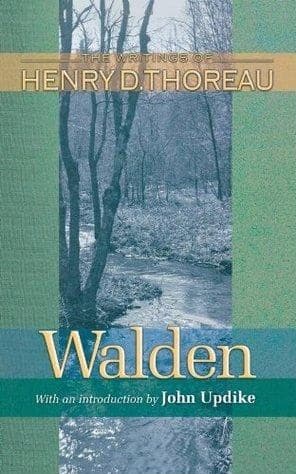
- Walden
Henry David Thoreau
3.8 (158k) average on GoodreadsBiographyFocuses on nature, self-sufficiency, and a deep observation of life, aligning with Whitman's emphasis on presence and the natural world.
- Song of Myself
Walt Whitman
4.2 (12k) average on GoodreadsCreativityThis is the central poem within 'Leaves of Grass' and embodies all the core ideas in a more concentrated form.
- Brave New World
Aldous Huxley
4.0 (1.4M) average on GoodreadsFantasyIn a future where happiness comes from chemicals and individuality is gone, one man's desire for real experience threatens the calm, controlled society.
- Life of Pi
Yann Martel
3.9 (1.3M) average on GoodreadsFantasyStranded in the vast Pacific, a young Indian boy forms an unlikely bond with a Bengal tiger, questioning belief and survival.
- The Picture of Dorian Gray
Oscar Wilde
4.1 (966k) average on GoodreadsFantasyA beautiful young man's soul decays within a cursed portrait, mirroring the grotesque cost of his hedonistic pursuit of eternal youth and illicit pleasure.
- Tuesdays with Morrie
Mitch Albom
4.1 (782k) average on GoodreadsBiographyA dying professor's weekly lessons from his bedside change a former student, giving him ideas on life, love, and letting go.




Enjoyed the summary?
A summary gives you the shape of the book. The book itself has the detail, the examples and the voice.
Find Leaves of Grass on AmazonAs an Amazon Associate, BookBrief earns from qualifying purchases. How we're funded