

Synopsis
Covers the whole plot, including the ending.
- Difficulty
- Medium
- Pacing
- Fast
- Mood
- Suspenseful, Thrilling, Romantic, Futuristic
- Read it if
- You enjoy futuristic police procedurals with a strong romantic subplot, intricate mysteries, and high-stakes action.
- Skip it if
- You prefer hard science fiction over a blend of sci-fi and romance, or dislike detailed police procedural elements.
Loyalty in Death Plot Summary
Covers the whole plot, including the ending.
The First Bomb and the Taunting Letter
Lieutenant Eve Dallas responds to a bomb detonation in Central Park, which kills two people and injures several others. The device is sophisticated and leaves little evidence. Soon after, Eve receives an anonymous, typewritten letter addressed to her. The letter, signed 'The Secret Admirer,' boasts about the attack, claims responsibility for purging the 'corrupt masses,' and promises more destruction. Eve recognizes the personal nature of the communication, which sets a disturbing tone for the investigation. Her partner, Detective Delia Peabody, helps sift through the initial crime scene details and witness statements, but leads are scarce.
The Second Attack: A Restaurant Bombing
The Secret Admirer strikes again, bombing a high-end Manhattan restaurant during peak hours. Casualties are higher, and the city is gripped by fear. A second letter arrives for Eve, repeating the bomber's mission to cleanse society and mocking her inability to stop him. The letters become more personal, suggesting the bomber has a specific interest in Eve. Roarke, Eve's husband, offers his resources to aid the investigation, particularly in tracing rare components or identifying targets through his network. Eve feels the weight of public expectation and the personal challenge from the bomber.
Tracing the Bomb Components
Eve, along with Dr. Charlotte Mira, the police psychologist, and her team, examines the bombs' technical aspects. The devices are complex, using custom-fabricated parts and advanced explosives, making them hard to trace. Forensic analysis points to a skilled individual with access to specialized equipment. A breakthrough occurs when they identify a unique micro-controller in the bombs, leading them to a niche electronics supplier. This trace brings them to Julian Cross, a brilliant but reclusive electronics engineer with a history of mental health issues and deep resentment against the 'elite' he believes ruined his career.
Julian Cross: The Secret Admirer Revealed
Eve and Peabody bring Julian Cross in for questioning. He appears calm and arrogant, denying involvement in the bombings. His answers are evasive, and Eve senses a dangerous intelligence beneath his composed exterior. Dr. Mira's psychological profile of the bomber matches Julian's personality: a narcissistic individual with a Messiah complex, convinced he is purifying society. During the interrogation, Julian hints at his knowledge of Eve's personal life, confirming her suspicion that he is The Secret Admirer and that his obsession with her is growing. He is a master manipulator, making a direct confession difficult.
The Threat to Roarke and Mavis
The Secret Admirer escalates his attacks, making them personal. A bomb is found in one of Roarke's high-rise corporate buildings, narrowly defused by the bomb squad. This act sends a clear message to Eve: her personal life is not off-limits. Soon after, Eve receives a chilling threat against her best friend, Mavis Freestone, and Mavis's unborn child. This direct endangerment of her loved ones pushes Eve to her breaking point, fueling her determination to stop Julian. Roarke, enraged by the threat, dedicates all his resources to assisting Eve, putting his own life on the line.
The Race to Protect Mavis
Eve uses every available resource to ensure Mavis's safety. Mavis is moved to a secure location, guarded by multiple officers, and Eve personally oversees the security. The threat to Mavis highlights Julian's depravity and his desire to hurt Eve emotionally. Julian continues to send taunting letters, hinting at a final, devastating act of terror that will make his previous bombings seem minor. He believes he is on the verge of his ultimate triumph, and his messages become increasingly grandiose, foreshadowing a large-scale attack designed to cause maximum chaos and fear in the city.
The Grand Finale: Targeting the City's Infrastructure
Through forensic analysis of Julian's recovered materials and intercepted communications, Eve and her team uncover Julian's terrifying plan: a coordinated attack to cripple New York City's vital infrastructure. He intends to detonate multiple bombs targeting the main power grid, major transportation hubs, and communication networks, plunging the city into darkness and chaos. His motive is not just to kill, but to dismantle society, believing it to be corrupt beyond redemption. The plan's scale is unprecedented, demanding an immediate and massive response from law enforcement.
The Showdown at the Power Station
Eve tracks Julian to one of the primary power stations, where he is setting up his final, most devastating bomb. She arrives with a tactical team, but Julian, anticipating their arrival, has booby-trapped the facility. A tense standoff ensues, with Julian holding hostages and threatening to detonate the bomb, which would cause a catastrophic blackout across a significant portion of the city. Eve, using her negotiating skills and understanding of Julian's ego, tries to reason with him, knowing that a direct assault could trigger the device and result in immense loss of life and infrastructure damage.
Eve's Personal Battle and Roarke's Intervention
As the standoff intensifies, Eve isolates Julian, creating a direct confrontation. Julian, obsessed with Eve, sees this as the ultimate personal challenge. He reveals more about his twisted ideology and his desire to 'break' Eve. During their tense exchange, Roarke, using his technical expertise and knowledge of the facility's schematics, stealthily works to disable some of Julian's secondary devices and cut off potential escape routes. His actions provide Eve with a crucial advantage, allowing her to focus entirely on Julian without worrying about unforeseen traps or additional collateral damage. The battle becomes a test of wills and intellect.
The Resolution and Aftermath
Eve, capitalizing on a momentary lapse in Julian's concentration caused by Roarke's interference, disarms him and brings him into custody. The main bomb is defused just in time, averting a city-wide disaster. While the immediate threat is neutralized, the emotional and psychological toll on Eve is immense. The case has been deeply personal, forcing her to confront the vulnerability of her loved ones and the depths of human depravity. The city breathes a collective sigh of relief, but the scars of the attacks, and the memory of The Secret Admirer, will linger. Eve finds solace in Roarke's unwavering support and her team's camaraderie.
Loyalty in Death Characters
Eve Dallas
Protagonist
A tough, dedicated homicide lieutenant in 2059 New York City.
Lieutenant Eve Dallas is a brilliant, driven homicide detective in the NYPSD. Orphaned and abused as a child, she carries deep emotional scars but channels her trauma into an unwavering commitment to justice. She is fiercely loyal to her friends and husband, Roarke, and possesses an almost intuitive understanding of criminals. Her past experiences often inform her unique perspective on crime, making her exceptionally effective.
Relationships: Roarke (Husband, confidant, partner in life and often in investigations); Delia Peabody (Partner and close friend); Mavis Freestone (Best friend); Commander Whitney (Superior officer and mentor); Dr. Charlotte Mira (Police psychologist and trusted advisor)
Roarke
Supporting
Eve's enigmatic, wealthy, and powerful husband.
Roarke is a self-made billionaire with a mysterious past, hint of criminal origins, and vast global influence. He is intensely protective of Eve and uses his immense resources, intelligence, and connections to assist her investigations, often blurring the lines between legal and extra-legal methods. He is deeply in love with Eve, providing her with emotional stability and a safe harbor from her past.
Relationships: Eve Dallas (Wife, soulmate, partner); Mavis Freestone (Friend, future aunt to her child); Summerset (Butler and long-time loyal employee)
Julian Cross (The Secret Admirer)
Antagonist
A brilliant but deeply disturbed electronics engineer turned serial bomber.
Julian Cross is the titular 'Secret Admirer,' a highly intelligent but narcissistic and delusional electronics genius. He harbors a deep-seated resentment against what he perceives as a corrupt and unjust society, believing he is chosen to 'cleanse' it through acts of terror. He develops a twisted obsession with Eve Dallas, seeing her as a worthy adversary and an instrument of his grand plan. He is manipulative, arrogant, and utterly devoid of empathy, driven by a Messiah complex.
Relationships: Eve Dallas (Obsessive adversary, target of his personal taunts)
Detective Delia Peabody
Supporting
Eve's loyal, sharp, and increasingly competent partner.
Peabody is Eve's junior partner, known for her quirky fashion sense, sharp wit, and growing investigative skills. She is fiercely loyal to Eve, often acting as her emotional anchor and a grounded presence. She is detail-oriented and diligent, providing crucial support in investigations and gradually developing into a formidable detective in her own right. Her relationship with Eve has evolved from a professional partnership to a deep friendship.
Relationships: Eve Dallas (Partner, mentor, best friend); McNab (Boyfriend, fellow officer)
Mavis Freestone
Supporting
Eve's flamboyant best friend and a popular singer/designer.
Mavis is a vibrant, fashion-forward celebrity known for her music and designs. She is Eve's oldest and dearest friend, offering unconditional love and emotional support. Despite her glamorous lifestyle, she is down-to-earth and fiercely protective of Eve. She is pregnant with her first child during the events of the book, making her a particularly vulnerable and personal target for the Secret Admirer.
Relationships: Eve Dallas (Best friend); Leonardo (Husband); Roarke (Friend)
Dr. Charlotte Mira
Supporting
The NYPSD's insightful police psychologist.
Dr. Mira is a highly respected police psychologist who provides crucial insights into the minds of criminals and victims. She is one of the few people who can get Eve to open up emotionally, and her calm, analytical approach is invaluable to the force. Her psychological profiles are often key to understanding the perpetrator's motives and predicting their next moves.
Relationships: Eve Dallas (Therapist, trusted colleague, friend)
Commander Whitney
Supporting
Eve's superior officer and mentor.
Commander Whitney is the head of the Homicide Division and Eve's direct superior. He is a fair, intelligent, and highly respected officer who trusts Eve's instincts implicitly, even when they challenge conventional methods. He acts as a mentor and a buffer for Eve within the police department, providing her with the resources and latitude she needs to solve difficult cases.
Relationships: Eve Dallas (Superior officer, mentor)
Officer Troy MacNab
Supporting
A skilled computer tech and Peabody's boyfriend.
MacNab is a brilliant, slightly eccentric computer technician for the NYPSD. He is invaluable in digital forensics and tracking down online leads. He is deeply in love with Peabody and provides comic relief as well as critical technical support to Eve's team.
Relationships: Delia Peabody (Boyfriend); Eve Dallas (Colleague)
Loyalty in Death Themes
The Nature of Loyalty and Family
This theme explores how loyalty appears within chosen families and professional relationships, especially when facing extreme danger. Eve's fierce loyalty to Roarke, Mavis, and her team drives her actions when Julian Cross targets her loved ones. The book shows that family is not just blood but shared bonds and support, as seen when Roarke and Peabody risk everything for Eve, and Eve goes to great lengths to protect Mavis. The threats from the Secret Admirer highlight the strength of these connections.
“I don’t have blood family, Peabody. I have you. I have Roarke. I have Mavis. And nobody, nobody, touches my family.”
Justice vs. Revenge
The novel contrasts Eve's pursuit of justice with Julian Cross's quest for revenge and self-righteous purification. Julian believes he is enacting justice by punishing the 'corrupt,' but his actions are driven by personal grievance and a desire for chaos. Eve, despite her traumatic past, operates within the law, seeking to apprehend the bomber and protect the innocent. This theme explores the line between righteous anger and destructive vigilantism, showing the importance of due process and the rule of law, even when facing personal threats.
“He thinks he’s a god, dispensing judgment. I think he’s a killer who needs to be stopped.”
The Vulnerability of Loved Ones
A central theme is the emotional vulnerability that comes with deep personal connections. Eve, who once guarded herself fiercely, now has a husband, best friend, and partner whom she cherishes. Julian Cross exploits this, targeting Roarke's business and directly threatening Mavis, forcing Eve to confront the reality that her love for others makes them targets. This vulnerability is a source of both strength (fueling her determination) and immense fear, pushing Eve to her emotional limits. It highlights the cost of connection but also its value.
“He went after Mavis. He went after Roarke. He went after my heart, and that’s unforgivable.”
Technology and Its Perversion
The book explores advanced technology's dual nature: its use for societal benefit and its potential for destructive misuse. Julian Cross, a brilliant electronics engineer, perverts his technological genius to create sophisticated bombs and plan city-wide sabotage. Conversely, Eve's team, particularly McNab and Roarke, uses advanced forensics and surveillance technology to track and apprehend him. This theme shows how the same tools can be used for creation or destruction, depending on the user's moral compass, and the constant battle between those who innovate for good and those who exploit for harm.
“Brilliance misused is just another word for evil.”
Plot Devices & Literary Techniques
The Taunting Letters
Anonymous, personalized letters from the bomber to Eve Dallas.
The Secret Admirer's taunting letters are a primary plot device. They serve multiple functions: they establish the bomber's personal obsession with Eve, provide cryptic clues or boasts about upcoming attacks, and escalate the psychological warfare. These letters are not just communications; they are challenges, designed to provoke Eve and fuel her determination, making the investigation deeply personal. They also reveal the bomber's narcissistic personality and his belief in his own superiority, directly driving the narrative forward by setting the stage for each subsequent act of terror.
The Personal Stake
The antagonist directly targets Eve's loved ones.
This device elevates the stakes beyond a typical police procedural. By having Julian Cross specifically target Roarke's business and threaten Mavis, the plot moves from a professional investigation to a deeply personal vendetta. This forces Eve to confront her greatest fears – the vulnerability of those she loves – and pushes her to her emotional and professional limits. It creates immense tension and drives Eve's frantic race against time, making her actions more desperate and her resolve more absolute. The personal threat ensures Eve's unwavering commitment to the case.
The Ticking Clock
The constant threat of imminent, escalating attacks.
The plot is propelled by a relentless ticking clock. Each bombing and taunting letter from Julian Cross indicates that another, more devastating attack is imminent. This creates a pervasive sense of urgency and high stakes, forcing Eve and her team to work under immense pressure. The climax, involving the planned city-wide infrastructure attack, is the ultimate manifestation of this device, as Eve races against time to prevent a catastrophic disaster, making every decision and every lead critical to the survival of the city.
Psychological Profiling
Dr. Mira's insights into the bomber's mind.
Dr. Charlotte Mira's psychological profiling is a crucial plot device. Her analysis of the bomber's motivations, personality traits, and likely behaviors provides Eve with invaluable insights, guiding the investigation when forensic evidence is scarce. The profile helps Eve understand the 'why' behind the attacks, predict the bomber's escalation, and ultimately formulate a strategy for confrontation. It transforms the hunt from a purely physical pursuit to a battle of wits, adding depth to the antagonist's character and providing a framework for Eve's understanding of his pathology.
Loyalty in Death Quotes
“She was a cop, and she was a woman, and she was damn good at both.”
“There was a line, and she walked it. And if she had to step over it to catch a killer, she would.”
“He didn't just love her, he adored her. And she, in turn, adored him.”
“Death was never pretty, never clean. It was always messy, always final.”
“The past was a shadow, but it was a shadow that could still reach out and grab you.”
“Sometimes, the only way to heal was to break a little first.”
“Loyalty wasn't just a word; it was a bond, unbreakable and absolute.”
“She had a badge, a gun, and a very short fuse when it came to injustice.”
“Money bought a lot of things, but it couldn't buy absolution.”
“Every victim deserved justice, no matter who they were, or what they did.”
“You didn't get to choose your family, but you got to choose who you called family.”
“Fear was a tool, and sometimes, the best way to fight it was to use it.”
“The city never slept, and neither did its darkness.”
“Love didn't make you weak; it made you stronger, if you let it.”
Quiz
10 questions on the plot and the characters. Each answer comes with a short explanation.
Question 1
What is the primary method of attack used by the antagonist in 'Loyalty in Death'?
- Stabbings
- Bombings
- Poisonings
- Sniping
Show answer
B. Bombings The antagonist in 'Loyalty in Death' is described as an 'unknown bomber' who uses bombs to wreak terror and destruction.
Question 2
How does the antagonist communicate with Eve Dallas?
- Through video calls
- Via anonymous emails
- By sending taunting letters
- Leaving messages at crime scenes
Show answer
C. By sending taunting letters The book description states the antagonist 'taunts her with letters' and is a 'secret admirer' in this manner.
Question 3
What is Eve Dallas's profession?
- Private Investigator
- Forensic Scientist
- New York cop
- Federal Agent
Show answer
C. New York cop The summary clearly identifies Eve Dallas as a 'New York cop'.
Question 4
What motivates the bomber's attacks, according to the provided summary?
- Revenge against a specific individual
- Desire for wealth and power
- To punish the 'corrupt masses'
- To test Eve Dallas's abilities
Show answer
C. To punish the 'corrupt masses' The bomber promises 'to wreak mass terror and destruction among the 'corrupt masses''.
Question 5
What genre elements are highlighted in the description of J.D. Robb's series?
- Historical fiction and fantasy
- Western and horror
- Romance, suspense, and futuristic police procedural
- Epic fantasy and political thriller
Show answer
C. Romance, suspense, and futuristic police procedural The series is described as a 'tantalizing blend of romance, suspense, and futuristic police procedural'.
Question 6
What specific threat intensifies Eve Dallas's personal involvement in the case?
- The bomber targets her precinct directly.
- The bomber threatens her career and reputation.
- The bomber threatens those she cares for most.
- The bomber publicly humiliates her.
Show answer
C. The bomber threatens those she cares for most. The summary states, 'when his cruel web of deceit and destruction threatens those she cares for most, Eve fights back.'
Question 7
What is the overarching goal Eve Dallas must achieve in this novel?
- To negotiate with the bomber for a peaceful resolution.
- To expose corruption within her own police force.
- To make the pieces fit before the city falls.
- To evacuate the entire city before the final attack.
Show answer
C. To make the pieces fit before the city falls. The final sentence of the summary states, 'Now, in a race against a ticking clock, Eve must make the pieces fit before the city falls.'
Question 8
The antagonist is described as Eve Dallas's 'most ingenious foe'. What does this imply about the nature of the challenge she faces?
- The foe is physically stronger than any she's faced.
- The foe's methods are particularly clever, complex, and difficult to unravel.
- The foe has a personal connection to her past cases.
- The foe has unlimited resources and technology.
Show answer
B. The foe's methods are particularly clever, complex, and difficult to unravel. Ingenious implies cleverness and originality, suggesting the foe's plans and methods are complex and challenging to solve, more so than just being powerful or connected.
Question 9
The phrase 'it's hitting too close to home' suggests what about Eve Dallas's emotional involvement?
- She is experiencing burnout from her job.
- The crimes are occurring in her personal neighborhood.
- Her personal life or loved ones are being directly affected or targeted, making the case deeply personal.
- She feels guilty for not being able to stop the bomber sooner.
Show answer
C. Her personal life or loved ones are being directly affected or targeted, making the case deeply personal. 'Hitting too close to home' implies that the events of the case are no longer just professional but are impacting her on a personal level, likely through threats to her loved ones as mentioned earlier in the summary.
Question 10
Considering the series is described as 'futuristic police procedural,' what can be inferred about the setting and investigative methods?
- The story takes place in the past with traditional detective work.
- The setting is contemporary, but the police use advanced, speculative technology.
- The story is set in a future New York City, likely incorporating advanced technology and forensic methods in police investigations.
- The procedural aspects are minimal, focusing more on character relationships.
Show answer
C. The story is set in a future New York City, likely incorporating advanced technology and forensic methods in police investigations. A 'futuristic police procedural' clearly indicates a future setting for the police work, implying advanced technology and methods in the investigation of crimes.
Loyalty in Death FAQ
What is the central premise of 'Loyalty in Death'?
Lieutenant Eve Dallas is hunting an unknown bomber who is targeting New York City. This perpetrator sends her taunting letters, promising mass terror and destruction, explicitly stating his intent to cleanse the 'corrupt masses.' Eve must race against time to stop him before he causes widespread devastation.
Who is the main antagonist Eve Dallas faces in this book?
The main antagonist is an anonymous bomber who refers to himself as a 'secret admirer' in his taunting letters to Eve. He believes he is purifying society by eliminating those he deems corrupt, using sophisticated explosives and a meticulously planned campaign of terror.
How does the bomber communicate with Eve Dallas?
The bomber communicates with Eve through a series of taunting letters. These letters detail his philosophical motivations for the bombings and often hint at his next targets, serving as a psychological challenge directly aimed at Eve.
What personal stakes does Eve have in this particular case?
The case becomes deeply personal for Eve when the bomber's cruel web of deceit and destruction threatens those she cares for most, including her husband, Roarke, and potentially members of her police team. This proximity of danger intensifies her resolve to stop him.
What is the role of Roarke, Eve's husband, in 'Loyalty in Death'?
Roarke plays a crucial supporting role, providing emotional support, leveraging his vast resources and technical expertise to aid Eve's investigation, and acting as a sounding board. His own life also comes under threat, making his involvement even more critical.
Are there any subtle clues in the bomber's letters that point to his identity or background?
Yes, Eve and her team meticulously analyze the bomber's language, philosophical references, and even the paper and ink used for subtle clues. These details eventually help narrow down the suspect pool by revealing aspects of his education, social class, and psychological profile.
How does Eve utilize futuristic technology to track the bomber?
Eve employs advanced forensic tools, sophisticated data analysis, and surveillance tech common in her 2058 setting. This includes scanning communication networks, tracing digital footprints, and using advanced chemical analysis on bomb residue, which helps her team piece together the bomber's methods and movements.
Is there a specific historical or literary reference the bomber uses that hints at a deeper meaning?
The bomber often alludes to historical purges or philosophical concepts of societal cleansing, drawing parallels to past events or ideologies. These references are not just random but reflect his distorted worldview and belief in his own righteous cause, providing insight into his warped morality.
What psychological impact does the bomber's taunting have on Eve?
The bomber's direct taunts deeply frustrate and challenge Eve, pushing her to her limits both professionally and personally. She feels a profound responsibility to protect her city and those she loves, and the bomber's personal attacks fuel her determination while also stirring up her past traumas.
How does Eve's past trauma influence her approach to this particular case?
Eve's traumatic childhood, marked by abuse and feelings of powerlessness, makes her particularly sensitive to the bomber's targeting of innocent people and his desire to control. Her resolve to protect the vulnerable is amplified, driven by her own history of being a victim.
What is the bomber's psychological motivation for targeting the 'corrupt masses'?
The bomber operates under a delusion of moral superiority, believing he is an agent of purification. He perceives society as deeply flawed and corrupt, and his bombings are an attempt to 'cleanse' it, driven by a twisted sense of justice and a profound misanthropy.
How does the pressure of the ticking clock affect Eve's decision-making and her relationship with Roarke?
The intense pressure of the ticking clock heightens Eve's stress and single-minded focus, sometimes leading to friction with Roarke as she pushes herself relentlessly. However, it also solidifies their bond, as Roarke understands her drive and provides unwavering support, even when her intensity is overwhelming.
Is the bomber's definition of 'corruption' ever clearly defined, or is it left ambiguous?
The bomber's definition of 'corruption' is largely subjective and based on his own warped moral code, encompassing anyone he deems unworthy or contributing to societal decay. While he may point to specific examples, his criteria are broad and self-serving, making his targets unpredictable.
Does the book suggest any societal commentary on the nature of justice or vigilantism?
Yes, the book explores the dark side of vigilantism through the bomber, contrasting his twisted sense of 'justice' with Eve's adherence to the law and due process. It raises questions about who gets to define corruption and the dangers of individuals taking the law into their own hands.
How does 'Loyalty in Death' contribute to the overarching themes of the In Death series?
'Loyalty in Death' reinforces themes of loyalty, sacrifice, and the blurred lines between justice and personal vengeance. It further develops Eve's character by testing her limits and showcasing her unwavering commitment to her duty and her chosen family, solidifying her growth.
What is the significance of the title 'Loyalty in Death'?
The title refers to the various forms of loyalty explored in the book: Eve's loyalty to her city and colleagues, Roarke's loyalty to Eve, and even the bomber's twisted loyalty to his own ideology, even if it leads to death and destruction. It underscores the sacrifices made for deeply held beliefs.
Are there any unexpected plot twists regarding the bomber's identity or motive?
The bomber's identity is revealed through meticulous detective work, and while not a sudden, out-of-nowhere twist, the slow unveiling of his background and the specific catalyst for his actions provides a compelling and often disturbing insight into his psyche. The motive is deeply rooted in a personal grievance magnified into a societal crusade.
How does the futuristic setting enhance the thriller aspect of the story?
The futuristic setting provides advanced tools for both the bomber and Eve, escalating the stakes with more sophisticated explosives and surveillance. It also allows for unique scenarios and challenges that ground the mystery in a distinct, high-tech environment, making the race against time even more intense.
About the author

J.D. Robb is a pseudonym for author Nora Roberts, known for her work in the romance and suspense genres. She is particularly recognized for the "In Death" series, which includes titles such as "Naked in Death," "Glory in Death," "Immortal in Death," "Rapture in Death," "Ceremony in Death," and "Holiday in Death." These novels blend elements of crime fiction with futuristic settings and strong character development.
Similar books
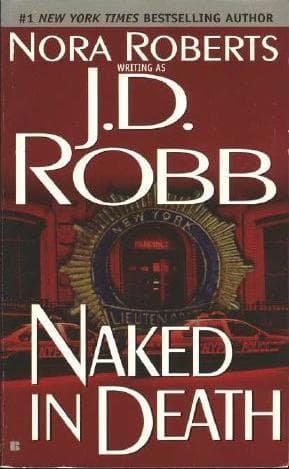
- Naked in Death
J.D. Robb
4.1 (167k) average on GoodreadsThrillerFirst book in the same series, establishing the characters and world.
- Conspiracy in Death
J.D. Robb
4.3 (34k) average on GoodreadsThrillerAnother installment in the 'In Death' series, featuring Eve Dallas solving a complex mystery.
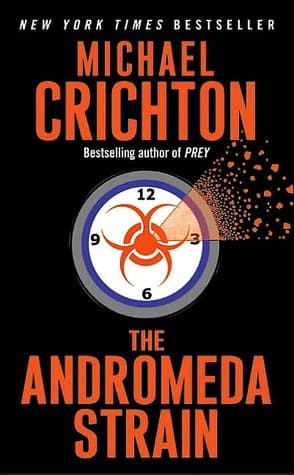
- The Andromeda Strain
Michael Crichton
3.9 (223k) average on GoodreadsThriller'The Andromeda Strain' excels in its hard science fiction and procedural intensity, focusing on a biological threat with a cold, almost clinical precision. 'Loyalty in Death,' while having strong procedural elements and a futuristic setting, balances these with a much stronger emphasis on character development and emotional arcs, particularly Eve's personal struggles and her relationship with Roarke. Crichton's work is often more about the 'how' of the threat and the scientific response, whereas Robb's delves deeper into the 'who' and the psychological impact on her protagonist.
- Gone Girl
Gillian Flynn
4.1 (2.3M) average on GoodreadsThrillerBoth 'Loyalty in Death' and 'Gone Girl' feature complex psychological thrillers, but their approaches differ significantly. Flynn's 'Gone Girl' is a masterclass in unreliable narration and psychological manipulation, with a dark, morally ambiguous tone and a focus on domestic dysfunction. 'Loyalty in Death,' while exploring psychological torment through its bomber and Eve's past, ultimately operates within a more traditional good-versus-evil framework, offering a more reassuring resolution. Robb's futuristic setting also allows for technological solutions that are absent in Flynn's contemporary realism.
- Angels & Demons
Dan Brown
3.9 (2.7M) average on GoodreadsThrillerA Harvard symbologist races through Rome's ancient sites, deciphering cryptic clues to unmask the Illuminati and stop a vengeful plot to destroy the Vatican with a stolen antimatter weapon.
- The Girl on the Train
Paula Hawkins
3.9 (2.1M) average on GoodreadsThrillerA woman’s fascination with a seemingly perfect couple she watches from her daily train commute leads her into a dark investigation when she witnesses something that shatters their idyllic image.



Enjoyed the summary?
A summary gives you the shape of the book. The book itself has the detail, the examples and the voice.
Find Loyalty in Death on AmazonAs an Amazon Associate, BookBrief earns from qualifying purchases. How we're funded