

Synopsis
Covers the whole plot, including the ending.
- Difficulty
- Medium
- Pacing
- Fast
- Mood
- Suspenseful, Tense, Clinical, Intense
- Read it if
- You enjoy high-stakes science thrillers with intricate scientific detail, a focus on biological threats, and a race against time.
- Skip it if
- You prefer character-driven narratives over plot-driven ones, or find detailed scientific explanations tedious.
The Andromeda Strain Plot Summary
Covers the whole plot, including the ending.
Project Scoop and the Piedmont Disaster
Near Piedmont, Arizona, the military satellite Scoop VII crashes. This satellite is part of Project Scoop, which collects alien microorganisms. Soon after its retrieval, a two-man military team, led by Captain Morton, finds every resident of Piedmont dead, except for an infant and an elderly man. The dead are frozen in their daily routines. Morton suspects a biological contaminant and issues a Code Red, activating Wildfire, a secret biological containment facility. The surviving infant and old man are taken to Wildfire, while a team prepares to recover the satellite and the deceased townspeople.
Activation of Project Wildfire
After the Code Red from Piedmont, Project Wildfire activates. This classified underground facility, designed to study and contain alien biological threats, calls its key scientific team. Dr. Jeremy Stone, a Nobel laureate in bacteriology and the project's lead, is summoned. He contacts the other core members: Dr. Charles Burton, a pathologist; Dr. Peter Leavitt, a clinical microbiologist; and Dr. Mark Hall, a surgeon and the team's designated 'odd man out' due to a security protocol. These four are briefed on the Piedmont incident and the potential for a deadly alien organism, preparing for the challenge.
Arrival at Wildfire and Initial Assessment
The Wildfire team, Drs. Stone, Burton, Leavitt, and Hall, arrive at the desolate Nevada desert site and go deep underground to the multi-level, self-destructing Wildfire facility. Their entry involves a strict, multi-stage decontamination process, stripping them of personal items and sterilizing them. Inside, they are briefed on preliminary findings from Piedmont: the rapid deaths, the two survivors, and the retrieved Scoop VII satellite. Their immediate task is to analyze the satellite, Piedmont samples, and blood from the survivors, all under strict containment, to identify the unknown agent.
Retrieval of Scoop VII and Autopsies
A specialized recovery team, working under extreme biohazard conditions, retrieves the Scoop VII satellite from Piedmont and takes it to Wildfire. Meanwhile, Wildfire scientists begin autopsies on the dead Piedmont residents. Dr. Burton, the pathologist, finds no visible trauma or disease. The victims' blood is dark and clotted, but the cause of death is unclear. The only consistent finding is apparent spontaneous blood coagulation. The team also begins studying the retrieved satellite, carefully opening it in a sterile environment, hoping to find the contamination source within its mechanisms, while maintaining absolute isolation.
The Andromeda Organism Revealed
After meticulous analysis of samples from the Scoop VII satellite, Dr. Stone and Dr. Leavitt discover a microscopic, non-cellular, crystalline organism. They name it 'Andromeda.' Initial tests show Andromeda is a rapidly mutating, protein-based life form that converts energy directly, without metabolic waste. It 'grows' by incorporating matter from its environment. Its simple yet adaptable structure is unique. The team hypothesizes that Andromeda caused the Piedmont residents' blood to coagulate instantly, leading to their rapid deaths. Andromeda's unique properties, including its ability to bypass standard biological processes, challenge the scientific team.
Studying the Survivors
Drs. Hall and Leavitt study the two survivors from Piedmont: an elderly man named Peter Jackson and an infant. Jackson is a cantankerous alcoholic; the baby seems unaffected. Blood tests show Jackson's blood pH is highly acidic, while the baby's pH is highly alkaline. The scientists theorize that Andromeda, a pH-sensitive organism, could not thrive or replicate in either extreme. Jackson's chronic alcoholism caused his acidosis, and the baby's rapid metabolism kept its blood alkaline. This discovery suggests a potential weakness for Andromeda and offers hope for a countermeasure, while also showing the organism's unique biological interactions.
Andromeda's Mutation and Escape
During experiments, Andromeda mutates, changing from a blood-clotting agent to a form that degrades synthetic rubber and plastic. This new mutation allows it to escape its containment vessel within the Wildfire lab. The organism spreads through the facility's ventilation system, causing critical equipment failures, including the destruction of seals and filters. The automated defense systems interpret these breaches as a full containment failure, triggering a countdown to the facility's self-destruct sequence, designed to incinerate Andromeda and the entire lab to prevent global contamination. Panic spreads as scientists realize the danger.
The Self-Destruct Countdown
With Andromeda spreading and the self-destruct sequence initiated, Dr. Mark Hall, designated as the 'odd man out' by the Wildfire protocol (meaning he is the only one who can abort the self-destruct in case of a computer error), is the only hope. He must navigate the increasingly dangerous and contaminated levels of the facility, bypassing automated defenses and the spreading Andromeda, to reach a central control console on the lowest level. The other scientists, trapped in their labs, provide guidance via intercom but cannot directly help him. The clock ticks down, threatening to incinerate the facility and potentially release a mutated, even more dangerous Andromeda into the atmosphere.
Hall's Desperate Race
Dr. Hall's journey through the Wildfire facility is a perilous race against time. He encounters numerous automated security measures, including lasers and tranquilizer darts, which he must disable or avoid. The spreading Andromeda has compromised various systems, making his path unpredictable and dangerous. He faces extreme claustrophobia and physical exertion, barely making it through rapidly closing doors and contaminated sections. His colleagues, Dr. Stone, Burton, and Leavitt, monitor his progress and offer crucial advice, calculating the fastest, safest routes. Hall's determination is tested as he navigates the complex, multi-level maze, knowing the world's fate rests on his success.
Aborting the Self-Destruct
After a harrowing descent, Dr. Mark Hall reaches the central control console on Wildfire's lowest level. With seconds left on the countdown, he inputs the correct abort code, stopping the self-destruct sequence. The facility is saved from incineration, and with it, the potential release of aerosolized Andromeda into the atmosphere. Exhausted but relieved, Hall tells his colleagues of his success. The immediate threat of the self-destruct is averted, but the Andromeda strain remains a formidable danger, though now contained within Wildfire, allowing scientists to regroup and continue efforts to understand and neutralize it.
Andromeda's Final Mutation and Departure
With the self-destruct aborted, the Wildfire team reassesses Andromeda. They discover the organism has undergone another, unexpected mutation. This time, Andromeda has transformed into a non-pathogenic, inert form. It is no longer harmful to biological life and cannot degrade synthetic materials. The organism, having apparently exhausted its capacity for harmful mutation or having adapted to an 'ideal' form, begins to disperse. It drifts harmlessly into the upper atmosphere, where it is expected to dissipate and become inert. The crisis ends, not by human intervention, but by Andromeda's own unpredictable evolution, leaving the scientists with relief and wonder.
Aftermath and Lessons Learned
After the Andromeda crisis, the Wildfire team reflects on the near-global catastrophe. Dr. Stone reports their findings to the President and other government officials, emphasizing the extreme danger of alien contamination and the unpredictable nature of alien life. The incident highlights the need for better sterilization protocols for all returning space probes and the importance of facilities like Wildfire, despite their risks. The scientists grapple with Andromeda's spontaneous mutation into a harmless form, acknowledging that humanity was saved by chance rather than scientific mastery. The experience leaves them with respect for the unknown and a sober understanding of humanity's vulnerability to alien threats.
The Andromeda Strain Characters
Dr. Jeremy Stone
Protagonist
Nobel laureate and lead scientist of Project Wildfire.
Dr. Jeremy Stone is a highly respected biophysicist and Nobel Prize winner, known for his brilliant mind and unwavering commitment to scientific integrity. He is the driving force behind Project Wildfire, having foreseen the potential dangers of extraterrestrial contamination. Stone is meticulous, logical, and often struggles with the bureaucratic and military aspects of the project, prioritizing scientific discovery and containment above all else. He carries the immense responsibility of leading the team and advising the government on the gravest biological threat imaginable.
Relationships: Dr. Charles Burton (colleague and fellow Wildfire scientist); Dr. Peter Leavitt (colleague and fellow Wildfire scientist); Dr. Mark Hall (colleague and fellow Wildfire scientist)
Dr. Charles Burton
Supporting
Pathologist on the Wildfire team.
Dr. Charles Burton is a distinguished pathologist, brought into Project Wildfire for his expertise in disease and tissue analysis. He is methodical and thorough, often focusing on the tangible evidence and the immediate biological effects of the Andromeda strain. Burton is generally calm under pressure but experiences moments of intense frustration as Andromeda defies conventional medical understanding. His role is crucial in performing autopsies and analyzing the physical impact of the organism on human biology, providing vital clues about its mechanism of action.
Relationships: Dr. Jeremy Stone (colleague and team leader); Dr. Peter Leavitt (colleague); Dr. Mark Hall (colleague)
Dr. Peter Leavitt
Supporting
Clinical microbiologist on the Wildfire team.
Dr. Peter Leavitt is a brilliant clinical microbiologist with a specialization in infectious diseases. He is the most susceptible to illness among the team, a crucial detail that complicates his role within the high-stakes environment of Wildfire. Leavitt is insightful and often provides crucial theoretical leaps in understanding Andromeda's behavior. Despite his physical vulnerability, he remains dedicated and plays a key role in identifying Andromeda's unique properties and its interactions with various biological conditions, particularly regarding the survivors.
Relationships: Dr. Jeremy Stone (colleague and team leader); Dr. Charles Burton (colleague); Dr. Mark Hall (colleague)
Dr. Mark Hall
Protagonist
Surgeon and the 'odd man out' of the Wildfire team.
Dr. Mark Hall is a skilled surgeon, chosen for the Wildfire team due to a unique 'odd man out' protocol, which dictates that the person least likely to have children should be able to abort the facility's self-destruct sequence. He is pragmatic, resourceful, and often feels like an outsider among the pure scientists. Hall's surgical background gives him a practical, problem-solving approach to the crisis. He becomes the unexpected hero, tasked with the perilous mission of navigating the contaminated facility to prevent global catastrophe, demonstrating immense courage and determination.
Relationships: Dr. Jeremy Stone (colleague and team leader); Dr. Charles Burton (colleague); Dr. Peter Leavitt (colleague)
Peter Jackson
Supporting
One of two survivors from Piedmont.
Peter Jackson is an elderly, cantankerous alcoholic resident of Piedmont. He is one of only two survivors of the Andromeda outbreak in the town. His chronic alcoholism has led to a highly acidic blood pH, which, unbeknownst to him, makes him inhospitable to the Andromeda organism. Despite his gruff demeanor and initial resistance to cooperation, his unique physiological state provides a crucial clue to the Wildfire team about Andromeda's vulnerabilities. He represents the unpredictable factors that can influence biological interactions.
Relationships: Wildfire Team (subject of study)
The Infant
Supporting
The other survivor from Piedmont.
The infant is the second survivor from Piedmont, found unharmed amidst the tragedy. Its rapid metabolism and naturally alkaline blood pH render it immune to the Andromeda strain, much like Peter Jackson. The infant's survival further reinforces the theory of Andromeda's pH sensitivity. It represents innocence and the arbitrary nature of survival in the face of an unknown biological threat. Its presence underscores the indiscriminate nature of the organism and the fragility of life.
Relationships: Wildfire Team (subject of study)
Captain Morton
Mentioned
Military officer who discovers the Piedmont disaster.
Captain Morton is the military officer who leads the initial recovery team to Piedmont. He is the first to discover the horrifying scene of the town's dead inhabitants and correctly identifies it as a Code Red biological threat. His quick thinking and adherence to protocol initiate the entire Wildfire response. Though his direct involvement in the scientific analysis is minimal, his initial actions are pivotal in setting the story in motion and ensuring the proper containment procedures are activated.
Relationships: Military Command (subordinate officer)
Andromeda Strain
Antagonist
The extraterrestrial, rapidly mutating microorganism.
The Andromeda Strain is the central antagonist of the story, an extraterrestrial, non-cellular, crystalline microorganism brought back by the Scoop VII satellite. It is characterized by its incredibly rapid mutation rate, its ability to directly convert energy without waste, and its initial mechanism of causing immediate blood coagulation. Andromeda is not sentient but acts as a relentless, evolving threat, defying all conventional biological understanding and posing an existential danger to humanity. Its unpredictable nature is its most terrifying weapon.
Relationships: Humanity (existential threat)
The Andromeda Strain Themes
The Dangers of Unforeseen Contamination
A central theme explores humanity's vulnerability to biological threats from beyond Earth, especially when precautions are not fully understood or implemented. Project Scoop and its disaster in Piedmont show the catastrophic results of bringing back unknown organisms without absolute containment. The deaths in Piedmont, and Andromeda's escape within Wildfire, warn that even advanced scientific protocols can fail against an alien life form. This underscores the deep responsibility of space exploration.
“We are like men who have been asked to study a game of chess played by beings from another dimension. We see the pieces move, but we don't know the rules.”
The Limits of Scientific Control and Prediction
Despite the brilliant minds and advanced technology at Wildfire, the Andromeda Strain consistently defies the scientists' understanding and control. Its rapid mutation, from a blood coagulant to a rubber-eating airborne agent, and finally to a harmless form, shows life's inherent unpredictability, especially alien life. The scientists constantly react to Andromeda's evolution rather than controlling it. The fact that humanity is saved not by a cure but by Andromeda's own spontaneous, benign mutation emphasizes the limits of human knowledge and the role of chance in survival, challenging the idea of scientific mastery.
“The single most important fact about Andromeda was that it was constantly changing.”
The Balance Between Secrecy and Public Safety
Project Wildfire operates under extreme secrecy, necessary to prevent mass panic and maintain national security. However, this secrecy also creates vulnerabilities, such as the limited number of personnel who understand the full scope of the threat and the complex self-destruct mechanism. The narrative explores the ethical dilemmas of withholding information from the public, even when it is deemed for their own good. The potential for a contained disaster to become a global pandemic due to a single protocol failure (like Hall's 'odd man out' role) underscores the fine line between protecting sensitive information and ensuring robust, transparent safeguards for humanity.
“The Wildfire project was perhaps the most secret government operation in the history of the United States.”
Humanity's Vulnerability and Resilience
The novel powerfully shows humanity's fragility when faced with an unknown, rapidly evolving biological threat. The instant deaths in Piedmont illustrate how quickly civilization can collapse. Yet, it also highlights human resilience through the Wildfire team's dedication and courage. Despite overwhelming odds, personal fears, and constant danger, the scientists persist. Dr. Hall's desperate journey through the self-destructing facility exemplifies this resilience, demonstrating the human capacity for heroism and self-sacrifice in the face of existential danger, even when salvation ultimately comes from an external, unpredictable factor.
“Man has always assumed that he is the highest form of life on Earth. But what if there are other forms, more basic, more primitive, that are also more successful?”
Plot Devices & Literary Techniques
The Self-Destruct Mechanism
A fail-safe designed to prevent global contamination, but also a ticking clock.
The Wildfire facility is equipped with a nuclear self-destruct mechanism, designed as a last resort to incinerate any uncontained extraterrestrial biological agent. This device serves as a powerful ticking clock, creating immense tension during the climax of the novel. It highlights the extreme measures deemed necessary to protect humanity, but also introduces a terrifying secondary threat: the potential for accidental detonation or, worse, the release of an aerosolized, mutated Andromeda if the explosion were to occur in the atmosphere. Its existence forces the 'odd man out' protocol into play, directly driving Dr. Hall's perilous race against time.
The 'Odd Man Out' Protocol
A unique security measure designed to prevent a false positive self-destruct.
The 'odd man out' protocol is a crucial security measure within Project Wildfire. It dictates that only one member of the core scientific team, chosen for being least likely to have children (to minimize emotional bias in a crisis), has the authority to abort the self-destruct sequence. This device introduces Dr. Mark Hall as the unlikely hero and creates a desperate, personal mission for him during the climax. It underscores the military's cold, logical approach to extreme threats, prioritizing the survival of the species over individual lives, but also acknowledging the fallibility of automated systems.
Rapid Mutation of Andromeda
The organism's unpredictable evolution drives the plot and challenges scientific understanding.
Andromeda's ability to mutate rapidly and unpredictably is a central plot device. It constantly forces the scientists to reassess their understanding and strategies, preventing them from developing a stable countermeasure. This mutation not only changes the organism's lethality (from blood coagulant to rubber-eating airborne agent) but also its very nature, ultimately leading to its benign transformation. This device highlights the theme of the limits of scientific control and prediction, making Andromeda a truly formidable and unknowable antagonist that propels the narrative through a series of escalating crises and unexpected resolutions.
The Five-Level Wildfire Facility
A highly secure, complex underground laboratory that becomes a maze.
The Wildfire facility itself acts as a significant plot device. Its multi-level, self-contained, and highly automated design initially provides a sense of security and scientific prowess. However, as Andromeda escapes and the self-destruct sequence is initiated, the facility transforms into a dangerous, claustrophobic maze. Its intricate systems, automated defenses, and contamination zones become obstacles for Dr. Hall. The progressively increasing security levels are designed to contain a threat but also serve to isolate the team and amplify the sense of urgency and danger during the climactic chase to abort the detonation.
The Andromeda Strain Quotes
“The human brain has 10^10 neurons. Each neuron is connected to 10^4 others. That means there are 10^14 connections in the brain. The number of possible states of the brain is therefore 10^10^14. This is a number so large that it is beyond comprehension.”
“There are some things we aren't meant to know. And some things we are meant to forget.”
“Pure research is a myth. There's always an application, even if it's not immediately apparent.”
“The greatest danger, in a situation like this, is not the unknown. It's the known that turns out to be wrong.”
“We're not dealing with an organism that evolved on this planet. We're dealing with something entirely alien.”
“It's not enough to be clever. You have to be right.”
“The crisis is not what you think it is. It's never what you think it is.”
“Human beings have a talent for survival. But sometimes, that talent can be a liability.”
“Every time we think we have it cornered, it changes. It adapts.”
“The trouble with science is that it's done by people. And people make mistakes.”
“We are fighting an enemy that doesn't play by our rules, doesn't even know we have rules.”
“The universe is full of surprises. Most of them unpleasant.”
“In the end, it always comes down to the data. No matter how much you want to believe something else.”
“Control is an illusion. Especially when dealing with something you don't understand.”
Quiz
10 questions on the plot and the characters. Each answer comes with a short explanation.
Question 1
Which of the following describes the initial discovery made in the town of Piedmont after the satellite's return?
- The town was completely deserted with no signs of life.
- The streets were littered with the dead bodies of the town's inhabitants.
- The inhabitants were found in a catatonic state, unresponsive but alive.
- The town had been destroyed by an unknown explosion.
Show answer
B. The streets were littered with the dead bodies of the town's inhabitants. The back cover explicitly states that 'the streets are littered with the dead bodies of the town's inhabitants, as if they dropped dead in their tracks.'
Question 2
What was the primary concern of the pre-eminent biophysicists that led to the development of the satellite program?
- The potential for alien invasion through space probes.
- The inadequacy of current sterilization procedures for returning space probes.
- The risk of space debris damaging Earth's atmosphere.
- The need to develop new propulsion systems for space travel.
Show answer
B. The inadequacy of current sterilization procedures for returning space probes. The back cover states that biophysicists warned 'current sterilization procedures applied to returning space probes may be inadequate to guarantee uncontaminated re-entry to the atmosphere.'
Question 3
How many satellites were initially sent into the outer fringes of space to collect organisms and dust?
- Seven
- Seventeen
- Twenty-seven
- Seventy
Show answer
B. Seventeen The back cover specifies that 'seventeen satellites are sent into the outer fringes of space'.
Question 4
What was the stated purpose of sending the seventeen satellites into space?
- To establish a communication network.
- To test new navigation systems.
- To collect organisms and dust for study.
- To monitor solar flare activity.
Show answer
C. To collect organisms and dust for study. The back cover mentions the satellites were sent 'to collect organisms and dust for study'.
Question 5
What is the approximate distance from the satellite landing site to the town of Piedmont?
- Two miles
- Seven miles
- Twelve miles
- Twenty miles
Show answer
C. Twelve miles The back cover states, 'Twelve miles from the landing site, in the town of Piedmont, a shocking discovery is made.'
Question 6
The warning from the biophysicists about sterilization procedures was given how long before the satellite's return and the Piedmont incident?
- One year
- Two years
- Five years
- Immediately before
Show answer
B. Two years The back cover notes, 'Two years later, seventeen satellites are sent into the outer fringes of space...' This 'two years later' refers to the period after the initial warning.
Question 7
Based on the back cover, what type of location did the one returning satellite land in?
- A bustling city center.
- A remote mountainous region.
- A desolate area of Arizona.
- An ocean.
Show answer
C. A desolate area of Arizona. The back cover states that the satellite fell to earth, 'landing in a desolate area of Arizona.'
Question 8
What is the implied central theme or danger presented by the premise of 'The Andromeda Strain'?
- The dangers of space exploration itself.
- The potential catastrophic consequences of extraterrestrial biological contamination.
- The inherent flaws in government scientific research.
- The unpredictable nature of satellite technology.
Show answer
B. The potential catastrophic consequences of extraterrestrial biological contamination. The entire premise revolves around the biophysicists' warning about 'uncontaminated re-entry' and the subsequent deaths in Piedmont, strongly implying the danger of extraterrestrial biological contamination.
Question 9
The back cover suggests that the deaths in Piedmont occurred in what manner?
- They were killed in their sleep.
- They died after a prolonged illness.
- They dropped dead in their tracks.
- They were evacuated before succumbing.
Show answer
C. They dropped dead in their tracks. The back cover explicitly states the bodies were found 'as if they dropped dead in their tracks.'
Question 10
Considering the genre and back cover description, what kind of scientific discipline would be most crucial for the protagonists in this story?
- Astrophysics
- Geology
- Microbiology/Virology
- Mechanical Engineering
Show answer
C. Microbiology/Virology Given the 'uncontaminated re-entry' warning, the collection of 'organisms and dust for study,' and the mass deaths, understanding microscopic life (microbiology/virology) would be paramount to identify and combat any potential extraterrestrial pathogen.
The Andromeda Strain FAQ
What is Project Scoop and what is its primary objective?
Project Scoop is a top-secret U.S. government initiative to collect extraterrestrial microorganisms from the upper atmosphere using specialized satellites. Its primary objective is to study potential alien life forms and assess any biological threats they might pose to Earth, following a prior warning about inadequate sterilization protocols for returning space probes.
How is the Andromeda organism initially discovered and what are its immediate effects on Piedmont?
The Andromeda organism is discovered when Scoop VII, one of the Project Scoop satellites, crash-lands near Piedmont, Arizona. Shortly after, the entire town's population, except for an old man and a crying baby, is found dead in their tracks, exhibiting rapid blood coagulation and suffocation, indicating an incredibly virulent and fast-acting biological agent.
Who are the key scientists assembled at Wildfire and what are their respective specializations?
The key scientists at the Wildfire underground laboratory are Dr. Jeremy Stone (microbiologist and project lead), Dr. Charles Burton (pathologist), Dr. Peter Leavitt (clinical microbiologist/epidemiologist), and Dr. Mark Hall (surgeon). Each brings critical expertise in microbiology, disease analysis, and emergency medicine, essential for identifying and containing the Andromeda strain.
What is the significance of the two survivors from Piedmont, Peter Jackson and the infant Jamie Ryerson?
The two survivors, the alcoholic Peter Jackson and the infant Jamie Ryerson, are crucial because they provide the first clues to Andromeda's nature. Jackson's altered blood pH, caused by his alcoholism, and Ryerson's constant crying, leading to hyperventilation and alkalosis, somehow made them resistant to the organism's immediate lethal effects, challenging the scientists' initial assumptions about its lethality.
What is the Wildfire facility and what are its security protocols?
Wildfire is a highly classified, five-level underground biological containment laboratory designed to study extraterrestrial pathogens. Its security protocols include multiple decontamination stages, an automated self-destruct mechanism involving a nuclear device to sterilize the facility in case of a breach, and a strict 'odd-man-out' contingency requiring Dr. Hall, as the unmarried scientist, to be present for the self-destruct sequence.
How does the Andromeda Strain's mechanism of action evolve during the story?
Initially, Andromeda causes rapid blood coagulation and death by effectively 'clotting' the victims' blood. However, it later mutates to a non-lethal form that degrades plastic and rubber, including vital seals in the Wildfire facility. This mutation, while less immediately deadly to humans, poses a new threat by compromising containment and potentially releasing the organism into the environment.
What is the 'odd-man-out' protocol and why is Dr. Hall central to it?
The 'odd-man-out' protocol is a security measure for the Wildfire self-destruct sequence, requiring a scientist who is not married and has no dependents to be present to activate it. Dr. Hall is central to this because he is the only unmarried member of the team, making him the designated individual to ensure the nuclear detonation in the event of an irreversible containment breach, a morally complex decision.
What critical error do the scientists make regarding the organism's containment and how is it resolved?
The critical error is the organism's mutation from a deadly form to one that degrades synthetic materials like rubber and plastic, which are used in many of Wildfire's seals and equipment. This leads to a containment breach through degraded seals. The resolution comes when Dr. Hall realizes the organism's new form is harmless to humans and the self-destruct sequence must be stopped, leading to a frantic race against time.
What is the significance of the organism's interaction with the atmosphere?
The Andromeda Strain is initially deadly in its terrestrial form, causing rapid blood coagulation. However, upon exposure to the oxygen-rich atmosphere outside the contained environment, it undergoes a rapid mutation. This mutation renders it harmless to humans but gives it the ability to degrade synthetic materials, revealing its adaptability and the unpredictable nature of extraterrestrial life.
How does the isolation and high-pressure environment of Wildfire affect the scientists' decision-making and psychological states?
The extreme isolation and constant threat of a global pandemic significantly heighten the scientists' stress and anxiety, leading to fatigue and strained interpersonal dynamics. This pressure directly impacts their decision-making, as seen in their initial misinterpretations of Andromeda's behavior and the desperate race to prevent the nuclear self-destruct, highlighting the psychological toll of such high-stakes work.
Discuss the ethical dilemmas faced by the scientists, particularly concerning the nuclear self-destruct option.
The scientists face profound ethical dilemmas, most notably the decision to activate the nuclear self-destruct, which would destroy the facility and potentially a large swath of Arizona, to prevent a global pandemic. This forces them to weigh the lives of thousands against the potential extinction of humanity, a heavy moral burden, especially for Dr. Hall, who is tasked with its activation.
How does the novel explore the theme of human fallibility in the face of scientific crisis?
The novel consistently highlights human fallibility through the scientists' initial misjudgments, the unforeseen mutations of Andromeda, and the near-catastrophic activation of the self-destruct sequence. Despite their intelligence and advanced technology, their biases, incomplete data, and the unpredictable nature of the organism lead to numerous errors, underscoring the limits of human control in complex scientific crises.
What psychological impact does Dr. Stone's leadership style have on the team, particularly during moments of crisis?
Dr. Stone's leadership style is characterized by his intense focus and occasional authoritarianism, driven by his deep understanding of the threat. While his expertise is invaluable, his demanding nature and occasional secrecy, such as his prior knowledge of the 'odd-man-out' protocol, can create tension and distrust within the team, especially when they are under extreme pressure.
What is the ultimate message about humanity's relationship with the unknown and extraterrestrial life?
The novel suggests that humanity's relationship with the unknown, especially extraterrestrial life, is fraught with peril and unpredictability. It warns against hubris in scientific exploration, emphasizing that even with advanced technology, our understanding is limited, and unforeseen consequences can arise from interactions with alien organisms, highlighting our vulnerability and the need for extreme caution.
How does the ending of the novel, with Andromeda's mutation, challenge conventional notions of biological threats?
The ending, where Andromeda mutates from a lethal blood coagulant to a harmless, plastic-eating organism, profoundly challenges conventional notions of biological threats. It demonstrates that alien life might not conform to Earth-based biological principles and that a threat can evolve or diminish in unexpected ways, making prediction and containment incredibly difficult and highlighting biological unpredictability.
Discuss the novel's portrayal of government and military involvement in scientific research.
The novel portrays government and military involvement as essential for funding and implementing large-scale scientific projects like Project Scoop and Wildfire, but also as a source of potential overreach and bureaucracy. Their primary concern is national security, which sometimes clashes with pure scientific inquiry, leading to secrecy and high-stakes protocols like the nuclear self-destruct, which can complicate scientific progress.
What broader societal warnings or criticisms does 'The Andromeda Strain' offer about scientific progress and its potential dangers?
'The Andromeda Strain' offers a stark warning about the potential dangers of unchecked scientific ambition and the unforeseen consequences of technological advancement. It criticizes the hubris in believing humanity can fully control or understand complex biological systems, especially alien ones, and emphasizes the need for rigorous safety protocols and ethical considerations in scientific exploration to prevent catastrophic outcomes.
How does the novel's use of scientific detail contribute to its realism and sense of dread?
The novel's meticulous use of scientific detail, from descriptions of sterile environments to complex biological processes and computer systems, creates a profound sense of realism. This scientific authenticity grounds the narrative, making the threat of the Andromeda Strain feel incredibly plausible and intensifying the reader's dread by blurring the lines between fiction and potential reality, amplifying the stakes.
About the author
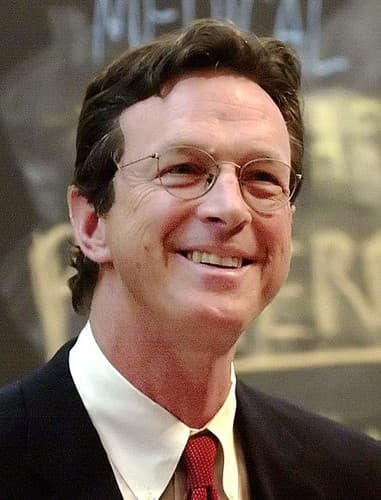
Michael Crichton was an American author and filmmaker known for his contributions to the science fiction genre. His notable works include Jurassic Park, The Andromeda Strain, Timeline, Sphere, Congo, and State of Fear, many of which explore themes of technology and its impact on society. Crichton's writing often blends scientific concepts with thrilling narratives, making him a significant figure in contemporary literature.
Similar books
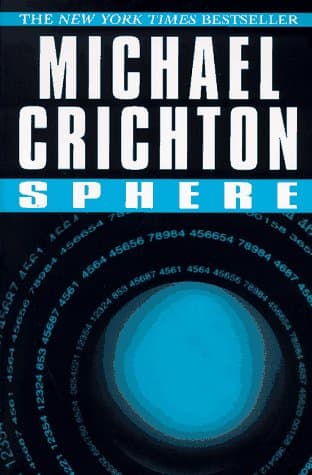
- Sphere
Michael Crichton
3.8 (167k) average on GoodreadsThrillerAnother Crichton novel featuring a team of scientists investigating an unknown, potentially dangerous object.
- The War of the Worlds
H.G. Wells
3.8 (245k) average on GoodreadsFantasyWells' novel focuses on large-scale alien invasion and societal panic, while Crichton's focuses on microscopic biological threats and the scientific containment response. Crichton emphasizes scientific protocol and internal struggle for containment, distinct from Wells' broader societal collapse and overt conflict.
- The Stand
Stephen King
4.3 (616k) average on GoodreadsThrillerWhile both deal with devastating plagues, King's novel delves into societal breakdown, supernatural elements, and a battle between good and evil. Crichton's approach is strictly scientific and technological, focusing on the immediate biological threat and the efforts to understand and contain it, without supernatural or overtly moralistic undertones.
- Angels & Demons
Dan Brown
3.9 (2.7M) average on GoodreadsThrillerA Harvard symbologist races through Rome's ancient sites, deciphering cryptic clues to unmask the Illuminati and stop a vengeful plot to destroy the Vatican with a stolen antimatter weapon.
- Gone Girl
Gillian Flynn
4.1 (2.3M) average on GoodreadsThrillerA wife's sudden disappearance on her fifth anniversary reveals a web of lies and psychological warfare, exposing the secrets within a seemingly perfect marriage.
- The Girl on the Train
Paula Hawkins
3.9 (2.1M) average on GoodreadsThrillerA woman’s fascination with a seemingly perfect couple she watches from her daily train commute leads her into a dark investigation when she witnesses something that shatters their idyllic image.





Enjoyed the summary?
A summary gives you the shape of the book. The book itself has the detail, the examples and the voice.
Find The Andromeda Strain on AmazonAs an Amazon Associate, BookBrief earns from qualifying purchases. How we're funded