
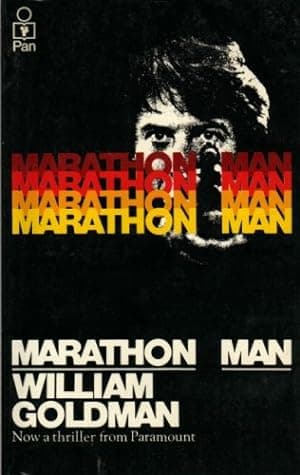
Synopsis
Covers the whole plot, including the ending.
- Difficulty
- Medium
- Pacing
- Fast
- Mood
- Suspenseful, Terrifying, Intense, Gritty
- Read it if
- You love high-stakes thrillers with a relentless pace, a compelling protagonist, and a truly terrifying villain.
- Skip it if
- You are sensitive to graphic torture scenes or prefer lighthearted mysteries.
Marathon Man Plot Summary
Covers the whole plot, including the ending.
The Setup: Babe and Doc's Lives
Thomas 'Babe' Levy is a graduate student at Columbia University, focused on history and marathon running. He is affected by his father's suicide, a historian disgraced during the McCarthy era. His older brother, Henry 'Doc' Levy, lives a more mysterious life, supposedly working for an oil company but often traveling to dangerous places and doing secret work. Despite their different lives, the brothers are close. Babe also begins a relationship with Elsa Opel, a foreign exchange student from Switzerland, who appears kind but has a hidden connection to Doc's work.
Doc's Final Mission
In Paris, Doc Levy barely escapes an assassination attempt by former Nazis. He is pursued by Dr. Christian Szell, 'Der Weisse Engel' (The White Angel), a former SS dentist from Auschwitz. Doc kills Szell's brother, who was part of the diamond smuggling, but Doc is mortally wounded. Before dying, Doc tries to contact Babe, leaving a cryptic message that hints at danger and hidden diamonds. This event starts the thriller, connecting Babe to a world of espionage and violence he never knew.
Babe's Introduction to the Underworld
After Doc's death, Babe is drawn into his brother's dangerous world. He is confronted by two mysterious men, Janeway and Karl, who claim to be U.S. government agents investigating Doc's death. They question Babe about Doc's activities and any information he might have about 'Scylla,' a code name for the diamonds. Babe, who knows nothing, is confused and terrified. These encounters escalate from questions to physical threats, making it clear he is a target and his life is in danger. This forces him to face the reality of Doc's secret life.
The First Interrogation and Szell's Arrival
Dr. Christian Szell arrives in New York to get his stolen diamonds and arranges Babe's kidnapping. Szell, a calm and sadistic man, subjects Babe to a brutal interrogation with dental instruments, repeatedly asking, 'Is it safe?' Babe has no idea what Szell means and cannot answer, leading to more torture. This scene clearly shows Szell's cruelty and the high stakes. Babe's endurance is tested, but he still cannot give Szell the information he wants.
Escape and the Revelation of Elsa's Betrayal
Babe manages a difficult escape from Szell and his men. Fleeing through New York, he seeks refuge with Elsa, only to learn she is involved in the plot. Elsa, working for Szell, was tasked with getting close to Babe to get information about Doc and the diamonds. This betrayal destroys Babe's trust and makes him feel more isolated. He realizes everyone around him could be an enemy, and he cannot trust anyone. His escape is short-lived, as Szell's men soon recapture him.
The Reservoir and the Diamonds
Szell, believing Babe has the key to the diamonds, forces him to go with his men to a bank where Doc had a safe deposit box. The box contains a fortune in diamonds, stolen from Jews during the Holocaust. Babe, now understanding 'Scylla,' is forced to get them. This scene highlights the terrible origin of Szell's wealth and the scale of his past atrocities, making his pursuit of the diamonds even more monstrous. The diamonds represent not just wealth but also immense suffering and injustice.
The Library and the Showdown
Babe, now with the diamonds, escapes again and lures Szell to a confrontation at the New York Public Library. He creates a distraction, drawing attention to Szell, who is recognized by an elderly Jewish woman as 'Der Weisse Engel.' This public exposure of Szell's past as a Nazi war criminal adds tension and moral weight to the climax. The library, a symbol of knowledge and truth, becomes the place where a monstrous lie is revealed.
The Water Treatment Plant
The story's climax happens at a water treatment plant. Babe, using his marathon runner's endurance and quick thinking, leads Szell on a desperate chase. He uses his knowledge of the facility and the diamonds to turn the situation against Szell. In a dramatic sequence, Babe throws the diamonds into the water, forcing Szell to try and retrieve them. This act is both a tactic and a symbolic rejection of the blood money Szell desires. The water treatment plant, a place of purification, becomes the site of Szell's death.
Szell's Demise
As Szell tries to get the diamonds from the water, Babe uses the chance to attack him. In a final, brutal fight, Szell falls, impaling himself on his own retractable knife. His death is quick and violent, a fitting end for a man who caused so much suffering. With Szell gone, Babe's immediate torment ends, but the psychological scars remain. The diamonds, the source of so much evil, are scattered and lost, preventing them from being used again.
Aftermath and Reflection
Afterward, Babe is left to deal with the traumatic events. He has lost his brother, discovered the dark side of international espionage, and endured terrible torture. His innocence is gone, and his view of the world is changed forever. The novel ends with Babe thinking about his experiences, the question 'Is it safe?' now having a deep meaning. He survived, but at a great personal cost, leaving him to rebuild his life after the horrors he witnessed.
Marathon Man Characters
Thomas 'Babe' Levy
Protagonist
A graduate student and marathon runner thrust into a world of espionage.
Babe is a brilliant but somewhat naive history graduate student, haunted by his father's McCarthy-era suicide. He is an avid marathon runner, disciplined and driven, which serves as both an escape and a foundation for his physical and mental endurance. His initial innocence and academic focus are starkly contrasted with the brutal world he is forced to enter, revealing an inner strength and resourcefulness he never knew he possessed. He deeply loves his brother, Doc, and this familial bond is a primary motivator for his actions.
Relationships: Henry 'Doc' Levy (Devoted older brother); Elsa Opel (Romantic interest turned betrayer); Dr. Christian Szell (Tormentor and nemesis)
Henry 'Doc' Levy
Supporting
Babe's mysterious older brother, a covert operative involved in a diamond smuggling ring.
Doc is Babe's older brother, a charming and enigmatic man who ostensibly works for an oil company but is secretly a covert operative involved in a dangerous international diamond smuggling ring. He is fiercely protective of Babe and tries to shield him from his dangerous world. Doc is resourceful, intelligent, and capable of extreme violence, but also deeply loyal and loving towards his brother. His death is the catalyst for Babe's entanglement in the plot.
Relationships: Thomas 'Babe' Levy (Devoted younger brother); Dr. Christian Szell (Antagonist, involved in the diamond theft)
Dr. Christian Szell
Antagonist
A sadistic former Nazi dentist, known as 'Der Weisse Engel'.
Dr. Christian Szell is one of the most chilling villains in literature. A former SS dentist at Auschwitz, known as 'Der Weisse Engel' (The White Angel), he is a man of immense cruelty and sadism. His calm, precise demeanor masks a monstrous evil, particularly evident in his use of dental torture. He is obsessed with reclaiming his stolen diamonds, which represent his ill-gotten gains from the Holocaust. Szell is intelligent, ruthless, and utterly devoid of empathy, making him a formidable and terrifying adversary.
Relationships: Thomas 'Babe' Levy (Victim and ultimate vanquisher); Henry 'Doc' Levy (Target and victim of his diamond pursuit)
Elsa Opel
Supporting
Babe's seemingly innocent girlfriend, who is secretly working for Szell.
Elsa is a Swiss exchange student who develops a romantic relationship with Babe. She appears sweet, vulnerable, and genuinely interested in Babe, but she is, in fact, an operative working for Szell. Her role is to get close to Babe and extract information about Doc and the diamonds. Her betrayal is a significant blow to Babe, shattering his trust and highlighting the pervasive deception in his new reality. She is a pawn in a larger game, driven by fear or necessity.
Relationships: Thomas 'Babe' Levy (Romantic interest, then betrayer); Dr. Christian Szell (Employer/master)
Janeway
Supporting
A shadowy government agent who initially interrogates Babe.
Janeway is a mysterious and ambiguous figure, claiming to be a U.S. government agent. He is one of the first individuals to interrogate Babe after Doc's death, attempting to extract information about the diamonds. His methods are forceful and intimidating, blurring the lines between ally and adversary. He represents the murky world of intelligence agencies, where loyalties are unclear and motives are often hidden. He initially appears to be on Babe's side, but his actions are driven by self-interest and the desire to recover the diamonds.
Relationships: Thomas 'Babe' Levy (Interrogator/manipulator); Dr. Christian Szell (Rival in the pursuit of diamonds)
Karl
Supporting
One of Szell's brutal henchmen.
Karl is one of Szell's primary enforcers and henchmen. He is a physically imposing and brutal man, directly involved in Babe's kidnapping and torture. He embodies the physical threat posed by Szell's organization and is utterly loyal to his master. His presence underscores the constant danger Babe faces throughout his ordeal. He is a man of few words, but his actions speak volumes about his capacity for violence.
Relationships: Dr. Christian Szell (Loyal subordinate); Thomas 'Babe' Levy (Tormentor)
The Old Jewish Woman
Mentioned
A Holocaust survivor who recognizes Szell at the library.
This unnamed character plays a pivotal, albeit brief, role in the climax of the story. While at the New York Public Library, she recognizes Dr. Christian Szell as 'Der Weisse Engel' from Auschwitz. Her sudden and horrified recognition exposes Szell's true identity to the public, adding a layer of moral justice to the narrative. Her presence serves as a powerful reminder of Szell's horrific past and the enduring trauma of the Holocaust.
Relationships: Dr. Christian Szell (Victim's witness)
Marathon Man Themes
The Loss of Innocence
Babe Levy starts as a naive graduate student, focused on studies and running, protected from the world's harsh realities. His forced entry into a brutal world of espionage, torture, and murder destroys his innocence. He experiences betrayal from those he trusts, endures great pain, and is forced to commit violent acts to survive. This theme is central to his change, as seen in the dental torture scene where his sheltered life is brutally ended, leaving him forever altered.
“He had been safe. He would never be safe again.”
Survival and Resilience
Despite facing overwhelming odds, brutal torture, and constant threats, Babe shows great resilience and a strong will to survive. His background as a marathon runner gives him physical endurance and mental strength, helping him escape his captors and outsmart Szell. This theme is clear in his repeated escapes and his ability to endure Szell's sadistic interrogations, always looking for a chance to fight back. His survival shows the human spirit's ability to endure terror.
“He was a runner. He ran. It was what he did.”
The Pervasiveness of Evil
The novel explores how evil, especially the legacy of Nazism, can continue and reappear decades later. Dr. Christian Szell, a former SS dentist from Auschwitz, embodies this theme. His continued existence and pursuit of blood diamonds show that past atrocities have lasting effects. The theme also extends to the unclear motives of government agents, who are willing to sacrifice Babe for their goals, suggesting that evil can appear in different forms, not just obvious villainy.
“Is it safe?”
Identity and Legacy
Babe deals with the legacy of his father's suicide and his brother's mysterious life. His own identity is shaped by these figures, and his ordeal forces him to confront who he really is beyond being a student or a runner. The diamonds themselves represent a terrible legacy of the Holocaust, forcing characters to face their roles in either continuing or fighting against this dark history. Babe's journey is about forming his own identity despite overwhelming external pressures.
“You want to know who you are? You're a runner, Babe. You're a runner.”
Betrayal and Trust
A main theme is the destruction of trust. Babe initially trusts Elsa, only for her to betray him, working for Szell. The unclear motives of the government agents also create distrust. This theme highlights Babe's isolation as he realizes he cannot rely on anyone but himself. The betrayal is deeply personal and contributes to his loss of innocence, forcing him to be constantly cautious and question everyone's motives.
“She was beautiful, and she was a lie.”
Plot Devices & Literary Techniques
MacGuffin
The diamonds stolen by Szell from Holocaust victims.
The stolen diamonds serve as the central MacGuffin of the story. While their horrific origin (stolen from Jews during the Holocaust) adds significant thematic weight, their primary function in the plot is to drive the actions of most characters. Szell is obsessed with reclaiming them, Doc was involved in their transportation, and the government agents seek to recover them. Babe, initially unaware of their existence, becomes entangled in the conflict because of his perceived connection to them. The diamonds are the object of desire that propels the narrative forward.
The 'Is It Safe?' Question
Szell's chilling interrogation phrase.
The repeated question 'Is it safe?' acts as a powerful motif and a psychological torture device. It is initially meaningless to Babe, amplifying his terror and confusion during Szell's interrogations. As the story progresses, the phrase takes on deeper meaning, symbolizing not just the safety of the diamonds, but also Babe's shattered sense of security and the pervasive danger he faces. It becomes a shorthand for the loss of innocence and the impossibility of true safety in the world he now inhabits.
The Marathon Runner Metaphor
Babe's identity as a runner reflecting his endurance and pursuit.
Babe's identity as a marathon runner is more than just a character trait; it's a profound metaphor for his journey. His physical training and mental discipline as a runner directly translate to his ability to endure torture, escape his captors, and outlast Szell. The act of running symbolizes his relentless pursuit of answers, his flight from danger, and his ultimate endurance in the face of overwhelming odds. It highlights his resilience and his capacity to push through pain, both physical and psychological.
Flashbacks/Backstory
Details of Doc's and Szell's pasts are gradually revealed.
The novel utilizes backstory, particularly concerning Doc's covert activities and Szell's horrifying past as a Nazi dentist, to gradually reveal the layers of the conspiracy. These revelations are not presented upfront but are parceled out, often through fragmented memories or brief explanations, keeping the reader and Babe in suspense. This technique builds tension and slowly unveils the true scope and depravity of the situation, explaining the high stakes and the historical context of the conflict.
Marathon Man Quotes
“Is it safe?”
“The world is full of people who are very, very good at what they do. And those people tend to be quiet.”
“He knew about things. He was a knower.”
“You're a student, I'm a dentist. We're both in the business of pain.”
“He understood what it was to be a victim, and that was the beginning of his understanding of everything.”
“There are no good guys. There are no bad guys. There's just us.”
“Revenge is a dish best served cold, and this was ice-cold.”
“He wasn't a hero, not in the classic sense. He was just a man who had been pushed too far.”
“The past is never dead. It's not even past.”
“Sometimes you have to do things you don't want to do, just to survive.”
“He was a survivor. That's what he was. He had always been one.”
“The truth was a weapon, and sometimes it was the only one you had.”
“You run for your life, because that's all you've got left.”
“Fear was a constant companion, but it wasn't paralyzing. It was motivating.”
Quiz
10 questions on the plot and the characters. Each answer comes with a short explanation.
Question 1
What is Tom 'Babe' Levy's primary academic pursuit?
- Law
- History
- English Literature
- Political Science
Show answer
B. History Babe Levy is a graduate student studying history, specifically focusing on the causes of tyranny and totalitarianism.
Question 2
What is the name of Babe's older brother who visits him early in the novel?
- Doc
- Hank
- Karl
- Max
Show answer
A. Doc Babe's older brother is Henry 'Doc' Levy, who works for a mysterious government agency.
Question 3
What is the primary motivation behind the antagonist Szell's actions?
- Political power
- Revenge for past wrongs
- Financial gain from stolen diamonds
- Ideological commitment to Nazism
Show answer
C. Financial gain from stolen diamonds Szell, the 'White Angel,' is primarily motivated by the retrieval and sale of the diamonds he stole from Jewish victims during World War II.
Question 4
What specific method does Szell use to torture Babe to extract information?
- Waterboarding
- Electric shocks
- Dental drilling without anesthetic
- Sleep deprivation
Show answer
C. Dental drilling without anesthetic Szell infamously tortures Babe by drilling into his teeth, repeatedly asking the question, 'Is it safe?'
Question 5
What is the significance of the question 'Is it safe?' throughout the novel?
- It refers to the safety of Babe's academic career.
- It is Szell's code phrase to ascertain the security of his diamonds.
- It refers to Babe's emotional well-being after his father's suicide.
- It is a phrase used by Doc to signal danger to Babe.
Show answer
B. It is Szell's code phrase to ascertain the security of his diamonds. The question 'Is it safe?' is Szell's constant refrain during his torture of Babe, trying to find out if the diamonds he'd hidden are still secure.
Question 6
What is the profession of Babe's father, whose scandal-driven suicide haunts him?
- A famous athlete
- A renowned scientist
- A prominent economist
- A celebrated author
Show answer
C. A prominent economist Babe's father was a famous economist who committed suicide after a public scandal, leaving a lasting impact on Babe.
Question 7
Where does the climactic confrontation between Babe and Szell take place?
- In a crowded New York City park
- In a remote cabin in the woods
- At a water pumping station
- Inside a bank vault
Show answer
C. At a water pumping station The final showdown occurs at a water pumping station, where Babe disposes of the diamonds and ultimately confronts Szell.
Question 8
What is the ultimate fate of the diamonds Szell is trying to retrieve?
- They are recovered by the US government.
- They are stolen by another criminal organization.
- Babe throws them into the water, effectively destroying their value.
- Szell successfully retrieves them and escapes.
Show answer
C. Babe throws them into the water, effectively destroying their value. In a final act of defiance and a bid for survival, Babe throws the diamonds into the water at the pumping station, rendering them unrecoverable and worthless to Szell.
Question 9
What is the primary thematic connection between Babe's running and the events he endures?
- It symbolizes his desire to escape his past and outrun danger.
- It represents his pursuit of athletic glory.
- It is a distraction from his academic studies.
- It is a way for him to connect with his deceased father.
Show answer
A. It symbolizes his desire to escape his past and outrun danger. Babe's running is a central motif, symbolizing his constant attempt to outrun the trauma of his father's suicide and, later, the literal dangers presented by Szell and his associates.
Question 10
Which historical event is directly linked to Szell's past and the origin of the diamonds?
- The Cold War
- World War I
- The Holocaust
- The Vietnam War
Show answer
C. The Holocaust Szell is a former Nazi SS dentist who stole diamonds from Jewish victims during the Holocaust, making him a war criminal being sought by various parties.
Marathon Man FAQ
What is the central conflict that propels Babe Levy into the main plot of 'Marathon Man'?
The central conflict begins when Babe's older brother, Doc, a mysterious government agent, is murdered. This event, coupled with Doc's earlier request for Babe to hide a package, inadvertently draws Babe into the dangerous world of Christian Szell and his search for stolen diamonds, shattering Babe's academic and athletic life.
Who is Christian Szell, and what is his primary motivation in the story?
Christian Szell, known as 'der weiße Engel' (the White Angel), is a notorious Nazi war criminal who performed brutal dental experiments on Jewish prisoners at Auschwitz. His primary motivation in the story is to retrieve a vast fortune in diamonds that he had hidden away, which were initially stolen from his victims during the war.
What role does Elsa Opel play in Babe's initial involvement with the antagonists?
Elsa Opel initially appears to be Babe's love interest, a seemingly innocent Swiss student he meets at Columbia. However, she is secretly an agent working for Szell's organization, tasked with monitoring Babe because of his connection to Doc and the stolen diamonds, making her a deceptive entry point into his nightmare.
How does the iconic phrase 'Is it safe?' become a tool of torture and psychological terror?
The phrase 'Is it safe?' is used repeatedly by Szell during his torture of Babe, specifically during the infamous dental scenes where he drills into Babe's healthy teeth without anesthesia. Szell is not asking about physical safety but about the safety of the diamonds, using the ambiguity to inflict maximum psychological and physical torment.
What is the significance of Babe Levy's background as a marathon runner?
Babe's background as a marathon runner is significant both literally and metaphorically. Literally, his physical endurance and ability to keep running are crucial to his survival during chases and escapes. Metaphorically, it represents his relentless pursuit of truth and his internal struggle to outrun his past and the specter of his father's suicide.
What is the true nature of Doc's work, and how does it connect him to Szell?
Doc Levy, Babe's brother, works for 'The Division,' a covert government agency involved in intelligence and assassinations. He was involved in a long-standing arrangement with Szell to protect him in exchange for intelligence, but Szell broke the deal by attempting to retrieve his diamonds, leading to Doc's investigation and eventual murder.
What specific historical event forms the backdrop for Szell's diamond fortune?
Szell's diamond fortune originates from the systematic looting of Jewish victims during the Holocaust, specifically from their dental fillings and jewelry. This detail grounds Szell's villainy in real-world atrocities, emphasizing the horrific source of his wealth.
How does the 'Division' agency, particularly characters like Janeway, complicate the moral landscape of the story?
The 'Division' and Janeway complicate the moral landscape by revealing that government agencies are willing to protect horrific war criminals like Szell for their own strategic interests. Janeway's cold pragmatism and willingness to sacrifice Babe demonstrate the blurred lines between good and evil within the intelligence world.
What is the significance of the character Erhard and his relationship with Szell?
Erhard is Szell's loyal and ruthless right-hand man, a former SS officer who embodies the enduring loyalty and brutality of Szell's past. His presence highlights Szell's continued ability to command absolute obedience and execute violence, even decades after the war, underscoring the reach of his evil.
Analyze Babe Levy's psychological state throughout his ordeal, particularly his struggle with paranoia and trust.
Babe's psychological state rapidly deteriorates from an idealistic student to a deeply traumatized and paranoid individual. The constant betrayals, particularly by Elsa and the 'Division,' shatter his ability to trust anyone. He becomes hyper-vigilant, constantly questioning reality and who his true enemies are, a direct result of the intense psychological torture he endures.
How does the novel explore themes of inherited trauma through Babe's relationship with his father's suicide?
The novel explores inherited trauma through Babe's father's suicide, which casts a long shadow over his life, driving his need for academic and athletic excellence as a form of escape or atonement. This unresolved trauma makes him psychologically vulnerable, and his later experiences with torture and betrayal echo the sense of being overwhelmed and helpless that his father likely felt.
Discuss the psychological impact of the dental torture scene on Babe and its lasting effects.
The dental torture scene is a pivotal moment that shatters Babe's sense of physical and psychological safety. Szell's deliberate, excruciating pain, coupled with the repetitive 'Is it safe?' question, leaves Babe deeply traumatized. It instills a profound fear of vulnerability and authority, and fundamentally alters his perception of the world as a safe place, forcing him to embrace a brutal reality.
How does Babe's transformation from an innocent student to a killer reflect the novel's dark view of human nature?
Babe's transformation reflects the novel's dark view by showing how extreme circumstances can force even the most innocent into violence. His journey from an idealistic student to someone capable of killing Szell demonstrates that survival can necessitate abandoning moral purity, suggesting that violence begets violence and that the world can corrupt anyone, regardless of their initial character.
What is the ultimate fate of Christian Szell, and why is Babe's method of dealing with him significant?
Christian Szell ultimately dies at Babe's hands, forced to ingest his own diamonds at a water filtration plant. Babe's method of making Szell consume the very diamonds he coveted, the fruits of his horrific crimes, is profoundly significant. It represents a poetic justice, forcing Szell to literally choke on his greed and the suffering he caused, rather than simply being killed.
Does 'Marathon Man' offer a hopeful or cynical conclusion regarding justice and morality in a post-Holocaust world?
The conclusion of 'Marathon Man' is deeply cynical. While Szell is brought to a brutal form of justice by Babe, it's not through conventional legal means, and the corrupt 'Division' remains active. The novel suggests that true justice is often elusive, and individuals are left to mete out their own, highlighting a world where moral lines are blurred and institutions are compromised.
How does the novel use the setting of New York City to enhance the feeling of urban paranoia and isolation?
The novel uses New York City to enhance paranoia and isolation by portraying it as a labyrinthine, indifferent backdrop where danger can lurk anywhere. The vastness of the city, its anonymous crowds, and its hidden corners allow Szell's agents to operate unseen and for Babe to feel constantly hunted and alone, despite being surrounded by millions of people.
Discuss the ambiguity of Doc Levy's character – was he a hero, a villain, or something in between?
Doc Levy's character is ambiguous; he is neither a clear hero nor a villain. While he genuinely cares for Babe, his involvement with the 'Division' and his long-standing, morally compromised dealings with Szell place him in a grey area. He's a pragmatist operating in a dangerous world, embodying the moral compromises necessary for survival in intelligence work.
What statement does the book make about the lingering impact of historical atrocities like the Holocaust?
The book makes a powerful statement about the lingering impact of the Holocaust, demonstrating that its perpetrators and their ill-gotten gains can continue to haunt the present, decades later. Szell's continued existence and wealth show that historical evil doesn't simply disappear, but can resurface to corrupt new generations and challenge contemporary morality.
About the author

William Goldman was an American author and screenwriter known for his contributions to fiction. He is best recognized for his novel "Marathon Man," which explores themes of espionage and betrayal. Goldman also wrote screenplays for notable films, further establishing his influence in both literature and cinema.
Similar books
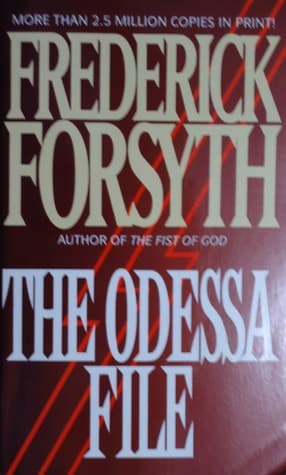
- The Odessa File
Frederick Forsyth
4.1 (55k) average on GoodreadsThrillerFeatures a young protagonist inadvertently drawn into a hunt for a Nazi war criminal.
- The Bourne Identity
Robert Ludlum
4.0 (397k) average on GoodreadsThrillerInvolves a protagonist in over his head, hunted by shadowy organizations, and piecing together a dangerous puzzle.
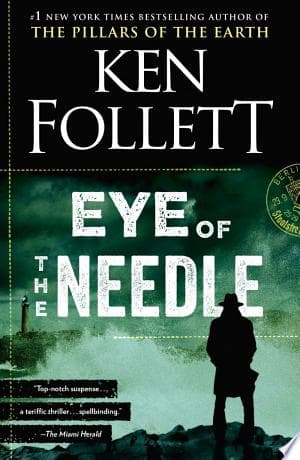
- Eye of the Needle
Ken Follett
4.2 (129k) average on GoodreadsThrillerA tense spy thriller with a relentless antagonist and a protagonist caught in a deadly game.
- The Day of the Jackal
Frederick Forsyth
4.3 (118k) average on GoodreadsThrillerWhile both are thrillers, Marathon Man focuses on the psychological horror and personal breakdown of an individual, whereas The Day of the Jackal emphasizes meticulous procedural detail and a detached, almost journalistic account of an assassination plot. Goldman prioritizes emotional impact; Forsyth, factual precision.
- Angels & Demons
Dan Brown
3.9 (2.7M) average on GoodreadsThrillerA Harvard symbologist races through Rome's ancient sites, deciphering cryptic clues to unmask the Illuminati and stop a vengeful plot to destroy the Vatican with a stolen antimatter weapon.
- Gone Girl
Gillian Flynn
4.1 (2.3M) average on GoodreadsThrillerA wife's sudden disappearance on her fifth anniversary reveals a web of lies and psychological warfare, exposing the secrets within a seemingly perfect marriage.



Enjoyed the summary?
A summary gives you the shape of the book. The book itself has the detail, the examples and the voice.
Find Marathon Man on AmazonAs an Amazon Associate, BookBrief earns from qualifying purchases. How we're funded