

Synopsis
Covers the whole plot, including the ending.
- Difficulty
- Medium
- Pacing
- Moderate
- Mood
- Suspenseful, Gritty, Historical, Intense, Obsessive
- Read it if
- You enjoy meticulously researched historical thrillers with a strong sense of realism, moral urgency, and a protagonist driven by a personal quest for justice.
- Skip it if
- You prefer fast-paced action over detailed procedural investigation and political intrigue, or are sensitive to graphic descriptions of Holocaust atrocities.
The Odessa File Plot Summary
Covers the whole plot, including the ending.
The Suicide of Salomon Tauber and Peter Miller's Discovery
On November 22, 1963, the day President Kennedy is assassinated, German freelance journalist Peter Miller hears an ambulance in Hamburg and investigates. He finds a police investigation at the apartment of an elderly Jewish Holocaust survivor, Salomon Tauber, who committed suicide. Peter bribes an officer to see the apartment. He discovers Tauber's diary, which describes his experiences in the Riga Ghetto and concentration camp, overseen by SS Captain Eduard Roschmann, known as the 'Butcher of Riga.' The diary also contains a recent entry expressing fear of an organization called ODESSA, which Tauber believed was protecting Roschmann. Miller decides to investigate.
Tracing Roschmann and Encountering ODESSA's Reach
Peter Miller begins his investigation by trying to find Eduard Roschmann, starting with official channels and then moving to unofficial ones. He visits the Central Office of the State Justice Administrations for the Investigation of National Socialist Crimes in Ludwigsburg but finds little help regarding Roschmann's current whereabouts. His inquiries quickly draw the attention of ODESSA (Organisation der ehemaligen SS-Angehörigen – Organization of Former SS Members), a powerful, secret network protecting former SS officers and furthering their aims. Miller soon realizes that his journalistic pursuit has put him in danger, as ODESSA's agents monitor and silence anyone who threatens their secrets.
An Attempt on Miller's Life and Meeting the Israeli Agents
As Peter investigates further, he becomes a target. ODESSA tries to assassinate him by sabotaging his car, but he escapes. This incident confirms the danger of his investigation. Shortly after, a group of Israeli agents approaches him, led by a man named Simon Wiesenthal (a fictionalized version of a similar character working with Mossad). They say they have monitored ODESSA for years and recognize the importance of Roschmann's file. They explain ODESSA's purpose: to protect former SS members and to acquire chemical and biological weapons for a potential future war against Israel. Recognizing Miller's courage, they recruit him to infiltrate the organization.
The Plan to Infiltrate and Miller's Training
The Israeli agents plan for Peter Miller, who resembles a deceased former SS grenadier named Rolf Brandt, to assume Brandt's identity. Brandt was a minor SS officer who served under Roschmann in Riga and was reported killed on the Eastern Front, though his body was never found. Miller trains rigorously, learning Brandt's biography, mannerisms, and SS protocols. He learns to forge documents, speak SS slang, and endure interrogation, preparing him to pass as a genuine former SS member seeking help from ODESSA. The goal is for him to get close enough to Roschmann to kill him and uncover ODESSA's full operational plans.
Entering the ODESSA Network
With forged papers and a new identity as Rolf Brandt, Peter Miller begins his infiltration. He uses a coded contact method from the Israelis to approach ODESSA. His story is that he is a former SS officer, now a truck driver, who needs a new identity and financial help from the organization. He passes the initial vetting process, convincing ODESSA operatives that he is Brandt. His knowledge of SS ranks, units, and shared experiences from Riga, memorized during training, helps him gain their trust. He is given a safe house and begins to be integrated into the network.
The Vetting Process and Near Exposure
Miller's infiltration is dangerous. ODESSA's security measures are extensive. He undergoes repeated interrogations, psychological profiling, and background checks. At one point, he is nearly exposed when an old SS comrade questions a detail from his 'past' as Rolf Brandt, remembering Brandt differently. Miller, quick-witted, deflects suspicion and maintains his cover, convincing his interrogators of a memory lapse due to wartime trauma. This close call shows the constant danger and the small margin for error in his mission, reinforcing ODESSA's ruthlessness.
Getting Closer to Roschmann and the Arms Deal
As Miller gains trust, he is assigned to various tasks, rising within the local ODESSA cell. He learns that Roschmann is a key figure in ODESSA's plans. Roschmann is orchestrating a project to acquire gyroscopes, a component for guiding advanced missiles, from a German electronics firm. These missiles are for Egypt, to be armed with chemical warheads, as part of a joint Arab-ODESSA initiative to destroy Israel. Miller realizes the scope of the threat and the urgency of his mission, as he is now directly involved in the logistics of this arms deal, bringing him closer to Roschmann.
The Encounter with Roschmann
Miller finally gets to meet Eduard Roschmann. He is taken to a secret location, a lavish villa, where Roschmann lives under a new identity. The encounter is tense. Miller, maintaining his cover as Rolf Brandt, acts subservient while fighting his desire for revenge for Salomon Tauber and others. He confirms Roschmann's identity and the man's lack of remorse for his past actions. During this meeting, Miller gathers intelligence about the gyroscope deal and the broader ODESSA network, while planning his moment to strike.
Miller's Revenge and the Unraveling of the Plot
During a subsequent meeting or a planned opportunity, Peter Miller confronts Eduard Roschmann. Driven by the memories from Tauber's diary and the atrocities, Miller kills Roschmann. The act is both personal revenge and the end of his mission. Following Roschmann's death, Miller transmits the intelligence about the gyroscope deal and the Egyptian missile project to his Israeli handlers. This information allows the Israelis to intervene and sabotage the arms deal, preventing the delivery of the weapons to Egypt. While Roschmann is dead and a major threat averted, the broader ODESSA network remains largely intact, its upper echelons still hidden.
The Aftermath and Loose Ends
With his mission accomplished, Peter Miller is extracted by the Israeli agents. He returns to his life as a journalist, changed by his experiences. The world remains largely unaware of the network of ODESSA, though its immediate plans for the chemical weapons are thwarted. The gyroscopes, for the missile guidance systems, are destroyed or diverted. The book concludes with the understanding that while one 'Butcher' has been brought to justice and a major plot foiled, the organization itself continues to exist, a threat in the shadows, waiting for another opportunity to pursue its agenda. Miller carries the weight of his actions and knowledge, a solitary figure who faced a powerful, evil force.
The Odessa File Characters
Peter Miller
Protagonist
A young, determined German journalist seeking justice.
Peter Miller is a 29-year-old freelance German journalist, initially driven by a strong sense of journalistic curiosity and later by a profound moral outrage. He is resourceful, courageous, and possesses a sharp wit, which serves him well in dangerous situations. His investigation into Salomon Tauber's suicide and diary transforms him from an ordinary reporter into an obsessed avenger. He is not ideologically driven by politics but by a deep-seated belief in justice and a personal revulsion towards the atrocities of the SS. His ability to adapt and think on his feet makes him an ideal candidate for infiltration.
Relationships: Salomon Tauber (Victim whose diary inspires Peter's quest for justice); Sigi (Girlfriend, initially unaware of Peter's dangerous mission); Israeli Agents (Mossad) (Recruiters and handlers during his infiltration)
Eduard Roschmann
Antagonist
The notorious 'Butcher of Riga' and a key figure in ODESSA.
Eduard Roschmann is a former SS Hauptsturmführer (Captain) and the commandant of the Riga Ghetto, infamous for his brutal cruelty and direct involvement in the murder of thousands of Jews. Known as the 'Butcher of Riga,' he is a chilling embodiment of Nazi evil, showing no remorse for his actions. After the war, he becomes a high-ranking member of ODESSA, living under a false identity and orchestrating the acquisition of gyroscopes for the Egyptian missile program. He is cunning, ruthless, and utterly devoid of empathy, making him a formidable and dangerous target for Miller.
Relationships: Salomon Tauber (Victim and chronicler of Roschmann's atrocities); Peter Miller (His ultimate nemesis and executioner); ODESSA leadership (Fellow conspirators and protectors)
Salomon Tauber
Supporting
A Holocaust survivor whose diary ignites Miller's investigation.
Salomon Tauber is an elderly Jewish Holocaust survivor living in Hamburg. His life is consumed by the trauma of his experiences in the Riga Ghetto under Eduard Roschmann. He meticulously documents his suffering and the atrocities committed in his diary. Driven to despair by the realization that Roschmann is not only alive but protected by a powerful organization (ODESSA), and fearing for his own safety, Tauber commits suicide. His diary, discovered by Peter Miller, serves as the catalyst for the entire plot, providing the initial proof and emotional impetus for Miller's dangerous quest.
Relationships: Eduard Roschmann (His tormentor in Riga); Peter Miller (The recipient of his posthumous plea for justice)
Sigi
Supporting
Peter Miller's loyal girlfriend, initially unaware of his true mission.
Sigi is Peter Miller's girlfriend, a kind and supportive young woman. She is initially unaware of the true extent of Peter's dangerous investigation into ODESSA. Her concern for Peter's safety and well-being provides a personal anchor for him amidst the escalating peril of his mission. While not directly involved in the espionage, her presence highlights Peter's personal stakes and the sacrifices he makes. She represents the normal life Peter leaves behind and hopes to return to, adding a human element to the high-stakes thriller.
Relationships: Peter Miller (Girlfriend)
General Streicher
Supporting
A high-ranking, influential figure within ODESSA.
General Streicher is a powerful, shadowy figure within ODESSA, holding a significant position of authority and influence. He is one of the architects of ODESSA's post-war strategy and plays a crucial role in protecting former SS members and advancing their political and military goals. Streicher is cunning, ruthless, and deeply committed to the Nazi ideology, even decades after the war. He oversees the vetting process for new members and is instrumental in the organization's broader schemes, including the acquisition of weapons for use against Israel. He represents the enduring power and reach of the ODESSA network.
Relationships: Eduard Roschmann (Co-conspirator in ODESSA's plans); Peter Miller (as Brandt) (One of the figures Miller must impress to gain trust)
Rolf Brandt
Mentioned
The deceased SS officer whose identity Peter Miller assumes.
Rolf Brandt is a minor, deceased SS grenadier who served under Roschmann in Riga. He was reported killed on the Eastern Front, but his body was never recovered, leaving a convenient gap in records. Peter Miller assumes Brandt's identity as part of the Israeli-devised plan to infiltrate ODESSA. Brandt's real biography, including his unit, service record, and personal details, is meticulously studied and adopted by Miller. His existence, or lack thereof, provides the perfect cover for Miller, allowing him to gain access to the secretive organization.
Relationships: Peter Miller (His identity is assumed by Miller); Eduard Roschmann (Served under him in Riga)
Klaus
Supporting
An ODESSA operative who helps vet and integrate Miller.
Klaus is an ODESSA operative, one of the first contacts Peter Miller makes when infiltrating the organization under the guise of Rolf Brandt. He is responsible for the initial vetting and integration of new 'recruits' into the network. Klaus is cautious and thorough, subjecting Miller to interrogations and background checks. He represents the mid-level functionaries of ODESSA, loyal to the cause and diligent in protecting the organization's secrets. His interactions with Miller are crucial in establishing Miller's credibility within the network.
Relationships: Peter Miller (as Brandt) (Initial handler and contact within ODESSA)
The Israeli Agent (Mossad)
Supporting
The handler who recruits and guides Miller.
This unnamed Israeli agent, often representing the collective Mossad operation, is a highly skilled and dedicated intelligence officer. He approaches Peter Miller after the attempt on his life, revealing the true nature of ODESSA and recruiting Miller for his dangerous mission. He provides Miller with training, resources, and crucial intelligence, acting as Miller's primary contact and guide throughout the infiltration. He is pragmatic, strategic, and deeply committed to preventing ODESSA's plans against Israel. His character embodies the broader geopolitical stakes of the story.
Relationships: Peter Miller (Recruiter and handler)
The Odessa File Themes
Justice and Vengeance
The main theme is Peter Miller's pursuit of justice for Salomon Tauber and the many victims of the Holocaust. While initially curious as a journalist, Miller's quest becomes a personal vendetta against Eduard Roschmann. The line between justice and vengeance blurs, as Miller takes on a dangerous mission, not just to expose truth, but to personally eliminate a war criminal. Tauber's diary is a constant reminder of the atrocities and fuels Miller's determination to see Roschmann pay for his crimes, ending in Miller's direct confrontation and killing of the 'Butcher of Riga.'
“There are some things that cannot be forgiven, and some men who cannot be allowed to live.”
The Persistence of Evil and Ideology
The novel shows how Nazi ideology and its followers did not disappear after World War II but went underground, forming organizations like ODESSA. This theme explores how evil can persist and adapt, planning new atrocities decades later. ODESSA's goals, especially acquiring chemical weapons for use against Israel, show a continuation of Hitler's 'Final Solution' by other means. Characters like General Streicher and Roschmann embody this theme, showing a commitment to their hateful beliefs and a lack of remorse, highlighting the lasting threat of such networks.
“ODESSA was not just an organization; it was an idea, a cancer that had merely gone into remission.”
Identity and Deception
A core theme explored through Peter Miller's infiltration of ODESSA. Miller must shed his own identity and convincingly adopt that of a deceased SS officer, Rolf Brandt. This involves changing his name and papers, and deeply immersing himself in Brandt's fabricated history, mannerisms, and the mindset of a former SS member. The constant threat of exposure forces Miller to live a lie, questioning his own sense of self. The mission's success depends entirely on his ability to deceive, showing the psychological toll and moral complexities in espionage, where one's true identity must be suppressed for the greater good.
“He was no longer Peter Miller; he was Rolf Brandt, and the transformation had to be absolute.”
The Power of Documentation and Witness Testimony
Salomon Tauber's diary is the basis of the entire plot. It documents Roschmann's crimes and hints at ODESSA's existence. This theme shows the importance of recording history, especially atrocities, and the power of witness testimony to demand accountability. Even after Tauber's death, his words guide Peter Miller's investigation, giving voice to the victims. The diary's authenticity and details are important for Miller's motivation and for the Israeli agents to confirm the threat from Roschmann and ODESSA, proving that historical records can ignite present-day justice.
“The ink was faded, but the words screamed with a freshness that tore at the soul.”
Plot Devices & Literary Techniques
The MacGuffin (Tauber's Diary)
The central object that drives the plot and motivates the protagonist.
Salomon Tauber's diary serves as the primary MacGuffin in 'The Odessa File.' It is the initial object of desire that sets Peter Miller's investigation in motion. While its contents (details of Roschmann's atrocities and the mention of ODESSA) are crucial and have deep emotional significance, its primary function as a plot device is to ignite the narrative. It provides Miller with the initial information and the moral impetus to pursue Roschmann, leading him into the dangerous world of ODESSA, even though the diary itself is not the ultimate goal of the mission.
Identity Swap / Undercover Infiltration
The narrative technique of the protagonist assuming a false identity to penetrate a hostile organization.
This is a core plot device. Peter Miller, a civilian journalist, is transformed into Rolf Brandt, a former SS officer. This device allows the author to explore themes of identity, deception, and the psychological toll of living a lie. It also provides a direct, high-stakes mechanism for Miller to gain access to the secretive ODESSA network, enabling him to gather intelligence and directly confront his target. The meticulous training and the constant threat of exposure inherent in this device create sustained tension and suspense throughout the middle sections of the novel.
The Real-Life Historical Figure (Eduard Roschmann)
The use of a genuine historical war criminal to ground the fiction in reality.
Frederick Forsyth masterfully employs the real-life historical figure of Eduard Roschmann, the 'Butcher of Riga,' as the primary antagonist. This device lends a chilling authenticity and gravity to the fictional narrative. By using a known, unpunished Nazi war criminal, the story feels more immediate and terrifying, blurring the lines between fact and fiction. It taps into collective historical memory and outrage, making Miller's quest for justice resonate deeply with readers who are aware of the real atrocities committed by such individuals, thereby enhancing the emotional impact and perceived stakes of the plot.
The Unseen Network (ODESSA)
A powerful, shadowy organization that operates behind the scenes.
ODESSA functions as a classic unseen network, a powerful and pervasive antagonist that is rarely fully seen but whose influence is constantly felt. This device creates a sense of omnipresent danger and conspiracy. Its vast reach, resources, and dedication to protecting former SS members and advancing their goals make it a formidable obstacle for Miller. The fact that its upper echelons remain largely unexposed even after the main plot's resolution reinforces the idea of a persistent, lurking evil, adding to the thriller's lasting impact and the sense that the fight against such forces is never truly over.
The Odessa File Quotes
“There are some men who can only be stopped by death.”
“The past is never really past. It just waits.”
“Fear is a great motivator, but so is hate.”
“He knew that he was now committed, truly committed, and there was no turning back.”
“The truth, like murder, will out.”
“The most dangerous animal is a cornered man.”
“It was a world where loyalty was a commodity, and betrayal an everyday occurrence.”
“Sometimes, to find the truth, you have to become part of the lie.”
“Revenge is a dish best served cold, but justice is a dish that must be served.”
“The silence was oppressive, filled with unspoken threats and the weight of history.”
“He learned that courage was not the absence of fear, but the triumph over it.”
“There are some wounds that never heal, only scar over.”
“The line between hunter and hunted can blur very quickly.”
“Every man has his price, but some men pay it with their lives.”
Quiz
10 questions on the plot and the characters. Each answer comes with a short explanation.
Question 1
What event initially sparks Peter Miller's investigation?
- He receives an anonymous tip about a secret organization.
- He interviews a former SS officer who confesses to war crimes.
- He stumbles upon the suicide of an elderly Jewish man.
- He is assigned to cover a trial of a Nazi war criminal.
Show answer
C. He stumbles upon the suicide of an elderly Jewish man. Peter Miller's journey begins when he hears about the suicide of Salomon Tauber and, out of curiosity, investigates the scene, finding Tauber's diary.
Question 2
Who is the 'Butcher of Riga' that Peter Miller is trying to find?
- Eduard Roschmann
- Reinhard Heydrich
- Klaus Barbie
- Josef Mengele
Show answer
A. Eduard Roschmann The 'Butcher of Riga' is the real-life SS officer Eduard Roschmann, whose atrocities are detailed in Salomon Tauber's diary and become Peter Miller's primary target.
Question 3
What is the primary goal of the organization 'Odessa'?
- To establish a new German empire in South America.
- To provide a network for former SS members to escape justice and rebuild their influence.
- To fund scientific research into advanced weaponry.
- To sabotage the governments of former Allied nations.
Show answer
B. To provide a network for former SS members to escape justice and rebuild their influence. Odessa (Organisation der ehemaligen SS-Angehörigen) is a secret organization designed to help former SS members escape, hide, and eventually regain power and influence globally.
Question 4
How does Peter Miller initially infiltrate Odessa?
- He poses as a wealthy benefactor willing to fund their operations.
- He is recruited by a double agent already inside the organization.
- He assumes the identity of a deceased former SS officer.
- He blackmails a low-ranking member to gain access.
Show answer
C. He assumes the identity of a deceased former SS officer. To get close to Odessa, Peter Miller undergoes extensive training and assumes the identity of Rolf Brandt, a deceased SS veteran, using forged documents and a fabricated backstory.
Question 5
What is the 'Final Solution' plot that Odessa is ultimately trying to carry out?
- To assassinate world leaders who oppose their ideology.
- To develop and deploy biological weapons against Israel.
- To overthrow the German government and reinstate a Nazi regime.
- To establish a new, secret Nazi state in Antarctica.
Show answer
B. To develop and deploy biological weapons against Israel. The ultimate goal of Odessa, as revealed in the book, is to develop and use biological weapons (specifically, a virulent strain of bubonic plague) against Israel, a continuation of Hitler's 'Final Solution'.
Question 6
Why does Peter Miller feel such a personal connection to hunting Roschmann?
- Roschmann murdered his own family during the war.
- Roschmann was responsible for the death of his mentor.
- Peter's father, a Wehrmacht officer, was killed by an SS unit under Roschmann's command.
- He discovered that Roschmann had stolen his family's property.
Show answer
C. Peter's father, a Wehrmacht officer, was killed by an SS unit under Roschmann's command. The novel reveals a deeply personal motive for Miller's vendetta: his father, a Wehrmacht officer, was executed by an SS unit led by Roschmann for refusing to participate in atrocities, making Miller's pursuit an act of vengeance.
Question 7
What real-life historical figure does the character of Eduard Roschmann represent?
- He is a purely fictional character created for the novel.
- He is based on the actual SS officer Eduard Roschmann, who was known as the 'Butcher of Riga'.
- He is an amalgam of several notorious Nazi war criminals.
- He represents the general evil of the SS without being tied to one individual.
Show answer
B. He is based on the actual SS officer Eduard Roschmann, who was known as the 'Butcher of Riga'. Frederick Forsyth explicitly based the character of Eduard Roschmann on the real-life SS-Hauptsturmführer Eduard Roschmann, who was indeed known as the 'Butcher of Riga' and was a fugitive after WWII.
Question 8
What is the significance of the number '231' to Odessa members?
- It's a code for their secret meeting place.
- It's the serial number of a key weapon in their plot.
- It refers to the number of members in their inner circle.
- It's a recognition signal used among members, often combined with a hand gesture.
Show answer
D. It's a recognition signal used among members, often combined with a hand gesture. The number '231' is a key recognition signal among Odessa members, often accompanied by a specific hand gesture, allowing them to identify each other discreetly.
Question 9
Which government intelligence agency eventually becomes aware of Miller's investigation and Odessa's plot?
- The CIA
- Mossad
- MI6
- The BND (German Federal Intelligence Service)
Show answer
B. Mossad As Miller delves deeper, his actions attract the attention of the Israeli intelligence agency, Mossad, who are also tracking Odessa and their biological weapon plot against Israel.
Question 10
What is the ultimate fate of Eduard Roschmann at the end of the novel?
- He is captured by Mossad and put on trial.
- He escapes to South America and is never found.
- He is killed by Peter Miller in a final confrontation.
- He commits suicide to avoid capture.
Show answer
C. He is killed by Peter Miller in a final confrontation. In a climactic confrontation, Peter Miller tracks down and personally kills Eduard Roschmann, fulfilling his vow of vengeance for his father and Tauber's family.
The Odessa File FAQ
What is The Odessa File about?
The Odessa File follows Peter Miller, a young German journalist who, after discovering the suicide of an elderly Jewish man, embarks on a quest to uncover a clandestine organization named ODESSA (Organisation der ehemaligen SS-Angehörigen). This group is dedicated to protecting former SS members and their post-war interests, ultimately leading Miller to confront a notorious war criminal known as the 'Butcher of Riga' and a terrifying plot to re-establish Nazi power.
Why should I read The Odessa File?
You should read The Odessa File for its masterfully crafted suspense, intricate plot, and historical depth. Forsyth meticulously blends fact with fiction, creating a gripping thriller that feels incredibly real, while also exploring themes of justice, vengeance, and the lingering shadows of World War II. It's a classic example of a high-stakes espionage novel.
What is the background/setting of The Odessa File?
The book is set primarily in West Germany in 1963, a period when the country was grappling with its post-war identity and the presence of former Nazis within its society. The narrative also delves into the historical context of World War II, particularly the atrocities committed by the SS in Latvia, providing a chilling backdrop to the contemporary hunt for war criminals.
What are the most memorable quotes?
While Forsyth's strength lies more in plot and narrative than quotable dialogue, a memorable sentiment is 'The past is never dead. It's not even past.' This encapsulates the novel's core theme of how historical evils continue to influence the present. Another is the chilling revelation about ODESSA's true intentions, often summarized as 'the Fourth Reich in embryo.'
What writing style does the author use?
Frederick Forsyth employs a highly detailed, almost journalistic writing style, characterized by extensive research and a focus on procedural accuracy. He builds tension through meticulous scene-setting and a step-by-step unfolding of events, often presenting information as if reporting real-life intelligence operations. His prose is precise and direct, favoring clarity and realism over elaborate literary flourishes.
What minor details add significant meaning?
The detailed descriptions of the forging process for documents and passports highlight the professional efficiency of ODESSA and the immense challenge Peter Miller faces in infiltrating them. Also, the specific mention of Israeli intelligence involvement, though often behind the scenes, underscores the global reach and lasting impact of the hunt for Nazi war criminals, adding a layer of geopolitical realism.
What are some subtle foreshadowing moments?
The initial discovery of the old man's diary, with its meticulous details of wartime atrocities and the mention of Roschmann, subtly foreshadows the depth of the evil Miller is about to confront and the systematic nature of ODESSA's operations. Also, the early difficulties Miller faces in getting official help hint at the pervasive influence ODESSA has within German society.
What unexpected character connections exist?
The most significant unexpected connection is between Peter Miller and Eduard Roschmann, the 'Butcher of Riga.' It is revealed that Roschmann was responsible for the death of Miller's own father during the war, transforming Miller's journalistic pursuit into a deeply personal quest for vengeance. This revelation redefines the entire narrative.
What are unspoken character motivations?
Beyond his overt search for justice and vengeance, Peter Miller's relentless pursuit of Roschmann is implicitly driven by a need to reconcile with his own German identity and the shame associated with his country's past. His actions are a form of atonement, not just for his personal loss, but for the collective guilt he feels as a German.
What psychological complexities do characters exhibit?
Peter Miller exhibits a complex mix of journalistic integrity, personal grief, and a growing obsession that borders on recklessness. He grapples with the morality of his methods, especially as he delves deeper into the criminal underworld. Roschmann, on the other hand, displays a chilling lack of remorse and a calculating, survivalist mentality, embodying pure evil disguised by bureaucratic efficiency.
What are the major emotional turning points?
The discovery of the Jewish man's diary and the horrific details of the Riga Ghetto is the initial emotional catalyst for Miller. The most profound turning point is when Miller learns of Roschmann's direct involvement in his own father's death, transforming his mission from professional curiosity to deeply personal vengeance. Finally, his confrontation with Roschmann is the culmination of his emotional journey.
How do relationship dynamics evolve?
Peter Miller's relationship with his girlfriend, Sigi, becomes strained as his obsession grows, highlighting the personal sacrifices he makes. His interactions with ODESSA members start as purely adversarial but evolve into a dangerous game of cat and mouse where he must adopt their tactics and even feign allegiance to infiltrate them. His brief, tense alliance with Israeli agents also shows a dynamic of mutual distrust and shared purpose.
Which parts remain ambiguous or open-ended?
While the immediate conflict with Roschmann is resolved, the ultimate fate and long-term effectiveness of ODESSA as an organization remain somewhat open-ended. The book concludes with the dismantling of a specific plot and the death of Roschmann, but the broader network of former SS members and their influence is implied to persist, leaving the reader to ponder the enduring nature of such evils.
What are controversial scenes or decisions?
Miller's decision to impersonate a former SS officer and infiltrate ODESSA involves him engaging in morally ambiguous acts, including lying and associating with genuine criminals. This raises questions about whether the ends justify the means. Also, the graphic descriptions from the diary about the atrocities committed in Riga, while historically grounded, can be disturbing and controversial for some readers.
The Odessa File ending explained: how it ends & what it means
The book culminates in Peter Miller successfully infiltrating ODESSA's inner circle and confronting Eduard Roschmann. Miller, driven by the revelation that Roschmann killed his father, kills the 'Butcher of Riga.' The immediate plot to establish a missile guidance system for Arab states, orchestrated by ODESSA, is thwarted. The ending signifies a personal victory for Miller and a temporary setback for ODESSA, suggesting that while individual villains can be brought to justice, the broader ideological threat of Nazism and its proponents remains a persistent, albeit challenged, force.
About the author

Frederick Forsyth is a British author known for his thrillers and espionage novels. His notable works include The Day of the Jackal, which revolves around an assassination plot, The Odessa File, a story about a journalist uncovering a Nazi conspiracy, The Negotiator, focusing on hostage situations, and Avenger, which deals with themes of justice and revenge.
Similar books
- The Day of the Jackal
Frederick Forsyth
4.3 (118k) average on GoodreadsThrillerAnother classic Forsyth thriller known for its intricate plotting, detailed research, and cat-and-mouse tension.
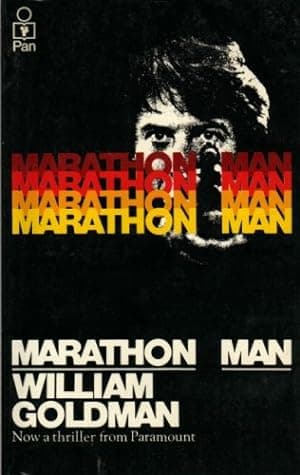
- Marathon Man
William Goldman
4.1 (20k) average on GoodreadsThrillerFeatures a protagonist unwittingly drawn into a dangerous conspiracy involving former Nazis and a quest for hidden valuables.
- Eye of the Needle
Ken Follett
4.2 (129k) average on GoodreadsThrillerA WWII-era spy thriller with a focus on historical detail and a desperate pursuit.
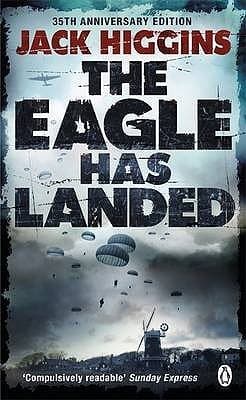
- The Eagle Has Landed
Jack Higgins
4.2 (54k) average on GoodreadsThrillerBoth are historical thrillers set around WWII, involving audacious plots and German characters. Higgins' The Eagle Has Landed focuses on a fictional German commando raid, emphasizing action and a more straightforward 'mission' narrative. The Odessa File, conversely, is a mystery-thriller centered on investigative journalism and the hunt for a specific war criminal, with a greater emphasis on uncovering hidden truths and networks rather than a direct military operation.
- Angels & Demons
Dan Brown
3.9 (2.7M) average on GoodreadsThrillerA Harvard symbologist races through Rome's ancient sites, deciphering cryptic clues to unmask the Illuminati and stop a vengeful plot to destroy the Vatican with a stolen antimatter weapon.
- Gone Girl
Gillian Flynn
4.1 (2.3M) average on GoodreadsThrillerA wife's sudden disappearance on her fifth anniversary reveals a web of lies and psychological warfare, exposing the secrets within a seemingly perfect marriage.




Enjoyed the summary?
A summary gives you the shape of the book. The book itself has the detail, the examples and the voice.
Find The Odessa File on AmazonAs an Amazon Associate, BookBrief earns from qualifying purchases. How we're funded