

Synopsis
Covers the whole plot, including the ending.
- Difficulty
- Medium
- Pacing
- Moderate
- Mood
- Dark, Suspenseful, Philosophical, Introspective
- Read it if
- You enjoy classic short stories exploring moral dilemmas, psychological tension, and philosophical themes.
- Skip it if
- You prefer fast-paced thrillers or stories with clear, unambiguous plot resolutions.
Markheim Plot Summary
Covers the whole plot, including the ending.
The Murder in the Antique Shop
On a gloomy Christmas Day, Markheim enters an antique shop, supposedly to buy a gift for a woman. He is alone with the old dealer, a man he has seen before, whose shop is full of valuable, though dusty, curiosities. Markheim, driven by desperation and a long history of bad choices, suddenly attacks and kills the old man with a dagger. The dealer falls, gasping, and Markheim is left alone with the body, the deed done. His first reaction is a mix of terror and a strange calm, as he begins to think about what to do next: find money and escape.
Searching for Valuables
After the murder, Markheim's immediate goal is to find money. He believes the dealer keeps large sums hidden in the shop, not in a bank. He systematically starts to search, moving from room to room, opening drawers, sifting through papers, and looking at the various objects. His search is not random; he has watched the dealer before and knows where money might be hidden. Despite his frantic state, he proceeds with a strange, almost professional care, even as the quiet of the shop and the presence of the body weigh heavily on him.
The Clock's Chimes and Growing Paranoia
As Markheim continues his search, a clock in the shop chimes the hour, its sound echoing loudly in the silence. This sudden noise startles him, reminding him of time passing and the increased risk of being discovered. He imagines footsteps on the street outside and the chance of someone entering the shop. The chiming clock acts as a constant reminder of his crime and the danger of his situation, further increasing his paranoia and the psychological pressure he feels. He becomes very aware of every creak and shadow, convinced he is being watched.
An Unseen Presence
During his search, Markheim becomes more and more aware of an unseen presence in the room. He senses it subtly at first, a feeling of not being alone, which then turns into a distinct, disembodied voice. This voice, calm and logical, speaks directly to him, showing it knows his thoughts, actions, and past very well. Markheim first tries to explain it as a trick of his mind or a hallucination caused by stress, but the voice's persistent and insightful remarks soon convince him it is real, though he cannot see its source.
The Dialogue with the Voice
The unseen presence talks with Markheim in a long and deeply psychological conversation. The voice, which Markheim later sees as the Devil or his own conscience, examines his character, his history of moral failures, and the true nature of his current act. It challenges his self-deceptions, pointing out the wickedness in his past and present deeds, while also offering him a way to escape and commit more crime. Markheim, though at first resistant, feels forced to respond, wrestling with the voice's accusations and its deep insights into his soul.
Confession and Self-Reflection
During his talk with the mysterious voice, Markheim begins to admit the full extent of his moral decay. He confesses that he is not just a man who made one mistake, but one whose life has been a series of corrupt choices, driven by laziness and a lack of real purpose. He acknowledges the 'canker' within him, the deep flaw that led him to this point. This confession is not born of remorse in the usual sense, but rather a clear recognition of his own degraded character, prompted by the voice's constant questioning.
The Offer of Escape
The voice, seeming to be aligned with evil, offers Markheim a detailed and practical plan for escape. It suggests that Markheim finish his search for the money, then arrange the shop to make it look like the dealer simply disappeared, giving him plenty of time to flee. The voice insists that Markheim has the cleverness and the chance to succeed, playing on his desire for self-preservation. This offer presents a clear temptation for Markheim to fully embrace his criminal nature and continue down a path of more deception and evasion, without any immediate punishment for his actions.
A Glimmer of Conscience
Despite the appeal of escape and the voice's convincing arguments, Markheim experiences a deep inner change. He realizes that even if he were to escape justice, he would remain a prisoner of his own corrupted soul. The idea of living a life of constant deceit and more crime becomes unbearable. He recognizes that true freedom is not in avoiding punishment, but in facing his own wickedness. This realization marks a crucial turning point, as Markheim begins to value moral integrity over physical survival, a completely new feeling for him.
The Arrival of the Maid
Just as Markheim is having his moral revelation, he hears a bell ring at the shop's door. The voice confirms that it is the dealer's maid, returning from her Christmas holiday. This arrival means immediate discovery and the end of any chance of a clean escape. The maid's presence highlights the finality of Markheim's situation and the limited time he has left. The sound of the bell, which earlier filled him with dread, now seems to resonate with a strange sense of purpose, forcing his hand.
Markheim's Decision
Faced with the maid's imminent entry, Markheim makes a clear choice. He rejects the voice's final offers of escape and accepts the results of his actions. He decides not to hide or flee, but to let the maid discover him and the body. This decision is not born of fear, but of a new, though desperate, desire for redemption and an end to his life of moral compromise. He understands that this is his only chance to regain some honor, even if it means sacrificing his life and enduring punishment.
The Maid's Discovery
Markheim opens the door for the maid, who enters the shop, unsuspecting. He calmly stands before her, allowing her to discover the antique dealer's body. The maid's reaction is one of shock and horror, but Markheim remains composed. He has accepted his fate and the results of his actions. His surrender is quiet and firm, a stark contrast to the frantic, guilt-ridden man who committed the murder earlier. The story ends with Markheim's silent acceptance of his coming arrest and punishment, showing his final, desperate act of moral reclamation.
Markheim Characters
Markheim
Protagonist
A morally bankrupt man who commits murder and grapples with his conscience.
Markheim is a man haunted by a lifetime of bad choices, idleness, and a deep-seated moral corruption. He is intelligent and perceptive, capable of self-analysis, yet consistently falls prey to his own weaknesses and temptations. He is a 'gentleman' in appearance but a 'criminal' in spirit, driven by desperation and a lack of honest industry. His murder of the antique dealer is not an act of passion, but a culmination of his degraded character, seeking an easy solution to his financial woes. He possesses a keen awareness of his own flaws, yet lacks the will to overcome them until the very end.
Relationships: Antique Dealer (Victim of Markheim's murder; a man Markheim has observed before.); The Voice (or Devil/Conscience) (A mysterious, unseen entity that engages Markheim in a deep philosophical and psychological debate.); Maid (The dealer's employee who discovers Markheim and the body, leading to his surrender.)
The Antique Dealer
Victim
The elderly, unsuspecting owner of the antique shop, murdered by Markheim.
The antique dealer is an elderly man, described as having a 'shrewd, old, gentle, and kindly' appearance, though Markheim also notes his 'greedy' eyes. He is a collector and seller of curiosities, living a solitary life surrounded by his wares. His primary role is to serve as Markheim's victim, the catalyst for the story's central moral conflict. He is largely a symbolic figure, representing the world Markheim has violated and the life he has extinguished. His death immediately plunges Markheim into a psychological and moral crisis.
Relationships: Markheim (His murderer; a customer he had probably dealt with before.); Maid (His employee.)
The Voice (or Devil/Conscience)
Antagonist/Catalyst
An unseen, omniscient entity that guides Markheim through his moral reckoning.
This mysterious voice, which Markheim struggles to identify as either the Devil or his own conscience, is a central figure in his psychological drama. It is calm, rational, and possesses an uncanny insight into Markheim's past, present, and inner thoughts. It serves as both a tempter, offering Markheim easy escape and justification for his crimes, and a relentless interrogator, forcing him to confront the true nature of his moral decay. The voice's ambiguity allows for interpretations of it as either an external supernatural force or an internal manifestation of Markheim's own subconscious struggle.
Relationships: Markheim (Engages Markheim in a profound, soul-searching dialogue, acting as both tempter and moral guide.)
The Maid
Supporting
The antique dealer's employee whose arrival forces Markheim's final decision.
The maid is a minor character who appears only at the very end of the story. Her role is crucial as she represents the external world and the inevitable discovery of Markheim's crime. Her arrival from her Christmas holiday is perfectly timed to interrupt Markheim's internal debate and force him to choose between escape and surrender. She is an innocent figure whose shock and horror upon discovering the body underscore the gravity of Markheim's actions and the reality of the consequences he has chosen to face.
Relationships: Antique Dealer (Her employer, whose body she discovers.); Markheim (The murderer whom she discovers in the shop.)
Markheim Themes
Guilt and Conscience
The story explores the psychological burden of guilt and the awakening of conscience. Initially, Markheim's guilt appears as paranoia and fear of discovery, but as the story moves forward, especially through his talk with the mysterious voice, it becomes a deep moral reckoning. He confronts his 'canker'—the flaw in his character—and realizes that true freedom is not in escaping justice, but in acknowledging his depravity. This is clear when he chooses to surrender rather than flee, showing conscience winning over self-preservation.
“'I am a man of a life too easy and too idle, and I have had to pay for it in one of those dishonest shifts to which I have at last succumbed.'”
Redemption and Moral Transformation
Markheim's journey is one of possible redemption, not through forgiveness, but through a radical change in his moral priorities. His decision to surrender, knowing it means certain punishment, is his first truly moral act after a lifetime of wrongdoing. This change is not about avoiding sin, but about choosing to face its consequences honestly. The story suggests that even a deeply corrupt person can experience a moment of profound change, valuing spiritual integrity over worldly survival, as seen in his final, firm acceptance of his fate.
“'I have lived a life of what you call crime, and I have been punished for it, and I have been shamed for it; but I have never been broken for it.'”
The Nature of Evil and Self-Deception
Stevenson looks into the harmful nature of evil, showing it not as one terrible act, but as a slow buildup of small moral compromises and self-deceptions. Markheim's past is marked by 'dishonest shifts' and 'idle' living, which slowly weaken his character until he is capable of murder. The mysterious voice constantly exposes Markheim's attempts to explain his actions and his inherent wickedness, forcing him to face the truth that his crime is not a single event but a sign of deeper moral rot. His struggle shows how easily one can fall into a pattern of self-justification that hides true evil.
“'You have been a criminal all your life. Your life has been a succession of base and ignoble shifts.'”
Free Will vs. Predetermination
The debate between Markheim and the voice touches on the old question of free will. The voice often presents Markheim's actions as the unavoidable results of his character, suggesting a fated view of his destiny. However, Markheim's ultimate choice to surrender, despite the clear path to escape offered by the voice, shows a powerful act of free will. It implies that even when seemingly trapped by one's past and nature, there remains a capacity for conscious moral choice. This inner conflict highlights the tension between the forces that shape a person and their ultimate power to choose their own path.
“'You have but to choose; and the choice is easy. You can yet be a free man.'”
Plot Devices & Literary Techniques
The Mysterious Voice
An ambiguous, disembodied presence that acts as Markheim's interrogator and tempter.
The mysterious voice is the primary plot device that drives Markheim's internal conflict. Its ambiguity—whether it's the Devil, a hallucination, or his own conscience—allows for a multifaceted exploration of Markheim's psychology. The voice serves to externalize Markheim's inner turmoil, forcing him to articulate and confront his deepest moral failings and self-deceptions. By offering both temptation and brutal honesty, it acts as a catalyst for his ultimate moral awakening, pushing him towards a definitive choice about his fate.
The Christmas Day Setting
A juxtaposition of a sacred holiday with a profane act of murder and moral reckoning.
The setting of Christmas Day is a powerful symbolic device. Christmas, typically associated with peace, goodwill, and redemption, starkly contrasts with Markheim's act of murder and his subsequent moral struggle. This juxtaposition amplifies the gravity of his crime and highlights his spiritual desolation. It also subtly suggests the possibility of a 'rebirth' or moral awakening, aligning with the themes of redemption, even amidst the darkness of his actions. The holiday emphasizes the profound moral stakes of Markheim's final decision.
The Antique Shop
A confined, cluttered space symbolizing Markheim's trapped mental state and his past.
The antique shop itself functions as a symbolic plot device. Its cluttered, dusty, and confined nature mirrors Markheim's own trapped and disordered psychological state. The 'curiosities' and 'old rubbish' within the shop can be seen as representing the accumulated moral debris of Markheim's past life. The shop becomes a stage for his internal drama, a place where time seems to stand still as he grapples with his conscience. Its isolation and the presence of the dead dealer intensify the claustrophobic atmosphere of his moral dilemma.
The Chiming Clock
A recurring auditory reminder of time, danger, and the inevitability of consequences.
The chiming of the clock serves as a significant auditory plot device. Initially, it heightens Markheim's paranoia and fear of discovery, marking the relentless passage of time and the increasing risk of being caught. Later, as Markheim undergoes his moral transformation, the sound of the clock's chime takes on a different meaning, subtly guiding him towards the inevitability of his fate and the finality of his decision. It functions as a constant, external pressure that pushes Markheim towards a resolution.
Markheim Quotes
“It was Christmas Day, and the shop was busy.”
“For here, he reflected, was the very sanctuary of his life; here was the cupboard where he hid his shame; here were the tools with which he wrought his ruin.”
“He knew he was a lost man; he had but to take the next step, and he was lost indeed.”
“The thought of escape, which had hitherto buoyed him up, began now to desert him.”
“He was not one of those who are afraid of a dead body; he was too familiar with death in many forms.”
“It was not remorse, at least, not the remorse of a good man, that now began to gnaw him.”
“He had but one desire: to get rid of the witness, to bury it, to put it out of sight.”
“For the first time in his life, he was face to face with his own soul.”
“The evil was in him, not in the circumstances.”
“You have but to cross the threshold, and you are free.”
“I have been a bad man, and I have done a bad thing; but I will not add to it.”
“He had found his soul, and he had lost his life.”
“The clock struck the hour, and he knew that his time was come.”
“He had but to open the door, and the world was before him; but he chose to open the door to his doom.”
Quiz
10 questions on the plot and the characters. Each answer comes with a short explanation.
Question 1
On what specific holiday does the story 'Markheim' open?
- New Year's Eve
- Christmas Day
- Boxing Day
- All Saints' Day
Show answer
B. Christmas Day The story explicitly states it opens late on Christmas Day, setting a specific atmosphere.
Question 2
What is Markheim's primary intention when he visits the antique shop?
- To purchase a rare gift for a loved one.
- To pawn a valuable family heirloom.
- To rob the shop and murder the dealer.
- To browse for interesting curiosities.
Show answer
C. To rob the shop and murder the dealer. Markheim enters the shop with the premeditated intent to commit robbery and murder, which he carries out.
Question 3
What object does Markheim use to commit the murder?
- A heavy candlestick
- A knife
- A pistol
- A blunt instrument from the shop
Show answer
B. A knife Markheim uses a knife to murder the antique dealer, a detail crucial to the immediate aftermath.
Question 4
What is the primary internal conflict Markheim experiences after the murder?
- Anxiety about being caught by the police.
- Guilt and a struggle with his conscience.
- Frustration over the difficulty of finding valuables.
- Regret over not planning the crime more effectively.
Show answer
B. Guilt and a struggle with his conscience. Markheim's internal struggle is primarily one of conscience and the moral implications of his actions, leading to a profound self-examination.
Question 5
Who is the mysterious 'visitor' or 'second self' who appears to Markheim?
- The ghost of the murdered dealer.
- A manifestation of his own conscience or a supernatural entity.
- A police officer in disguise.
- A former accomplice looking for a share of the loot.
Show answer
B. A manifestation of his own conscience or a supernatural entity. The visitor is ambiguous, representing either Markheim's own tormented conscience or a supernatural entity prompting his moral reckoning.
Question 6
What specific detail about the antique shop's layout makes Markheim uneasy after the murder?
- The presence of numerous mirrors reflecting his image.
- The intricate locks on the display cases.
- The strong smell of dust and decay.
- The flickering gaslight causing strange shadows.
Show answer
A. The presence of numerous mirrors reflecting his image. The numerous mirrors in the shop, reflecting Markheim and the dead body, amplify his sense of observation and guilt.
Question 7
What is the 'visitor's' primary argument to Markheim regarding his past and future actions?
- That he is destined for greatness if he embraces his darker nature.
- That all his past deeds are connected and define his true self, making redemption impossible.
- That he should escape and start a new life in another country.
- That he should find a way to frame someone else for the crime.
Show answer
B. That all his past deeds are connected and define his true self, making redemption impossible. The visitor argues that Markheim's past actions are an indelible part of him, suggesting a continuity of character that makes true change difficult.
Question 8
What ultimate decision does Markheim make regarding his fate?
- He successfully escapes with the stolen valuables.
- He commits suicide out of despair.
- He surrenders himself to the maid, accepting his punishment.
- He decides to cover up the crime and live a life of secrecy.
Show answer
C. He surrenders himself to the maid, accepting his punishment. After his profound internal struggle, Markheim ultimately chooses to surrender himself to the maid, accepting the consequences of his actions.
Question 9
The story explores the theme of free will versus predestination. How does Markheim's final act relate to this theme?
- It suggests his actions were predetermined by his inherent evil nature.
- It demonstrates his capacity for a moral choice, asserting free will even in dire circumstances.
- It implies he was coerced by the 'visitor' into his decision.
- It shows that external circumstances completely dictated his surrender.
Show answer
B. It demonstrates his capacity for a moral choice, asserting free will even in dire circumstances. Markheim's decision to surrender, despite the visitor's cynical view of his character, highlights his assertion of free will and moral agency.
Question 10
What is the significance of the maid's arrival at the end of the story?
- Her arrival is a mere coincidence, providing a convenient ending.
- She represents the external world and the return to societal order and justice.
- She is secretly an accomplice of the antique dealer.
- Her presence distracts Markheim, allowing him to escape.
Show answer
B. She represents the external world and the return to societal order and justice. The maid's arrival signifies the intrusion of the outside world and the inevitability of justice, providing the opportunity for Markheim's final moral choice.
Markheim FAQ
What is the basic premise of 'Markheim'?
The story opens with Markheim, a man down on his luck, visiting an antique shop on Christmas Day under the pretense of buying a gift. His true intention, however, is to rob the shopkeeper, which he accomplishes by murdering him. The narrative then follows Markheim's psychological turmoil and internal debate as he grapples with his crime and the subsequent arrival of a mysterious visitor.
Who is the main character, Markheim, and what is his initial state?
Markheim is the protagonist, a man depicted as impoverished, desperate, and with a history of questionable dealings. He feels a profound sense of failure and self-loathing, believing himself to be a 'sordid, everyday sinner.' His initial state is one of extreme anxiety and a grim determination to commit a desperate act for financial gain.
What crucial event triggers Markheim's internal conflict?
The immediate trigger for Markheim's internal conflict is his impulsive murder of the antique shop owner. This act, committed in a moment of panic and desperation, plunges him into a deep psychological crisis, forcing him to confront his own nature and the consequences of his actions.
Who is the mysterious visitor Markheim encounters, and what is their role?
The mysterious visitor, who appears after Markheim has committed the murder, is a figure of ambiguous identity, often interpreted as the Devil, an angel, or Markheim's own conscience personified. This visitor engages Markheim in a profound philosophical debate about good, evil, truth, and the nature of sin, acting as a catalyst for Markheim's ultimate decision.
How does the story conclude for Markheim?
Markheim ultimately chooses to surrender himself to the authorities. After a prolonged internal struggle and a debate with the mysterious visitor, he decides that true redemption lies in facing the consequences of his actions, accepting his fate, and allowing himself to be punished, rather than attempting further escape or deceit.
What significance does the Christmas Day setting hold for the narrative?
The Christmas Day setting is highly significant, contrasting sharply with Markheim's dark deed and moral decay. It evokes themes of redemption, rebirth, and divine judgment, highlighting Markheim's alienation from conventional morality and setting the stage for his spiritual reckoning amidst a time traditionally associated with hope and forgiveness.
Are there any subtle clues about the shopkeeper's character before his death?
While the shopkeeper is not deeply characterized, Stevenson subtly portrays him as somewhat shrewd and perhaps a bit too trusting, or at least complacent, in his dealings with Markheim. His initial politeness and subsequent vulnerability set the stage for Markheim's swift, almost accidental, act of violence.
What is the implied nature of the 'truth' that the mysterious visitor offers Markheim?
The mysterious visitor offers Markheim a 'truth' about his own nature, suggesting that Markheim's soul is inherently flawed and that his past actions have shaped him into a particular kind of sinner. This 'truth' is presented not as an excuse, but as a deep, inescapable understanding of his own moral landscape, which the visitor claims to merely reflect.
How does Markheim's perception of his own 'sordidness' evolve throughout the story?
Initially, Markheim views his sordidness as a fixed, unchangeable state, a burden he carries. However, through his internal debate and interaction with the visitor, he begins to see that even within his depravity, there exists a capacity for self-awareness and a desperate yearning for purity, which ultimately guides his decision to confess.
What psychological defense mechanisms does Markheim employ immediately after the murder?
Immediately after the murder, Markheim experiences a mix of panic, denial, and rationalization. He attempts to convince himself that the act was an accident or a necessary evil. He also displays a dissociative response, trying to distance himself from the horror of what he has done, focusing instead on the practicalities of escape.
How does fear manifest in Markheim, and how does it influence his choices?
Fear manifests in Markheim as extreme anxiety, paranoia, and a profound dread of discovery and punishment. Initially, this fear drives his desperate actions, but as the story progresses, his fear transforms. He becomes less afraid of external punishment and more afraid of living with his own corrupted soul, influencing his decision to seek a form of internal peace through confession.
What role does Markheim's conscience play, and how is it externalized?
Markheim's conscience plays a central role, tormenting him with guilt and self-reproach. It is largely externalized through the mysterious visitor, who acts as a mirror to Markheim's inner turmoil, vocalizing the moral arguments and self-accusations that Markheim is battling within his own mind.
Is the mysterious visitor meant to be a literal entity or a psychological manifestation?
The mysterious visitor is deliberately ambiguous, allowing for multiple interpretations. While he speaks and acts with distinct personality, many readers interpret him as a psychological manifestation of Markheim's own conscience, his shadow self, or an externalization of his internal moral struggle, rather than a literal supernatural being.
Does Markheim achieve true redemption, or merely punishment, by the story's end?
This is a point of debate. While Markheim accepts punishment, his act of surrender is often seen as a significant step towards redemption. By choosing to confess and face justice, he demonstrates a profound moral awakening and a desire to purge his guilt, suggesting a spiritual redemption even if legal punishment awaits.
How does Stevenson use symbolism, particularly with light and darkness, in 'Markheim'?
Stevenson frequently uses light and darkness to symbolize Markheim's internal state and moral struggle. The dim, dusty antique shop reflects his clouded conscience, while the flickering lamp and the encroaching darkness outside parallel his descent into crime and his subsequent search for moral clarity amidst his despair.
What philosophical questions does 'Markheim' raise about free will versus predetermined fate?
'Markheim' deeply explores the tension between free will and fate. The mysterious visitor suggests Markheim's actions are a natural outgrowth of his character, hinting at a predetermined path. However, Markheim's ultimate choice to surrender reasserts an element of free will, suggesting that even a 'sinner' can choose a path of moral rectitude.
Can the story be read as an allegory for the struggle between good and evil within every individual?
Yes, 'Markheim' is frequently interpreted as an allegory for the universal struggle between good and evil within the human soul. Markheim represents humanity, grappling with temptation, guilt, and the potential for both depravity and redemption, making his internal conflict a microcosm of a broader moral battle.
What is the significance of Markheim's final exchange with the mysterious visitor before he surrenders?
The final exchange is crucial as it solidifies Markheim's moral transformation. The visitor, having presented the path of deceit, is surprised by Markheim's decision to confess, acknowledging the 'purity' of his intention. This moment validates Markheim's choice, suggesting he has transcended his 'sordid' nature through an act of genuine self-sacrifice.
About the author
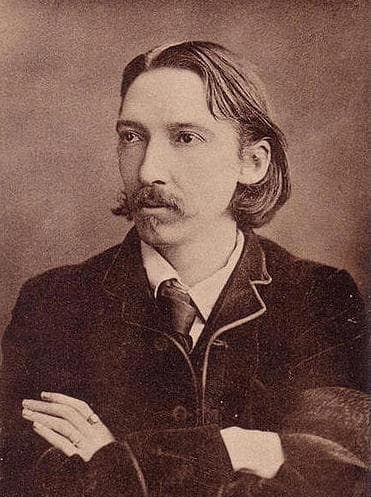
Robert Louis Stevenson was a Scottish novelist, essayist, poet and travel writer. He is best known for works such as Treasure Island, Strange Case of Dr Jekyll and Mr Hyde, Kidnapped and A Child's Garden of Verses.
Similar books
- The Picture of Dorian Gray
Oscar Wilde
4.1 (966k) average on GoodreadsFantasyBoth deal with sin and the soul, but Wilde externalizes Dorian's moral decay onto a supernatural portrait, allowing him to evade immediate consequences. "Markheim" presents an immediate, internal struggle, forcing a direct confrontation with actions and offering a more immediate path to atonement, making the internal battle the central drama.
- Nineteen Eighty-Four
George Orwell
4.2 (5.5M) average on GoodreadsFictionWinston Smith dreams of truth and rebellion in a world where Big Brother watches all, but he confronts the terrifying power of a regime that controls not just actions, but thoughts.
- The Frozen River
Ariel Lawhon
4.4 (600k) average on GoodreadsFictionIn 1789 Maine, a heroic midwife's diary helps her expose a murder and get justice in a town that wants to silence her.
- A Man Called Ove
Fredrik Backman
4.4 (569k) average on GoodreadsFictionA stubborn widower, who lives by strict rules, finds his quiet world changed by a lively new family next door, making him face his past and find happiness in human connection.
- The Art of Racing in the Rain
Garth Stein
4.2 (452k) average on GoodreadsFictionThrough the eyes of Enzo, a wise and observant dog, a race car driver's family navigates a journey of love, loss, and resilience, learning that life's most important lessons often come in the curves, not just on the straightaways.
- The Colour of Magic
Terry Pratchett
4.0 (425k) average on GoodreadsFictionOn a discworld hurtling through space on the back of a giant turtle, an inept wizard and his naive, walking-luggage-toting tourist embark on a chaotic, belief-fueled journey to the very edge of their flat planet, encountering dragons that only exist if you believe in them.






Enjoyed the summary?
A summary gives you the shape of the book. The book itself has the detail, the examples and the voice.
Find Markheim on AmazonAs an Amazon Associate, BookBrief earns from qualifying purchases. How we're funded