

Synopsis
Covers the whole plot, including the ending.
- Difficulty
- Medium
- Pacing
- Moderate
- Mood
- Dark, Philosophical, Aesthetic, Tragic, Suspenseful
- Read it if
- You enjoy philosophical tales exploring morality, beauty, and corruption, with a dark, gothic atmosphere and sharp, witty dialogue.
- Skip it if
- You prefer fast-paced action or lighthearted narratives, or are sensitive to themes of moral decay and tragedy.
The Picture of Dorian Gray Plot Summary
Covers the whole plot, including the ending.
A Portrait's Birth and a Dangerous Philosophy
Basil Hallward, a talented painter, is taken with the beauty of young Dorian Gray, whom he considers his muse. He paints a great portrait of Dorian. During a sitting, Lord Henry Wotton, Basil's witty and cynical friend, meets Dorian. Lord Henry, who believes in pleasure, immediately influences Dorian. He talks about how youth and beauty are temporary, telling Dorian to enjoy pleasure and live life fully before his beauty disappears. Dorian is deeply affected by Lord Henry's words, realizing his own beauty will not last.
The Fatal Wish and the Pact
Standing before Basil's finished painting, Dorian is struck by its beauty and the fact that the portrait will always be young while he will age. In despair and drawn to Lord Henry's ideas, Dorian makes a desperate wish: that the portrait would show age and sin, keeping him young and beautiful forever. He says he would give his soul for this. Unknown to him, this wish comes true, starting the supernatural events of his life. Basil is concerned by Dorian's intensity but thinks it is just youthful drama.
Sibyl Vane and the First Stain
Dorian becomes fascinated with Sibyl Vane, a beautiful young actress in a London theatre. He is charmed by her talent and the pure love she shows in her Shakespeare roles. He proposes marriage, and she, in love, accepts. But when Dorian invites Lord Henry and Basil to see Sibyl perform, she acts terribly. She has lost her talent because her love for Dorian makes her see the stage as false. Disgusted, Dorian cruelly rejects her, saying she has 'killed his love.' When he gets home, he sees the first change in his portrait: a faint sneer on its lips, showing his cruelty.
Sibyl's Demise and the Portrait's Deeper Corruption
The next morning, Lord Henry tells Dorian that Sibyl Vane has killed herself with poison after his rejection. At first, Dorian is upset and feels guilty. Lord Henry, however, quickly explains the event as a sad but romantic end to Sibyl's life. He encourages Dorian's pleasure-seeking ideas. Dorian looks at his portrait again and sees the sneer has deepened, and there is cruelty in the eyes. He now understands his wish came true. Instead of being horrified, he accepts the pact, deciding to hide the portrait and live a life of pleasure and sin, while his own looks remain perfect.
The Hidden Portrait and Years of Debauchery
Dorian moves the portrait to a locked, unused schoolroom at the top of his house, covering it and keeping the key. This room becomes his secret place. For the next eighteen years, Dorian lives for pleasure and moral corruption. He tries different vices, goes to opium dens, has scandalous affairs, and corrupts young people. His reputation suffers, whispered about in society, but his outward appearance stays young and beautiful. This contrasts with the hidden portrait, which gets more grotesque with each sin, showing his soul's decay.
Basil's Confrontation and Murder
Before leaving for Paris, Basil Hallward visits Dorian one stormy night. He expresses deep worry about Dorian's ruined reputation and the bad rumors about his corrupting influence. Basil asks Dorian to deny these accusations and to pray for forgiveness. Dorian, in anger, decides to show the truth of his soul. He takes Basil to the locked room and uncovers the hideous portrait. It now looks like a monstrous old man, wrinkled, with a leering mouth and blood-stained hands. Basil is horrified, seeing his painting twisted into pure evil. He tells Dorian to repent. Instead, Dorian grabs a knife and stabs Basil to death, silencing the only person who knew how corrupt he was.
Blackmail and Disposing of the Body
After Basil's murder, Dorian is calm. He remembers Alan Campbell, a brilliant young chemist he had befriended and then ruined. Dorian sends for Campbell, who at first refuses to help. Dorian then shows a letter, revealing a dark secret from Campbell's past, and blackmails him into getting rid of Basil's body. Under pressure, Campbell agrees to use his science to dissolve the body completely, leaving no trace. The task is gruesome for Campbell, but Dorian shows no emotion, only caring about keeping his secret.
James Vane's Vengeance
Years later, Dorian is at his country estate, Selby Royal, with guests. While hunting, a beater dies in an accident. This reminds Dorian of Sibyl Vane. Unknown to Dorian, Sibyl's brother, James Vane, a sailor, has been looking for the man who caused his sister's death. He had sworn revenge years ago. James hears a woman in an opium den call Dorian 'Prince Charming' and mention his eternal youth. He realizes Dorian Gray is the man he seeks. He stalks Dorian, confronts him with a pistol, but Dorian's youthful looks make James doubt his identity, as he remembers his sister's lover as much younger. Dorian uses this to escape.
The Hunt and James Vane's Death
After escaping James Vane, Dorian is afraid, knowing James is still hunting him. He sees James's face at a window and is terrified. However, during a shooting party at Selby Royal, James Vane dies in an accident in a thicket. He was lurking in the bushes and mistaken for a rabbit by one of Dorian's guests. Dorian is relieved, thinking he is now safe. James Vane's death, though accidental, makes Dorian feel more detached from the results of his actions, making him believe he is safe.
A Flicker of Conscience and the Final Act
Dorian tries to do one 'good' thing by deciding not to corrupt a young village girl, Hetty Merton. He tells himself this act of mercy might start to reverse his soul's corruption and thus, the portrait. He goes to the locked room, hoping to see a positive change. But the portrait is even more hideous, showing new hypocrisy and vanity. Realizing that even his 'good' intentions are flawed, and that the portrait will always show his monstrous soul, Dorian, in despair and rage, grabs the same knife he used to murder Basil Hallward and plunges it into the portrait, trying to destroy the evidence of his sins and free himself.
The Reversal and Dorian's Demise
A scream comes from the locked room. Servants, hearing the noise, break down the door. They find the magnificent portrait of Dorian Gray restored to its original, youthful beauty, just as Basil Hallward had painted it. On the floor, next to the portrait, is the body of a dead man, old, withered, and hideous, with a knife in his heart. Only by his rings can the servants identify him as Dorian Gray. The portrait had absorbed all his sins. When it was destroyed, the curse broke, transferring all the age and corruption back to Dorian, causing his instant death in his true, hideous form.
Principal Figures
Dorian Gray
Protagonist
A beautiful young man who trades his soul for eternal youth and beauty.
Dorian Gray begins as an innocent, remarkably handsome young man, easily influenced by others. His encounter with Lord Henry Wotton's hedonistic philosophy and Basil Hallward's portrait awakens a deep vanity and a fear of aging. His wish for the portrait to bear the burden of his sins and age is granted, leading him down a path of profound moral corruption, debauchery, and cruelty. Despite his outward charm and unchanging beauty, his soul becomes increasingly monstrous, reflected in the hidden portrait. He is ultimately a tragic figure, unable to escape the consequences of his choices.
Relationships: Basil Hallward (Artist and admirer; later victim); Lord Henry Wotton (Corrupting mentor and friend); Sibyl Vane (Brief romantic interest and victim); James Vane (Avenging brother of Sibyl)
Lord Henry Wotton
Antagonist/Supporting
A witty, cynical aristocrat who espouses a philosophy of hedonism and aestheticism.
Lord Henry is a charming, intelligent, and dangerous character whose primary role is to corrupt Dorian Gray. He is a master of paradox and epigram, using his wit to challenge conventional morality and promote a life devoted to beauty, pleasure, and sensation. He acts as a Mephistophelean figure, subtly guiding Dorian towards self-indulgence and moral decay, without ever directly committing evil himself. He finds Dorian an interesting 'experiment' and remains detached from the consequences of his influence, viewing life as a fascinating spectacle. His philosophy is central to the novel's exploration of morality and aesthetics.
Relationships: Dorian Gray (Disciple and object of psychological experimentation); Basil Hallward (Friend and intellectual sparring partner); Lady Wotton (Estranged wife)
Basil Hallward
Supporting
The artist who paints Dorian's portrait and represents moral conscience.
Basil Hallward is a deeply moral and sensitive artist who is utterly captivated by Dorian Gray's beauty, believing it to be the inspiration for his greatest artistic achievements. He genuinely cares for Dorian and becomes increasingly worried about his friend's corrupted reputation and moral decline. He represents the voice of conscience and traditional Victorian morality, warning Dorian against Lord Henry's influence and pleading with him to repent. Basil's artistic integrity and his love for Dorian are ultimately his downfall, as he is murdered by Dorian for confronting him about his sins and seeing the monstrous truth of the portrait.
Relationships: Dorian Gray (Artist and muse; later, moral guide and victim); Lord Henry Wotton (Friend, but disapproves of his influence on Dorian)
Sibyl Vane
Supporting
A talented young actress who falls in love with Dorian and becomes his first victim.
Sibyl Vane is a beautiful, innocent, and talented actress who performs in a humble theatre. Dorian is initially enchanted by her ability to embody various Shakespearean heroines, seeing her as a pure artistic ideal. She falls deeply in love with Dorian, believing him to be 'Prince Charming,' and this love becomes so consuming that it destroys her ability to act, as she no longer finds the stage real compared to her love. Her rejection by Dorian, who is disgusted by her poor performance, leads directly to her tragic suicide. She serves as a catalyst for the portrait's first significant corruption and the beginning of Dorian's descent.
Relationships: Dorian Gray (Lover, then cruel rejecter); James Vane (Brother); Mrs. Vane (Mother)
James Vane
Supporting
Sibyl Vane's protective sailor brother, who vows revenge on Dorian.
James Vane is Sibyl's older brother, a sailor who is deeply protective of his innocent sister. Before leaving for Australia, he makes Sibyl promise to be careful and swears to avenge her if 'Prince Charming' ever wrongs her. Upon hearing of Sibyl's suicide, he dedicates his life to finding and killing Dorian Gray. He is a relentless, single-minded figure of retribution, representing the moral consequences that Dorian tries to evade. His accidental death prevents him from fulfilling his vengeance, but his pursuit adds to Dorian's growing paranoia and fear.
Relationships: Sibyl Vane (Sister); Dorian Gray (Target of revenge)
Alan Campbell
Supporting
A brilliant chemist blackmailed by Dorian into disposing of Basil's body.
Alan Campbell is a brilliant young scientist, particularly skilled in chemistry, who was once a close friend of Dorian Gray. Their friendship ended abruptly and mysteriously, with Dorian having somehow ruined Campbell's reputation or life. Years later, Dorian blackmails Campbell with a dark secret from his past to force him to dispose of Basil Hallward's body. Campbell is repulsed by the task and by Dorian's monstrous request, but he is trapped by the blackmail. He represents another innocent individual whose life is tainted and destroyed by Dorian's corrupting influence, ultimately committing suicide from the trauma.
Relationships: Dorian Gray (Former friend, blackmailer); Basil Hallward (Victim whose body he disposes of)
Duchess of Monmouth (Gladys)
Mentioned/Supporting
An aristocratic woman who flirts with Dorian, adding to his social circle.
The Duchess of Monmouth, often referred to as Gladys, is a witty and charming society woman who openly flirts with Dorian Gray at his country estate. She represents the superficial, aristocratic society in which Dorian moves, a world where wit and appearance are prized above morality. Her interactions with Dorian highlight his continued social charm and ability to attract even as his inner self decays. She is one of many characters who are drawn to Dorian's external beauty without ever suspecting the evil beneath.
Relationships: Dorian Gray (Flirtatious acquaintance); Lord Henry Wotton (Friend, shares a similar cynical wit)
Mrs. Vane
Supporting
Sibyl and James Vane's impoverished mother, who exploits Sibyl's talent.
Mrs. Vane is the impoverished mother of Sibyl and James Vane. She is a rather theatrical and mercenary woman who encourages Sibyl's acting career primarily for the financial benefits it brings. She is more concerned with the social and monetary advantages of Dorian's affections than with Sibyl's emotional well-being. Her character highlights the harsh realities of Victorian poverty and the class divide that separates Dorian from Sibyl's family, while also serving as a foil to Sibyl's innocent romanticism.
Relationships: Sibyl Vane (Daughter); James Vane (Son)
Themes & Insights
Beauty and Youth vs. Inner Corruption
The main theme looks at the difference between outward appearance and inner morality. Dorian Gray's lasting youth and beauty contrast with his increasingly hideous portrait. The portrait shows his soul's decay from sin and cruelty. The novel asks if beauty can hide evil and suggests that true beauty must be internal. Dorian's physical perfection shows his moral decay because it lets him avoid the social results of his actions, leading to more corruption.
“'As it had revealed to him the loveliness of his own body, so it would reveal to him the horror of his own soul. And it would never alter.'”
The Price of Hedonism and Aestheticism
The novel examines hedonism (the search for pleasure) and aestheticism (art for art's sake), mainly through Lord Henry Wotton's influence on Dorian. These ideas, while promoting beauty and sensory experience, lead to destructive self-indulgence and a lack of care for others when taken too far without moral limits. Dorian's life is a warning about seeking pleasure without limits. It shows that a life lived only for sensation results in spiritual emptiness, cruelty, and self-destruction. Wilde explores the dangers of separating art and beauty from ethical responsibility.
“'The only way to get rid of a temptation is to yield to it.'”
Art and Life
Wilde explores the connection between art and life. Basil Hallward believes art should show the artist's soul and morality. Lord Henry sees art as a way to experience life aesthetically, without moral judgment. The portrait itself is a strong symbol, blurring the lines between art and reality. It is a painting that becomes a living conscience, a canvas that absorbs Dorian's sinful life. The novel questions art's purpose, its power to influence, and its ability to show or hide truth. Dorian tries to live his life as a work of art, but this leads to his downfall.
“'The portrait was to bear the burden of his shame: that was all.'”
Influence and Corruption
The theme of influence and corruption is central, mainly through Lord Henry's effect on Dorian. Lord Henry's words and cynical view of the world slowly corrupt Dorian's innocent nature, turning him into a monstrous pleasure-seeker. The novel also shows Dorian's own corrupting influence on others, like Alan Campbell and the young men he misleads. This theme suggests that ideas and actions have strong and often terrible effects on those around us. It shows the responsibility that comes with power and charm. The chain of corruption eventually leads back to Dorian's own destruction.
“'There was something terribly enthralling in the personality of the great lord, something terribly dangerous.'”
Plot Devices & Literary Techniques
The Supernatural Portrait
A magical painting that ages and decays in place of its subject.
The portrait is the central magical element and plot device in the novel. It literally takes on the physical manifestations of Dorian Gray's sins and the passage of time, preserving his youthful beauty while becoming increasingly grotesque. It serves as Dorian's conscience, a visual record of his moral decay, and a constant reminder of his pact. The portrait is not merely a symbol but an active participant in the plot, driving Dorian's actions (hiding it, checking it) and ultimately leading to his demise when he attempts to destroy it, thereby breaking the supernatural bond and transferring the accumulated corruption back to himself.
Epigrams and Paradoxes
Witty, often contradictory, statements used to convey philosophical ideas.
Wilde's distinctive style is heavily reliant on epigrams and paradoxes, primarily delivered by Lord Henry Wotton. These concise, memorable, and often contradictory statements serve to challenge conventional morality, provoke thought, and reveal the characters' philosophies. They are not just stylistic flourishes but a key plot device, as Lord Henry's epigrams are what initially captivate and ultimately corrupt Dorian Gray, shaping his worldview. They create a sense of intellectual daring and moral ambiguity, reflecting the aesthetic movement's focus on wit and style over traditional ethics.
The Faustian Bargain
A pact with supernatural forces for personal gain, usually at the cost of one's soul.
Dorian Gray's wish for eternal youth and beauty, at the expense of his portrait bearing the marks of age and sin, is a classic Faustian bargain. This literary trope, derived from the legend of Faust, is a central plot device that drives the entire narrative. It establishes the supernatural premise and allows Wilde to explore the moral consequences of unchecked desire and the pursuit of pleasure without ethical boundaries. Dorian essentially sells his soul for superficial gain, and the novel meticulously details the escalating price of this bargain, culminating in his tragic end.
Symbolism of Flowers and Jewels
Objects used to represent fleeting beauty, decadence, and corruption.
Wilde frequently uses the symbolism of beautiful, exotic, and often ephemeral objects, particularly flowers and jewels, to reflect Dorian's aesthetic pursuits and his moral decay. The early descriptions of gardens and flowers emphasize beauty. Later, Dorian's obsession with collecting rare jewels and ecclesiastical vestments symbolizes his descent into decadent and superficial pleasures, his search for new sensations, and his detachment from genuine human connection. These objects, while beautiful, are ultimately inanimate and sterile, mirroring the emptiness of Dorian's soul and the artificiality of his life.
The Picture of Dorian Gray Quotes
“The only way to get rid of a temptation is to yield to it.”
“I am too fond of reading books to care to write them.”
“Nowadays people know the price of everything and the value of nothing.”
“The books that the world calls immoral are books that show the world its own shame.”
“To define is to limit.”
“There is only one thing in the world worse than being talked about, and that is not being talked about.”
“Experience is merely the name men gave to their mistakes.”
“I can believe anything, provided that it is quite incredible.”
“The soul is a terrible reality. It can be bought, and sold, and bartered away.”
“Laughter is not at all a bad beginning for a friendship, and it is far the best ending for one.”
“Every portrait that is painted with feeling is a portrait of the artist, not of the sitter.”
“The tragedy of old age is not that one is old, but that one is young.”
“It is the spectator, and not life, that art really mirrors.”
“I don't want to be at the mercy of my emotions. I want to use them, to enjoy them, and to dominate them.”
Quiz
10 questions on the plot and the characters. Each answer comes with a short explanation.
Question 1
What does Dorian Gray wish for after hearing Lord Henry's philosophy about beauty and youth?
- To become a famous artist like Basil
- To sell his soul so the portrait ages instead of him
- To marry Sibyl Vane and live a simple life
- To destroy the portrait immediately
Show answer
B. To sell his soul so the portrait ages instead of him After Lord Henry's hedonistic influence, Dorian becomes obsessed with preserving his youth and beauty, leading him to whimsically wish that the portrait would age while he remains unchanged—a wish that is mysteriously granted.
Question 2
Who is the artist that paints the portrait of Dorian Gray?
- Lord Henry Wotton
- James Vane
- Basil Hallward
- Alan Campbell
Show answer
C. Basil Hallward Basil Hallward is the painter who creates the portrait of Dorian Gray, becoming infatuated with Dorian's beauty and seeing it as a source of artistic inspiration.
Question 3
What happens to the portrait as Dorian commits more sins?
- It becomes more beautiful and radiant
- It ages and shows disfigurements reflecting his soul
- It disappears entirely
- It changes to depict Lord Henry instead
Show answer
B. It ages and shows disfigurements reflecting his soul The portrait serves as a moral mirror, aging and becoming increasingly grotesque with each of Dorian's immoral acts, while Dorian himself remains physically unchanged.
Question 4
Why does Dorian break off his engagement to Sibyl Vane?
- Because she refuses to give up acting
- Because she gives a poor performance on stage after falling in love with him
- Because Lord Henry convinces him she is unworthy
- Because Basil reveals she has a criminal brother
Show answer
B. Because she gives a poor performance on stage after falling in love with him Sibyl Vane, an actress, loses her artistic talent after falling in love with Dorian, leading to a terrible performance. Dorian, valuing art over love, cruelly rejects her, which contributes to her suicide.
Question 5
What is Lord Henry Wotton's primary philosophy that influences Dorian?
- Stoicism and self-discipline
- A new hedonism focused on beauty and sensory fulfillment
- Christian morality and redemption
- Political activism for social reform
Show answer
B. A new hedonism focused on beauty and sensory fulfillment Lord Henry advocates for a hedonistic lifestyle where beauty, youth, and the pursuit of pleasure are paramount, which deeply corrupts Dorian's worldview and actions.
Question 6
How does Basil Hallward react when he sees the changed portrait later in the novel?
- He praises it as a masterpiece of realism
- He is horrified and urges Dorian to repent
- He offers to paint a new portrait to replace it
- He destroys it in a fit of rage
Show answer
B. He is horrified and urges Dorian to repent Basil is shocked by the portrait's grotesque appearance, seeing it as evidence of Dorian's corrupted soul, and pleads with him to pray for redemption, which ultimately leads to his murder by Dorian.
Question 7
What does Dorian use to blackmail Alan Campbell into helping him?
- A love letter from Alan to Lord Henry
- Knowledge of a dark secret from Alan's past
- A large sum of money
- Threats to expose Alan's scientific experiments
Show answer
B. Knowledge of a dark secret from Alan's past After murdering Basil, Dorian blackmails Alan Campbell, a chemist and former friend, by hinting at an undisclosed scandal in Alan's past to force him to dispose of the body.
Question 8
What ultimately happens to Dorian Gray at the end of the novel?
- He escapes to a foreign country and lives in anonymity
- He stabs the portrait and is found dead, aged and disfigured, while the portrait reverts to its original beauty
- He marries and settles down, seeking redemption
- He is killed by James Vane in revenge for Sibyl's death
Show answer
B. He stabs the portrait and is found dead, aged and disfigured, while the portrait reverts to its original beauty In a fit of rage and despair, Dorian stabs the portrait with the same knife he used to kill Basil. This act breaks the supernatural bond, causing Dorian to die as an old, hideous man while the portrait returns to its pristine state.
Question 9
Which character serves as a symbol of conscience and moral integrity in contrast to Dorian's corruption?
- Lord Henry Wotton
- Basil Hallward
- Sibyl Vane
- Alan Campbell
Show answer
B. Basil Hallward Basil represents artistic purity and moral goodness, consistently urging Dorian toward virtue. His murder by Dorian highlights the clash between innocence and corruption in the novel.
Question 10
What is the significance of the 'yellow book' that Lord Henry gives to Dorian?
- It is a guide to financial success that Dorian ignores
- It is a novel that further corrupts Dorian by glorifying decadence and aestheticism
- It is a religious text that Dorian uses for redemption
- It is a collection of Basil's art critiques
Show answer
B. It is a novel that further corrupts Dorian by glorifying decadence and aestheticism The unnamed 'yellow book' (inspired by Joris-Karl Huysmans' 'À Rebours') deeply influences Dorian, serving as a manual for a life of decadence and aesthetic obsession, reinforcing Lord Henry's hedonistic teachings.
The Picture of Dorian Gray FAQ
What is 'The Picture of Dorian Gray' about?
The novel follows Dorian Gray, a young man whose portrait ages and bears the marks of his sins while he remains physically youthful and beautiful. After being influenced by the hedonistic Lord Henry Wotton, Dorian pursues a life of debauchery, with the painting serving as a haunting reflection of his corrupted soul, leading to tragic consequences for himself and those around him.
Why should I read 'The Picture of Dorian Gray'?
It offers a profound exploration of aestheticism, morality, and the duality of human nature through a gripping Gothic tale. Wilde's sharp wit and philosophical depth make it a timeless critique of Victorian society and the dangers of unchecked vanity and hedonism.
What is the background/setting of 'The Picture of Dorian Gray'?
Set in late 19th-century London, the novel portrays the opulent and morally rigid world of the British upper class. Key locations include Basil Hallward's studio, where the portrait is painted, and the lavish homes and theaters where Dorian indulges in his secret vices.
What are the most memorable quotes from 'The Picture of Dorian Gray'?
Notable quotes include Lord Henry's 'The only way to get rid of a temptation is to yield to it' and 'Nowadays people know the price of everything and the value of nothing,' which encapsulate the book's themes of hedonism and superficiality. Dorian's reflection 'Each of us has Heaven and Hell in him' highlights the internal moral conflict.
What writing style does Oscar Wilde use in 'The Picture of Dorian Gray'?
Wilde employs a witty, epigrammatic style filled with paradoxes and elegant prose, blending Gothic horror with philosophical dialogue. The narrative is rich in symbolism, such as the portrait representing the soul, and features sharp social satire on Victorian norms.
What minor details add significant meaning to 'The Picture of Dorian Gray'?
The yellow book Lord Henry gives Dorian, symbolizing decadent influence, and the changing colors and expressions in the portrait, like the 'cruel lines' around the mouth, subtly track Dorian's moral decay. Basil's initial admiration for Dorian's 'purity' contrasts with later horrors.
What are some subtle foreshadowing moments in 'The Picture of Dorian Gray'?
Early on, Dorian's wish that the portrait age instead of him foreshadows the supernatural bargain. Lord Henry's warning that 'to influence a person is to give him one's own soul' hints at Dorian's corruption, and Basil's fear that the portrait reveals too much prefigures his murder.
What unexpected character connections exist in 'The Picture of Dorian Gray'?
Sibyl Vane's brother, James, seeks revenge on Dorian for her death, creating a tense subplot. Lord Henry's wife, Victoria, is briefly mentioned, highlighting his detached hedonism, and Dorian's blackmailer, Alan Campbell, is an old friend forced into covering up Basil's murder.
What are the unspoken character motivations in 'The Picture of Dorian Gray'?
Basil Hallward's infatuation with Dorian stems from an artistic and possibly homoerotic obsession, driving him to create the portrait. Dorian's pursuit of pleasure masks a deep fear of mortality and emptiness, while Lord Henry advocates hedonism partly to avoid his own boredom and societal constraints.
What psychological complexities do characters exhibit in 'The Picture of Dorian Gray'?
Dorian Gray shows narcissism and dissociation, as he separates his beautiful exterior from his sinful actions reflected in the portrait. Lord Henry displays a cynical, manipulative psyche, using others as experiments, and Basil embodies guilt and repression, torn between admiration and horror.
What are the major emotional turning points in 'The Picture of Dorian Gray'?
Dorian's cruel rejection of Sibyl Vane, leading to her suicide, marks his first major moral fall. The murder of Basil Hallward in a fit of rage deepens his corruption, and his final attempt to destroy the portrait, resulting in his own death, serves as the tragic climax of his guilt and despair.
How do relationship dynamics evolve in 'The Picture of Dorian Gray'?
Dorian's relationship with Basil shifts from muse and friend to victim and murderer as Dorian's corruption grows. His bond with Lord Henry evolves from mentorship to a toxic dependency, with Lord Henry remaining amused but detached. Dorian's interactions become increasingly manipulative and isolated over time.
Which parts of 'The Picture of Dorian Gray' remain ambiguous or open-ended?
The exact nature of the portrait's supernatural power is never explained—whether it's a Faustian bargain, psychological projection, or magical realism. Dorian's final moments and whether his death represents redemption or damnation are left for interpretation, as is the extent of Lord Henry's influence.
What are controversial scenes or decisions in 'The Picture of Dorian Gray'?
Dorian's indirect causing of Sibyl Vane's suicide and his cold reaction sparked debate on morality. The murder of Basil Hallward and Dorian's later blackmail and corruption of others were controversial for their graphic depiction of sin. The novel's hedonistic themes led to censorship in Wilde's time.
'The Picture of Dorian Gray' ending explained: how it ends & what it means
Dorian stabs the portrait in a rage, but in doing so, kills himself, with his body appearing aged and disfigured while the portrait reverts to its original beauty. This symbolizes the collapse of his divided self, suggesting that one cannot escape the consequences of sin, and beauty without morality is ultimately destructive.
About the author
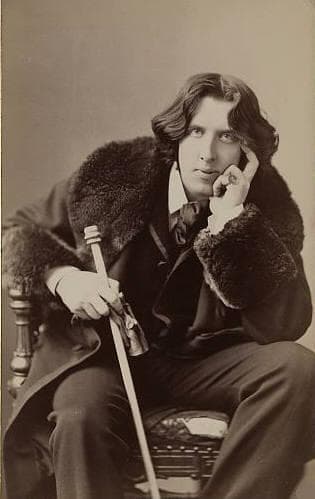
Oscar Fingal O'Fflahertie Wills Wilde was an Irish poet and playwright. After writing in different forms throughout the 1880s, he became one of the most popular playwrights in London in the early 1890s. He is best remembered for his epigrams and plays, his novel The Picture of Dorian Gray, and the circumstances of his criminal conviction for gross indecency for consensual homosexual acts in "one of the first celebrity trials", imprisonment, and early death from meningitis at the age of 46.
Similar books
- Frankenstein: The 1818 Text
Mary Shelley
3.8 (1.2M) average on GoodreadsFantasyExplores themes of creation, monstrosity, and the consequences of unchecked ambition.
- Strange Case of Dr. Jekyll and Mr. Hyde
Robert Louis Stevenson
3.9 (147k) average on GoodreadsExamines the duality of human nature and the hidden darkness within an outwardly respectable individual.
- Harry Potter and the Sorcerer's Stone
J.K. Rowling
4.5 (7M) average on GoodreadsFantasyRescued from a miserable life under the stairs, an orphaned boy discovers he's a wizard destined for a magical school, where he uncovers a dangerous secret tied to the dark wizard who murdered his parents.
- The Hunger Games
Suzanne Collins
4.3 (6.4M) average on GoodreadsFantasyIn a future where children fight to the death on live television, Katniss Everdeen volunteers for the arena, turning a death sentence into a fight for survival and a spark of rebellion.
- 1984
George Orwell
4.2 (3.1M) average on GoodreadsPoliticsIn a future where surveillance and thought control are absolute, a man's search for truth clashes with the Party, showing that hope can be a form of rebellion.
- Divergent
Veronica Roth
4.2 (2.9M) average on GoodreadsFantasyIn a society divided by virtues, a sixteen-year-old's difference from the norm starts a rebellion that threatens her world.






Enjoyed the summary?
A summary gives you the shape of the book. The book itself has the detail, the examples and the voice.
Find The Picture of Dorian Gray on AmazonAs an Amazon Associate, BookBrief earns from qualifying purchases. How we're funded