

Synopsis
Covers the whole plot, including the ending.
- Difficulty
- Medium
- Pacing
- Moderate
- Mood
- Dark, Romantic, Rebellious, Desperate
- Read it if
- You enjoy dystopian settings with a blend of historical romance, political intrigue, and a fight against oppression.
- Skip it if
- You dislike dark themes, morally grey characters, or a focus on societal decay and rebellion.
Masque of the Red Death Plot Summary
Covers the whole plot, including the ending.
A Life of Debauchery in a Dying City
Araby Worth lives in a decaying, walled-off city, destroyed by the Red Death plague. Her family, once rich, struggles now, and her younger brother, April, has a mysterious illness. To deal with the harsh reality, Araby spends her nights at the Debauchery Club, run by Will. Here, she escapes by dancing, drinking, and the brief excitement of being anonymous behind a mask. Her best friend, Lisbeth, often goes with her, seeking the same escape. Araby's father, a scientist, tries to find a cure for the plague, often ignoring his family, while her mother has accepted their situation. Araby feels a strong responsibility for April, whose condition gets worse each day, making her desperate for any distraction.
Encounters and Growing Suspicions
At the Debauchery Club, Araby often meets Elliott, a charming and smart aristocrat who seems to know more than he says. Their talks always have hidden meanings and veiled comments about the city. Araby finds herself drawn to both Elliott's intelligence and Will's dark appeal, feeling a complicated pull between them. She notices strange things at the club: people disappearing, quiet conversations, and a general feeling of unease beneath the fun. Her suspicions grow because of Elliott's warnings about the city's rulers, the Prosperos, and the club's true purpose, suggesting it is more than just an escape. She starts to think the Red Death is not just a natural disaster.
April's Decline and a Desperate Plea
April's health quickly worsens, showing symptoms like the Red Death, but with unsettling differences. Araby's father is consumed by his research, unable to find a solution. Desperate, Araby asks Will, the owner of the Debauchery Club, for help. She senses that Will has knowledge or resources beyond what he shows. Will, surprisingly, agrees to help April, but his help comes with a cost, suggesting a deeper involvement in the city's hidden workings. This interaction confirms Araby's belief that powerful forces are at play, controlling the city and its people, and that Will is important in this game. She will do anything to save her brother.
Unveiling the Prosperos' Control
Elliott trusts Araby with the truth about the Prosperos, the city's ruling elite. He explains that the entire city is an experiment, a 'masque' designed to study human behavior under extreme conditions of plague and despair. The Red Death itself is not a natural disease but a manufactured virus, carefully managed and released by the Prosperos to keep their power and do their research. The Debauchery Club, Elliott explains, is a controlled place for observing and even 'removing' people. Araby is shocked by this, realizing her whole life has been a lie, and that her family, including April, are just pieces in a bigger, cruel game by the Prosperos.
Will's True Allegiance and a Proposal
Will admits who he really is and his deep involvement with the Prosperos. He reveals that he is one of them, though he has become unhappy with their methods, and that he helped create the Debauchery Club as part of their experiment. However, he has come to hate their ways and wants to secretly work against them. He offers Araby a dangerous proposal: join him in his efforts to expose and overthrow the Prosperos. He needs her perspective and her father's scientific knowledge to succeed. Araby is torn, struggling with the betrayal and the huge risk, but her love for April and her growing sense of justice make her consider Will's offer, despite her deep mistrust.
The Plan to Expose the Truth
Araby decides to join Will and Elliott in their dangerous mission. Their plan is to gather strong evidence of the Prosperos' manipulation, focusing on how the Red Death was engineered and the city's role as a human laboratory. Araby's father, though he didn't know at first, has important research notes and samples that could reveal the truth. Elliott, with his connections, can help navigate the Prosperos' inner circles, while Will, using his position at the Debauchery Club, can help with communication and movement. The risks are very high, as failure means not only their deaths but the continued suffering of the entire city and no chance for April's survival.
Lisbeth's Betrayal and a Narrow Escape
As Araby gets more involved in the resistance, she discovers that Lisbeth, her best friend, has been secretly working for the Prosperos as an informant. Lisbeth, driven by fear and wanting to be safe in the collapsing city, betrays Araby and their plans to the rulers. This betrayal leads to a tense fight, forcing Araby, Will, and Elliott to run from Prospero agents. The escape is dangerous, showing the constant threat and the enemies' efficiency. Araby is heartbroken by Lisbeth's actions, but the urgency of their mission makes her personal pain less important, strengthening her resolve to fight for the truth.
Confronting the Prosperos
Using their combined skills and knowledge, Araby, Will, and Elliott manage to get into the heavily guarded central compound of the Prosperos. They want to access the main laboratory and communication systems to broadcast their findings to the outside world, if one still exists. Getting in is full of danger, requiring them to get past complex security and confront Prospero guards. Araby's father, now fully aware of the deception, helps by understanding scientific data and bypassing security related to the plague's origins. The tension is high as they get closer to the center of the Prosperos' operation, knowing that one mistake could end everything.
The Broadcast and Aftermath
In a big confrontation, Araby and her allies succeed in broadcasting the truth about the Red Death and the Prosperos' experiments to the outside world. The broadcast reveals their cruelty, showing the city as a large, dark stage. However, this win comes at a great cost. Elliott makes a sacrifice, drawing attention away from Araby and Will, making sure they escape. The city falls into chaos as the people learn of the deception, leading to a widespread rebellion against the Prosperos. Araby is left with the consequences of their choices and the uncertain future without the Prosperos' control, but also a small hope for a real cure for April and a new beginning.
A New Beginning, A Lingering Hope
With the Prosperos' power broken, the city begins a slow, hard process of healing and rebuilding. Araby, Will, and her father work to develop a real cure for the Red Death and April's specific illness, using the Prosperos' stolen research. April slowly starts to get better, a sign of hope for Araby. The outside world, having received the broadcast, starts to send aid and support. Araby and Will, having formed a strong, complex bond through their shared experience, look towards an uncertain future. While the past's scars remain, there is a feeling of freedom and the promise of a world where truth and kindness can finally grow, free from the manipulative 'masque' of the Red Death.
Principal Figures
Araby Worth
Protagonist
A young woman seeking escape and truth in a plague-ridden city.
Araby is the central protagonist, a resilient and observant young woman living in a city ravaged by the Red Death. She initially seeks oblivion in the Debauchery Club to cope with the despair of her family's decline and her brother April's illness. Beneath her desire for escape lies a deep sense of loyalty and a growing suspicion about the true nature of her world. Her intelligence and empathy drive her to question authority and ultimately fight for justice, even when it puts her life at risk. She is fiercely protective of her brother and is willing to make difficult choices for his survival.
Relationships: Will (Complex romantic interest, ally, co-conspirator); Elliott (Intellectual romantic interest, ally, mentor); April Worth (Younger brother, her primary motivation); Lisbeth (Best friend, later betrayer); Mr. Worth (Father, scientist, initially oblivious to the truth)
Will
Supporting/Love Interest
Enigmatic proprietor of the Debauchery Club, with a hidden agenda.
Will is the dark, charismatic owner of the Debauchery Club. He appears to be a figure of decadence and control, but beneath his aloof exterior lies a complex past and a deep-seated resentment towards the Prosperos. He is revealed to be a disillusioned member of the ruling elite, using his position to subtly undermine them. Will is intelligent, manipulative when necessary, but ultimately driven by a desire for justice and a genuine connection with Araby. He provides a stark contrast to Elliott's more intellectual charm, offering a dangerous yet compelling path to truth.
Relationships: Araby Worth (Complex romantic interest, ally, co-conspirator); Elliott (Reluctant ally in the resistance); Prosperos (Former affiliation, now actively working against them)
Elliott
Supporting/Love Interest
Wickedly smart aristocrat who exposes the city's dark secrets.
Elliott is a charming and highly intelligent aristocrat, often found at the Debauchery Club. He possesses a keen intellect and a deep understanding of the city's political landscape, which he uses to subtly guide Araby towards the truth. He is one of the first to reveal the Prosperos' true nature and the engineered reality of the Red Death. Elliott is a strategist and a scholar, offering intellectual guidance and moral support to Araby. His self-sacrificing nature underscores his commitment to justice and his deep care for Araby and the city's inhabitants.
Relationships: Araby Worth (Intellectual romantic interest, ally, mentor); Will (Reluctant ally in the resistance); Prosperos (Opponent, actively working against their regime)
April Worth
Supporting
Araby's younger brother, whose mysterious illness is a key plot driver.
April is Araby's younger brother, whose deteriorating health serves as a primary motivator for Araby's actions. He suffers from a variant of the Red Death, which eventually proves to be a key piece of evidence in exposing the Prosperos' experiments. April is portrayed as vulnerable and innocent, his suffering highlighting the cruelty of the Prosperos' regime. His eventual recovery symbolizes the hope for a future free from their control and the possibility of genuine healing for the city.
Relationships: Araby Worth (Older sister, protector); Mr. Worth (Father)
Lisbeth
Supporting
Araby's best friend, who betrays her out of fear.
Lisbeth is Araby's best friend, initially sharing in the escapism of the Debauchery Club. She represents the segment of the population driven by fear and self-preservation in the face of the plague and the Prosperos' power. Her betrayal of Araby, though painful, highlights the moral compromises people are forced to make in a dystopian society. Her character serves as a foil to Araby's growing courage, illustrating the different ways individuals react to extreme pressure.
Relationships: Araby Worth (Best friend, later betrayer)
Mr. Worth
Supporting
Araby's scientist father, obsessed with finding a cure.
Mr. Worth is Araby's father, a dedicated but initially oblivious scientist. He is consumed by his research into the Red Death, often neglecting his family in his quest for a cure. His scientific expertise, though initially misdirected by the Prosperos' false information, ultimately becomes crucial in understanding the engineered nature of the plague. His character represents the scientific community that can either be manipulated by power or become a force for truth once enlightened.
Relationships: Araby Worth (Daughter); April Worth (Son)
Mrs. Worth
Mentioned
Araby's mother, resigned to their family's fate.
Mrs. Worth is Araby's mother, largely resigned to the grim realities of their plague-ridden city and their family's declining fortunes. She is less active in the plot, primarily serving to illustrate the despair and apathy that can take hold in such a society. Her character provides a contrast to Araby's growing defiance and her husband's scientific obsession, embodying a quiet, almost defeated acceptance of their circumstances.
Relationships: Araby Worth (Daughter); Mr. Worth (Husband)
The Prosperos
Antagonist
The shadowy, manipulative ruling elite of the city.
The Prosperos are the unseen, yet omnipresent, antagonists of the story. They are the ruling elite who have engineered the Red Death and transformed the city into a controlled experiment, a 'masque' to study human behavior under extreme conditions. They are ruthless, intelligent, and believe themselves superior, viewing the city's inhabitants as mere test subjects. Their manipulation of information and control over every aspect of life make them a formidable foe, representing the dangers of unchecked power and scientific hubris.
Relationships: Will (Former member, now enemy); Elliott (Enemy); Araby Worth (Target, opponent)
Themes & Insights
Identity and Self-Discovery
Araby's journey is about finding out who she is amid chaos and lies. At first, she tries to lose herself in the Debauchery Club, but through her relationships with Will and Elliott, and what she learns about her city, she finds a deeper purpose. She changes from just watching to actively participating, finding her strength and voice in the fight for truth. The masks at the club represent hidden selves and the appearances people put on, which Araby eventually removes to show her true, brave self.
“Perhaps that was what the masks did. They allowed you to be yourself. Or they allowed you to be what you thought you should be.”
Truth vs. Deception
A main theme is the sharp difference between the reality the Prosperos created and the terrible truth. The whole city is a 'masque' – a big lie meant to control its people. Araby's goal is to uncover this truth, challenging the lies that have guided her life. The discoveries about the engineered plague and the city's purpose make characters face uncomfortable realities, showing the dangers of not knowing and the power of knowledge. The 'masque' itself emphasizes this theme.
“Everything was a lie. The sickness, the deaths, the fear. It was all a carefully orchestrated performance.”
Freedom vs. Control
The book looks at the conflict between individual freedom and systemic control. The Prosperos have complete control over the city, deciding life, death, and even information. The Debauchery Club, ironically, offers a false sense of freedom through pleasure, which is itself controlled by Will and, through him, the Prosperos. Araby's rebellion represents the fight for true freedom – intellectual, physical, and emotional – from the oppressive forces that try to control every part of human life. The walled city clearly shows this controlled environment.
“We are all just puppets, Araby. Dancing to their tune, thinking we're free.”
Love and Sacrifice
Love, in its different forms, drives many of the characters' actions and often requires sacrifice. Araby's strong love for her brother April is her main reason for seeking a cure and later for joining the rebellion. The growing romantic relationships between Araby, Will, and Elliott also involve sacrifice, as characters risk their lives for each other and for the common good. Elliott's final act of self-sacrifice is an example of this theme, showing that true love can be deep selflessness when facing overwhelming odds.
“Some things are worth dying for, Araby. And some things are worth living for, even when the world tells you there's no hope.”
Decay and Renewal
The city itself shows decay and the possibility for new beginnings. Physically falling apart because of the plague, it reflects the moral decay of its rulers and the despair of its people. The Debauchery Club, with its shiny exterior over rot, is a small example of this. However, Araby's fight and the eventual exposure of the Prosperos offer a promise of renewal. The city, and its people, must first break down the old, corrupt structures to build something new and healthier, symbolizing hope for a rebirth after the apocalypse.
“The city was dying, but even in death, there was a terrible, beautiful dance.”
Plot Devices & Literary Techniques
The Masque
The literal and metaphorical mask of the city's deception.
The 'masque' functions on multiple levels. Literally, it refers to the masked balls at the Debauchery Club, allowing characters to hide their identities and indulge in escapism. Metaphorically, it represents the entire city's existence – a grand, orchestrated deception by the Prosperos, who have masked the true nature of the plague and their experimental control. The title itself points to this central device, underscoring the theme of truth versus deception and the performative nature of their dystopian reality.
The Red Death
A weaponized plague used for social control and experimentation.
The Red Death is not merely a natural disaster but a plot device that serves as the primary catalyst for the story's conflict and atmosphere. It is revealed to be an engineered virus, deliberately controlled and released by the Prosperos to maintain power and conduct their social experiments. This revelation transforms the plague from a force of nature into a tool of oppression, deepening the antagonist's cruelty and raising the stakes for Araby's quest to find a genuine cure and expose the truth. April's specific variant of the disease is also crucial evidence.
The Debauchery Club
A controlled environment for observation and escapism.
The Debauchery Club acts as a central setting and a key plot device. It is presented as a place of hedonistic escape from the grim reality of the plague, but it is actually a carefully monitored environment established by the Prosperos (through Will) to observe and control the population. It serves as a meeting point for key characters, a place for revelations, and a symbol of false freedom. The masks worn there embody the hidden truths and identities of its patrons, including Araby herself.
The Walled City
A physical manifestation of isolation and controlled experimentation.
The walled city serves as a powerful symbol and plot device, physically isolating the inhabitants and reinforcing the idea of a controlled experiment. The walls not only keep the plague 'contained' but also prevent outside interference and keep the truth from escaping. It creates a claustrophobic atmosphere, intensifying the sense of entrapment and desperation. Breaking through these walls, both literally and figuratively, becomes a goal for Araby and her allies, representing the desire for freedom and connection with a wider, unmanipulated world.
Masque of the Red Death Quotes
“The Red Death had long devastated the country. No pestilence had ever been so fatal, or so hideous.”
“But the Prince Prospero was happy and dauntless and sagacious.”
“He summoned to his presence a thousand hale and light-hearted friends from among the knights and dames of his court.”
“The external world could take care of itself.”
“There were buffoons, there were improvisatori, there were ballet-dancers, there were musicians, there was Beauty, there was wine.”
“All these and security were within. Without was the 'Red Death.'”
“The mask which concealed the visage was made so nearly to resemble the countenance of a stiffened corpse.”
“And now was acknowledged the presence of the Red Death.”
“He had come like a thief in the night.”
“And one by one dropped the revellers in the blood-bedewed halls of their revel.”
“And Darkness and Decay and the Red Death held illimitable dominion over all.”
“The prince had provided all the appliances of pleasure.”
“There were seven—an imperial suite.”
“And the life of the ebony clock went out with that of the last of the gay.”
Quiz
10 questions on the plot and the characters. Each answer comes with a short explanation.
Question 1
What is the name of the club where Araby spends her nights trying to forget her despair?
- The Red Death Club
- The Debauchery Club
- The Oblivion Lounge
- The Masquerade Club
Show answer
B. The Debauchery Club In the book, Araby escapes her grief by spending nights at the Debauchery Club, where she indulges in beautiful dresses, glittery makeup, and ways to forget the plague-ravaged world.
Question 2
What devastating event has left the city in ruins and the population living in fear?
- A war with neighboring kingdoms
- A magical curse
- A devastating plague
- An alien invasion
Show answer
C. A devastating plague The story is set in a city decimated by a plague, which has killed much of the population and left the survivors in constant fear of infection as the infrastructure crumbles.
Question 3
Who is the proprietor of the Debauchery Club that Araby meets?
- Elliott
- Will
- Prince Prospero
- Dr. Worth
Show answer
B. Will Will is described as the terribly handsome proprietor of the Debauchery Club, whom Araby encounters in the depths of the club and her own despair.
Question 4
What does Araby initially use to cope with her grief and the horrors of the plague-ridden city?
- Scientific research to find a cure
- Political activism to rebuild society
- Nights at the Debauchery Club with dresses and makeup
- Isolating herself in her home
Show answer
C. Nights at the Debauchery Club with dresses and makeup Araby seeks oblivion through the distractions of the Debauchery Club, including beautiful dresses and glittery makeup, to forget the plague and her personal despair.
Question 5
Which character is described as a 'wickedly smart aristocrat' that Araby meets?
- Will
- Elliott
- Araby's father
- The Red Death figure
Show answer
B. Elliott Elliott is introduced as a wickedly smart aristocrat who, along with Will, is not what he seems and has secrets that intertwine with Araby's journey.
Question 6
What does Araby potentially find in the depths of the club and her despair that gives her a new purpose?
- A cure for the plague
- Wealth and power
- Something to live for and fight for
- Escape from the city
Show answer
C. Something to live for and fight for Through her encounters with Will and Elliott, Araby moves beyond seeking oblivion and discovers reasons to live and fight, regardless of the personal cost.
Question 7
How are Will and Elliott characterized in relation to their true natures?
- They are exactly as they appear on the surface
- They are both secretly plague survivors
- Neither is what he seems, and both have secrets
- They are brothers working together
Show answer
C. Neither is what he seems, and both have secrets The book emphasizes that Will and Elliott are not what they seem, with hidden secrets that add complexity to their roles in Araby's life and the broader plot.
Question 8
What overarching theme is highlighted by Araby's journey from seeking oblivion to finding something to fight for?
- The inevitability of death in a plague-stricken world
- The corruption of aristocracy during crises
- Finding hope and purpose amidst despair and ruin
- The dangers of hedonism in society
Show answer
C. Finding hope and purpose amidst despair and ruin Araby's character arc centers on transitioning from escapism and despair to discovering meaningful causes to live and fight for, reflecting themes of resilience and redemption.
Question 9
In the context of the book, what does the 'Masque of the Red Death' likely symbolize or reference?
- A literal mask worn by plague victims
- The deceptive appearances and secrets of characters
- A festival celebrating the end of the plague
- A type of dance performed at the Debauchery Club
Show answer
B. The deceptive appearances and secrets of characters Drawing from Edgar Allan Poe's original story, the title suggests themes of masquerade and hidden truths, aligning with the book's focus on characters like Will and Elliott who conceal their real intentions and identities.
Question 10
What is implied about the societal state in the city beyond the personal struggles of Araby?
- It is thriving with new technological advances
- It is under strict military control
- It is crumbling with widespread fear and secrecy
- It has been abandoned by all residents
Show answer
C. It is crumbling with widespread fear and secrecy The setting is described as a city in ruins where the plague has left survivors in fear, infrastructure is decaying, and secrets abound, creating a backdrop of societal collapse that drives the characters' actions.
Masque of the Red Death FAQ
What is 'Masque of the Red Death' about?
The novel follows Araby Worth in a plague-ravaged city where society has collapsed. Araby seeks escape at the Debauchery Club, where she becomes entangled with two mysterious men—Will, the club's handsome proprietor, and Elliott, a cunning aristocrat—and discovers secrets that push her to find purpose beyond mere survival.
Why should I read 'Masque of the Red Death'?
It blends fantasy, historical fiction, and dystopian elements with a gripping romance, offering a fresh retelling of Edgar Allan Poe's classic story. The atmospheric setting, complex characters like Araby, Will, and Elliott, and themes of resilience in decay make it compelling for YA and adult readers alike.
What is the background/setting of 'Masque of the Red Death'?
Set in a crumbling city devastated by a deadly plague, the world is in ruins with a fearful population. The Debauchery Club serves as a central hub of escapism, contrasting the outside decay with its glittery, decadent interior where characters like Araby hide from reality.
What are the most memorable quotes?
While specific quotes vary, key themes include Araby's despair ('Nights in the Debauchery Club... tantalizing ways to forget it all') and her transformation ('Araby may find not just something to live for, but something to fight for'). The prose often highlights the tension between oblivion and purpose in the plague-ridden world.
What writing style does the author use?
Bethany Griffin employs a lush, atmospheric style with vivid descriptions of the decaying city and the opulent club. The narrative blends introspective first-person perspective from Araby with fast-paced plot twists, creating a moody tone that mirrors the Gothic and dystopian elements.
What minor details add significant meaning?
Araby's focus on 'beautiful dresses and glittery makeup' at the club symbolizes her attempt to mask pain and societal collapse. The club's name, 'Debauchery,' subtly critiques the elite's escapism while the plague ravages others, hinting at class divides and moral decay.
What are some subtle foreshadowing moments?
Early scenes of Araby's despair in the club foreshadow her eventual shift to fighting for a cause. Will and Elliott's mysterious natures—'neither is what he seems'—hint at later revelations about their roles in the city's power struggles and secrets tied to the plague.
What unexpected character connections exist?
Will and Elliott, though initially presented as rivals for Araby's attention, share hidden ties to the city's aristocracy and plague response. Their secrets intertwine with Araby's past, revealing how their lives are interconnected beyond the club's surface interactions.
What are unspoken character motivations?
Araby's obsession with the club stems from guilt and trauma over plague-related losses, driving her to seek oblivion. Will's role as proprietor masks a deeper desire for control in a chaotic world, while Elliott's aristocratic demeanor hides ambitions to reshape the city's power structure.
What psychological complexities do characters exhibit?
Araby grapples with survivor's guilt and depression, using hedonism as a coping mechanism. Will balances charm with manipulative tendencies, reflecting the moral ambiguity of leadership in crisis. Elliott's intelligence is shadowed by ruthless pragmatism, showing how desperation warps ethics.
What are the major emotional turning points?
Araby's realization that oblivion in the club is unsustainable marks a key shift. Her growing attachments to Will and Elliott force her to confront secrets, leading to moments of betrayal and sacrifice that redefine her purpose from mere survival to active resistance against the plague's horrors.
How do relationship dynamics evolve?
Araby's interactions with Will and Elliott transform from superficial attractions to complex alliances fraught with trust issues. As secrets unravel, these relationships become pivotal in her journey, blending romance with political intrigue and forcing her to choose between personal desires and broader fights.
Which parts remain ambiguous or open-ended?
The true origins of the plague and the full extent of the city's collapse are left partly mysterious. The fates of certain characters and the ultimate resolution of power struggles between factions like the aristocracy and club underworld invite interpretation beyond the main plot.
What are controversial scenes or decisions?
Araby's initial passivity and hedonistic escape in the club may be seen as negligent amid societal crisis. Will and Elliott's secretive manipulations raise ethical questions about using deception for survival, sparking debate on whether their actions are justified in the plague-ridden world.
'Masque of the Red Death' ending explained: how it ends & what it means
Without spoiling specifics, the climax involves Araby embracing a cause to fight for, often at great personal cost. The ending suggests themes of redemption and agency, implying that even in ruin, individuals like Araby can find meaning through resistance and connection, rather than mere escape.
Similar books
- The Hunger Games
Suzanne Collins
4.3 (6.4M) average on GoodreadsFantasyFeatures a dystopian society, a young female protagonist fighting against an oppressive elite, and themes of rebellion and survival.
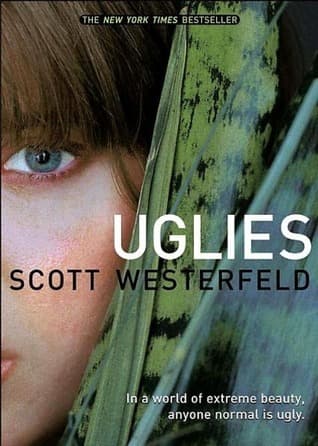
- Uglies
Scott Westerfeld
3.9 (560k) average on GoodreadsFantasyExplores a society with strict social divisions and a protagonist who uncovers a hidden truth about their world.
- Throne of Glass
Sarah J. Maas
4.2 (596k) average on GoodreadsFantasyOffers a strong female lead, elements of romance and intrigue, and a fight against a tyrannical power.
- Cinder
Marissa Meyer
4.1 (683k) average on GoodreadsFantasyBoth are YA dystopian sci-fi retellings, but Cinder offers a more straightforward narrative with clear technological explanations and a lighter tone. Masque is darker, more atmospheric, and prioritizes psychological dread and gothic aesthetics over detailed world-building of its futuristic elements.
- Harry Potter and the Sorcerer's Stone
J.K. Rowling
4.5 (7M) average on GoodreadsFantasyRescued from a miserable life under the stairs, an orphaned boy discovers he's a wizard destined for a magical school, where he uncovers a dangerous secret tied to the dark wizard who murdered his parents.
- 1984
George Orwell
4.2 (3.1M) average on GoodreadsPoliticsIn a future where surveillance and thought control are absolute, a man's search for truth clashes with the Party, showing that hope can be a form of rebellion.





Enjoyed the summary?
A summary gives you the shape of the book. The book itself has the detail, the examples and the voice.
Find Masque of the Red Death on AmazonAs an Amazon Associate, BookBrief earns from qualifying purchases. How we're funded