
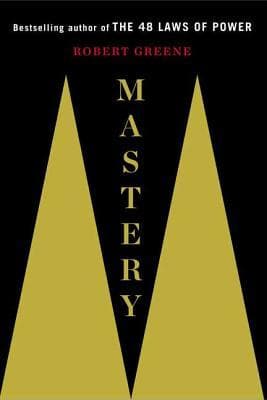
Core Idea
- Difficulty
- Medium
- Read it if
- You are ambitious, feel a strong calling towards a particular field, and are looking for a detailed, historical roadmap to achieving excellence and profound expertise in your chosen craft.
- Skip it if
- You prefer quick fixes, are looking for superficial productivity hacks, or are not interested in historical examples and philosophical reflections on human potential.
Key Takeaways from Mastery
The Life's Task
Discover your unique calling and align your career with your deepest inclinations.
Greene states that mastery starts when you find your 'Life's Task'—a deep, often forgotten, childhood interest that shows your unique talent. This is not just about finding a job you like, but about recognizing a strong pull toward a specific subject or activity. This initial interest, if cared for, drives lasting effort and resilience. Many masters, from Martha Graham to V.S. Ramachandran, link their lasting passion to an early, almost natural attraction to their field. Ignoring this inner voice for outside pressures or what seems 'practical' leads to a disconnected life and a shallow engagement with work, making true mastery impossible. Connecting with this original desire gives an endless source of energy and focus.
“The first step in attaining mastery is to choose a field that resonates with your deepest inclinations and passions.”
In the book: Greene highlights the early life of Charles Darwin, whose childhood fascination with collecting specimens and observing nature, though initially discouraged, ultimately led to his groundbreaking work in natural selection. This deep-seated curiosity was his Life's Task.
Try this: Reflect on your childhood fascinations and recurring interests. What subjects or activities captivated you effortlessly? Consider how these inclinations might be integrated into your current work or lead you towards a new path, even if it requires unconventional thinking.
Related ideas: life-s-task, innate-inclination, passion-discovery
The Apprenticeship Phase
Embrace disciplined learning and humble observation to build foundational skills.
The apprenticeship is a vital, often long, period of intense learning and skill development. Greene stresses that this phase is not about ego or quick rewards, but about humbly committing to the craft and a mentor. It has three main parts: careful observation, skill building, and trying new things. During this time, the apprentice must avoid trying to innovate too soon. Instead, they should focus on learning the basic rules and methods of their chosen field. This needs great patience, discipline, and a willingness to make mistakes and learn from them. Many people who want to be masters fail here because they lack the strength to do the often boring and hard work needed to build a strong base.
“The apprenticeship is not a glamorous period, but it is the most critical for building the deep foundation of skills and knowledge necessary for true mastery.”
In the book: Benjamin Franklin's rigorous apprenticeship as a printer, where he meticulously learned every aspect of the trade from typesetting to writing, provided him with a practical education and discipline that served him throughout his diverse career.
Try this: Identify areas where your foundational skills are weak. Seek out mentors or resources that can guide you through a structured learning process. Commit to deliberate practice, breaking down complex skills into smaller, manageable parts, and focusing on improvement rather than perfection.
Related ideas: apprenticeship, deliberate-practice, skill-acquisition, mentorship
Mentorship as Accelerated Learning
Strategically choose and learn from masters to accelerate your journey.
Greene emphasizes how important a mentor is for becoming a master. A mentor is more than just a source of facts; they represent the field's wisdom. They offer useful feedback, emotional support, and insights that books alone cannot give. The relationship, however, is a two-way street. The apprentice must show respect, a desire to learn, and a willingness to work hard. Greene points out that the best apprentices often 'steal' knowledge from their mentors, not in a bad way, but by closely watching, learning, and then changing what they have learned to create their own style. The goal is not to be a copy, but to learn the core ideas and then go beyond them.
“A good mentor is not merely a teacher, but a guide who helps you see the terrain with new eyes and avoid the pitfalls they themselves encountered.”
In the book: The relationship between composer Joseph Haydn and Wolfgang Amadeus Mozart, where Haydn served as a mentor, offering guidance and critique that profoundly shaped Mozart's development, even as Mozart eventually surpassed him.
Try this: Actively seek out individuals who embody the mastery you aspire to. Offer your assistance, demonstrate your commitment, and be an eager, humble learner. Don't be afraid to ask questions, but also learn to observe and deduce independently.
Related ideas: mentorship, learning-from-masters, accelerated-growth
The Creative Active Phase
Move beyond imitation to innovate and reshape your field with original contributions.
After the intense learning of the apprenticeship, the master enters a 'creative active' phase. Here, they move past just copying others and start to experiment, innovate, and eventually change their field. This is where all the learned knowledge and skills are put together and used in new ways. It requires a willingness to challenge old ideas, take risks, and handle criticism. Greene says this phase is marked by a deep understanding of the field's basic rules. This allows the master to see new connections and possibilities that others miss. It is a time of strong intellectual and creative growth, where the person's unique view finally leads to important contributions.
“True mastery is not merely about accumulating knowledge, but about transforming that knowledge into original creations.”
In the book: Leonardo da Vinci's career, after his apprenticeship with Verrocchio, saw him constantly experimenting across various disciplines, combining art, science, and engineering in unprecedented ways, leading to innovations in painting, anatomy, and invention.
Try this: Once you have a strong foundation, consciously seek opportunities to experiment and deviate from established methods. Question assumptions, look for connections between seemingly disparate ideas, and don't be afraid to propose new solutions, even if they seem unconventional.
Related ideas: creative-innovation, originality, synthesizing-knowledge
Social Intelligence and The Inner Circle
Navigate the social dynamics of your field to protect and advance your work.
Greene emphasizes that mastery is not done alone; it is tied to social interactions. The master must develop sharp social skills to handle the politics, jealousies, and power struggles in any field. This means understanding people, figuring out their motives, and strategically building a group of supporters who believe in their vision. It also means finding and stopping potential saboteurs without getting caught up in conflict. Ignoring the social side can lead to excellent work being ignored or ruined, no matter how good it is. The master learns to protect their creative space and promote their ideas by skillfully managing relationships and how others see them.
“The master understands that brilliance alone is not enough; one must also navigate the human element, the politics and jealousies that inevitably arise.”
In the book: The political maneuvering and strategic alliances Benjamin Franklin cultivated throughout his diplomatic career were as crucial to his success as his scientific and intellectual achievements.
Try this: Actively observe the social dynamics within your workplace or industry. Identify key influencers and potential detractors. Cultivate genuine relationships based on mutual respect and shared goals. Learn to communicate your ideas effectively, anticipating and addressing potential objections.
Related ideas: social-intelligence, networking, career-strategy, politics-of-work
The Return to the Primal Mind
Access intuitive, holistic thinking by breaking free from conventional thought patterns.
Greene suggests that true masters eventually move past usual, linear thinking to reach a 'primal mind.' This is a more intuitive, complete, and flexible way of understanding. It does not mean giving up logic, but combining it with a deeper, often subconscious, ability to see patterns. Through years of deep focus, the master develops an almost natural understanding of their field. This allows them to have sudden insights and see connections that others miss. This state involves strong focus and a blending of conscious and unconscious thought, leading to breakthroughs that seem easy but come from much past effort. It is about seeing the 'hidden' forces at work and trusting one's instincts.
“The highest form of intelligence is not analytical, but intuitive—a return to the primal mind where connections are made effortlessly.”
In the book: Albert Einstein's famous 'thought experiments' and his ability to visualize complex physics problems are examples of this primal, intuitive thinking, allowing him to arrive at solutions that defied conventional logic.
Try this: After deep study, practice stepping back from purely analytical thought. Engage in activities that encourage free association, daydreaming, or 'mind-wandering' related to your field. Trust your intuition more, and pay attention to 'aha!' moments that arise from seemingly unrelated thoughts.
Related ideas: intuitive-thinking, holistic-understanding, pattern-recognition, subconscious-intelligence
Overcoming Stagnation and Complacency
Continuously challenge yourself to avoid the pitfalls of success and maintain growth.
Success, Greene warns, can be a master's biggest challenge. Once a certain level of achievement is reached, it is tempting to relax, become satisfied, or just repeat past successes. This leads to stagnation and a loss of creative ability. True masters, however, keep challenging themselves and reinventing their work. They actively look for new problems, learn new skills, and even purposely put themselves in uncomfortable situations to force more growth. This means being willing to be a 'beginner' again in new areas. This keeps the mind sharp and open to new ideas, ensuring their mastery stays active and developing.
“The greatest danger to a master is not failure, but the complacency that comes with success.”
In the book: The later career of musician Miles Davis, who continually reinvented his sound and embraced new musical forms, refusing to be confined by past successes and constantly pushing the boundaries of jazz.
Try this: Once you achieve a goal, immediately set a new, more challenging one. Seek out new skills or areas of knowledge that complement or expand your existing expertise. Actively solicit critical feedback, even if it's uncomfortable, to identify areas for improvement.
Related ideas: continuous-improvement, self-reinvention, anti-complacency, growth-mindset
The Mastery of Self
Cultivate emotional discipline and self-awareness to prevent internal obstacles.
Greene states that external mastery is not possible without internal mastery. This means deeply understanding and carefully managing one's own emotions, biases, and psychological weaknesses. Uncontrolled emotions like envy, anger, impatience, or fear can ruin the long and hard path to mastery. They can lead to bad decisions, self-sabotage, and a loss of focus. The master learns to observe their inner state without bias, to separate from immediate emotional reactions, and to develop patience, resilience, and a strong commitment to their Life's Task. This self-awareness helps them handle the unavoidable setbacks and criticisms that come with any ambitious goal, keeping them steady on their path.
“Before you can master a field, you must first master yourself—your emotions, your weaknesses, your self-defeating patterns.”
In the book: The stoicism and emotional control displayed by figures like Abraham Lincoln, who, despite immense personal and political pressures, maintained a calm demeanor and rational decision-making ability, crucial for his leadership.
Try this: Practice mindfulness and self-observation to identify your emotional triggers and recurring negative patterns. Develop strategies to manage stress and setbacks constructively. Cultivate patience and resilience, understanding that the path to mastery is long and fraught with challenges.
Related ideas: self-mastery, emotional-intelligence, resilience, self-awareness
Embracing the Process, Not Just the Outcome
Find deep satisfaction in the journey of learning and creation itself.
Ultimately, Greene shows that mastery is not an end point but an ongoing process. Those who achieve true greatness are not only motivated by external rewards like fame or money. They are driven by a love for the work itself—solving problems, learning, creating, and constantly improving their skills. This deep involvement with the process provides a lasting sense of purpose and satisfaction, making the difficult journey sustainable. When the focus shifts from the result to the process, setbacks become chances to learn, and the work itself becomes its own reward. This inner motivation is the strongest fuel for sustained effort and a mark of a true master.
“True masters are not simply driven by the desire for recognition or wealth, but by the profound satisfaction found in the process of creation and continuous learning.”
In the book: The relentless dedication of figures like Marie Curie, who pursued scientific discovery with an almost ascetic devotion, driven by the thrill of unraveling nature's secrets rather than personal gain or recognition.
Try this: Shift your focus from purely outcome-driven goals to process-oriented ones. Find joy in the daily tasks, the challenges, and the continuous learning. Celebrate small victories in skill development and problem-solving, fostering an intrinsic love for your craft.
Related ideas: process-orientation, intrinsic-motivation, love-of-craft, lifelong-learning
Mastery Quotes
“The future belongs to those who learn more skills and combine them in creative ways.”
“The greatest danger you face is your own emotionality.”
“You must understand the following: In the game of life, you are not a passenger. You are the pilot.”
“The need to feel important, to feel loved, to feel superior, to feel appreciated, to feel secure, to feel free, to feel powerful, to feel that you are contributing something, to feel that you are making a difference—all of these are powerful drives.”
“Your most important task is to find a field that rouses your interest and best suits your inclinations.”
“The master’s power is his ability to see the whole picture, to grasp the essence of things, to make connections that others miss.”
“The human brain is a pattern-seeking instrument. It seeks to make sense of the world by identifying recurring patterns and connections.”
“To conquer the world, you must first conquer yourself.”
“The greatest masters are those who have maintained a childlike sense of wonder and curiosity throughout their lives.”
“The creative power that you naturally possess is the most important element in your pursuit of mastery.”
“You must be able to endure the pain of this process, the loneliness, the feeling of not knowing, the feeling of being overwhelmed.”
“True intelligence is the ability to adapt to new circumstances, to learn from experience, and to think critically.”
“The goal of your apprenticeship is not to become a clone of your master, but to absorb their spirit, their methods, and then to find your own voice.”
“Do not be afraid of the unknown. It is where you will find your greatest discoveries.”
Quiz
10 questions on the main ideas. Each answer comes with a short explanation.
Question 1
According to Robert Greene in 'Mastery,' what is the initial phase an aspiring master must undertake to discover their life's task?
- Immediately specialize in a niche area of expertise.
- Engage in a period of deep self-exploration to reconnect with their primal inclinations and unique curiosities.
- Seek out as many mentors as possible simultaneously.
- Focus solely on practical skills demanded by the current job market.
Show answer
B. Engage in a period of deep self-exploration to reconnect with their primal inclinations and unique curiosities. Greene emphasizes that the first step to mastery is to discover one's Life's Task by looking inward to primal inclinations, childhood fascinations, and unique curiosities, rather than external pressures or immediate specialization.
Question 2
Which historical figure, featured in 'Mastery,' famously spent years as an apprentice in various workshops, including a goldsmith's and a painter's, before developing his own unique style and becoming a polymath?
- Charles Darwin
- Benjamin Franklin
- Leonardo da Vinci
- Albert Einstein
Show answer
C. Leonardo da Vinci Leonardo da Vinci's early life was characterized by extensive apprenticeships across various crafts, which Greene uses to illustrate the importance of the Apprenticeship Phase in acquiring foundational skills and diverse perspectives.
Question 3
In 'Mastery,' Greene discusses the 'Apprenticeship Phase.' What is the primary purpose of this phase?
- To quickly gain recognition and a prominent position.
- To accumulate wealth and resources for future endeavors.
- To acquire foundational skills, absorb the culture of a field, and learn from a mentor.
- To avoid any form of structured learning and rely solely on self-discovery.
Show answer
C. To acquire foundational skills, absorb the culture of a field, and learn from a mentor. The Apprenticeship Phase is crucial for developing fundamental skills, understanding the conventions of a domain, and benefiting from the guidance of an experienced master, often through observation and imitation.
Question 4
Greene argues that modern education often hinders mastery by promoting what particular myth about genius?
- That genius is solely the result of hard work and deliberate practice.
- That genius is an innate, mystical quality that cannot be cultivated.
- That genius is primarily about networking and social connections.
- That genius is only possible for those from privileged backgrounds.
Show answer
B. That genius is an innate, mystical quality that cannot be cultivated. Greene debunks the myth that genius is a magical, inborn trait, instead asserting that it is the result of a deliberate, structured path of intense focus, learning, and practice.
Question 5
Which contemporary master interviewed in the book, known for her work in animal science and autism advocacy, exemplifies the power of seeing the world from a unique, non-conventional perspective due to her neurological makeup?
- Paul Graham
- Daniel Everett
- Temple Grandin
- Yoky Matsuoka
Show answer
C. Temple Grandin Temple Grandin is prominently featured as a contemporary master whose unique perspective, shaped by her autism, allowed her to revolutionize livestock handling and offer profound insights into animal behavior.
Question 6
Greene introduces the concept of 'The Creative-Active Phase.' What is the defining characteristic of this phase?
- Strict adherence to established rules and traditions.
- Passive observation and imitation of existing masters.
- Rebellion against all forms of structure and discipline.
- Moving beyond imitation to experiment, innovate, and develop one's own unique voice and style.
Show answer
D. Moving beyond imitation to experiment, innovate, and develop one's own unique voice and style. After the foundational learning of the Apprenticeship, the Creative-Active Phase is where the aspiring master begins to actively experiment, synthesize knowledge, and push the boundaries of their field, moving from passive absorption to active creation.
Question 7
Benjamin Franklin's rigorous self-education and systematic practice of writing and rhetoric, as detailed by Greene, primarily illustrate which principle of mastery?
- The importance of natural talent over deliberate effort.
- The power of intense, self-directed practice and continuous self-improvement.
- The necessity of formal university education for all fields.
- That mastery can be achieved quickly through shortcuts.
Show answer
B. The power of intense, self-directed practice and continuous self-improvement. Franklin's story highlights the critical role of self-directed, consistent, and rigorous practice in developing skills and intellectual capabilities, demonstrating that mastery is a cultivated state, not a gift.
Question 8
Greene posits that true mastery involves a fusion of the rational and the intuitive mind. How does he suggest one cultivates this 'higher intelligence'?
- By exclusively relying on logical deduction and suppressing emotional responses.
- By prioritizing gut feelings and rejecting all forms of analytical thought.
- Through years of deep immersion, practice, and reflection that allows for unconscious patterns to emerge and guide conscious decisions.
- By constantly seeking external validation and advice from others.
Show answer
C. Through years of deep immersion, practice, and reflection that allows for unconscious patterns to emerge and guide conscious decisions. Greene argues that true mastery transcends mere technique, evolving into a 'higher intelligence' where years of deep engagement transform conscious knowledge into intuitive understanding, allowing for fluid, insightful action.
Question 9
What is the primary danger Greene warns against in the final 'Mastery' phase, once an individual has achieved a high level of expertise?
- Becoming overly competitive and aggressive towards peers.
- Falling into complacency, rigidity, and the inability to adapt to new ideas or challenges.
- Losing interest in their chosen field and abandoning it entirely.
- Being overwhelmed by the demands of mentorship and teaching others.
Show answer
B. Falling into complacency, rigidity, and the inability to adapt to new ideas or challenges. Greene cautions that even masters can fall prey to complacency, becoming rigid in their thinking and resistant to new ideas. He stresses the importance of maintaining a beginner's mind and continuing to challenge oneself to avoid stagnation.
Question 10
Greene emphasizes the importance of understanding the 'Resistance' or 'False Paths' that can derail an aspiring master. Which of the following is NOT presented as a common pitfall?
- The desire for immediate gratification and shortcuts.
- Choosing a path based on parental or societal expectations rather than one's own primal inclinations.
- The over-reliance on a single mentor to provide all answers, rather than developing independent judgment.
- Embracing a wide variety of diverse experiences and knowledge during the Apprenticeship phase.
Show answer
D. Embracing a wide variety of diverse experiences and knowledge during the Apprenticeship phase. Embracing diverse experiences is encouraged by Greene, especially during the Apprenticeship phase, as it broadens understanding and prevents premature specialization. The other options represent common pitfalls or 'False Paths' that deter individuals from true mastery.
Mastery FAQ
What is the core concept of 'Mastery' by Robert Greene?
The core concept of 'Mastery' is that true power and fulfillment come from achieving mastery in a chosen field. Greene argues that this is an attainable process, not an innate talent, and involves deep learning, practice, and dedication over time.
Does 'Mastery' provide practical steps for career development?
Yes, 'Mastery' offers a structured framework for achieving expertise, including identifying your life's task, undergoing an apprenticeship, developing social intelligence, and eventually merging intuition with rationality. It provides a roadmap for long-term career growth and skill acquisition.
How does Robert Greene define 'genius' in the context of 'Mastery'?
Greene debunks the myth of innate genius, instead defining it as the culmination of intense focus, persistent effort, and a deep understanding of a subject gained through years of dedicated practice. He emphasizes that genius is cultivated, not born.
What role do historical figures play in 'Mastery'?
Historical figures like Charles Darwin, Leonardo da Vinci, and Benjamin Franklin serve as case studies to illustrate Greene's principles of mastery. Their life stories provide concrete examples of the stages and challenges involved in achieving greatness.
How is 'Mastery' different from other self-help books on productivity or success?
'Mastery' distinguishes itself by offering a historical and philosophical depth, focusing on a lifelong process of deep learning and intuitive understanding rather than quick fixes or surface-level productivity hacks. It emphasizes a profound transformation of the self through dedicated work.
Does the book suggest that mastery is only for a select few?
No, Greene explicitly argues that mastery is within reach for anyone willing to commit to the process. He demystifies the idea of genius, presenting mastery as a universal human potential that can be unlocked through specific strategies and persistent effort.
What is the significance of the 'Apprenticeship Phase' in 'Mastery'?
The Apprenticeship Phase is crucial for acquiring foundational skills, knowledge, and discipline under the guidance of a mentor. It's a period of intense learning and humble submission to the craft, essential for building the bedrock of future mastery.
Does 'Mastery' address how to overcome plateaus or setbacks?
While not explicitly detailing 'how to overcome setbacks' in a bulleted list, the book implicitly addresses this through the resilience and perseverance demonstrated by the masters it profiles. Greene's framework encourages viewing challenges as integral parts of the learning process, fostering a mindset that embraces obstacles as opportunities for deeper understanding and growth.
Is 'Mastery' relevant for people in creative fields?
Absolutely. Greene uses examples from art, science, and business to illustrate his principles, demonstrating that the path to mastery is universal across disciplines. Creative individuals will find valuable insights into developing their unique voice and achieving profound impact.
About the author

Robert Greene is an American author known for his works on strategy, power, and human behavior. His notable books include The 48 Laws of Power, Mastery, The Art of Seduction, The 33 Strategies of War, The Daily Laws, and The Laws of Human Nature, which explore themes of manipulation, influence, and personal development. Greene's writing combines historical examples with practical advice, appealing to a wide audience interested in self-improvement and strategic thinking.
Similar books
- Outliers: The Story of Success
Malcolm Gladwell
4.2 (556k) average on GoodreadsBusinessExplores the factors contributing to high levels of success and expertise, often through historical examples.
- Deep Work
Cal Newport
4.2 (192k) average on GoodreadsProductivityAdvocates for focused, uninterrupted concentration as a path to producing high-quality work and acquiring complex skills.
- Steve Jobs
Walter Isaacson
4.1 (957k) average on GoodreadsBusinessSteve Jobs was a visionary who fused creativity and technology to revolutionize six industries and shape our digital world.
- Freakonomics: A Rogue Economist Explores the Hidden Side of Everything
Steven D. Levitt
4.0 (709k) average on GoodreadsBusinessThis book uses economic principles to reveal the surprising incentives behind everything from drug dealing and real estate to cheating teachers and the decline of crime.
- The Tipping Point: How Little Things Can Make a Big Difference
Malcolm Gladwell
4.0 (690k) average on GoodreadsBusinessMalcolm Gladwell explains how small, targeted actions can start widespread changes in trends, behaviors, and ideas.
- The Subtle Art of Not Giving a F*ck: A Counterintuitive Approach to Living a Good Life
Mark Manson
3.9 (530k) average on GoodreadsBusinessEmbrace your flaws and stomach life's lemons, because true happiness isn't about relentless positivity, but about choosing what truly matters to give a f*ck about.





Enjoyed the summary?
A summary gives you the shape of the book. The book itself has the detail, the examples and the voice.
Find Mastery on AmazonAs an Amazon Associate, BookBrief earns from qualifying purchases. How we're funded