

Synopsis
Covers the whole plot, including the ending.
- Difficulty
- Medium
- Pacing
- Moderate
- Mood
- Thought-provoking, Melancholy, Hopeful, Allegorical
- Read it if
- You enjoy thought-provoking allegories about community, sacrifice, and the nature of good and evil, or if you're a fan of The Giver and Gathering Blue.
- Skip it if
- You prefer fast-paced action over introspective, character-driven narratives with a philosophical bent.
Messenger Plot Summary
Covers the whole plot, including the ending.
Matty's Life in Village and the Forest's Changes
Matty lives in Village, a community founded on welcoming and acceptance, alongside his guardian, Seer, a blind man with a unique gift of 'true sight.' Matty, who arrived years ago as a young boy with a troubled past from another community (revealed to be the Community from *The Giver*), now is the community's sole Messenger, navigating the forest that surrounds Village. He possesses a mysterious 'healing' gift, though he doesn't fully understand it or how to control it, often using it on small creatures. Lately, Matty has observed a disturbing transformation in the forest; it has become increasingly malevolent and difficult to traverse, actively harming those who pass through it. This change mirrors a shift within Village itself, as its inhabitants, once open and generous, are beginning to exhibit selfishness and suspicion, driven by a new 'Trade Mart' where desirable items are exchanged for deeper, more personal attributes.
The Trade Mart and the Rise of Selfishness
The 'Trade Mart' becomes a central part of Village life, enticing residents to exchange parts of themselves for material goods or desired traits. For instance, a woman trades her 'courtesy' for a sewing machine, and a man trades his 'truthfulness' for a better fishing net. These exchanges have a negative impact on the community's moral fabric. Matty observes the increasing selfishness and distrust among the villagers, realizing that the Trade Mart is systematically eroding the principles Village was founded on. Even Leader, the respected elder who founded Village (Jonas from *The Giver*), is troubled by these developments but struggles to find a way to reverse the growing corruption, as the community is increasingly resistant to his guidance.
The Vote to Close Village
As the corruption deepens, the villagers, swayed by their newly acquired self-centeredness and fear of the unknown, hold a vote to decide whether to close Village to all newcomers. The vote passes overwhelmingly, a stark departure from Village's founding principle of open borders and welcoming all who seek refuge. This decision distresses Leader, who had established Village as a sanctuary for those fleeing oppressive or restrictive societies. Matty, too, is saddened, understanding the implications for those in need outside their borders. The closing of Village means that no one new can enter, effectively severing their connection to the wider world and leaving those in other communities, like Kira's village, without a potential haven.
Kira's Plea and Matty's Last Journey
Amidst the growing tension and the new decree to close Village, Leader receives a message from Kira, a young woman from a distant community (from *Gathering Blue*). Kira, who has a gift for weaving, is also the daughter of Seer, Matty's guardian, though she has never met him. Kira's message, delivered through an intricate woven cloth, expresses her desire to join her father in Village and asks Matty to guide her through the now-dangerous forest. Despite the recent vote to close Village and the increasing malevolence of the forest, Matty feels he must undertake this mission. Leader grants him special permission for this 'last journey,' recognizing the urgency and the moral need, but warns Matty of the dangers he will face.
The Forest's Growing Hostility
Matty goes on his journey into the forest, which has become a living, breathing entity of malice. It actively resists his passage, snagging his clothes, tripping him, and even causing him to hallucinate. The forest seems to feed on the negativity and selfishness that has seeped into Village, growing stronger and more dangerous each day. Matty relies on his knowledge of the paths and his resilience, but the journey is harder than any he has undertaken before. He encounters struggling travelers who are either trapped or have been severely injured by the forest, witnessing its destructive power and the fear it instills in all who attempt to cross it. He also begins to feel a strange, nascent power within himself stirring.
Meeting Kira and the Forest's Climax
After a grueling journey, Matty finally reaches Kira's village and finds her. He explains the situation in Village and the dangers of the forest, but Kira is determined to join her father. As they begin their return journey, the forest's hostility reaches a peak. It actively tries to prevent their passage, lashing out with thorns and entangling vines. Kira, who has a deformed leg, struggles immensely, and is eventually severely injured by the forest. Matty tries to use his 'healing' gift, but it's not enough. He realizes the forest is not merely a physical barrier but a manifestation of the collective corruption and selfishness of Village, and it is attacking them with a focused malice, threatening to consume them both.
Matty's Revelation and Ultimate Sacrifice
Trapped and desperate, with Kira gravely injured, Matty has a sudden realization about the true nature of his gift. He understands that his healing power is not just for physical wounds but can cleanse and restore. He also perceives the forest as a physical manifestation of the moral decay within Village, fueled by the Trade Mart. Recognizing that only a powerful act can save them and his beloved community, Matty embraces his full power. He uses his gift to absorb all the malevolence and corruption from the forest and, by extension, from the hearts of the villagers. This act is immensely painful and overwhelming, but he knows it is the only way to heal. In this moment of supreme sacrifice, Matty gives his life.
The Healing and Aftermath
As Matty makes his ultimate sacrifice, a wave of healing washes over the forest. The thorns recede, the paths clear, and the malevolent atmosphere dissipates, replaced by a sense of calm and natural beauty. Simultaneously, back in Village, the effects of the Trade Mart are reversed. Villagers who had traded away their kindness, honesty, or compassion suddenly find those qualities restored, and the items they had gained lose their allure. They are left with a sense of shame and confusion, but also relief. Kira is healed of her injuries, and she and Seer are reunited, grieving Matty but understanding the immense gift he bestowed. Leader (Jonas) feels the shift, understanding Matty's sacrifice and the impact it has had on their world, ushering in a new era for Village.
Principal Figures
Matty
Protagonist
Young messenger with a hidden healing gift, striving to maintain the goodness of Village.
Matty is a young boy who arrived in Village years ago, having been sent from the Community (from *The Giver*). He is known for his agility and knowledge of the forest, serving as the sole Messenger. Matty is observant, kind-hearted, and deeply loyal to Leader and Seer. He struggles with his past, particularly his tendency towards mischief and dishonesty, and seeks to be 'true.' He possesses a mysterious 'healing' gift that initially manifests subtly, repairing small injuries or wilting plants, but he gradually comes to understand its profound potential. He is driven by a desire to protect Village and its founding principles, even as he sees them eroding.
Relationships: Seer (Adoptive father and guardian); Leader (Jonas) (Mentor and respected elder); Kira (Friend and person he is tasked to bring to Village)
Seer
Supporting
Blind elder with 'true sight,' Matty's guardian and spiritual guide.
Seer is a blind man (revealed to be Kira's father, Christopher, from *Gathering Blue*) who possesses a unique ability to 'see beyond' the physical world, perceiving truth and essence. He is Matty's guardian and a wise, gentle figure in Village. Seer is patient and understanding, guiding Matty with quiet wisdom and encouraging him to find his 'true' self. His blindness ironically grants him greater insight into the true nature of people and the changes occurring in Village and the forest. He deeply misses his daughter, Kira, and yearns for their reunion.
Relationships: Matty (Adoptive son and ward); Kira (Biological daughter, separated for years); Leader (Jonas) (Close friend and fellow elder)
Leader (Jonas)
Supporting
Founder of Village, carrying the memories and wisdom from his past community.
Leader is the wise and respected founder of Village, having arrived there years ago (as Jonas from *The Giver*) carrying all the memories of his previous community. He possesses profound wisdom, empathy, and foresight, using his experiences to guide Village towards a harmonious existence. He is deeply troubled by the changes in Village, particularly the rise of selfishness and the vote to close the community, as it goes against everything he established. He serves as a moral beacon, though his influence wanes as the corruption takes hold. He entrusts Matty with the crucial mission to bring Kira to Village.
Relationships: Matty (Trusted messenger and protégé); Seer (Close friend and confidante)
Kira
Supporting
Young woman from a distant village with a gift for weaving, seeking her father in Village.
Kira is Seer's biological daughter, a young woman with a deformed leg and an extraordinary gift for weaving, which allows her to depict truths and prophecies in her art (from *Gathering Blue*). She lives in a different, more primitive community and has never met her father, Seer. She sends a message to Leader, requesting Matty's help to bring her to Village so she can finally be reunited with her father. She is determined and courageous, willing to brave the dangerous forest to reach her family. Her journey to Village is a catalyst for Matty's final act.
Relationships: Seer (Biological father, whom she seeks to reunite with); Matty (Her guide and eventual savior)
Mentor
Supporting
A teacher in Village, initially supportive but corrupted by the Trade Mart.
Mentor is a teacher in Village, initially a kind and respected figure who is fond of Matty. However, he becomes one of the most prominent examples of the corruption brought by the Trade Mart. He trades away his 'truthfulness' for a new Gaming Machine, becoming dishonest and manipulative. His character arc highlights the insidious nature of the Trade Mart, showing how even good people can succumb to selfishness and lose their moral compass for personal gain, abandoning their responsibilities and integrity.
Relationships: Matty (His former student, now a victim of his dishonesty)
Ramon
Supporting
A young boy in Village, Matty's friend, whose behavior changes due to the Trade Mart.
Ramon is a boy Matty's age, initially a friend and playmate. He exemplifies the subtle yet pervasive corruption affecting the younger generation in Village. Ramon trades away his 'courtesy' at the Trade Mart, becoming rude and dismissive. His change in behavior is a clear indicator to Matty of the negative shift within the community, showing how even seemingly minor trades can erode fundamental social graces and personal virtues. He is one of the many villagers who benefit from Matty's ultimate sacrifice.
Relationships: Matty (Friend)
Frolic
Mentioned
A dog in Village, loyal to Matty.
Frolic is Matty's loyal dog, who accompanies him on many of his shorter messenger trips within the Village perimeter. Frolic represents the natural, uncorrupted world and the simple companionship that Matty values. While not a major character, Frolic’s presence highlights Matty’s connection to animals and his innate kindness, as Matty often uses his nascent healing gift to help Frolic and other creatures. Frolic's loyalty provides a contrast to the growing disloyalty among the villagers.
Relationships: Matty (Pet and companion)
The Trademaster
Antagonist
The unseen, insidious force behind the Trade Mart, preying on human desires.
The Trademaster is not a physical character but an unseen, malevolent force that operates the Trade Mart in Village. It represents temptation, greed, and the corrupting influence of unchecked desire. The Trademaster preys on the villagers' longing for material possessions or desired traits, offering trades that seem beneficial but ultimately strip away their essential goodness and moral integrity. Its influence is the primary antagonist, transforming Village from a utopia into a selfish, fearful community. Its power grows directly from the villagers' moral compromises.
Themes & Insights
The Nature of Good and Evil
The book explores how good and evil manifest not just as external forces but as choices within individuals and communities. Village, initially founded on goodness, gradually succumbs to selfishness through the Trade Mart, showing how easily a utopian society can be corrupted. The malevolent forest mirrors the internal decay of the villagers, embodying the collective 'evil' they embrace. Matty's healing gift and ultimate sacrifice represent the triumph of inherent goodness and selflessness over the encroaching darkness, suggesting that true good requires sacrifice and conscious effort.
“What they had traded for were qualities that could not be seen, but they were the things that made a village a village, and a community a community.”
Identity and Self-Discovery
Matty's journey is one of self-discovery. He grapples with his past mischievousness and his desire to be 'true,' constantly seeking to understand his place and purpose. His healing gift, initially a mystery, becomes central to his identity. Through his journey and the realization of his power, Matty fully embraces who he is meant to be. The Trade Mart, conversely, shows how villagers trade away aspects of their identity, losing their core selves for superficial gains, thus emphasizing the importance of holding onto one's true nature.
“He knew, now, what his gift was. He had known it all along, in a way. But now he knew it completely.”
Community and Corruption
The novel portrays the fragility of community and how easily it can be corrupted from within. Village, once a beacon of acceptance and harmony, deteriorates as its inhabitants succumb to the allure of the Trade Mart, trading away virtues for personal gain. This leads to a breakdown of trust, empathy, and the eventual vote to close its borders. Matty's sacrifice ultimately restores the community's moral integrity, showing that true community thrives on selflessness and shared values, and that healing requires confronting and purging internal corruption.
“The people were changing. Matty could feel it. The air in Village felt different. More stale, somehow. Less fresh. Less welcoming.”
Sacrifice and Redemption
Sacrifice is a central theme, ending in Matty's ultimate act. He willingly gives his life to cleanse the forest and, by extension, heal the moral sickness within Village. This act of self-sacrifice leads to the redemption of the community, as the villagers are freed from the hold of the Trademaster and their traded virtues are restored. The theme shows that true love and commitment to others often demand personal cost, and that such sacrifices can bring about widespread healing and renewal, not just for individuals but for an entire society.
“He felt it now, the way he had felt it before, the overwhelming sense of rightness, of purpose, of knowing what must be done.”
The Power of Nature
The forest surrounding Village is a powerful, almost sentient entity that mirrors the spiritual health of the community. Initially a neutral or mildly challenging barrier, it becomes increasingly malevolent and dangerous as the villagers' hearts grow selfish and corrupt. Its thorns, entanglements, and oppressive atmosphere are physical manifestations of the internal decay. Matty's healing power directly interacts with the forest, absorbing its malice and restoring it to a peaceful state, showing nature's responsiveness to human actions and its capacity for both destruction and renewal.
“The forest had become a malicious entity. It did not simply impede, it actively attacked.”
Plot Devices & Literary Techniques
The Forest as a Metaphor
A physical entity that mirrors the moral state of Village.
The forest surrounding Village serves as a powerful metaphor for the collective spiritual and moral health of the community. As the villagers become increasingly selfish and corrupt through the Trade Mart, the forest transforms from a navigable, if challenging, wilderness into a malevolent, actively hostile entity. Its thorns, dense undergrowth, and oppressive atmosphere are physical manifestations of the greed, distrust, and negativity seeping into Village. When Matty makes his sacrifice, cleansing the community's corruption, the forest is simultaneously healed, becoming peaceful and welcoming once more, directly reflecting the internal state of the people.
The Trade Mart
A system of bartering that corrupts individuals and the community.
The Trade Mart is a central plot device that drives the conflict and the moral decay within Village. It's a system where villagers can exchange abstract personal qualities (like courtesy, truthfulness, compassion) for material goods or desired traits. This device highlights the insidious nature of temptation and the gradual erosion of moral values. It's not a direct antagonist but a mechanism through which the unseen 'Trademaster' preys on human desires, systematically stripping the community of its foundational virtues and transforming it into a selfish, fearful place. Its reversal is crucial for the story's resolution.
Matty's Healing Gift
A supernatural ability that evolves into the ultimate tool for redemption.
Matty's healing gift is a key supernatural plot device. Initially, it's a subtle, almost unconscious ability to mend small injuries or revive wilting plants. As the story progresses and the stakes rise, Matty's understanding and control over his gift grow. It is revealed to be far more profound than simple physical healing, extending to the ability to cleanse and restore not just physical beings but also the spiritual and moral health of an entire environment and community. This gift is the ultimate solution to the pervasive corruption, leading to his self-sacrificial act and the redemption of Village.
Interconnected Communities (The Giver Quartet)
Links the narrative to previous books, expanding the fictional world.
This device connects 'Messenger' to the wider universe of Lois Lowry's Giver Quartet. Matty, Leader (Jonas), and Seer (Christopher, Kira's father) are characters from or have connections to the previous books (*The Giver* and *Gathering Blue*). This interconnectedness enriches the world-building, providing backstory and depth to the characters and their motivations. It shows how the choices made in one community can have ripple effects, creating a larger narrative about humanity's search for utopia and the challenges of maintaining it across different societies and generations.
Messenger Quotes
“He understood that he was an Outlier, a person who didn't quite fit in, who had some strange abilities that set him apart.”
“The community was built on the principle of helping one another, sharing burdens, and celebrating joys.”
“But lately, something had changed. A sourness had crept in, like a disease.”
“He had learned that true vision was not just seeing with your eyes, but understanding with your heart.”
“Trade Mart was a place of temptation, where people could exchange their true selves for something shiny and new.”
“What had once been a gift, a special talent, now felt like a burden, a thing to be hidden.”
“He remembered the feeling of being truly wanted, truly needed, not just for what he could do, but for who he was.”
“The forest was alive, and it knew things. It had a memory, and it had a purpose.”
“Sometimes, to heal a place, you had to hurt it first. To make it truly clean.”
“Fear was a powerful thing. It could make people do terrible things, and it could make them give up what was most precious.”
“His true name, when he had earned it, would be a reflection of his deepest self, his purpose.”
“He knew, with a certainty that settled deep in his bones, that his journey was not yet over. It had just begun.”
“The true gift was not the ability to heal, but the willingness to give of oneself completely.”
“He could feel the world breathing around him, a vast, intricate network of life and energy.”
Quiz
10 questions on the plot and the characters. Each answer comes with a short explanation.
Question 1
What is Matty's primary role or job in Village before the vote to close it?
- Fisherman
- Healer's apprentice
- Messenger
- Storyteller
Show answer
C. Messenger The book explicitly states that Matty has been invaluable as a messenger, traveling between Village and other communities.
Question 2
Who is Seer, the blind man who guides Matty?
- Matty's biological father
- The Giver from the first book
- Jonas, the protagonist from The Giver
- Leader of the new community
Show answer
C. Jonas, the protagonist from The Giver Seer is revealed to be Jonas, the protagonist from 'The Giver,' who now lives in Village and has lost his physical sight but gained inner 'sight.'
Question 3
What 'sinister' change has begun to affect Village, leading to the vote to close its borders?
- A new disease spreading rapidly
- The Forest becoming more dangerous and aggressive
- People trading their true selves for superficial desires and traits
- An external enemy threatening invasion
Show answer
C. People trading their true selves for superficial desires and traits The sinister change is the growing selfishness and desire for material possessions or superficial traits among the villagers, leading them to trade away their inner 'true selves' to a mysterious entity.
Question 4
What unexpected power does Matty discover within himself?
- The ability to control the weather
- The power to heal living things, including the Forest
- Invisibility
- Telekinesis
Show answer
B. The power to heal living things, including the Forest Matty discovers he has a powerful healing gift, which he uses to soothe the increasingly hostile Forest and ultimately to try and heal the corrupted villagers.
Question 5
Why is Matty's final journey through the Forest described as 'treacherous'?
- It is filled with dangerous wild animals that have recently migrated there.
- The Forest itself has become hostile and actively tries to impede travelers, reflecting the corruption in Village.
- Bandits have begun to prey on travelers along the path.
- A severe winter storm has made the path impassable.
Show answer
B. The Forest itself has become hostile and actively tries to impede travelers, reflecting the corruption in Village. The Forest mirrors the moral decay in Village; as the villagers become more selfish, the Forest becomes increasingly dense, thorny, and actively harmful to those who try to pass through it.
Question 6
What is the ultimate consequence of the villagers' 'trades' for their desires?
- They gain immense wealth but lose their homes.
- They become physically stronger but mentally weaker.
- They lose their inner goodness, compassion, and true selves, becoming shallow and cruel.
- They are exiled from Village to live in the treacherous Forest.
Show answer
C. They lose their inner goodness, compassion, and true selves, becoming shallow and cruel. The trades, facilitated by Trademaster, result in the villagers losing their positive inner qualities like kindness, empathy, and integrity, making them increasingly selfish and unkind.
Question 7
Who is Trademaster, the mysterious figure behind the 'trades' in Village?
- A benevolent merchant from a neighboring community.
- A former elder who became corrupted by power.
- A malevolent entity that feeds on human flaws and desires.
- A misunderstood Forest spirit.
Show answer
C. A malevolent entity that feeds on human flaws and desires. Trademaster is not a human but a malevolent, almost supernatural entity that preys on the desires and weaknesses of the villagers, offering them superficial gains in exchange for their essential goodness.
Question 8
What is Matty's ultimate sacrifice at the climax of the novel?
- He chooses to leave Village forever, becoming a solitary wanderer.
- He uses his healing power to its fullest extent to heal the Forest and the corrupted villagers, which leads to his own death.
- He trades his own sight to Trademaster to restore Seer's vision.
- He confronts Trademaster in a physical battle and defeats him.
Show answer
B. He uses his healing power to its fullest extent to heal the Forest and the corrupted villagers, which leads to his own death. In a climactic act of self-sacrifice, Matty uses his extraordinary healing power to cleanse the Forest and to restore the villagers' true natures, but the immense drain of this act costs him his life.
Question 9
How does the community of Village originally differ from the society depicted in 'The Giver'?
- Village is a highly structured, emotionless dystopia, similar to the Giver's community.
- Village embraces individuality, welcomes newcomers, and values emotions and differences, unlike the Sameness of the Giver's world.
- Village is a technologically advanced society, while the Giver's community is primitive.
- Village has strict rules against personal relationships, while the Giver's community encourages them.
Show answer
B. Village embraces individuality, welcomes newcomers, and values emotions and differences, unlike the Sameness of the Giver's world. Village was founded on principles of welcoming and celebrating differences and individuality, serving as a stark contrast to the controlled 'Sameness' and emotional suppression of Jonas's original community.
Question 10
What is the significance of Matty's 'true name' being 'Messenger'?
- It indicates his destiny to deliver important letters between leaders.
- It reflects his role in physically connecting communities and later his spiritual role in bringing healing and truth.
- It means he is destined to be a gossip and spread news.
- It implies he will always be a follower, never a leader.
Show answer
B. It reflects his role in physically connecting communities and later his spiritual role in bringing healing and truth. Matty's true name 'Messenger' is significant because it encompasses not only his literal job of delivering messages but also his deeper spiritual role in 'delivering' healing and truth, and connecting the broken parts of his world.
Messenger FAQ
What is 'Messenger' about?
'Messenger' follows Matty, a young man who has found a home in Village with the blind Seer. When Village's once-welcoming nature turns hostile, and a mysterious force begins to corrupt the forest and its people, Matty, a skilled messenger, must embark on a dangerous final journey through the treacherous woods to bring Kira, Seer's daughter, to safety before Village closes its borders permanently.
Why should I read 'Messenger'?
You should read 'Messenger' for its exploration of community, corruption, and self-sacrifice, set within the rich, interconnected world of The Giver Quartet. It offers a unique perspective on the consequences of unchecked desires and the power of compassion, featuring a compelling protagonist's journey of self-discovery and heroism.
What is the background/setting of 'Messenger'?
The story is set primarily in Village, a community founded by people who left the restrictive society of The Giver. Village is known for its acceptance of 'broken' people and its leader, the Chief (Jonas from 'The Giver'). Surrounding Village is a mysterious, increasingly dangerous forest, which acts as a barrier and a source of both wonder and dread.
What writing style does Lois Lowry use in 'Messenger'?
Lois Lowry employs a clear, evocative, and somewhat understated writing style that is accessible for young adult readers while still delving into complex themes. She uses vivid descriptions, particularly of the forest and its changes, and relies on internal monologue and character interactions to reveal emotional depth and plot developments.
What minor details add significant meaning in 'Messenger'?
The increasing 'Trade' among the villagers for seemingly trivial items, which gradually escalates to trading away essential character traits, subtly highlights the insidious corruption taking root. Also, the gradual decay of the forest, from merely difficult to actively hostile, mirrors the moral decay within Village itself.
What are some subtle foreshadowing moments in 'Messenger'?
Matty's occasional, unexplained ability to calm distressed animals or find his way through the most tangled parts of the forest hints at his latent healing power. Similarly, the Chief's growing weariness and the increasing difficulty of the forest itself subtly foreshadow the ultimate sacrifice required to heal the land and its people.
What unexpected character connections exist in 'Messenger'?
Jonas, the protagonist from 'The Giver,' is revealed to be the Chief of Village, providing a powerful link to the first book and showing his continued role in guiding a community. Matty himself is the young boy, Gabe, from 'The Giver,' who Jonas saved as an infant, making their reunion in Village a profound full-circle moment.
What are unspoken character motivations in 'Messenger'?
The unspoken motivation for many villagers to engage in 'Trade' is a deep-seated desire for something 'more' or 'better,' often fueled by envy or dissatisfaction, even if they don't consciously realize they are trading away their kindness or empathy. Seer's quiet support of Matty, despite his initial mischief, stems from his deep love and his 'true sight' into Matty's inherent goodness and potential.
What psychological complexities do characters exhibit in 'Messenger'?
Matty grapples with his past as a mischievous trickster, striving to be worthy of Village's trust and Seer's love, showcasing a complex journey of self-redemption. The villagers, once open and accepting, exhibit a chilling psychological shift as their desires are magnified by the forest's influence, leading to selfishness and xenophobia.
What are the major emotional turning points in 'Messenger'?
A major emotional turning point is when Matty witnesses the true extent of the villagers' corruption during the vote to close Village, realizing the deep-seated malice that has taken hold. Another is when Matty discovers his full healing power while trying to save Kira and the Chief, leading to his ultimate act of sacrifice.
How do relationship dynamics evolve in 'Messenger'?
Matty's relationship with Seer evolves from that of a guardian and a sometimes-troublesome ward to one of deep, mutual love and respect, reflecting Matty's growth. The community's dynamic with outsiders shifts dramatically, from unconditional welcome to fearful rejection, mirroring the internal corruption of its members.
Which parts of 'Messenger' remain ambiguous or open-ended?
The exact nature and origin of the 'evil' in the forest and how it specifically amplifies human flaws remain somewhat ambiguous, presented as a mystical force rather than a scientific one. While Matty's sacrifice brings healing, the long-term impact on the villagers' redeemed natures and the future challenges they might face are left to the reader's imagination.
What are controversial scenes or decisions in 'Messenger'?
The decision by the villagers to vote to close Village, driven by selfishness and fear, is a controversial and disheartening moment, showcasing humanity's darker side. Matty's ultimate act of self-sacrifice, while heroic, can be seen as controversial in its finality, as it removes a beloved character from the narrative.
Messenger ending explained: how it ends & what it means
In the end, Matty uses his newly discovered, powerful healing gift to mend the forest and the corrupted souls of the villagers. This act requires his ultimate sacrifice, as his life force is expended in the process. His body merges with the earth, becoming part of the healed landscape, signifying that true healing and redemption often come at a great personal cost, and that one individual's pure spirit can cleanse an entire community.
About the author
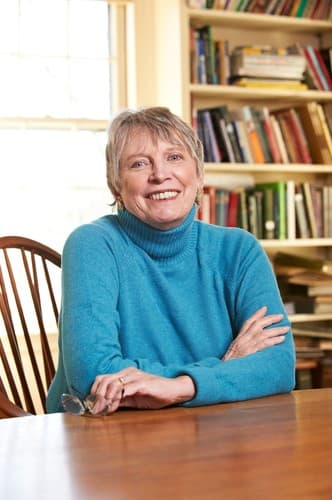
Lois Lowry is an American author known for her contributions to children's and young adult literature. Her notable works include "The Giver," "Number the Stars," "Gathering Blue," and the books in "The Giver Quartet," which explore themes of memory, identity, and the human experience. Lowry has received multiple awards for her writing, including the Newbery Medal.
Similar books
- The Giver
Lois Lowry
4.1 (1.8M) average on GoodreadsFantasyPart of the same quartet, exploring similar themes of community, individuality, and societal flaws.
- Gathering Blue
Lois Lowry
3.8 (161k) average on GoodreadsFantasyThe second book in the quartet, introducing characters and world-building relevant to Messenger.
- A Wrinkle in Time
Madeleine L'Engle
4.0 (1.1M) average on GoodreadsFantasyFeatures a young protagonist discovering unique powers and undertaking a perilous journey to combat a dark, abstract evil.
- The Hunger Games
Suzanne Collins
4.3 (6.4M) average on GoodreadsFantasyWhile both are YA dystopian novels, The Hunger Games focuses heavily on political rebellion, survival, and external oppression. Messenger, by contrast, delves into the internal moral decay of a seemingly utopian society and the personal cost of maintaining its integrity, with less emphasis on direct action and more on philosophical inquiry.
- I Know What You Did Last Summer
Lois Duncan
3.5 (12k) average on GoodreadsThrillerDuncan's work is a realistic YA thriller, grounded in psychological suspense and the consequences of human actions without supernatural elements. Messenger distinguishes itself by incorporating magical realism and allegorical landscapes to explore ethical dilemmas, offering a more speculative and philosophical narrative compared to Duncan's purely realistic approach.
- Harry Potter and the Sorcerer's Stone
J.K. Rowling
4.5 (7M) average on GoodreadsFantasyRescued from a miserable life under the stairs, an orphaned boy discovers he's a wizard destined for a magical school, where he uncovers a dangerous secret tied to the dark wizard who murdered his parents.





Enjoyed the summary?
A summary gives you the shape of the book. The book itself has the detail, the examples and the voice.
Find Messenger on AmazonAs an Amazon Associate, BookBrief earns from qualifying purchases. How we're funded