
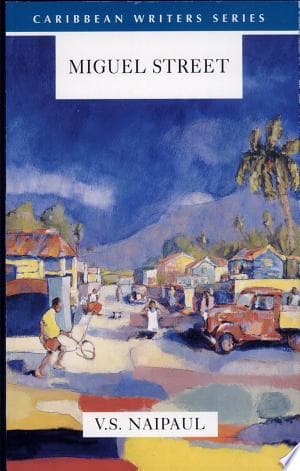
Synopsis
Covers the whole plot, including the ending.
- Difficulty
- Easy
- Pacing
- Slow
- Mood
- Nostalgic, Observational, Humorous, Melancholy, Atmospheric
- Read it if
- You enjoy character-driven stories with a strong sense of place and a blend of humor and melancholy, seen through the eyes of a child.
- Skip it if
- You prefer fast-paced plots with a clear narrative arc and resolution, or stories with a single protagonist.
Miguel Street Plot Summary
Covers the whole plot, including the ending.
Bogart
The young, unnamed narrator grows up on Miguel Street and introduces Bogart. Bogart is a quiet man with mysterious habits, often sitting on his porch, watching the street. He is known for his strange statements and his seemingly aimless life. Neighbors guess about his past, some believing he was once rich, others seeing him as a philosopher. The narrator tells how Bogart would sometimes disappear for long times, only to return without explanation, making him more mysterious. His quiet presence sets a tone of observation and oddness for the street's residents.
Hat
Hat is a showy character on Miguel Street, known for his careful grooming and his idea of being a 'fancy-man.' He spends his life looking good, wearing stylish clothes, and keeping up a certain image, often ignoring practical duties. The narrator watches Hat's many romantic relationships and his attempts to impress women. But Hat's life worsens when he gets involved in selling illegal goods, leading to his arrest and time in jail. This experience deeply affects how he sees himself and his 'fancy-man' identity, showing how easily his constructed image can break when faced with harsh reality.
George and the Fight
George is introduced as a quiet, modest man, very different from the louder people on Miguel Street. He is a hard worker and a family man, seemingly happy with his daily life. However, the street is shocked when George gets into a brutal fight with another man over a small issue. The fierceness and unexpectedness of his violence leave a lasting impression on the narrator and other residents. This event shows the hidden depths and unpredictable nature of even the most ordinary people, challenging the street's ideas about George's character and revealing a darker side beneath his calm outside.
Popo
Popo is an artist on Miguel Street, though his art often meets with doubt and jokes from his neighbors. He spends his days working with different materials, making sculptures and other objects that are rarely finished or understood. His wife, a practical and outspoken woman, constantly complains about his lack of a steady job and his impractical art. The narrator observes Popo's dedication to his art despite money troubles and his wife's disapproval. Popo's story explores the conflict between artistic passion and what society expects, as he deals with pressure to live a more conventional life while holding onto his creative dreams.
Laura and the Multiple Husbands
Laura is a well-known person on Miguel Street, known for her many marriages and the large number of children she has with different fathers. The narrator details her various relationships, each ending with a new husband and often more children. Laura's life is a constant cycle of new starts and departures, as she tries to find stability and happiness. Her story highlights the social norms and difficulties faced by women in the community, especially regarding marriage and family. Despite her unconventional family life, Laura remains tough, dealing with her complex relationships with a mix of practicality and deep emotion.
Man-man
Man-man is perhaps the strangest character on Miguel Street. He believes he is the second Christ, a delusion that leads him to perform odd rituals and make wild statements. The narrator recounts Man-man's antics, including his attempts to convert others and his announcement of running for election. His behavior is a source of both amusement and confusion for the residents. Eventually, Man-man's delusions grow, ending in an incident where he throws stones at cars, leading to him being put in an institution. His story is a sad and funny look at mental illness and the community's different reactions to those who do not fit in.
B. Wordsworth
The narrator becomes close with B. Wordsworth, a kind and thoughtful poet who lives in a small, run-down house. B. Wordsworth claims to be writing the 'greatest epic poem of the world,' which he describes as a thousand-page work about the life of a single bee. The narrator spends time with him, learning about his creative process and his ideas on life and art. B. Wordsworth eventually disappears, leaving only a single, unfinished poem. His story is about unfulfilled artistic ambition and the sad side of dreams, deeply influencing the young narrator's understanding of creativity and loss.
Titus Hoyt
Titus Hoyt sees himself as the smart person of Miguel Street. He is a schoolteacher who constantly tries to introduce the residents to 'culture,' often through public readings of Shakespeare or talks about books. However, his efforts are mostly met with disinterest or jokes by the street's practical inhabitants. The narrator observes Titus's serious but often misguided attempts to enlighten his neighbors, showing the gap between his academic pursuits and the reality of Miguel Street life. His story is a funny comment on intellectual showiness and the challenges of forcing outside values on a self-contained community.
The Narrator's Schooling and Aspirations
As the narrator gets older, he shows a strong talent for school, always doing well. His intelligence and hard work set him apart from many other children on Miguel Street, and his teachers see his potential. This academic success begins to open up opportunities beyond the street, suggesting a future different from that of the adults he observes. The narrator's growing intellect allows him to analyze and understand the lives around him with increasing detail, fueling his desire for knowledge and a broader understanding of the world, hinting at his eventual departure.
Departure from Miguel Street
After finishing school in Trinidad with high marks, the narrator gets a scholarship to study abroad. This important decision marks his leaving Miguel Street, the only home he has known. The goodbyes are bittersweet, as he leaves behind the strange characters and familiar rhythms of the street that shaped his childhood. His departure means a move from innocence to experience, from a small world to a larger one. The final scene highlights the idea of escape and the bittersweet feeling of leaving one's origins, even as the memories and lessons of Miguel Street remain a lasting part of his identity.
Principal Figures
The Narrator (Unnamed Boy)
Protagonist
An observant and intelligent boy who chronicles life on Miguel Street.
The unnamed narrator is a young, precociously observant boy who serves as the lens through which the reader experiences Miguel Street. He is curious, intelligent, and possesses a keen eye for detail, capturing the quirks and complexities of his neighbors' lives. As he grows, his understanding of the world deepens, moving from childlike wonder to a more nuanced, often critical, perspective. He is a quiet observer, often privy to private moments and conversations, which he recounts with a blend of innocence and growing sophistication.
Relationships: Bogart (Fascination and quiet observation); B. Wordsworth (Mentorship and friendship, artistic influence); His Mother (Parental relationship, source of stability and occasional discipline)
Bogart
Supporting
A mysterious and reclusive man whose past is a subject of speculation.
Bogart is an enigmatic figure who rarely speaks but commands a certain presence on Miguel Street. He is often seen sitting silently on his porch, observing the world, or disappearing for long periods without explanation. The other residents create various theories about his past, ranging from a wealthy man who lost his fortune to a philosophical wanderer. He represents the unknown and the power of quiet observation, embodying a detached wisdom that the narrator finds intriguing. His life is a testament to the idea that there is more to people than meets the eye.
Relationships: The Narrator (Object of the narrator's fascination); Other residents (Subject of speculation and curiosity)
Hat
Supporting
A flamboyant 'fancy-man' obsessed with his appearance and status.
Hat is a vain and superficial man who dedicates his life to maintaining an image of a 'fancy-man.' He is meticulous about his clothing, grooming, and social life, prioritizing appearance over substance. His romantic entanglements and schemes often lead to trouble, culminating in his arrest and imprisonment. Hat's character explores themes of identity, social performance, and the fragility of outward appearances when confronted with harsh realities. Despite his flaws, he possesses a certain charm that makes him a memorable figure on the street.
Relationships: Various women (Romantic and flirtatious entanglements); Other residents (Admired and sometimes ridiculed for his style)
Popo
Supporting
An aspiring but struggling artist whose passion clashes with his wife's pragmatism.
Popo is an artist by nature, constantly tinkering with materials to create sculptures and other objects. However, his artistic pursuits are largely unappreciated by his neighbors and, more significantly, by his pragmatic wife, who constantly nags him about his inability to provide a stable income. Popo embodies the struggle of the artist in a utilitarian world, where passion often takes a backseat to financial necessity. His creations are often incomplete or abstract, reflecting his internal world and his resistance to conventional expectations.
Relationships: His Wife (Contentious marriage, constant nagging and disapproval); The Narrator (Observed with a mix of pity and fascination)
Laura
Supporting
A resilient woman known for her many marriages and numerous children.
Laura is a strong, independent, and somewhat unconventional woman on Miguel Street, known for her succession of husbands and her ever-growing brood of children. Her life is a cycle of new relationships, pregnancies, and eventual separations, yet she always manages to bounce back. She represents a certain resilience and adaptability in the face of life's challenges, embodying the complexities of female experience in the community. Her story highlights themes of love, loss, motherhood, and the search for stability.
Relationships: Various Husbands (Serial marriages); Her Children (Motherhood and responsibility)
Man-man
Supporting
A delusional eccentric who believes himself to be the second Christ.
Man-man is a tragicomic figure whose mental illness manifests in his belief that he is the second coming of Christ. His bizarre behavior, including his attempts at evangelism and his run for election, makes him a source of both amusement and concern for the street. He is a symbol of the fragile line between eccentricity and madness, and the community's varied reactions to those who deviate from societal norms. His eventual institutionalization highlights the limitations of the community's ability to cope with severe mental illness.
Relationships: Other residents (Object of curiosity, mockery, and eventual pity)
B. Wordsworth
Supporting
A gentle and aspiring poet who mentors the young narrator.
B. Wordsworth is a sensitive and intellectual poet who dreams of writing the 'greatest epic poem of the world' about a single bee. He embodies the romantic ideal of the struggling artist, dedicated to his craft despite its impracticality. He develops a tender friendship with the young narrator, sharing his poetic insights and influencing the boy's appreciation for language and observation. His character explores themes of artistic ambition, the beauty of the natural world, and the bittersweet nature of unfulfilled dreams.
Relationships: The Narrator (Mentor and friend, artistic influence)
Titus Hoyt
Supporting
A schoolteacher who attempts to bring 'culture' to Miguel Street.
Titus Hoyt is a well-meaning but often misguided schoolteacher who sees himself as the intellectual leader of Miguel Street. He attempts to introduce his neighbors to high culture, often through public readings and discussions, but his efforts are largely met with indifference or gentle mockery. He represents the clash between academic ideals and the practical realities of everyday life, highlighting the futility of imposing external values on a self-contained community. His character provides comic relief and a commentary on intellectual pretension.
Relationships: Other residents (Met with indifference or amusement for his intellectual pursuits)
Themes & Insights
The Nature of Dreams and Unfulfilled Ambition
Many characters on Miguel Street have big dreams that never come true, showing the difference between what they want and what happens. Popo dreams of being a great artist but struggles to finish his work and get noticed, always nagged by his practical wife. B. Wordsworth spends his life writing the 'greatest epic poem,' but disappears, leaving only a small piece. Even Hat's dream of being a perpetual 'fancy-man' breaks when he goes to jail. These stories together show the sad truth of dreams in a world where practical matters often outweigh artistic or personal goals, as seen in the narrator's observations of Popo's unfinished sculptures and B. Wordsworth's bee poem.
“You see, a writer writes about what he knows. And I know about love, and I know about bees.”
Escape and the Desire for a Wider World
The idea of escape is central, mainly seen in the narrator's journey away from Miguel Street. While many residents are happy or resigned to their lives on the street, the narrator's success in school and growing awareness of a bigger world make him want to leave. This desire for a wider world is not just about moving but also about growing intellectually and personally. His eventual departure symbolizes breaking old patterns and seeking new chances, a clear contrast to characters like Bogart who seem forever tied to the street. The narrator's final trip abroad represents the ultimate escape from the isolated world of Miguel Street.
“I felt that I had been there too long, and that I was seeing the same things over and over again.”
Identity and Self-Deception
Characters on Miguel Street often create detailed identities for themselves, sometimes bordering on self-deception, to deal with their lives. Hat carefully builds his 'fancy-man' image, believing it defines him, only for it to fall apart when he faces legal trouble. Man-man's belief that he is the second Christ is an extreme example of an imagined identity, leading to sad results. Even Titus Hoyt's self-appointed role as the street's intellectual savior speaks to a made-up identity that does not quite fit reality. These stories explore how people create and maintain their sense of self, often defying outside circumstances, and how these identities are challenged or kept within the community, as the narrator observes their often-fragile appearances.
“He was a fancy-man, and that was all he wanted to be.”
The Nature of Community and Eccentricity
Miguel Street itself is a lively, self-contained community defined by its collection of unique characters. The street tolerates, watches, and sometimes judges its special inhabitants, forming a small version of society. Characters like Bogart, Man-man, and Popo, with their peculiar habits and beliefs, are not just individuals but main parts of the street's overall identity. The community's reactions to these oddities—from amusement to pity to occasional help—show the complex ways people accept or exclude others. The narrator's stories show how these different people, despite their differences, are connected by their shared space and their roles within the street's unique world, forming a rich collection of human experiences.
“A stranger could drive through Miguel Street and just say 'Slum!' because he could see no more. But to its residents this derelict corner of Trinidad's capital is a complete world, where everybody is quite different from everybody else.”
Plot Devices & Literary Techniques
Episodic Structure
The narrative is composed of distinct, self-contained chapters, each focusing on a different character or event.
The novel is structured as a series of interconnected short stories or vignettes, with each chapter typically centered around a specific resident of Miguel Street. This episodic structure allows Naipaul to explore a wide array of characters and their individual narratives without the constraints of a single overarching plot. It mirrors the fragmented, yet cohesive, nature of community life, where individual stories contribute to the larger tapestry of the street. This device enables the narrator to provide deep dives into various personalities, offering a mosaic portrait of Miguel Street rather than a linear plot progression, emphasizing character over traditional plot development.
Child Narrator's Perspective
The story is told through the eyes of an unnamed, observant young boy.
The use of a child narrator provides a unique lens through which to view Miguel Street. The boy's initial innocence and curiosity allow for objective observation of the adults' eccentricities, while his gradual maturation introduces a more nuanced and critical understanding. His perspective blends wonder with growing disillusionment, capturing the humor and pathos of the street's inhabitants without heavy judgment. This device allows for a tone that is both intimate and detached, reflecting the narrator's evolving relationship with his community and foreshadowing his eventual departure.
Microcosm
Miguel Street serves as a miniature representation of broader societal issues and human nature.
Miguel Street functions as a microcosm, a small world that reflects universal themes and human experiences. The diverse cast of characters—the artist, the intellectual, the dreamer, the social climber, the mentally ill—represents a cross-section of humanity. Through their individual stories, the novel explores larger societal issues such as poverty, class, ambition, mental health, gender roles, and the search for identity. The confined setting allows for an intense focus on these themes, making the specific experiences of Miguel Street residents resonate with broader human concerns, demonstrating that even a 'slum' can contain a complete world of human drama.
Miguel Street Quotes
“Every now and then he would get a job, but he never kept it for long. He was a poet, he said, and poets did not work.”
“Is a man a man when he is not thinking?”
“What is a man without money? A man without money is a man without a country.”
“I had to go away, you see, to come back. And I couldn't have come back if I hadn't gone away.”
“He said that every morning he got up and looked at his wife and children and knew that he was a failure.”
“She was a woman who was always looking for something to do, and when she found it, she did it with all her heart.”
“The world was a place of infinite possibilities, but only if you were prepared to grasp them.”
“He was a man who believed in things that were not there.”
“Life wasn't a straight road, it was a crooked one, full of twists and turns, and you never knew what was around the corner.”
“But the truth was, everybody on Miguel Street was running away from something.”
“He didn't just write poems; he was a poet. He lived poetry.”
“It was a street where everybody knew everybody else's business, and everybody liked it that way.”
“I felt that I had been cheated, that I had been given a glimpse of something wonderful and then it had been taken away.”
“You could never tell with people. They were always doing the unexpected.”
Quiz
10 questions on the plot and the characters. Each answer comes with a short explanation.
Question 1
What is Bogart's real name, which he keeps a secret from most of the residents of Miguel Street?
- Elias
- Hat
- Popo
- Hardy
Show answer
D. Hardy Bogart's real name is Hardy, which he reveals to the narrator in confidence, emphasizing his desire to escape his past and reinvent himself.
Question 2
What is Man-man's recurring, eccentric campaign that often involves him standing for election and then withdrawing?
- To become the street's official storyteller
- To be the 'President' of Miguel Street
- To build a new community center
- To organize a street-wide carnival band
Show answer
B. To be the 'President' of Miguel Street Man-man repeatedly stands for election as 'President' of Miguel Street, only to withdraw after gaining attention, a testament to his love for performance and disruption.
Question 3
Why does Hat, the narrator's friend, eventually go to jail?
- For stealing from a shop
- For assaulting a police officer
- For murdering his wife, Dolly
- For gambling illegally
Show answer
C. For murdering his wife, Dolly Hat is imprisoned for the murder of his wife, Dolly, a tragic event that deeply affects the narrator and the street.
Question 4
What is Popo's primary 'occupation' or passion, despite his wife's constant complaints?
- Writing poetry
- Painting elaborate murals
- Making useless things out of scrap iron
- Collecting rare stamps
Show answer
C. Making useless things out of scrap iron Popo is known for his dedication to making 'useless things' out of scrap iron, which his wife consistently disparages, highlighting the theme of unfulfilled artistic aspirations.
Question 5
What is the narrator's ultimate decision about Miguel Street at the end of the book?
- He decides to stay and raise his own family there.
- He leaves Trinidad to study abroad, seeking a different life.
- He buys a house on the street and becomes a respected elder.
- He dedicates himself to documenting the street's history.
Show answer
B. He leaves Trinidad to study abroad, seeking a different life. At the end of the novel, the narrator leaves Miguel Street and Trinidad to study in England, symbolizing his escape from the confines of the street and his pursuit of a larger world.
Question 6
What unique characteristic defines Elias, the character who repeatedly fails his exams?
- His exceptional talent for music
- His ambition to become a doctor, despite his academic failures
- His quiet and reclusive nature
- His skill as a carpenter
Show answer
B. His ambition to become a doctor, despite his academic failures Elias is characterized by his persistent, yet ultimately futile, attempts to pass exams and become a doctor, reflecting themes of aspiration and the limitations of opportunity.
Question 7
What is the significance of the phrase 'The world is a wheel' as spoken by some characters?
- It refers to the cyclical nature of carnival celebrations.
- It expresses a fatalistic view of life, where fortunes can change unexpectedly.
- It describes the continuous movement of traffic on the street.
- It is a literal reference to a broken cart wheel on the street.
Show answer
B. It expresses a fatalistic view of life, where fortunes can change unexpectedly. The phrase 'The world is a wheel' is a recurring motif that conveys a sense of fatalism and the unpredictable nature of life and fortune on Miguel Street.
Question 8
How does Laura, a character known for having many children by different fathers, embody a certain aspect of Miguel Street life?
- Her dedication to traditional family values.
- Her ability to maintain a stable household despite challenges.
- Her unconventional and often chaotic personal life, reflecting the street's nonconformity.
- Her successful business ventures.
Show answer
C. Her unconventional and often chaotic personal life, reflecting the street's nonconformity. Laura's tumultuous personal life, marked by multiple partners and children, highlights the unconventional and often chaotic social dynamics present on Miguel Street.
Question 9
What event marks the beginning of the narrator's awareness of the broader world beyond Miguel Street and his desire for escape?
- His first trip to the capital city, Port of Spain.
- When he starts attending secondary school and meets new people.
- The arrival of American soldiers during World War II.
- Reading books about faraway lands.
Show answer
B. When he starts attending secondary school and meets new people. Attending secondary school and encountering different perspectives and opportunities outside of Miguel Street is a key turning point for the narrator, fueling his desire for a life beyond the street.
Question 10
The novel is narrated by an unnamed boy. What does his narrative perspective primarily allow Naipaul to explore?
- A detached, objective historical account of Trinidad during WWII.
- The inner workings of the adult minds and their complex motivations.
- The gradual disillusionment and awakening of a young mind observing a contained, eccentric world.
- A purely humorous and lighthearted portrayal of childhood.
Show answer
C. The gradual disillusionment and awakening of a young mind observing a contained, eccentric world. The unnamed boy's perspective allows Naipaul to depict Miguel Street through innocent, yet increasingly observant eyes, showing the gradual disillusionment and understanding of the complex adult world as the narrator matures.
Miguel Street FAQ
What is the central premise of 'Miguel Street'?
'Miguel Street' is a collection of interconnected short stories set during World War II in a fictional cul-de-sac in Port of Spain, Trinidad. It chronicles the lives and eccentricities of the street's diverse residents, as observed and narrated by a precocious young boy growing up within the community, offering a microcosm of Trinidadian life.
Who is the narrator of 'Miguel Street' and what is his role?
The narrator is an unnamed young boy, often referred to as 'the boy' or 'Naipaul's alter ego,' who lives on Miguel Street. He acts as the reader's eyes and ears, observing the adults around him with a blend of childlike innocence and keen, often humorous, insight, documenting their quirks, failures, and fleeting triumphs as he matures.
What kind of characters inhabit Miguel Street?
Miguel Street is populated by a colorful array of characters, each with their own unique aspirations and eccentricities. We encounter figures like Hat, the street's resident philosopher and trickster; George, the womanizer; Popo, the carpenter turned artist; and Elias, the ambitious but unlucky student, among many others, who collectively form a vibrant community.
What is the significance of the setting, Miguel Street, itself?
Miguel Street is more than just a physical location; it functions as a self-contained world and a character in its own right. It represents a sanctuary and a stage for the residents' lives, providing a sense of community and belonging, even as it ultimately proves to be a place from which the narrator must eventually depart to find his own path.
How does the narrator's perspective change throughout the book?
Initially, the narrator observes the adults with a mixture of awe and confusion, often taking their stories at face value. As he grows older, his understanding deepens, and he begins to perceive the underlying sadness, irony, and futility in many of the residents' lives, leading to a more nuanced and sometimes cynical perspective.
Are there any recurring symbols or motifs in the stories?
A significant recurring motif is the idea of unfulfilled dreams and failed ambitions, seen in characters like Popo trying to be an artist or Elias repeatedly failing exams. The street itself can be seen as a symbol of stagnation, a place where grand aspirations often dwindle into mundane realities, yet it also offers a sense of enduring community.
How do the character stories connect beyond shared geography?
Beyond living on the same street, the characters' lives are intertwined through gossip, shared experiences, and the narrator's evolving understanding. Events in one story, like the arrival of a new resident or a character's public outburst, often become the subject of discussion and interpretation among the others, creating a cohesive, if loosely structured, narrative web.
What is the significance of the narrator's eventual departure from Miguel Street?
The narrator's departure symbolizes his coming of age and his breaking away from the confines of the street's insular world. It represents a necessary step towards self-discovery and a quest for a larger life beyond the familiar, yet ultimately limiting, environment that shaped his formative years, echoing a common theme of post-colonial migration.
How does the novel subtly critique colonial influence or societal structures?
While not overtly political, the novel subtly critiques the limited opportunities and aspirations available to its characters, many of whom are trapped by poverty or societal expectations. Characters like Elias aspiring to an 'English' education or Popo's artistic ambitions clashing with practical needs hint at the broader societal constraints and the lingering effects of colonialism on individual agency.
What psychological impact does Miguel Street have on its residents?
The street fosters a complex blend of camaraderie and resignation. While it provides a strong sense of community and belonging, it also breeds a certain fatalism and an acceptance of mediocrity, as many residents' grand dreams are repeatedly thwarted. This environment can lead to both resilience and a cyclical pattern of unfulfilled potential.
Analyze the character of Hat – is he truly a philosopher or just a trickster?
Hat embodies both roles. He is a 'philosopher' in the street's context, offering cynical wisdom and commentary on life, often through humorous anecdotes. However, his actions frequently reveal him to be a mischievous trickster, manipulating situations and people for his own amusement or benefit, blurring the lines between sage and scoundrel.
How do the women of Miguel Street contribute to the street's psychological landscape?
The women, such as Mrs. Bhakcu or Laura, often represent the more grounded, practical, and sometimes gossipy, aspects of the community. They are the backbone of many households, often dealing with the consequences of the men's eccentricities and providing a strong, if sometimes critical, social fabric that binds the street together, managing both domesticity and social order.
What does the character of Popo and his 'art' reveal about human aspiration and self-deception?
Popo's story highlights the human need for self-expression and identity, even if it's based on delusion. His 'art' – simply sawing wood – is a coping mechanism, a way to elevate himself and avoid the drudgery of his real job. It reveals how individuals can construct elaborate self-narratives to maintain dignity and purpose, even in the face of external skepticism.
Is 'Miguel Street' ultimately a hopeful or a melancholic book?
The book possesses a mercurial mood, balancing both. It's melancholic in its portrayal of unfulfilled lives and the often-grim realities faced by its characters. However, it's also hopeful in its celebration of human resilience, the enduring spirit of community, and the narrator's eventual escape, suggesting the possibility of growth and new beginnings beyond the street's confines.
How does Naipaul use humor to address serious themes?
Naipaul masterfully employs humor, often through irony and satire, to lighten the tone while simultaneously underscoring the pathos of his characters' situations. The absurdity of their dreams or the comical nature of their failures allows the reader to engage with themes of poverty, dashed hopes, and societal stagnation without being overwhelmed by despair, making the social commentary more palatable.
Does the unnamed narrator represent V. S. Naipaul himself, and if so, how does that influence the reading?
Many critics view the narrator as a thinly veiled autobiographical stand-in for Naipaul, reflecting his own childhood experiences and observations in Trinidad. This perspective adds a layer of authenticity and personal reflection to the narrative, suggesting that the stories are not merely fictional constructs but rooted in the author's formative years and his developing worldview.
What is the lasting message or moral of 'Miguel Street'?
The lasting message is multifaceted: it celebrates the resilience and colorful individuality of ordinary people, even in challenging circumstances. It also explores the universal themes of aspiration, disillusionment, and the complex journey of self-discovery, emphasizing that while one's origins shape them, they do not necessarily define their ultimate destiny.
How does the ending, with the narrator leaving, resolve or complicate the themes of the book?
The ending both resolves and complicates the book's themes. It resolves the narrator's personal journey, fulfilling his desire to escape and seek a larger world. However, it complicates the idea of 'home' and community, leaving the reader to ponder whether his departure is a triumph or a bittersweet abandonment of the vibrant, flawed world that shaped him, highlighting the inevitability of change.
About the author
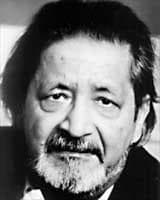
Sir Vidiadhar Surajprasad Naipaul was a Trinidadian-born British writer of works of fiction and nonfiction in English. He is known for his comic early novels set in Trinidad, his bleaker novels of alienation in the wider world, and his vigilant chronicles of life and travels. He wrote in prose that was widely admired, but his views sometimes aroused controversy. He published more than thirty books over fifty years.
Similar books
- A House for Mr Biswas
V. S. Naipaul
3.8 (18k) average on GoodreadsLiterary FictionShares similar themes of identity, post-colonial life in Trinidad, and observational humor.
- Annie John
Jamaica Kincaid
3.7 (7k) average on GoodreadsLiterary FictionFeatures a young girl's coming-of-age and observations of island life with a distinct narrative voice.
- The Lonely Londoners
Samuel Selvon
3.7 (14k) average on GoodreadsExplores the lives of Caribbean immigrants with a similar blend of humor and poignant social commentary.
- Nineteen Eighty-Four
George Orwell
4.2 (5.5M) average on GoodreadsFictionWinston Smith dreams of truth and rebellion in a world where Big Brother watches all, but he confronts the terrifying power of a regime that controls not just actions, but thoughts.
- The Frozen River
Ariel Lawhon
4.4 (600k) average on GoodreadsFictionIn 1789 Maine, a heroic midwife's diary helps her expose a murder and get justice in a town that wants to silence her.
- A Man Called Ove
Fredrik Backman
4.4 (569k) average on GoodreadsFictionA stubborn widower, who lives by strict rules, finds his quiet world changed by a lively new family next door, making him face his past and find happiness in human connection.





Enjoyed the summary?
A summary gives you the shape of the book. The book itself has the detail, the examples and the voice.
Find Miguel Street on AmazonAs an Amazon Associate, BookBrief earns from qualifying purchases. How we're funded