

Synopsis
Covers the whole plot, including the ending.
- Difficulty
- Medium
- Pacing
- Slow
- Mood
- Tragicomic, Melancholy, Satirical, Resilient
- Read it if
- You appreciate epic, character-driven sagas with a blend of dark humor and pathos, exploring themes of post-colonial identity, family dynamics, and the pursuit of self-determination.
- Skip it if
- You prefer fast-paced plots with clear resolutions, or find detailed, often bleak, portrayals of life's struggles and bureaucratic absurdities tedious.
A House for Mr Biswas Plot Summary
Covers the whole plot, including the ending.
A Prophecy of Misfortune and an Ill-Fated Birth
Mohun Biswas is born into a poor Hindu family in rural Trinidad. He has an extra finger, which a pundit says is a sign of bad luck. His father, Raghu, a sugar cane worker, is told to keep the child away from dead bodies and to please the gods. When Mr. Biswas, as he is called throughout his life, is six, he and his cousins, including the playful Oodhoo, play near a pond. Oodhoo dares Mr. Biswas to touch a neighbor's dead body, pulled from the water. Scared, Mr. Biswas throws a stone at his father, who is nearby. Raghu, surprised, falls into the pond and, unable to swim, drowns. This accidental event is blamed on Mr. Biswas, causing his family to quickly break apart. His mother, Bipti, and his siblings are scattered, sent to live with various relatives, and Mr. Biswas goes to live with his aunt Tara and uncle Ajodha.
A Transient Youth and Failed Apprenticeships
After his father's death, Mr. Biswas's childhood is unsettled. He first lives with his Aunt Tara and Uncle Ajodha, where he feels like an unwanted burden, neglected emotionally and punished physically. He then moves to live with his Aunt Chinta and Uncle Jairam, where he is treated slightly better but still wants to belong. He goes to school off and on, showing some intelligence but lacking consistent guidance. He tries various apprenticeships—with a pundit, a sign painter, and a shopkeeper—but finds himself unsuited to each, often due to his rebellious nature, sensitive personality, or the exploitative conditions. These early experiences strengthen his feelings of displacement and his wish for an independent life, free from others' control.
The Unintended Marriage to Shama Tulsi
While working as a shop assistant for his cousin Oodhoo, Mr. Biswas meets the beautiful Shama Tulsi. Wanting affection and making a naive attempt at flirting, he writes her a love letter, misunderstanding her family's social customs. Shama's strict sister, Padma, and her husband, Seth, find the letter. The Tulsi family, a large and powerful group, sees Mr. Biswas's actions as a marriage proposal. Despite his protests and lack of real intent, he is quickly pressured into marrying Shama. This sudden marriage brings him into the large, controlling world of the Tulsis, a family whose sheer size and collective will dominate his life for decades, dictating where he lives and works, and stifling his individuality.
Life at Arwacas and the Dominance of the Tulsis
After his marriage, Mr. Biswas moves into the Tulsi family's old home in Arwacas, a large, run-down compound filled with relatives. He gets a small, shared room and quickly becomes part of the Tulsi way of life. He is expected to work in one of their many businesses, first as a store manager, and his wages are often controlled by Mrs. Tulsi or Seth. His attempts to assert himself or bring new ideas to the family are met with ridicule or ignored. He feels trapped and powerless due to the family's strong collective will and their constant involvement in his life. His artistic interests, especially his sign-painting skills, are mostly dismissed or used for the family's benefit, further showing his lack of freedom.
The First Attempts at Independence and the Hanuman House Collapse
Driven by his strong desire for his own home, Mr. Biswas, against the Tulsis' advice, starts building a small house on land given to him by Seth. He puts his small savings and much effort into this project, seeing it as his escape from the Tulsi compound. However, because of his inexperience and cheap materials, the house is poorly built. During a heavy rainstorm, the partly built structure collapses, a devastating blow to his hopes. This event is an early symbol of his struggle for independence and the repeated setbacks he faces, often due to his own lack of resources, practical skills, and the Tulsis' constant influence. Despite their help, they also contribute to his failures through subtle undermining and a lack of real support for his personal goals.
Working for the Tulsis: From Stores to Sugar Estates
Over the years, the Tulsis assign Mr. Biswas to manage various stores and sugar cane estates they own, moving him and his growing family from place to place. He manages a store in The Chase, then another in Green Vale, enduring isolation and constant scrutiny from Tulsi relatives. He is often underpaid or has his wages manipulated, reinforcing his economic dependence. These postings are not promotions but strategic moves by the Tulsis to expand their empire, with Mr. Biswas serving as a convenient, though unhappy, employee. He experiences further humiliation when he is put in charge of a sugar estate and is expected to manage the laborers, a role he finds uncomfortable and morally difficult. Each move, though offering a temporary change of scenery, ultimately ties him more to the Tulsi family's economic machine and prevents him from forging his own path.
The Move to Port of Spain and the Sentinel
A major change happens when Mr. Biswas gets a job as a reporter and features writer for The Sentinel, a newspaper in Port of Spain. This move allows him to escape the Tulsi family's direct, daily control and gives him a steady income and a creative outlet. He thrives in this environment, using his wit and observation skills to write articles and humorous pieces. He makes friends with colleagues and gains a sense of professional identity. While Shama and the children initially stay with the Tulsis, he eventually brings them to Port of Spain, renting a series of increasingly run-down houses. This period marks a key shift in his mindset, as he begins to assert his individuality and pursue his writing ambitions, however small.
The Education of His Children and the Struggle for a Home
Despite his own limited education, Mr. Biswas is strongly committed to his children's schooling, especially his eldest son, Anand, whom he sees as his intellectual successor. He invests heavily in their education, often at great personal cost, ensuring they attend good schools and receive tutoring. He encourages their reading and curiosity, fostering a love for learning that he himself never had. At the same time, his search for a house continues, becoming an obsession. He and Shama move through a series of rented houses in Port of Spain, each more temporary and unsatisfactory than the last. These houses are often unsound, poorly located, or subject to landlords' whims, constantly reminding him that he doesn't truly own a home or have security.
The Final House and Its Imperfections
After years of searching and saving, Mr. Biswas finally manages to buy his own house in Port of Spain. It is a small, ramshackle dwelling, bought at a high price because of his desperation and the seller's deceptive practices. The house is a constant source of problems: the roof leaks, the walls are unstable, and the foundation is weak. He spends much of his time and what little money he has on repairs and renovations, often with the reluctant help of his sons and occasional tradesmen. Despite its many flaws and the financial strain it causes, this house represents the end of his life's struggle, a tangible symbol of his achieved independence, however imperfect. It is his sanctuary, his space, free from the Tulsis' direct oversight.
Aging, Illness, and the Departure of His Children
As Mr. Biswas ages, his health declines. He suffers from heart problems and other ailments, made worse by years of stress, poor diet, and overwork. The house he so desperately sought becomes a burden, needing constant attention and draining his money. His children, especially Anand, begin to leave Trinidad for higher education abroad, fulfilling his hopes for their success but also making him feel increasingly alone. He feels a mix of pride and sadness as they leave, understanding that their futures lie beyond the limits of his own hard-won independence. He remains in his imperfect house, thinking about a life of struggle and the bittersweet taste of his final achievement, surrounded by the remnants of his family's presence.
The Legacy of the House and Mr. Biswas's Death
Mr. Biswas eventually dies from his illness, in his own house at age 46. His death, though early, happens in the place he fought so hard to own. The house, despite its flaws, shows his lifelong struggle for freedom and his escape from the Tulsi family's pervasive influence. His children, though scattered, benefited from his determination, having received the education and opportunities he never had. The story ends by reflecting on the house's importance—not just as a building, but as a symbol of Mr. Biswas's identity and his successful, though difficult, break from the traditional, communal life the Tulsis represented. His independence, achieved at great cost, becomes the basis for his children's future freedom.
A House for Mr Biswas Characters
Mohun Biswas
Protagonist
A sensitive, intellectual, and perpetually struggling man driven by a lifelong quest for independence and a home of his own.
Mr. Biswas is a complex character: a dreamer, a writer, an intellectual trapped by circumstance, and a man riddled with self-pity and an inferiority complex. Born with an extra finger, he is marked by misfortune from birth. He yearns for dignity and autonomy, constantly rebelling against the suffocating communalism of the Tulsi family. He is often sarcastic, witty, and deeply resentful, but also capable of great tenderness, particularly towards his children. His artistic inclinations and love for books set him apart, yet he is often impractical and prone to making bad decisions, especially regarding financial matters and property. His defining characteristic is his relentless, almost obsessive, pursuit of a house.
Relationships: Shama Tulsi (Wife, initially a naive object of affection, later a pragmatic partner who often sides with her family but eventually supports his quest for a house.); Mrs. Tulsi (Mother-in-law, the matriarch and primary antagonist, representing the oppressive communal force he rebels against.); Seth (Brother-in-law, a cunning and influential figure in the Tulsi family who both exploits and occasionally assists Mr. Biswas.); Anand Biswas (Eldest son, whom Mr. Biswas sees as his intellectual heir and invests heavily in his education, sharing a complex bond of understanding and occasional friction.); Tara (Aunt, who provides a harsh, temporary home after his father's death, contributing to his early feelings of displacement.)
Shama Tulsi Biswas
Supporting
Mr. Biswas's wife, a pragmatic woman deeply entrenched in her family's traditions but who eventually supports her husband's desire for independence.
Shama is initially a quiet, somewhat passive character, almost an accidental wife for Mr. Biswas. She is deeply loyal to her large, domineering Tulsi family, often prioritizing their wishes and customs over her husband's individualistic desires, especially in the early years of their marriage. She is practical, resilient, and bears many children. As the novel progresses, she becomes more supportive of Mr. Biswas's quest for a house, sharing his struggles and enduring the hardships of their many moves. While she never fully sheds her Tulsi identity, she grows into a more independent figure within the confines of her marriage, representing a bridge between the traditional communal world and Mr. Biswas's modern aspirations.
Relationships: Mohun Biswas (Husband, a challenging and often frustrating partner, but one she ultimately stands by.); Mrs. Tulsi (Mother, to whom she feels deep loyalty and obligation.); Anand Biswas (Son, whom she nurtures and supports.)
Mrs. Tulsi
Antagonist
The formidable matriarch of the Tulsi family, symbolizing the oppressive forces of tradition and communalism that Mr. Biswas rebels against.
Mrs. Tulsi is the undisputed head of the sprawling Tulsi clan, a powerful and imposing figure who commands absolute loyalty and obedience from her children and in-laws. She is shrewd, traditional, and deeply rooted in Hindu customs and the communal way of life. She sees Mr. Biswas as an outsider and a useful, if troublesome, asset to be incorporated into the family's extensive business empire. Her influence is pervasive, dictating where Mr. Biswas lives, works, and even how his children are raised. She represents the collective, suffocating force that Mr. Biswas constantly fights against, her presence a constant reminder of his lack of autonomy. Despite her sternness, she provides a form of stability and security, however unwelcome, for her family.
Relationships: Mohun Biswas (Son-in-law, whom she largely controls and exploits, viewing him as an ungrateful nuisance.); Shama Tulsi (Daughter, whom she expects absolute obedience from.); Seth (Son-in-law, her chief lieutenant in managing the family's affairs.)
Anand Biswas
Supporting
Mr. Biswas's eldest son, an intelligent and sensitive boy who becomes his father's intellectual confidante and the inheritor of his aspirations.
Anand is the son who most closely resembles Mr. Biswas intellectually and temperamentally. He is observant, sensitive, and develops a love for reading and learning, encouraged by his father. He often acts as a quiet witness to his father's struggles and frustrations, understanding his father's complexities more than anyone else in the family. Mr. Biswas pours his hopes and dreams into Anand's education, seeing him as a means to achieve the intellectual and social mobility he himself was denied. Anand's eventual departure to study abroad symbolizes the fulfillment of Mr. Biswas's aspirations for his children, a break from the confines of Trinidad and the Tulsi influence.
Relationships: Mohun Biswas (Father, with whom he shares a deep, often unspoken, intellectual and emotional bond.); Shama Tulsi (Mother, who nurtures him.); Mrs. Tulsi (Grandmother, whose influence he eventually escapes.)
Seth
Supporting
A cunning and influential son-in-law of Mrs. Tulsi, who manages many of the family's businesses and exerts significant control over Mr. Biswas's life.
Seth is a pragmatic, astute businessman, and a loyal, if manipulative, member of the Tulsi family. He is married to Padma, Shama's sister, and acts as Mrs. Tulsi's right-hand man, overseeing many of the family's stores and estates. Seth is instrumental in bringing Mr. Biswas into the Tulsi fold and subsequently moving him between various family enterprises. He is often the one who issues directives, controls Mr. Biswas's wages, and subtly undermines his attempts at independence. While he can appear helpful, offering land or employment, his actions always serve the Tulsi family's interests, keeping Mr. Biswas dependent. He represents the practical, economic arm of the Tulsi's communal power.
Relationships: Mohun Biswas (Brother-in-law, whom he exploits and controls as a family asset.); Mrs. Tulsi (Mother-in-law, to whom he is fiercely loyal and serves as her chief administrator.); Padma (Wife, Shama's sister.)
Padma
Supporting
Shama's sister and Seth's wife, a formidable and often critical figure within the Tulsi family.
Padma is one of Shama's older sisters, known for her sharp tongue and her strong adherence to Tulsi family traditions. She is often critical of Mr. Biswas, finding him lazy, ungrateful, and a poor provider. She plays a significant role in orchestrating Mr. Biswas's marriage to Shama and is a constant presence in his early life within the Tulsi compound. Her opinions carry weight within the family, and she often reinforces Mrs. Tulsi's authority. She embodies the judgmental and stifling aspects of the communal family structure that Mr. Biswas despises, constantly reminding him of his subordinate position.
Relationships: Mohun Biswas (Brother-in-law, whom she often criticizes and looks down upon.); Shama Tulsi (Sister, with whom she shares a close family bond.); Seth (Husband, with whom she forms a formidable partnership within the Tulsi family.)
Bipti
Supporting
Mr. Biswas's mother, a tragic figure whose life is shattered after her husband's death, leading to her children's dispersal.
Bipti is Mr. Biswas's mother, a woman who experiences immense hardship and loss early in the novel. After her husband Raghu's accidental death, she is unable to keep her family together, and her children, including young Mohun, are scattered among relatives. Her inability to provide a stable home for her children deeply impacts Mr. Biswas, fueling his lifelong desire for security and a home of his own. She represents the vulnerability of individuals in a society lacking strong social safety nets, and her early struggles foreshadow Mr. Biswas's own difficulties in establishing a stable family life.
Relationships: Mohun Biswas (Son, separated from him early in life due to circumstances.); Raghu (Husband, whose death causes her family's collapse.)
Raghu
Mentioned
Mr. Biswas's father, whose accidental death sets in motion the protagonist's lifelong struggles.
Raghu is Mr. Biswas's father, a sugar cane laborer whose accidental drowning early in the novel is the catalyst for the dissolution of his family and Mr. Biswas's subsequent nomadic childhood. Though his presence is brief, his death is a pivotal event, marking Mr. Biswas with a sense of blame and misfortune. He represents the precariousness of life for the impoverished working class in Trinidad and the devastating impact of sudden loss on a family without resources.
Relationships: Mohun Biswas (Son, whose life is irrevocably shaped by his father's death.); Bipti (Wife.)
Oodhoo
Supporting
Mr. Biswas's cousin, a mischievous and sometimes opportunistic figure who represents a different path within their shared social context.
Oodhoo is Mr. Biswas's cousin, present from their childhood. He is the one who dares Mr. Biswas to touch the corpse, indirectly leading to Raghu's death. Later, Oodhoo employs Mr. Biswas in his shop, where Mr. Biswas first meets Shama. Oodhoo is more pragmatic and less intellectual than Mr. Biswas, and he navigates the world with a certain shrewdness. He represents a contrast to Mr. Biswas, showing a different way to survive and even thrive within the social structures of Trinidad, often by embracing the very opportunism that Mr. Biswas despises but occasionally employs.
Relationships: Mohun Biswas (Cousin, employer at one point, and a childhood acquaintance.)
A House for Mr Biswas Themes
The Quest for Autonomy and Identity
The main theme is Mr. Biswas's constant, lifelong struggle to define himself apart from outside forces, especially the Tulsi family's controlling communalism. His desire for 'a house of his own' is a strong symbol for this search for selfhood, dignity, and a place where he can control his own life. He constantly fights against the overwhelming family structure that tries to absorb him, exploit his labor, and dictate his life. His sarcastic wit and intellectual pursuits also show his attempt to assert an individual identity that goes beyond his circumstances. The imperfect house he eventually gets, despite its flaws, represents his hard-won victory in this deeply personal battle, allowing him to declare 'I am I'.
“How often had he not rehearsed it, the moment of his buying a house! The very words had a magic for him. 'My house.' 'My property.' 'My land.'”
Colonialism, Post-Colonialism, and Cultural Identity
The novel is set in post-colonial Trinidad, a society dealing with its inherited cultural identities. Mr. Biswas, a descendant of indentured Indian laborers, lives in a culture that mixes Hindu traditions with British colonial influences, yet he feels disconnected from both. The Tulsi family represents a conservative, traditional Hindu communalism, while Mr. Biswas is drawn to Western individualism, literature, and the English language. His struggle for a house can be seen as a small example of the larger post-colonial struggle for self-definition and nation-building, moving away from old structures toward a new, independent identity. Trinidad's societal background, with its diverse ethnic groups and lingering colonial mindset, shapes the characters' hopes and limitations.
“He was struck again and again by the wonder of being in his own house, the audacity of it: to walk in through his own front gate, to bar entry to whoever he wished, to close his doors and windows every night.”
The Nature of Family and Belonging
Family is shown as both a source of security and oppression. The Tulsi family, while providing a safety net for its many members, also stifles individual goals and demands complete conformity. Mr. Biswas's early experiences of family breaking apart after his father's death create in him a deep desire for a stable, independent family unit. His efforts to build and keep his own nuclear family, separate from the Tulsis, and his dedication to his children's education, are central to this theme. The novel explores the tension between the group and the individual, showing how the desire to belong can conflict with the need for personal freedom, ultimately emphasizing the importance of creating one's own chosen space and family identity.
“But a house was more than a house. It was the only place where he could be Mohun Biswas.”
The Power of Storytelling and Literature
Mr. Biswas is a frustrated writer and intellectual, finding comfort and self-worth in literature and his work as a journalist. His love for books, his satirical writings for The Sentinel, and his constant internal thoughts show the power of storytelling as a way to understand reality, assert individuality, and find meaning in a chaotic world. His ability to create stories, even if only for himself, allows him to keep a critical distance from his circumstances and imagine a different life. This theme highlights the author's own skill and the novel's self-aware quality, showing how words and stories can be tools for survival and self-creation.
“He was a man who had made a world for himself out of words.”
Plot Devices & Literary Techniques
The House as Metaphor
The physical house symbolizes Mr. Biswas's quest for autonomy, identity, and dignity.
Throughout the novel, the 'house' is not merely a dwelling but a profound symbol. It represents Mr. Biswas's yearning for independence from the oppressive Tulsi family, a space where he can be master of himself. The various houses he inhabits or attempts to build—from the collapsing mud hut to the rented shacks and finally his own imperfect home—mirror his fluctuating fortunes and his gradual, arduous progress towards self-actualization. The house is a tangible manifestation of his psychological and social liberation, signifying his break from traditional communal living and his embrace of individual identity.
Irony and Satire
Used to highlight the absurdity of Mr. Biswas's struggles and the social conditions of Trinidad.
Naipaul employs a biting, often dark, irony and satire to depict Mr. Biswas's misfortunes, the machinations of the Tulsi family, and the broader societal landscape of Trinidad. Mr. Biswas himself is a master of sarcastic wit, using it as a defense mechanism and a form of rebellion. The ironic situations, such as his accidental marriage or the flawed nature of his hard-won house, underscore the often-absurd gap between aspiration and reality. Satire is used to critique social norms, colonial legacies, and the human condition, making the novel both deeply poignant and darkly comic.
Omniscient Narrator with Free Indirect Discourse
A narrative voice that provides both broad context and intimate access to Mr. Biswas's thoughts and feelings.
The novel is told by an omniscient narrator who possesses extensive knowledge of all characters and events, providing historical and social context for the story. Crucially, the narrator often slips into free indirect discourse, allowing the reader to experience Mr. Biswas's thoughts, feelings, and unique perspective directly, without explicit quotation marks. This technique creates a deep sense of empathy for the protagonist, giving insight into his wit, his resentments, his dreams, and his perpetual struggles, making his internal world as vivid as his external circumstances.
The Tulsi Family as a Collective Antagonist
A large, communal family unit that acts as a symbolic obstacle to the protagonist's individualism.
The Tulsi family functions as a collective antagonist, rather than a single villain. Their sheer numbers, their strict adherence to tradition, their economic power, and their communal demands constantly thwart Mr. Biswas's attempts at independence. They represent the forces of tradition, social obligation, and economic exploitation that threaten to subsume individual identity. While individual Tulsis (like Mrs. Tulsi or Seth) play specific roles, their collective presence and influence are the primary external barrier Mr. Biswas must overcome in his quest for autonomy, embodying the very communalism he seeks to escape.
A House for Mr Biswas Quotes
“How could it be that Mr Biswas, a man who had never been able to build a house, was now, at the age of forty-six, to have one built for him?”
“He had never been able to please his father, and now that his father was dead, he felt a deeper sense of failure.”
“To be born a Biswas was to be born to a house, and to a household, and to a family, and to a history of failure.”
“He was a man who needed to be alone, but he was never alone.”
“The world was not a place for the weak, and Mr Biswas was weak.”
“He knew that he was a failure, but he also knew that he was a man.”
“He wanted to be a man, but he was only a shadow.”
“He wanted a house, but he did not know what kind of house he wanted.”
“It was a house that was always building, never built.”
“He had been born in a house of mud and straw, and he would die in a house of mud and straw.”
“A house was not a house unless it was his own.”
“He was a man who had always wanted to be a writer, but he had never written anything.”
“He had always been an outsider, even in his own family.”
“The world was full of people who wanted to be something, but few ever were.”
“His life was a series of small, meaningless victories and large, crushing defeats.”
Quiz
10 questions on the plot and the characters. Each answer comes with a short explanation.
Question 1
What is the primary motivation for Mr. Biswas's lifelong struggle, as highlighted in the synopsis?
- To become a wealthy landowner and escape poverty.
- To achieve independence and own his own house.
- To gain acceptance and approval from the Tulsi family.
- To travel the world and experience new cultures.
Show answer
B. To achieve independence and own his own house. The synopsis explicitly states, 'But in spite of endless setbacks, Mr. Biswas is determined to achieve independence, and so he begins his gruelling struggle to buy a home of his own.'
Question 2
What significant event, caused by Mr. Biswas's actions, leads to the dissolution of his family early in his life?
- He accidentally burns down their family home.
- He causes the death of his father.
- He runs away from home to join a traveling circus.
- He gambles away all of his family's savings.
Show answer
B. He causes the death of his father. The synopsis mentions, 'Meaning only to avoid punishment, he causes the death of his father and the dissolution of his family.'
Question 3
Who introduces 'A House for Mr Biswas' in the edition described?
- V. S. Naipaul himself
- Teju Cole
- A literary critic from the 20th century
- An unnamed editor
Show answer
B. Teju Cole The description states, 'With an introduction by author Teju Cole, A House for Mr Biswas is Nobel Prize in Literature winner V. S. Naipaul's unforgettable masterpiece.'
Question 4
Mr. Biswas ends up marrying a woman after 'simply flirt[ing]' with her. Which family does he subsequently become reliant on?
- The Seth family
- The Ramaswami family
- The Tulsi family
- The Singh family
Show answer
C. The Tulsi family The synopsis mentions, 'Wanting simply to flirt with a beautiful woman, he ends up marrying her, and reluctantly relying on her domineering family for support.' While the synopsis doesn't explicitly name the family, the book extensively details his reliance on the domineering Tulsi family.
Question 5
The novel is set against the backdrop of which specific historical context?
- Colonial India
- Pre-colonial Africa
- Post-colonial Trinidad
- Victorian England
Show answer
C. Post-colonial Trinidad The description specifies, 'a classic that evokes a man's quest for autonomy against the backdrop of post-colonial Trinidad.'
Question 6
What is the implied emotional tone of the novel, as described by the introduction?
- Purely tragic and despairing
- Lighthearted and purely comedic
- Heart-rending and darkly comic
- Detached and academic
Show answer
C. Heart-rending and darkly comic The description calls the book 'Heart-rending and darkly comic,' indicating a blend of sadness and humor.
Question 7
What is the long-standing prophecy or belief that has followed Mr. Biswas since birth?
- He is destined for greatness and immense wealth.
- Misfortune will follow him throughout his life.
- He will always be a wanderer, never settling down.
- He will live an exceptionally long and peaceful life.
Show answer
B. Misfortune will follow him throughout his life. The synopsis states, 'Mr. Biswas has been told since the day of his birth that misfortune will follow him – and so it has.'
Question 8
The phrase 'audacity of it: to walk in through his own front gate, to bar entry to whoever he wished, to close his doors and windows every night' primarily illustrates Mr. Biswas's desire for what?
- Social dominance and control over others.
- Privacy and personal sovereignty within his own space.
- A lavish lifestyle and luxurious possessions.
- Escape from his family's constant demands.
Show answer
B. Privacy and personal sovereignty within his own space. This quote emphasizes the personal control and security that owning his own house provides, reflecting a deep desire for privacy and autonomy rather than just escape or luxury.
Question 9
What does the repeated phrase 'struck again and again by the wonder of being in his own house' suggest about Mr. Biswas's ultimate achievement?
- He quickly became bored with homeownership.
- The struggle for the house was more fulfilling than owning it.
- The realization of his dream brought profound and lasting satisfaction.
- He constantly worried about losing the house.
Show answer
C. The realization of his dream brought profound and lasting satisfaction. The 'wonder' of being in his own house, 'struck again and again,' indicates that his achievement brought a deep, repeated sense of fulfillment and joy, suggesting the profound impact of finally realizing his lifelong dream.
Question 10
Considering the description, which literary genre convention does 'A House for Mr Biswas' most strongly exemplify through its focus on a character's lifelong journey and development?
- Gothic novel
- Bildungsroman
- Satire
- Picaresque novel
Show answer
B. Bildungsroman A Bildungsroman (or 'novel of formation') focuses on the psychological and moral growth of the protagonist from youth to adulthood. Mr. Biswas's lifelong 'quest for autonomy' and 'gruelling struggle to buy a home of his own' clearly fit this convention.
A House for Mr Biswas FAQ
What is the central struggle of Mohun Biswas throughout the novel?
Mohun Biswas's central struggle is his lifelong quest for independence and a home of his own, free from the overwhelming influence and control of his wife Shama's domineering Tulsi family. This pursuit is driven by his desire for autonomy and a space where he can assert his individuality, constantly clashing with the societal and familial expectations placed upon him.
How does Mr. Biswas's early life and the prophecy of misfortune shape his character?
From birth, Mr. Biswas is marked by a prophecy of misfortune and is blamed for his father's death, leading to a deep-seated sense of victimhood and a rebellious, often cynical, outlook. This early trauma fosters his unique blend of self-pity and an underlying determination to defy his fate, even if his attempts often lead to further complications.
Who are the Tulsi family, and why are they so significant to Mr. Biswas's life?
The Tulsi family are Mr. Biswas's in-laws, a large, influential, and deeply traditional Hindu clan in Arwacas, Trinidad, who provide him with a home and employment after his marriage to Shama. Their collective presence and pervasive control, particularly through figures like Mrs. Tulsi and Seth, represent the very antithesis of the independence Mr. Biswas craves, constantly stifling his aspirations.
What is the significance of the various houses Mr. Biswas inhabits before acquiring his own?
Before his own house, Mr. Biswas lives in numerous temporary or borrowed dwellings, including Hanuman House, the Chase, and Shorthills, each symbolizing his lack of true ownership and subservience to others, especially the Tulsis. These transient homes highlight his persistent longing for a personal space where he can be master, underscoring his displacement.
How does Mr. Biswas's career as a sign-painter and later a journalist reflect his personality?
Mr. Biswas's initial career as a sign-painter and later as a journalist allows him a degree of creative expression and social observation, reflecting his artistic sensibilities and keen, often cynical, wit. These roles offer him a semblance of independence and a platform to articulate his unique perspective, even as he struggles with the practicalities and recognition of his work.
What is the implied significance of the 'house' as a symbol in the post-colonial Trinidadian context?
In post-colonial Trinidad, the 'house' symbolizes not just personal independence but also stability, identity, and a rooted sense of belonging in a society grappling with its own evolving identity. For Mr. Biswas, owning a house represents a triumph over the transient, colonial past and the establishment of a personal legacy within a new national framework.
Are there any subtle indications of the changing social landscape of Trinidad beyond the immediate family drama?
Yes, the novel subtly references the evolving social landscape through the decline of traditional Hindu customs among the younger generation, the rise of new economic opportunities, and the increasing Westernization of Trinidadian society. These shifts are evident in characters like Anand, who pursues education abroad, and the gradual weakening of the Tulsi family's absolute authority.
How does the author's own background and experience with Trinidad influence the portrayal of Mr. Biswas's journey?
V. S. Naipaul, himself a Trinidadian of Indian descent, infuses the narrative with an authentic understanding of the cultural nuances, social hierarchies, and existential struggles of his homeland, particularly the challenges faced by the Indian diaspora. Mr. Biswas's quest for identity and belonging deeply echoes Naipaul's own exploration of displacement and the search for roots.
What is the underlying commentary on the immigrant experience, even if not explicitly stated as such?
The novel subtly comments on the immigrant experience through the Tulsi family's adherence to traditional Indian customs in Trinidad, highlighting the challenges of maintaining cultural identity in a new land, and Mr. Biswas's own struggle to find his place outside of inherited structures. His journey reflects the universal search for belonging and self-definition in an adopted homeland.
How does Mr. Biswas's relationship with his son, Anand, evolve and what does it represent?
Mr. Biswas's relationship with Anand evolves from early indifference to a complex bond marked by both affection and a projection of his own unfulfilled aspirations. Anand, who eventually studies in England, represents the hope for a future free from the struggles that defined Mr. Biswas's life, a chance for his son to achieve the independence he so desperately sought.
Analyze Mr. Biswas's use of humor and wit as a coping mechanism against his misfortunes.
Mr. Biswas frequently employs humor, sarcasm, and a sharp wit as a primary coping mechanism, using it to distance himself from his misfortunes and assert a sense of intellectual superiority over his circumstances and those who oppress him. This often dark comedy allows him to maintain a degree of dignity and control in situations where he is otherwise powerless.
How does Shama's character contribute to Mr. Biswas's psychological state and quest for independence?
Shama, Mr. Biswas's wife, is often torn between her loyalty to her family and her husband, contributing significantly to his psychological torment and reinforcing his need for independence. Her inability to fully side with him against the Tulsis fuels his sense of isolation and intensifies his desire for a physical space free from their collective influence.
What role does shame play in Mr. Biswas's motivations and actions throughout the narrative?
Shame is a powerful motivator for Mr. Biswas, stemming from his early life's misfortunes, his dependence on the Tulsis, and his perceived failures. This shame drives his desperate attempts to assert himself, often leading to impulsive decisions, and fuels his relentless pursuit of a respectable home to prove his worth and escape the indignity of his circumstances.
Is Mr. Biswas a tragic hero or a comic figure, and why?
Mr. Biswas can be seen as both a tragic hero and a comic figure. His relentless struggle against insurmountable odds and his deep-seated desire for self-determination lend him tragic dignity, while his often-absurd predicaments, self-pitying pronouncements, and frequent failures contribute to his darkly comic persona. The novel expertly blends these elements to create a complex, relatable character.
To what extent does Mr. Biswas truly achieve 'independence' by the end of the novel?
While Mr. Biswas finally acquires his own house, providing him with a physical space of autonomy, his independence is always qualified. He remains financially burdened, his health is failing, and his family's needs still bind him, suggesting that true, absolute independence is an elusive ideal. His achievement is more a symbolic victory against a lifetime of subjugation.
Does the novel offer a hopeful or pessimistic view of the human condition, particularly regarding individual agency?
The novel offers a complex, perhaps bittersweet, view. While Mr. Biswas's ultimate acquisition of his house suggests a triumph of individual agency against formidable odds, his struggles, the pervasive influence of family, and the inevitability of mortality temper this hope with a degree of pessimism. It portrays agency as hard-won and often incomplete, but nonetheless essential.
How does the narrative structure, particularly its episodic nature, contribute to the reader's understanding of Mr. Biswas's life?
The episodic narrative structure, moving through various homes and stages of Mr. Biswas's life, effectively emphasizes his transient existence and his repeated attempts and failures to find a stable footing. This structure mirrors the fragmented nature of his quest, highlighting the cumulative effect of his misfortunes and the relentless, ongoing nature of his struggle for self-possession.
What is the significance of the novel being set in post-colonial Trinidad, and how does this context influence the themes?
The post-colonial Trinidadian setting is crucial, as it provides a backdrop of a society itself grappling with identity, independence, and the legacy of its past, mirroring Mr. Biswas's personal struggles. This context amplifies themes of displacement, the search for belonging, and the tension between traditional customs and modern aspirations, making his quest a microcosm of the nation's own journey.
About the author
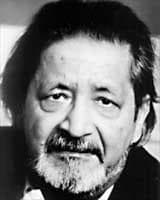
Sir Vidiadhar Surajprasad Naipaul was a Trinidadian-born British writer of works of fiction and nonfiction in English. He is known for his comic early novels set in Trinidad, his bleaker novels of alienation in the wider world, and his vigilant chronicles of life and travels. He wrote in prose that was widely admired, but his views sometimes aroused controversy. He published more than thirty books over fifty years.
Similar books
- One Hundred Years of Solitude
Gabriel García Márquez
4.1 (753k) average on GoodreadsLiterary FictionEpic scope, multi-generational family saga, blend of realism and myth, post-colonial setting.
- The Adventures of Augie March
Saul Bellow
3.8 (16k) average on GoodreadsLiterary FictionPicaresque journey of a man trying to find his place and identity, rich character study.
- The Lonely Londoners
Samuel Selvon
3.7 (14k) average on GoodreadsWhile both Naipaul and Selvon explore the lives of Caribbean individuals, Selvon's The Lonely Londoners focuses on the experiences of West Indian immigrants in post-war London, highlighting themes of displacement, community formation, and the challenges of adapting to a new culture. In contrast, Naipaul's A House for Mr Biswas is primarily set within Trinidad, examining the internal struggles for identity and autonomy within a society grappling with its own post-colonial identity. Selvon's tone is often more overtly humorous and communal, whereas Naipaul's is more introspective and tinged with a tragicomic melancholy, focusing on the individual's battle against societal constraints rather than the collective immigrant experience.
- The Old Man and the Sea
Ernest Hemingway
3.8 (831k) average on GoodreadsLiterary FictionA Cuban fisherman's long struggle with a giant marlin becomes a story of endurance and dignity, now retold for young adults with illustrations, phonetic guides, and writing prompts in Traditional Chinese.
- The Goldfinch
Donna Tartt
3.9 (720k) average on GoodreadsLiterary FictionHaunted by a tragic explosion and clutching a stolen Dutch masterpiece, a young orphan navigates the opulent drawing rooms of New York and the gritty underbelly of the art world, desperately seeking connection and redemption amidst a life spiraling into crime and obsession.
- Little Fires Everywhere
Celeste Ng
4.1 (713k) average on GoodreadsLiterary FictionIn Shaker Heights, an artist and her daughter move in, and their free-spirited lives clash with a rule-bound matriarch, revealing hidden conflicts beneath a perfect surface.






Enjoyed the summary?
A summary gives you the shape of the book. The book itself has the detail, the examples and the voice.
Find A House for Mr Biswas on AmazonAs an Amazon Associate, BookBrief earns from qualifying purchases. How we're funded