
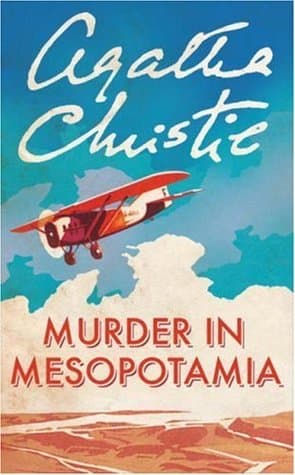
Synopsis
Covers the whole plot, including the ending.
- Difficulty
- Medium
- Pacing
- Moderate
- Mood
- Intriguing, Suspenseful, Classic Mystery, Atmospheric
- Read it if
- You love classic whodunits with a confined setting, intricate plots, and a brilliant detective at the helm, especially if you enjoy archaeological backdrops.
- Skip it if
- You prefer fast-paced modern thrillers, explicit gore, or stories with unreliable narrators and ambiguous endings.
Murder in Mesopotamia Plot Summary
Covers the whole plot, including the ending.
Nurse Leatheran Arrives at Tell Yarimjah
Nurse Amy Leatheran, an English nurse, is hired by Dr. Eric Leidner, an American archaeologist, to care for his wife, Louise, at an excavation site near Hassanieh, Iraq. Dr. Leidner explains that Louise has nervous attacks and vivid visions, believing someone is trying to harm her. At Tell Yarimjah, Nurse Leatheran meets the diverse group of archaeologists and assistants: Richard Carey, Father Lavigny, Mr. Mercado, Captain Maitland, Miss Johnson, Miss Reilly, and the Coleman couple. Louise Leidner, beautiful and manipulative, is a complex patient. Nurse Leatheran sees the strained relationships in the compound, especially Louise's effect on the men, and feels an underlying tension and fear, confirming Dr. Leidner's warning about his wife's mental state and her belief she is in danger.
Louise Leidner's Disturbing Confessions
Louise Leidner tells Nurse Leatheran the real reason for her fear. She says her first husband, Frederick Bosner, was violent and possessive and that she thought he died in a train wreck in America. However, after marrying Dr. Leidner, she started getting anonymous letters threatening her life, signed 'Frederick.' Louise believes Bosner is alive and seeking revenge. She describes a recent event where a heavy stone mortar almost hit her head, strengthening her belief that someone at the dig is trying to kill her. Nurse Leatheran at first thinks these claims are part of Louise's nervous condition but starts to take them seriously as Louise tells vivid details of the threats and her past, including a scary story about a face at her window.
The First Murder: Louise Leidner is Found Dead
One afternoon, after a rest, Louise Leidner is found dead in her room, hit by a heavy stone mortar. The room was locked from the inside, and the window was also secured by an iron grille. Dr. Leidner, Nurse Leatheran, and the others are shocked. The local police, led by Captain Maitland, are called, but the murder circumstances are confusing. There seems to be no way an intruder could have entered or left the room. Nurse Leatheran, despite her initial doubt about Louise's 'visions,' now understands the seriousness of the threats Louise described. The murder makes the archaeological camp fearful and suspicious, with everyone a potential suspect in the dig house.
Hercule Poirot Arrives at the Scene
Hercule Poirot, the Belgian detective, is traveling through Iraq and is asked by Captain Maitland to help with the case. Poirot arrives at Tell Yarimjah and starts his careful investigation, interviewing each expedition member. He pays close attention to Nurse Leatheran's accounts of Louise's fears and confessions. Poirot inspects the murder scene, the locked room, and the compound, looking for any missed detail that might explain the impossible crime. His presence changes the tense atmosphere, as everyone faces his sharp observations and questions, bringing out hidden resentments and secrets among the group.
Unraveling the 'Frederick Bosner' Mystery
Poirot looks into Louise Leidner's past, especially her first marriage to Frederick Bosner. His inquiries show that Bosner was not just violent but a criminal involved in spying, and that his death in the train wreck was real, confirmed by records. This makes Louise's story about 'Frederick' sending threats more complicated. Poirot concludes that someone else must have pretended to be Bosner or used his name to scare Louise. He considers that the 'threats' were a psychological plan to make Louise paranoid, making her murder seem like the end of long persecution, rather than a sudden act.
The Second Victim: Father Lavigny's Demise
As Poirot's investigation continues, a second tragedy happens. Father Lavigny, the French scholar who was working on ancient tablets and seemed close to a major discovery, is found dead. His death is at first called a heart attack, but Poirot suspects murder, given the timing and suspicious details around his work. It seems Lavigny might have found something that pointed to the murder or the 'Frederick' letters. This second death confirms Poirot's belief that a dangerous killer is in the camp, willing to kill anyone who gets close to the truth, and puts everyone on high alert.
The Third Victim: Miss Johnson's Poisoning
The violence continues with the poisoning of Miss Johnson, Dr. Leidner's long-time secretary and assistant. She gets sick after drinking water and dies soon after. Poirot concludes that Miss Johnson, a quiet but observant woman, must have been close to finding the murderer, or perhaps had already made an important connection. Her careful nature and loyalty to Dr. Leidner made her a threat to the killer. This third death confirms a pattern of killing witnesses or those who pose a risk, showing the killer's desperation and the complex deception at the isolated archaeological compound, making Poirot work harder to find the killer before more lives are lost.
Poirot Gathers the Suspects and Reveals the Truth
After gathering all information and carefully analyzing the alibis, motives, and psychological profiles of each suspect, Poirot gathers the remaining expedition members. He systematically explains the impossible nature of Louise Leidner's locked-room murder, showing how the window grille helped create the illusion. Poirot reveals that the 'Frederick' letters were a trick, not from a resurrected husband, but from someone in the camp. He then exposes the murderer, a person whose reason was a deep desire to eliminate Louise and start a new life, having planned a long and detailed deception.
The Unmasking of the Killer: Dr. Leidner
Hercule Poirot reveals that the murderer of Louise Leidner, Father Lavigny, and Miss Johnson is Dr. Eric Leidner himself. Poirot explains that Dr. Leidner was Louise's *first* husband, Frederick Bosner, who faked his death in a train wreck years ago to escape a criminal past. He then remarried Louise under a new identity, only to find her still manipulative and destructive. When Louise recognized him, or was close to doing so, and threatened his new life, he planned her murder. He sent the 'Frederick' letters to himself and Louise to create the illusion of an outside threat, deflecting suspicion from himself. His reason was to silence Louise and start a new life, while keeping his respected archaeological career.
The Method of the Locked Room Explained
Poirot explains Dr. Leidner's clever method for the locked-room murder. Dr. Leidner, as Frederick Bosner, knew Louise's psychological weaknesses. He sent the threatening letters himself, making her paranoid. On the day of the murder, he put the heavy stone mortar on the window sill outside Louise's room. He called to her from outside the window, bringing her close. When she came near, he hit her through the iron grille with the mortar, then quickly pulled it back, making it seem like the blow came from inside. The 'locked room' illusion continued because Louise herself locked the door from the inside, and the window grille, though it looked secure, allowed the fatal blow from outside by a person who was supposedly not Bosner, but was Bosner disguised as Leidner.
The Fates of Father Lavigny and Miss Johnson
Poirot clarifies why the later murders happened. Father Lavigny was killed because he had found old letters or documents that showed Dr. Leidner's real identity as Frederick Bosner, perhaps through his work with ancient texts or by recognizing handwriting. Miss Johnson, an observant and loyal assistant, was killed because she started to notice inconsistencies or something wrong with Dr. Leidner's behavior or alibis, possibly realizing the truth about the 'Frederick' letters or the threats. Dr. Leidner killed both to protect his secret and stop his plan from falling apart, showing his cold and calculating nature and his willingness to kill anyone who threatened his new identity.
Murder in Mesopotamia Characters
Hercule Poirot
Protagonist
The renowned Belgian detective, called to solve the impossible murders at Tell Yarimjah.
Hercule Poirot is a brilliant, meticulous, and somewhat vain Belgian detective known for his 'little grey cells' and his insistence on order and method. He arrives in Iraq on holiday but is drawn into the complex murder case at Tell Yarimjah. His sharp intellect, psychological insight, and keen observation skills allow him to unravel the intricate web of deceit and reveal the true identity of the murderer. He pays close attention to human nature and motives, often seeing beyond the obvious physical clues to the deeper psychological truths. His methodical approach to interviewing suspects and reconstructing events is central to solving the seemingly impossible locked-room mystery.
Relationships: Amy Leatheran (Confidante and chronicler of the case); Dr. Eric Leidner (The murderer, whom Poirot unmasks); Captain Maitland (Local police contact, requesting Poirot's assistance)
Nurse Amy Leatheran
Supporting/Narrator
The practical English nurse whose eyewitness account forms the primary narrative perspective.
Nurse Amy Leatheran is the narrator of the story, a sensible, down-to-earth English nurse hired to care for Louise Leidner. She is initially skeptical of Louise's claims of being threatened but becomes a key witness and confidante. Her practical nature and lack of pretension make her an astute observer of human behavior, though she sometimes struggles to grasp the complexities of the archaeological world and the passions within it. She provides a grounded, objective perspective, and her detailed recollections of Louise's fears and the household dynamics are invaluable to Poirot's investigation. She represents the 'everyperson's' view of the extraordinary events.
Relationships: Louise Leidner (Patient, whose fears she initially dismisses but later validates); Dr. Eric Leidner (Employer, whose true nature she eventually discovers); Hercule Poirot (Confidante and assistant in the investigation)
Dr. Eric Leidner
Antagonist
The renowned archaeologist and Louise's husband, secretly her first husband and the manipulative murderer.
Dr. Eric Leidner is ostensibly the kind, distinguished American archaeologist leading the expedition and the devoted husband of Louise Leidner. He hires Nurse Leatheran to care for his 'nervous' wife and appears genuinely concerned for her safety. However, he is secretly Louise's first husband, Frederick Bosner, who faked his death years ago to escape a criminal past. He remarried Louise under a new identity, only to find her still manipulative and a threat to his new life. He is a cunning and ruthless individual, capable of orchestrating an elaborate scheme of psychological terror and multiple murders to protect his secret and secure his freedom.
Relationships: Louise Leidner (Wife, and his first wife; his victim); Miss Johnson (Loyal assistant; his victim); Hercule Poirot (His eventual unmasker)
Louise Leidner
Victim
The beautiful, manipulative, and deeply feared wife of Dr. Leidner, whose murder sets the plot in motion.
Louise Leidner is a strikingly beautiful but highly manipulative and self-centered woman. She is the wife of Dr. Eric Leidner and the central victim of the first murder. She has a history of driving men to distraction and revels in the attention she receives. Louise is genuinely terrified, believing her first husband, Frederick Bosner, is alive and seeking revenge, a fear she confides in Nurse Leatheran. Her past is shrouded in mystery and danger, as she previously married a violent criminal. Her complex personality and the effect she has on others contribute significantly to the tense atmosphere at the dig site and provide numerous potential motives for her murder.
Relationships: Dr. Eric Leidner (Husband, and secretly her first husband; her murderer); Richard Carey (Former lover, still emotionally entangled); Nurse Amy Leatheran (Confidante for her fears)
Richard Carey
Supporting
A handsome architect on the expedition, who had a past affair with Louise Leidner.
Richard Carey is a handsome and moody architect working on the expedition. He had a past affair with Louise Leidner, which ended badly, leaving him with a mix of lingering attraction and resentment. He is a prime suspect due to his known history with Louise and his volatile temperament. Carey is often seen brooding and distant, making him appear suspicious. His presence highlights the emotional turmoil Louise caused among the men at the dig, and his strained relationship with her provides a clear motive for murder, though he maintains his innocence throughout the investigation.
Relationships: Louise Leidner (Former lover, with a complicated, unresolved history); Dr. Eric Leidner (Rival for Louise's affection)
Miss Anne Johnson
Victim
Dr. Leidner's loyal and observant secretary, who becomes the third victim.
Miss Anne Johnson is Dr. Leidner's long-standing, devoted, and highly efficient secretary and assistant. She is a quiet, unassuming woman, known for her loyalty and methodical nature. She often acts as a calming influence within the volatile household and is deeply fond of Dr. Leidner. Miss Johnson is highly observant and perceptive, noticing details that others might miss. Her quiet intelligence and her close proximity to Dr. Leidner ultimately make her a threat to the murderer, leading to her poisoning. She is a tragic figure, eliminated for getting too close to the truth.
Relationships: Dr. Eric Leidner (Employer, whom she is fiercely loyal to; her murderer); Louise Leidner (Co-resident, whom she tolerates)
Father Lavigny
Victim
A French epigraphist on the expedition, who becomes the second murder victim.
Father Lavigny is a French epigraphist working on the archaeological dig, responsible for deciphering ancient tablets. He is portrayed as a scholarly, somewhat eccentric figure, deeply engrossed in his work. He is the second victim, initially believed to have died of a heart attack, but Poirot quickly suspects foul play. It is later revealed that Father Lavigny likely stumbled upon some crucial information or evidence related to Dr. Leidner's true identity or past, making him a dangerous witness who had to be silenced. His death adds another layer of complexity to the mystery, escalating the danger within the compound.
Relationships: Dr. Eric Leidner (Colleague; his murderer); Hercule Poirot (The detective investigating his death)
Captain Maitland
Supporting
The local police officer who initially handles the case and calls in Poirot.
Captain Maitland is the local British police officer stationed in the area who is called to investigate Louise Leidner's murder. He is competent but quickly realizes the perplexing nature of the locked-room mystery is beyond his immediate capabilities. He is the one who suggests calling in Hercule Poirot, recognizing the need for a detective with extraordinary skills. Maitland assists Poirot in the investigation, providing local context and resources, and represents the conventional law enforcement perspective against Poirot's unique methods.
Relationships: Hercule Poirot (Colleague, whom he respects and assists); Dr. Eric Leidner (Initially a suspect, later the revealed murderer)
Mr. Joseph Mercado
Supporting
A member of the expedition, suffering from an illness and suspected of dealing in antiquities.
Mr. Joseph Mercado is a member of the archaeological team, an architect of Syrian descent. He is portrayed as a rather sickly man, suffering from an unspecified illness that often confines him to bed. He is suspected of secretly dealing in antiquities, which adds another layer of potential motive and illicit activity to the dig site. Mercado is generally quiet and keeps to himself, but his past and his illness make him a figure of some suspicion, especially given the tension and secrets within the compound. He is one of the many red herrings in Poirot's investigation.
Relationships: Louise Leidner (Acquaintance, possibly a victim of her manipulation); Dr. Eric Leidner (Colleague)
Mrs. Mercado
Supporting
Joseph Mercado's quiet wife, who is devoted to her husband.
Mrs. Mercado is the quiet, devoted wife of Joseph Mercado. She is often seen tending to her ailing husband and generally keeps to herself, not engaging much with the other members of the expedition. She is a less prominent figure than her husband, but her presence adds to the diverse cast of characters at the dig. Her quiet demeanor makes her difficult to read, and she is one of the many individuals whose true thoughts and loyalties are subject to Poirot's scrutiny during the investigation, though she ultimately proves to be innocent.
Relationships: Joseph Mercado (Devoted wife); Louise Leidner (Acquaintance)
Coleman (Bill and David)
Supporting
Young archaeologists on the expedition, often seen together.
Bill and David Coleman are two young, enthusiastic, and somewhat naive archaeologists on the expedition. They are generally portrayed as lighthearted and less entangled in the deeper emotional complexities of the group, though they are not immune to Louise Leidner's charms. They represent the more youthful and less experienced members of the team. Their reactions and observations sometimes provide comic relief or a different perspective, but they are not central to the core mystery, serving primarily as background characters who are also subjected to the fear and suspicion that grips the camp after the murders.
Relationships: Dr. Eric Leidner (Employer); Louise Leidner (Acquaintance, one of many she flirted with)
Murder in Mesopotamia Themes
Deception and Hidden Identities
The novel uses deception, most notably the reveal that Dr. Eric Leidner is Frederick Bosner, Louise Leidner's first husband who faked his death. This theme shows how people can create new lives to escape their pasts. Louise herself is manipulative, using her beauty and charm to control others. The 'Frederick' letters, at first seeming like outside threats, are part of Dr. Leidner's deception, meant to scare Louise and mislead suspicion. Poirot's investigation is about removing these layers of lies to find the true identities and reasons.
“It is the psychology, the human factor, that interests me most.”
The Destructive Power of Love and Obsession
Love, or a twisted version of it, and obsession drive the main villain. Dr. Leidner's initial love for Louise led him to marry her, but her manipulative nature turned that love into a desperate need for freedom, ending in murder. His obsession with keeping his new identity and escaping his past makes him ruthless. Louise is a character who inspires both strong adoration and strong hatred, her beauty causing destructive emotions in those around her, including Richard Carey's lingering resentment. The novel shows how deep emotional ties, when twisted, can lead to violence and death.
“She was one of those women who draw men like magnets, but who also seem to have a strange power of wrecking their lives.”
Isolation and Suspicion
The remote archaeological dig site at Tell Yarimjah acts as a small version of human society, cut off from the outside world. This isolation increases the psychological tension and suspicion among the small group. Once the murders start, everyone is trapped together, facing the possibility that one of them is a killer. The lack of outside influences means the investigation must focus entirely on the group's internal dynamics and secrets. This isolation increases paranoia, making every look, conversation, and personal history a potential clue or source of fear. Nurse Leatheran often mentions the confined atmosphere.
“In a small community like ours, every word, every glance, every gesture is noticed and commented upon.”
The Nature of Truth and Perception
The novel questions what is real and what is perceived. Louise Leidner's 'visions' and fears are at first dismissed as nervous attacks, only to be tragically proven true by her murder. The 'Frederick' letters are presented as threats from a ghost, but are actually a carefully made deception by the killer. Poirot's skill is his ability to look past the surface, challenge assumptions, and tell the difference between carefully built illusions and the real truth. The story, told through Nurse Leatheran's view, shows how easily people can be fooled by appearances and how hard it is to find the truth when dealing with a clever deceiver.
“The truth, however ugly in itself, is always beautiful in its simplicity.”
Plot Devices & Literary Techniques
Locked-Room Mystery
The seemingly impossible murder of Louise Leidner in a securely locked and barred room.
The murder of Louise Leidner presents as a classic locked-room mystery. She is found bludgeoned to death in her room, which was locked from the inside, and the window was secured by a heavy iron grille. This impossibility is the central puzzle that Poirot must solve. The device creates immediate intrigue and challenges the reader to consider how such a crime could be committed. Poirot meticulously examines the physical layout of the room and the compound, eventually revealing an ingenious, yet simple, method that exploited the limitations of perception and the victim's own vulnerabilities, rather than supernatural means or complex mechanisms.
Unreliable Narrator (Subtle)
Nurse Leatheran's limited perspective and initial skepticism influence the early understanding of events.
While not overtly unreliable, Nurse Amy Leatheran's narration subtly shapes the reader's perception. She is a practical, no-nonsense woman who initially dismisses Louise Leidner's fears as 'nervous imaginings.' This initial skepticism, combined with her limited knowledge of the archaeological world and the complex pasts of the characters, leads the reader to also doubt Louise's claims. Her perspective, though detailed, is subjective and incomplete, allowing Poirot to later reveal layers of truth that were invisible to her, and thus to the reader. Her 'ordinariness' makes the extraordinary events seem even more shocking when the truth is revealed.
Red Herrings
Multiple characters with plausible motives and suspicious behaviors designed to mislead the investigation.
Christie masterfully employs numerous red herrings to deflect suspicion from the true killer. Richard Carey, with his past affair and volatile temper, is a strong initial suspect. Mr. Mercado's suspected illicit dealings in antiquities and his illness also raise questions. The general atmosphere of resentment and unease surrounding Louise Leidner ensures that almost everyone at the dig has a plausible, albeit minor, motive. These characters and their suspicious behaviors serve to complicate the investigation, providing alternative explanations and diverting Poirot's, and the reader's, attention away from the actual murderer until the very end.
Psychological Manipulation
The killer's use of 'Frederick' letters and implied threats to terrorize Louise Leidner.
A key plot device is the psychological manipulation employed by the killer against Louise Leidner. The anonymous letters, purportedly from her first husband, Frederick Bosner, are designed to systematically terrorize Louise and drive her to a state of extreme paranoia. This campaign of psychological warfare serves multiple purposes: it makes her appear mentally unstable, thus diminishing the credibility of her claims; it provides a ready-made explanation for her eventual death (that Bosner finally caught up with her); and it deflects suspicion from the actual killer, who is ostensibly trying to protect her. This device highlights the killer's cunning and their deep understanding of Louise's vulnerabilities.
Murder in Mesopotamia Quotes
“The human heart is an abyss.”
“It is so easy to be clever when one knows the answer.”
“One does not have to be a murderer to understand murder.”
“Always distrust the obvious.”
“People with a secret are always more interesting.”
“It is the little things, Mademoiselle, that are by far the most important.”
“One never knows what goes on in other people's minds.”
“Truth, however ugly in itself, is always beautiful in effect.”
“Everyone is a potential murderer.”
“The past is never dead. It's not even past.”
“A man who is afraid of nothing is a man to be afraid of.”
“It is not the spectacular that is important, but the commonplace.”
“The greatest crimes are not committed for money, but for love.”
“There are times when one must act without knowing everything.”
Quiz
10 questions on the plot and the characters. Each answer comes with a short explanation.
Question 1
Who is the primary narrator of 'Murder in Mesopotamia'?
- Hercule Poirot
- Captain Hastings
- Nurse Amy Leatheran
- Dr. Leidner
Show answer
C. Nurse Amy Leatheran The story is uniquely narrated by Nurse Amy Leatheran, giving the reader her perspective as an outsider introduced to the archaeological dig and its inhabitants.
Question 2
What is the initial cause of death for Mrs. Louise Leidner?
- A stab wound
- Poisoning
- A blow to the head
- Suffocation
Show answer
C. A blow to the head Mrs. Leidner is found dead in her room, having been struck on the head with a blunt instrument, initially believed to be a stone pestle.
Question 3
Before her marriage to Dr. Leidner, Louise had a previous marriage to a man named Frederick Bosner. What was Bosner's fate?
- He died in a war.
- He was executed for espionage.
- He faked his own death and disappeared.
- He divorced Louise and remarried.
Show answer
B. He was executed for espionage. Louise's first husband, Frederick Bosner, was an American secret service agent who was executed for espionage, a fact that later becomes crucial to understanding her fears.
Question 4
What significant object is found near Mrs. Leidner's body that initially appears to be a red herring?
- A broken ancient pottery shard
- A small, carved ivory figurine
- A stone pestle
- A discarded letter
Show answer
C. A stone pestle A stone pestle is found near her body, leading investigators to believe it was the murder weapon, though Poirot later reveals the true weapon was much smaller.
Question 5
Which character is described as being 'always in love with someone' and is a key figure in the romantic entanglements at the dig site?
- Richard Carey
- Father Lavigny
- Anne Johnson
- Sheila Maitland
Show answer
D. Sheila Maitland Sheila Maitland is portrayed as a young woman who frequently falls in love, often with men on the expedition, adding to the complex relationships among the crew.
Question 6
What is the primary motive behind the murders in 'Murder in Mesopotamia'?
- Revenge for past archaeological discoveries
- To silence a blackmail scheme
- To prevent exposure of a hidden identity and a past crime
- A dispute over the ownership of ancient artifacts
Show answer
C. To prevent exposure of a hidden identity and a past crime The murders are committed to protect the secret identity of the killer, who is Louise's first husband, Frederick Bosner, who faked his death and continued to torment her.
Question 7
How does Hercule Poirot explain the seemingly impossible nature of Mrs. Leidner's murder, given the locked room scenario?
- The killer used a secret passage.
- The murder was committed from outside the window.
- The killer was already inside the room, disguised as a piece of furniture.
- The killer used a piece of furniture to create a temporary barrier and then removed it, or was the person she let in.
Show answer
D. The killer used a piece of furniture to create a temporary barrier and then removed it, or was the person she let in. Poirot deduces that the killer was in the room and used a small table to block the door after entering, giving the illusion that the room was sealed before the murder, or was the person Louise willingly admitted.
Question 8
Which character is secretly in love with Mrs. Leidner and is initially a prime suspect due to his emotional intensity?
- Dr. Riley
- Mr. Mercado
- Richard Carey
- Bill Coleman
Show answer
C. Richard Carey Richard Carey is shown to have a strong, unrequited love for Louise Leidner, making him a suspect due to his passionate nature and potential for jealousy.
Question 9
What is the crucial piece of evidence that helps Poirot link the past events of Frederick Bosner's supposed death to the current murders?
- A photograph of Bosner taken recently at the dig site.
- A distinctive scar on the killer's hand matching Bosner's description.
- The peculiar handwriting in the threatening letters, which matches the killer's ordinary hand.
- A confession found hidden in a secret compartment.
Show answer
C. The peculiar handwriting in the threatening letters, which matches the killer's ordinary hand. Poirot realizes that the threatening letters Louise received, supposedly from her dead first husband, were actually written by the murderer in their natural handwriting, revealing their true identity.
Question 10
What role does the character of Marie Leidner, Dr. Leidner's sister, play in the story's resolution?
- She is the second victim of the murderer.
- She provides a crucial alibi for one of the suspects.
- She is revealed to be Frederick Bosner in disguise, and thus the murderer.
- She discovers the hidden ancient treasure that the killer was after.
Show answer
C. She is revealed to be Frederick Bosner in disguise, and thus the murderer. In a shocking twist, Marie Leidner is revealed to be Frederick Bosner, Louise's first husband, who faked his death and infiltrated the dig under a new identity to continue his torment and ultimately murder Louise.
Murder in Mesopotamia FAQ
What is Murder in Mesopotamia about?
Murder in Mesopotamia follows nurse Amy Leatheran as she is hired to care for the high-strung Louise Leidner, wife of an American archaeologist, at an excavation site in Iraq. Soon after her arrival, Louise is found dead, seemingly by an accident, but it quickly becomes clear she was murdered. Luckily, Hercule Poirot is touring the region and is brought in to unravel the complex web of secrets and past traumas among the small, isolated group of archaeologists and their associates.
Why should I read Murder in Mesopotamia?
You should read Murder in Mesopotamia for its classic 'locked-room' style mystery set in the exotic, claustrophobic environment of an archaeological dig, which adds unique pressures and limited suspects. Agatha Christie masterfully crafts a tense atmosphere with a cast of suspicious characters, each with their own motives and secrets, culminating in a highly satisfying and intricate solution delivered by Hercule Poirot.
What is the background/setting of Murder in Mesopotamia?
The story is set in the 1930s at an archaeological excavation site near Hassanieh, Iraq, specifically at the 'tell' or mound where ancient ruins are being unearthed. The remote and isolated nature of the dig, with a small group of Europeans living and working closely together in a house near the site, creates a hothouse environment where tensions and past grievances can fester, making it an ideal, claustrophobic setting for a murder mystery.
What are the most memorable quotes?
One memorable quote is Hercule Poirot's observation, 'The human heart is an enigma. It is a labyrinth of twists and turns, of hidden passages and secret chambers.' This reflects the psychological depth he applies to his investigations. Another is Amy Leatheran's pragmatic thought, 'Murder is a shocking thing, but it has to be dealt with,' highlighting her down-to-earth nursing perspective amidst the drama.
What writing style does the author use?
Agatha Christie employs a first-person narrative through the eyes of Nurse Amy Leatheran, which provides a grounded, observant, and often bewildered perspective on the unfolding events. Her writing is precise, detailed, and focuses on character interactions and psychological nuances, building suspense through dialogue and internal monologue rather than overt action, characteristic of classic Golden Age detective fiction.
What minor details add significant meaning?
The seemingly trivial detail of Louise Leidner's fear of a 'white face at the window' and the specific type of window latch in her room become crucial clues. Also, the discussion of the various types of 'voices' Louise claimed to hear, distinguishing between a real voice and a hallucination, provides a key insight into the killer's method and her past.
What are some subtle foreshadowing moments?
Louise Leidner's constant, almost paranoid, fear of her first husband, Frederick Bosner, returning to kill her subtly foreshadows the true identity of her murderer, though readers are led to believe Bosner is long dead. The initial 'accidental' falling of the grinding stone, dismissed by most, also hints at an underlying malevolence on the dig before the actual murder occurs.
What unexpected character connections exist?
The most unexpected connection is between Dr. Leidner and Frederick Bosner, Louise's supposedly deceased first husband. Dr. Leidner is revealed to *be* Frederick Bosner, having faked his death years ago and assumed a new identity to escape his murderous wife, only for her to find him again. This twist completely recontextualizes their marriage and his motives.
What are unspoken character motivations?
Dr. Leidner's unspoken motivation for marrying Louise again, despite her dangerous past, was a desperate, misguided attempt to 'cure' her and live a normal life, driven by a deep, enduring love and a sense of responsibility. Similarly, Miss Johnson's quiet devotion to Dr. Leidner, bordering on unrequited love, motivates her protective actions and her eventual tragic intervention.
What psychological complexities do characters exhibit?
Louise Leidner exhibits extreme psychological complexity, appearing as a manipulative, narcissistic, and deeply disturbed individual who thrives on creating fear and chaos. Dr. Leidner, on the other hand, shows a complex blend of love, denial, and a profound psychological need to protect and 'fix' Louise, even to his own detriment, highlighting the psychological toll of their toxic relationship.
What are the major emotional turning points?
A major emotional turning point is the discovery of Louise Leidner's body, which shatters the fragile peace of the dig and forces everyone to confront the reality of murder. Another is the moment when Nurse Leatheran realizes the true identity of the murderer, which fundamentally shifts her perception of the 'victims' and 'villains' she has come to know.
How do relationship dynamics evolve?
The relationship dynamics initially show a strained tolerance among the isolated group, with everyone tiptoeing around Louise Leidner's unpredictable moods. After the murders, these dynamics devolve into suspicion and fear, with alliances shifting and old grievances resurfacing. Ultimately, the resolution allows for some relationships, like that between Nurse Leatheran and Dr. Reilly, to solidify in trust and respect.
Which parts remain ambiguous or open-ended?
While Poirot meticulously solves the murders, the long-term psychological impact on the surviving members of the dig, particularly those who were deeply involved or deceived, is left somewhat ambiguous. The future of the archaeological expedition itself, after such a traumatic event, is also not explicitly detailed, leaving readers to ponder the fallout.
What are controversial scenes or decisions?
The decision by Dr. Leidner (as Frederick Bosner) to marry Louise *again* after she had previously tried to murder him is a controversial and perplexing choice, highlighting a profound and perhaps unhealthy devotion that many readers find difficult to reconcile. Also, Miss Johnson's final act of sacrificing herself to save Dr. Leidner, though heroic, is a controversial decision that some might view as tragic or unnecessary.
Murder in Mesopotamia ending explained: how it ends & what it means
The novel ends with Hercule Poirot revealing that Dr. Leidner is, in fact, Frederick Bosner, Louise's first husband, who faked his death years ago to escape her murderous tendencies. He remarried her under a new identity, hoping to cure her. Louise was murdered by Bosner, who disguised himself as a phantom 'voice' and then poisoned her. The second victim, Father Lavigny, was killed by Miss Johnson, who believed he knew the truth about Bosner's identity and was protecting him. The ending means that the 'victim' was also a killer, and the true mastermind was driven by a desperate, tragic love and self-preservation, revealing the complex, often dark, motives hidden beneath polite society.
About the author
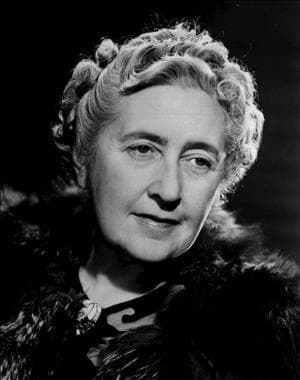
Dame Agatha Mary Clarissa Christie, Lady Mallowan, was an English writer known for her 66 detective novels and 14 short story collections, particularly those revolving around fictional detectives Hercule Poirot and Miss Marple. She also wrote the world's longest-running play, the murder mystery The Mousetrap, which has been performed in the West End since 1952. A writer during the "Golden Age of Detective Fiction", Christie has been called the "Queen of Crime". She also wrote six novels under the pseudonym Mary Westmacott. In 1971, she was made a Dame (DBE) by Queen Elizabeth II for her contributions to literature. Guinness World Records lists Christie as the best-selling fiction writer of all time, her novels having sold more than two billion copies.
Similar books
- Death on the Nile
Agatha Christie
4.1 (127k) average on GoodreadsThrillerAnother Hercule Poirot mystery set in an exotic, isolated location with a limited pool of suspects.
- And Then There Were None
Agatha Christie
4.3 (822k) average on GoodreadsThrillerFeatures a confined group of people being picked off one by one, creating high tension and a classic mystery structure.
- Angels & Demons
Dan Brown
3.9 (2.7M) average on GoodreadsThrillerA Harvard symbologist races through Rome's ancient sites, deciphering cryptic clues to unmask the Illuminati and stop a vengeful plot to destroy the Vatican with a stolen antimatter weapon.
- Gone Girl
Gillian Flynn
4.1 (2.3M) average on GoodreadsThrillerA wife's sudden disappearance on her fifth anniversary reveals a web of lies and psychological warfare, exposing the secrets within a seemingly perfect marriage.
- The Girl on the Train
Paula Hawkins
3.9 (2.1M) average on GoodreadsThrillerA woman’s fascination with a seemingly perfect couple she watches from her daily train commute leads her into a dark investigation when she witnesses something that shatters their idyllic image.
- The Da Vinci Code
Dan Brown
3.9 (1.9M) average on GoodreadsThrillerA symbologist and a cryptologist race through European landmarks, deciphering ancient codes and uncovering a conspiracy that could rewrite the foundations of Christianity.





Enjoyed the summary?
A summary gives you the shape of the book. The book itself has the detail, the examples and the voice.
Find Murder in Mesopotamia on AmazonAs an Amazon Associate, BookBrief earns from qualifying purchases. How we're funded