Estimated read time: 10 min read
One Sentence Summary
An American woman embarks on a transformative journey across the Australian Outback with a group of Aboriginal people, learning their spiritual and cultural wisdom.
Table of Contents
Introduction
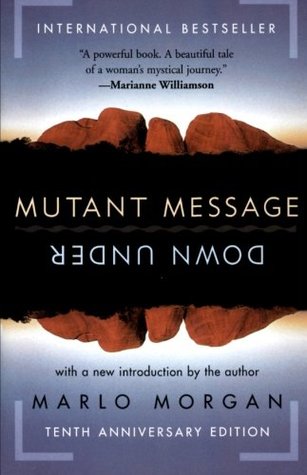
Imagine being swept from your comfortable, predictable American life and plunged into the heart of Australia’s forbidding Outback—no GPS, no running water, and definitely no Wi-Fi. That’s the wild ride Marlo Morgan takes us on in her bestselling book, Mutant Message Down Under. Part memoir, part spiritual odyssey, this book has inspired, puzzled, and even outraged readers since its release. Whether you’re a seeker of adventure, a student of cross-cultural encounters, or simply in need of a new perspective on life, Morgan’s narrative offers an unforgettable journey into the wisdom of Australia’s Aboriginal people.
Historical Context
Set in late 20th-century Australia, Mutant Message Down Under enters a society grappling with its colonial legacy and the marginalization of its Indigenous peoples. The Aboriginal Australians—custodians of the world’s oldest continuous culture—had by then endured centuries of dispossession. As the Western world raced forward, many Aboriginal communities struggled to maintain their ancient traditions amid urbanization and government policies that often ignored or misunderstood their values.
Morgan’s journey occurs against this backdrop, highlighting the tensions between modernity and tradition, and bringing attention to the struggles and spiritual richness of Australia’s First Peoples. Although the book is presented as a true account, it has sparked controversy and skepticism, particularly among Aboriginal communities, for its fictionalized portrayal of Indigenous beliefs and experiences. Still, its impact on popular perceptions of Aboriginal spirituality and cross-cultural understanding remains significant.
Brief Synopsis
Plot Overview
Mutant Message Down Under recounts Marlo Morgan’s transformation from a pragmatic American professional to a spiritual seeker. After being invited to a mysterious gathering in the Australian Outback by an Aboriginal tribe she calls the "Real People," Morgan embarks on a months-long trek through the desert. Deprived of modern comforts and forced to confront her own prejudices and limitations, she learns profound lessons about community, simplicity, connection with nature, and what it means to be truly human.
Setting
The story unfolds in the Australian Outback—a vast, rugged, and often unforgiving landscape. The desert’s beauty and danger become as much a character as any member of Morgan’s Aboriginal guides. The contrast between Morgan’s former life in urban America and the timeless rhythms of the Outback underscores the book’s exploration of cultural differences and personal transformation.
Main Characters
Here’s a quick look at the key figures in Mutant Message Down Under:
| Name (Alias) | Role | Key Traits | Importance to Plot |
|---|---|---|---|
| Marlo Morgan | Narrator/Protagonist | Curious, skeptical, open | Undergoes transformation |
| Ooota | Tribal leader and spiritual guide | Wise, compassionate | Guides Morgan on her journey |
| Toolmaker | Practical member, creator of tools | Resourceful, inventive | Demonstrates ingenuity |
| Healer | Medic and spiritual healer | Nurturing, mystical | Introduces Aboriginal healing |
| Spirit Woman | Female elder, spiritual authority | Insightful, maternal | Offers key spiritual lessons |
| Tribe Members | The “Real People” Aboriginal clan | Communal, resilient | Embody tribal wisdom |
Note: The names are pseudonyms or descriptions, reflecting Morgan’s efforts to protect identities or to symbolize the characters’ roles.
Plot Summary
The “Invitation”
Morgan’s adventure begins innocuously enough—she is working as a health consultant in Australia when she receives an invitation from an Aboriginal group. What she believes will be a formal event turns out to be the start of a life-altering trek.
Into the Unknown
Without warning, Morgan is whisked away by the tribe, stripped of her possessions (including her shoes!), and plunged into the Outback. Her initial shock and discomfort are palpable—imagine trading your phone and credit cards for a stick and the endless horizon.
The Walkabout
Morgan embarks on the “Walkabout”, a spiritual journey emblematic in Aboriginal culture. The harshness of the desert tests her physically and mentally, but she slowly adapts, learning to find water, food, and shelter from the land. The group’s deep connection to nature and one another astonishes her.
Lessons from the Tribe
As the journey progresses, Morgan is schooled in Aboriginal philosophy—respect for all life, the importance of community, and living in harmony with nature. She is introduced to “telepathic” communication, traditional healing, and ceremonies that challenge her Western worldview.
Moments of Crisis
Morgan faces several crises: exhaustion, fear, and doubt. She questions her capacity to survive and the validity of the tribe’s teachings. These moments, often described with humor and humility, are turning points in her transformation.
The Revelation
By journey’s end, Morgan emerges changed. She realizes the “mutant message” refers to the tribe’s perception of modern humans—disconnected from the earth and each other, in need of healing and spiritual realignment. The tribe, seeing Morgan’s transformation, encourages her to share their message with the outside world.
Themes and Motifs
Connection vs. Disconnection
At its core, the book contrasts the deep connection of the “Real People” to each other and their environment with the disconnection Morgan perceives in Western society. The tribe’s way of life revolves around communal well-being, respect for the land, and a sense of spiritual purpose.
Simplicity and Non-Attachment
Morgan’s enforced simplicity—living with almost nothing—becomes a source of liberation. The tribe’s rejection of materialism prompts readers to question the value of consumption and status.
Healing and Transformation
Physical and spiritual healing recur throughout the journey. Aboriginal healing arts, ceremonies, and a holistic view of well-being are central, offering a counterpoint to Western medicine and psychology.
Nature as Teacher
The Outback itself is a powerful motif. Its challenges and beauty force Morgan to confront her limits, adapt creatively, and embrace humility.
Communication Beyond Words
The book explores ways of knowing and communicating—telepathy, intuition, and shared silence—challenging our reliance on language and rational thought.
Cultural Critique
Morgan’s narrative is a critique of Western society’s “mutant” qualities: alienation, environmental destruction, and the loss of spiritual values.
Thematic Table
| Theme | Description | Relevance to Story |
|---|---|---|
| Connection to Nature | Living in harmony with the earth | Central to Aboriginal worldview |
| Community | Collective responsibility over individualism | Drives tribal interactions |
| Simplicity | Minimal possessions, maximum freedom | Liberates Morgan, challenges Western norms |
| Healing | Holistic, spiritual, communal | Contrasts with Western medicine |
| Spiritual Transformation | Personal growth through adversity | Morgan’s main arc |
| Cultural Critique | Examination of modern society’s “mutant” values | Provides book’s central message |
Literary Techniques and Style
Narrative Structure
Morgan writes in the first person, lending immediacy and intimacy to her encounters. The book is structured as a linear journey, but interspersed with flashbacks and reflective passages that allow readers to track her inner transformation.
Symbolism
The Outback is both landscape and symbol—a place of hardship and revelation. The act of shedding possessions represents a spiritual rebirth.
Realism and Allegory
While the story claims to be a memoir, it often reads like an allegory, with characters embodying spiritual archetypes rather than fully fleshed individuals. This has led to questions about the book’s factual accuracy, but also enhances its mythic quality.
Accessible Language
Morgan’s style is direct and accessible, peppered with humor and self-deprecation. Her outsider perspective invites the reader to share in her bewilderment and awe.
Use of Aboriginal Lore
The narrative is replete with references to Aboriginal beliefs, stories, and customs. However, these are often filtered through Morgan’s interpretation, which has led to criticisms of misrepresentation.
Author's Background
Marlo Morgan, an American health care professional, wrote Mutant Message Down Under after a visit to Australia in the 1980s. Before her foray into writing, she worked in public health, which informs her interest in holistic healing and cross-cultural medicine.
Morgan self-published her book in 1991, and it quickly gained traction, eventually becoming an international bestseller. However, her claim that the story is a true account has been widely disputed—most notably by Aboriginal leaders and scholars, who argue that the book is fictional and misrepresents their culture.
Despite the controversy, Morgan’s work has reached millions, sparking discussions about cultural appropriation, the responsibilities of storytellers, and the Western fascination with Indigenous wisdom.
Other Works
Morgan has written sequels and related works, but none have matched the impact of her debut. She remains a divisive figure—admired by some for raising awareness of Aboriginal spirituality, criticized by others for inaccuracy and cultural insensitivity.
Key Takeaways
- Connection is healing: True well-being comes from reconnecting with others and the environment.
- Simplicity liberates: Letting go of material attachments can lead to freedom and clarity.
- Question your assumptions: Exposure to radically different cultures can reveal the limits of your own worldview.
- Listen to the land: Nature offers wisdom and guidance if approached with respect.
- Personal growth is uncomfortable: Transformation often requires discomfort and letting go of the familiar.
- Cultural dialogue is complex: Engaging with other traditions demands humility and care.
Reader's Takeaway
Prepare to be challenged, inspired, and occasionally frustrated. Mutant Message Down Under invites you to question the very foundations of your daily life—your relationship to stuff, to people, to nature, and to the stories you tell about what matters. Even if you approach the book with skepticism, you’ll likely find yourself reevaluating your assumptions about happiness and success.
Emotionally, the book is a rollercoaster—by turns funny, humbling, and profound. Academically, it’s a springboard for discussions about cultural representation, spirituality, and personal transformation. Whether you agree with Morgan or not, you’ll come away with new questions and, perhaps, a desire to embark on your own inner walkabout.
Conclusion
Mutant Message Down Under is not just a travel memoir; it’s a call to adventure—one that begins not in the Australian bush, but in the heart and mind of every reader. Morgan’s journey with the “Real People” is both a literal trek across forbidding terrain and a metaphorical journey toward greater self-awareness and global empathy.
The book’s legacy is complicated: It has opened doors for cross-cultural dialogue, but also fueled debate about authenticity and appropriation. For college students and lecturers, it offers fertile ground for critical discussion about the ethics of storytelling, the allure of the “other,” and the ongoing relevance of Indigenous wisdom in a rapidly changing world.
So, if you’re ready to walk barefoot into the unknown, leave your “mutant” baggage behind, and consider new ways of seeing and being, give Mutant Message Down Under a try. Just remember: The real journey might begin after you close the book.
Mutant Message Down Under FAQ
What is 'Mutant Message Down Under' about?
'Mutant Message Down Under' is a spiritual adventure memoir by Marlo Morgan that recounts her journey across the Australian Outback with a group of Aboriginal people, referred to as the 'Real People.' The book explores themes of self-discovery, indigenous wisdom, and the nature of humanity.
Is 'Mutant Message Down Under' based on a true story?
Marlo Morgan initially presented the book as a true account of her experiences with Aboriginal Australians. However, the authenticity of her story has been widely disputed, with many Aboriginal groups and scholars stating that the events described are fictional.
Who are the 'Real People' in the book?
The 'Real People' in the book refer to an Aboriginal tribe that Marlo Morgan claims to have traveled with. They are depicted as a deeply spiritual and wise group, living in harmony with nature and possessing unique cultural practices.
What are some major themes in 'Mutant Message Down Under'?
Major themes include respect for nature, the power of spiritual connection, self-transformation, the wisdom of indigenous cultures, and critiques of modern Western society.
Why is 'Mutant Message Down Under' controversial?
The book is controversial because many Aboriginal groups have denounced it as a fabrication that misrepresents their culture and spirituality. Critics argue that it perpetuates stereotypes and appropriates indigenous traditions.
What genre is 'Mutant Message Down Under'?
'Mutant Message Down Under' is generally categorized as a memoir, spiritual adventure, and sometimes as fiction, due to questions surrounding its factual accuracy.
What message does Marlo Morgan aim to convey in the book?
Marlo Morgan aims to convey a message about the importance of spiritual growth, listening to indigenous wisdom, living simply, and respecting the environment. She encourages readers to reflect on their own lives and societal values.
Has 'Mutant Message Down Under' been adapted into other media?
As of now, 'Mutant Message Down Under' has not been adapted into a major film or television production, though it remains popular in spiritual and self-help circles.
How was 'Mutant Message Down Under' received by critics?
The book was a bestseller and resonated with many readers seeking spiritual insight, but it also faced significant criticism for its alleged inaccuracies and cultural appropriation.
Should I read 'Mutant Message Down Under' for accurate information about Aboriginal culture?
While the book may offer personal insights and spiritual reflections, it should not be considered an accurate or authoritative source on Aboriginal Australian culture. Readers interested in authentic information are encouraged to seek works by Aboriginal authors and scholars.