

Synopsis
Covers the whole plot, including the ending.
- Difficulty
- Medium
- Pacing
- Slow
- Mood
- Nostalgic, Reflective, Poignant, Evocative, Melancholic
- Read it if
- You appreciate classic American literature, stories of immigration and pioneer life, and character-driven narratives with a strong sense of place.
- Skip it if
- You prefer fast-paced plots with high stakes, or dislike reflective, melancholic narratives.
My Antonia by Willa Cather Plot Summary
Covers the whole plot, including the ending.
The Arrival in Black Hawk
Ten-year-old Jim Burden, an orphan from Virginia, arrives in Black Hawk, Nebraska, to live with his grandparents after his parents' death. On the same train is the Shimerda family, Bohemian immigrants who speak little English. The Burdens' hired man, Jake Marpole, helps the Shimerdas find their new, basic sod house on the prairie. Jim's grandmother, Mrs. Burden, feels sorry for the Shimerdas' difficulties and poverty, often bringing them food and supplies. Jim quickly becomes interested in the eldest daughter, Ántonia, a spirited girl with dark eyes and a lively personality, despite their language barrier. He begins to teach her English words, and they explore the wild prairie together, forming a strong, early bond.
First Winter on the Prairie
The first winter proves very harsh for the Shimerda family. Their lack of experience with farming the prairie, along with Mr. Shimerda's inability to adjust to the physical labor and isolation, leads to severe deprivation. Mrs. Shimerda is often ill, and the younger children suffer from cold and hunger. Jim's grandparents continue to help, but the Shimerdas' pride and the language barrier sometimes cause tension. Mr. Shimerda, a cultured and sensitive man, becomes more and more sad and withdrawn. His despair grows as he feels the weight of his family's struggles and his own unsuitability for pioneer life, hinting at a tragic event.
Tragedy Strikes
The constant hardships of winter take a heavy toll on Mr. Shimerda. One morning, Jim's grandfather is called to the Shimerda farm and returns with the news: Mr. Shimerda has killed himself by shooting himself. The community, though shocked, comes together to help. Otto Fuchs, the Burdens' kind hired man, and Jake Marpole help with the burial, as the ground is frozen too hard for a proper grave in the local cemetery. This tragic event deeply affects Ántonia and her family, forcing her to take on adult responsibilities at a very young age. Her resilience begins to show as she works constantly to support her family.
Ántonia's Transformation
After her father's death, Ántonia, along with her older brother Ambrosch, takes over the farm work. She becomes an incredibly strong and capable farmhand, working in the fields like a man. Jim watches her change from a carefree girl into a powerful, sun-bronzed young woman, toughened by labor but still keeping her core spirit. Their close friendship continues, though their paths separate slightly as Ántonia is now tied to the land. Jim admires her strength and persistence, seeing her as an example of the pioneering spirit. Her commitment to her family and the farm becomes a main defining quality.
Moving to Town
When Jim reaches adolescence, his grandparents decide to move from the farm into the town of Black Hawk so Jim can get a good education. Soon after, Ántonia, now a young woman, also moves to Black Hawk to work as a hired girl for the Harling family, a well-known and respected household. She quickly adjusts to town life, learning domestic skills and enjoying social events. Jim, now living closer to Ántonia, watches her interactions with other hired girls and the townspeople. She becomes a popular and lively figure among the 'hired girls,' who are often seen as more energetic and independent than the local town girls.
Town Life and New Friendships
In Black Hawk, Jim and Ántonia's friendship continues, though it changes as they both grow up. Ántonia thrives among the other 'hired girls,' especially Lena Lingard and Tiny Soderball, who are also immigrant women working in town. These girls are independent, financially self-sufficient, and enjoy dancing and social gatherings. Jim, while attending school, often spends time with them, feeling a deep connection to their energy and enthusiasm for life. He observes the social divisions in Black Hawk, where the hired girls, despite their hard work, are sometimes looked down upon by the town's more established families. Ántonia's liveliness makes her a central person in this group.
Ántonia's Betrayal and Disappointment
Ántonia, despite her strong character, falls for the charms of Larry Donovan, a smooth-talking and irresponsible railroad conductor. Against the advice of her friends and the Harlings, she gets engaged to him and eventually follows him to Denver, believing they will marry. Jim, who has always thought highly of Ántonia, is very disappointed by her choice, seeing Donovan as not worthy of her. He later learns that Donovan abandons Ántonia, taking her savings and leaving her pregnant and unmarried. This betrayal is a crushing blow to Ántonia's reputation and spirit, forcing her to return to Black Hawk in shame.
Jim's Departure for University
As Ántonia deals with the aftermath of her failed engagement, Jim prepares to leave Black Hawk for the University of Nebraska. He visits Ántonia before he leaves, finding her working in the fields again, strong and resilient despite her recent heartbreak and pregnancy. This meeting strengthens his lasting admiration for her strong spirit. Jim does well in his studies, first at the University of Nebraska and then at Harvard Law School, pursuing a successful career as a corporate lawyer in New York. Though physically distant, Ántonia remains a powerful, almost mythical figure in his memory, representing the essential goodness and strength of the prairie.
A Life of Fulfillment
Years later, Jim, now a successful lawyer, returns to Nebraska and finds Ántonia. He finds her married to Anton Cuzak, a fellow Bohemian immigrant, and living on a farm with their large family of ten children. Ántonia has become a sturdy, weathered woman, her hands roughened by work, but her eyes still hold the familiar spark and warmth. She is a devoted mother, a loving wife, and a capable farm manager, showing a deep sense of fulfillment and belonging. Jim is deeply moved by her happiness and the busy life she has created, seeing her as the embodiment of fertile, productive life on the prairie.
Reflections on the Past
Jim spends time with Ántonia and her family, watching her interactions with her children and her husband. He sees in her not just a woman who has endured hardship, but one who has succeeded through sheer force of character and a constant connection to the land. Their reunion is a moment of nostalgic reflection for Jim. He realizes that Ántonia, more than anyone else, embodies his memories of the prairie and the experiences that shaped his youth. Her image and spirit have formed his understanding of life, strength, and the American West, leaving a lasting mark on him, even as their lives took different paths.
Principal Figures
Jim Burden
Protagonist/Narrator
An orphaned boy who finds his identity intertwined with the Nebraska prairie and Ántonia.
Jim Burden is the novel's narrator and protagonist, an orphaned boy from Virginia who moves to Nebraska to live with his grandparents. He is intelligent, introspective, and observant, with a deep appreciation for nature and the people of the prairie. Jim develops a profound, lifelong connection with Ántonia Shimerda, seeing her as the embodiment of the pioneering spirit and the untamed beauty of the West. He pursues education and a successful legal career, but his heart remains tied to his childhood memories and the land.
Relationships: Ántonia Shimerda (Lifelong friend, object of affection and idealization, muse); Grandfather Burden (Caretaker, moral compass, stable figure); Grandmother Burden (Caretaker, nurturing figure, practical and kind); Otto Fuchs (Hired man, kind, adventurous, symbolic of the old West); Jake Marpole (Hired man, loyal, simple, protective)
Ántonia Shimerda
Protagonist
A resilient Bohemian immigrant woman who embodies the pioneering spirit of the American West.
Ántonia Shimerda is a spirited, strong, and deeply resilient Bohemian immigrant girl who grows into a powerful woman. She faces immense hardship, including poverty, her father's suicide, and social betrayal, yet she never loses her fundamental goodness, vitality, and connection to the land. Ántonia embodies the 'un-freezable human spirit,' working tirelessly, raising a large family, and finding profound fulfillment in her life on the prairie. She is Jim Burden's central memory and ideal, representing the best of the pioneer generation.
Relationships: Jim Burden (Lifelong friend, confidante, object of his idealization); Mr. Shimerda (Beloved father, whose tragic death deeply impacts her); Mrs. Shimerda (Mother, often difficult but Ántonia is loyal to her); Ambrosch Shimerda (Older brother, with whom she works the farm); Anton Cuzak (Husband, fellow Bohemian immigrant, loving and supportive); Larry Donovan (Fiancé who betrays and abandons her)
Grandfather Burden
Supporting
Jim's steady, moral, and pragmatic guardian.
Jim's paternal grandfather, a devout, quiet, and deeply moral man. He is a respected figure in the community and provides a stable, loving home for Jim. He is a man of few words but strong principles, offering practical help and guidance to the Shimerda family. His calm demeanor and strong work ethic represent the steadfast values of the early settlers. He is a pillar of strength and common sense, especially during times of crisis, like Mr. Shimerda's death.
Relationships: Jim Burden (Grandfather and guardian, provides stability); Grandmother Burden (Wife, partner in managing the household and farm); Shimerda family (Neighbor, offers practical assistance and moral support)
Grandmother Burden
Supporting
Jim's kind, nurturing, and resourceful guardian.
Jim's paternal grandmother, a warm, energetic, and compassionate woman. She is the heart of the Burden household, known for her excellent cooking and her practical kindness. She takes pity on the struggling Shimerda family, often bringing them food and comfort. She is a strong, capable pioneer woman who manages her household with efficiency and love, providing a nurturing environment for Jim and a sense of community for those around her.
Relationships: Jim Burden (Grandmother and guardian, provides love and care); Grandfather Burden (Husband, partner in managing the household and farm); Shimerda family (Neighbor, offers maternal care and practical help)
Mr. Shimerda
Supporting
Ántonia's sensitive, cultured father who struggles to adapt to pioneer life.
Ántonia's father, a cultured and educated man from Bohemia. He is a violinist and artisan, ill-suited for the harsh physical demands and isolation of pioneer life on the Nebraska prairie. He becomes deeply despondent and homesick, unable to provide for his family in the way he feels he should. His profound sadness and inability to adapt ultimately lead to his tragic suicide, a pivotal event that forces Ántonia to mature rapidly and take on adult responsibilities.
Relationships: Ántonia Shimerda (Beloved daughter, shares a special bond with him); Mrs. Shimerda (Wife, whom he struggles to support and protect); Jim Burden (Young neighbor, with whom he shares a quiet respect)
Lena Lingard
Supporting
A beautiful and independent Norwegian 'hired girl' who pursues a career in dressmaking.
Lena Lingard is one of the 'hired girls' in Black Hawk, a beautiful and charming Norwegian immigrant. Unlike Ántonia, Lena is more focused on personal independence and financial success than on family or farming. She is pursued by many men but avoids marriage, preferring to establish her own dressmaking business in Lincoln and later in San Francisco. She represents a different path for immigrant women, one of urban sophistication and self-reliance, contrasting with Ántonia's rootedness to the land.
Relationships: Ántonia Shimerda (Friend and fellow 'hired girl'); Jim Burden (Friend, and for a brief period, an object of his romantic interest)
Tiny Soderball
Supporting
Another independent 'hired girl' who finds success in the Alaskan gold rush.
Tiny Soderball is another of the 'hired girls' in Black Hawk, a sturdy and ambitious Swedish immigrant. She works as a hotel chambermaid before moving west to Seattle and eventually Alaska during the gold rush. Tiny is pragmatic and driven by the desire for wealth, and she ultimately achieves significant financial success. Her story, alongside Lena's, further illustrates the diverse paths available to immigrant women beyond farming and domesticity, though her success is more materialistic compared to Ántonia's fulfillment.
Relationships: Ántonia Shimerda (Friend and fellow 'hired girl'); Lena Lingard (Friend and fellow 'hired girl')
Otto Fuchs
Supporting
The Burdens' kind and adventurous Austrian hired man.
Otto Fuchs is the Burdens' first hired man, an Austrian immigrant with a colorful past as a cowboy and adventurer. He is kind, loyal, and good-natured, serving as a comforting presence for young Jim. Otto embodies the romanticized image of the American West, with his stories of wild adventures and his practical skills. He helps the Burdens and the Shimerdas with farming and during Mr. Shimerda's burial. When the Burdens move to town, Otto decides to seek new adventures in the West, unable to adapt to town life.
Relationships: Jim Burden (Mentor figure, friend, storyteller); Grandfather Burden (Employer, respected companion); Grandmother Burden (Employer, friend)
Larry Donovan
Antagonist
A charming but deceitful railroad conductor who betrays Ántonia.
Larry Donovan is a railroad conductor who captivates Ántonia with his charm and promises. He represents a dangerous element of town life, a man who is superficial, irresponsible, and ultimately deceitful. He persuades Ántonia to follow him to Denver, takes her savings, and abandons her while she is pregnant. His betrayal is a significant blow to Ántonia, both personally and socially, highlighting the vulnerability of young women navigating new social landscapes.
Relationships: Ántonia Shimerda (Fiancé, then betrayer and father of her first child)
Anton Cuzak
Supporting
Ántonia's devoted husband and father of her many children.
Anton Cuzak is a fellow Bohemian immigrant whom Ántonia marries years after her experience with Larry Donovan. He is a hardworking, kind, and devoted farmer and father. Cuzak provides Ántonia with the stable, loving family life she always desired and the opportunity to fulfill her deepest nature on the land. He is a quiet but strong presence, a partner who truly values Ántonia's strength and spirit, allowing her to thrive as a matriarch of a large, happy family.
Relationships: Ántonia Shimerda (Husband, loving and supportive partner)
Themes & Insights
The American Dream and Immigrant Experience
The novel explores the many parts of the immigrant experience in pursuit of the American Dream on the Nebraska prairie. For characters like the Shimerdas, the dream is filled with great difficulty, cultural displacement, and tragedy, as seen in Mr. Shimerda's suicide. Yet, for others like Ántonia, Lena, and Tiny, it eventually offers paths to independence, success, and contentment, though through different means. Ántonia's journey, in particular, shows the dream not just as material wealth, but as the creation of a meaningful life rooted in family and land, despite initial struggles.
“I was thinking of the Shimerdas' first winter in this country, when they had almost nothing to eat. And the Shimerdas were the first Bohemian family to come to Black Hawk. So they were often lonely.”
The Power of the Land and Nature
The vast, wild Nebraska prairie is a central character itself, shaping the lives and futures of all who live on it. It is both a source of great challenge, with its harsh winters and demanding labor, and deep beauty and sustenance. The land connects the immigrants to a basic existence and encourages resilience. Ántonia, more than any other character, shows this theme, drawing strength and identity from her deep connection to the earth, from her early days exploring with Jim to her later life as a fertile farm wife. The land determines success, failure, and character.
“The earth was so rich and the grass so thick, that if we had not been able to cut our wheat, we might have been able to cut it with a scythe. But we had a machine, and it was a good one.”
Memory and Nostalgia
The entire novel is told as Jim Burden's nostalgic memory of his youth and, specifically, his memories of Ántonia. Cather uses memory to explore identity, loss, and the passage of time. Jim idealizes Ántonia and the prairie, seeing them as symbols of a purer, more authentic past. His longing for this past shapes his current understanding of himself and the world. Remembering is not just about telling events but about giving them meaning and preserving a disappearing way of life.
“For Ántonia and for me, this was the beginning of our friendship. I remember how I used to sit on the porch and watch her as she worked.”
The Indomitable Human Spirit
Despite great difficulties, the characters, especially the immigrant women, show incredible resilience and a refusal to be defeated. Ántonia's journey from a struggling orphan to a strong, fulfilled mother, overcoming poverty, tragedy, and betrayal, is the main example. The 'hired girls' also show this spirit through their independence and determination to create their own paths. This theme celebrates the lasting strength, adaptability, and fundamental goodness of individuals in the face of great adversity, portraying a moving tribute to the human spirit.
“She was a rich mine of life, like the earth itself. She knew how to work, and she knew how to play.”
Gender Roles and Female Agency
Cather presents different female experiences and agency. Ántonia embodies the traditional, yet powerful, role of the pioneer woman, deeply connected to family and the land, finding fulfillment in motherhood and hard work. In contrast, characters like Lena Lingard and Tiny Soderball represent a growing independence, pursuing careers and financial autonomy outside of marriage and domesticity. Even the town girls are contrasted with the 'hired girls,' who are seen as more spirited and self-reliant. The novel subtly critiques restrictive social expectations while celebrating the strength and diverse paths women create.
“The hired girls were not afraid of anything. They were not afraid of the town girls, or of the town boys, or of the rich people.”
Plot Devices & Literary Techniques
Frame Narrative
The story is told as a recollection by an older Jim Burden.
The novel begins with a brief introduction where an unnamed narrator meets Jim Burden, who then presents his manuscript about Ántonia. This structure establishes the entire narrative as Jim's personal memory and interpretation of events. It allows for a reflective, nostalgic tone and positions Ántonia as an idealized figure in Jim's mind. The frame emphasizes the subjective nature of memory and the enduring impact of childhood experiences, making the past feel both vivid and slightly distant.
First-Person Retrospective Narration
Jim Burden recounts his past experiences and observations from a later point in his life.
Jim Burden tells the story from his adult perspective, looking back on his childhood and adolescence. This allows him to reflect on the significance of events and characters, particularly Ántonia, with the wisdom of hindsight. His narration is often elegiac and deeply personal, imbued with his affections and idealizations. It means the reader experiences Ántonia and the prairie primarily through Jim's subjective lens, highlighting her lasting impact on his identity and worldview rather than an objective account.
Symbolism of the Prairie
The vast Nebraska landscape represents both struggle and life-giving power.
The prairie is more than just a setting; it is a powerful symbol throughout the novel. Initially, it represents a harsh, unforgiving force that challenges the immigrants, leading to despair for some (Mr. Shimerda). Over time, it becomes a symbol of fertility, resilience, and the life-affirming power of nature, particularly through Ántonia's connection to it. The 'red grass' and the 'humped' earth are recurring images that evoke the wild beauty and fundamental strength of the land, which ultimately shapes the characters' spirits.
Character Foil (Lena Lingard/Tiny Soderball to Ántonia)
Other 'hired girls' provide contrasting paths and values to Ántonia's.
Lena Lingard and Tiny Soderball serve as foils to Ántonia, illustrating different ways immigrant women adapted to American life. While Ántonia finds fulfillment in family and farming, Lena pursues personal independence and a career in dressmaking, and Tiny seeks financial success through entrepreneurship. These contrasting figures highlight the diversity of female agency in the early 20th century and emphasize Ántonia's unique connection to the land and her choice of a more traditional, yet equally powerful, form of fulfillment, making her values stand out more sharply.
My Antonia by Willa Cather Quotes
“I had been further than you, and I'd got my things, and I was going to take care of myself.”
“The only thing that was much good in this world was the big out-of-doors, and that was good, God help us, only when it was warm.”
“Some memories are realities, and are better than anything that can ever happen to one again.”
“We were talking about things that are always the same, things that never change.”
“She was a rich mine of life, like the founders of early races.”
“The land was one of the elements that had made us what we were.”
“Whatever we had missed, we possessed together the precious, incommunicable past.”
“I was thinking how it was she, Antonia, who had come along at the right time to make us all feel young and gay.”
“There was nothing but land: not a country at all, but the material out of which countries are made.”
“The great fact was Antonia.”
“She was a battered woman now, not a lovely girl; but she still had that something which fires the imagination.”
“The older immigrants, like the Shimerdas, who had come with a purpose, to found a home and to make a fortune, were the real pioneers.”
“The wind was like a living thing, and it had a voice, and a way of calling to you.”
“It was no wonder that her children loved her. She was not only their mother but their comrade, their playfellow.”
Quiz
10 questions on the plot and the characters. Each answer comes with a short explanation.
Question 1
Which character is the narrator of 'My Ántonia'?
- Ántonia Shimerda
- Jim Burden
- Lena Lingard
- Willa Cather
Show answer
B. Jim Burden Jim Burden is the orphaned boy from Virginia who narrates the story, recounting his memories of Ántonia.
Question 2
From what country do the Shimerda family immigrate?
- Germany
- Sweden
- Bohemia
- Norway
Show answer
C. Bohemia The Shimerdas are described as a family of Bohemian immigrants who come to Nebraska.
Question 3
What state serves as the primary setting for the novel?
- Virginia
- Nebraska
- Kansas
- Iowa
Show answer
B. Nebraska Both Jim Burden and Ántonia Shimerda are brought as children to be pioneers in Nebraska.
Question 4
What significant event leads to the Shimerda family's deep despair and impacts Ántonia's life early in the novel?
- A devastating prairie fire destroys their crops.
- Ántonia's father, Mr. Shimerda, commits suicide.
- Their youngest child dies from a winter illness.
- They lose all their savings in a fraudulent land deal.
Show answer
B. Ántonia's father, Mr. Shimerda, commits suicide. Mr. Shimerda's suicide due to his inability to adapt to the harsh prairie life and his longing for his homeland is a pivotal tragic event for the family.
Question 5
Which of the following best describes the relationship between Jim Burden and Ántonia Shimerda throughout the novel?
- They become estranged after a childhood disagreement and never reconcile.
- They marry and build a life together on the prairie.
- Jim remains a lifelong admirer and friend, deeply affected by her spirit, though they pursue separate lives.
- They are rivals, constantly competing for success in the new land.
Show answer
C. Jim remains a lifelong admirer and friend, deeply affected by her spirit, though they pursue separate lives. Jim Burden deeply admires Ántonia and she represents the spirit of the prairie for him, but their paths diverge as he goes to university and becomes a lawyer, while she remains on the farm.
Question 6
What is the primary theme explored through the character of Ántonia and her experiences on the prairie?
- The corrupting influence of urban life.
- The struggle and triumph of immigrant women in adapting to and shaping the American West.
- The decline of traditional family values in the face of modernity.
- The futility of human effort against the forces of nature.
Show answer
B. The struggle and triumph of immigrant women in adapting to and shaping the American West. Ántonia embodies the resilience and strength of the immigrant spirit, particularly women, who endure hardships to build lives on the challenging prairie.
Question 7
Which of these characters represents the 'hired girls' who come to Black Hawk to work for American families?
- Mrs. Burden
- Lena Lingard
- Mrs. Shimerda
- Tiny Soderball
Show answer
B. Lena Lingard Lena Lingard is one of the most prominent 'hired girls' who moves to Black Hawk to work, later achieving independent success.
Question 8
How does Jim Burden's view of Ántonia evolve from his childhood memories to his adult reflections?
- He initially idealizes her but later sees her as a symbol of missed opportunities and regret.
- He initially sees her as an exotic foreigner but later views her as a symbol of American assimilation.
- He initially sees her as a playmate but later comes to view her as an embodiment of the rich, enduring spirit of the prairie and its pioneers.
- He initially resents her strength but later appreciates her vulnerability.
Show answer
C. He initially sees her as a playmate but later comes to view her as an embodiment of the rich, enduring spirit of the prairie and its pioneers. Jim's narration consistently portrays Ántonia as a vital force, representing the 'un-freezable human spirit' and the enduring strength of the land and its people, a view that deepens with age.
Question 9
What is the significance of the 'hired girls' in the town of Black Hawk, beyond their domestic work?
- They are often exploited and represent the failure of the American dream for immigrants.
- They inject a vibrant, independent, and sometimes scandalous energy into the conservative town, challenging social norms.
- They are exclusively depicted as tragic figures who never achieve personal happiness.
- They serve primarily as a contrast to Ántonia's more traditional path.
Show answer
B. They inject a vibrant, independent, and sometimes scandalous energy into the conservative town, challenging social norms. The 'hired girls' like Lena Lingard and the other 'country girls' are depicted as lively, attractive, and often more ambitious and independent than the town girls, bringing a new dynamic to Black Hawk.
Question 10
What literary device does Willa Cather primarily use by having Jim Burden narrate the story of Ántonia?
- Third-person omniscient narration to provide a detached, objective account.
- A stream-of-consciousness narrative to present Ántonia's inner thoughts directly.
- A frame narrative, where Jim Burden's memories and reflections form the core story, emphasizing the subjective nature of memory and its influence.
- An unreliable narrator who intentionally misleads the reader about Ántonia's character.
Show answer
C. A frame narrative, where Jim Burden's memories and reflections form the core story, emphasizing the subjective nature of memory and its influence. The novel opens with Jim Burden introducing himself as the narrator, reflecting on his manuscript about Ántonia, thus creating a frame narrative that emphasizes his personal perspective and memory.
My Antonia by Willa Cather FAQ
What is the central relationship explored in My Ántonia?
The novel primarily explores the lifelong relationship between Jim Burden, the narrator, and Ántonia Shimerda, a Bohemian immigrant girl. Their bond forms during their childhood on the Nebraska prairie, shaped by shared experiences, hardships, and mutual admiration, though their paths diverge significantly as they grow older.
Who is Jim Burden and what is his role in the narrative?
Jim Burden is the orphaned protagonist and first-person narrator of My Ántonia. He arrives in Nebraska from Virginia as a young boy and becomes deeply attached to Ántonia. His narrative voice shapes our understanding of Ántonia and the prairie experience, reflecting his nostalgic and idealized memories of their shared past.
What challenges do the Shimerda family face upon their arrival in Nebraska?
The Shimerda family, Bohemian immigrants, face immense challenges including extreme poverty, a harsh winter, and a profound lack of understanding of American farming methods and the English language. Their struggles culminate in the tragic suicide of Mr. Shimerda, unable to cope with the despair of their new life.
How does Ántonia's life change after leaving the farm for Black Hawk?
After leaving the farm, Ántonia works as a hired girl in Black Hawk, first for the Harlings and then for the Cutters. This period exposes her to town life, provides some financial independence, but also leads to experiences of betrayal and exploitation, particularly at the hands of Wick Cutter.
What is the significance of the 'hired girls' in Black Hawk?
The 'hired girls,' including Ántonia, Lena Lingard, and Tiny Soderball, represent a vibrant, independent, and often exploited segment of the immigrant community in Black Hawk. They bring a lively spirit to the town, often outshining the more conventional American girls, and symbolize the resilience and upward mobility of immigrant women, despite societal prejudices.
How does the landscape of the Nebraska prairie influence the characters?
The vast, often harsh, but ultimately fertile Nebraska prairie profoundly shapes the characters, particularly Ántonia and Jim. It instills resilience, a deep connection to the land, and a sense of isolation, while also symbolizing both the struggle and the promise of the American West. The land reflects the characters' inner states and serves as a constant, powerful presence.
What is the implied meaning of the 'road to Ántonia's' at the end of the novel?
The 'road to Ántonia's' at the end of the novel symbolizes Jim's enduring connection to Ántonia and his past, suggesting that despite his successful career, his truest self and deepest memories are tied to her and the prairie. The road, though overgrown, represents the path back to his emotional origins and the foundational experiences of his life.
What is the significance of the Latin quotations Jim Burden uses throughout his narrative?
Jim Burden's frequent use of Latin quotations, particularly from Virgil's Georgics, subtly highlights his intellectual and refined nature, contrasting with Ántonia's earthy pragmatism. These allusions connect the pioneering experience in Nebraska to classical agricultural themes, elevating the seemingly simple lives of the immigrants to epic proportions and reflecting Jim's idealized view of the past.
How does Jim Burden's nostalgia affect his portrayal of Ántonia?
Jim Burden's deep nostalgia leads him to idealize Ántonia, viewing her as a symbol of the untamed prairie and the 'good old times.' He often focuses on her strength, resilience, and connection to the land, sometimes overlooking or downplaying her personal struggles and the complexities of her choices, fitting her into his romanticized memory.
Analyze the psychological impact of Mr. Shimerda's suicide on Ántonia and her family.
Mr. Shimerda's suicide leaves a profound psychological scar on Ántonia and her family, forcing Ántonia to mature rapidly and shoulder immense responsibility. It instills a deep sense of loss, displacement, and the harsh reality of their immigrant struggles, shaping Ántonia's fierce determination to survive and protect her family.
How does the trauma of the Wick Cutter incident affect Ántonia's view of men and relationships?
The traumatic incident with Wick Cutter, where he assaults her, likely contributes to Ántonia's later caution and perhaps even cynicism in relationships. It underscores the vulnerability of women in her position and may explain her initial choice of a seemingly respectable but ultimately deceitful man like Larry Donovan, and her subsequent retreat to the security of farm life and motherhood.
Discuss Ántonia's psychological resilience in the face of repeated setbacks and betrayals.
Ántonia exhibits extraordinary psychological resilience throughout the novel, enduring poverty, her father's suicide, exploitation by employers like the Cutters, and betrayal by Larry Donovan. Her strength stems from her deep connection to the land, her unwavering love for her children, and an innate vital force that allows her to continually rebuild and find joy despite hardship.
Is Ántonia a tragic figure or a triumphant one?
Ántonia is arguably a triumphant figure, despite enduring numerous hardships and betrayals. While her life involves significant struggle and loss, her ultimate fulfillment in motherhood and her deep connection to the land portray her as a woman who found profound meaning and happiness on her own terms, embodying resilience and an unbreakable spirit, rather than succumbing to tragedy.
How does the novel challenge or reinforce traditional American ideals of success?
The novel challenges traditional American ideals of success, which often prioritize wealth and social status, by presenting Ántonia's life as deeply fulfilling despite her lack of material riches or social climbing. Her 'success' lies in her fruitfulness, her strong family, and her integral connection to the land, suggesting a more organic, community-based measure of achievement.
To what extent is Jim Burden's love for Ántonia romantic, platonic, or something else entirely?
Jim Burden's love for Ántonia is complex, containing elements of both romantic longing and deep platonic affection. It's primarily a nostalgic, idealized love for what she represents—the prairie, his youth, and a fundamental goodness. While there's an underlying romantic pull, it remains largely unconsummated, evolving into a profound spiritual and intellectual bond that transcends conventional categories.
How does Cather use the seasons to reflect the emotional and thematic shifts in the narrative?
Cather masterfully uses the changing seasons to mirror the emotional and thematic shifts. The harsh Nebraska winters emphasize the immigrants' struggles and despair, while the vibrant springs and bountiful summers symbolize hope, rebirth, and the fertile promise of the land. This cyclical pattern reinforces the enduring resilience of both nature and the human spirit.
Could Ántonia have achieved a different kind of success if she had left the prairie?
While Ántonia might have achieved conventional success (like Lena Lingard or Tiny Soderball) if she had left the prairie, the novel suggests her true fulfillment was inextricably linked to the land and motherhood. Her strength and identity are so deeply rooted in the prairie that leaving it might have meant sacrificing the very essence of who she was, despite potential material gains.
What is the role of memory in Jim Burden's narration of Ántonia's story?
Memory is central to Jim Burden's narration, as the entire story is a recollection of his past experiences with Ántonia. His narrative is shaped by nostalgia, idealization, and the filtering of time, suggesting that the 'truth' of Ántonia's story is deeply intertwined with Jim's subjective perceptions and his longing for a lost era.
About the author
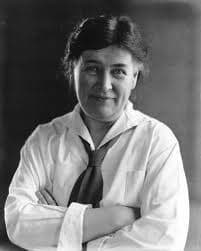
Willa Sibert Cather was an American writer known for her novels of life on the Great Plains, including O Pioneers!, The Song of the Lark, and My Ántonia. In 1923, she was awarded the Pulitzer Prize for One of Ours, a novel set during World War I.
Similar books
- The Grapes of Wrath
John Steinbeck
4.0 (750k) average on GoodreadsHistorical FictionFocuses on the struggles of American families tied to the land during difficult times.
- Nineteen Eighty-Four
George Orwell
4.2 (5.5M) average on GoodreadsFictionWinston Smith dreams of truth and rebellion in a world where Big Brother watches all, but he confronts the terrifying power of a regime that controls not just actions, but thoughts.
- The Frozen River
Ariel Lawhon
4.4 (600k) average on GoodreadsFictionIn 1789 Maine, a heroic midwife's diary helps her expose a murder and get justice in a town that wants to silence her.
- A Man Called Ove
Fredrik Backman
4.4 (569k) average on GoodreadsFictionA stubborn widower, who lives by strict rules, finds his quiet world changed by a lively new family next door, making him face his past and find happiness in human connection.
- The Art of Racing in the Rain
Garth Stein
4.2 (452k) average on GoodreadsFictionThrough the eyes of Enzo, a wise and observant dog, a race car driver's family navigates a journey of love, loss, and resilience, learning that life's most important lessons often come in the curves, not just on the straightaways.
- The Colour of Magic
Terry Pratchett
4.0 (425k) average on GoodreadsFictionOn a discworld hurtling through space on the back of a giant turtle, an inept wizard and his naive, walking-luggage-toting tourist embark on a chaotic, belief-fueled journey to the very edge of their flat planet, encountering dragons that only exist if you believe in them.




Enjoyed the summary?
A summary gives you the shape of the book. The book itself has the detail, the examples and the voice.
Find My Antonia by Willa Cather on AmazonAs an Amazon Associate, BookBrief earns from qualifying purchases. How we're funded